
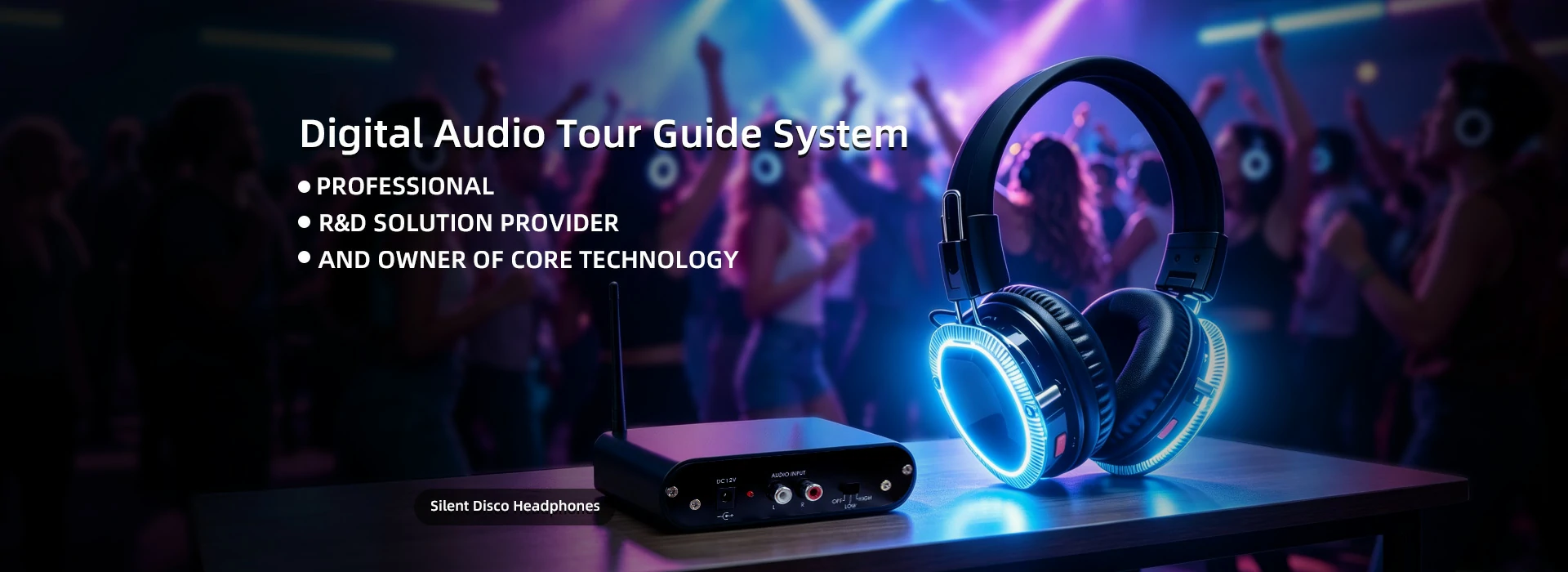
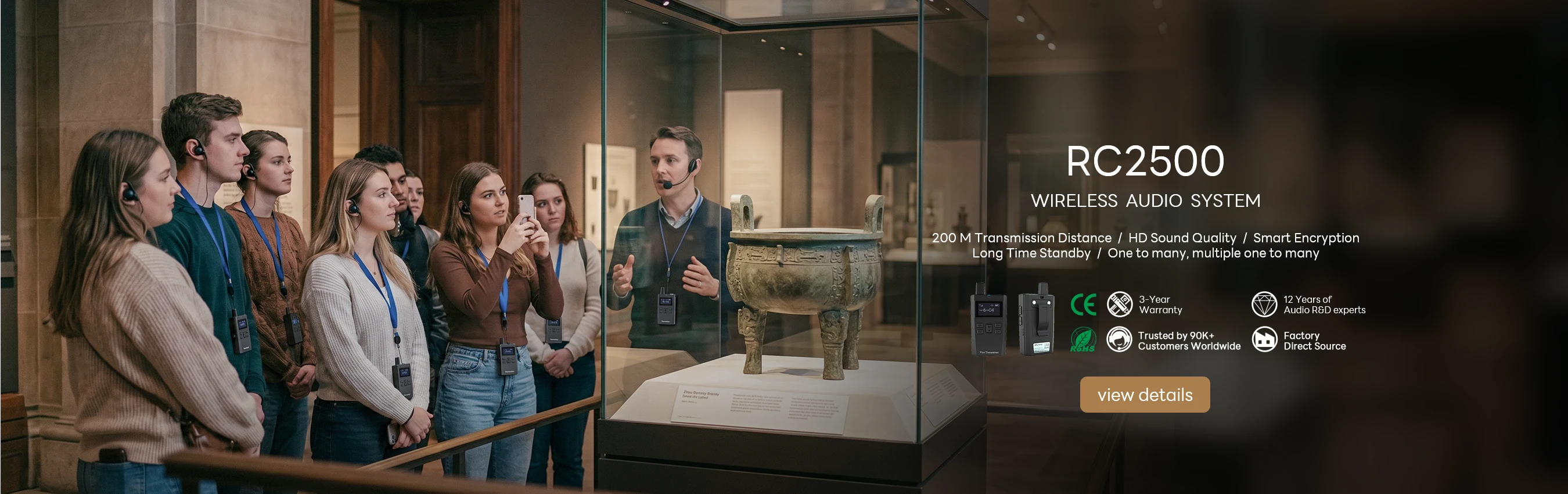

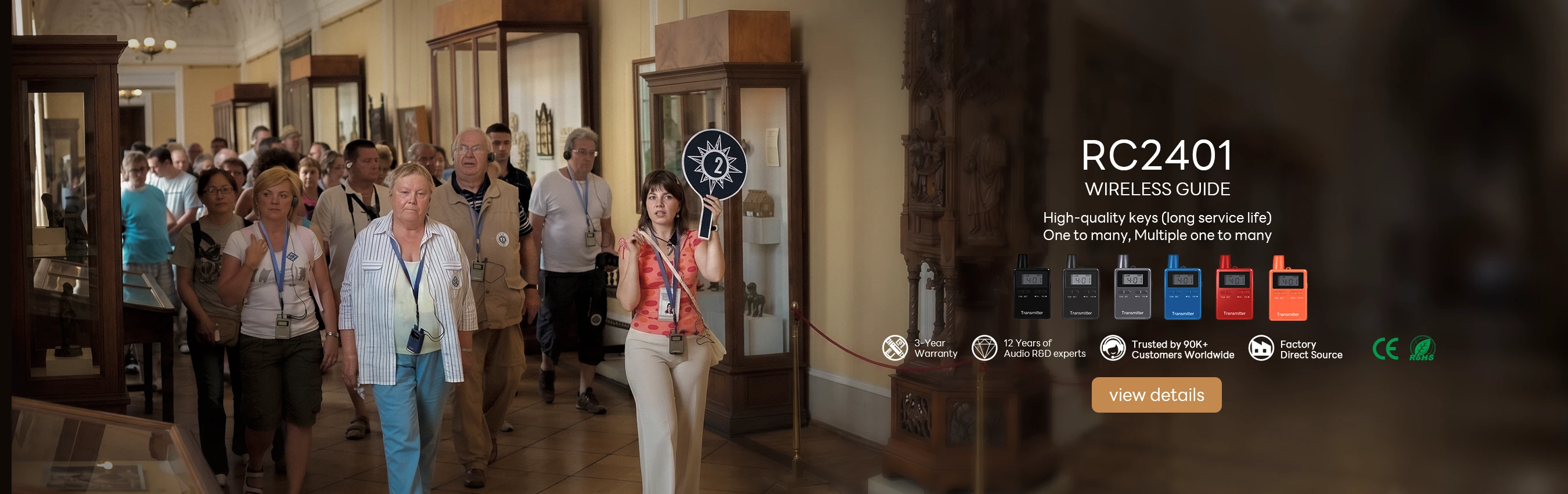
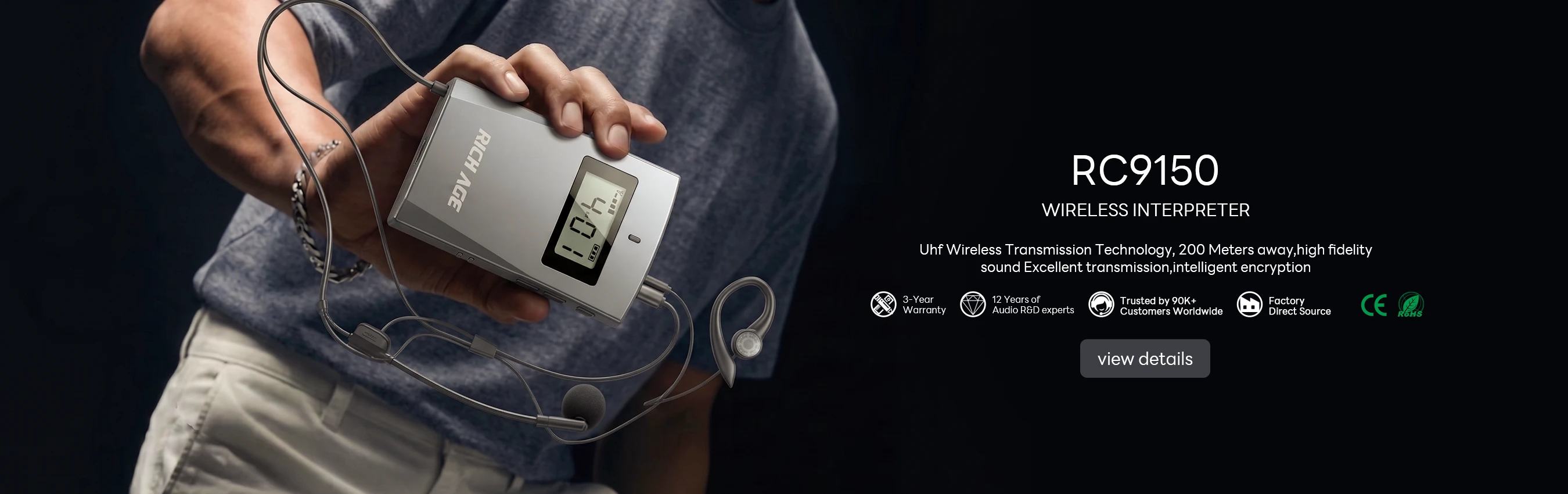
A battery plant is not a quiet museum. Visitors walk past electrode coating lines, winding machines, and formation chambers where a dropped signal or a misunderstood safety note carries a real cost. The audio guide hardware that keeps a tour coherent has to earn its place on the same spreadsheet that already lists gloves, badges, and the guide's own time. We break the budget into three separate lines, not one, because the plant usually needs three different kinds of device: a lightweight receiver for every visitor, a stable transmitter for the guide, and a silent disco set for the canteen or the break area where a second language track keeps staff and guests apart without raising the volume. The full factory tour audio range shows how these roles fit together on one site.
📡 Why the Plant Needs Separate Radio Lines
Most plants start by asking for "a tour system" and stop there, which hides the fact that three jobs are being asked of one box. The visitor walking the line needs something small and forgettable that survives a full shift on one charge. The guide at the front needs a transmitter that holds a clean signal through concrete and steel, which is a different radio problem entirely. The canteen or training room needs a multi-channel headphone that lets two languages run at once without a second pair of speakers. Bundling all three into one number makes the purchase look cheaper than it is and makes the weak point invisible until the tour actually runs. Splitting the budget is the only way to see which line deserves more and which one is quietly overspecified.
📱 The Lightweight 2.4G Receiver and Where the Penny Goes
The ear-hook receiver in this trio runs on the 2.4G band at 2403 to 2483 MHz with fifty channels and a body that weighs just eighteen grams. The full receiver specification sheet shows the split in plain numbers: the transmitter sits at fifty-nine grams with a 1500 mAh cell giving around ten hours, while the receiver carries a 300 mAh cell for roughly eight hours of use and charges over a Micro USB 5V/1A port. Fifty channels matter here because a large plant can run several overlapping tours without the groups bleeding into each other, and that headroom is exactly what lets the per-unit cost stay low instead of paying for a more exotic radio. The reason this line stays affordable is the module inside: a 2.4G part is a commodity component, the fifty-channel PLL is a mature design, and the tiny 300 mAh cell is cheap to source in volume. What you pay for here is lightness and simplicity, not range or radio exclusivity, which is exactly what a visitor receiver should cost. Most of the budget lands in the mould for the eighteen-gram shell and the ear-hook that has to survive being handed between a hundred strangers a week.
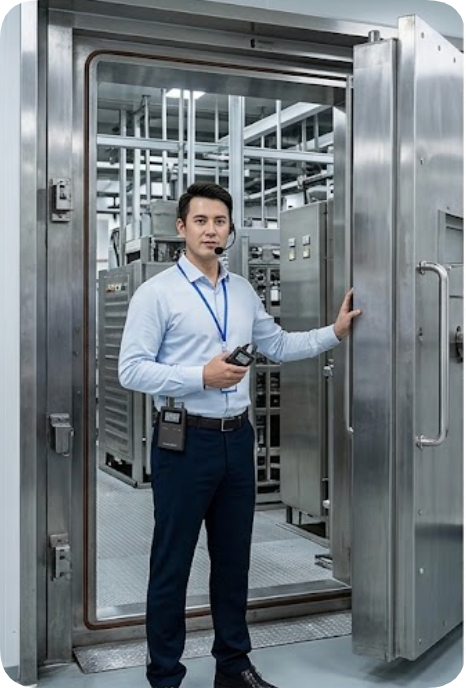
📡 A UHF Transmitter Worth a Higher Line
The teaching transmitter in the same comparison moves to the UHF band at 860 to 870 MHz with twenty channels, a fifty-gram receiver backed by a 1000 mAh cell rated near twenty hours, and a DC charging port rather than USB. The UHF radio is the part that justifies the higher line: the module and its filtering cost more than a 2.4G part, and the band is the reason the guide's voice holds through a metal-clad building where the lighter receiver would drop out. You are also paying for single-band stability and a wider colour option list on the housing, which adds tooling cost the visitor receiver does not carry. For a plant where the guide walks past formation racks and shielded rooms, that premium buys fewer tour interruptions, and interruptions are the cost line nobody prints on the quote. Full transmitter specifications list the band and battery split in detail.
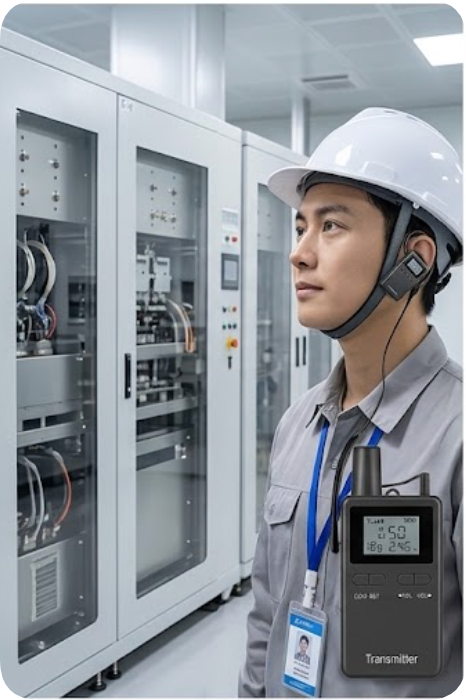
📡 When the Budget Moves to Audio Instead of RF
The silent disco set flips the cost logic. Its transmitter runs UHF at 863 to 925 MHz with ten FM stereo channels, the headphones carry a 500 mAh cell for about ten hours and charge over Micro USB, and the audio path uses forty-millimetre Mylar drivers with a signal-to-noise ratio above 75 dB. The radio is similar in price class to the teaching transmitter, but the money that would have gone into range instead goes into the speaker, the five-colour LED that shows each channel, and the comfort of a headphone worn for a whole shift. This is the line that grows with the canteen, not the production floor: more guests in more languages simply means more headphones on the same transmitter. The silent disco product page lays out the channel and driver details that drive that part of the spend.
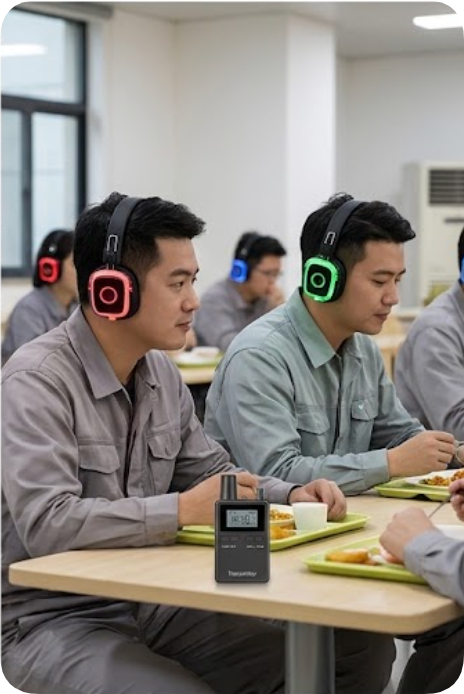
All Three Options Side by Side
The table below puts the three budget lines on one row so the plant can see what each dollar actually buys. The numbers come from the published specification sheets for the receiver, the transmitter and the headphone set; where a figure is not published we say so rather than guess. The wider solution library covers adjacent site types if the plant later adds a warehouse or a showroom tour.
| Cost driver | 2.4G ear-hook receiver | UHF teaching transmitter | Silent disco headphone |
|---|---|---|---|
| Radio band | 2403 to 2483 MHz (2.4G) | 860 to 870 MHz (UHF) | 863 to 925 MHz (UHF) |
| Channels | 50 | 20 | 10 (FM stereo) |
| Receiver battery | 300 mAh | 1000 mAh | 500 mAh |
| Receiver weight | 18 g ear-hook | 50 g | Headphone worn |
| Where the cost sits | Light shell and mould | UHF module and filtering | 40 mm driver and LED |
| Cheaper when | Volume of visitors is high | Building is metal-heavy | Two languages run at once |
What Moves Each Number Up or Down
Three levers move the final figures more than the sticker price ever does. Order volume is the first: the eighteen-gram receiver is cheap per unit precisely because plants buy it by the hundred, while the UHF transmitter is bought in ones and twos and keeps its premium. Customisation is the second, and it bites hardest on the teaching transmitter with its wider colour list and on any housing that needs a plant logo moulded in rather than printed on. Certification is the third, because a battery manufacturing area may ask for proof that the radio behaves near sensitive process equipment, and that paperwork is a real line on the invoice. The full tour guide catalogue is the place to check which variants are already certified for industrial sites. A fourth lever is the spare pool and the warranty, which move the three-year number more than the upfront price: receivers are dropped and lost far more often than transmitters, so holding a small spare percentage on the lightest unit protects the tour without padding the UHF budget, and a longer warranty on the radio module beats a cheaper box that fails inside a year.
🏭 A Practical Split for the Factory Floor
A mid-size plant running two guided tours a day can start from a simple ratio rather than an open-ended cart. Budget one teaching transmitter per active guide, fifty ear-hook receivers per tour group, and a silent disco set sized to the canteen rather than the floor. The earlier procurement checklist for the same plant type works through the headcount math in more detail and avoids the common mistake of buying transmitter capacity the guide never uses while short on receivers the visitors actually wear. Revisit the split after the first month: if the canteen runs two languages every break, the headphone line is the one to grow first.