.webp)
How to Deploy a Multilingual Wireless Tour Guide System: A Step-by-Step Guide for RC2402, RC2500, and RC2406
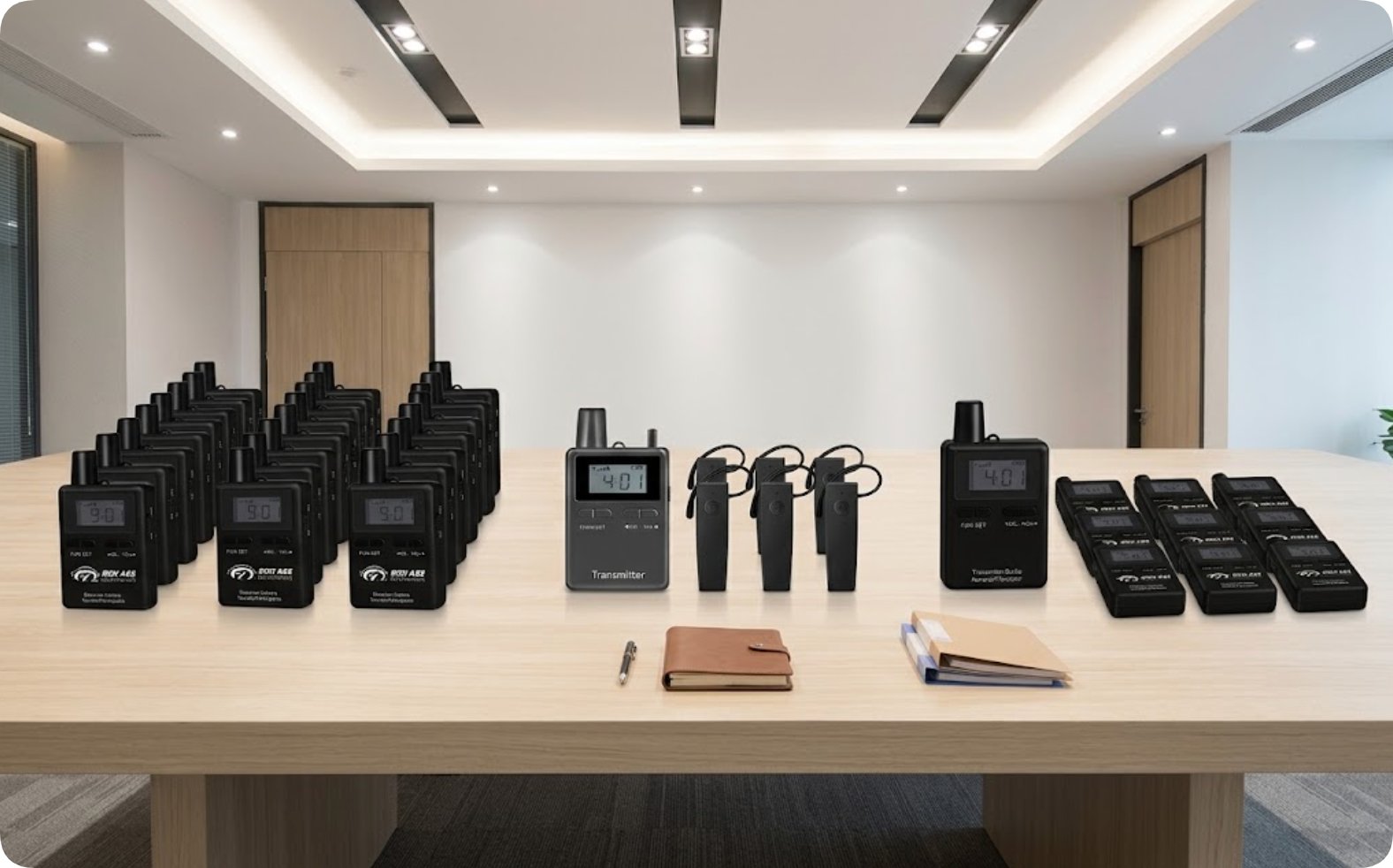
Over the years, I have worked on countless audio communication deployments across museums, factories, and heritage sites. One truth stands out: a successful multilingual tour depends far more on your deployment strategy than on the hardware alone. When you are managing a historic site, a corporate factory tour, or a museum filled with international visitors, real-time language switching is not a luxury—it is a necessity. A wireless tour guide system eliminates the chaos of overlapping voices and ensures every guest, regardless of their native language, receives clear, consistent interpretation. In my experience, most operators stumble during installation. They overlook channel planning, battery management, and signal coverage. That is why I have created this practical guide focused on three of our most versatile models: the RC2402, the RC2500, and the RC2406. Whether you are setting up for a small private tour or a large simultaneous group event, the core principles remain the same. You need a system that is easy to deploy, reliable under pressure, and scalable for future growth. This is where our dedicated multilingual conference solutions come into play, offering a robust foundation for any interpretation scenario.
RC2402: The Reliable Workhorse for Medium Group Tours
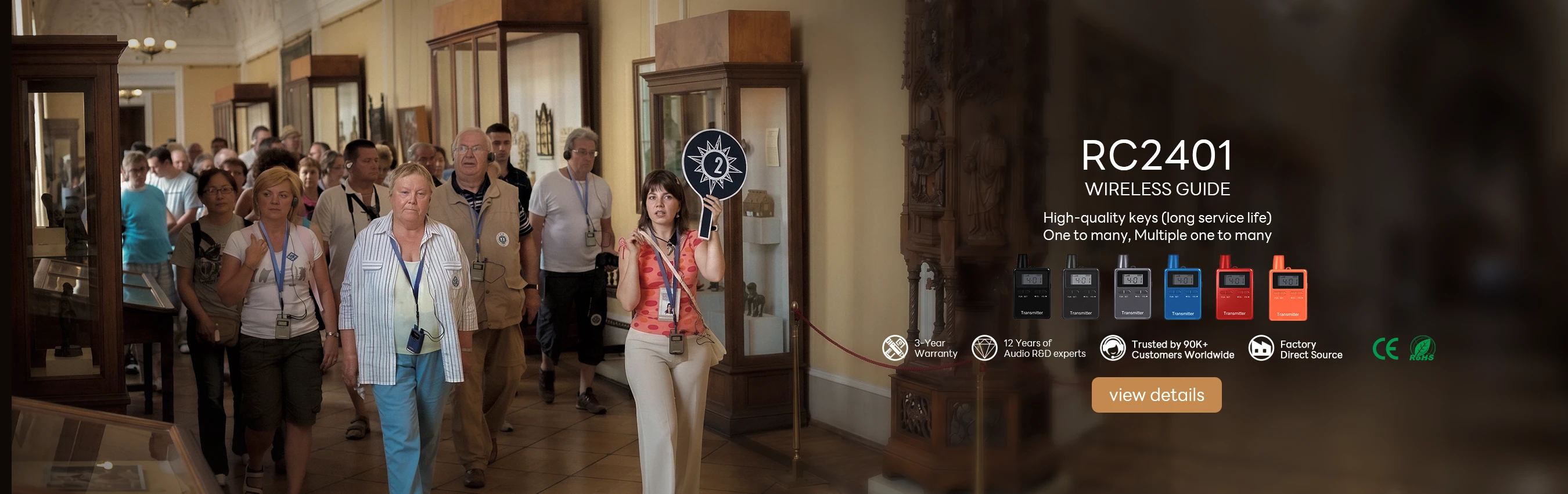
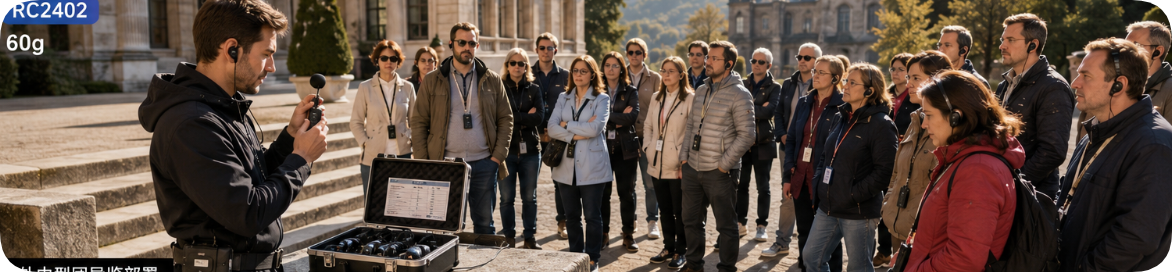
The RC2402 is what I consider the standard bearer for medium-sized group tours. With a unit weight of just 60 grams, it is lightweight enough for all-day use yet robust enough for outdoor environments. Installation is incredibly straightforward. The transmitter features a simple power button and a channel selector dial. For a typical deployment, I recommend the guide pre-selects a clear channel before the group arrives. The receiver units are equally simple—visitors just power them on and plug in the earphone. The key advantage here is battery life. You can run a full day of tours without needing to recharge, which is critical for busy attractions. This model is best suited for outdoor settings like historic courtyards or botanical gardens where a single guide leads 15-20 people. The signal range is excellent, and audio clarity remains crisp even with ambient noise from wind or traffic. For a quick deployment checklist: charge all units overnight, assign one channel to the guide, and distribute receivers with the channel pre-locked. That is it. You are ready to go in under ten minutes.
RC2500: Ultra-Compact Solution for Small Group Mobility
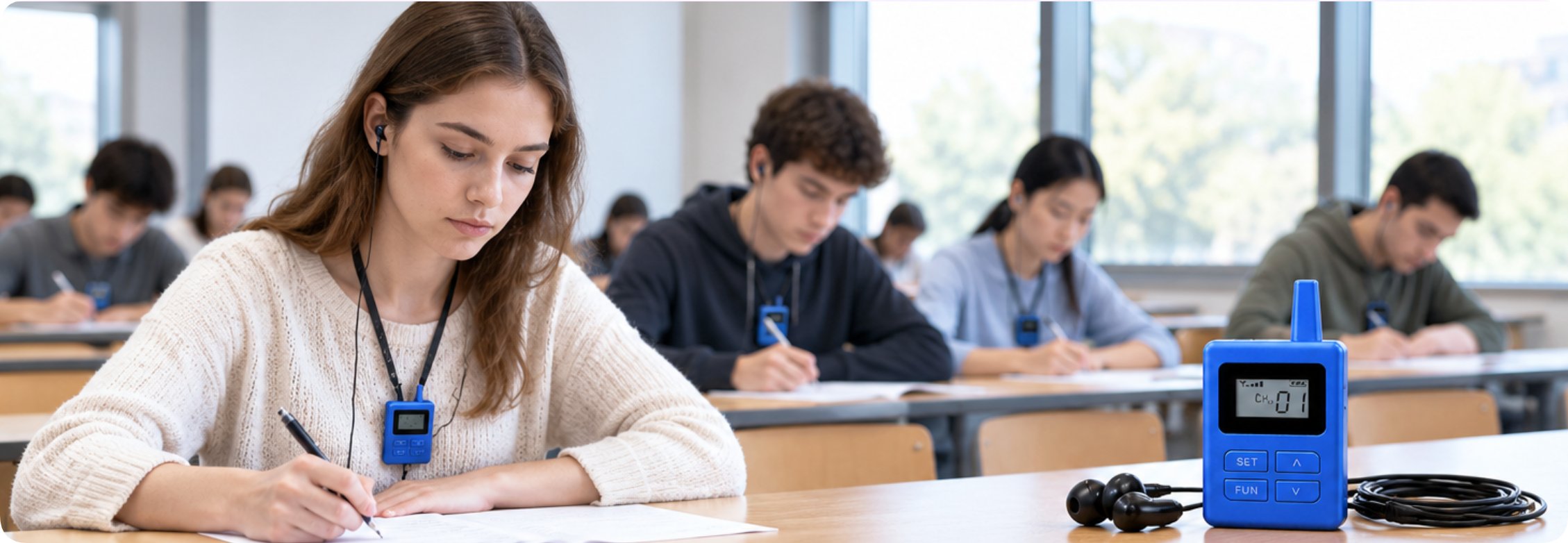
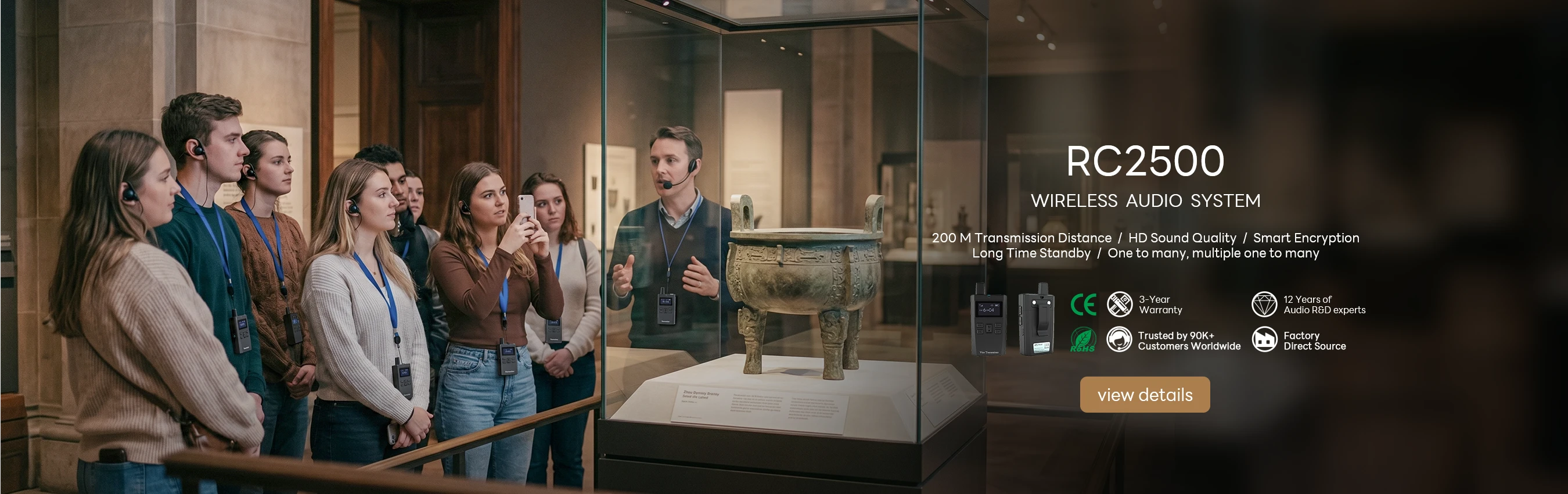
When space is tight or the group size is smaller, the RC2500 becomes the ideal choice. Weighing in at only 55 grams, it is the lightest option in our lineup, making it perfect for indoor heritage sites where visitors need to move through narrow corridors or stand close to exhibits. The installation process for the RC2500 is identical to the RC2402 in terms of simplicity, but the compact form factor allows for easier storage and faster distribution. I often recommend this model for corporate visitors or VIP tours where the guide wants to maintain a low profile. Battery performance is equally impressive, supporting a full workday. One subtle but important detail in deployment is the earphone fit. Since the RC2500 is often used in quiet indoor environments, make sure the earphone tips are clean and comfortable for visitors. This small step significantly improves the user experience. The best deployment scenario for the RC2500 is a small group of 8-10 people gathered around an exhibit case. The guide can speak at a normal volume, and the wireless system ensures everyone hears the explanation without straining. For installation, simply sync the transmitter and receivers on the same channel, and you are operational.

RC2406: The Multi-Group Powerhouse for Large Venues
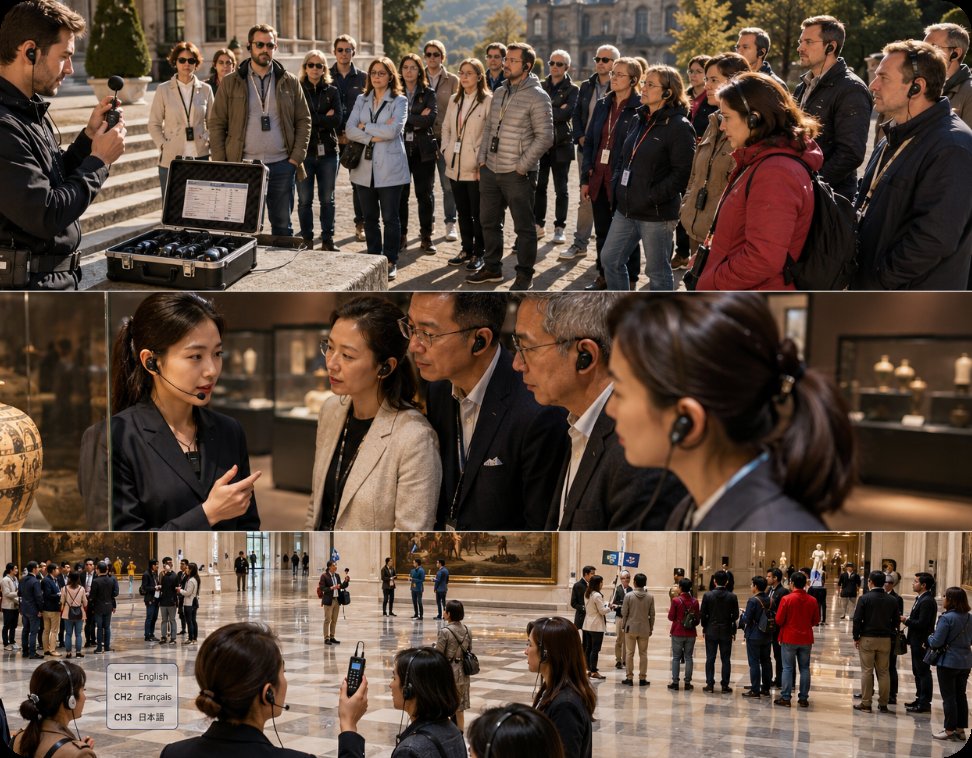
For large venues like museum galleries or convention centers where multiple tours operate simultaneously, the RC2406 is the only logical choice. This model supports 80 channels on the 2.4G frequency band, which means you can run up to 80 different language groups in the same space without any interference. The unit weighs 65 grams, slightly heavier than the other two, but this is a trade-off for advanced channel management. The installation process for the RC2406 requires a bit more planning. I always advise site managers to conduct a channel scan before the event to identify the clearest frequencies. The transmitter has a dedicated channel selector dial that makes it easy for the guide to switch between languages if needed. For a large museum with multiple docents, you can assign each guide a different channel, and visitors simply tune their receivers to their preferred language. This is a game-changer for multilingual events. The deployment strategy here is to create a channel map. For example, Channel 1 for English, Channel 2 for French, Channel 3 for Japanese, and so on. Print these assignments on small cards and include them with the receiver units. The RC2406 is best for groups of 12-15 people per guide, with multiple groups operating simultaneously in the same gallery. Signal stability is outstanding, even with marble floors and thick walls.
Product Comparison Table
| Model | Weight | Battery Life (Typical) | Protection Rating | Best Scenario |
|---|---|---|---|---|
| RC2402 | 60 g | Up to 8 hours | IPX4 (Splash-resistant) | Outdoor medium group tours (15-20 people) |
| RC2500 | 55 g | Up to 8 hours | IPX4 (Splash-resistant) | Indoor small group tours (8-10 people) |
| RC2406 | 65 g | Up to 7 hours | IPX4 (Splash-resistant) | Large venue multi-group simultaneous tours |
How to Choose the Right Model for Your Deployment
Selecting the correct model comes down to three key considerations: group size, venue type, and language complexity. For outdoor tours with a single guide and a medium-sized group, the RC2402 offers the best balance of weight, battery life, and range. If you are working indoors with smaller, more intimate groups, the RC2500 is the most comfortable option for both the guide and the visitors. For large-scale operations where multiple languages are needed at the same time, the RC2406 provides the necessary channel capacity. I also recommend considering your future needs. If you plan to expand your tours, investing in the RC2406 now gives you the flexibility to grow without replacing your hardware. All three models share the same 2.4G frequency band, which means they can be used together in a mixed deployment. For example, you can use the RC2406 for the main gallery and supplement with RC2500 units for breakout groups. This modular approach is very cost-effective. When you browse our entire RC2402 series, you will see that each model is designed with a specific user experience in mind, from the button layout to the earphone jack placement.
Final Deployment Tips and Call to Action
Before you finalize your installation, run a quick test in the actual venue. Check for signal dead zones near metal structures or thick walls. Always carry spare batteries and a few extra receiver units. The beauty of these systems is that once you have set up the channels, the operation is nearly hands-free. The guides can focus on their narrative, and the visitors can immerse themselves in the experience without technical distractions. If you are still unsure which model fits your needs, I encourage you to explore our solutions page for more detailed case studies and deployment guides. We have helped hundreds of venues transition from traditional audio systems to wireless tour guide systems, and the feedback is always the same: the installation is simple, the audio quality is excellent, and the visitor satisfaction scores increase dramatically. Do not let technical confusion delay your upgrade. Contact our team today for a personalized consultation, and we will help you choose the perfect system for your multilingual tour needs.
Frequently Asked Questions (FAQ)
Q: Can the RC2402, RC2500, and RC2406 models be used together in the same venue?
A: Yes. All three models operate on the compatible 2.4GHz global frequency band, enabling seamless mixed deployments across different rooms or tour sizes without cross-talk or interference.
Q: How many simultaneous channels does the RC2406 support for multi-language tours?
A: The RC2406 supports up to 80 independent channels, allowing venue managers to operate multiple simultaneous language groups or breakout sessions concurrently in the same space.