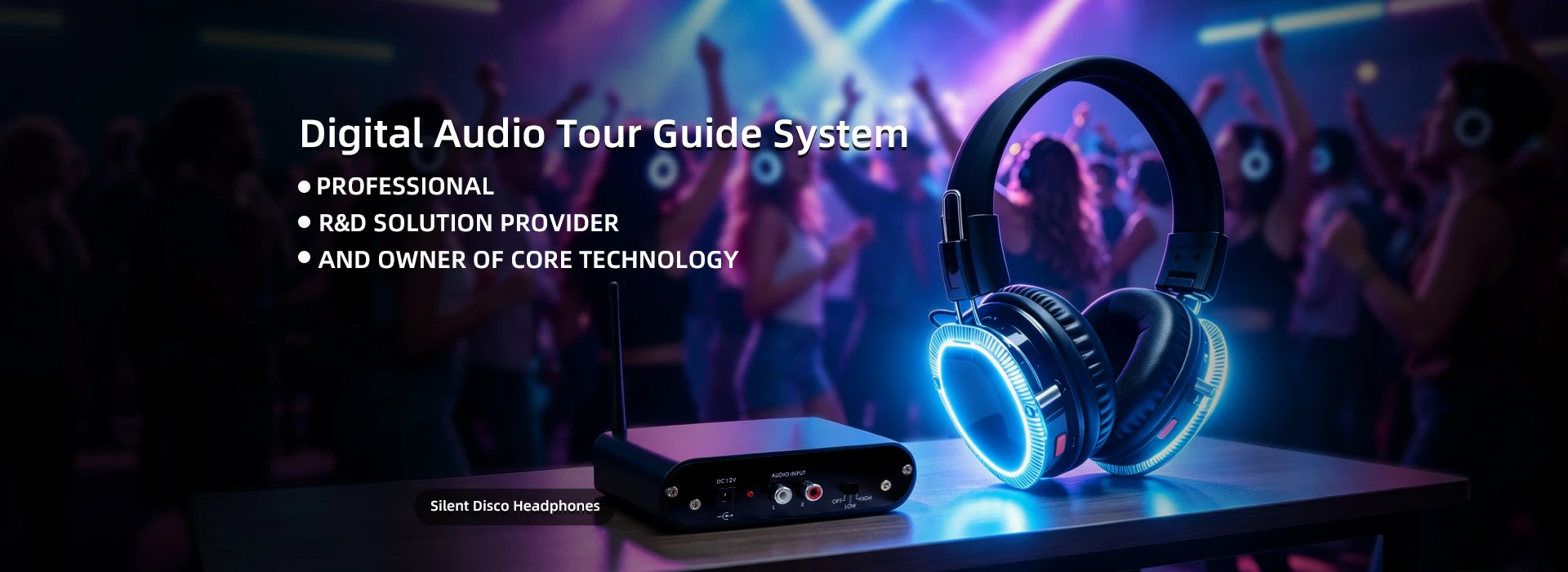
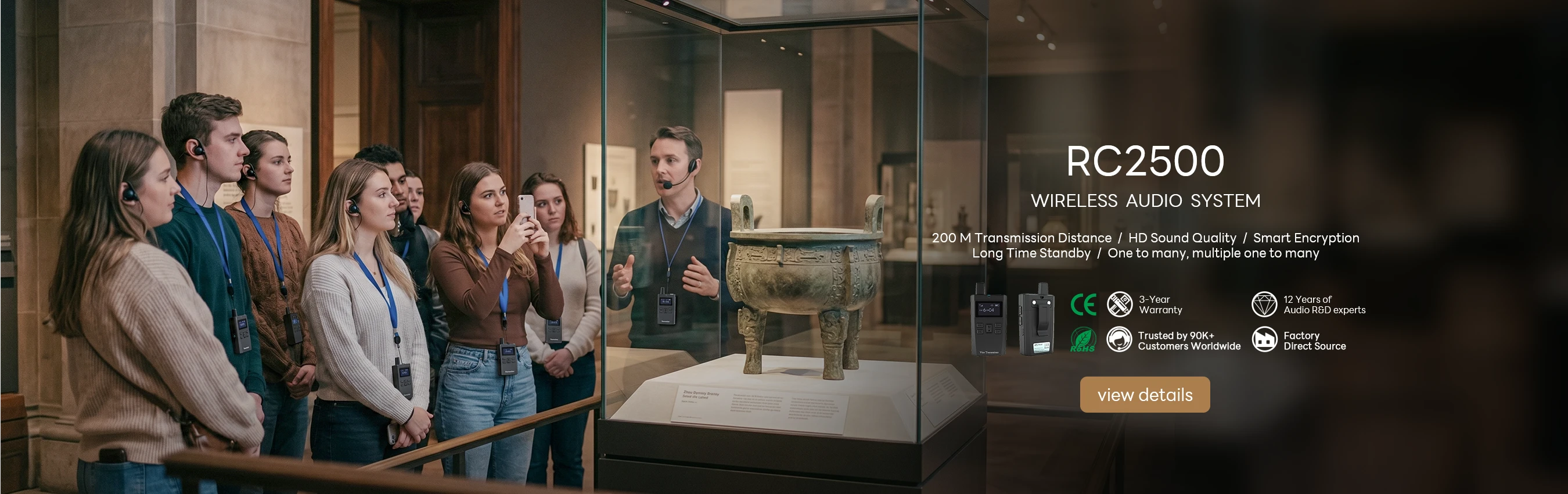

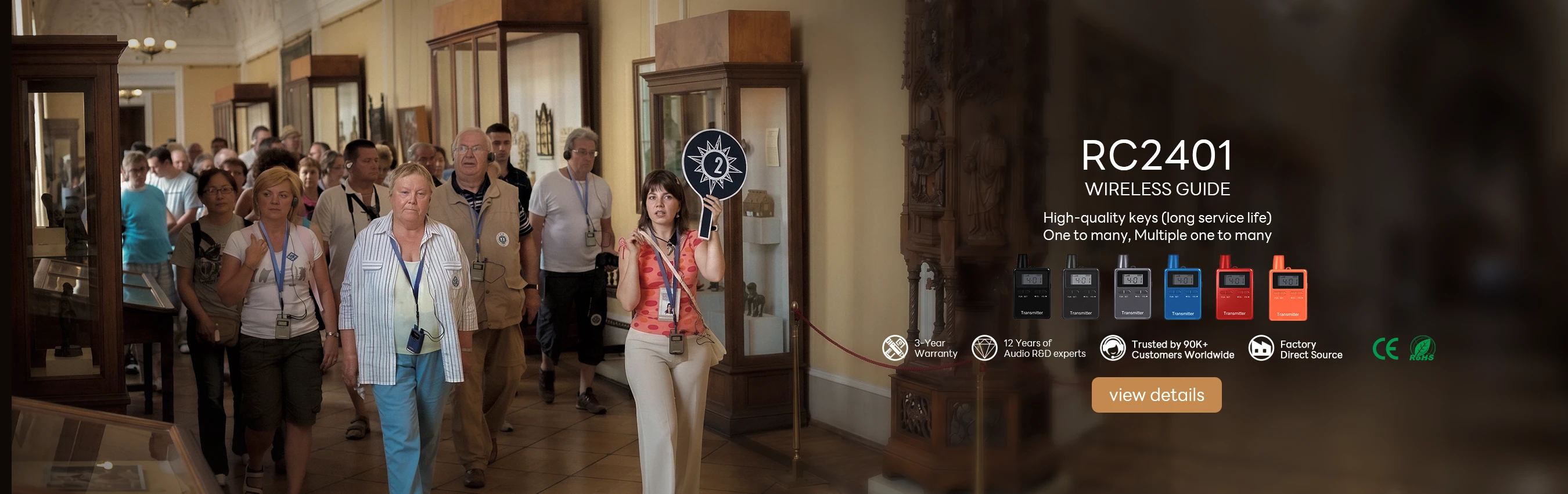
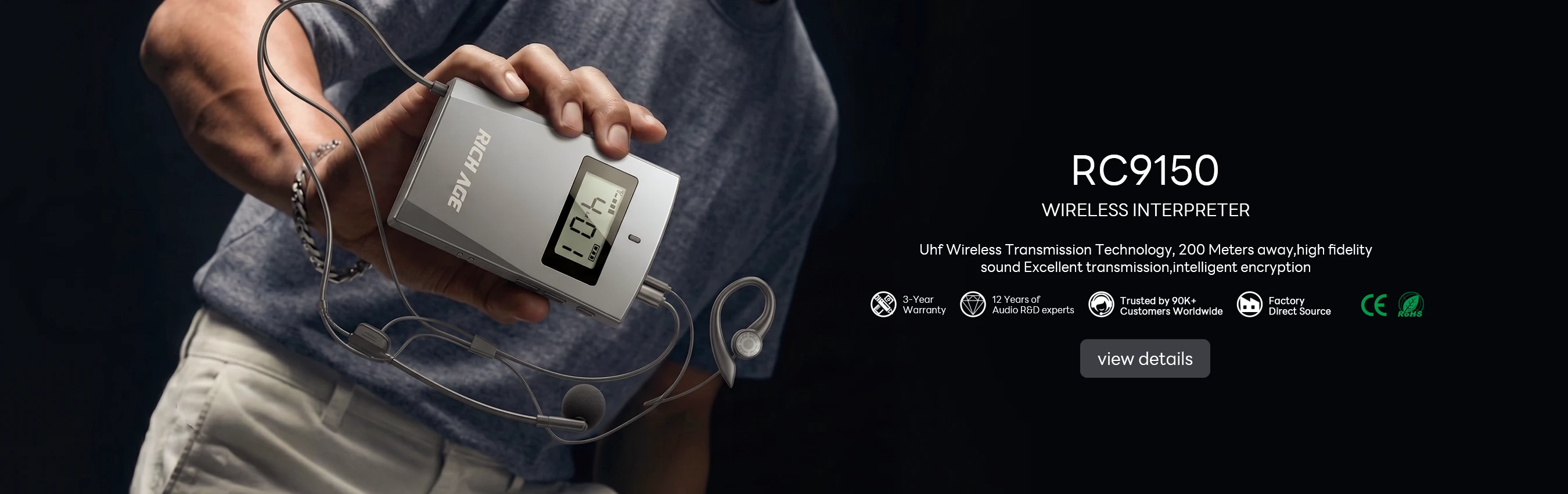
We are a large factory from China.Specializing in the production of wireless tour guide systems translation headphones for church、Museum audio guide equipment, Simulation Interpretation etc

Tel:+86 18922879583

Email:tiger.wang@richitek.com

How to Choose the Best Wireless Tour Guide System for Museums?

How to Choose the Best Wireless Tour Guide System for Museums

A practical guide for museum directors, tour operators, and cultural heritage managers — what to look for, what to avoid, and how to get the best value.

Museums are sanctuaries of culture and history, yet crowded galleries, ambient noise, and multilingual audiences can turn guided tours into communication nightmares. A high‑quality wireless tour guide system solves these problems — but with so many options on the market, how do you choose the right one? This guide walks you through the decision process, feature by feature.
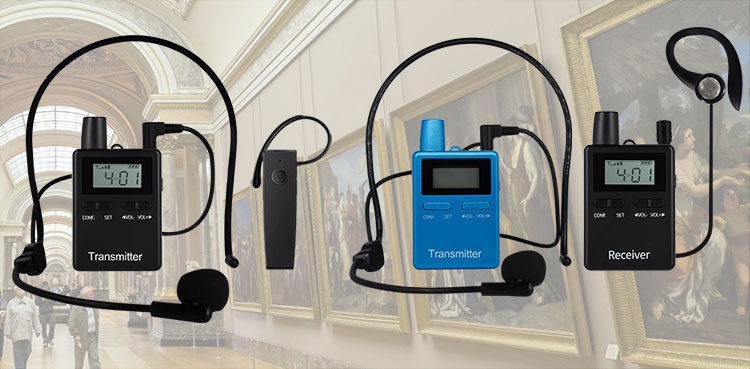
     How to Choose the Best Wireless Tour Guide System for Museums?(图1)    

Step 1: Assess Your Museum’s Specific Needs

Before comparing products, answer these four questions:

  • Group size — Do you primarily host small VIP tours (5–15 people) or large school groups (30–50+)? Some systems support unlimited receivers, others cap at a certain number.

  • Language requirements — International visitors expect multilingual options. Look for systems that support real‑time interpretation on separate channels.

  • Noise level — Open‑plan exhibits or interactive installations create background chatter. Systems with active noise cancellation are a must.

  • Coverage area — How far will the guide move from the group? A 50m range may suffice for indoor galleries, but outdoor museum grounds or large halls need 150–200m.

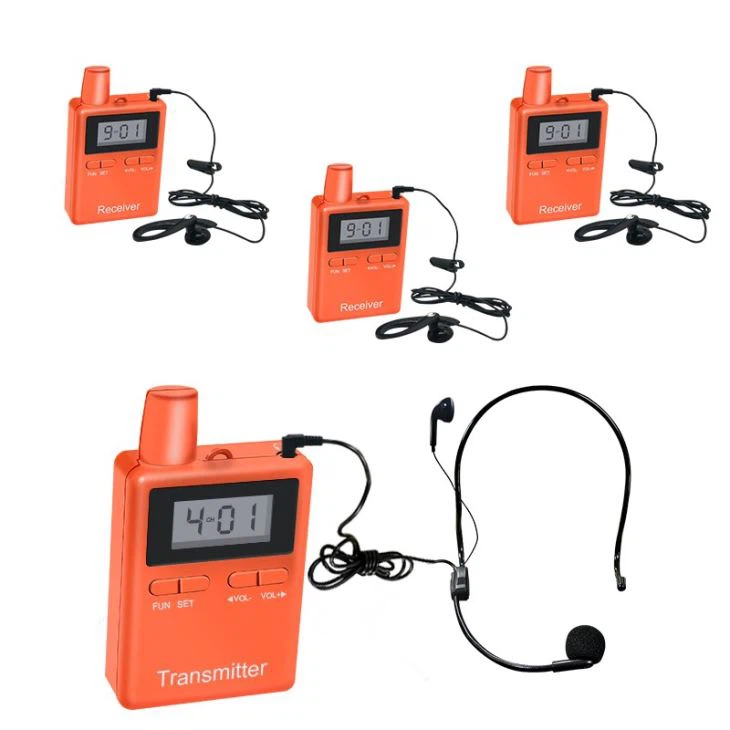
How to Choose the Best Wireless Tour Guide System for Museums?(图2)

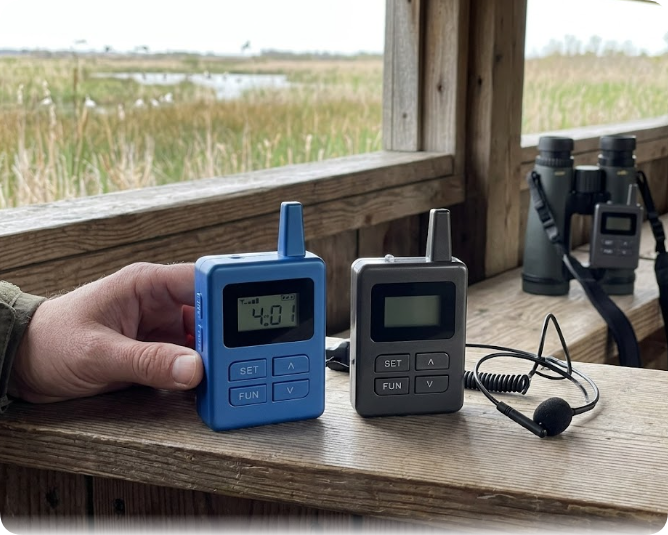
How to Choose the Best Wireless Tour Guide System for Museums?(图3)

Step 2: Critical Features to Prioritize

Audio Clarity & Transmission Stability

Choose between UHF and 2.4GHz digital systems. UHF offers longer range and better wall penetration; 2.4GHz provides license‑free operation worldwide and less interference from other radio devices. Both can deliver excellent clarity if the manufacturer uses proper noise filtering and anti‑feedback circuitry.

Comfort & Ease of Use

Visitors will wear receivers for 1–2 hours on average. Lightweight designs (under 40g) with soft ear‑hooks or neckbands dramatically improve satisfaction. For staff, one‑button synchronization and intuitive controls reduce training time.

Battery Life & Charging Infrastructure

Aim for at least 10 hours of continuous operation — enough for back‑to‑back tours without midday recharging. USB‑C charging is now standard, but multi‑unit charging cases (10, 20, or 50 slots) are a game‑changer for busy museums. They simplify storage, prevent lost devices, and ensure everything is ready for the next day.

How to Choose the Best Wireless Tour Guide System for Museums?(图4)

Multi‑Channel Support

If your museum runs several guided tours simultaneously (e.g., English, French, Mandarin, or different exhibit themes), you need a system with 20+ channels. Each group gets a clean, interference‑free channel, even when walking through the same gallery.

Portability & Storage

Compact devices are easier to distribute, collect, and sanitize. Look for systems that come with custom foam‑lined carrying cases — they protect your investment and speed up daily operations.

Step 3: Wired vs. Wireless — Why Wireless Always Wins

Some older museums still rely on wired audio guides (headsets plugged into floor jacks). The limitations are obvious:

  • Visitors are tethered to fixed positions — no freedom to wander.

  • Wires break, jacks malfunction, and maintenance is costly.

  • No real‑time guide interaction; just pre‑recorded tracks.

Modern wireless tour guide systems eliminate all these problems. They offer:

  • ✅ Complete freedom of movement — visitors can step closer to exhibits while still hearing the guide.

  • ✅ Superior audio clarity — direct transmission to the ear, bypassing ambient noise.

  • ✅ Live, interactive commentary — guides can answer questions and adapt on the fly.

How to Choose the Best Wireless Tour Guide System for Museums?(图5)

Step 4: Choosing a Reliable Supplier

Not all wireless tour guide systems are created equal. When evaluating manufacturers, ask about:

  • Durability — Are the devices drop‑tested? Museum staff handle them dozens of times per day.

  • Warranty & support — Look for at least a 1‑year warranty and responsive technical support.

  • Customization — Can they brand the equipment with your museum’s logo? This adds professionalism and reduces theft.

  • Proven experience — Suppliers who have worked with cultural institutions understand your unique needs (hygiene, ease of cleaning, multi‑language support).


How to Choose the Best Wireless Tour Guide System for Museums?(图6)

How to Choose the Best Wireless Tour Guide System for Museums?(图7)

Final Thoughts: Invest in the Visitor Experience

A well‑chosen wireless tour guide system does more than transmit sound — it transforms how people connect with your collection. Visitors retain more information, stay engaged longer, and leave with a deeper appreciation of your museum. For you, it means fewer complaints, less guide fatigue, and smoother daily operations.

If you’re ready to explore professional‑grade solutions, reach out to experienced manufacturers who specialize in museum audio guides. Ask for demo units, test them in your actual environment, and compare side‑by‑side.

Need Expert Advice?

Rich Age Technology has over a decade of experience supplying wireless tour guide systems to museums, heritage sites, and visitor attractions worldwide. We offer free consultations, sample kits, and customization (branding, multi‑language support, charging cases). Contact us to discuss your museum’s unique requirements — no obligation.

2025年04月11日 17:24
click: 965

How to Choose the Best Wireless Tour Guide System for Museums?

time: 2025年04月11日 click:965

How to Choose the Best Wireless Tour Guide System for Museums

A practical guide for museum directors, tour operators, and cultural heritage managers — what to look for, what to avoid, and how to get the best value.

Museums are sanctuaries of culture and history, yet crowded galleries, ambient noise, and multilingual audiences can turn guided tours into communication nightmares. A high‑quality wireless tour guide system solves these problems — but with so many options on the market, how do you choose the right one? This guide walks you through the decision process, feature by feature.

     How to Choose the Best Wireless Tour Guide System for Museums?(图1)    

Step 1: Assess Your Museum’s Specific Needs

Before comparing products, answer these four questions:

  • Group size — Do you primarily host small VIP tours (5–15 people) or large school groups (30–50+)? Some systems support unlimited receivers, others cap at a certain number.

  • Language requirements — International visitors expect multilingual options. Look for systems that support real‑time interpretation on separate channels.

  • Noise level — Open‑plan exhibits or interactive installations create background chatter. Systems with active noise cancellation are a must.

  • Coverage area — How far will the guide move from the group? A 50m range may suffice for indoor galleries, but outdoor museum grounds or large halls need 150–200m.

How to Choose the Best Wireless Tour Guide System for Museums?(图2)

How to Choose the Best Wireless Tour Guide System for Museums?(图3)

Step 2: Critical Features to Prioritize

Audio Clarity & Transmission Stability

Choose between UHF and 2.4GHz digital systems. UHF offers longer range and better wall penetration; 2.4GHz provides license‑free operation worldwide and less interference from other radio devices. Both can deliver excellent clarity if the manufacturer uses proper noise filtering and anti‑feedback circuitry.

Comfort & Ease of Use

Visitors will wear receivers for 1–2 hours on average. Lightweight designs (under 40g) with soft ear‑hooks or neckbands dramatically improve satisfaction. For staff, one‑button synchronization and intuitive controls reduce training time.

Battery Life & Charging Infrastructure

Aim for at least 10 hours of continuous operation — enough for back‑to‑back tours without midday recharging. USB‑C charging is now standard, but multi‑unit charging cases (10, 20, or 50 slots) are a game‑changer for busy museums. They simplify storage, prevent lost devices, and ensure everything is ready for the next day.

How to Choose the Best Wireless Tour Guide System for Museums?(图4)

Multi‑Channel Support

If your museum runs several guided tours simultaneously (e.g., English, French, Mandarin, or different exhibit themes), you need a system with 20+ channels. Each group gets a clean, interference‑free channel, even when walking through the same gallery.

Portability & Storage

Compact devices are easier to distribute, collect, and sanitize. Look for systems that come with custom foam‑lined carrying cases — they protect your investment and speed up daily operations.

Step 3: Wired vs. Wireless — Why Wireless Always Wins

Some older museums still rely on wired audio guides (headsets plugged into floor jacks). The limitations are obvious:

  • Visitors are tethered to fixed positions — no freedom to wander.

  • Wires break, jacks malfunction, and maintenance is costly.

  • No real‑time guide interaction; just pre‑recorded tracks.

Modern wireless tour guide systems eliminate all these problems. They offer:

  • ✅ Complete freedom of movement — visitors can step closer to exhibits while still hearing the guide.

  • ✅ Superior audio clarity — direct transmission to the ear, bypassing ambient noise.

  • ✅ Live, interactive commentary — guides can answer questions and adapt on the fly.

How to Choose the Best Wireless Tour Guide System for Museums?(图5)

Step 4: Choosing a Reliable Supplier

Not all wireless tour guide systems are created equal. When evaluating manufacturers, ask about:

  • Durability — Are the devices drop‑tested? Museum staff handle them dozens of times per day.

  • Warranty & support — Look for at least a 1‑year warranty and responsive technical support.

  • Customization — Can they brand the equipment with your museum’s logo? This adds professionalism and reduces theft.

  • Proven experience — Suppliers who have worked with cultural institutions understand your unique needs (hygiene, ease of cleaning, multi‑language support).

How to Choose the Best Wireless Tour Guide System for Museums?(图6)

How to Choose the Best Wireless Tour Guide System for Museums?(图7)

Final Thoughts: Invest in the Visitor Experience

A well‑chosen wireless tour guide system does more than transmit sound — it transforms how people connect with your collection. Visitors retain more information, stay engaged longer, and leave with a deeper appreciation of your museum. For you, it means fewer complaints, less guide fatigue, and smoother daily operations.

If you’re ready to explore professional‑grade solutions, reach out to experienced manufacturers who specialize in museum audio guides. Ask for demo units, test them in your actual environment, and compare side‑by‑side.

Need Expert Advice?

Rich Age Technology has over a decade of experience supplying wireless tour guide systems to museums, heritage sites, and visitor attractions worldwide. We offer free consultations, sample kits, and customization (branding, multi‑language support, charging cases). Contact us to discuss your museum’s unique requirements — no obligation.

×

Contact us

email:
name:
subject:
content: