
.webp)
Why Equestrian Training Demands a Wireless Tour Guide System: A Field Perspective
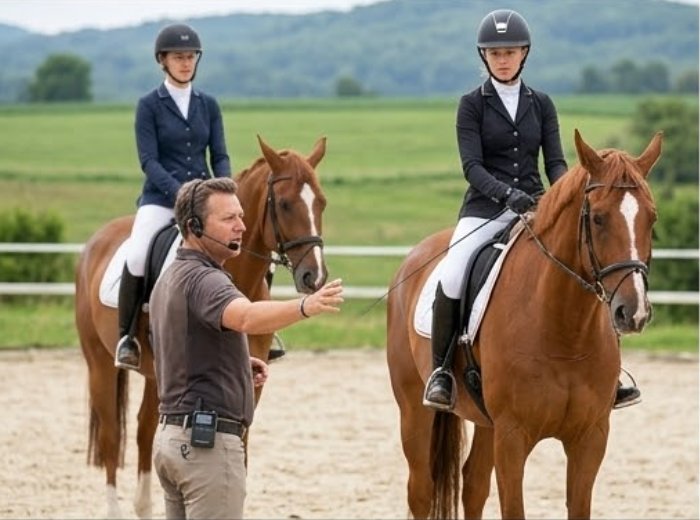
Standing at the edge of a riding arena, watching a coach struggle to be heard over the thunder of hooves and gusts of wind, you quickly realize that traditional shouting has no place in modern horse training. The gap between the instructor's voice and the rider's ear is where confusion often takes root, especially during complex maneuvers like a flying lead change or a collected canter. That's why integrating a Wireless Tour Guide System has become a cornerstone of effective equestrian coaching. It bridges that gap effortlessly, allowing trainers to deliver calm, precise instructions without straining their voice. For anyone serious about improving rider confidence and horse responsiveness, this technology turns every session into a focused, two-way dialogue. I strongly advocate for dedicated equestrian training solutions specifically engineered to handle the rugged conditions of this sport.
RC2468: The Ultra-Light Companion for Ground Work and Trail Lessons
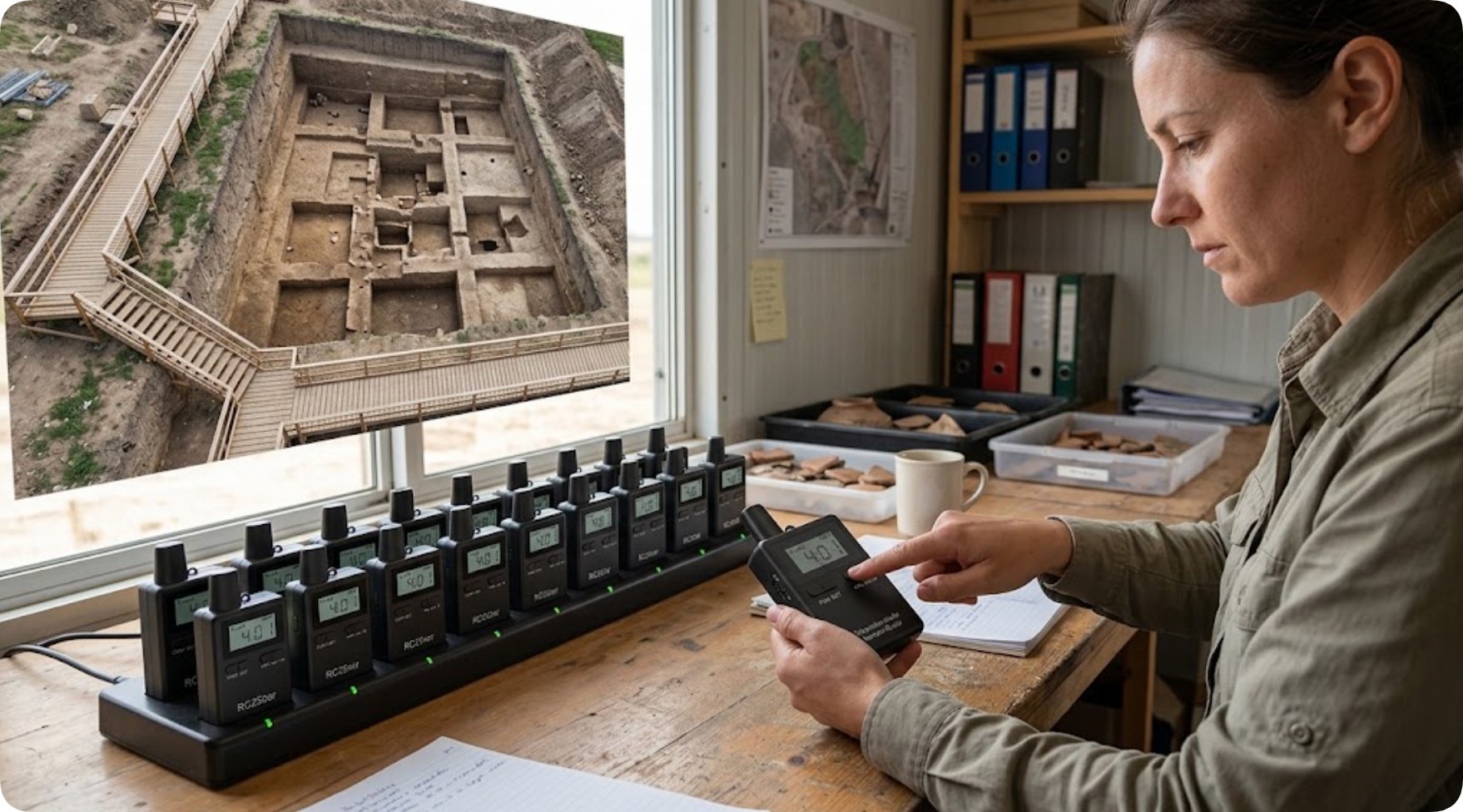
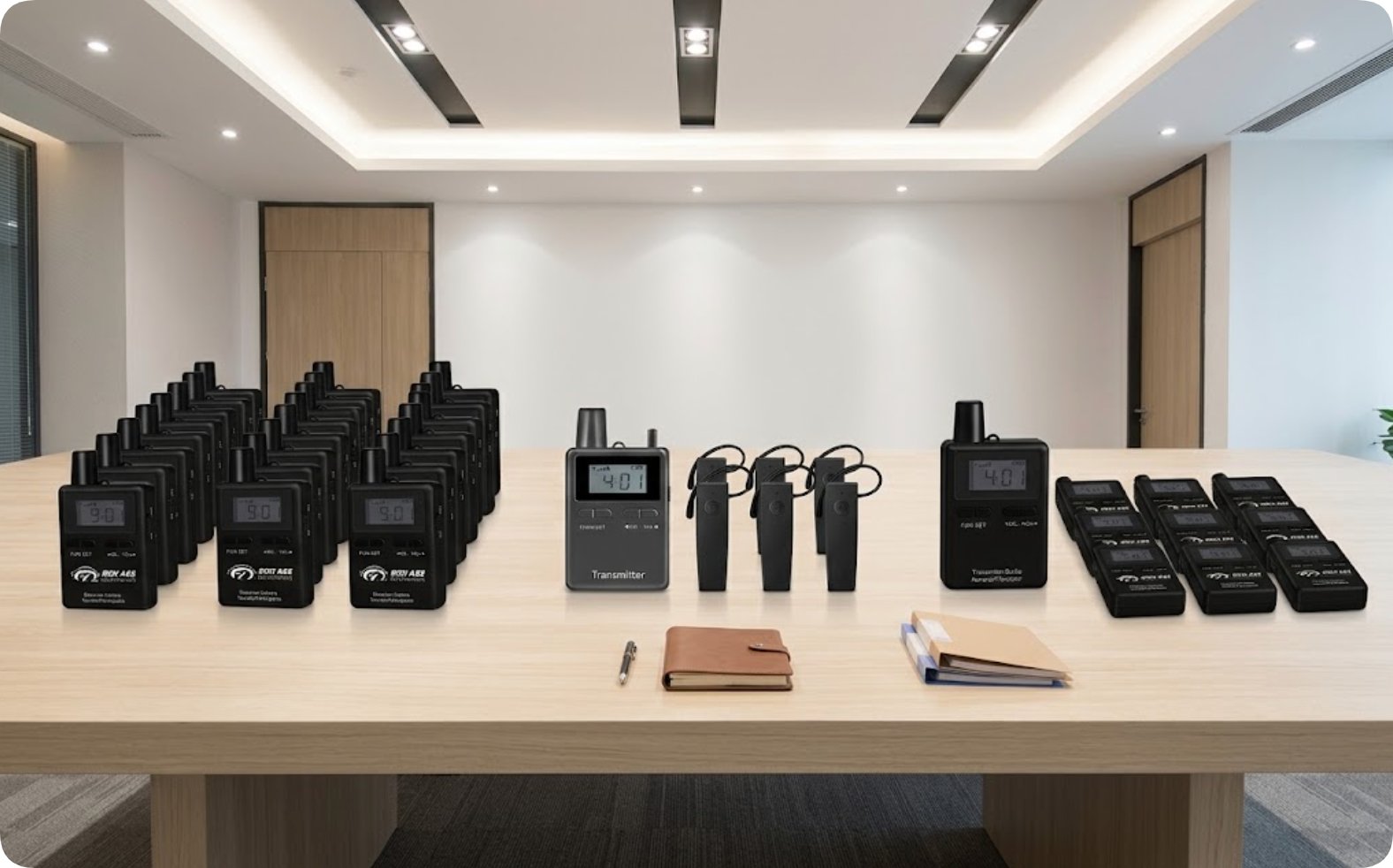
For trainers who value discretion and mobility, the RC2468 stands out as an ideal tool. Weighing just 38 grams, this ultra-light 2.4G wireless tour guide system is purpose-built for low-impact scenarios where extra bulk can be a distraction. During groundwork sessions or trail riding lessons, where the instructor often walks beside or behind the horse, this device shines. The transmitter clips easily onto a collar or belt loop without adding noticeable weight, while the compact receivers fit comfortably under a helmet strap. Its reliable 2.4G frequency ensures stable communication across open fields, making it a favorite for trainers who juggle multiple lessons in different locations or hike to remote training spots. For everyday schooling and beginner rides, the RC2468 delivers all the essential features in a featherlight package.
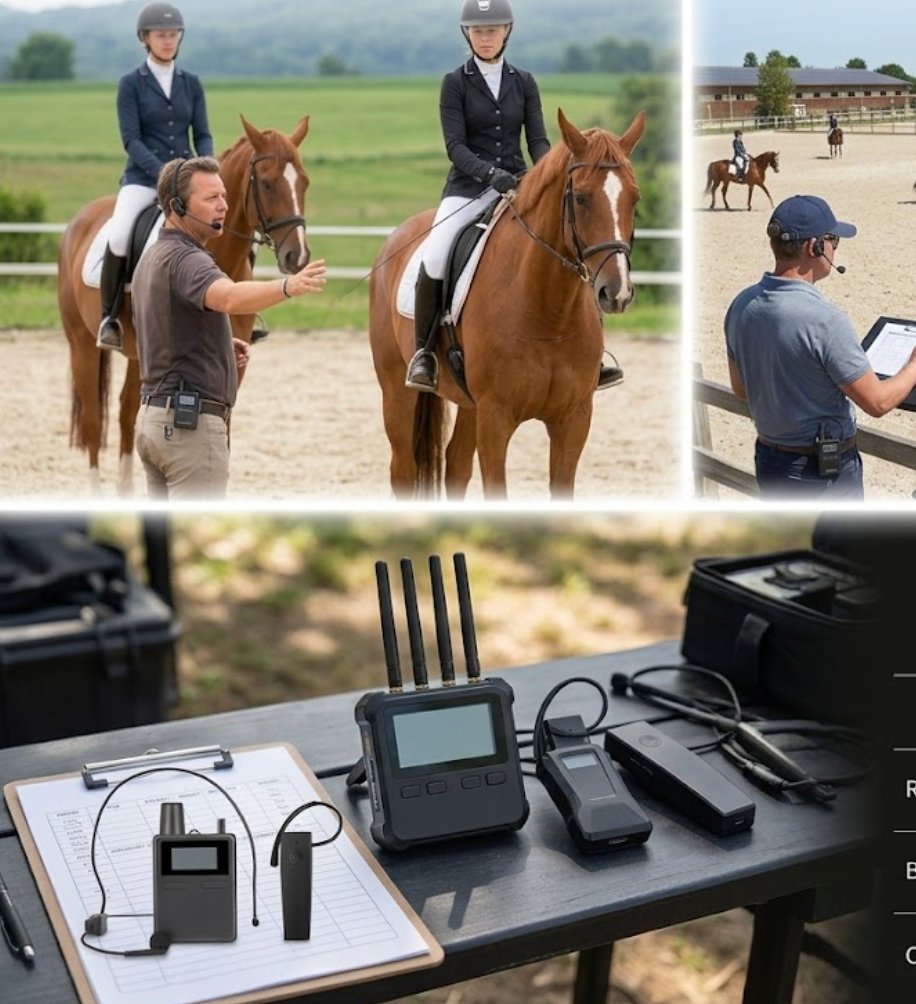
RC8860: Built for High-Motion Outdoor Coaching and Jumping Arenas
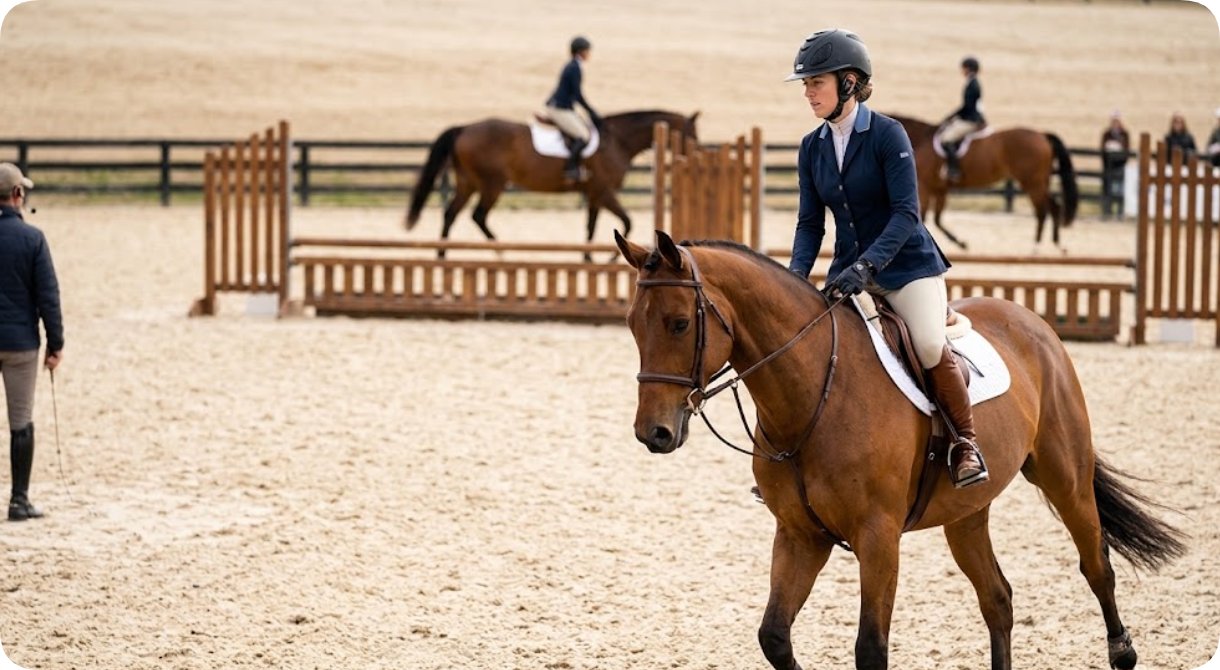
When the pace picks up—think show jumping, cross-country gallops, or advanced dressage tests—the RC8860 becomes the go-to choice. Engineered for high-motion outdoor coaching, this model weighs 59 grams, a slight increase that comes from a sturdier build and stronger transmission capabilities. In field tests, the RC8860 maintained crystal-clear audio even when a rider was cantering at the far end of a 60-meter arena. The transmitter clips securely to a waistband and features tactile buttons that are easy to operate while holding a whip or a stopwatch. This unit is built for professional coaches who need consistent performance in dusty, sunny, or mildly windy conditions. You can explore the full specifications of the RC8860 on its product page.
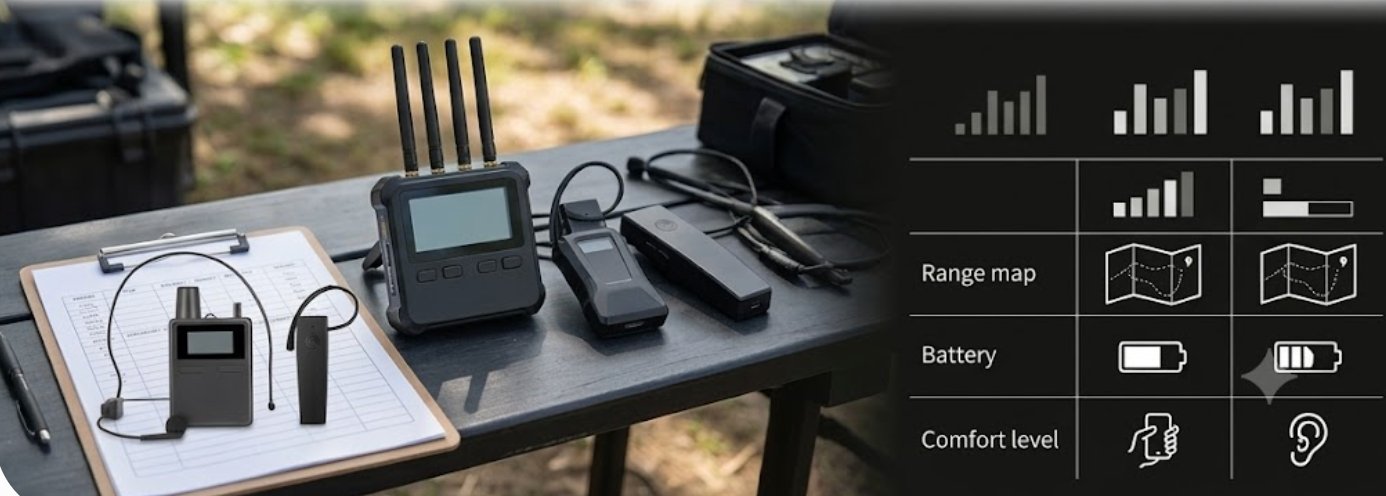
Side-by-Side Comparison: RC2468 vs. RC8860
To help you decide which unit aligns with your coaching style, here is a direct comparison based on key performance metrics.
| Feature | RC2468 | RC8860 |
|---|---|---|
| Weight | 38 g | 59 g |
| Battery Life (Typical Use) | Up to 12 hours | Up to 15 hours |
| Protection Rating | IPX4 (Splash resistant) | IPX5 (Water jet resistant) |
| Ideal Scenario | Ground work, trail lessons, hiking | Jumping, dressage, cross-country |
Both models are part of the RC2468 product family, but their different weights and battery capacities make them suitable for distinct training environments.
How to Choose the Right System for Your Equestrian Program
Choosing between the RC2468 and RC8860 comes down to your typical training conditions. For flatwork lessons, lunging sessions, or beginner trail rides where you stay close to the rider, the RC2468 provides everything you need in a lighter form. Its 38-gram weight means riders barely notice the receiver, which is a significant advantage for younger horses or those easily startled by new gear. Conversely, if your program involves high-speed work, large outdoor arenas, or frequent sessions in variable weather, the RC8860 is the smarter investment. Its IPX5 rating offers superior protection against sweat, rain, and dust, while the extended battery life ensures you won't run out of power during a long competition warm-up. For most professional stables, I recommend keeping both units on hand: the RC2468 for daily schooling and the RC8860 for advanced jumping and cross-country work.
My Take: In my opinion, the right wireless tour guide system transforms equestrian training from a shouting match into a precise, educational dialogue. Whether you choose the ultra-light RC2468 or the rugged RC8860, you are investing in clearer communication and safer training. I encourage you to test these units in your own arena to see the difference firsthand.
Final Thoughts and Next Steps
For more detailed comparisons and use-case studies, please explore our solutions to find the perfect match for your coaching program. The right wireless tour guide system is not just about gear; it is about elevating your entire teaching methodology. When you eliminate the noise and frustration of miscommunication, you free yourself to focus on what truly matters: the partnership between horse and rider. Whether you are training for a local show or preparing for international competition, the clarity and consistency provided by a dedicated system like the RC2468 or RC8860 will pay dividends in performance and safety. Do not settle for shouting across the arena when you can deliver precise, calm instruction from anywhere on the field. That shift alone can transform a frustrated student into a confident competitor.