
.webp)
Selecting the right hardware for a museum requires a balance between signal stability, audio fidelity, and maintenance costs. Here is a technical breakdown of the industry’s leading solutions.

1. UHF vs. 2.4G: Which Frequency Wins?
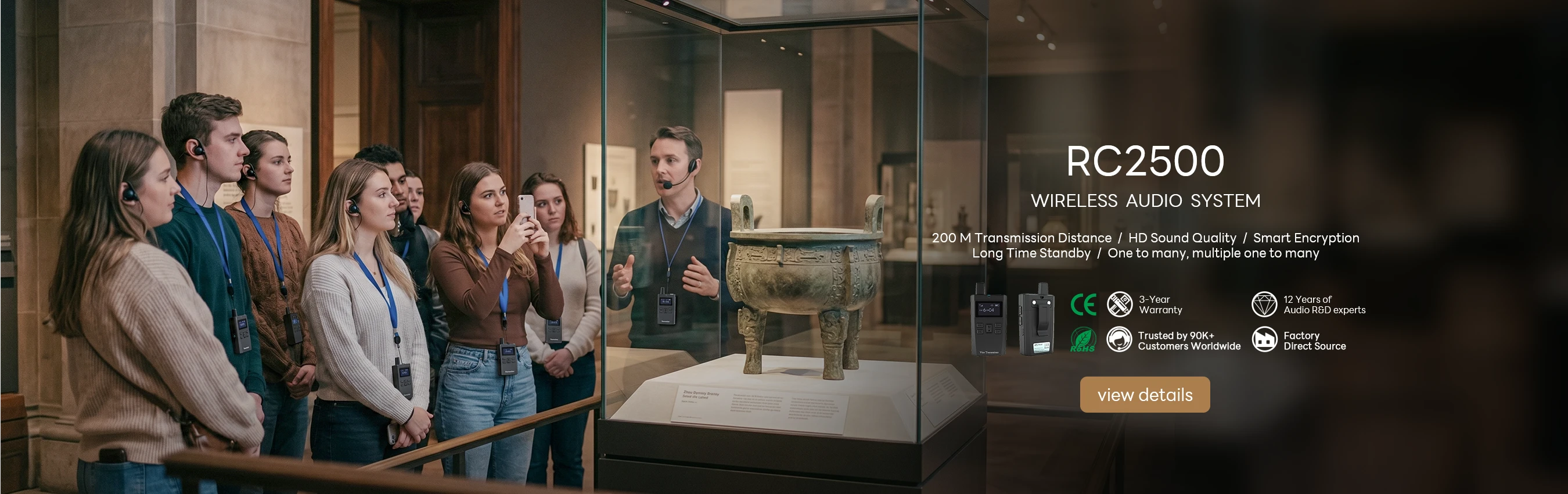
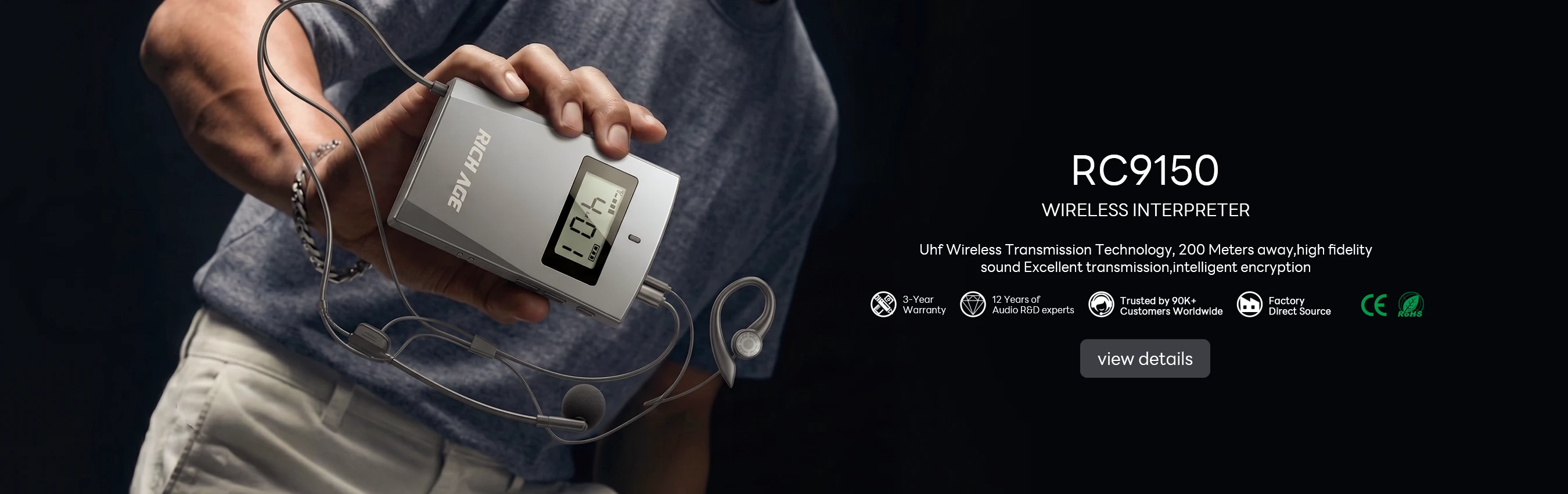
UHF (Ultra High Frequency): Known for its superior penetration. If your museum has thick stone walls or multiple floors, UHF is the gold standard. it avoids signal dropouts and offers a range of up to 200 meters.
2.4G (Digital): Operates on a global license-free frequency. It offers CD-quality sound and is highly resistant to electromagnetic interference, making it ideal for high-tech "Smart Cities" or tech-heavy exhibitions.

2. Manual vs. Automated Interaction
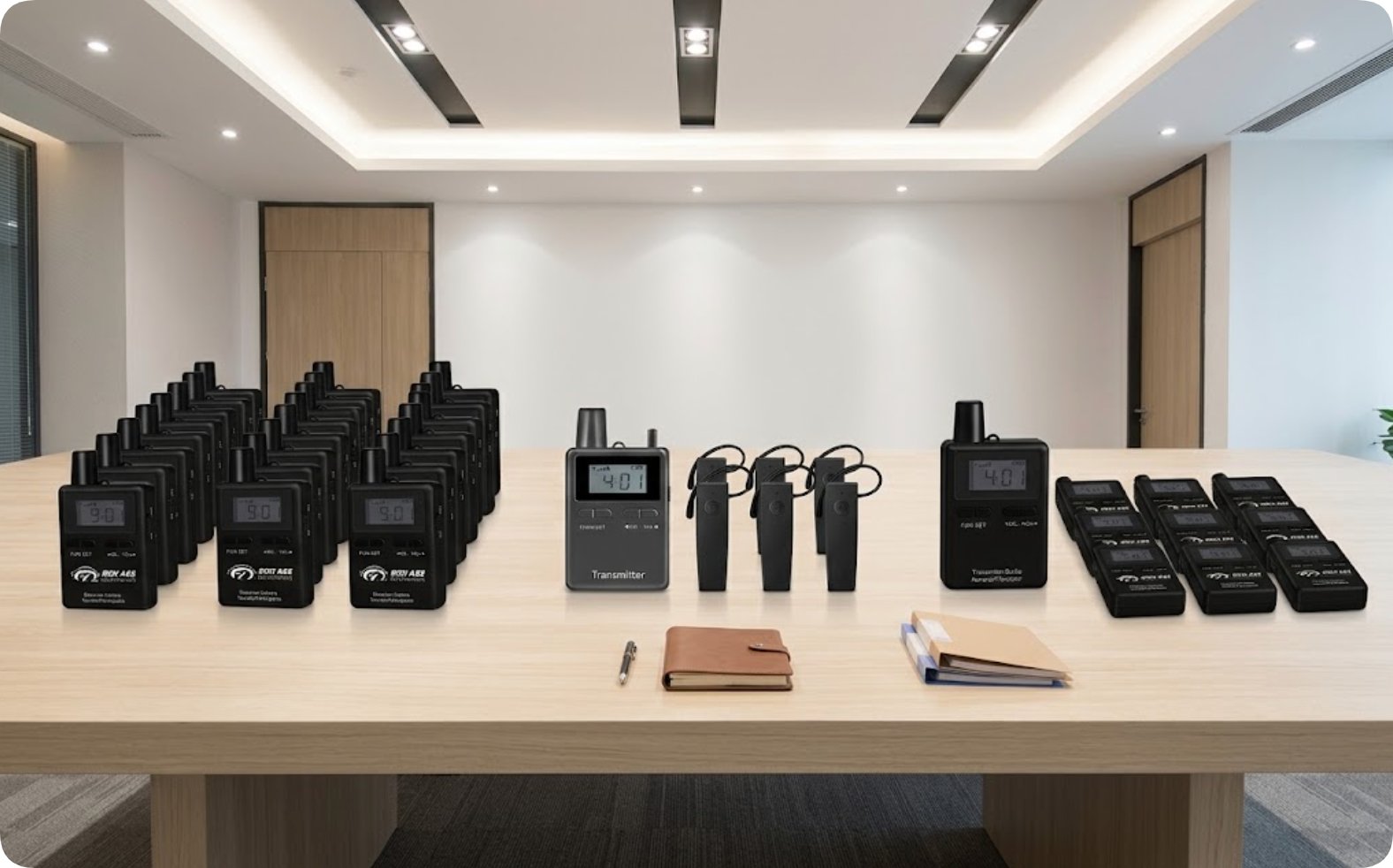
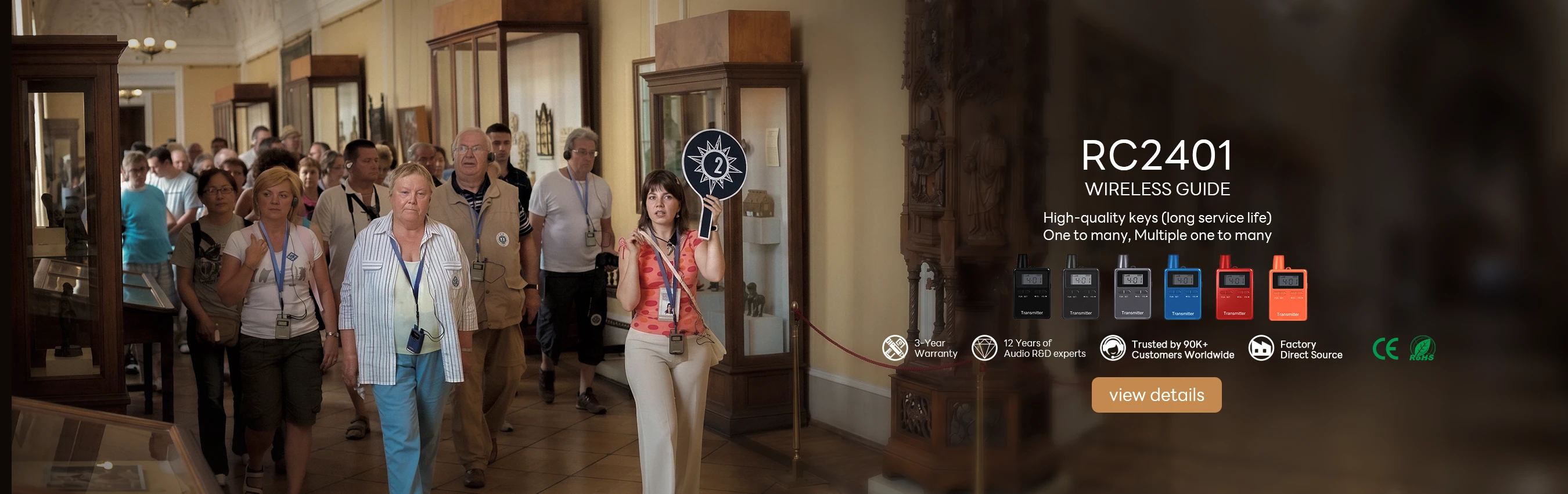
Live Guided Systems: Best for VIP tours where human interaction is key. Features like "one-key synchronization" allow guides to pair hundreds of receivers in seconds.
Automatic Triggering (RFID/Bluetooth): For independent travelers, automated systems trigger audio content as the visitor approaches a specific exhibit. This "Self-Guided" model reduces staffing costs while maintaining a high level of information delivery.

3. Operational Durability and Hygiene
In a high-traffic museum, battery life and sanitization are critical. Look for systems with:
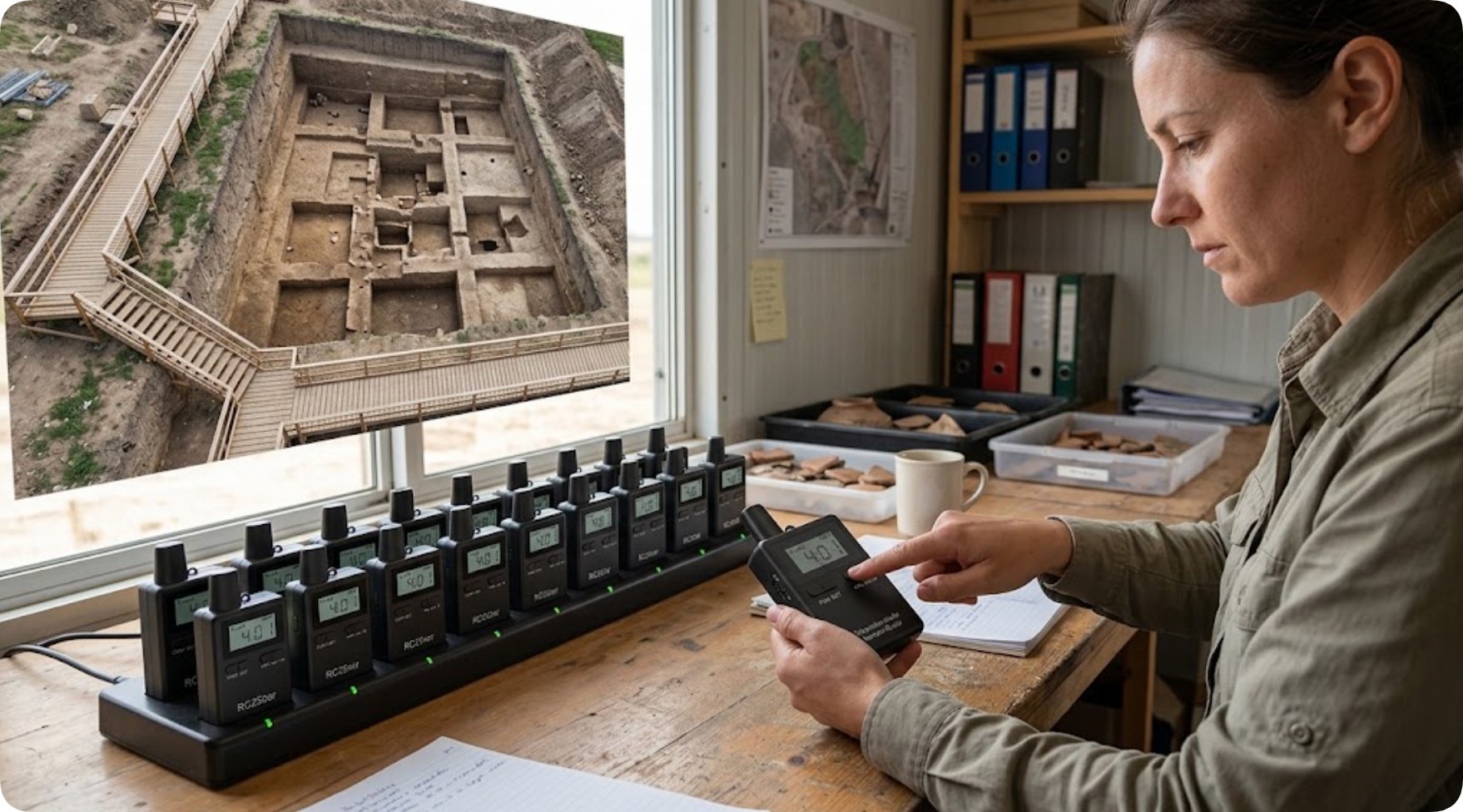
Drop-in Charging Racks: For rapid overnight charging.
Medical-grade Materials: Easy-to-clean surfaces to comply with modern health standards.
Long Battery Life: At least 12-18 hours of continuous use to cover full opening hours.

Museums should prioritize "Scalability." Choose a system that can handle a small 10-person VIP group today and a 500-person international conference tomorrow.