


A factory floor puts tour audio hardware into the hands of first-time visitors who wear gloves, focus on nearby machinery, skip printed instructions, and pass gear between colleagues mid-walkthrough. Unlike a trained volunteer in a house of worship or devices handed out across a quiet museum counter, plant tour equipment cycles rapidly through unfamiliar users across shifts. Building maintenance around how casual visitors actually handle transmitters, receivers, and self-paced guides keeps audio reliable without slowing tour schedules.
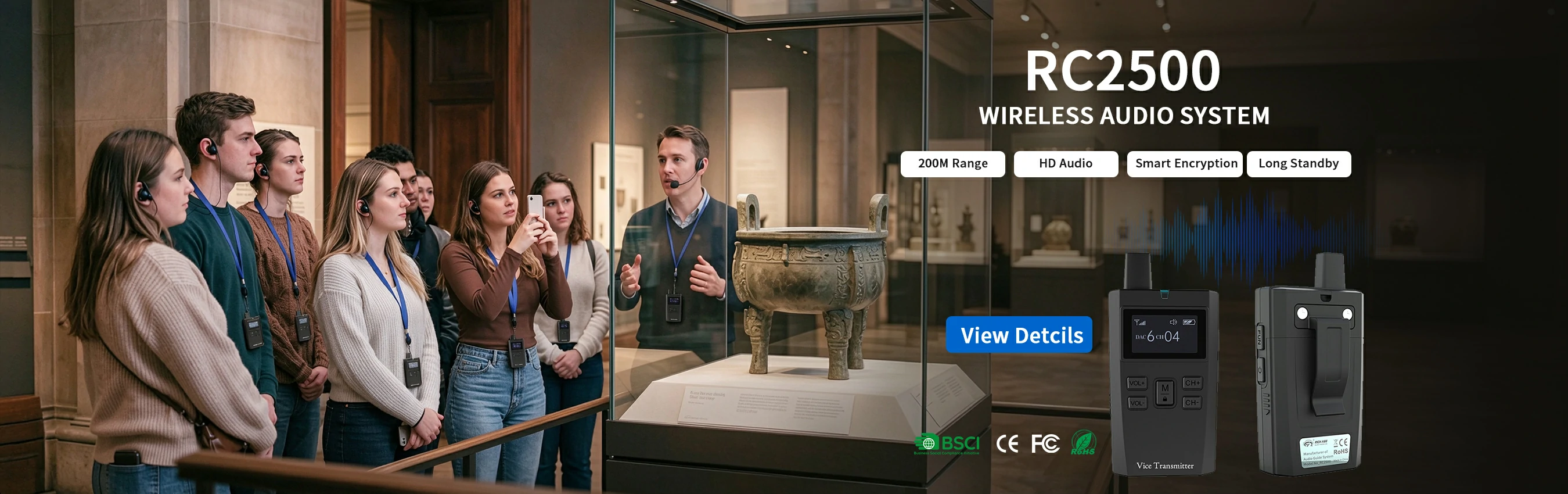
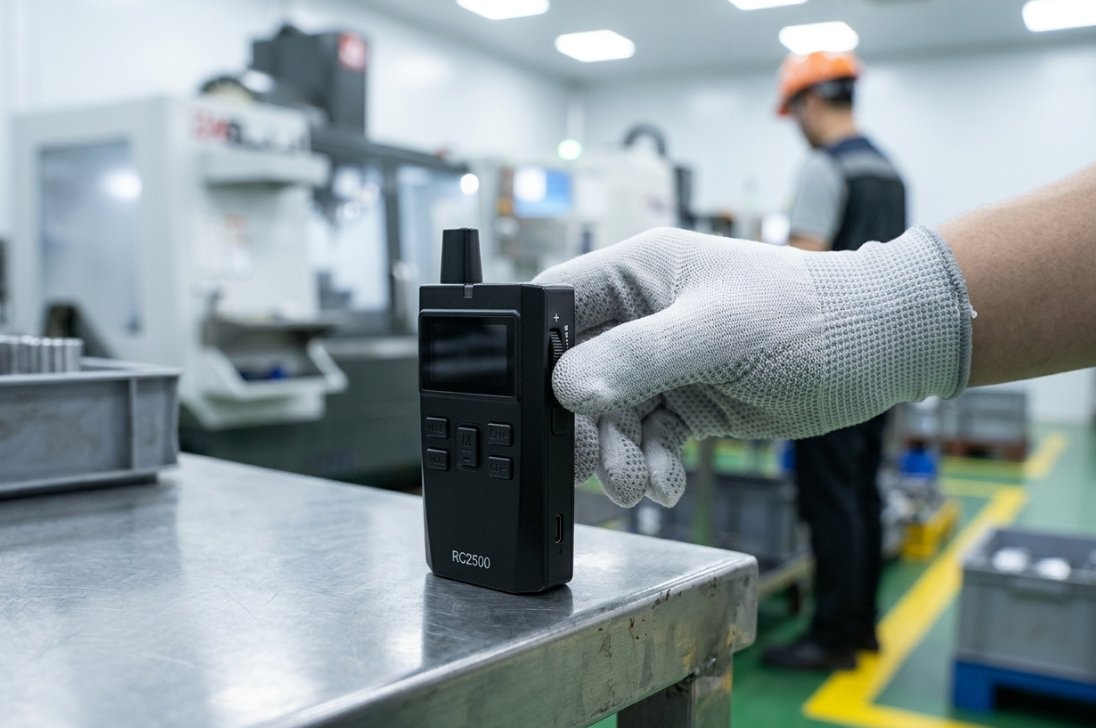
This kit pairs the RC2500 (50-channel PLL transmitter with a 15-hour transmitter battery and 35+ hour receiver standby), the RC085 (470–510 MHz UHF receiver with 100 channels and up to 20 hours of receiver runtime), and the 2.8-Inch Semi-Auto Digital Audio Guide (0–9 keypad triggering up to 9,999 stored files with 18-hour battery life). For routing context that keeps groups away from peak noise zones, see our Factory Tour Noise Reduction Audio Solutions guide.
Why Visitor Handling Stresses Plant Tour Equipment
During a single plant visit, one receiver can be signed out at reception, adjusted by someone wearing protective gloves, handed to a teammate near a welding or assembly cell, set down on a metal workbench while a visitor takes a photo, and dropped into a plastic return bin at the end of the route. Across two or three visitor groups per day, minor handling habits compound quickly.
Guides and supervisors handle transmitters routinely, whereas visitors treat receivers like disposable loaner phones. Rather than relying on long written rules that guests rarely read on arrival, effective plant maintenance identifies the specific failure modes caused by everyday visitor habits and runs short, targeted checks before tours begin.
Volume Pinned at Maximum: Transmitter Output and Earphone Wear
Leaving transmitter or receiver volume turned all the way up is one of the most frequent habits on busy shop floors. The RC2500 transmitter delivers 10 mW across a 50 Hz–8 kHz audio response and can run continuously without complaining, while the receiving earpiece and battery bear the strain when peak levels stay clipped or pushed hard for hours.
Driving an earpiece near maximum output over long tours increases current draw on the cell and makes vocal peaks sound harsh or clipped, prompting listeners to ask guides to repeat instructions. Adding a quick post-return check—resetting volume controls to a three-quarter reference point and checking audio tone clarity before docking—prevents the next group from starting at harsh maximum volume. Demonstrating the RC2500 one-key mute during hand-out also gives users a fast way to silence audio instead of twisting the volume wheel mid-tour. Full control details appear on the RC2500 Digital Tour Guide System Price page.
Receivers Set on Workbenches: Dust, Swarf, and Screen Care
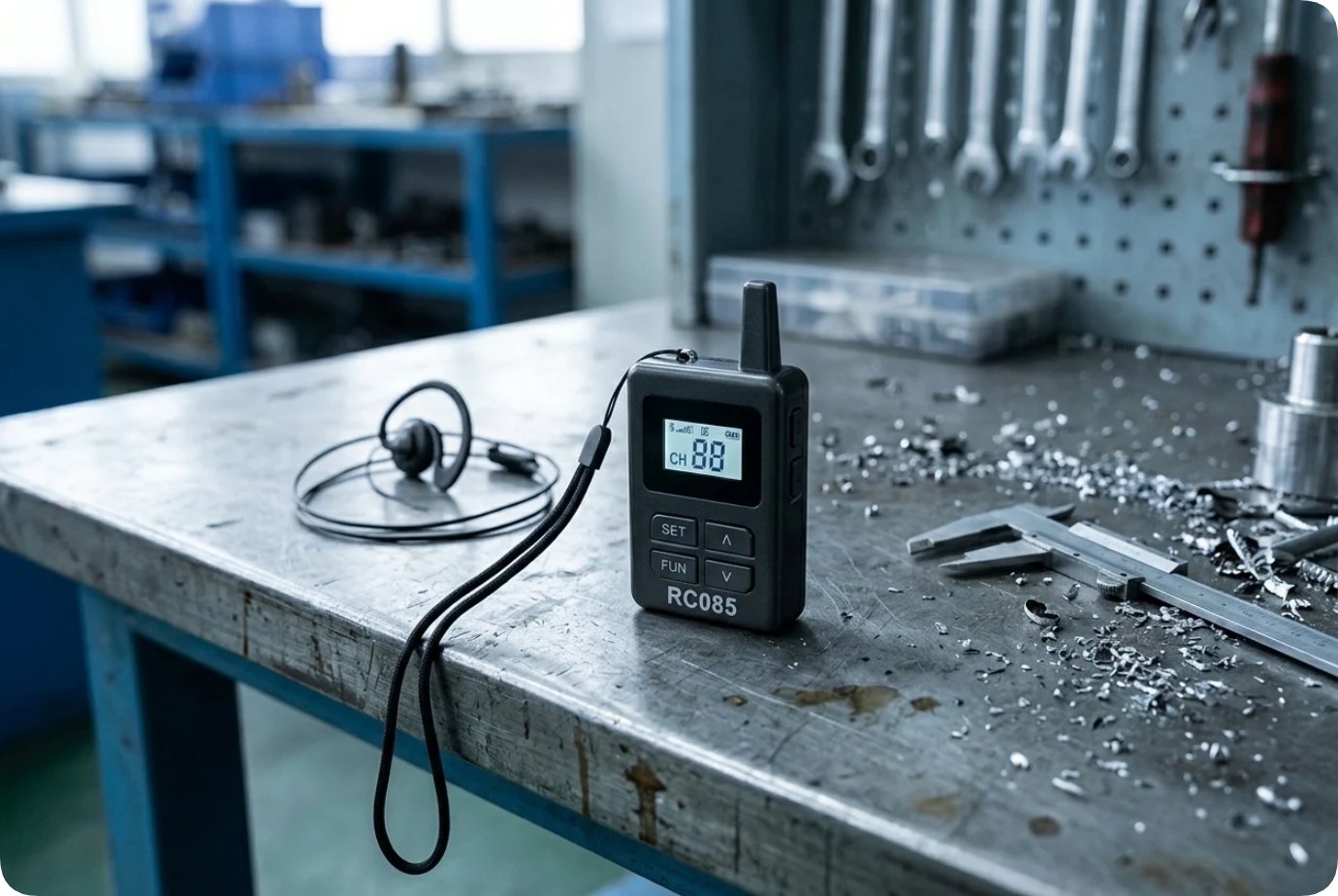
Setting a receiver down on a shop bench exposes its housing, speaker port, and display surface to whatever settles on that station—fine metal swarf or coolant mist near machining bays, cardboard fibers near packaging lines, or abrasive dust in heavier industrial areas. At 60 grams, the RC085 is light enough to clip onto a lanyard or slip into a pocket, yet when laid flat on a bench with its LCD facing up, it sits right where hand tools or calipers can bump it.
Two practical controls keep bench wear down: instruct visitors at hand-out to keep receivers on their lanyard or in a pocket rather than on workbenches, and run a brief morning check on each RC085 using a soft dry brush across the speaker mesh and a lint-free wipe on the LCD screen while listening for muffled audio. For long shifts in dusty bays, optional head-worn and lapel microphones listed on the RC085 Portable Tour Guide System Wholesale page help guides maintain steady hands-free voice pickup.
Concrete Drops and Delayed Hardware Faults
A receiver dropped onto concrete or tile rarely fails on the spot. Most units continue passing sound through the remainder of the tour, so minor impacts go unreported until seam flex appears, channel controls feel loose, or internal battery contacts shift enough to cause intermittent power loss during vibration.
Encouraging visitors to wear the RC085 lanyard prevents many one-handed slips in the first place. On the bench, pressing gently along case seams at return or during weekly checks spots flexing or clicking early, power-cycling verifies contact stability, and logging known impacts—retiring a unit to backup status after a third recorded hit—keeps active tour stock dependable.
Channel Drift Across Groups vs. Self-Paced Keypad Guides
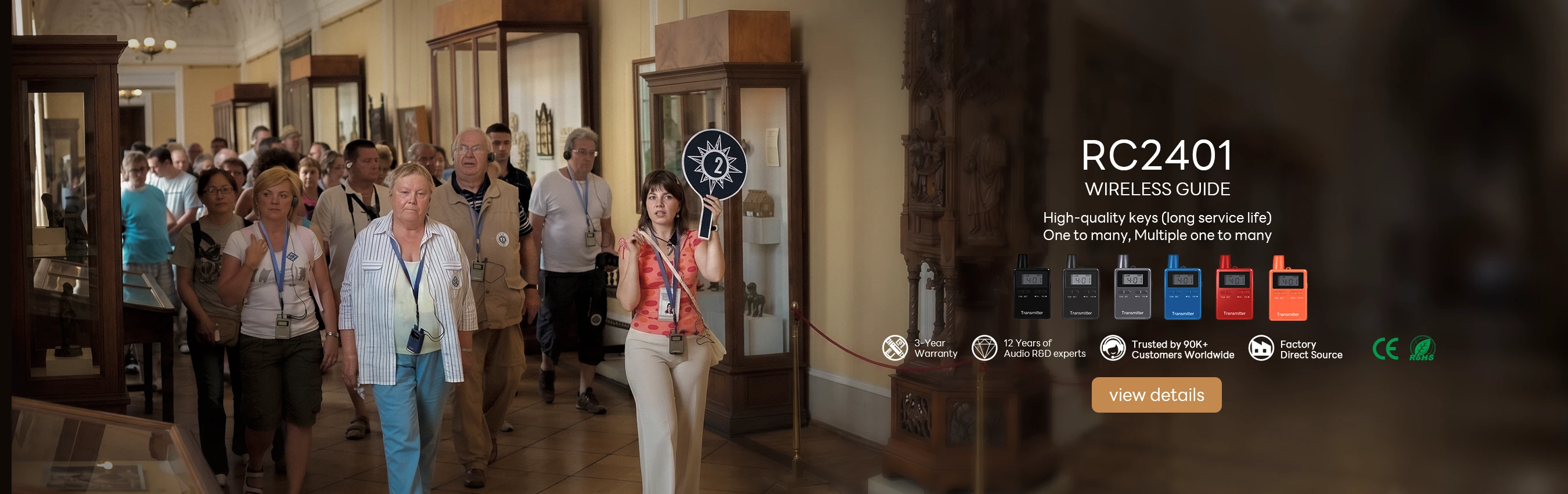
When visitors swap receivers mid-tour or return units out of order, a receiver paired to one group can end up with another party later in the day. While the RC2500 provides 50 channels and one-key sync to re-align units quickly, labeling storage rows by channel bank and returning each receiver to its matching slot prevents mix-ups before morning dispatch.
In mixed factory visits that include a self-paced showroom or display zone, the 2.8 Inch Display Automatic Museum Audio Guide avoids group-channel drift completely because visitors enter exhibit numbers on a 0–9 keypad to play local files from up to 9,999 stored tracks. A quick two-minute morning check—testing one receiver per channel row against its transmitter and re-syncing any mismatched unit—prevents opening-minute delays when a group arrives.
Uncharged Returns and Overnight Battery Care
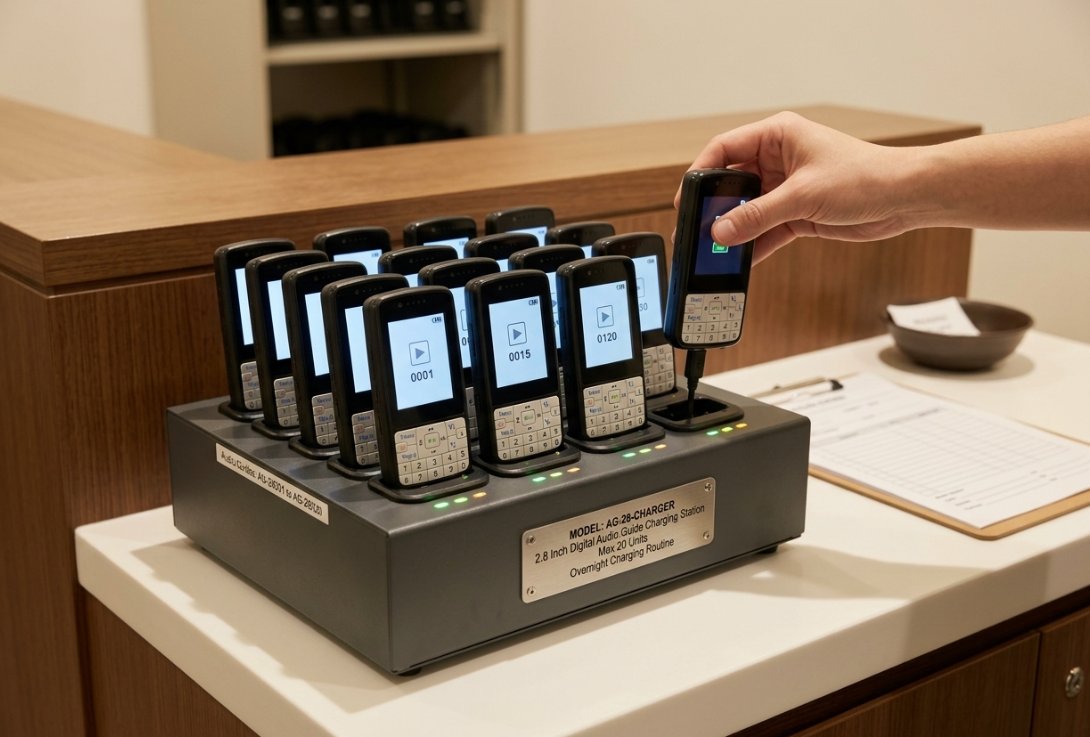
Leaving returned units uncharged inside a closed storage case is easy to overlook after a late afternoon tour. The 2.8-Inch guide provides roughly 18 hours of runtime per charge via Micro USB and pairs with a multi-slot charging box so storage doubles as charging, while the RC2500 receiver (35+ hours standby) and RC085 receiver (up to 20 hours runtime) handle occasional busy evenings better than multi-day deep discharge.
Repeatedly storing cells at zero charge over weekends accelerates battery aging. Docking every returned unit right away and scanning charging indicator lights before locking up on Friday afternoon takes seconds and avoids starting Monday morning with dead receivers.
Supervisor Quick-Reference Maintenance Table
Use this summary table at the tour desk or charging station to align daily checks with the most common factory handling patterns:
| Tour Handling Habit | Primary Component Affected | Routine Check | Pull-From-Service Trigger |
|---|---|---|---|
| Volume left at maximum | Earphone driver and battery draw | Reset to three-quarter level and check tone clarity | Repeated clipping or distortion across tours |
| Receiver placed on workbench | Speaker mesh and LCD display surface | Soft dry brush on mesh, lint-free wipe on LCD, audio check | Persistent muffled sound after cleaning |
| One-handed carry or floor drop | Housing seams and battery contacts | Light seam press check and power-cycle test | Seam flex/click or third logged impact |
| Cross-group unit swapping | Channel alignment and tour start time | Check one unit per row against transmitter and re-sync | Failure to hold channel sync |
| Returned uncharged in case | Rechargeable battery cycle health | Dock immediately at return and verify charge indicators | Inability to charge or hold runtime |
Short daily habits catch wear before it disrupts a scheduled visit. You can review the broader lineup and charging options on the Wireless Tour Guide System Manufacturer Direct page.
Three Clear Rules for the Hand-Out Desk
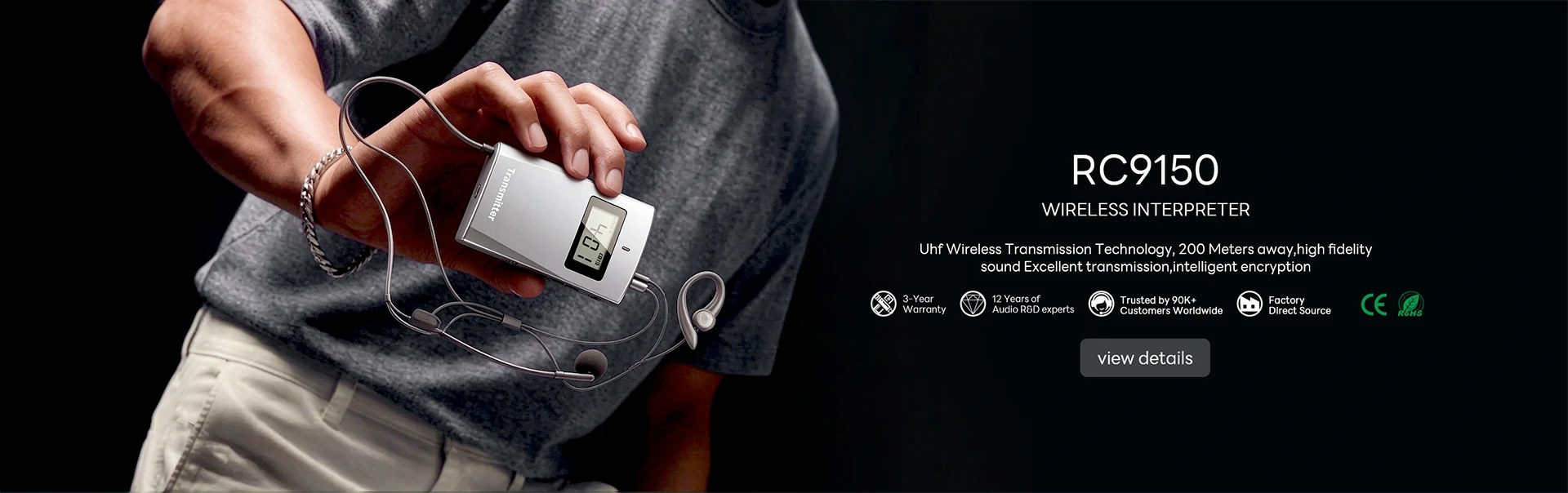
A brief hand-out routine sets expectations in plain language: wear the receiver on its lanyard or keep it in a pocket rather than placing it on workbenches; return equipment directly to staff rather than tossing it into a bin; and report any drop right away so a quick check can catch hidden damage early. For broader deployment and zoning examples across venues, see Wireless Audio Guide Application Solutions and RC9150, RC2468 and RC2406.
Frequently Asked Questions
1. How often should a factory tour audio kit be checked during busy tour weeks?
Running a quick morning check before tours start and completing a fuller seam, mesh, and charging review once a week keeps wear visible across high-turnover visitor schedules.
2. Why is docking returned units immediately important for battery longevity?
Plugging units into charging slots upon return and checking indicator lights before closing up prevents multi-day zero-charge storage that ages rechargeable cells faster.
3. How does the 2.8-Inch Semi-Auto guide fit into a factory tour workflow?
The 2.8-Inch Semi-Auto guide supports self-paced exhibit listening via its 0–9 keypad and stored tracks without channel pairing, pairing naturally with live wireless systems like the RC2500 during active plant walkthroughs.
4. How do staff catch subtle drop damage before it fails mid-tour?
Checking case seams for flex or clicking, verifying power-cycle stability, and tracking repeated impacts move questionable receivers to inspection before they fail during a live tour.