
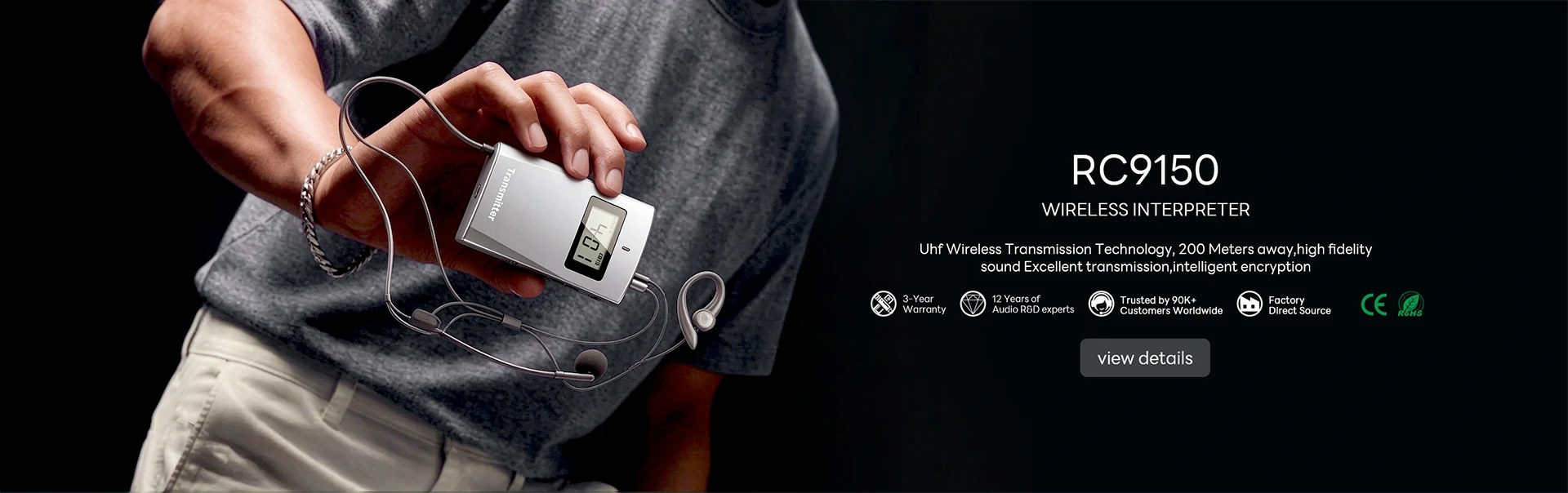
RC2408, RC9150, and RC2402: Shift Handover Kit Logs for Mine and Field Sites
On expansive mining, quarry, and oilfield sites, tour and inspection audio rarely breaks down because hardware goes missing—it causes friction when incoming shifts lack a written record of assigned channels, battery endurance margins, pairing configurations, and charging ports. Long distances between briefing rooms and active work zones make verbal handovers unreliable by the time a relief crew takes over.
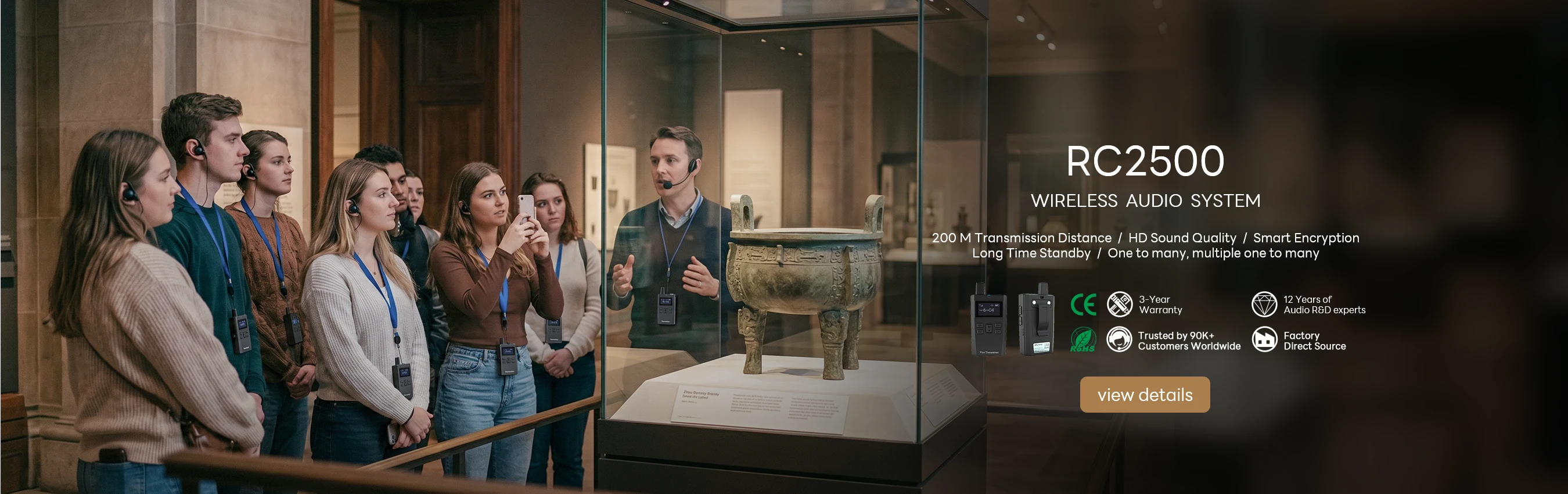
The RC2408, RC9150, and RC2402 all operate across the 2403–2483 MHz (2.4 GHz) band with a 1–200 m rated range, yet each model differs in channel count (80, 100, and 50), battery runtime, weight, and charging connector. Recording verified specifications alongside shift checkout notes gives supervisors an accurate baseline between shifts.
💡 Why Written Kit Logs Outlast Verbal Shift Handovers
Informal verbal notes break down when multiple crews rotate across heavy-equipment zones or staggered contractor windows. A written kit log capturing model ID, assigned channel block, speaker configuration, and observed battery state removes guesswork at shift change and prevents overlapping audio when separate teams operate along shared haul roads or benches.
Channel Allocation and Multi-Crew Separation Across Shifts
Across the 2403–2483 MHz band, channel capacity determines how easily supervisors partition concurrent groups: the RC9150 2.4G High Fidelity Audio Guide provides 100 selectable channels, the RC2408 Long Range Wireless Audio Guide provides 80 anti-interference channels, and the RC2402 Two Way Wireless Tour Guide System provides 50 channels.
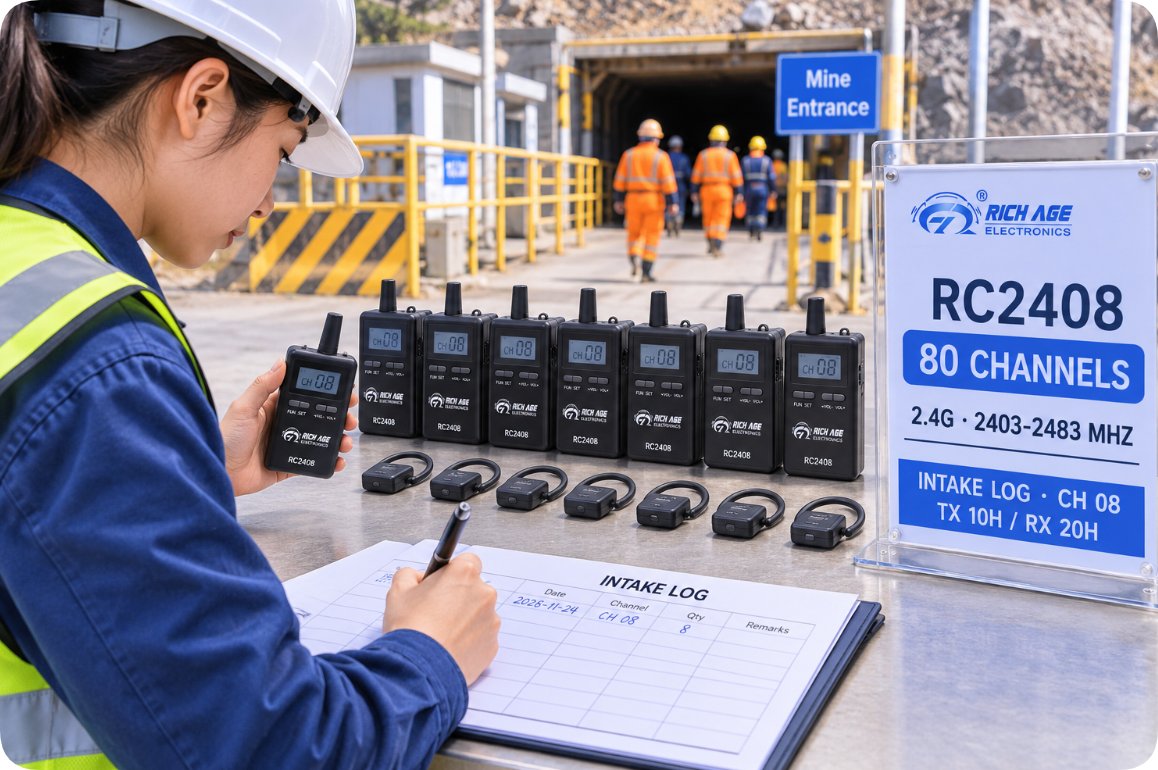
Logging explicit channel blocks per crew in the shift book—rather than relying on memory—keeps morning and afternoon contractor briefings separated even when routes intersect on site.
🔋 Battery Endurance vs. Extended Field Shifts
Battery endurance directly affects whether a transmitter completes extended site tours without mid-shift swaps. The RC9150 pairs 3.7V 1800 mAh batteries on both ends for a rated 15 h transmitter runtime and 35+ h receiver runtime, making it well suited for longer multi-leg site rotations.
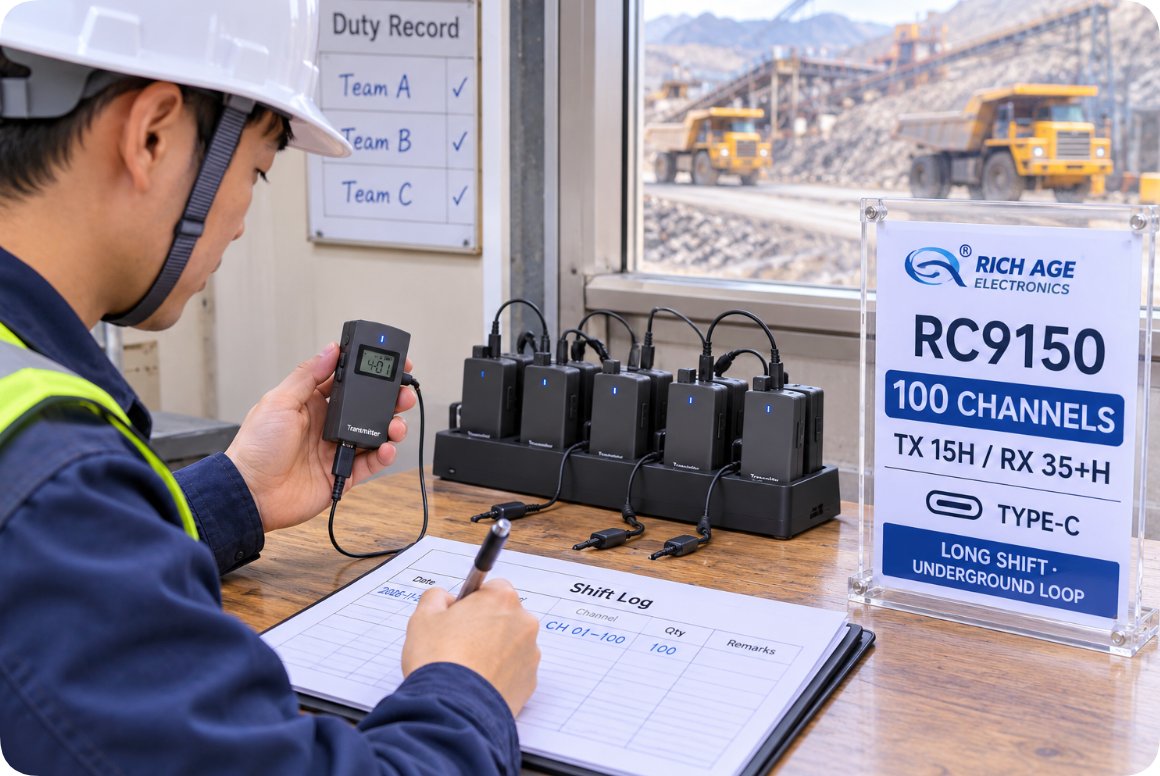
Both the RC2408 and RC2402 are rated for 10 h transmitter runtime (3.7V 1500 mAh) and 20 h receiver runtime (3.7V 1000 mAh). Recording actual hours deployed per shift helps supervisors decide when a spare transmitter or backup kit is required for back-to-back briefings.
📡 Pairing Checks, Two-Way Talk, and Charging Connectors
Before crews enter active zones, verifying pairing status prevents audio dropouts and clarifies speaking permissions: RC2402 supports one-click frequency synchronization and intelligent encryption, RC2408 adds one-key synchronization and two-way communication so a second speaker can respond while listeners stay tuned, and RC9150 supports two-way multi-talk with dual transmitters.
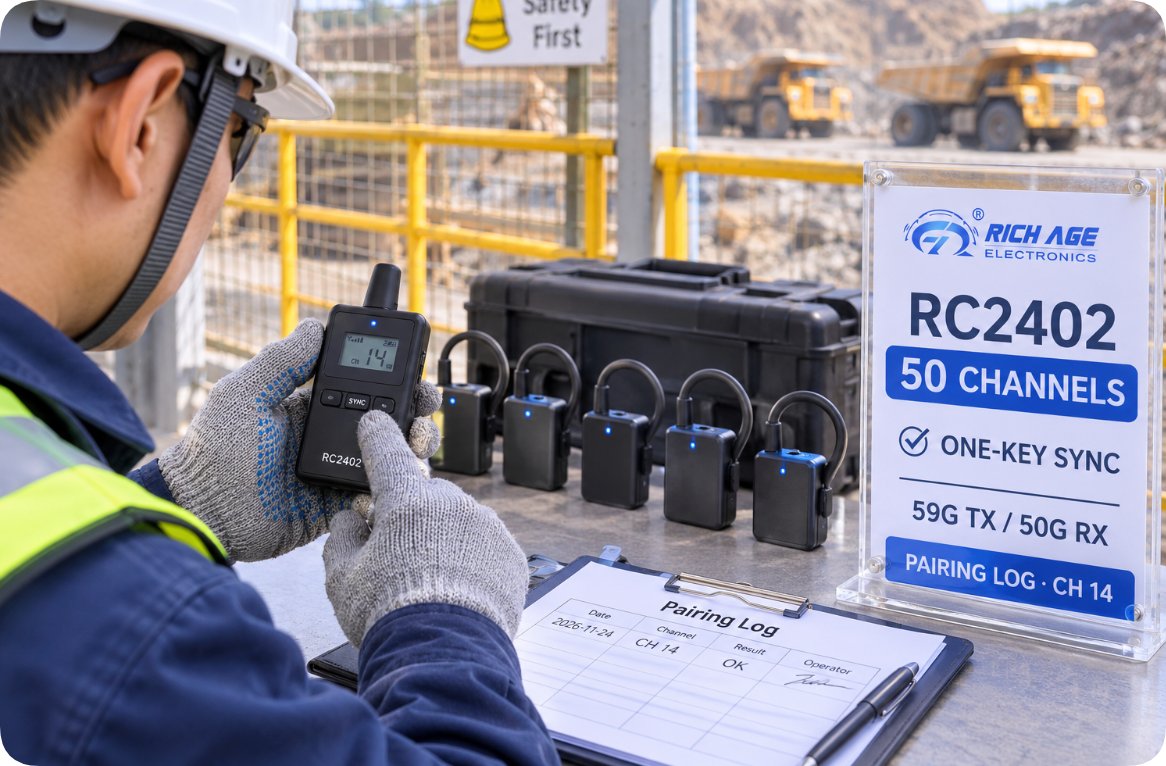
At the charging bench, connector types differ across the three models: RC9150 charges via USB Type-C, whereas both RC2408 and RC2402 use a DC port. Stocking both Type-C leads and compatible DC adapters—and logging each kit's charging port in the shift book—avoids turnaround delays between shifts.
Verified Specification Reference for Shift Supervisors
The table below consolidates published specification values across the RC2408, RC9150, and RC2402 for quick shift-log reference.
| Kit Log Parameter | RC2408 | RC9150 | RC2402 |
|---|---|---|---|
| Frequency Band & Range | 2403–2483 MHz; 1–200 m | 2403–2483 MHz; 1–200 m | 2403–2483 MHz; 1–200 m |
| Selectable Channels | 80 channels | 100 channels | 50 channels |
| TX / RX Runtime | 10 h / 20 h | 15 h / 35+ h | 10 h / 20 h |
| TX / RX Battery Capacity | 1500 mAh / 1000 mAh (3.7V) | 1800 mAh / 1800 mAh (3.7V) | 1500 mAh / 1000 mAh (3.7V) |
| TX / RX Weight | 59 g / 50 g | 97.5 g / 97.5 g | 59 g / 50 g |
| Charging Connector | DC Port | Type-C | DC Port |
| Frequency Response | TX 50 Hz–200 kHz / RX 50 Hz–12 kHz | 20 Hz–8 kHz | TX 50 Hz–200 kHz / RX 50 Hz–12 kHz |
| Certifications & Warranty | CE, RoHS; 1-year mainboard warranty | CE, FCC, RoHS; 1-year limited warranty | CE, EMC, LVD, RED, RoHS; 1-year limited warranty |
Separating Published Specs from Site Observation Notes
Written logs work best when published specifications remain distinct from site-specific field observations. None of these three product pages lists an IP ingress rating or operating temperature range, and warranty coverage varies by model (mainboard-only on RC2408 vs. 1-year limited coverage on RC9150 and RC2402). Recording dust, moisture, or impact observations in a separate remarks column keeps equipment histories clear across months of operation.
For broader fleet planning and high-noise industrial audio options, see bolting or packing a mine visit kit before the first crew arrives, Industrial Plant Tour Noise Cancelling Headsets, Tour Guide System Comparison & Buyer Guide, and the Wireless Tour Guide System Manufacturer Direct catalog.
Frequently Asked Questions
1. How many channels do the RC2408, RC9150, and RC2402 provide for multi-crew sites?
The RC9150 provides 100 selectable channels, the RC2408 provides 80 channels, and the RC2402 provides 50 channels across the 2403–2483 MHz band, giving supervisors distinct channel capacities for separating concurrent crews or contractor groups.
2. How do transmitter and receiver battery runtimes compare across the three models?
The RC9150 delivers 15 h transmitter and 35+ h receiver endurance on 1800 mAh cells, while both the RC2408 and RC2402 deliver 10 h transmitter (1500 mAh) and 20 h receiver (1000 mAh) endurance.
3. Which charging ports do supervisors need to support at the shift charging bench?
The RC9150 uses a USB Type-C charging port, whereas both the RC2408 and RC2402 charge through a DC port, requiring both Type-C cables and DC adapters when charging mixed fleets between shifts.
4. How do unit weights compare for full-shift wear on active work sites?
The RC2408 and RC2402 each weigh 59 g for the transmitter and 50 g for the receiver, while the RC9150 weighs 97.5 g for both transmitter and receiver.