
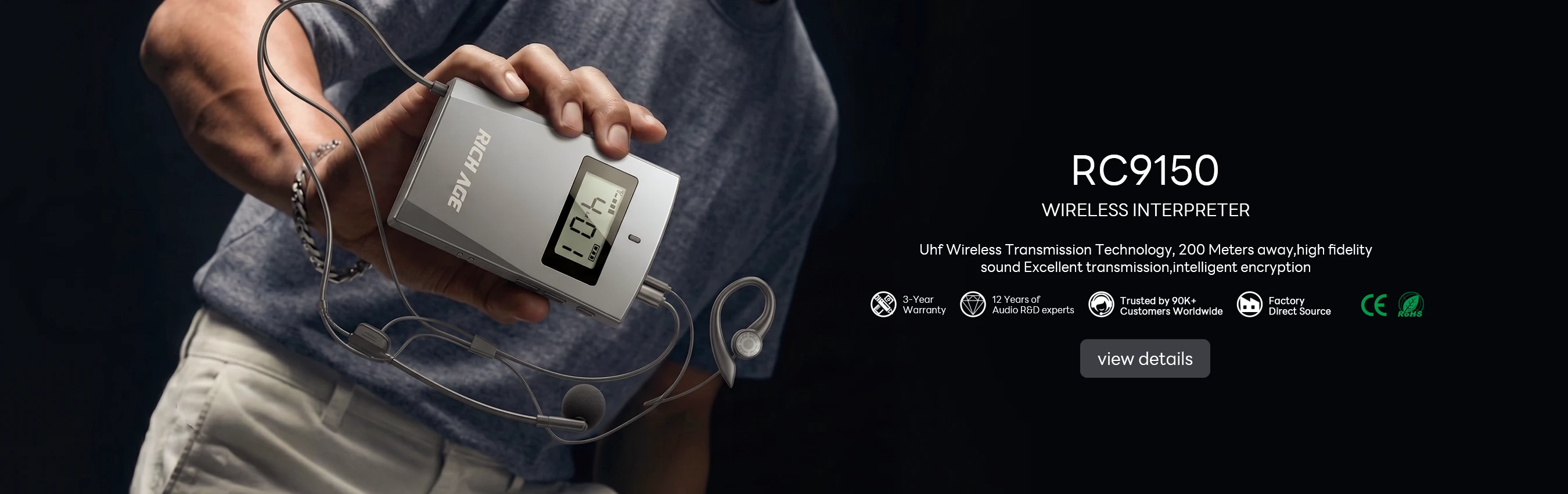
.webp)
I. Introduction: Not All Wireless Systems Are Created Equal
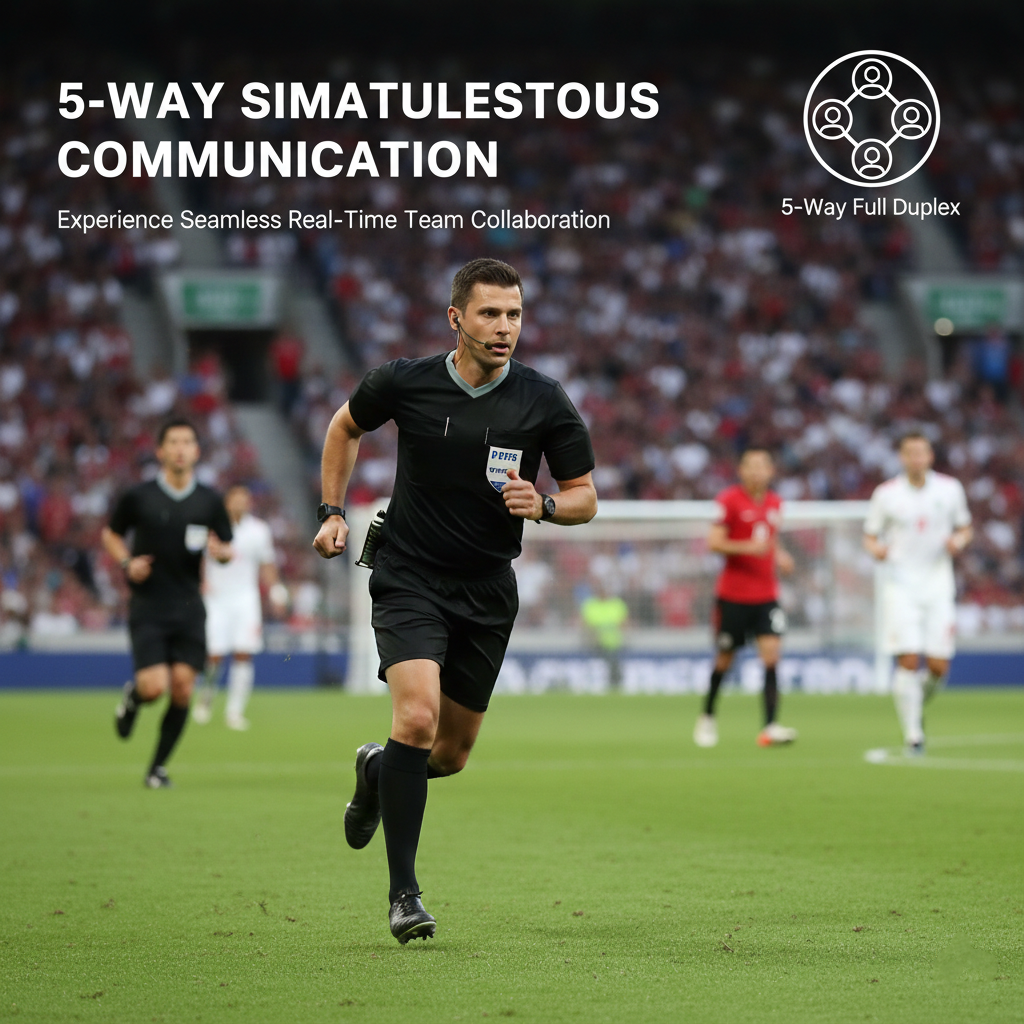
While a standard tour guide system is "one-way," refereeing requires Full-Duplex technology—where everyone can speak and hear simultaneously without pushing a button (Hands-free).

II. The Must-Have Technical Specs for Referees
Full-Duplex Communication: Unlike a Walkie-Talkie (Half-Duplex), referees need an open line where 3–6 people can talk at once, just like a conference call.
Encryption and Security: To prevent "eavesdropping" by coaches, media, or fans, the signal must be digitally encrypted (AES-128 or higher).
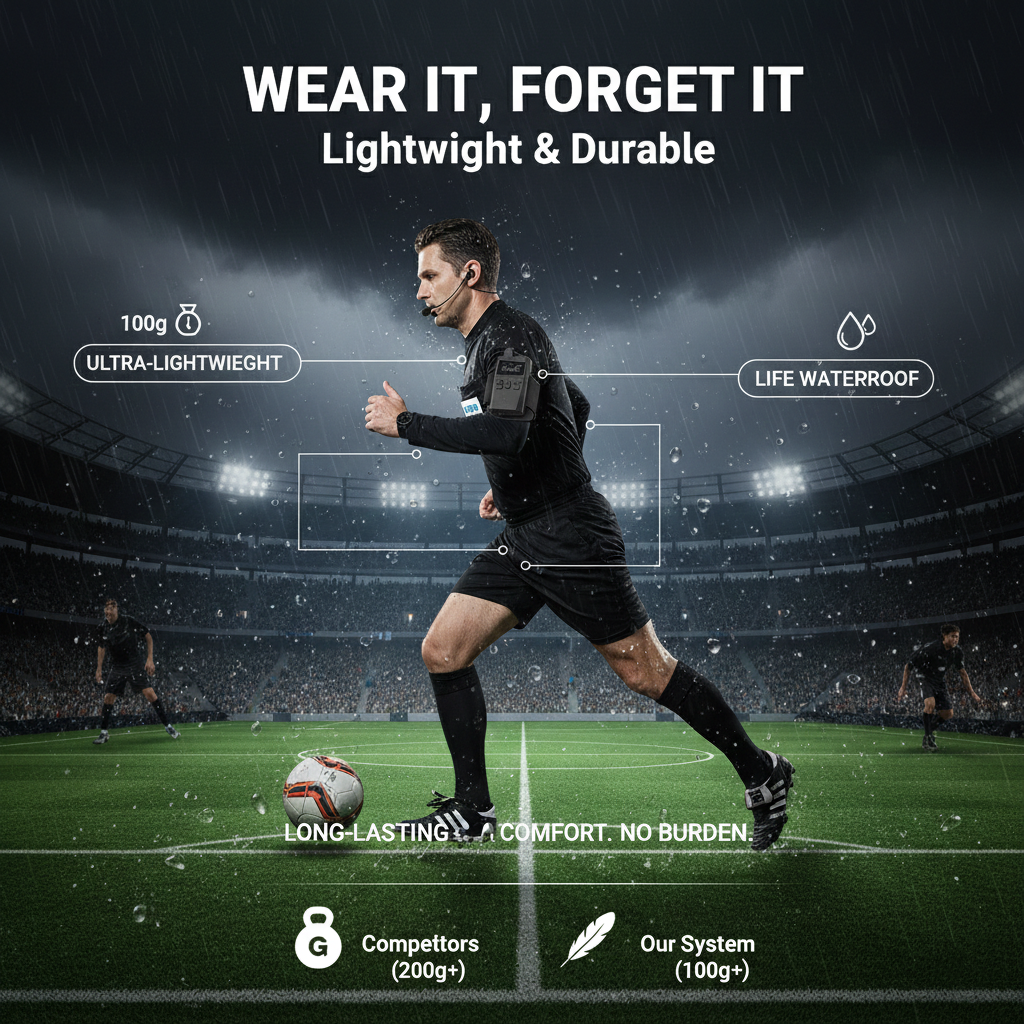
Environmental Durability (IP67 Rating): Referees operate in rain, mud, and extreme heat. The "transceivers" must be waterproof and shock-resistant.
Audio Latency: In sports, a 0.5-second delay is too long. The system must have near-zero latency (Ultra-low latency) to ensure the call is made in the "live" moment.
III. UHF vs. 2.4G/5G for Sports
2.4G/5G Systems: Excellent for high-fidelity audio and global use, but can be crowded in "smart stadiums" with heavy Wi-Fi.
UHF Systems: Superior range and ability to penetrate stadium structures. Often preferred for large-scale outdoor sports like American Football or Marathons.
IV. Ergonomics: The "Weight" of the Call
A referee runs several miles per game. The device must be lightweight (under 100g) and the headsets must be "stay-in-ear" designs that don't fall out during a sprint.