
.webp)
I. Introduction: The Psychology of the "Team of Officials"
Officiating is often a lonely job. Isolated by the roar of the crowd and the speed of the game, referees must make split‑second decisions that can define championships. Wireless communication systems have revolutionized this dynamic, transforming a solitary role into a connected, collaborative team. According to a 2025 survey by the International Association of Sports Officials, 78% of referees who use in‑ear communication report significantly lower stress levels during high‑pressure matches.
The concept of a "psychological safety net" is real: knowing that your colleagues have your back—and are in your ear—reduces the anxiety that leads to judgment fatigue. When an official hears a supportive "good call" or a clarifying "I had a better angle," confidence soars and hesitation vanishes. Modern referee intercoms create a virtual huddle, enabling real‑time consensus building. This not only improves accuracy but also protects the mental well‑being of officials, who often face abuse and second‑guessing from players and fans.
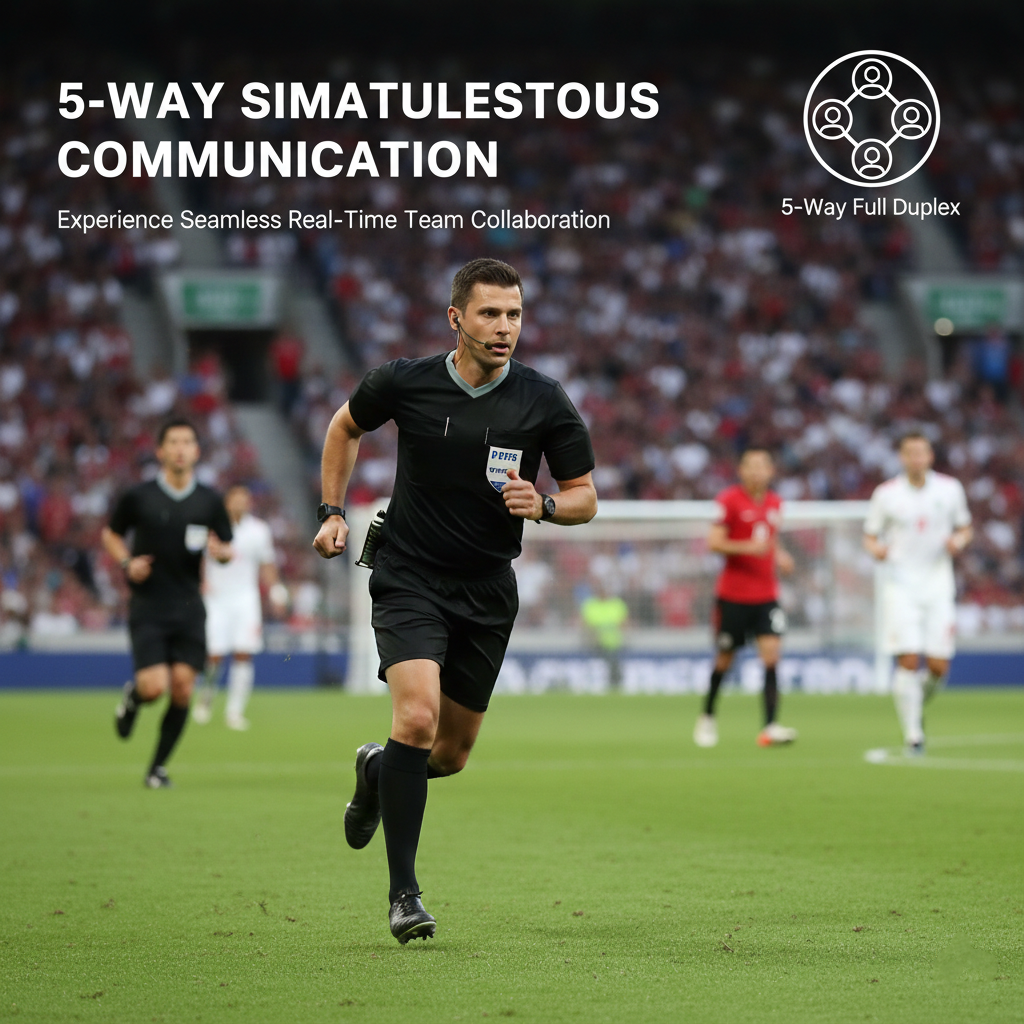
Moreover, the strategic layer added by wireless referee communication cannot be overstated. For example, in football (soccer), the referee, two assistants, and the fourth official can coordinate offside calls, foul severity, and injury management without stopping the game. Basketball crews can discuss blocking/charging calls instantly. This seamlessness reduces dead time and maintains game flow—a direct benefit for broadcasters and fans alike.
II. Impact on Training and Mentorship
The "Shadow" Referee: Senior officials can wear a receiver and listen to the dialogue of junior referees during a live match, providing "post‑game" coaching based on the actual communication that took place. This live‑listening approach is far more effective than reviewing video alone because mentors hear exactly what the novice heard—and how they reacted. Several professional leagues now mandate such shadowing for new recruits, cutting the time to full certification by nearly 30%.
Standardizing Verbiage: Systems help leagues standardize how referees talk to each other, ensuring that terminology is consistent across the entire season. For example, "hold" vs. "wrap," "advantage" vs. "play on," or "clear contact" vs. "incidental." When every official uses the same code words, confusion vanishes and decision‑making becomes faster. This is especially critical for multi‑league organizations where referees often work different competitions.
Furthermore, recorded communication logs (a feature available on premium referee earpiece systems) serve as an incredible educational archive. Aspiring referees can listen to how elite crews handled controversial moments, learning the art of calm, clear communication under extreme pressure.
III. Maintaining Game Integrity
In the age of sports betting and intense media scrutiny, integrity is everything. A single questionable call can trigger thousands of social media attacks and even death threats. The ability to record the referee's audio loop—a feature of high‑end systems—provides an "official record" of why a decision was made, protecting officials from unfounded accusations of bias.
Several governing bodies have already adopted mandatory audio recording for playoff and high‑stakes matches. When a dispute arises, the recording is reviewed internally, and if the call was justified, the referee is fully exonerated. This transparent approach builds trust with clubs, fans, and betting regulators. In fact, the European Leagues association reported a 42% drop in formal complaints after introducing mandatory audio capture in 2024.
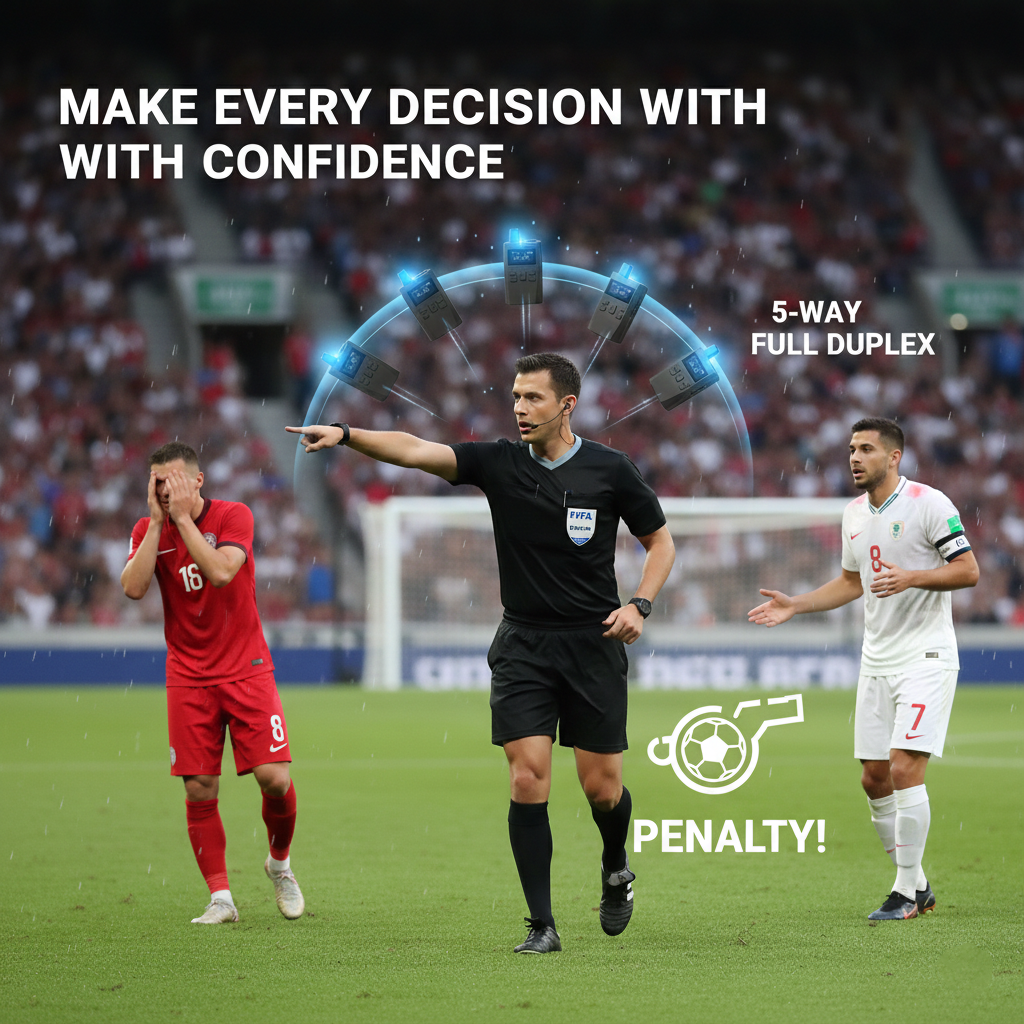
Moreover, real‑time communication allows the referee team to correct errors before they become scandals. For example, if the lead referee misses a foul but the assistant sees it clearly, a quiet word through the earpiece can reverse the call immediately—without the spectacle of a lengthy video review. This preserves the flow of the game while upholding fairness.

IV. The Future: AI and Biometric Integration
Imagine a system where the referee's heart rate is monitored. If the system detects extreme stress—for instance, a sustained rate above 160 bpm—it could alert the head official to take a moment of pause or call a timeout for the crew. Biometric feedback is already being tested in professional rugby and American football, and early results show that it helps prevent burnout and impulsive decisions.
Another frontier is AI voice‑to‑text that automatically logs fouls, offsides, and other events into the official scoreboard or VAR system. The communication system becomes the "OS" (Operating System) of the future pitch. By integrating with stadium sensors and video review, the referee could receive real‑time summaries like "three fouls on player #10 in last 10 minutes" directly into their ear, without looking at a tablet.
Additionally, machine learning can analyze referee communication patterns to identify best practices. For example, which phrases correlate with fewer overturned decisions? Which tone of voice leads to better player cooperation? These insights will drive a new era of evidence‑based officiating training.
V. Conclusion
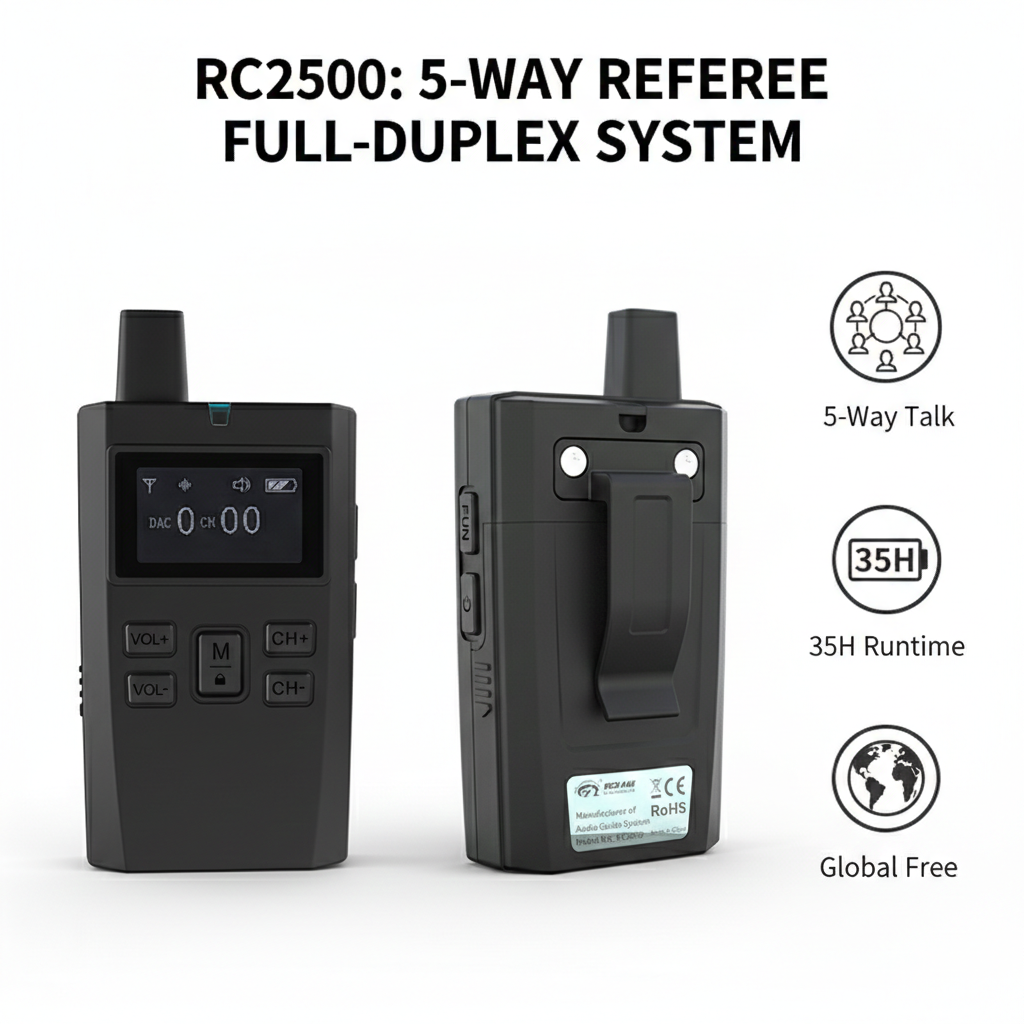
The referee communication system has moved from a "luxury" used only by the EPL and NFL to a necessity for any league that values accuracy, fairness, and the mental health of its officials. From grassroots tournaments to World Cup finals, wireless referee intercoms are leveling the playing field—empowering crews to act as one cohesive unit. As biometrics and AI continue to merge with these systems, the future of officiating looks more precise, transparent, and human than ever before.
For sports organizations seeking to reduce errors, accelerate referee development, and protect game integrity, investing in a professional referee communication solution is no longer a question of "if" but "when." The whistle may start the play, but the conversation behind it defines the game.