
A leading China factory specializing in Wireless Tour Guide Systems, Church Audio Guides, and Translation Headphones with premium OEM/ODM solutions.

Tel:+86 18922879583

Email:tiger.wang@richitek.com

Wireless Tour Guide System Applications in Palliative Care and Hospice Sensory Gardens

Palliative Care Sensory Garden Audio (RC8860 & RC2401)
Wireless Tour Guide System Applications in Palliative Care and Hospice Sensory Gardens(图1)

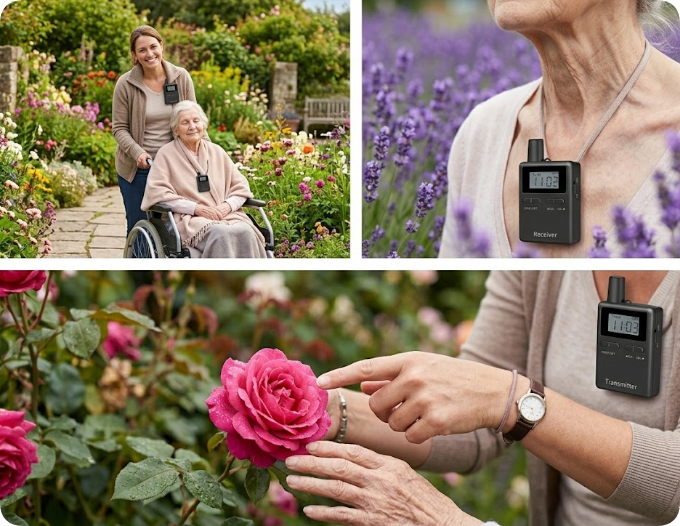
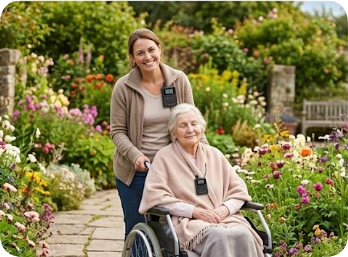
My View: I recently visited a peaceful healthcare facility that featured a beautifully designed sensory garden for palliative patients. A dedicated volunteer was pushing a wheelchair-bound resident through the blooming flowerbeds, but she constantly had to shout descriptions over the drone of nearby highway traffic. The patient, visibly weak and in chronic pain, simply could not hear a single word. Recognizing this barrier, the facility deployed a professional Wireless Tour Guide System. On my next visit, the volunteer wore a compact RC8860 transmitter, while the resident wore an ultra-lightweight RC2401 receiver on a soft lanyard. The volunteer could speak in a gentle whisper, saying, “feel the lavender, it is incredibly soft,” and the patient heard her with perfect clarity, even with eyes closed in rest. That is when I realized: high-fidelity wireless audio can bring immense dignity, warmth, and genuine human connection to end-of-life care.

Palliative and end-of-life care is an essential, rapidly expanding sector within global healthcare management. Annually, over 55 million individuals worldwide require specialized palliative services, and specialized therapeutic sensory gardens are clinically proven to decrease patient anxiety, lower blood pressure, and significantly mitigate pain perception. However, meaningful interpersonal communication in these outdoor spaces is regularly broken by environmental wind, urban traffic, and the physical limitations of a patient's own weakened state. Utilizing a high-performance UHF wireless system like the RC8860 allows nursing staff and volunteers to beam comforting words directly into a patient’s ear without ever raising their voices. This specialized integration establishes a noticeably quieter, deeply intimate, and far more effective therapeutic environment for families and residents alike.
Wireless Tour Guide System Applications in Palliative Care and Hospice Sensory Gardens(图2)

Acoustic Warmth and Clarity: The Technical Advantage of the RC8860 UHF Transmitter

Creating a truly calming environment inside healthcare facilities requires high-end audio transmission that feels natural rather than electronic or harsh. The RC8860 UHF system is uniquely optimized for peaceful hospice gardens and courtyards. Operating on the clean 863-865MHz UHF frequency band, the device delivers a completely stable, interference-free audio feed that remains entirely unaffected by local cellular networks or medical facility Wi-Fi installations.

A primary standout feature of this hardware is its adjustable input sensitivity. The transmitter’s internal microphone gain can be dialed down to capture only the softest whispers, allowing a family member or nurse to speak at a quiet volume that would otherwise be completely lost over background rustling. With 20 independent channels available, multiple patient-volunteer pairs can explore the grounds simultaneously without experiencing cross-talk or signal bleeding. Furthermore, the expansive 200-meter range ensures a volunteer can step away to pick a fresh herb or coordinate with medical staff while still staying in voice contact, while built-in HDCD sound quality fully preserves the organic timber and emotional resonance of the human voice—a vital psychological factor in establishing trust and comfort.

Ergonomic Simplicity for Frail Patients: The RC2401 Receiver

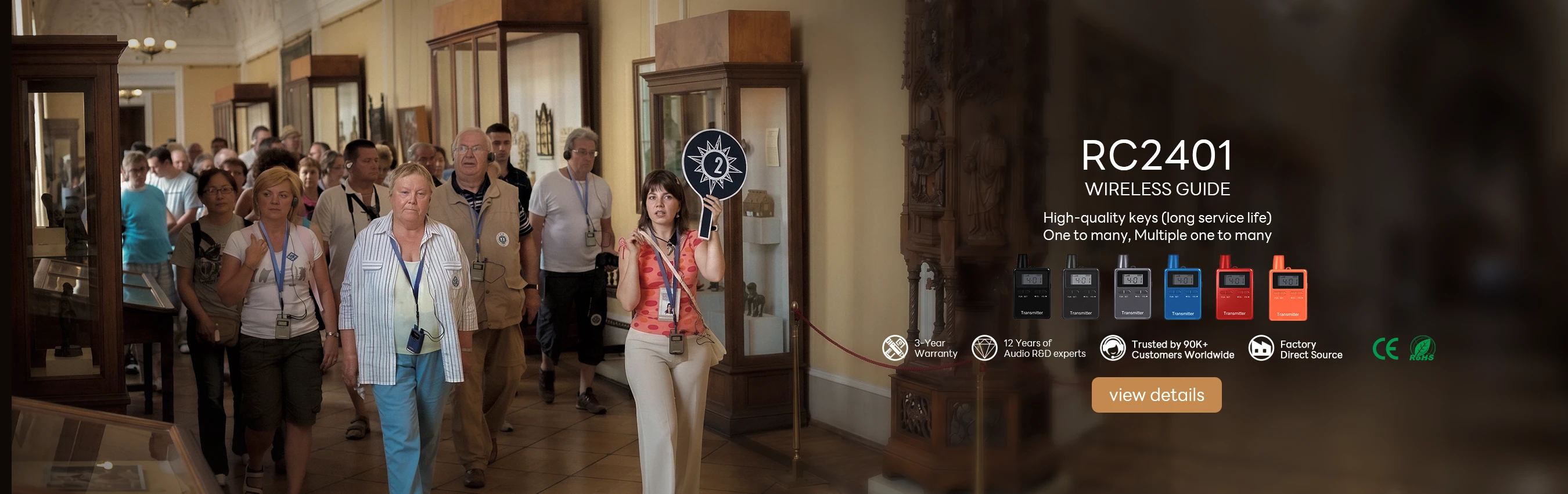
In assistive medical environments, user interfaces must be completely intuitive and non-intimidating. The ultra-accessible RC2401 wireless audio guide receiver features a highly simplified physical layout consisting of an uncomplicated power switch and a smooth volume adjustment wheel. This straightforward design ensures that elderly volunteers and heavily fatigued patients can operate the hardware instantly without undergoing any technical training or digital setup.

Physical comfort is heavily prioritized in the device construction. Weighing an astonishingly light 50 grams, the receiver never presses uncomfortably against frail neck muscles or fragile skin when worn on a lanyard. Its continuous 10-hour battery life easily spans multiple volunteer shifts throughout the day without requiring mid-day intervention. Furthermore, the flexible ear-hook design sits perfectly alongside oxygen tubing, facial masks, and traditional behind-the-ear hearing aids. Crucially for medical infection control protocols, the non-porous outer casing can be rapidly sanitized with standard hospital-grade alcohol wipes between patient rotations, ensuring complete safety and peace of mind.
Wireless Tour Guide System Applications in Palliative Care and Hospice Sensory Gardens(图3)

Clinical Success: Restoring Emotional Smiles and Family Engagement

The profound mental health and quality-of-life benefits of implementing this adaptive technology are clearly illustrated at a progressive hospice center located in Oregon. The facility manages an expansive sensory courtyard open to residents, rehabilitation patients, and visiting family groups. Every afternoon, life-enrichment coordinators host structured botanical strolls and outdoor storytelling hours.

Before adopting professional wireless audio devices, many hard-of-hearing or highly fatigued patients routinely declined to participate because they felt alienated by their inability to follow the group leader's commentary. Following the integration of the whisper-mode transmitter and lightweight earpieces, patient participation metrics immediately tripled. During a clinical review, a resident’s daughter shared a moving observation: "My mother had been unresponsive and hadn't smiled in weeks. Today, through her receiver, she heard the volunteer describe a heritage rose as feeling 'exactly like soft velvet.' She instantly reached her hand out from her blanket to touch the petal and smiled broadly. It completely restored her connection to the world around her."

Bedside Solace and Multi-Sensory Therapeutic Care

The practical utility of this audio ecosystem extends far beyond outdoor courtyard walkways. Nursing staff heavily rely on the system to deliver targeted bedside "audio comfort" therapy to immobilized individuals. Volunteers can comfortably sit across the room or out in the hallway, reading favorite literature passages, spiritual texts, or playing acoustic music directly into the patient's ear hook, eliminating the bulk and discomfort of large, over-ear consumer headphones.

Additionally, when configuring the devices in its specialized F2 two-way communication mode, bedridden patients who retain only a very faint speaking voice can press a single button to softly request a sip of water, a subtle position adjustment, or emotional reassurance from a nearby nurse. This subtle capability completely removes the need for stressful shouting or thrashing to grab attention, fundamentally preserving the patient's personal dignity during critical stages of care.


Why This Specific Audio Architecture Excels in Palliative Environments

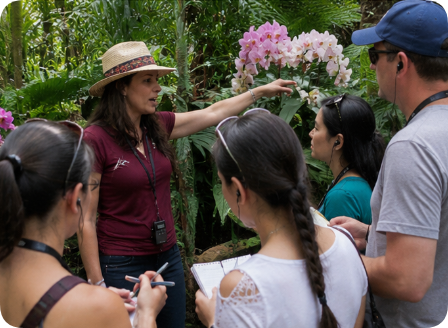
Managing acoustics in a healthcare space requires equipment that balances extreme sensitivity with absolute ease of deployment. Highly responsive whisper-mode mic circuitry allows for quiet, dignified conversations that never disturb neighboring residents or alter the peaceful ambience of a care wing. High-definition HDCD processing filters out electronic hiss, maintaining a warm, recognizable vocal tone that reduces cognitive friction. The ultra-lightweight profile ensures compliance among weak patients, and long-lasting internal battery cells minimize regular maintenance workloads for busy floor nurses. Beyond sensory gardens, these adaptive systems are widely implemented for memory care stimulation walks, gentle dementia group orientation, and pediatric hospice music therapy.

Strategic Guidance for Healthcare Executives and Facility Directors

A clinical sensory garden is a vital therapeutic asset, but its medical efficacy drops to zero if environmental noise isolates your patients in a world of silence or confusion. Do not allow wind, traffic noise, or hearing impairment to sever the precious link between your care team and those in your charge. Investing in a professional, whisper-optimized wireless communication network is an exceptionally low-cost, high-impact approach to dramatically improving patient satisfaction scores, lowering distress indicators, and providing unmatched emotional value to families during life's most delicate moments.

Featured Assisted Care Communication Components:

  • Wireless Tour Guide System: Professional-grade assistive audio technology built to stream crystal-clear vocals across corporate, educational, and clinical applications.

  • RC8860 UHF System: High-fidelity, multi-channel UHF transmitter featuring advanced whisper-sensitive gain control and rich HDCD audio processing.

  • RC2401 Wireless Audio Guide: Ultra-lightweight, 50-gram assistive receiver boasting an incredibly simple user layout, sanitizable frame, and excellent hearing aid compatibility.
2026年05月27日 09:05
click: 513

Wireless Tour Guide System Applications in Palliative Care and Hospice Sensory Gardens

time: 2026年05月27日 click:513

Palliative Care Sensory Garden Audio (RC8860 & RC2401)

Wireless Tour Guide System Applications in Palliative Care and Hospice Sensory Gardens(图1)

My View: I recently visited a peaceful healthcare facility that featured a beautifully designed sensory garden for palliative patients. A dedicated volunteer was pushing a wheelchair-bound resident through the blooming flowerbeds, but she constantly had to shout descriptions over the drone of nearby highway traffic. The patient, visibly weak and in chronic pain, simply could not hear a single word. Recognizing this barrier, the facility deployed a professional Wireless Tour Guide System. On my next visit, the volunteer wore a compact RC8860 transmitter, while the resident wore an ultra-lightweight RC2401 receiver on a soft lanyard. The volunteer could speak in a gentle whisper, saying, “feel the lavender, it is incredibly soft,” and the patient heard her with perfect clarity, even with eyes closed in rest. That is when I realized: high-fidelity wireless audio can bring immense dignity, warmth, and genuine human connection to end-of-life care.

Palliative and end-of-life care is an essential, rapidly expanding sector within global healthcare management. Annually, over 55 million individuals worldwide require specialized palliative services, and specialized therapeutic sensory gardens are clinically proven to decrease patient anxiety, lower blood pressure, and significantly mitigate pain perception. However, meaningful interpersonal communication in these outdoor spaces is regularly broken by environmental wind, urban traffic, and the physical limitations of a patient's own weakened state. Utilizing a high-performance UHF wireless system like the RC8860 allows nursing staff and volunteers to beam comforting words directly into a patient’s ear without ever raising their voices. This specialized integration establishes a noticeably quieter, deeply intimate, and far more effective therapeutic environment for families and residents alike.

Wireless Tour Guide System Applications in Palliative Care and Hospice Sensory Gardens(图2)

Acoustic Warmth and Clarity: The Technical Advantage of the RC8860 UHF Transmitter

Creating a truly calming environment inside healthcare facilities requires high-end audio transmission that feels natural rather than electronic or harsh. The RC8860 UHF system is uniquely optimized for peaceful hospice gardens and courtyards. Operating on the clean 863-865MHz UHF frequency band, the device delivers a completely stable, interference-free audio feed that remains entirely unaffected by local cellular networks or medical facility Wi-Fi installations.

A primary standout feature of this hardware is its adjustable input sensitivity. The transmitter’s internal microphone gain can be dialed down to capture only the softest whispers, allowing a family member or nurse to speak at a quiet volume that would otherwise be completely lost over background rustling. With 20 independent channels available, multiple patient-volunteer pairs can explore the grounds simultaneously without experiencing cross-talk or signal bleeding. Furthermore, the expansive 200-meter range ensures a volunteer can step away to pick a fresh herb or coordinate with medical staff while still staying in voice contact, while built-in HDCD sound quality fully preserves the organic timber and emotional resonance of the human voice—a vital psychological factor in establishing trust and comfort.

Ergonomic Simplicity for Frail Patients: The RC2401 Receiver

In assistive medical environments, user interfaces must be completely intuitive and non-intimidating. The ultra-accessible RC2401 wireless audio guide receiver features a highly simplified physical layout consisting of an uncomplicated power switch and a smooth volume adjustment wheel. This straightforward design ensures that elderly volunteers and heavily fatigued patients can operate the hardware instantly without undergoing any technical training or digital setup.

Physical comfort is heavily prioritized in the device construction. Weighing an astonishingly light 50 grams, the receiver never presses uncomfortably against frail neck muscles or fragile skin when worn on a lanyard. Its continuous 10-hour battery life easily spans multiple volunteer shifts throughout the day without requiring mid-day intervention. Furthermore, the flexible ear-hook design sits perfectly alongside oxygen tubing, facial masks, and traditional behind-the-ear hearing aids. Crucially for medical infection control protocols, the non-porous outer casing can be rapidly sanitized with standard hospital-grade alcohol wipes between patient rotations, ensuring complete safety and peace of mind.

Wireless Tour Guide System Applications in Palliative Care and Hospice Sensory Gardens(图3)

Clinical Success: Restoring Emotional Smiles and Family Engagement

The profound mental health and quality-of-life benefits of implementing this adaptive technology are clearly illustrated at a progressive hospice center located in Oregon. The facility manages an expansive sensory courtyard open to residents, rehabilitation patients, and visiting family groups. Every afternoon, life-enrichment coordinators host structured botanical strolls and outdoor storytelling hours.

Before adopting professional wireless audio devices, many hard-of-hearing or highly fatigued patients routinely declined to participate because they felt alienated by their inability to follow the group leader's commentary. Following the integration of the whisper-mode transmitter and lightweight earpieces, patient participation metrics immediately tripled. During a clinical review, a resident’s daughter shared a moving observation: "My mother had been unresponsive and hadn't smiled in weeks. Today, through her receiver, she heard the volunteer describe a heritage rose as feeling 'exactly like soft velvet.' She instantly reached her hand out from her blanket to touch the petal and smiled broadly. It completely restored her connection to the world around her."

Bedside Solace and Multi-Sensory Therapeutic Care

The practical utility of this audio ecosystem extends far beyond outdoor courtyard walkways. Nursing staff heavily rely on the system to deliver targeted bedside "audio comfort" therapy to immobilized individuals. Volunteers can comfortably sit across the room or out in the hallway, reading favorite literature passages, spiritual texts, or playing acoustic music directly into the patient's ear hook, eliminating the bulk and discomfort of large, over-ear consumer headphones.

Additionally, when configuring the devices in its specialized F2 two-way communication mode, bedridden patients who retain only a very faint speaking voice can press a single button to softly request a sip of water, a subtle position adjustment, or emotional reassurance from a nearby nurse. This subtle capability completely removes the need for stressful shouting or thrashing to grab attention, fundamentally preserving the patient's personal dignity during critical stages of care.


Why This Specific Audio Architecture Excels in Palliative Environments

Managing acoustics in a healthcare space requires equipment that balances extreme sensitivity with absolute ease of deployment. Highly responsive whisper-mode mic circuitry allows for quiet, dignified conversations that never disturb neighboring residents or alter the peaceful ambience of a care wing. High-definition HDCD processing filters out electronic hiss, maintaining a warm, recognizable vocal tone that reduces cognitive friction. The ultra-lightweight profile ensures compliance among weak patients, and long-lasting internal battery cells minimize regular maintenance workloads for busy floor nurses. Beyond sensory gardens, these adaptive systems are widely implemented for memory care stimulation walks, gentle dementia group orientation, and pediatric hospice music therapy.

Strategic Guidance for Healthcare Executives and Facility Directors

A clinical sensory garden is a vital therapeutic asset, but its medical efficacy drops to zero if environmental noise isolates your patients in a world of silence or confusion. Do not allow wind, traffic noise, or hearing impairment to sever the precious link between your care team and those in your charge. Investing in a professional, whisper-optimized wireless communication network is an exceptionally low-cost, high-impact approach to dramatically improving patient satisfaction scores, lowering distress indicators, and providing unmatched emotional value to families during life's most delicate moments.

Featured Assisted Care Communication Components:

  • Wireless Tour Guide System: Professional-grade assistive audio technology built to stream crystal-clear vocals across corporate, educational, and clinical applications.

  • RC8860 UHF System: High-fidelity, multi-channel UHF transmitter featuring advanced whisper-sensitive gain control and rich HDCD audio processing.

  • RC2401 Wireless Audio Guide: Ultra-lightweight, 50-gram assistive receiver boasting an incredibly simple user layout, sanitizable frame, and excellent hearing aid compatibility.
×

Contact us

email:
name:
subject:
content: