
.webp)
The Future of Heritage Interpretation: Immersive Audio Dramas with RC9150 UHF Systems
Transforming Historical Sites from Static Exhibits into Cinematic Experiences using Hi-Fi Wireless Audio and Noise-Cancelling Technology.
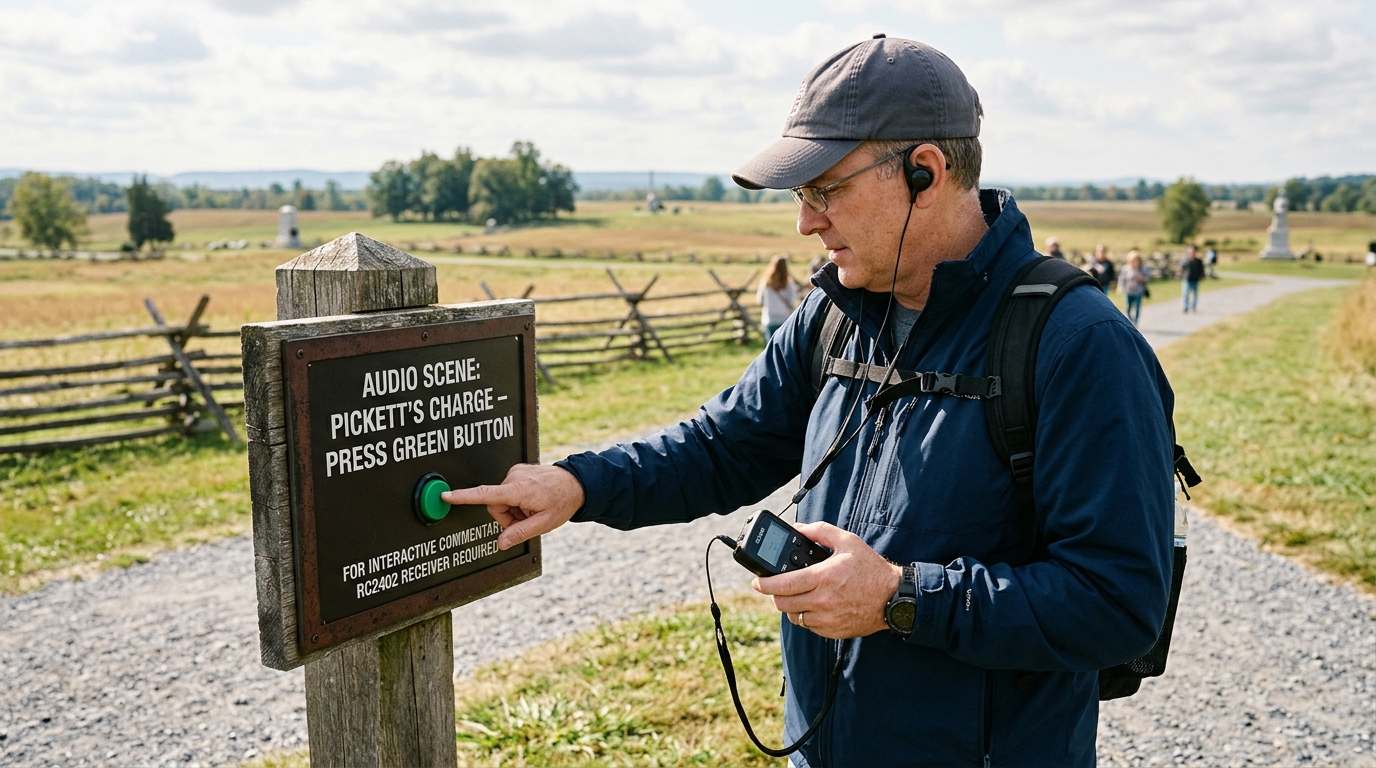
My Perspective: Having walked the hallowed grounds of Gettysburg twice, the difference in my emotional connection was night and day. On my first visit, following a guide's flag felt like watching history through a foggy window; I couldn't bridge the gap between the modern grass and the 1863 chaos. On my return, I utilized the RC9150 system loaded with a high-production audio drama. Suddenly, the wind carried the phantom sounds of Pickett's Charge. Actors whispered original soldier letters into my ears as I stood at "The Angle." History shouldn't be a dry lecture; it is a visceral story. To make it land, you need high production value. A 100-channel wireless system allows us to deliver GPS-triggered narratives that respect the silence of the site while bringing the past to life.
The $1.9 Billion Shift: Why Narrative is the New Standard
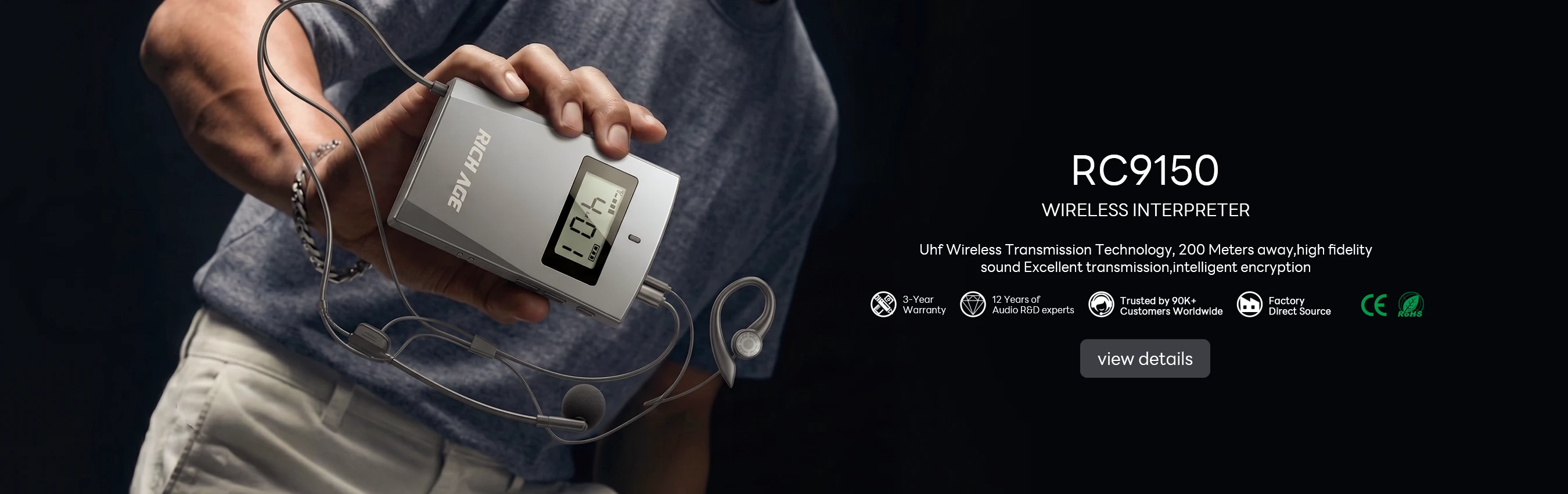
The global heritage interpretation market is undergoing a seismic shift. Static signage and dusty placards are no longer sufficient for a generation raised on cinematic media. Projections indicate the audio guide sector will hit $1.9 billion by 2028, driven almost entirely by immersive storytelling. Visitors don't just want facts; they want to feel the weight of the moment. The RC9150 addresses this demand by offering 100 independent channels. This allows a single battlefield or museum to host a "Narrative Matrix":
Strategic Analysts: Deep-dive tactical tracks for military historians focusing on troop movements.
The Human Element: Character-driven stories for families that highlight the civilian experience during wartime.
Global Access: Native-language tracks that provide nuanced translations rather than robotic summaries.
Hardware that Disappears: The RC2402 Advantage
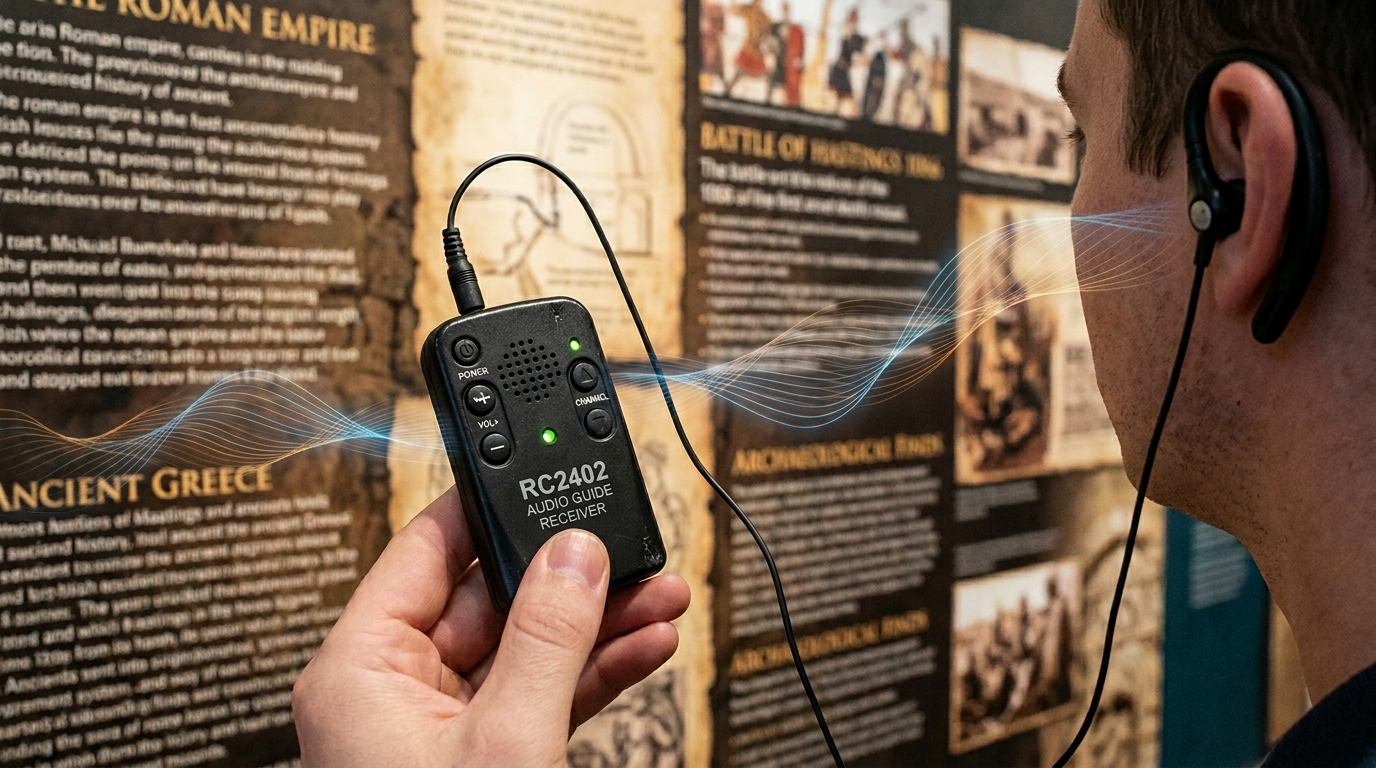
For an audio drama to be effective, the technology must get out of the way. The RC2402 receiver is specifically engineered for outdoor heritage sites. When walking through an open battlefield, ambient noise—wind, distant traffic, or other tour groups—can break the immersion. The RC2402 features ≥25dB digital noise cancellation, creating an "acoustic cocoon" for the visitor.
Furthermore, the 40-hour battery life is a logistical dream for site managers. It ensures that even during peak holiday weekends, the units can stay in the field without constant cycling through chargers. The Hi-Fi frequency response (20Hz-20kHz) ensures that the low-frequency rumble of a recorded cannon or the high-frequency snap of a musket sounds terrifyingly real.
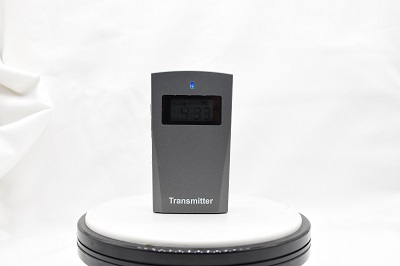
The RC9150 enables GPS-synced audio that mirrors the visitor's exact location on the field.
Operational Impact: Insights from the Field
Site managers at locations like the Alamo and San Jacinto have reported a transformative effect on visitor behavior. A common pain point for historical parks is "site skimming"—visitors walking quickly through the grounds without engaging. By implementing the RC9150's GPS-triggered audio, managers have seen average visit durations increase by over 75 minutes. Visitors linger because they want to hear the conclusion of the "chapter" tied to that specific geographic coordinate.
Why Managers are Switching: "Live guides are wonderful, but they aren't scalable during peak hours. The RC9150 ensures that the 1,000th visitor of the day receives the same emotionally resonant performance as the first. Plus, the intelligent encryption means our custom-produced scripts—which cost thousands to record—cannot be intercepted or pirated by unauthorized devices."
Beyond Mono: Ambisonic Soundscapes and Interaction
The RC9150 isn't just a radio; it's a delivery mechanism for 3D audio. By using ambisonic playback techniques, sound designers can place sounds in a 360-degree space around the visitor. Imagine standing in a quiet grove and hearing the distinct sound of a cavalry charge approaching specifically from your left flank. This spatial awareness tethers the visitor to the physical landscape in a way that visual signs never could.
In educational settings, we've seen these systems used for "Decision-Point" tours. At key historical junctures, the audio stops and prompts students: "General Lee is deciding whether to charge the center. Based on what you see, what would you do?" Students use the individual volume and channel toggles to select their 'path,' making history an interactive puzzle rather than a passive memory test.