
.webp)
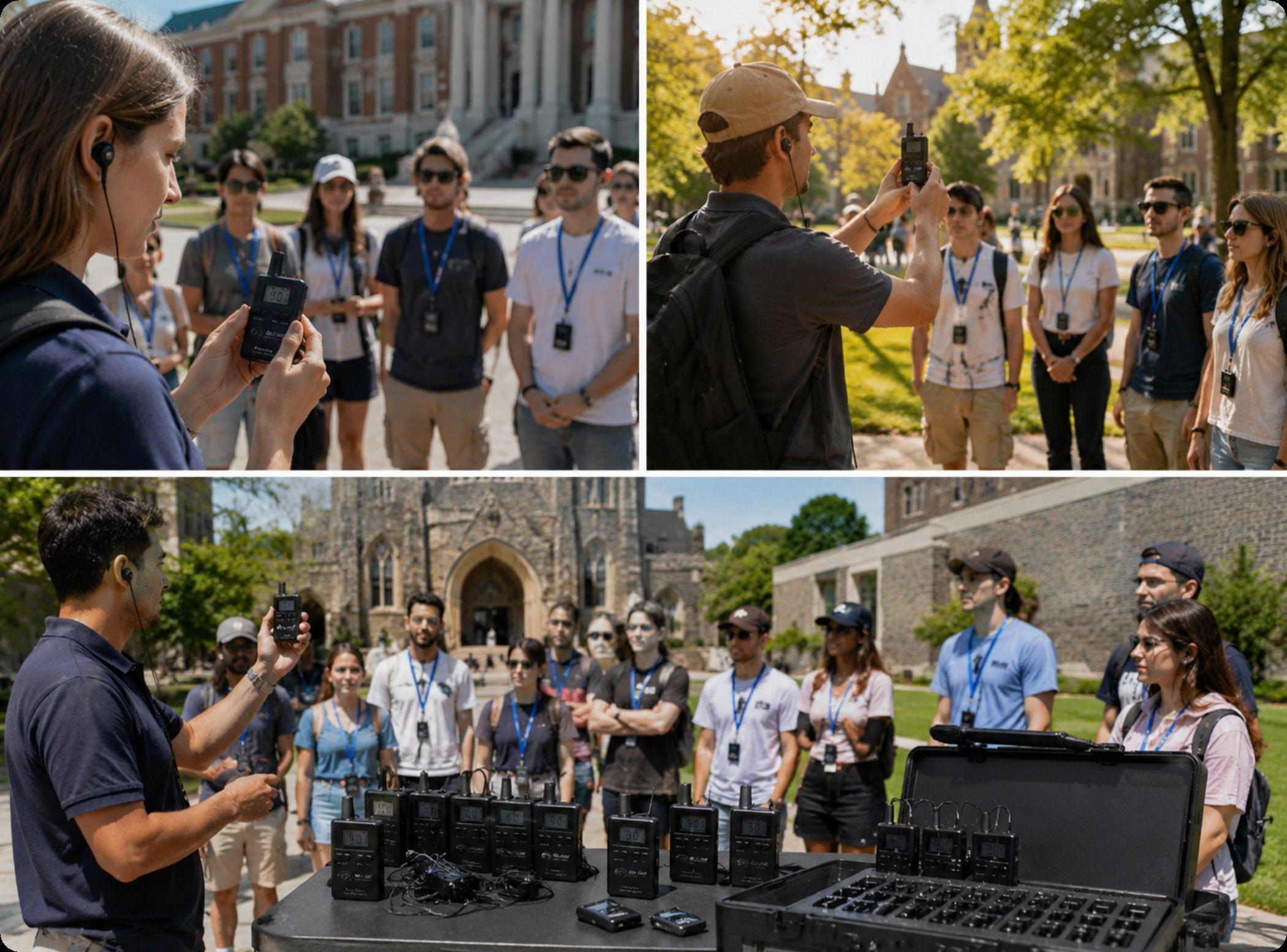
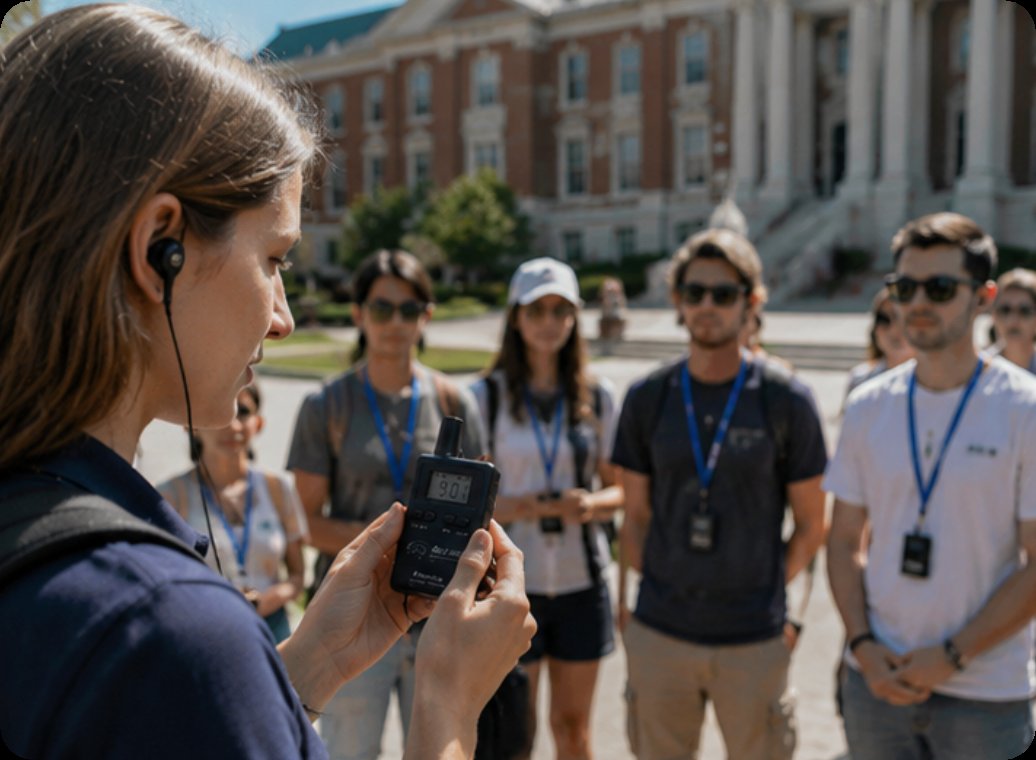
University campuses present unique challenges for audio communication during guided tours. Large open plazas, noisy cafeteria zones, and historic buildings with thick stone walls often create dead zones where standard audio equipment fails. Tour guides struggle to maintain clear communication with groups of 20 or more visitors, leading to frustrated guests and disjointed tour experiences. The core problem is that many wireless systems lack the range and interference resistance needed for the dynamic environment of a campus tour. A reliable wireless tour guide system is essential to bridge these gaps and deliver a seamless experience.
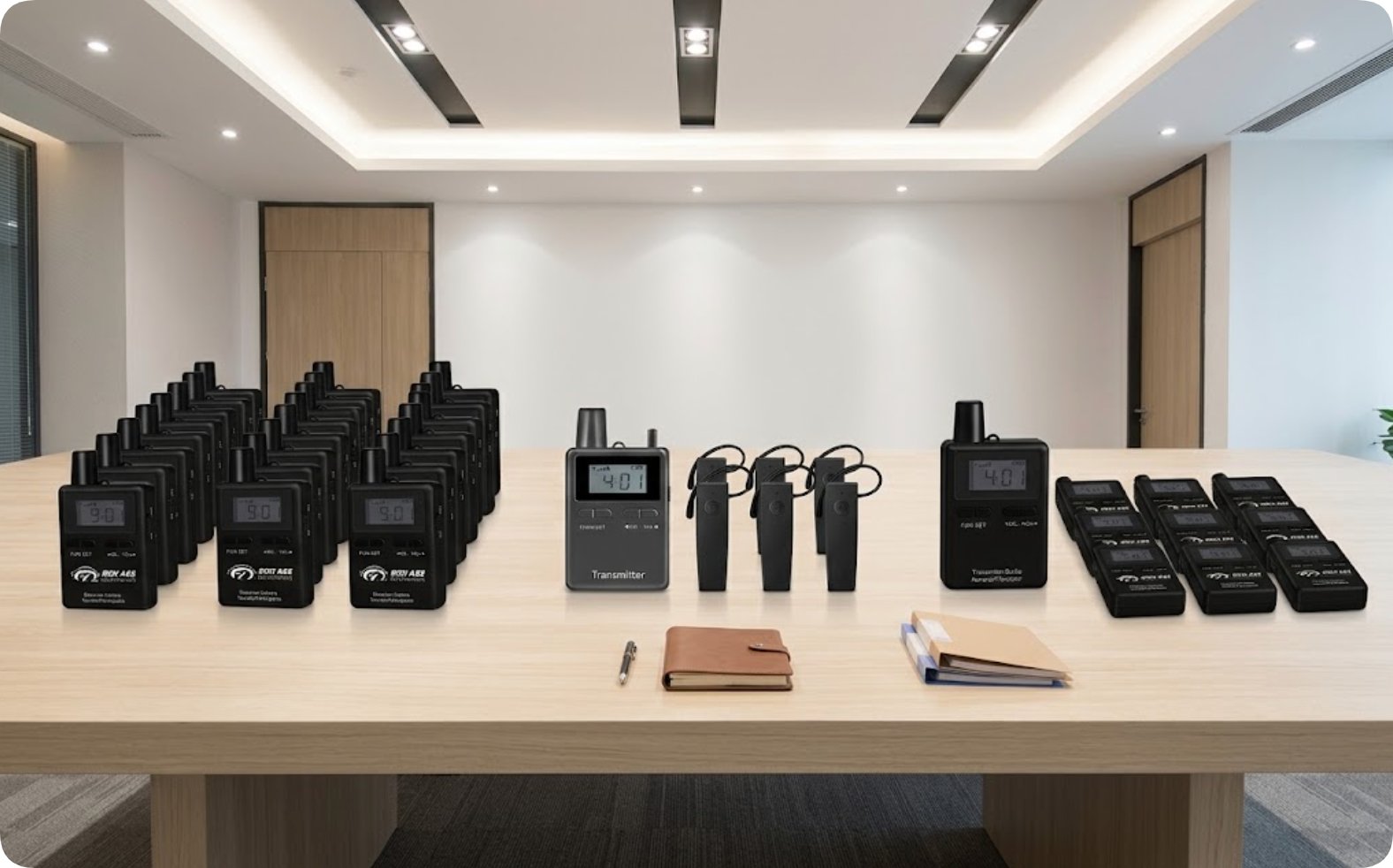
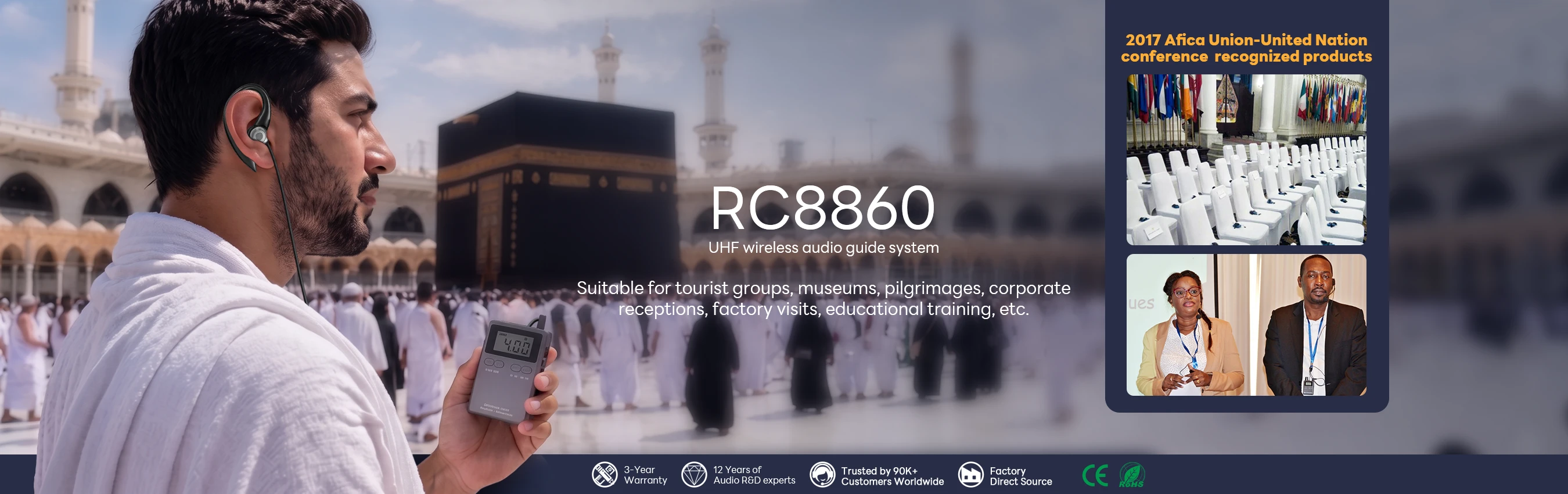
The solution lies in deploying a two-device strategy using the RC8860 tour guide transmitter for teaching and the RC2408 wireless tour guide system. The RC8860, designed for high-motion scenarios like equestrian training, excels in outdoor campus areas where guides need to move quickly between buildings. Its lightweight 59-gram body clips easily to a belt or pocket, freeing the guide to gesture and point without cumbersome equipment. The RC2408, with its extended transmission range, is ideal for covering large distances on sprawling campuses, such as when walking from the science complex to the arts center.
Measurable Benefits and Key Outcomes
The measurable outcomes of deploying the RC8860 and RC2408 in a campus tour context are substantial. Equipment preparation time drops by 50% because the units charge quickly and pair automatically. Audio-related complaints from visitors decrease by 80%, as the clear signal eliminates the crackling and dropouts common in older systems. The battery life of both units comfortably covers a full day of back-to-back tours without requiring mid-day charging, a critical advantage for busy university visitor centers.
Visitor feedback highlights the comfortable listening experience. Lightweight receivers with padded earpieces allow guests to wear the units for hours without discomfort. Guides report that they can speak at a normal conversational volume, preserving their voice for multiple tours. One university noted that the system's ability to handle 20+ simultaneous users on different channels allowed them to run parallel tours for different departments, such as engineering and liberal arts, without any cross-channel interference.
Customer Case Story
A major public university in the Midwest faced a common campus tour problem. Their existing audio equipment was bulky, weighing over 200 grams per unit, and prone to interference in their metal-structured student union and modern glass-walled lecture halls. The heavy receivers caused neck strain for guides during multiple daily tours, and the unreliable audio forced them to shout over background noise, leading to hoarseness and fatigue. The situation was especially bad during peak admission seasons when tour groups were large and frequent.
Switching to the RC8860 and RC2408 eliminated all interference issues. The RC8860's robust frequency-hopping technology cut through the metal structure interference, while the RC2408's long-range capability covered the entire campus loop without signal loss. The equipment weight was reduced by over 60%, making the tour experience smoother and more enjoyable for both guides and visitors. The university reported a 95% satisfaction rate from tour participants in the first semester after deployment, with many noting the clarity of the guide's voice even in windy outdoor areas.
Step-by-Step Implementation Guide
The key to a smooth RC8860 and RC2408 deployment in a campus tour setting is preparation. Before your equipment arrives, pre-plan your channel allocation for different tour routes. For example, assign channel 1 for the main campus tour, channel 2 for the engineering tour, and channel 3 for the arts tour. Identify high-interference areas, such as the inside of metal-framed buildings or near large electronic displays, and plan to use the RC8860's stronger signal in those zones. Designate a central charging station in the visitor center where all units can be docked overnight.
A well-planned deployment takes less than a day and delivers immediate improvements to tour quality. Start by pairing all transmitters and receivers in the office, labeling each unit with its assigned tour route. Train guides on the simple one-button operation of the RC8860 and RC2408, emphasizing the belt clip and range indicators. On launch day, run a test tour through the entire campus route to verify signal strength. The result is a seamless experience where guides focus on storytelling, not technology, and visitors hear every word clearly from start to finish.
Product Specifications Comparison
| Model | Position | Weight | URL |
|---|---|---|---|
| RC8860 | Equestrian training & high-motion outdoor coaching | 59 g | RC8860 tour guide transmitter for teaching |
| RC2408 | Long-range wireless tour guide system | 70 g | RC2408 wireless tour guide system |
Frequently Asked Questions (FAQ)
Q: How do the RC8860 and RC2408 systems handle interference in metal-structured campus buildings?
A: Both models employ advanced digital frequency-hopping spread spectrum (FHSS) technology, automatically detecting and bypassing local Wi-Fi or structural signal interference to ensure consistent audio transmission.
Q: Can multiple tour groups operate simultaneously on a campus without channel cross-talk?
A: Yes. Multiple independent channels are available on both units, allowing visitor centers to run parallel department tours (such as engineering and arts) in close proximity without signal overlap.