
.webp)
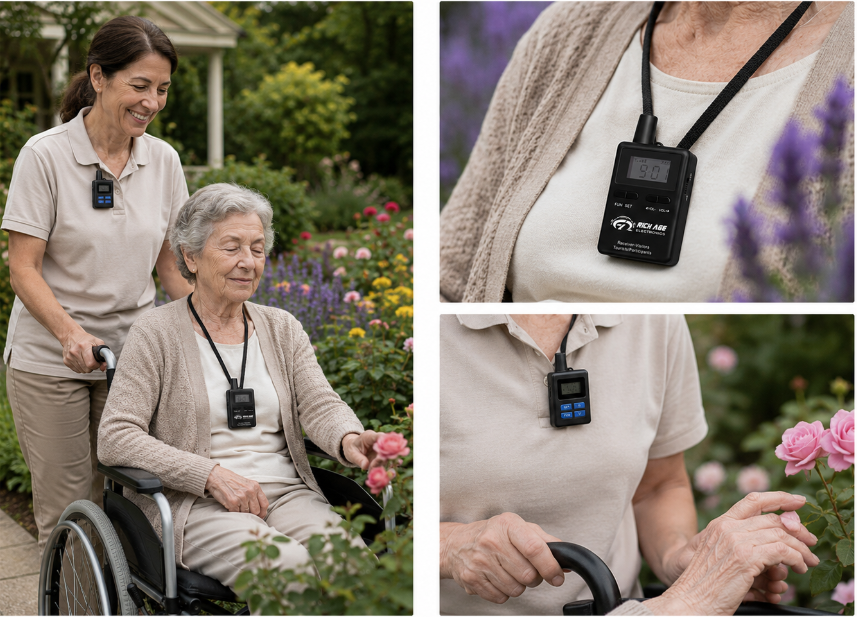
Enhancing acoustic accessibility in palliative care setups directly transforms the patient experience. Integrating a professional Wireless Tour Guide System within hospice environments bridges communication gaps, ensuring every delicate conversation remains perfectly intact during critical moments of care.
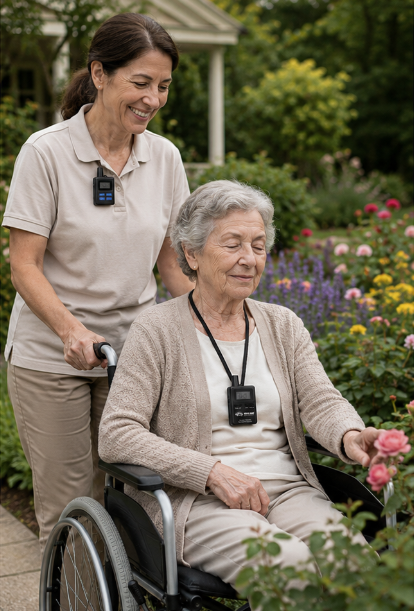
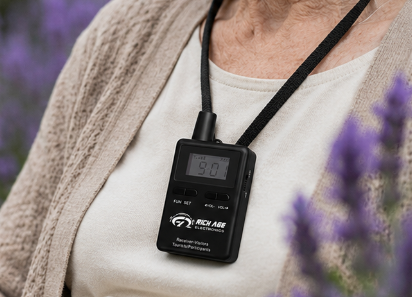
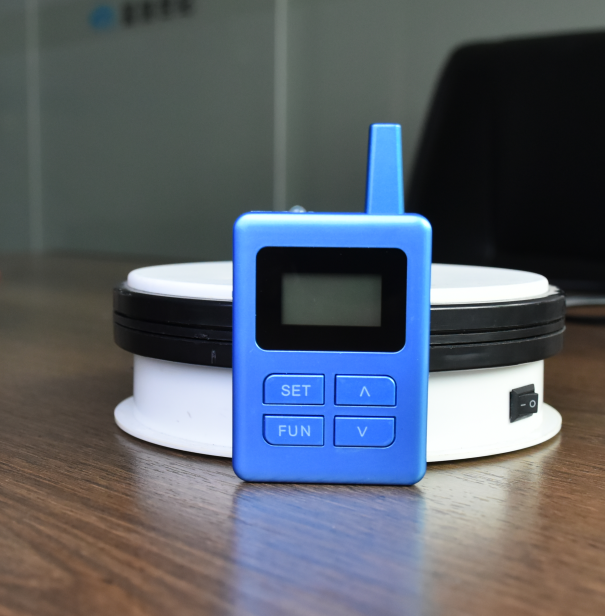
My View: I visited a hospice that featured a beautifully designed, small sensory garden for patients. A volunteer would push a wheelchair-bound resident through the flowers, but she constantly had to shout descriptions over the heavy, intrusive traffic noise from the nearby highway. The patient, weak and in considerable pain, couldn’t hear a single word. Then the hospice installed a RC085 UHF system. The volunteer wore a compact transmitter, and the patient wore a RC2402 receiver on a comfortable lanyard. She could whisper, “feel the lavender, it’s soft,” and the patient heard her clearly, even with eyes closed. That’s when I realized: wireless audio can bring dignity and connection to end‑of‑life care.
The Acoustic Struggle in Modern Palliative Care Units
Palliative care is a rapidly growing healthcare sector, with over 55 million people requiring structured end‑of‑life services annually across the globe. To improve emotional well-being, many modern facilities construct specialized sensory gardens. These outdoor spaces are clinically proven to reduce patient anxiety, lower heart rates, and lower overall pain perception by providing positive natural distractions. However, outdoor communication is often entirely broken by ambient environmental factors.
A premium UHF digital system like the RC085 operates quietly in the background, minimizing sensory overload. It features a specialized, low-intensity red‑only indicator light that doesn’t flash or disturb the peaceful, low-light atmosphere required by resting patients. Crucially, its advanced telecoil compatibility works directly with standard hearing aids, preventing the frustrating high-pitched feedback common in traditional audio devices. Furthermore, the innovative F2 two‑way mode lets fragile patients simply press a soft button on their receiver to ask for a pause, a sip of water, or a blanket, without needing to strain their voices.
Technical Features Engineered for Medical Silence
Outdoor therapeutic gardens frequently border bustling urban zones, exposing patients to unpredictable sound pollutions. The RC2402 receiver solves this through proprietary, built-in ≥25dB noise cancellation circuitry. This hardware stack intelligently filters out distant traffic roar, construction rumblings, and heavy industrial HVAC hum, delivering only the volunteer’s gentle, close-mic voice directly into the earpiece. The acoustic signal remains pure, warm, and highly intelligible even at extremely low input volumes.
Operational reliability is equally critical in fast-paced medical environments. The ultra-efficient 40‑hour battery life ensures the system lasts for days on a single charge. No clinical staff member or busy nurse has to worry about a device dying or managing cumbersome charging docks in the middle of a critical emotional visit or shift. For patients confined to specialized beds or reclined mobility chairs, the ergonomic, lightweight ear-hook design stays perfectly secure and comfortable without exerting painful pressure on the cartilage, even when the patient is completely lying down.
Spiritual Support and Emotional Comfort for Families
What hospice chaplains told me: “We used to have to lean in uncomfortably close and strain to hear each other, breaking the natural physical boundaries of pastoral care. Now, the patient can simply close their eyes, focus entirely on the clear sound of my voice via the receiver, and drift into a peaceful sleep. It functions beautifully as a spiritual tool for prayer, meditation, and reading final rites.”
To prevent constant manual adjustment by busy clinical practitioners, the device includes an automated power‑saving wake‑up mode. If a chaplain or family member pauses speaking to allow the patient to rest, the transmitter drops its power draw, allowing the entire system to remain active for an entire day without draining the internal lithium cells. The moment someone speaks into the microphone again, the connection instantly wakes up with zero latency, ensuring no initial syllables are cut off.
Optimized Performance and Broad Clinical Applications
Why does this specific hardware combination work so flawlessly for sensitive end‑of‑life care scenarios? The technical reasons are clear:
UHF Band Penetration: The RC085 utilizes ultra-high frequency bands that easily penetrate through dense garden leaves, wooden pergolas, and light rain, avoiding the signal dropouts common with standard 2.4GHz or Bluetooth alternatives.
Precise Mechanical Volume Control: The RC2402 features an intuitive physical volume wheel that staff can easily preset to a low, soothing, non-startling audio level before placing the headset on the patient.
Anti-Glare Matte Black Finish: The specialized medical-grade polymer chassis has a non-reflective, **matte black finish** that completely prevents harsh sunlight from reflecting off the casing into sensitive eyes.
Beyond peaceful garden walks, I have seen this specialized combination utilized successfully for institutional "bedside story" programs. In these setups, young volunteers read comforting literature or family letters to isolated, quarantined patients. Furthermore, the system serves as an exceptional tool within specialized memory care and advanced dementia units. Playing familiar stories or tracking soft, guided vocal instructions consistently calms severe evening agitation (sundown syndrome) without resorting to chemical sedation alternatives.
Strategic Recommendations for Palliative Facility Administrators
Clear, unhurried, and accessible communication is the foundational core of high-standard palliative care. Investing in professional-grade assistive listening systems directly addresses the psychological needs of your residents. A specialized wireless audio system represents a highly manageable utility investment for your facility. The immediate returns are seen clearly in measurable patient comfort levels, elevated family satisfaction reviews during surveys, and improved retention among caregiving staff who no longer face vocal strain during their daily emotional duties.
Products featured in this operational overview: RC085 UHF Digital System, RC2402 Noise Cancelling Wireless Receiver. Learn more about RC085 Technical Specifications