
We are a large factory from China.Specializing in the production of wireless tour guide systems translation headphones for church、Museum audio guide equipment, Simulation Interpretation etc

Tel:+86 18922879583

Email:tiger.wang@richitek.com

UHF vs 2.4GHz Tour Guide System: Which One Should You Choose in 2026?


UHF vs 2.4GHz Tour Guide System: Which One Should You Choose in 2026?

Choosing between a UHF tour guide system and a 2.4GHz wireless audio system can directly impact communication quality, especially in factories, museums, and large group environments. While both technologies are widely used, they perform very differently depending on the scenario.

In this guide, we break down the real differences between UHF and 2.4GHz tour guide systems, including signal stability, interference, range, and best use cases—so you can choose the right solution for your needs.

UHF vs 2.4GHz Tour Guide System – Quick Comparison

FeatureUHF System2.4GHz System
Frequency470–510 MHz2.4 GHz ISM Band
Signal PenetrationExcellent (walls, machinery)Moderate
InterferenceLowHigh (WiFi, Bluetooth)
Best EnvironmentFactories, warehousesMuseums, open areas
SetupSimpleVery simple

1. Signal Penetration: Why UHF Works Better in Factories

One of the biggest differences between UHF and 2.4GHz systems is how signals behave around obstacles.

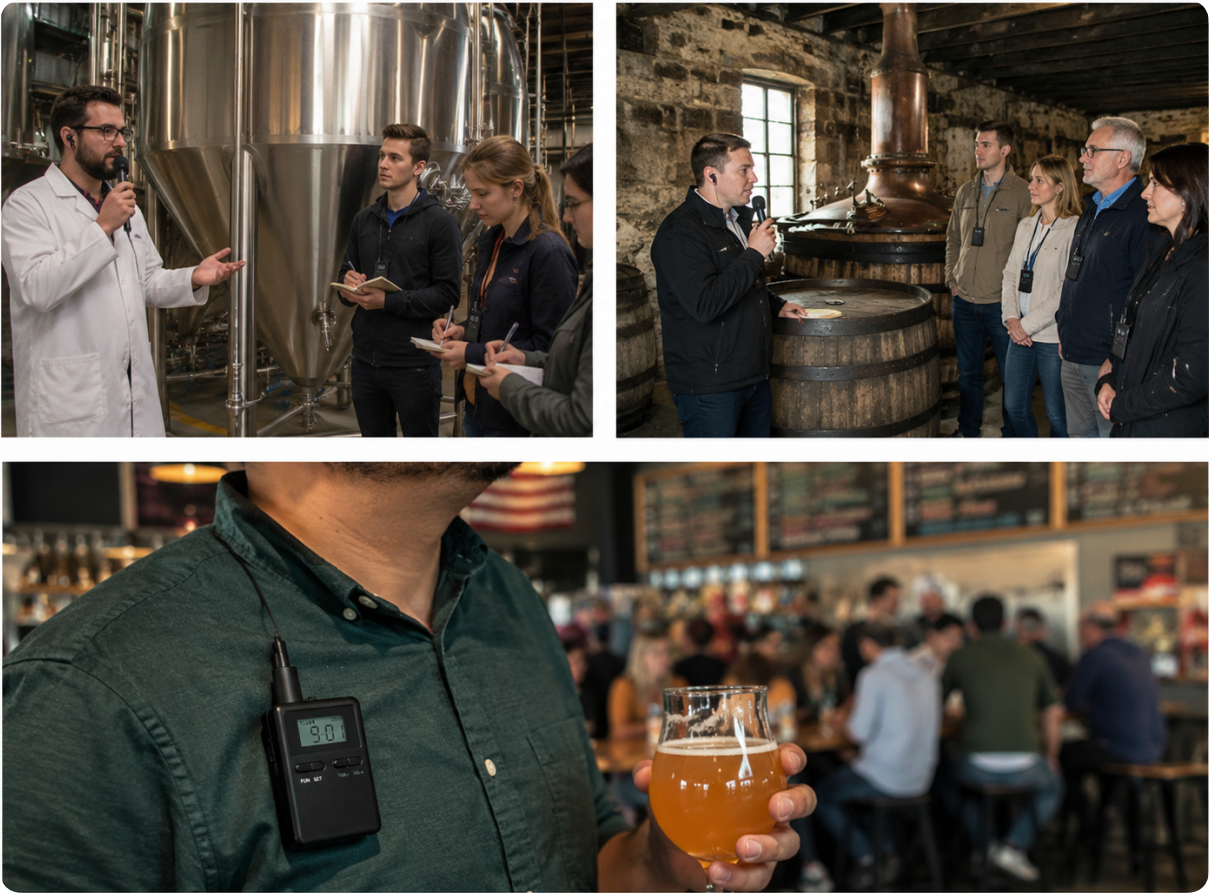
UHF signals (470–510MHz) can bend around walls, metal equipment, and machinery. This makes them ideal for factory tours, industrial training, and warehouses where obstacles are everywhere.

In contrast, 2.4GHz signals are more likely to be blocked or weakened by solid objects, especially metal structures.

2. Interference: The Hidden Problem with 2.4GHz

The 2.4GHz band is widely used by:

  • Wi-Fi routers

  • Bluetooth devices

  • Wireless cameras

This means 2.4GHz tour guide systems often experience interference in crowded environments like exhibitions, offices, or smart factories.

UHF systems operate on a less crowded spectrum, resulting in more stable and reliable communication.

3. Best Use Cases: When to Choose UHF or 2.4GHz

Choose UHF if you need:

  • Factory tour communication

  • Industrial environments with noise

  • Long-distance stability

  • Obstacle-heavy locations

Choose 2.4GHz if you need:

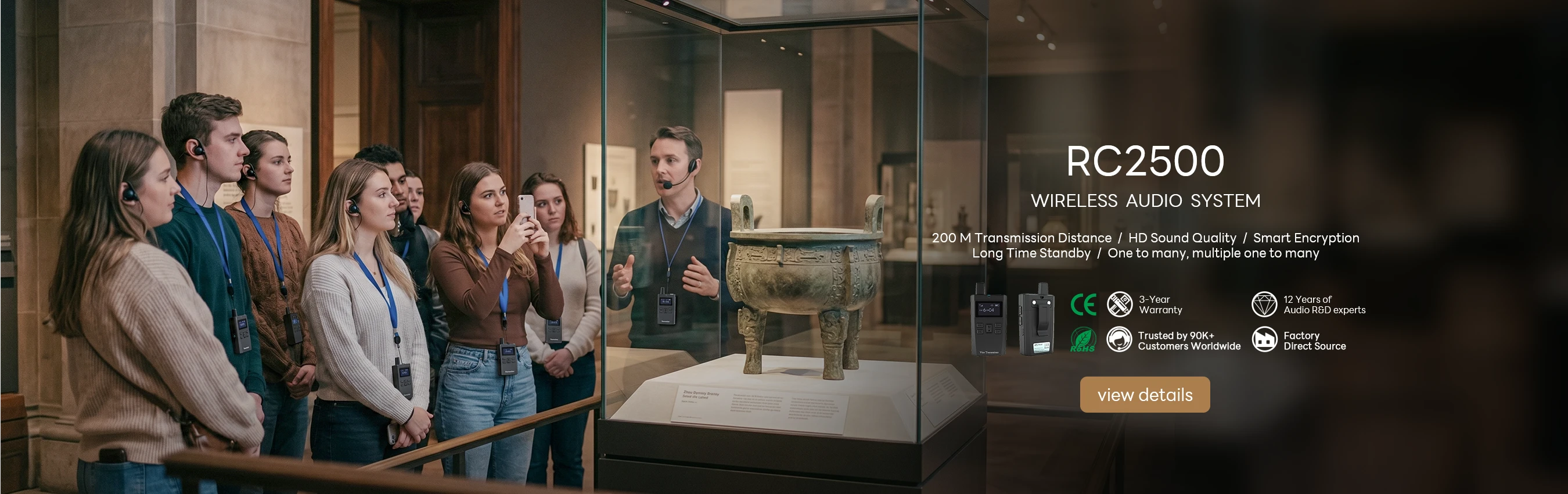
  • Museum or gallery tours

  • Lightweight portable systems

  • Simple indoor environments

  • License-free global usage

Recommended Systems

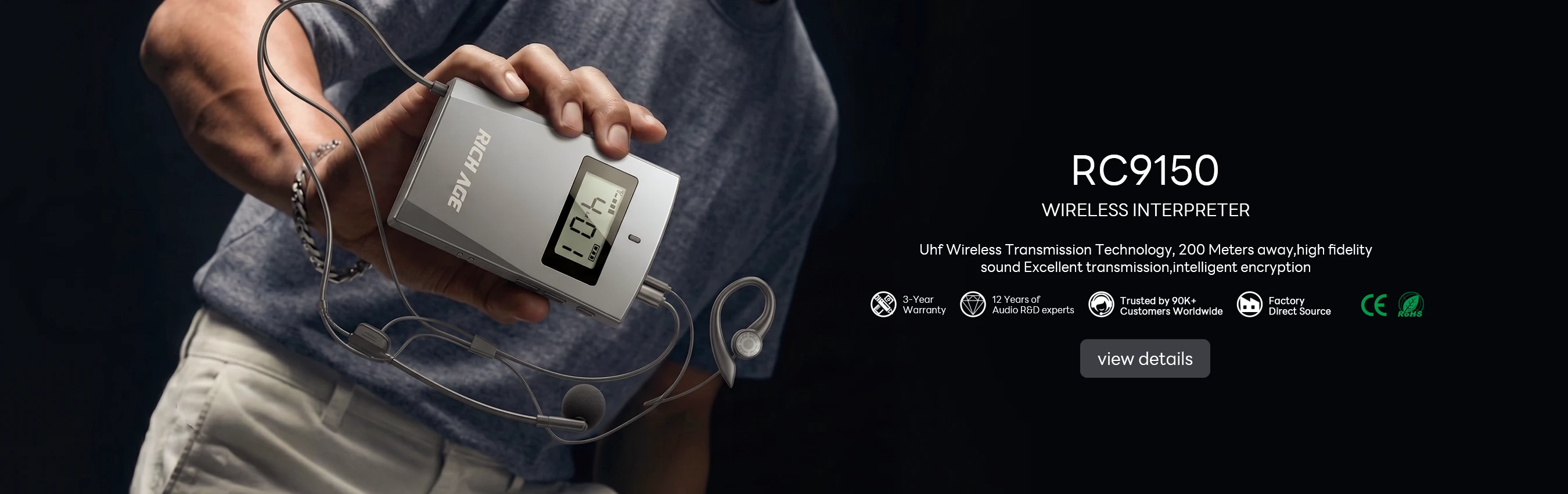
For industrial and complex environments, we recommend:

2026年05月04日 11:57
click: 644
no data

UHF vs 2.4GHz Tour Guide System: Which One Should You Choose in 2026?

time: 2026年05月04日 click:644


UHF vs 2.4GHz Tour Guide System: Which One Should You Choose in 2026?

Choosing between a UHF tour guide system and a 2.4GHz wireless audio system can directly impact communication quality, especially in factories, museums, and large group environments. While both technologies are widely used, they perform very differently depending on the scenario.

In this guide, we break down the real differences between UHF and 2.4GHz tour guide systems, including signal stability, interference, range, and best use cases—so you can choose the right solution for your needs.

UHF vs 2.4GHz Tour Guide System – Quick Comparison

FeatureUHF System2.4GHz System
Frequency470–510 MHz2.4 GHz ISM Band
Signal PenetrationExcellent (walls, machinery)Moderate
InterferenceLowHigh (WiFi, Bluetooth)
Best EnvironmentFactories, warehousesMuseums, open areas
SetupSimpleVery simple

1. Signal Penetration: Why UHF Works Better in Factories

One of the biggest differences between UHF and 2.4GHz systems is how signals behave around obstacles.

UHF signals (470–510MHz) can bend around walls, metal equipment, and machinery. This makes them ideal for factory tours, industrial training, and warehouses where obstacles are everywhere.

In contrast, 2.4GHz signals are more likely to be blocked or weakened by solid objects, especially metal structures.

2. Interference: The Hidden Problem with 2.4GHz

The 2.4GHz band is widely used by:

  • Wi-Fi routers

  • Bluetooth devices

  • Wireless cameras

This means 2.4GHz tour guide systems often experience interference in crowded environments like exhibitions, offices, or smart factories.

UHF systems operate on a less crowded spectrum, resulting in more stable and reliable communication.

3. Best Use Cases: When to Choose UHF or 2.4GHz

Choose UHF if you need:

  • Factory tour communication

  • Industrial environments with noise

  • Long-distance stability

  • Obstacle-heavy locations

Choose 2.4GHz if you need:

  • Museum or gallery tours

  • Lightweight portable systems

  • Simple indoor environments

  • License-free global usage

Recommended Systems

For industrial and complex environments, we recommend:

no data
×

Contact us

email:
name:
subject:
content: