
.webp)
Hybrid Meetings Are Failing Due to Poor Audio: How the Right Audio Conference System Improves Clarity and Productivity
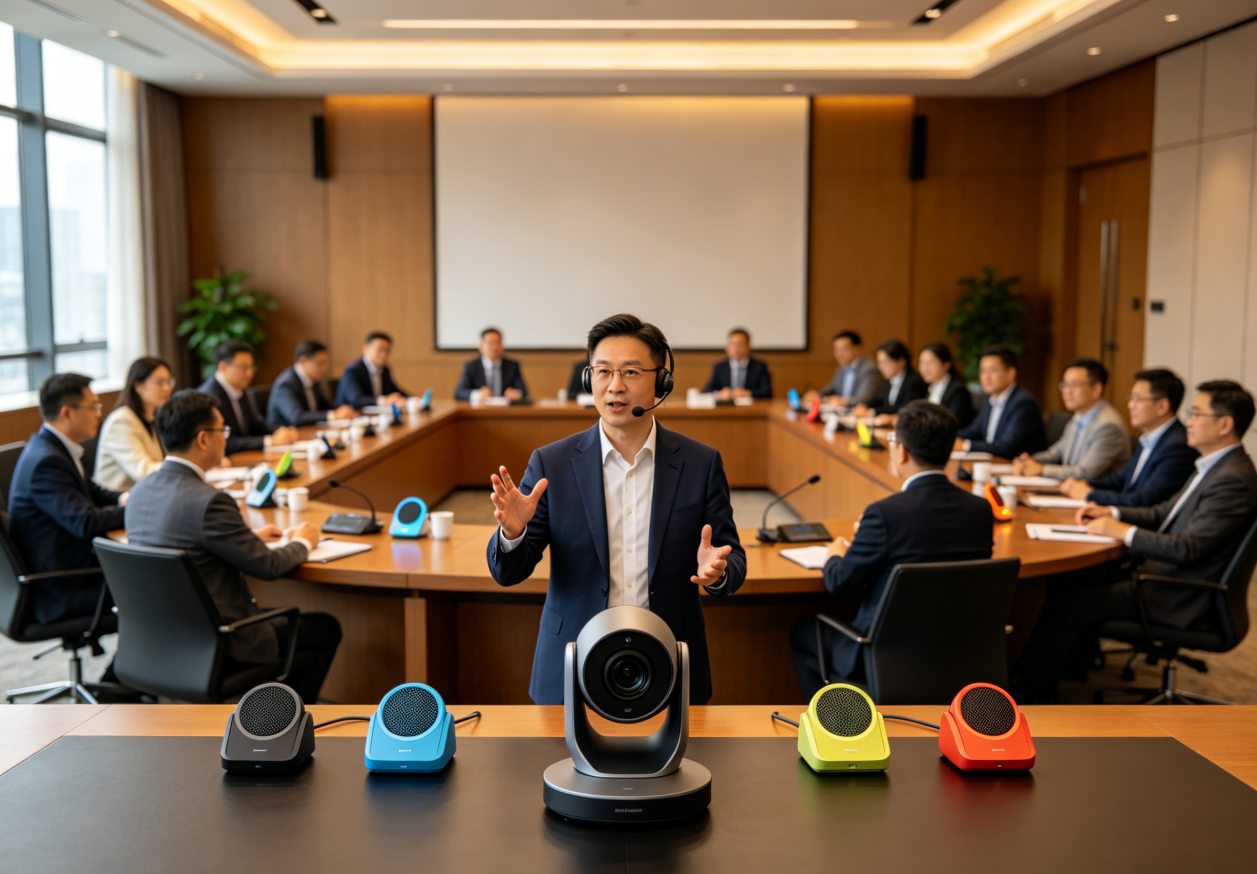
Hybrid work has redefined how teams communicate, but it has also exposed a critical weakness in many meeting environments: inconsistent audio quality. While organizations invest heavily in video and collaboration platforms, audio performance often remains overlooked—leading to inefficiencies, miscommunication, and reduced engagement.
Why Audio Is the Most Critical Element in Hybrid Meetings
In a hybrid meeting, participants rely on clear voice transmission to understand context, tone, and intent. Unlike video, which enhances communication, audio is fundamental—without it, meetings cannot function effectively.
Common issues affecting meeting performance include:
Echo and feedback disrupting conversations
Background noise masking key discussion points
Uneven volume levels between speakers
Difficulty hearing remote participants clearly
These problems can lead to repeated discussions, delayed decisions, and reduced meeting efficiency.
The Impact of Poor Audio on Business Productivity
Inefficient meetings affect both time and decision-making quality. When participants cannot hear clearly, conversations slow down and require repetition, increasing the overall duration of meetings.
Over time, this leads to:
Extended meeting durations and scheduling conflicts
Lower participation from remote team members
Reduced clarity in decisions and action items
Higher fatigue during long sessions
Improving audio quality directly contributes to more efficient collaboration and better outcomes.
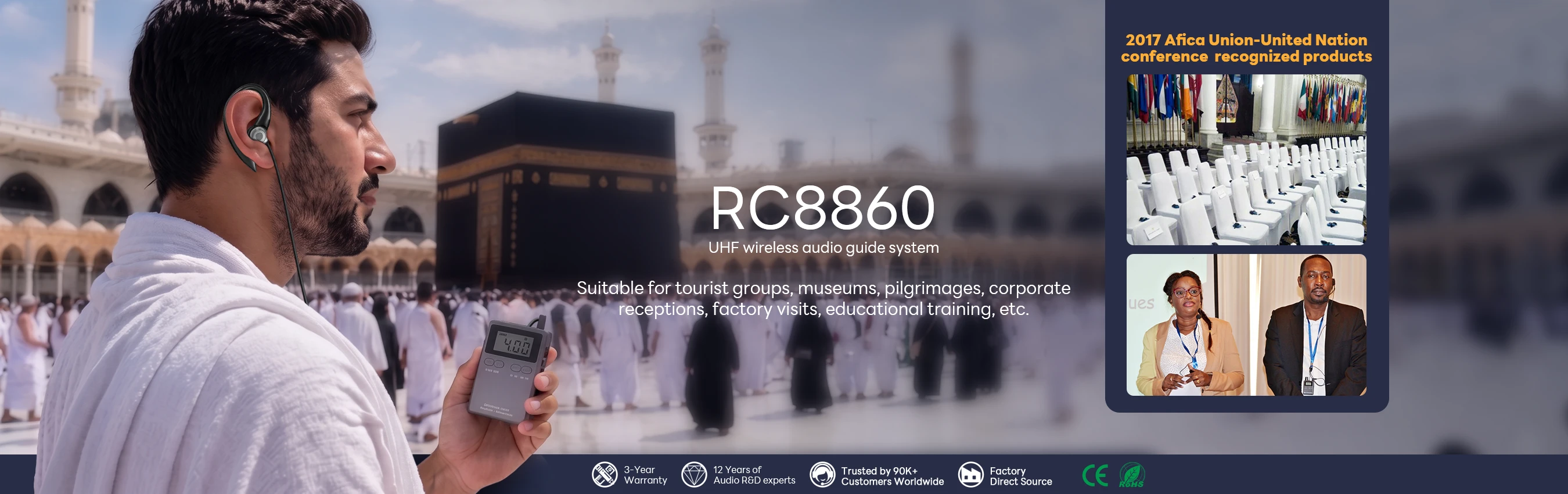
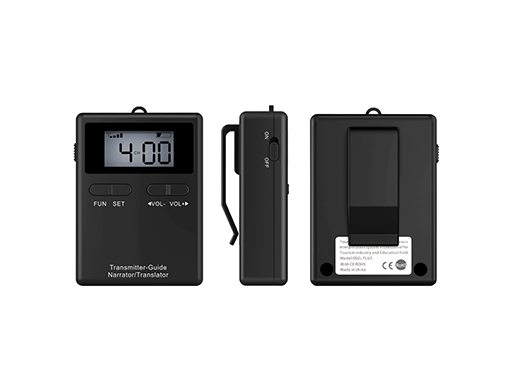
RC8860 Audio Conference System for Clear Communication
The RC8860 audio conference system is designed to provide stable and clear voice transmission in professional meeting environments.
Its wireless communication capabilities allow participants to hear instructions and discussions consistently, regardless of room size or layout.
Key features include:
Stable UHF transmission for reliable signal performance
Multi-channel support for flexible meeting configurations
Wide coverage suitable for boardrooms and open spaces
Hands-free operation for natural communication
Long battery life for extended meeting sessions
RC2402 for Noise-Controlled Environments
The RC2402 system is optimized for environments where background noise is a concern.
By reducing ambient distractions, it allows conversations to remain focused and improves overall communication clarity in shared workspaces.
RC2406 for Large-Scale Meeting Spaces
The RC2406 conference system supports larger meeting environments such as auditoriums and multi-participant sessions.
Its expanded channel capacity enables multiple users to communicate simultaneously without interference.
Benefits of Upgrading to a Dedicated Audio Conference System
Implementing a purpose-built audio system provides measurable improvements in meeting performance:
Clearer communication between in-room and remote participants
Reduced need for repetition and clarification
More efficient meeting flow and time management
Improved engagement across distributed teams
These benefits help organizations operate more effectively in hybrid work environments.
Common Use Cases
Audio conference systems are widely used across different professional settings:
Corporate boardrooms and executive meetings
Hybrid team collaboration sessions
Training and educational environments
Legal and compliance meetings
Healthcare and research discussions
Clear Audio Drives Better Meetings
In hybrid work environments, audio quality is no longer optional—it is a core component of effective communication. Investing in reliable audio infrastructure helps organizations reduce friction, improve collaboration, and make better decisions.
A dedicated audio conference system ensures that every participant can hear and be heard clearly, regardless of location.
Upgrade your meeting experience: Explore audio conference solutions designed for clarity, reliability, and modern hybrid collaboration.