.webp)

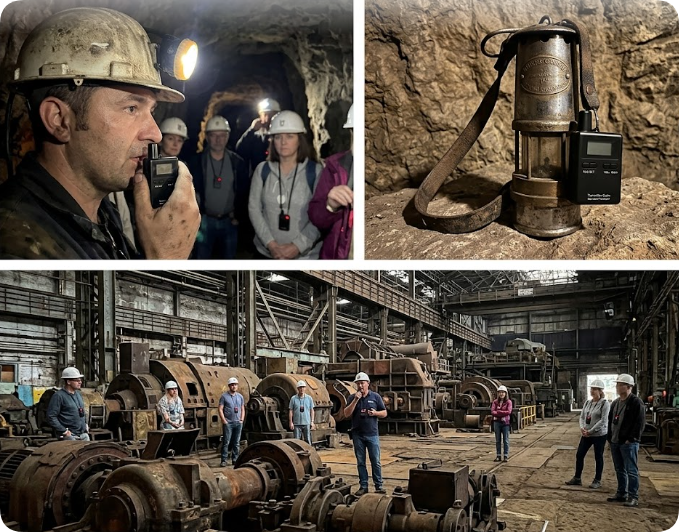
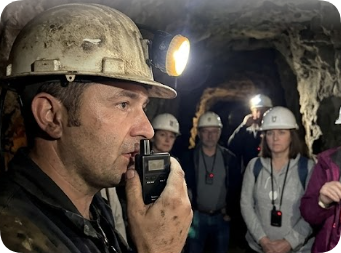
My View: I toured an old coal mine museum in Wales. The guide took us underground, where the echoes were so bad that his voice bounced off the stone walls like a ricocheting bullet. I understood maybe half of what he said. Then I visited a mining museum in Germany that used a Wireless Tour Guide System. The guide wore a RC086 transmitter, and each visitor wore a RC2406 receiver. He spoke in a normal voice, and I heard every word about the 19th‑century miners‘ conditions — even when the simulated dynamite blast went off. That‘s when I realized: industrial heritage tours need audio that works underground, in the dark, and through echoes.
Industrial Heritage & Mining Museum Audio (RC2406 & RC086 & RC2500)
Industrial heritage tourism has grown into an influential global cultural movement. Across the world, decommissioned deep-surface coal mines, monolithic steel foundries, complex textile mills, and historic railway facilities are actively being repurposed into immersive educational museums. However, preserving the physical structural integrity of these environments leaves administrators with massive acoustic challenges. Subterranean corridors, unyielding raw stone chambers, and soaring metallic structures amplify sound waves rather than absorbing them. A presenter’s spoken words quickly turn into chaotic reflections, stripping away intelligibility. In these dark, complex spaces, maintaining reliable voice transmission is a fundamental safety absolute for managing groups safely near heavy historical infrastructure.
Relying on an advanced, professional hardware setup completely bypasses these challenging environmental barriers. Utilizing specialized long-wavelength transmission equipment allows museum docents to speak comfortably without straining their vocal cords. Visitors receive clear, high-definition audio streams directly into their headsets, allowing crowds to fully absorb structural secrets, personal narratives, and safety rules while navigating tight tunnels or observing heavy machinery showcases.
Penetrating Solid Rock: The RC086 UHF Digital Transmitter
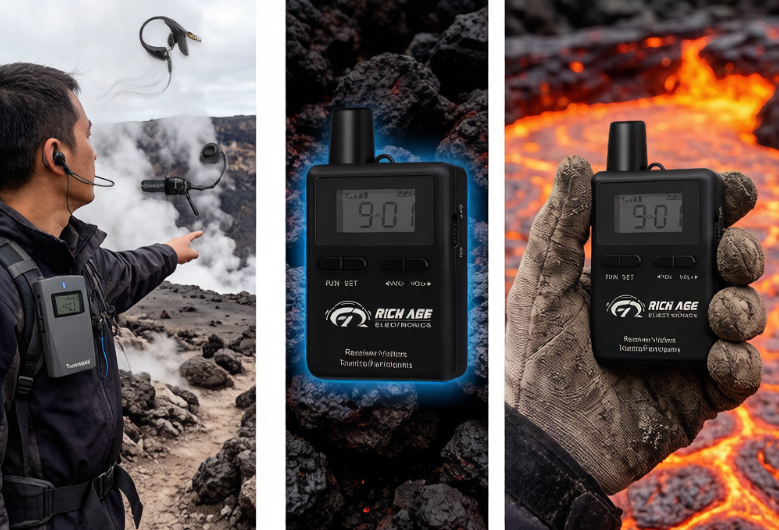
The RC086 UHF digital system is built specifically to operate reliably within deep underground shafts, narrow tunnels, and echoing industrial caverns. Moving tour groups through damp, rock-walled tunnels requires a stable signal that can easily wrap around tight blind corners and pierce physical geological blockages. Utilizing a specialized UHF band (470‑510MHz), this transmitter avoids the structural limitations that often disrupt higher-frequency consumer networks, delivering an unbroken 200‑meter range through heavy underground topography.
Acoustic performance is driven by an advanced chipset that produces premium HDCD sound quality, restoring full vocal definitions to counteract hard-surface reverberations. For long subterranean routes where adding charging points is impossible, the hardware uses an automated power‑saving wake‑up mode that dynamically lowers power consumption during periods of silence. To preserve a respectful environment within sensitive memorial mines, the integrated F2 two‑way mode allows visitors to ask questions via a discrete button interface, giving them direct communication without disrupting the quiet atmosphere of the site.
Surviving the Elements: The RC2406 Multi-Channel Receiver
For operations hosting multiple groups, school field trips, and public tours simultaneously, matching your equipment with the RC2406 receiver provides exceptional logistical flexibility. This unit offers 80 discrete channels, allowing dozens of individual tour guides to lead groups through the same mine entrance or factory floor at the same time without cross-talk or signal interference. Its advanced internal filtering provides excellent strong anti‑interference performance, shielding the audio stream from electric motors or underground ventilation grids.
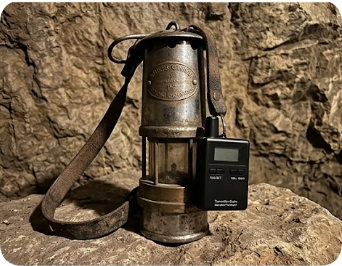
The physical structure is designed for demanding environments. Weighing a mere 50 grams, this ultra-lightweight receiver prevents wearer fatigue during extensive multi-hour excursions. Crucially for mining heritage applications, the exterior casing features a rugged, IPX4 splash‑resistant rating. This ensures perfect operational safety against constant ceiling drips, condensation, and high humidity levels. Simple controls allow visitors of all ages to manage their settings instantly, letting them stay focused on the historic experience.
Cutting Through Above-Ground Factory Noise: The High-Power RC2500
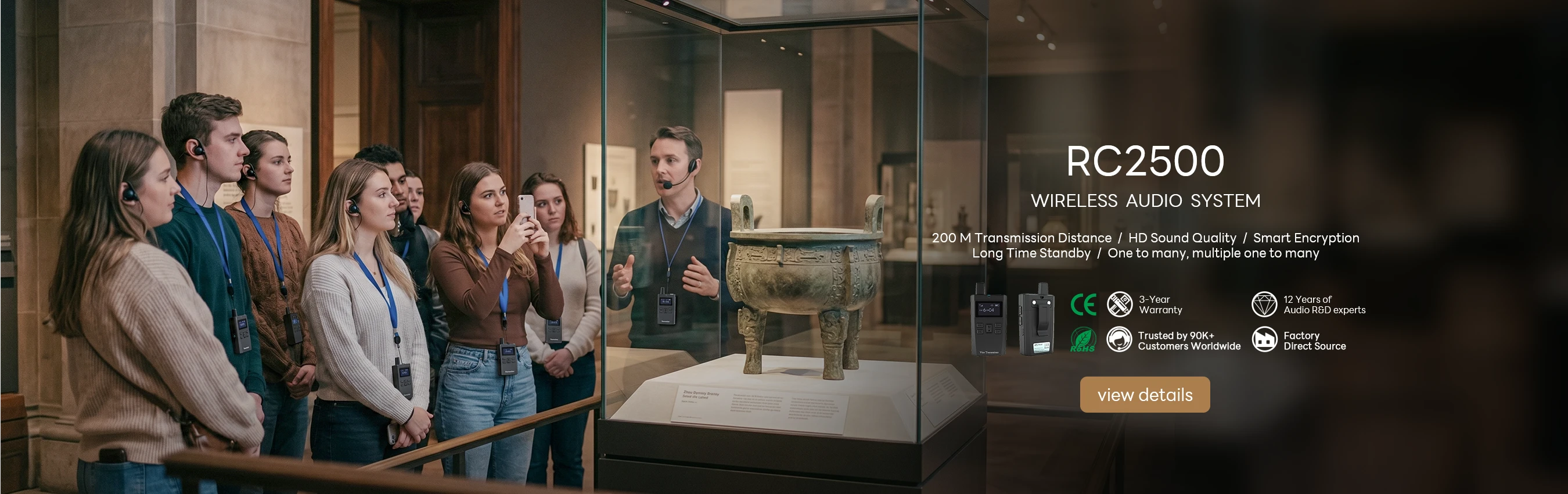
While deep underground tunnels present a challenge with echoes, above-ground industrial heritage sites—such as historic locomotive roundhouses, massive shipyard dry docks, and historic steel mills—introduce a different obstacle: heavy background noise. Even when historical machinery is static, modern ventilation systems, safety fans, and visiting crowds create a loud environment. For these open spaces, the RC2500 transmitter system offers an excellent technical solution.
Engineered with a robust 20mW output power, the RC2500 easily cuts through high background noise levels, keeping the guide's story perfectly audible across open outdoor yards and wide machinery floors. Its long-lasting 40‑hour receiver battery gives operators the freedom to run continuous tour slots all day long without needing to swap out devices or charge units between groups. Wrapped in an exceptionally durable, impact-resistant casing, this heavy-duty hardware is fully protected against airborne dust particles, grit, and vibrations common to historic industrial properties.
Case Study: Flawless Performance 150 Meters Beneath Austria
The practical value of integrating high-grade wireless hardware is shown by successful deployments in elite global tourist locations. A famous historic salt mine in Austria, which hosts over 500,000 international visitors annually, replaced its old PA speakers with the RC086 and RC2406 equipment setup. A highlight of this deep tour is an ancient underground chapel carved out of the rock, which features live acoustic music performances and historical reenactments.
Operating at depths more than 150 meters below the surface, the digital wireless transmitters maintain clear, noise-free audio distribution through thick geological layers. The site's principal tour coordinator shared their experience: “Before updating our equipment, our guides had to shout to overcome the heavy echoes of the cavern walls, causing vocal strain and an unprofessional visitor experience. Now, our staff can speak in soft, conversational tones, and every visitor hears the narrative perfectly. It has modernized our safety management, improved our professionalism, and brought a deeper level of respect to our historical site.”
Versatility Across Global Heritage, Aviation, and Military Museums
The technical advantages of a professional, long-range wireless audio broadcast network extend far beyond mining tours. Major educational destinations and preservation groups deploy this hardware combination to optimize a wide variety of guest experiences:
Aviation Museums and Echoing Hangars: Delivering clear, direct narratives beneath massive historical wings inside expansive, high-ceilinged steel hangar buildings.
Decommissioned Battleship & Naval Vessel Tours: Guiding visitors easily through narrow iron hatches and thick steel bulkheads without losing signal connection.
Cold War Underground Bunker Exhibits: Maintaining high-fidelity audio streams inside multi-layered blast shelters and concrete defensive installations.
Historic Railway Roundhouses & Maintenance Sheds: Overcoming the echoes of cavernous brick walls and large maintenance bays to deliver clear historical details.
Technical Breakdown: Choosing the Right Heritage Site Audio Hardware
| Product Specifications | RC086 UHF System | RC2406 Receiver Unit | RC2500 High-Power Unit |
|---|---|---|---|
| Operating Frequency | UHF 470-510MHz Band | 2.4GHz Digital Filtering | High-Power RF Transmission |
| Channel Variations | Multi-channel stability | 80 Independent Channels | Standard multi-channel selection |
| Environmental Shield | Standard industrial body | IPX4 Splash-Resistant Housing | Dust and Shock Resistant Casing |
| Primary Site Use | Subterranean shafts, deep tunnels | Damp mines, multi-group venues | Steel mills, yards, noisy factories |
Why this professional hardware combination is essential for industrial tourism: Long-wavelength UHF signals cut through rock barriers easily, avoiding dropouts in deep underground routes. High-capacity batteries ensure stable, all-day operation through extended tour schedules, while robust IPX4 ratings protect the gear from moisture and dripping water. Additionally, large channel options allow complex multi-group operations to run seamlessly without cross-talk, while built-in voice processing keeps audio crisp in challenging, echoing structures.
Actionable advice for industrial heritage museum directors and park curators: Your visitors choose your historic locations to connect with the authentic experiences of the workers who built our industrial heritage. Do not let heavy echoes, background ventilation noise, or deep underground paths compromise that history. Upgrading your venue with a professional wireless audio system is an immediate, high-impact choice that preserves clarity, ensures safety, and delivers a memorable educational journey for every guest.
Commercial Equipment Procurement Details: RC086 UHF Digital Transmitter, RC2406 80-Channel Audio Receiver, RC2500 High-Power Industrial System.
Discover professional industrial tour solutions on our specialized product channels:
Wireless Tour Guide System |
RC086 details |
RC2406 details |
RC2500 details