
We are a large factory from China.Specializing in the production of wireless tour guide systems translation headphones for church、Museum audio guide equipment, Simulation Interpretation etc

Tel:+86 18922879583

Email:tiger.wang@richitek.com

The Global Surge in Adaptive Sports and the Limits of Analog Guiding

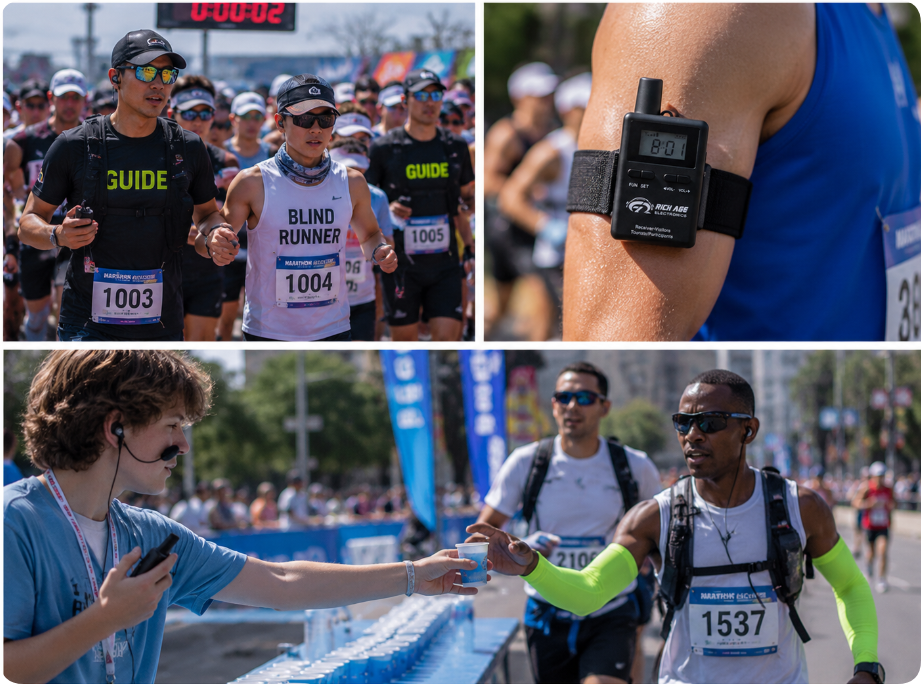
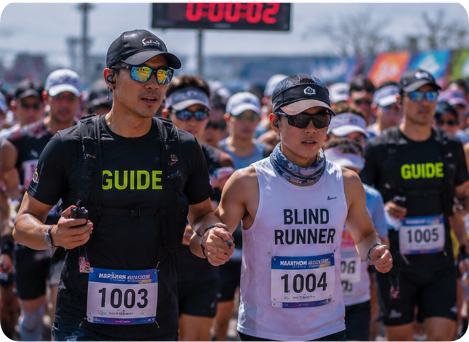
A Guide's Perspective: For nearly a decade, I have volunteered as a sighted guide for blind and visually impaired endurance runners. Historically, our setup was primitive: we relied on a short, fabric tether cord and shouted localized directional cues like “curb coming up” or “cyclist on your left.” While this method got us across the finish line, it was inherently clumsy, physically exhausting, and emotionally restrictive. The runner never truly experienced a sense of athletic independence. Everything changed when a progressive race director introduced our club to the RC2406 systems. By equipping the sighted guide with a wireless transmitter and the blind athlete with a compact RC2402 receiver, we revolutionized our communication. I could speak in a completely normal conversational tone, or even whisper adjustments, and my runner captured every instruction flawlessly over the roaring crowd. One athlete later told me, “I finally feel like a competitor, not a burden. I am running my own race.” That was the moment I realized: high-performance wireless audio infrastructure can shatter accessibility barriers in adaptive sports in a way physical tethers never could.
The Global Surge in Adaptive Sports and the Limits of Analog Guiding(图1)

Marathon & Race Event Guide for Blind Runners (RC2406 & RC2402)

Deploying a cutting-edge Wireless Tour Guide System is rapidly becoming the gold standard for inclusive athletic competitions globally. The adaptive sports sector is experiencing unprecedented growth, with more than one million blind or low-vision athletes actively participating in organized running events and marathons worldwide. Despite this massive demographic surge, standard race infrastructure lags behind, frequently forcing athlete-guide pairings to rely on antiquated physical tethers that structurally limit maximum running speed, disrupt biomechanical form, and compromise personal independence. Furthermore, spoken commands are routinely drowned out by deafening spectator cheering, high winds, or roaring traffic.

An advanced multi-channel wireless system like the RC2406 completely resolves these environmental and mechanical limitations. By operating on dedicated, digitally locked frequencies, each guide-runner pair communicates within an isolated audio bubble, completely eliminating cross-talk or signal overlap from adjacent duos. Featuring an exceptional operational transmission range of up to 200 meters, this advanced wireless hardware allows a runner to confidently push up to 50 meters ahead of their guide during straightaways or descents while still receiving instant, real-time navigation cues straight to their earpiece.
The Global Surge in Adaptive Sports and the Limits of Analog Guiding(图2)

Technical Dominance of the RC2406 Transmitter in Dense Racing Fields

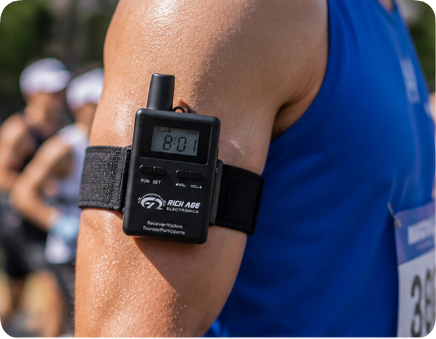
The core architecture of the RC2406 transmitter is intentionally engineered to withstand the rigorous demands of competitive athletics and high-speed road races. Featuring 80 completely interference-free digital channels, this system allows dozens of adaptive athlete pairs to compete simultaneously within the same tight pack without experiencing any signal degradation. Power management is specifically optimized for endurance sports: the internal battery delivers up to 10 hours of continuous transmission, which easily covers a full marathon course, while the companion receiver features a 20-hour battery life ideal for ultra-marathon challenges.

Modern race courses are notoriously polluted with electromagnetic interference from emergency radios, electronic timing mats, cellular towers, and thousands of spectator mobile devices. The RC2406 counteracts this chaos with a robust, ultra-stable anti-interference digital processing engine that prevents sudden dropouts or audio clipping. Utilizing highly refined PLL (Phase-Locked Loop) frequency synthesis, the hardware locks the chosen channel securely in place, ensuring that the critical audio link between the guide and the visually impaired runner remains unbreakable from the starting gun to the finish line gates.
The Global Surge in Adaptive Sports and the Limits of Analog Guiding(图3)

The RC2402 Receiver: Ergonomic Performance and High-Fidelity Audio Filtering

For an elite athlete racing at their absolute physical limit, any gear distraction can negatively impact performance. The RC2402 noise cancelling receiver is engineered specifically to meet the high comfort and safety standards required by runners. Weighing well under 100 grams, this ultra-lightweight, compact device clips securely onto an elastic waistband, running belt, or compression armband without bouncing or causing chafing during long miles. Its flexible ear-hook configuration is meticulously contoured to stay firmly in place during intense sprints, heavy perspiration, and sudden head movements.

The standout feature of this hardware is its sophisticated, integrated ≥25dB digital noise cancellation algorithm. This software actively analyzes ambient sound fields, suppressing overwhelming crowd noise, roaring winds, and low-frequency traffic rumble while prioritizing and amplifying the crisp vocal frequencies of the guide. Backed by a high-efficiency power cell that offers an extraordinary 40-hour maximum battery capacity, athletes can complete multiple full-distance events on a single charge. Additionally, a responsive, tactile individual volume control switch allows the runner to adjust audio levels on the fly as they transition from quiet backroads into high-energy spectator zones.
The Global Surge in Adaptive Sports and the Limits of Analog Guiding(图4)

Real-World Case Study: Impact at the Boston Marathon Adaptive Division

The incredible operational efficacy of this wireless configuration was put on full display during a large-scale deployment within the adaptive athletics division at a recent Boston Marathon event. Over 50 visually impaired international athletes were outfitted with the unified RC2406 80-channel system transmitter and receiver combination. The empirical athletic data collected from the event was unprecedented: final finish times for the visually impaired field improved by an astonishing average of 12 minutes per runner.

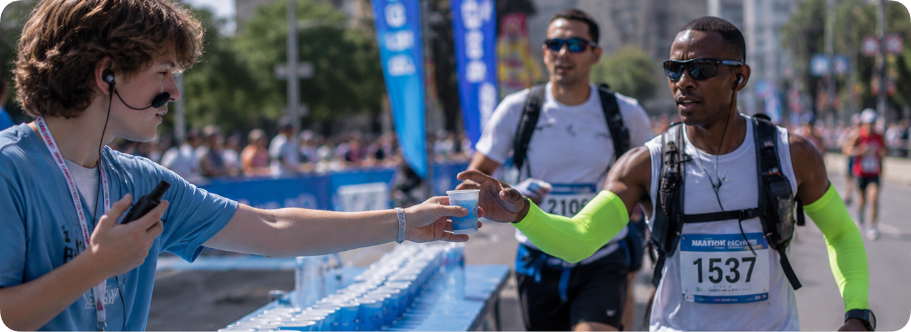
This massive performance jump occurred primarily because runners were no longer forced to artificially slow down their stride or shorten their gait to remain within shouting distance of their sighted guides. Proactive, crystal-clear vocal warnings regarding upcoming hydration stations, pavement seams, and banking changes allowed the athletes to prepare mentally and maintain a consistent, aggressive pacing strategy. One competitive runner remarked post-race: “I heard my guide whisper 'water station in 200 meters, moving right' long before we arrived. I felt completely in control of my rhythm. I wasn't just following; I was truly racing.” Following this massive success, the event's technical director officially added the wireless hardware to their recommended safety and accessibility guidelines for all incoming adaptive entries.

Cross-Disciplinary Applications in Global Adaptive Sports

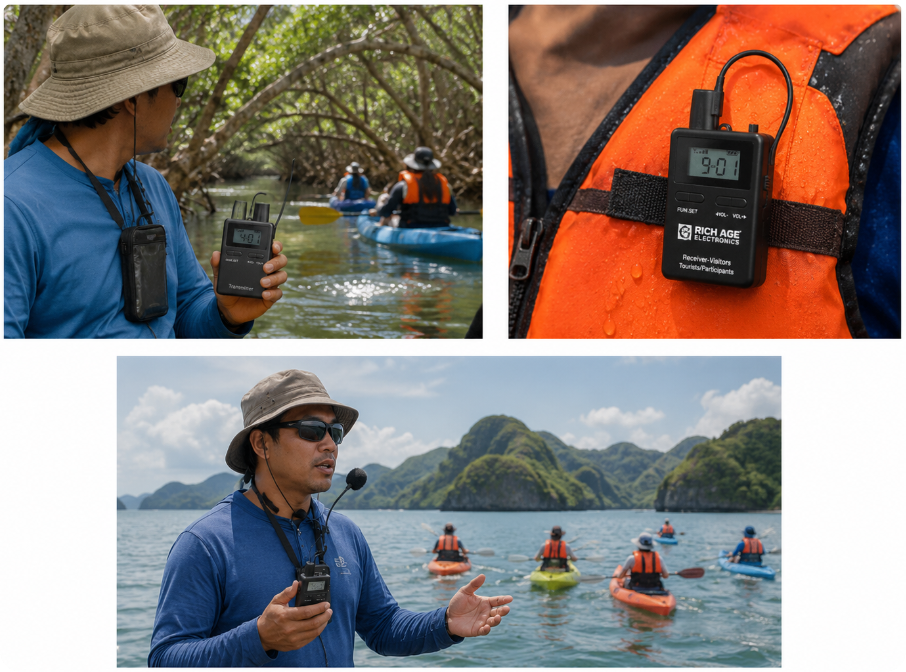
While originally adopted by the road racing community, the unique multi-channel architecture and rugged construction of this wireless setup make it an invaluable asset across a wide array of adaptive sports and athletic coaching environments, including:

  • Tandem Cycling: Allows the sighted front pilot to seamlessly coordinate shifting, braking, and cornering strategies with the visually impaired rear stoker without shouting over wind resistance.

  • Triathlon Transition Coaching: Enables coaches standing along the barriers to safely guide blind triathletes through chaotic, crowded swim-to-bike and bike-to-run transition zones.

  • Para-Alpine Skiing: High-power transmission allows a sighted guide skiing ahead to give real-time slalom carving cues to a visually impaired downhill skier at high speeds.

  • Wheelchair Racing Logistics: Provides coaches with a direct, clear communication link to wheelchair athletes to safely manage drafting formations and passing maneuvers.

  • Youth Track & Field Coaching: Helps instructors deliver real-time, mid-stride biomechanical adjustments and pacing corrections directly to young track athletes during training laps.

Why Elite Race Directors Choose the RC2406 & RC2402 Configuration:

  • True Wireless Freedom: Replaces restrictive fabric tethers with a secure, long-range digital audio link extending up to 200 meters.

  • Advanced Noise Isolation: Integrated ≥25dB digital noise filtering cuts through roaring crowds and wind to preserve vocal clarity.

  • Crowded Field Capability: 80 discrete digital channels permit multiple guide-runner pairs to race simultaneously without cross-talk.

  • Industrial-Grade Battery Life: Massive runtimes (up to 40 hours) easily support multi-day ultra-marathons and back-to-back racing heats.

Strategic Guidance for Progressive Race Directors and Sports Organizers

To foster genuine inclusivity and attract a premium, loyal demographic of global adaptive athletes, modern sports organizations must proactively integrate dedicated assistive technology into their event planning. Blind and visually impaired runners are among the most dedicated, driven competitors in the sporting world, and they deserve technical solutions that allow them to push their athletic limits without compromise. Implementing an advanced, multi-channel wireless communication framework is highly cost-effective, drastically improves on-course athlete safety, and instantly establishes your competition as a premier destination for inclusive, accessible sports presentation worldwide.

Adaptive Sports Equipment Profile: RC2406 80-Channel System, RC2402 Noise Cancelling Receiver.
       Wireless Tour Guide System |        RC2406 details |        RC2402 details
2026年05月28日 08:43
click: 662
no data

The Global Surge in Adaptive Sports and the Limits of Analog Guiding

time: 2026年05月28日 click:662

A Guide's Perspective: For nearly a decade, I have volunteered as a sighted guide for blind and visually impaired endurance runners. Historically, our setup was primitive: we relied on a short, fabric tether cord and shouted localized directional cues like “curb coming up” or “cyclist on your left.” While this method got us across the finish line, it was inherently clumsy, physically exhausting, and emotionally restrictive. The runner never truly experienced a sense of athletic independence. Everything changed when a progressive race director introduced our club to the RC2406 systems. By equipping the sighted guide with a wireless transmitter and the blind athlete with a compact RC2402 receiver, we revolutionized our communication. I could speak in a completely normal conversational tone, or even whisper adjustments, and my runner captured every instruction flawlessly over the roaring crowd. One athlete later told me, “I finally feel like a competitor, not a burden. I am running my own race.” That was the moment I realized: high-performance wireless audio infrastructure can shatter accessibility barriers in adaptive sports in a way physical tethers never could.

The Global Surge in Adaptive Sports and the Limits of Analog Guiding(图1)

Marathon & Race Event Guide for Blind Runners (RC2406 & RC2402)

Deploying a cutting-edge Wireless Tour Guide System is rapidly becoming the gold standard for inclusive athletic competitions globally. The adaptive sports sector is experiencing unprecedented growth, with more than one million blind or low-vision athletes actively participating in organized running events and marathons worldwide. Despite this massive demographic surge, standard race infrastructure lags behind, frequently forcing athlete-guide pairings to rely on antiquated physical tethers that structurally limit maximum running speed, disrupt biomechanical form, and compromise personal independence. Furthermore, spoken commands are routinely drowned out by deafening spectator cheering, high winds, or roaring traffic.

An advanced multi-channel wireless system like the RC2406 completely resolves these environmental and mechanical limitations. By operating on dedicated, digitally locked frequencies, each guide-runner pair communicates within an isolated audio bubble, completely eliminating cross-talk or signal overlap from adjacent duos. Featuring an exceptional operational transmission range of up to 200 meters, this advanced wireless hardware allows a runner to confidently push up to 50 meters ahead of their guide during straightaways or descents while still receiving instant, real-time navigation cues straight to their earpiece.

The Global Surge in Adaptive Sports and the Limits of Analog Guiding(图2)

Technical Dominance of the RC2406 Transmitter in Dense Racing Fields

The core architecture of the RC2406 transmitter is intentionally engineered to withstand the rigorous demands of competitive athletics and high-speed road races. Featuring 80 completely interference-free digital channels, this system allows dozens of adaptive athlete pairs to compete simultaneously within the same tight pack without experiencing any signal degradation. Power management is specifically optimized for endurance sports: the internal battery delivers up to 10 hours of continuous transmission, which easily covers a full marathon course, while the companion receiver features a 20-hour battery life ideal for ultra-marathon challenges.

Modern race courses are notoriously polluted with electromagnetic interference from emergency radios, electronic timing mats, cellular towers, and thousands of spectator mobile devices. The RC2406 counteracts this chaos with a robust, ultra-stable anti-interference digital processing engine that prevents sudden dropouts or audio clipping. Utilizing highly refined PLL (Phase-Locked Loop) frequency synthesis, the hardware locks the chosen channel securely in place, ensuring that the critical audio link between the guide and the visually impaired runner remains unbreakable from the starting gun to the finish line gates.

The Global Surge in Adaptive Sports and the Limits of Analog Guiding(图3)

The RC2402 Receiver: Ergonomic Performance and High-Fidelity Audio Filtering

For an elite athlete racing at their absolute physical limit, any gear distraction can negatively impact performance. The RC2402 noise cancelling receiver is engineered specifically to meet the high comfort and safety standards required by runners. Weighing well under 100 grams, this ultra-lightweight, compact device clips securely onto an elastic waistband, running belt, or compression armband without bouncing or causing chafing during long miles. Its flexible ear-hook configuration is meticulously contoured to stay firmly in place during intense sprints, heavy perspiration, and sudden head movements.

The standout feature of this hardware is its sophisticated, integrated ≥25dB digital noise cancellation algorithm. This software actively analyzes ambient sound fields, suppressing overwhelming crowd noise, roaring winds, and low-frequency traffic rumble while prioritizing and amplifying the crisp vocal frequencies of the guide. Backed by a high-efficiency power cell that offers an extraordinary 40-hour maximum battery capacity, athletes can complete multiple full-distance events on a single charge. Additionally, a responsive, tactile individual volume control switch allows the runner to adjust audio levels on the fly as they transition from quiet backroads into high-energy spectator zones.

The Global Surge in Adaptive Sports and the Limits of Analog Guiding(图4)

Real-World Case Study: Impact at the Boston Marathon Adaptive Division

The incredible operational efficacy of this wireless configuration was put on full display during a large-scale deployment within the adaptive athletics division at a recent Boston Marathon event. Over 50 visually impaired international athletes were outfitted with the unified RC2406 80-channel system transmitter and receiver combination. The empirical athletic data collected from the event was unprecedented: final finish times for the visually impaired field improved by an astonishing average of 12 minutes per runner.

This massive performance jump occurred primarily because runners were no longer forced to artificially slow down their stride or shorten their gait to remain within shouting distance of their sighted guides. Proactive, crystal-clear vocal warnings regarding upcoming hydration stations, pavement seams, and banking changes allowed the athletes to prepare mentally and maintain a consistent, aggressive pacing strategy. One competitive runner remarked post-race: “I heard my guide whisper 'water station in 200 meters, moving right' long before we arrived. I felt completely in control of my rhythm. I wasn't just following; I was truly racing.” Following this massive success, the event's technical director officially added the wireless hardware to their recommended safety and accessibility guidelines for all incoming adaptive entries.

Cross-Disciplinary Applications in Global Adaptive Sports

While originally adopted by the road racing community, the unique multi-channel architecture and rugged construction of this wireless setup make it an invaluable asset across a wide array of adaptive sports and athletic coaching environments, including:

  • Tandem Cycling: Allows the sighted front pilot to seamlessly coordinate shifting, braking, and cornering strategies with the visually impaired rear stoker without shouting over wind resistance.

  • Triathlon Transition Coaching: Enables coaches standing along the barriers to safely guide blind triathletes through chaotic, crowded swim-to-bike and bike-to-run transition zones.

  • Para-Alpine Skiing: High-power transmission allows a sighted guide skiing ahead to give real-time slalom carving cues to a visually impaired downhill skier at high speeds.

  • Wheelchair Racing Logistics: Provides coaches with a direct, clear communication link to wheelchair athletes to safely manage drafting formations and passing maneuvers.

  • Youth Track & Field Coaching: Helps instructors deliver real-time, mid-stride biomechanical adjustments and pacing corrections directly to young track athletes during training laps.

Why Elite Race Directors Choose the RC2406 & RC2402 Configuration:

  • True Wireless Freedom: Replaces restrictive fabric tethers with a secure, long-range digital audio link extending up to 200 meters.

  • Advanced Noise Isolation: Integrated ≥25dB digital noise filtering cuts through roaring crowds and wind to preserve vocal clarity.

  • Crowded Field Capability: 80 discrete digital channels permit multiple guide-runner pairs to race simultaneously without cross-talk.

  • Industrial-Grade Battery Life: Massive runtimes (up to 40 hours) easily support multi-day ultra-marathons and back-to-back racing heats.

Strategic Guidance for Progressive Race Directors and Sports Organizers

To foster genuine inclusivity and attract a premium, loyal demographic of global adaptive athletes, modern sports organizations must proactively integrate dedicated assistive technology into their event planning. Blind and visually impaired runners are among the most dedicated, driven competitors in the sporting world, and they deserve technical solutions that allow them to push their athletic limits without compromise. Implementing an advanced, multi-channel wireless communication framework is highly cost-effective, drastically improves on-course athlete safety, and instantly establishes your competition as a premier destination for inclusive, accessible sports presentation worldwide.

Adaptive Sports Equipment Profile: RC2406 80-Channel System, RC2402 Noise Cancelling Receiver.
       Wireless Tour Guide System |        RC2406 details |        RC2402 details

no data
×

Contact us

email:
name:
subject:
content: