Silent Astronomy: Revolutionizing Observatory Education with RC2500 Two-Way Audio Systems
Enhancing Public Science Communication through High-Power UHF Wireless Technology and Night-Vision Safe Receiver Design.
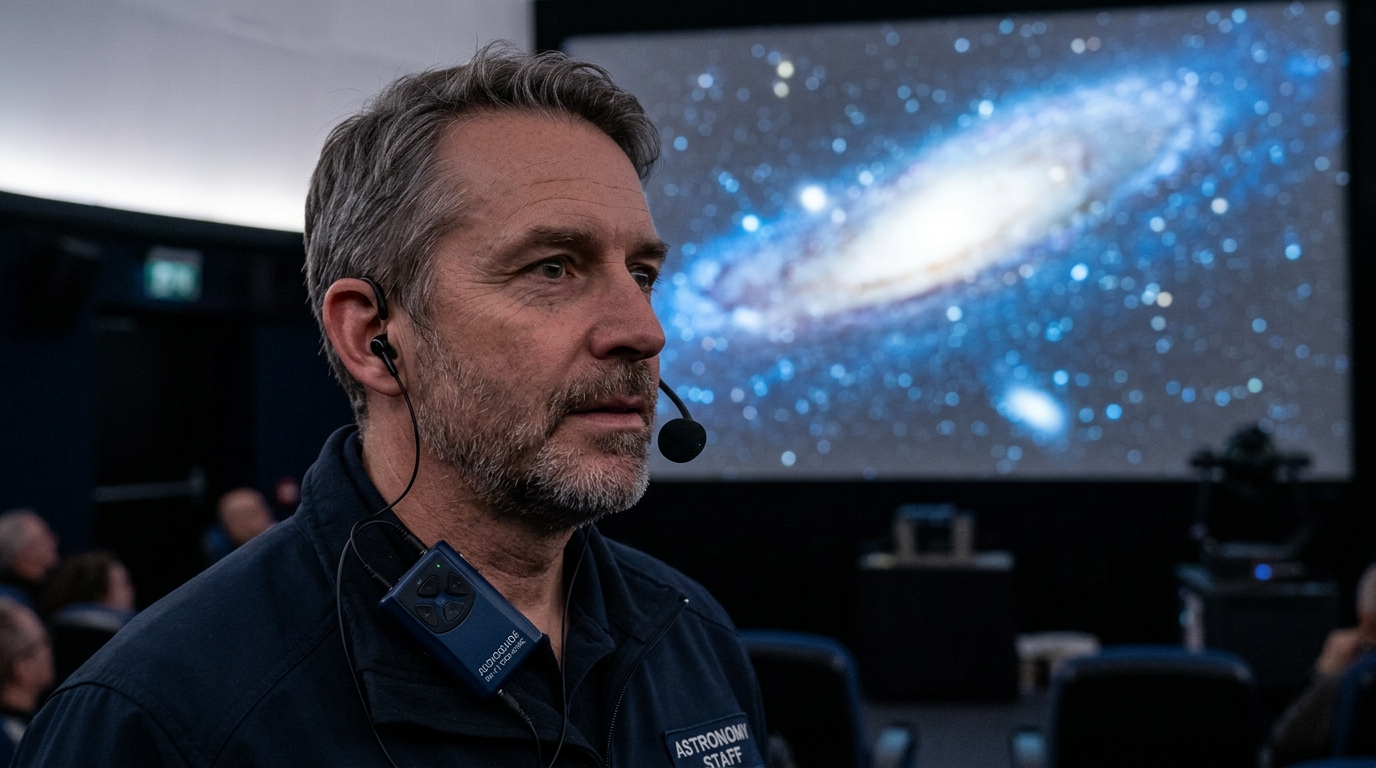
My View: During a public stargazing event in the Arizona desert, I witnessed a common pedagogical failure: a brilliant astronomer whose voice was being swallowed by the acoustic echo of a concrete observatory dome. The restless shuffling of children and the constant "shushing" from parents created a barrier to learning. Everything changed when he switched to the RC2500 system. Suddenly, the room went silent. He spoke with the intimacy of a whisper, yet reached every ear with crystalline clarity. When a young girl asked about event horizons, she didn't have to shout; she pressed a button, and her curiosity was shared instantly and clearly with the entire group. Silent two-way audio isn't just a gadget; it's the future of inclusive science communication.
The Challenge of Acoustic Environments in Science Centers
Observatories and planetariums are notoriously difficult acoustic environments. High vaulted ceilings, metallic telescope structures, and concrete flooring create significant reverberation, making traditional Public Address (PA) systems muddy and fatiguing for the listener. Furthermore, the "Stadium Effect"—where the loudest voices dominate the conversation—often intimidates younger or more soft-spoken visitors, preventing them from engaging with complex scientific topics.
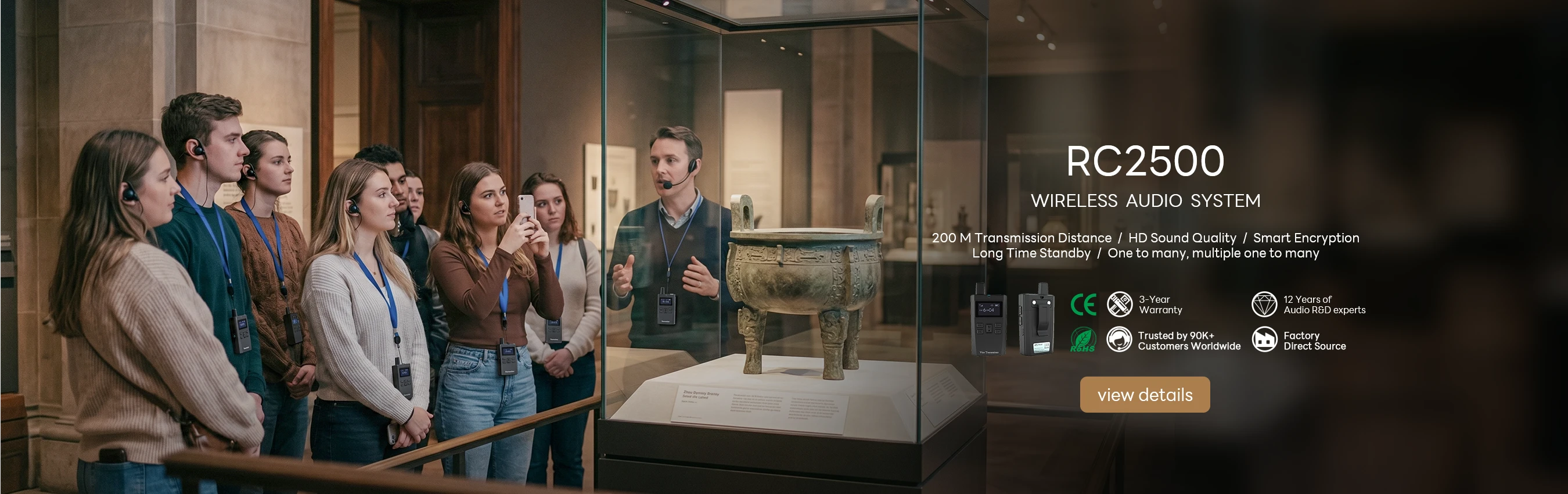
The Richitek RC2500 High-Power System bypasses these physical limitations entirely. By utilizing the 2.4G global frequency band paired with advanced UHF digital transmission, it delivers an interference-free audio feed directly to the visitor's ears. This "personalized soundstage" allows the educator to maintain a calm, conversational tone, which has been shown to improve information retention in public speaking settings by up to 40%.
Why the RC2500 Excels in Astronomical Programming
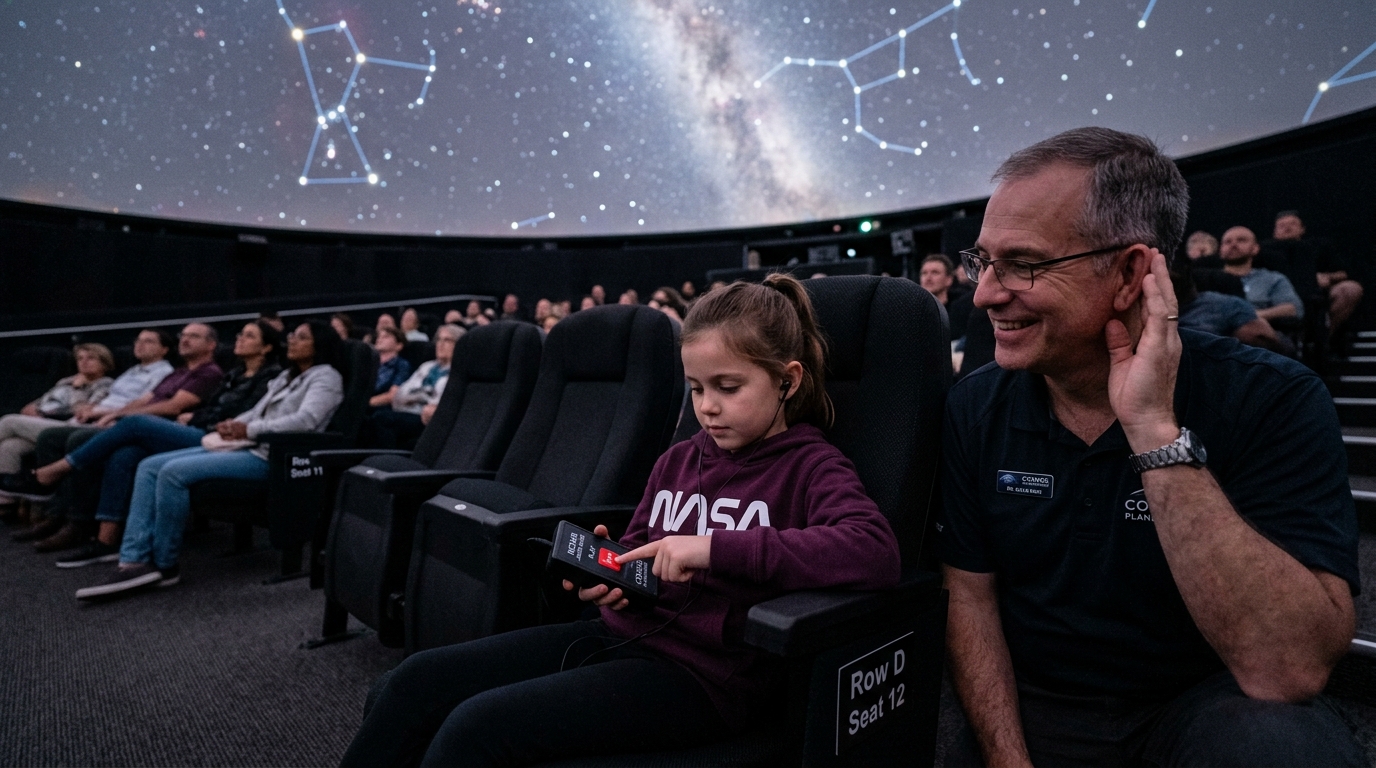
Preserving the Dark-Adapted Eye: Night-sky viewing requires the human eye to adjust for 20-30 minutes. The RC2408 receiver is designed with red-only LED indicators, a critical feature because red light does not trigger the "bleaching" of rhodopsin in the retina, allowing visitors to check their device status without ruining their view of the Milky Way.
200-Meter High-Power Range: Large observatories often have groups spread across multiple telescope piers or outdoor viewing decks. The RC2500’s 20mW output ensures that even those at the far edge of the facility remain perfectly synced with the main lecture.
Two-Way Dialogue (F2 Mode): Unlike one-way tour systems, the RC2500 allows for democratic participation. An audience member can ask a question from their seat, and the astronomer hears it in their headset. This eliminates the "shouting across the room" dynamic that often makes public nights feel chaotic.
The RC2500's high-fidelity sound quality brings cinematic cosmic soundscapes to every visitor.
Insights from Planetarium Directors
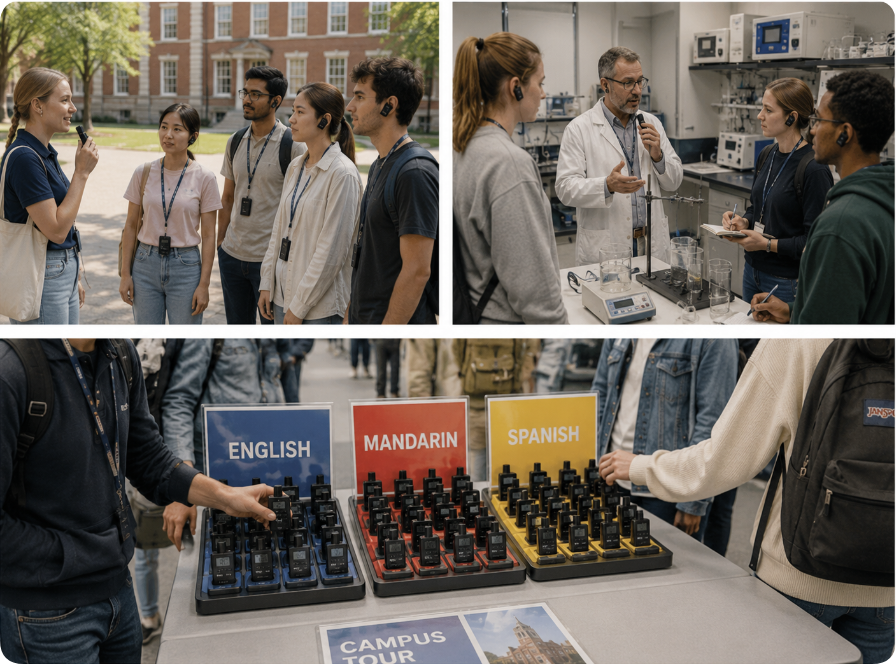
Facility managers emphasize that the primary benefit of the RC2500 is the elimination of "Noise Bleed." In many science centers, multiple exhibits or shows run simultaneously. Traditional speakers lead to a cacophony of overlapping audio. By moving to a silent system, the planetarium can run a high-energy show alongside a quiet telescope session in the next room without any acoustic interference.
Directors also point to fleet management efficiency. With a 40-hour battery life on the RC2408 receivers, staff only need to charge the units once every few days, even during busy summer seasons. The intelligent encryption provides a secondary benefit: it prevents "cross-talk" from local radio interference or other wireless devices commonly found in high-tech science environments.
Beyond Astronomy: Creative Industry Applications
The power and stability of the RC2500/RC2408 combo have led to adoption in other specialized fields:
Immersive Theater: Sound designers use the system to broadcast "inner monologues" or specific cues to actors on stage without the audience in the front row hearing the bleed.
Large-Scale Industrial Training: In electronics manufacturing plants where noise levels are high, the two-way feature allows trainees to ask questions without removing their hearing protection.
Multi-Lingual Science Summits: Utilizing the high channel count to provide simultaneous translation during international astrophysics conferences.
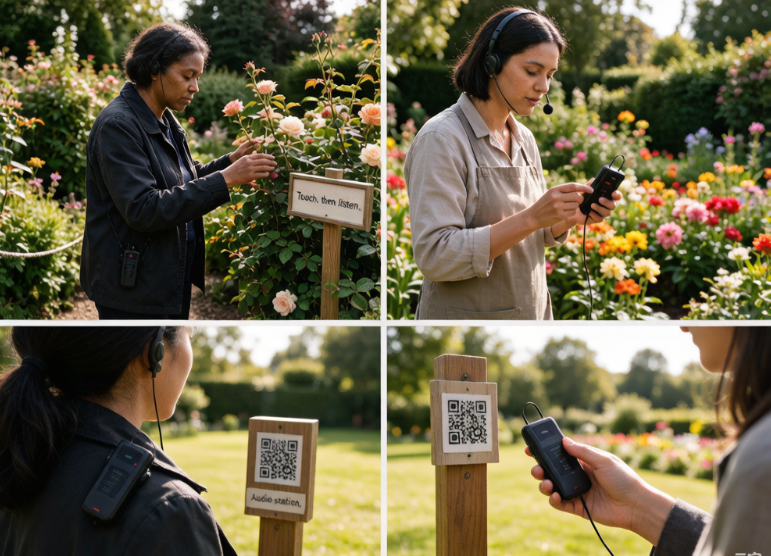
Tactile Astronomy for the Blind: Providing descriptive audio of the night sky to visually impaired visitors while they touch high-relief star maps.
Audio Fidelity: Hearing the Universe in Hi-Fi
Science education is increasingly moving toward a multi-sensory "theatrical" experience. The RC2500 supports 20Hz-20kHz Hi-Fi frequency response. This is crucial when the astronomer is playing audio data from space—such as the rhythmic pulse of a pulsar or the booming simulated roar of a Falcon 9 launch. Standard radio systems often clip these frequencies; the Richitek system ensures that the audio is as breathtaking as the visuals on the dome.
The one-key mute function on the transmitter allows for perfect timing. An educator can pause the narration to let a dramatic visual or a musical crescendo take center stage, then resume instantly with a single tap, keeping the audience perfectly in sync with the flow of the presentation.