
.webp)
Equine-Assisted Therapy Is Expanding Worldwide — Why RC8860 UHF Whisper Systems and RC2402 Noise-Cancelling Audio Solutions Are Transforming PTSD Recovery Programs
Clinical Insight: Horses respond instantly to emotion, tone, tension, and sudden sound. In trauma recovery sessions, especially those involving military veterans or abuse survivors, even a raised voice can disrupt emotional regulation and trigger anxiety. Modern equine-assisted psychotherapy increasingly depends on discreet wireless communication systems that allow therapists to guide patients calmly without breaking the quiet atmosphere of the pasture. Clear audio delivered privately through lightweight receivers helps preserve emotional safety, reduces sensory overload, and allows therapeutic conversations to unfold naturally.
Equine-assisted therapy has moved far beyond recreational riding programs. Across North America, Europe, and Australia, mental health organizations, rehabilitation ranches, trauma recovery centers, and veteran support foundations are integrating horses into structured psychotherapy and emotional recovery treatment plans.
The global equine-assisted services sector continues to grow rapidly as healthcare providers search for complementary approaches to anxiety, PTSD, depression, addiction recovery, autism support, and stress-related disorders. Clinical studies increasingly show measurable improvements in emotional regulation, social confidence, trust development, and trauma processing among participants involved in guided horse-assisted therapy programs.
For many veterans and trauma survivors, traditional clinical environments can feel overwhelming or emotionally closed off. Open outdoor therapy spaces offer a very different experience. Horses encourage non-verbal communication, emotional grounding, and mindfulness in ways conventional office settings often cannot.
But these sessions depend heavily on atmosphere.
Loud instructions, repeated shouting across fields, or inconsistent communication can interrupt focus, agitate horses, and increase stress for participants already coping with hypervigilance or sensory sensitivity.
This is why more therapy centers are adopting professional wireless communication systems for equine-assisted psychotherapy.
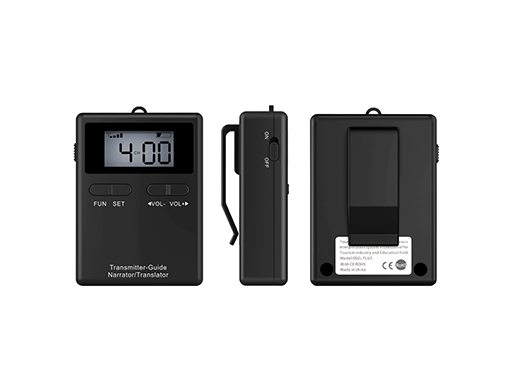
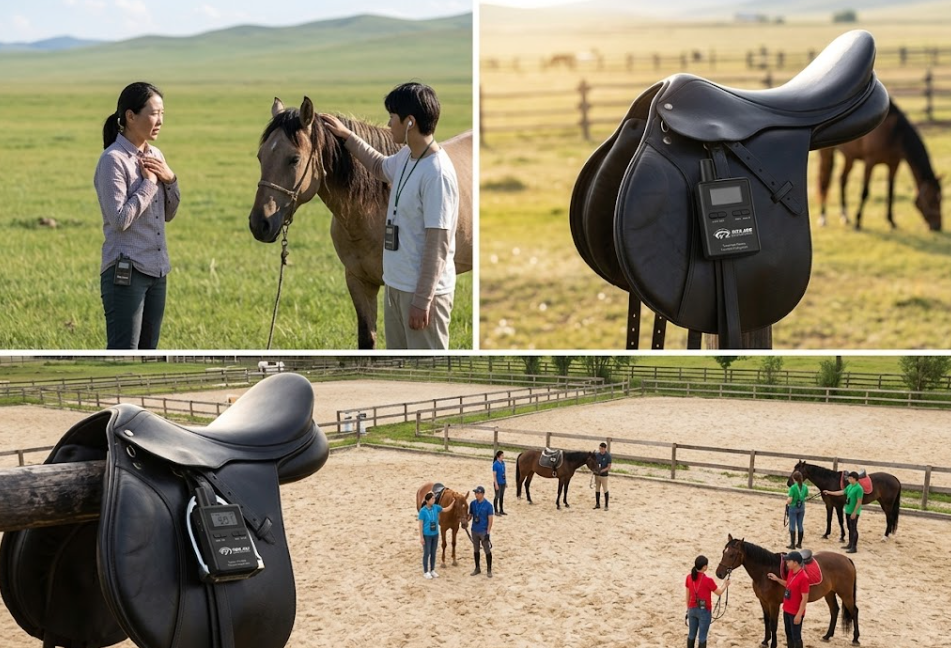
Fig 1 – A trauma therapist quietly guides a PTSD recovery session while maintaining a calm and non-intrusive environment for both horse and client using a wireless UHF communication system.
Why Quiet Communication Matters in Trauma-Informed Equine Therapy
In equine-assisted psychotherapy, the therapist often intentionally maintains physical distance from the participant. This space allows the client to feel less pressured and gives the horse freedom to interact naturally.
However, distance creates communication challenges.
Therapists still need to:
Provide emotional grounding cues
Guide breathing exercises
Offer behavioral prompts
Monitor riding safety
Respond immediately to emotional escalation
Maintain private one-on-one communication
A whisper-capable wireless audio system allows therapists to speak softly while patients hear every word clearly through a personal receiver.
The horses remain calm. The environment stays quiet. The participant maintains emotional focus.
For many clinicians, this has become an essential part of trauma-informed therapy design rather than simply a convenience accessory.

RC8860 — UHF Whisper Communication for Equine Therapy Programs
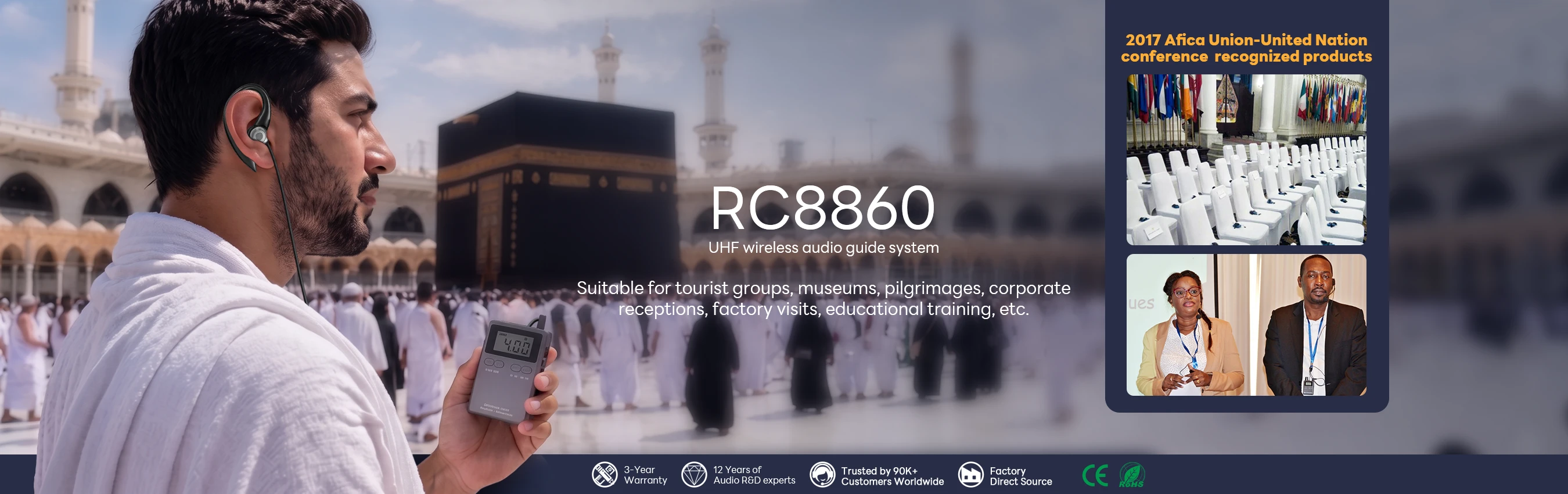
The RC8860 UHF Wireless Horse Instruction System was developed for environments where stable, long-range, low-noise communication is critical.
Operating on the 863-865MHz UHF frequency band, the RC8860 provides highly reliable transmission across large outdoor ranches, riding arenas, and open therapy pastures.
Key features especially valuable for equine-assisted psychotherapy include:
Whisper-level microphone sensitivity
Up to 200-meter communication range
20 independent channels for multiple therapy groups
Stable audio with minimal interference
Natural HD voice reproduction
Hands-free lightweight transmitter design
Therapists can guide sessions without raising their voices or physically approaching clients too quickly, which is particularly important when working with trauma survivors dealing with trust, hyperarousal, or emotional withdrawal.
Because the RC8860 allows multiple channels, larger therapy ranches can conduct simultaneous sessions in nearby paddocks without audio overlap or confusion.
RC2402 — Noise Cancellation for Outdoor Therapy Environments
Outdoor therapy sessions are often affected by wind, distant traffic, ranch equipment, birds, or other environmental sounds.
The RC2402 Noise-Cancelling Wireless System helps therapists maintain clear communication even in unpredictable outdoor conditions.
Its digital smart noise reduction technology filters ambient interference while preserving natural speech tone — an important factor in emotional therapy settings where vocal warmth and calm delivery matter.
Additional benefits include:
40-hour receiver battery life
Fast Type-C charging
Compact lightweight design
Comfortable all-day wearability
Reliable transmission in open rural spaces
The RC2402 is particularly effective during multi-day recovery retreats, equine wellness workshops, and group therapy programs where devices must remain operational throughout extended schedules.
RC2468 — Ultra-Light Receiver for Sensory-Sensitive Clients
Many equine therapy participants experience heightened sensory awareness or discomfort with heavy wearable equipment.
The RC2468 Ultra-Light Receiver weighs only 18g, making it ideal for therapy clients who require minimal physical distraction.
The receiver:
Fits comfortably under riding helmets
Does not interfere with movement
Provides natural, non-harsh sound quality
Reduces equipment-related stress
Supports long-duration sessions comfortably
For clinicians working with autistic individuals, veterans, adolescents, or abuse survivors, minimizing sensory irritation can significantly improve engagement and emotional participation.
Real Benefits for Equine Therapy Centers
A trauma recovery ranch serving military veterans integrated RC8860 and RC2402 systems across its equine-assisted psychotherapy program.
After implementation, the organization reported:
Lower first-session dropout rates
Improved therapist-to-client communication consistency
Reduced horse stress caused by sudden vocal commands
Greater privacy during outdoor counseling
Increased capacity for simultaneous therapy sessions
Higher client satisfaction with emotional comfort during treatment
Clinicians noted that participants appeared more relaxed when they no longer needed to strain to hear instructions or worry about being overheard across the ranch.
The systems also improved operational flexibility, allowing therapists to work more naturally while maintaining safe communication distances around horses.
Best Applications for Wireless Systems in Equine-Assisted Services
PTSD treatment programs for veterans
Trauma-informed psychotherapy
Addiction recovery ranches
Equine-assisted youth counseling
Therapeutic riding instruction
Autism support programs
Mental wellness retreats
First responder burnout recovery
Nature-based psychotherapy workshops
Quiet Technology Supports Better Human Connection
Equine-assisted therapy depends on trust, emotional regulation, and calm communication.
Technology should never dominate that environment. It should disappear into the background while supporting the therapeutic relationship.
The RC8860, RC2402, and RC2468 allow therapists to communicate clearly without interrupting the stillness that makes equine therapy effective in the first place.
In trauma recovery work, the smallest details matter — including how a voice reaches someone who is learning to feel safe again.
Contact RICH AGE Technology to explore professional wireless communication systems for equine-assisted psychotherapy, therapeutic riding programs, PTSD recovery centers, and trauma-informed outdoor wellness environments using RC8860, RC2402, and RC2468 audio solutions.