
.webp)
Conquering the Echo: Why the RC9150 System is the Gold Standard for Extreme Glacier and Ice Cave Tours
Elevating adventure tourism through high-power wireless audio in the world's most challenging acoustic environments.
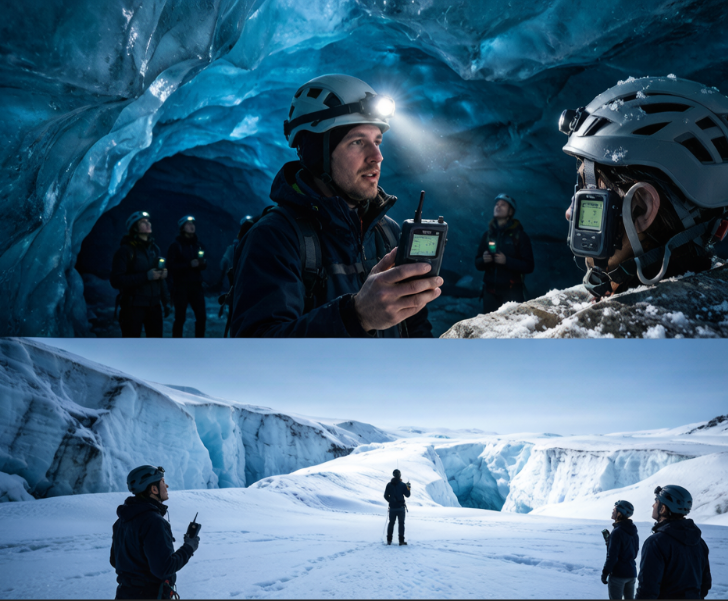
A Lesson from the Frozen Frontier: A few years ago, I stood inside a sapphire-blue ice cave in Iceland, having paid a premium for a "masterclass" tour. The guide was a world-class glaciologist, but his expertise was muffled by the howling wind and the constant drip of melting ice. I left that $200 experience with stunning photos but a hollow understanding of the geology.
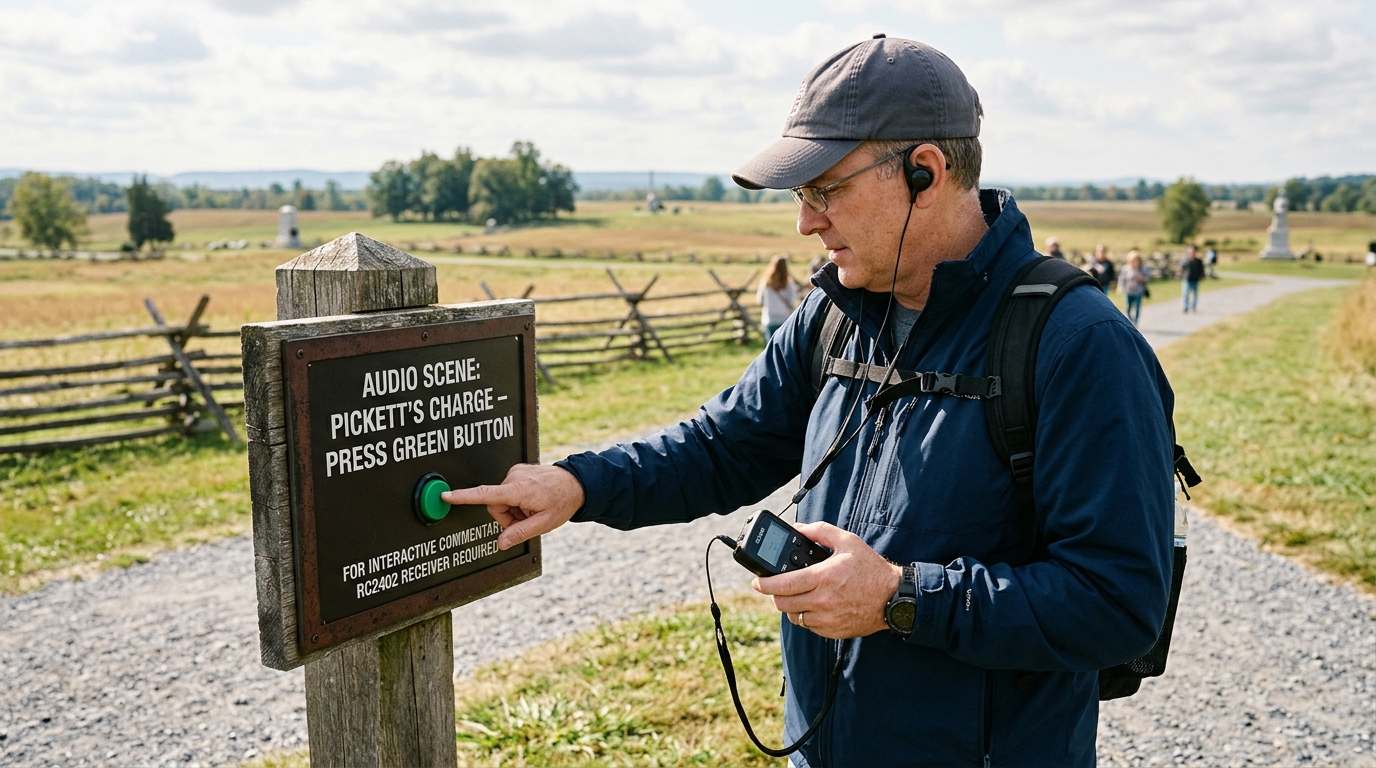
Fast forward to a recent trek in Alaska, where the operator utilized the RC9150 wireless system. This time, the guide didn't have to compete with the elements. Handing me an RC2500 receiver, he spoke at a conversational volume. I heard every nuanced detail about glacial retreats and moraine formations, even as I lagged 50 meters behind to capture a shot of a frozen waterfall. It was a revelation: Extreme environments demand extreme audio. Without it, the story of the ice is simply lost in the echo.
The Surge in "Last-Chance" Tourism
As the world’s glaciers retreat at an unprecedented pace, "last-chance tourism" has become a multi-billion dollar sector. The global ice cave and glacier tour market is on track to double by 2030. Tourists are no longer satisfied with just looking; they want deep educational immersion. However, glaciers are acoustic nightmares. Between the crunch of crampons on hard ice, the roar of moulins (glacial shafts), and the unpredictable wind, traditional verbal communication is almost impossible.
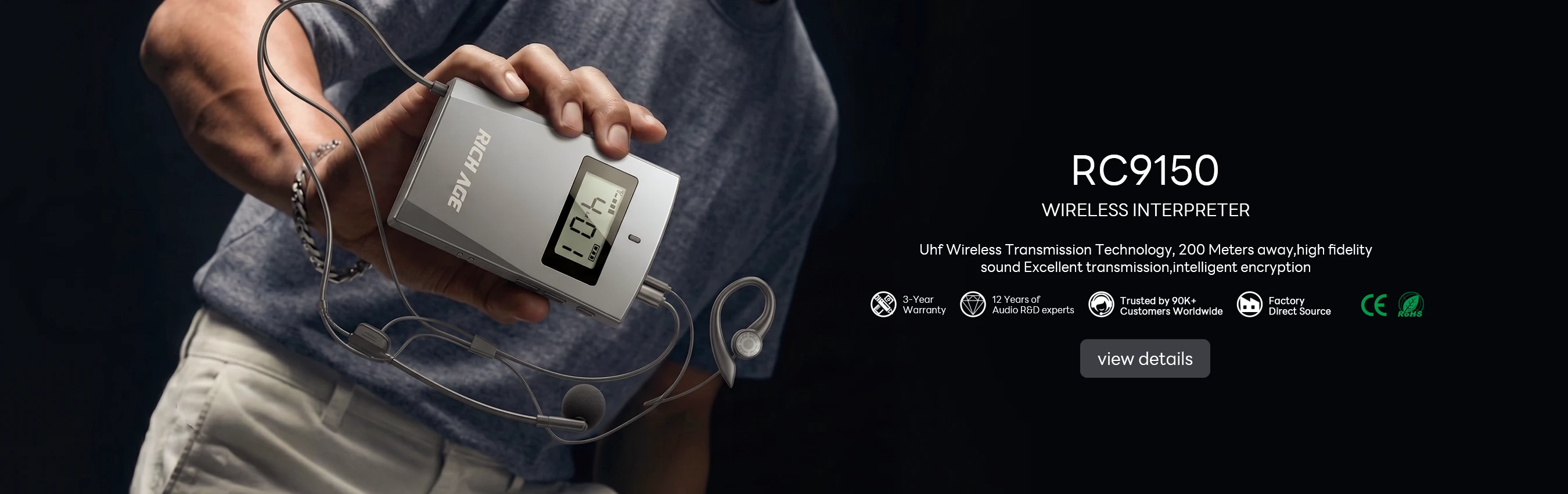
A high-power 100-channel system like the RC9150 serves as the technological backbone for these expeditions. With a robust 20mW output, the signal penetrates through crystalline structures and rocky outcrops that would stop standard devices in their tracks. It maintains a 200-meter range, allowing guests to spread out—essential for both safety on thin ice and for providing that "solitude" experience many trekkers crave.
Engineered for Sub-Zero Reliability: The RC2500 Receiver
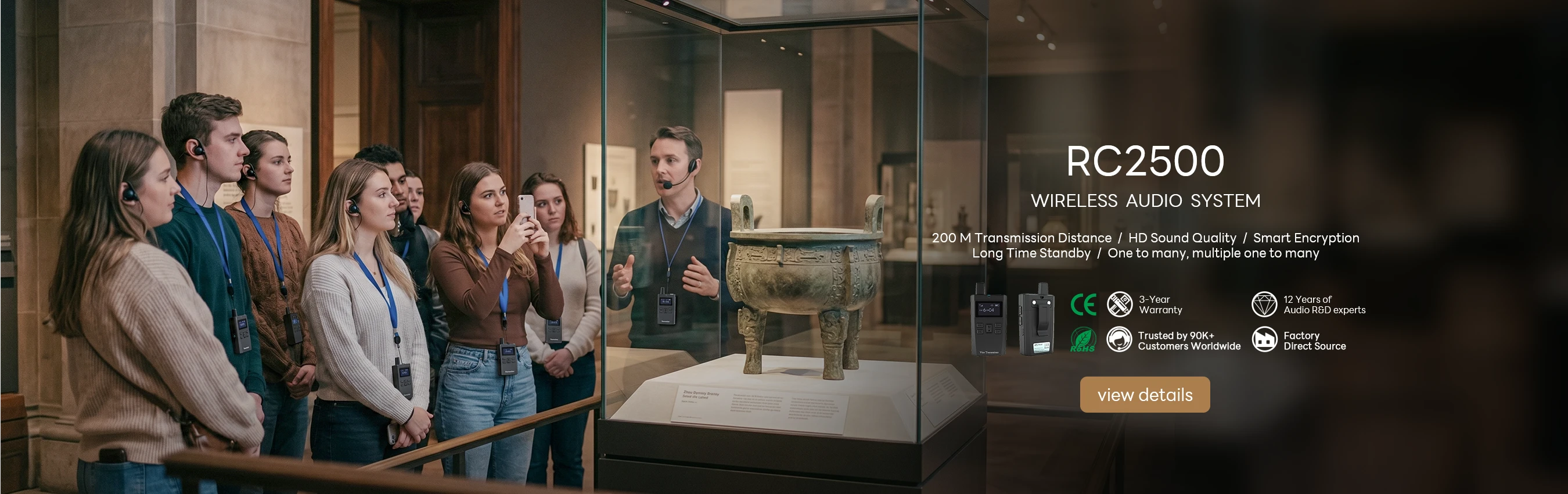
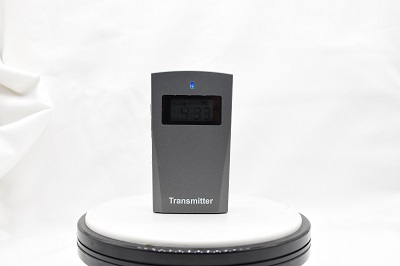
Standard electronics often fail when the mercury drops. The RC2500 receiver (fully compatible with the RC9150) is specifically hardened for the arctic. Here is why it is the top choice for adventure operators:
✓ Extreme Temperature Range: Certified to operate flawlessly from -15°C to 50°C, ensuring the battery doesn't drain instantly in the frozen depths of a cave.
✓ Glove-Friendly Interaction: In -10°C weather, nobody wants to remove their mittens. The RC2500 features large, tactile buttons that can be operated through thick thermal gloves.
✓ Moisture Resistance: Ice caves are inherently damp. The rugged, sealed casing protects the internal circuitry from condensation and dripping meltwater.
Safety and storytelling: Delivering high-fidelity audio in the world's quietest—and loudest—places.
Operational Insights from the Tundra
Safety is the primary concern for any glacier guide. I spoke with a veteran leader in Patagonia who noted a surprising benefit of the RC9150 system: "We used to have to shout to warn people about crevasses or unstable edges. Shouting can actually trigger vibrations in delicate ice formations. With the wireless system, I can give safety warnings in a whisper. It keeps the group calm and the environment stable."
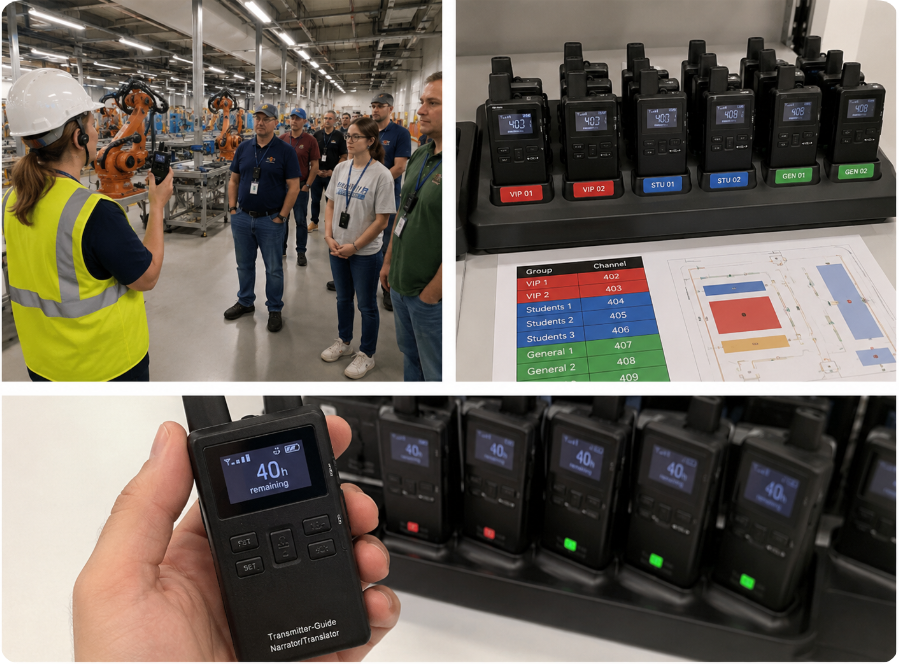
The data backs this up. Operators using these systems report a 35% increase in guest engagement. When tourists can actually hear the scientific explanation behind the ice, they value the tour more, leading to higher tips, better reviews, and increased referral business. Furthermore, the 40-hour battery life means guides can lead multi-day expeditions into remote base camps without the constant anxiety of finding a power source.
"The RC9150's intelligent encryption is a hidden gem for us. We've spent decades researching these glaciers. The encryption ensures our proprietary tour content stays with our paying guests and isn't intercepted or recorded by uncertified 'pirate' guides lurking nearby."
— Operations Manager, Arctic Expedition Co.
UHF vs. 2.4G in Extreme Terrain
| Feature | RC9150 (UHF) Performance | Benefit for Ice Tours |
|---|---|---|
| Wall Penetration | Exceptional through ice/rock | Hear the guide even around corners |
| Cold Stability | Tested to -15°C | No hardware freeze-ups in caves |
| Battery Logic | Low-consumption UHF chip | 40 hours of continuous use |
More Than Just Ice: Multi-Climate Versatility
While glaciers are the ultimate test, the RC9150's versatility extends to volcanic caves in Iceland, dog-sledging in the Arctic, and alpine mountaineering. Its 100 independent channels allow a single staging area (like a glacier base camp) to host dozens of different tour groups without any signal overlap. The ease of Type-C charging ensures that guides can top up their devices using standard power banks during long treks.
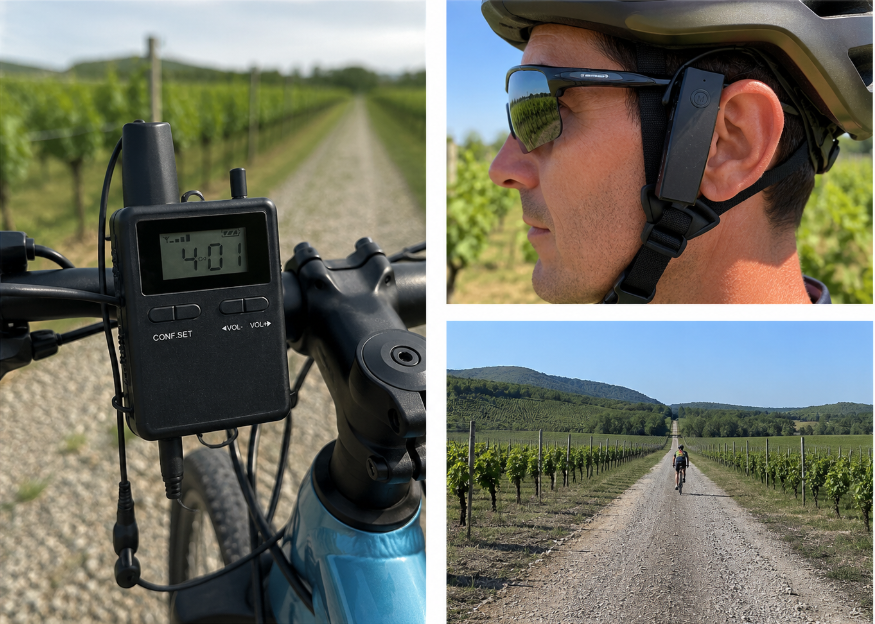
The ear-hook design of the RC2500 is another subtle but vital win. It sits securely even when the guest is wearing a balaclava, a beanie, and a climbing helmet. This ergonomics-first approach prevents the guest from fidgeting with their gear, allowing them to focus entirely on the majestic landscape around them.