
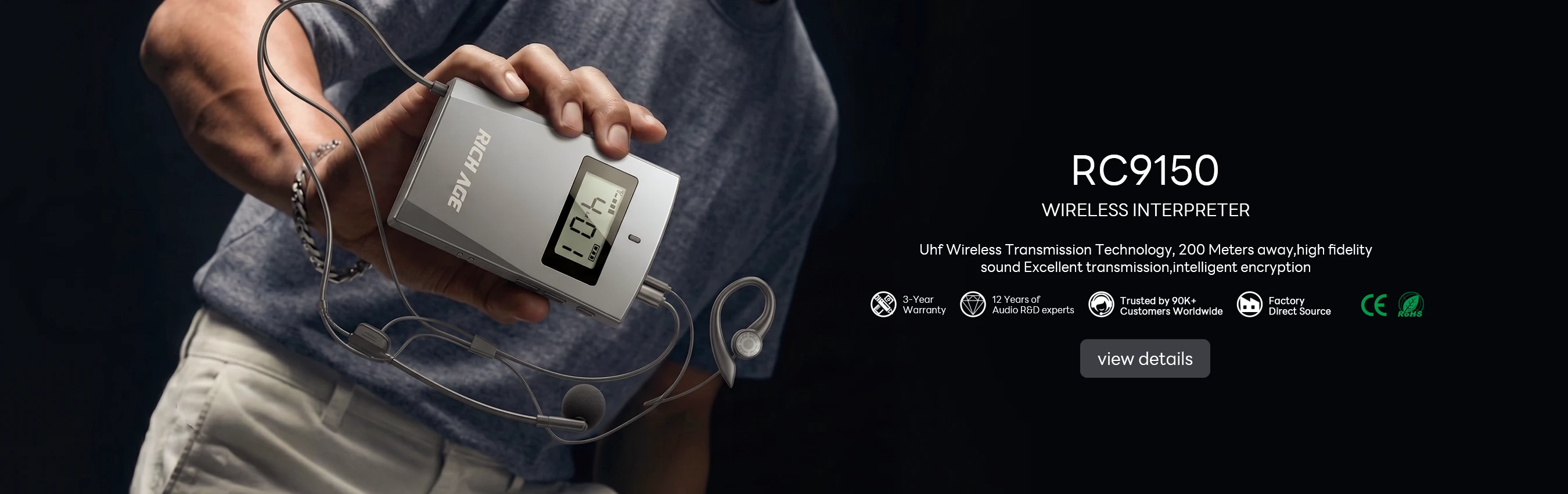
.webp)
Silent Safari: Why Professional UHF Audio Systems are Essential for Modern Night Zoo Experiences
Preserving the magic of nocturnal wildlife viewing through advanced RC085 wireless communication technology.
A Personal Night Safari Reflection: I recently took my niece to a "Lantern Safari" at our local zoological park. The atmosphere was ethereal—low amber lights, the rustle of leaves, and the rare sight of active nocturnal predators. However, the experience was nearly ruined by a logistical nightmare: the guide’s voice was completely lost in the shadows. He was gesturing toward a pride of lions, but those of us at the back of the group heard nothing but the ambient hum of the park.
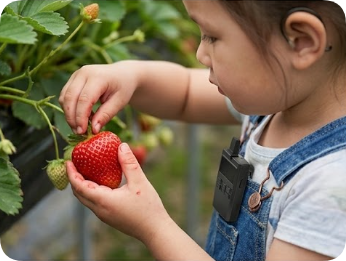
The game changed when the facility integrated the RC085 UHF system. On our next visit, every guest was handed a discreet RC2408 receiver. As the keeper whispered into his transmitter, my niece—who usually has the attention span of a butterfly—was transfixed. She heard every detail about the lion’s social hierarchy directly in her ear. That was my "lightbulb moment": for a night zoo to succeed, it must embrace silent audio technology to educate children without disturbing the very magic they came to see.
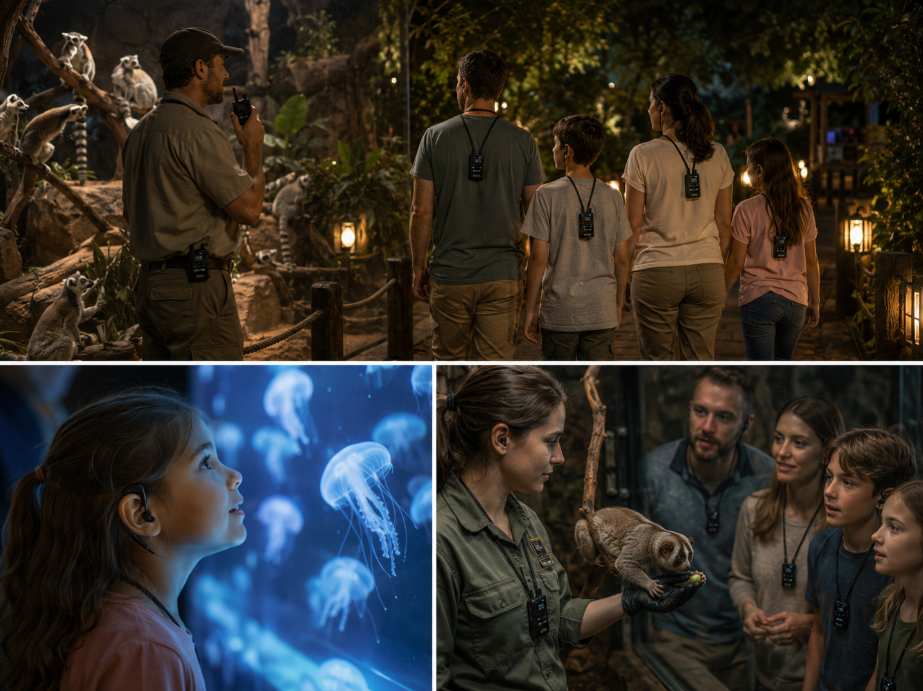
The $2.5 Billion Shift in Twilight Tourism
Nighttime events are no longer a side attraction; they are a cornerstone of the global zoo industry, growing at a staggering 15% annually. From twilight safaris to illuminated lantern festivals, zoos are finding that their revenue peaks when the sun goes down. But there is a massive biological hurdle: traditional PA systems and shouting guides create "noise pollution" that stresses animals and ruins the "wilderness" feel for premium ticket holders.
The RC085 UHF Digital System solves this by creating a "Silent Tour" environment. Operating on a specialized UHF band, it offers superior penetration through thick concrete habitats and glass enclosures. With a 200-meter range, the system allows large groups to spread out comfortably along winding, narrow jungle paths without the guide ever having to raise their voice above a conversational level.
Engineered for the Dark: Features That Matter
In a nocturnal setting, every design choice counts. Here is why the RC085 and RC2408 combination stands out for wildlife conservationists:
• Night-Vision Preservation: The RC085 transmitter features red-only LEDs. Unlike blue or white light, red wavelengths do not disrupt the dilated pupils of animals or visitors, keeping the night vision intact for better viewing.
• RF Density Stability: Modern zoos are crowded with security radios and Wi-Fi. The RC2408 receiver uses PLL (Phase-Locked Loop) digital technology to lock onto a clean signal, ensuring zero dropouts near high-interference areas.
• F2 Two-Way Interaction: Education is about dialogue. The F2 mode allows curious children to ask a question via their receiver, which the guide hears and answers for the whole group—all without a single shout.
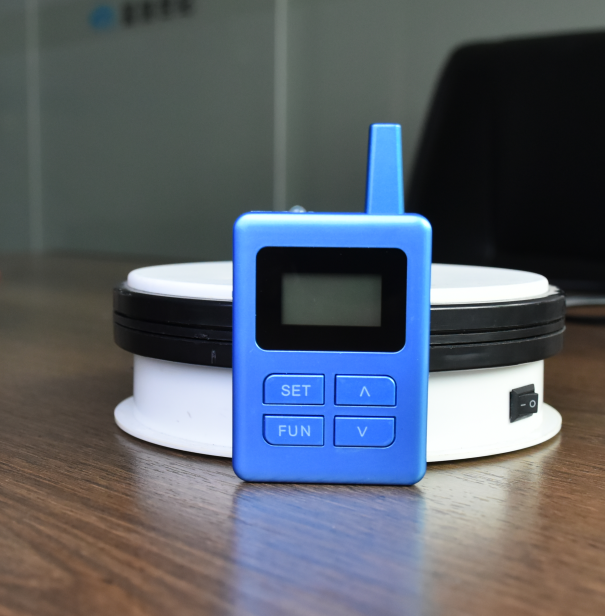
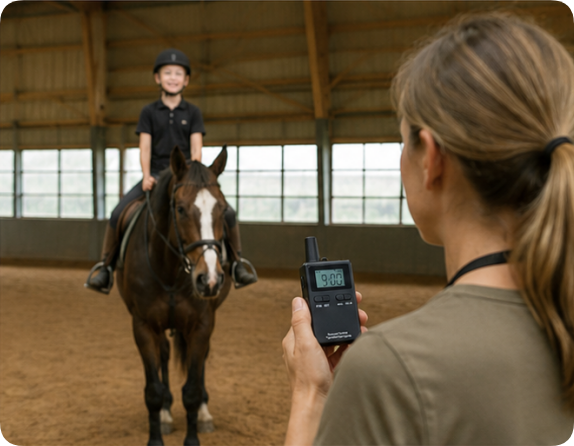
Stealthy communication: Educating visitors while respecting the silence of the wild.
What the Professionals are Saying
I sat down with a lead educator at a major metropolitan zoo who switched to UHF systems last year. Her feedback was revealing. "Before the RC085, our keepers were constantly competing with the noise of the crowds. It led to vocal strain and stressed animals. Now, we've noticed a significant change—breeding success rates in our nocturnal species have actually improved because the nighttime ambient noise has dropped by several decibels."
The safety benefits are equally impressive. During "Behind the Scenes" feeding sessions, keepers can keep both hands on their task and their eyes on the animal while providing a live commentary into a hands-free transmitter. It’s a seamless blend of safety and storytelling.
"The matte black finish of the RC2408 is a small but vital detail. It doesn't reflect light into the habitats, making the technology virtually invisible in the darkness. It’s the ultimate tool for non-invasive education."
— Senior Curator, Nocturnal Exhibits
Why UHF is the Superior Choice for Wildlife
| Environment | Audio Obstacle | RC085 / RC2408 Solution |
|---|---|---|
| Grand Aquariums | Water-filled tanks & glass | Deep-penetrating UHF digital waves |
| Dense Rainforests | Thick foliage interference | 200m range with signal stability |
| Invertebrate Houses | Extreme silence required | Whisper-mode sensitivity for keepers |
Efficiency for the Modern Operator
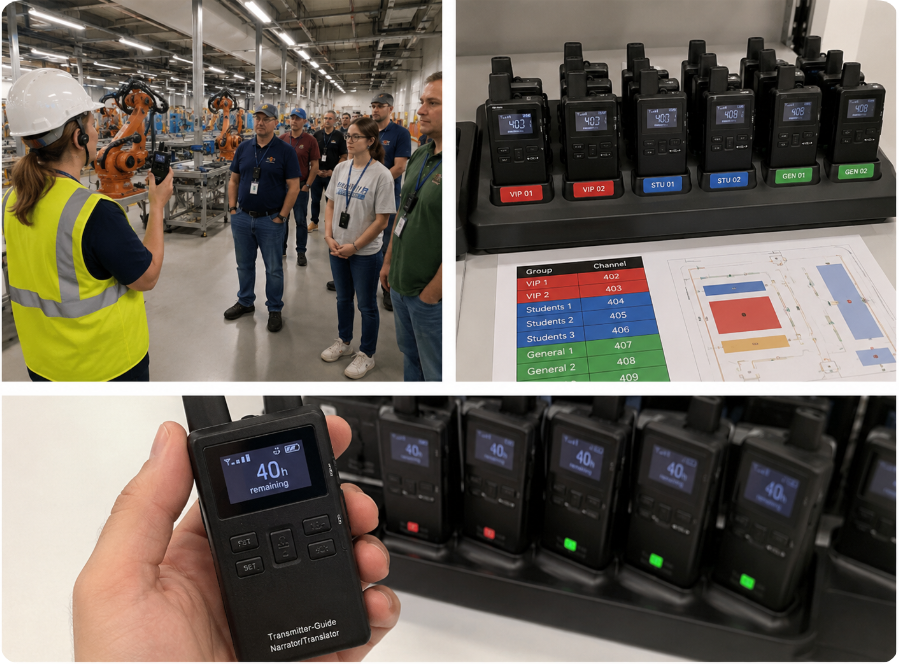
Zoos are vast, and keeping equipment charged is a full-time job. The power-saving "wake-up" mode on these receivers is a logistical blessing. Staff can prep the units in the afternoon, and the system stays in a low-power state until the guide activates the transmitter at dusk. With a 40-hour battery capability, you can run an entire week of festival nights on a single charge cycle.
Additionally, the inclusion of 80 independent channels means that multiple tours—say, a VIP photography group and a school field trip—can stand ten feet apart without their audio signals ever overlapping. This allows for a higher "density" of tours per night, directly increasing the park’s ROI.