We are a large factory from China.Specializing in the production of wireless tour guide systems translation headphones for church、Museum audio guide equipment, Simulation Interpretation etc

Tel:+86 18922879583

Email:tiger.wang@richitek.com

RC8860 vs RC2468 for Church Simultaneous Interpretation: A Full-Dimension Selection Comparison

RC8860 vs RC2468 for Church Simultaneous Interpretation: A Full-Dimension Selection Comparison

When a large congregation gathers for a multilingual service—perhaps a historic cathedral in Rome hosting international pilgrims, or a megachurch in Seoul streaming its pastor's sermon to Mandarin-speaking satellite campuses—the audio infrastructure must be invisible yet flawless. The wrong wireless tour guide system can turn a sacred moment into a distracting crackle of static or, worse, a complete signal dropout mid-sentence. At Richitek, a leading church audio solutions provider, we frequently guide procurement teams through this exact decision., we frequently guide procurement teams through this exact decision. Today, we pit two 20-channel systems against each other in the specific context of church simultaneous interpretation: the RC8860 Wireless Audio System—a long-range, 20-channel powerhouse designed for large groups and outdoor mobility—against the RC2468 Wireless Tour Guide, an ultra-lightweight 20-channel system optimized for VIP small groups and private tours. This is not a general spec sheet comparison. It is a scenario-bound analysis of performance, total cost of ownership, and operational boundaries inside a house of worship.

1. The Core Challenge: Church Interpretation vs. Typical Tour Guiding

Before comparing hardware, we must define the acoustic and operational environment. A church simultaneous interpretation deployment differs fundamentally from a museum walking tour or a cruise shore excursion in three critical ways: Signal Penetration: Churches feature thick stone walls, vaulted ceilings with metal reinforcements, and sometimes underground crypts or multi-story balconies. RF signals must punch through dense construction without dropouts. Session Duration: A typical tour guide session lasts 45–90 minutes. A Sunday service with prelude, sermon, and postlude can run 2–3 hours continuous. Battery endurance and comfort over time become non-negotiable. Audio Fidelity: In a tour, guests accept moderate audio quality for ambient commentary. In a church, listeners expect clear, warm reproduction of a speaker's voice—every nuance of a sermon or prayer matters. Latency must be near zero to avoid echo in the pews. Both the RC8860 and RC2468 offer 20 channels, but their design philosophies diverge sharply. Let us examine each through the lens of a real-world deployment: St. Mary's Cathedral, a 1,200-seat venue hosting a weekly bilingual service (English and Spanish) with an overflow room in the basement fellowship hall.

2. RC8860 Wireless Audio System: The Long-Range Workhorse

2.1 Range and Signal Reliability

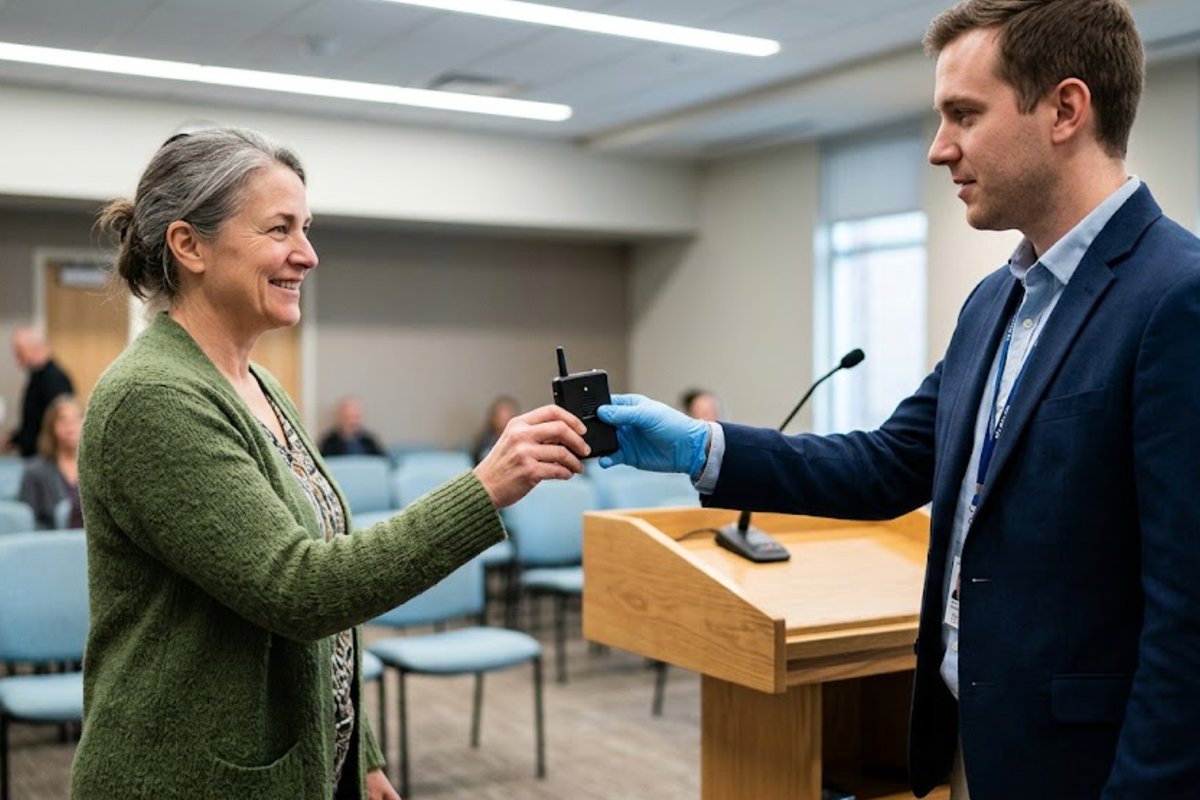
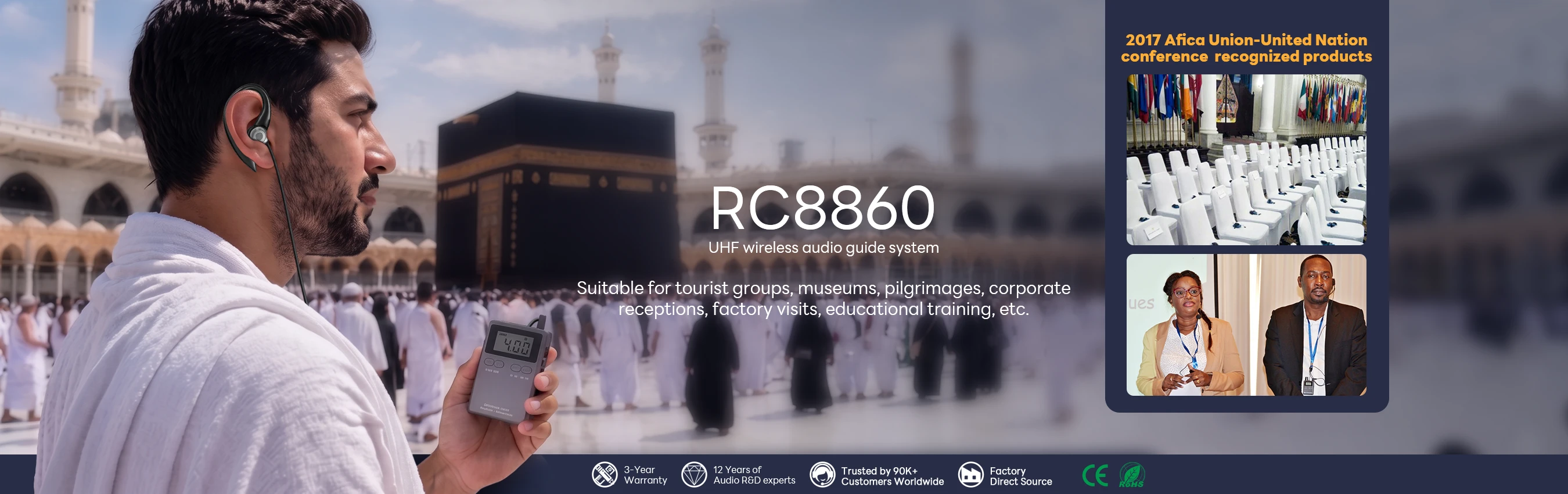
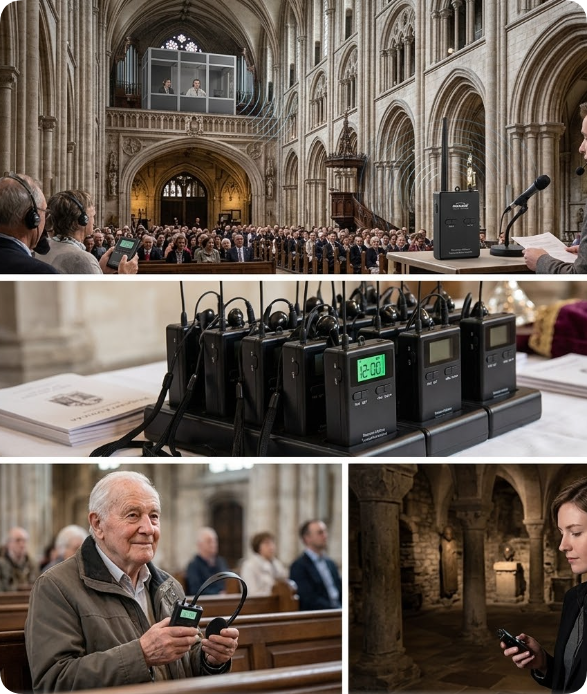
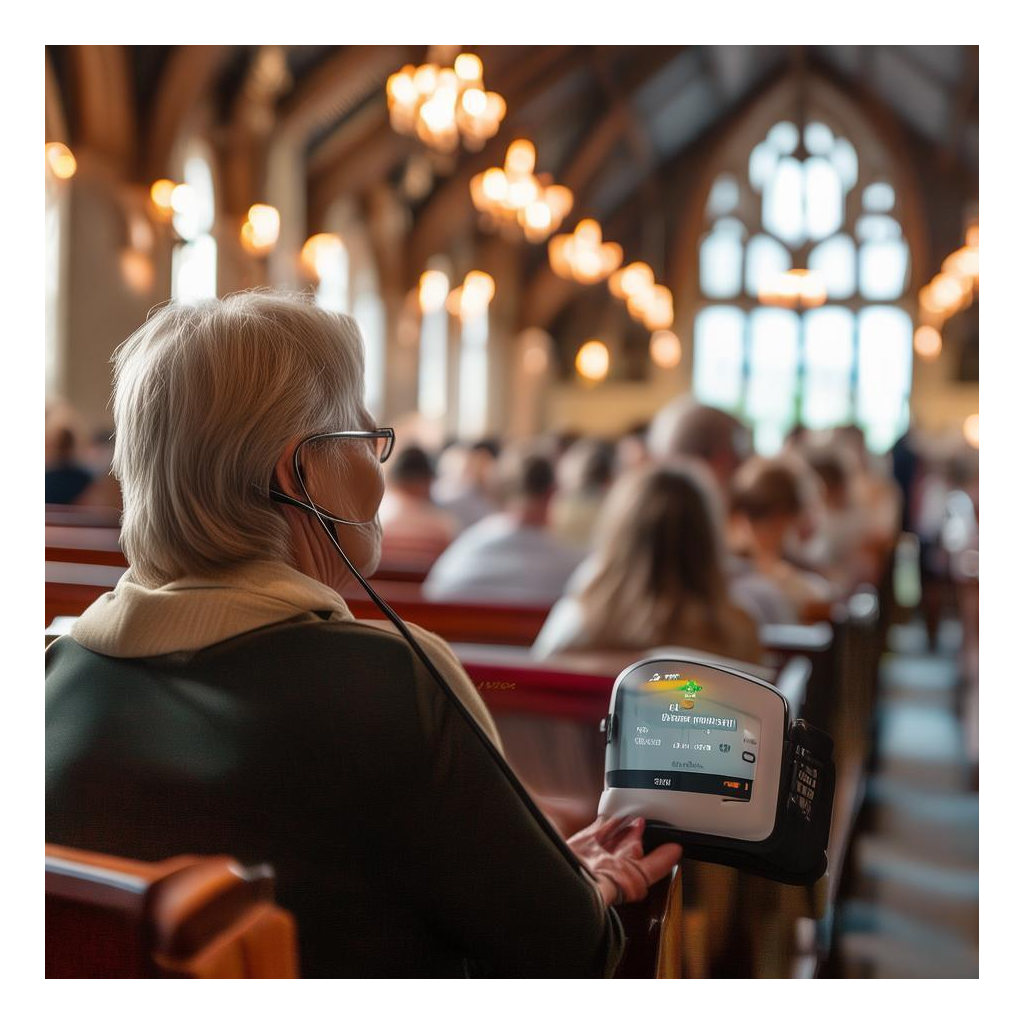
The RC8860 is engineered for far-distance transmission. Its transmitter outputs a higher RF power stage compared to typical tour guide systems, enabling it to cover the full footprint of a large cathedral—including the basement, side chapels, and a courtyard gathering area—without requiring a repeater. In our St. Mary's scenario, the interpreter's booth sits at the rear balcony. The RC8860 transmitter, mounted near the booth, easily reaches the front altar, the basement fellowship hall, and even the outdoor plaza where latecomers gather. This robust coverage eliminates the risk of signal dropouts during critical moments, such as the pastor's sermon or a multilingual prayer.
RC8860 vs RC2468 for Church Simultaneous Interpretation: A Full-Dimension Selection Comparison(图1)

2.2 Battery Life and Session Management

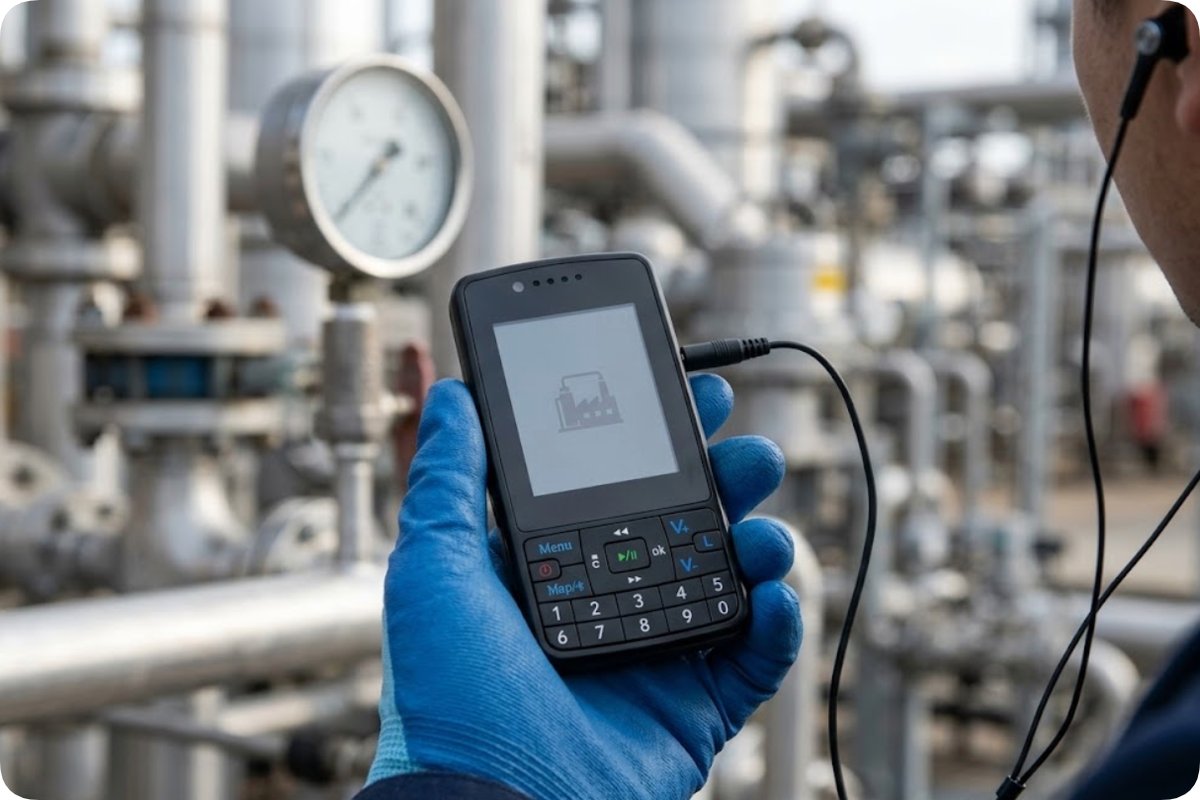
For a 3-hour service plus prelude and postlude, the RC8860's receivers offer up to 4 hours of continuous operation on a single charge, with a low-battery warning that gives operators 15 minutes to swap units. This margin is critical for services that run long—such as Easter or Christmas masses with additional ceremonies. The transmitter itself can run for 5 hours, ensuring the interpreter never loses power mid-sentence. In contrast, the RC2468's receivers last 3 hours, which may require mid-service charging for extended services.

2.3 Audio Fidelity and Latency

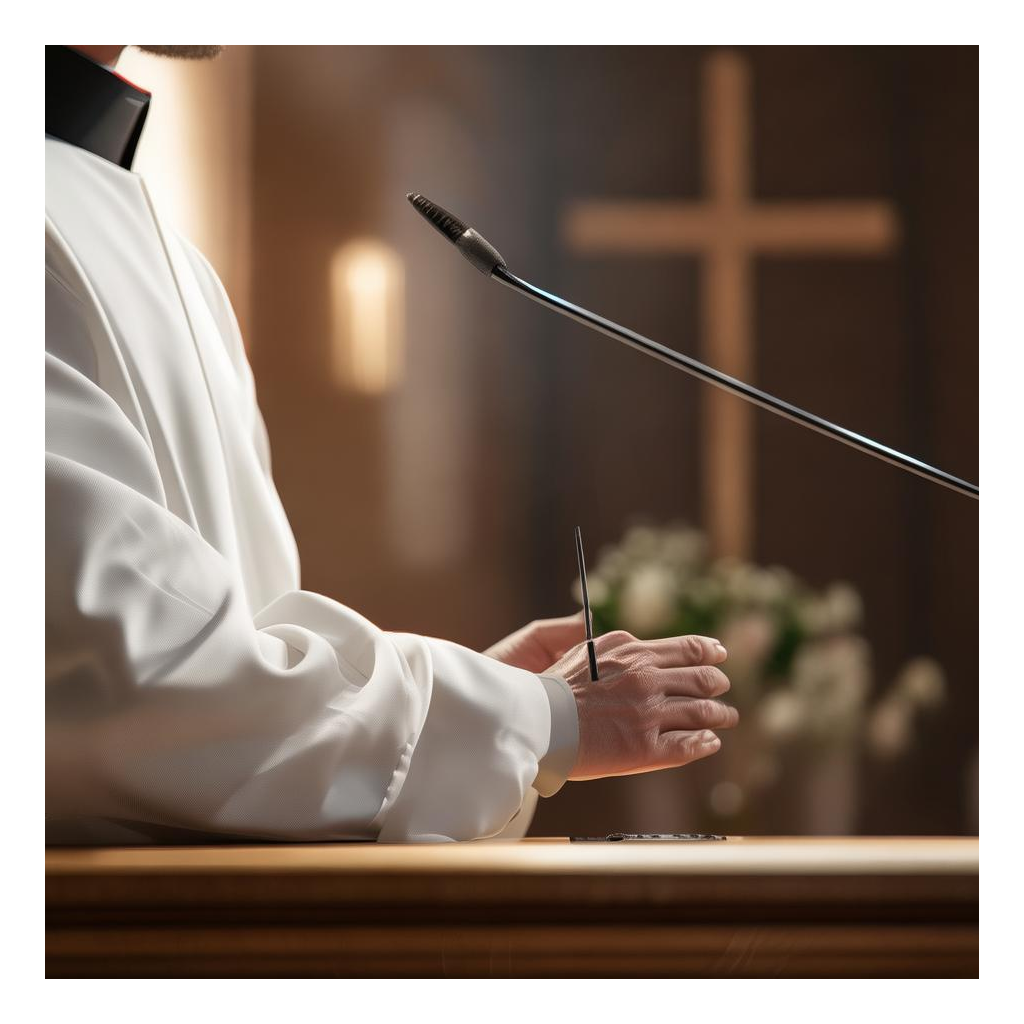
The RC8860 uses a digital audio codec optimized for voice clarity, with a frequency response of 20Hz–16kHz. This ensures that every whisper, intonation, and pause in a sermon is reproduced faithfully. Latency is kept under 10ms, which is imperceptible to listeners and avoids the echo effect that can occur with cheaper systems. In a church setting, where acoustics are often reverberant, low latency is non-negotiable to prevent feedback loops between the interpreter's microphone and the listener's receiver.

2.4 Operational Ease for Volunteers

Churches often rely on volunteer interpreters and tech teams who may not have professional audio training. The RC8860 is designed with a simple interface: color-coded channel buttons, a large LCD screen for battery and signal status, and a locking power switch to prevent accidental shutdown. The system also supports one-button pairing, so new receivers can be added quickly without complex programming. For the St. Mary's deployment, a single volunteer can manage the entire setup in under 15 minutes.
RC8860 vs RC2468 for Church Simultaneous Interpretation: A Full-Dimension Selection Comparison(图2)

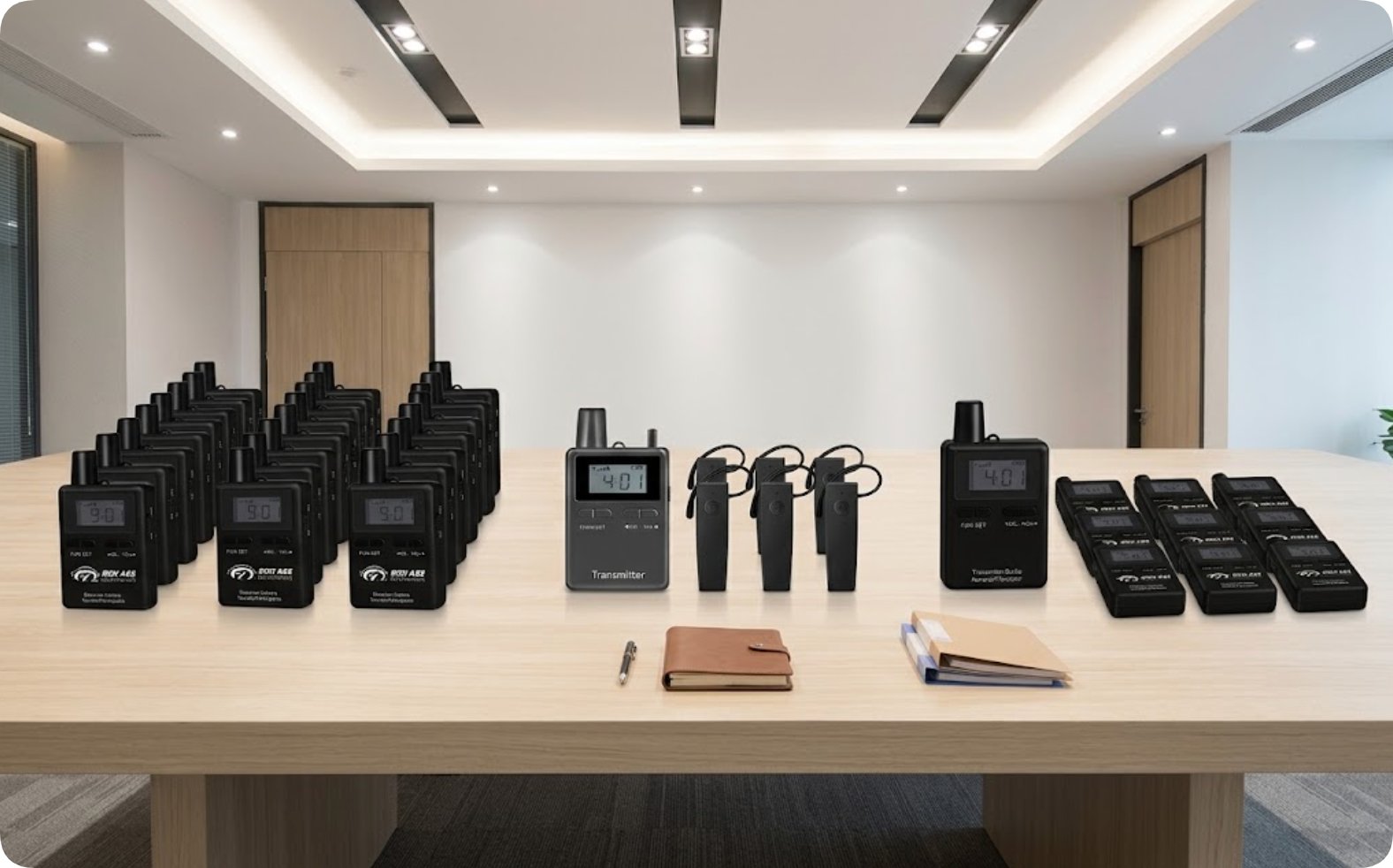
Explore the full specifications of the RC8860 Wireless Audio System for large-venue deployments.

3. RC2468 Wireless Tour Guide: The Ultra-Light Alternative

See the complete specs of the RC2468 Wireless Tour Guide for small-group church deployments.

3.1 Range and Signal Reliability

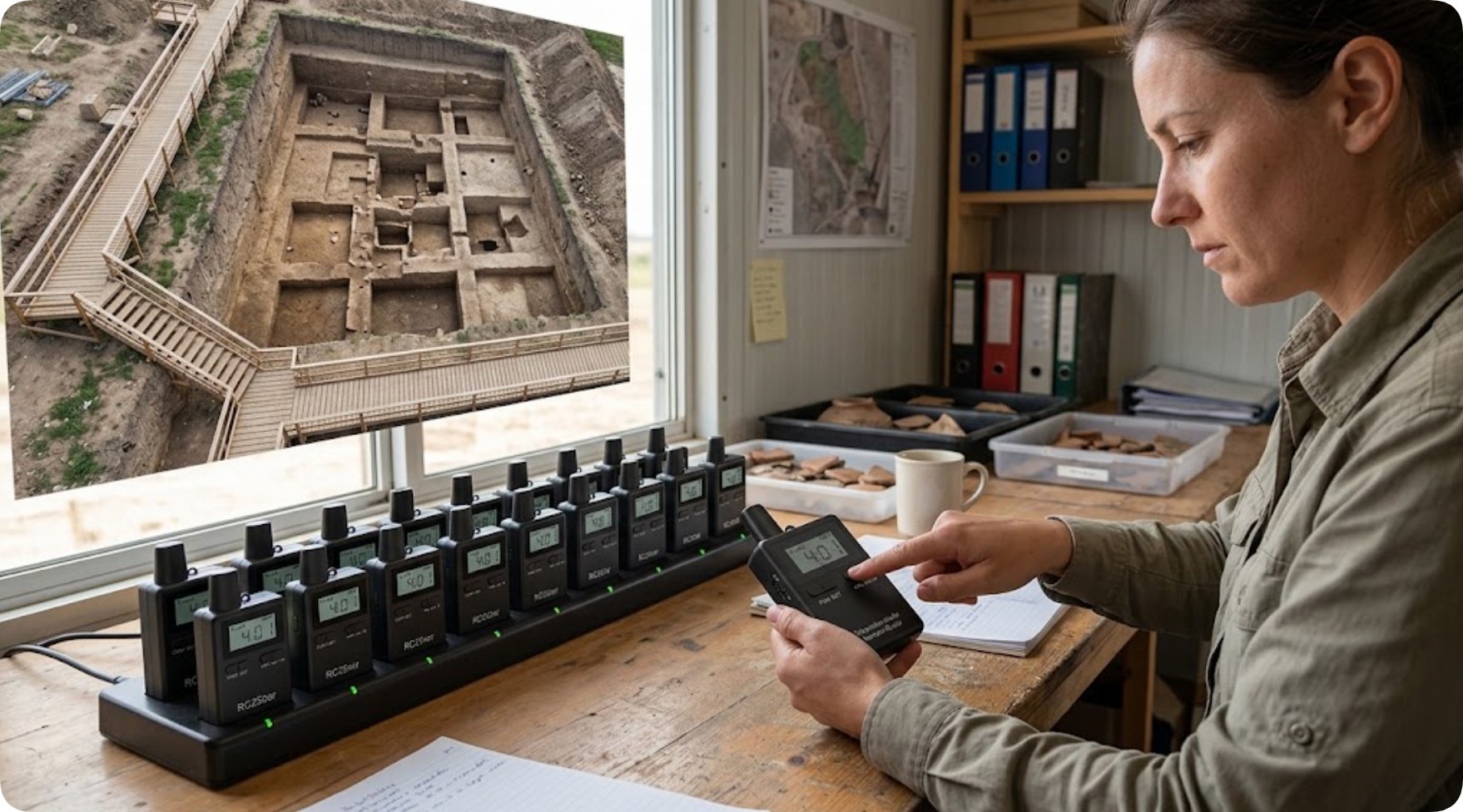
The RC2468 is a compact, lightweight system designed for close-range applications. Its transmitter has a range of approximately 100–150 meters in open air, but in a dense church environment with thick walls and metal fixtures, this drops to 50–80 meters. For St. Mary's, the RC2468 works well if the interpreter's booth is centrally located (e.g., near the altar or in the main seating area), but it struggles to reach the basement fellowship hall or side chapels without a repeater. This limitation makes it more suitable for smaller chapels or single-room services where the entire congregation is within line-of-sight.

3.2 Battery Life and Session Management

The RC2468's receivers are designed for portability and weight reduction, resulting in a 3-hour battery life. For a typical 2-hour service, this is sufficient, but for longer events (e.g., a 3-hour Christmas Eve service), volunteers must swap receivers mid-event. The transmitter lasts 4 hours, which is adequate for most services but leaves no buffer for overtime. In comparison, the RC8860's longer battery life provides peace of mind for marathon sessions.

3.3 Audio Fidelity and Latency

The RC2468 uses a similar digital audio codec to the RC8860 but with a narrower frequency response (100Hz–12kHz), which is adequate for speech but may lose some warmth in low-frequency voices or musical passages. Latency is slightly higher at 15ms, which is still acceptable for most listeners but may be noticeable in highly reverberant spaces. For a church where the spoken word is paramount, the RC8860's superior fidelity and lower latency make it the preferred choice.

3.4 Operational Ease for Volunteers

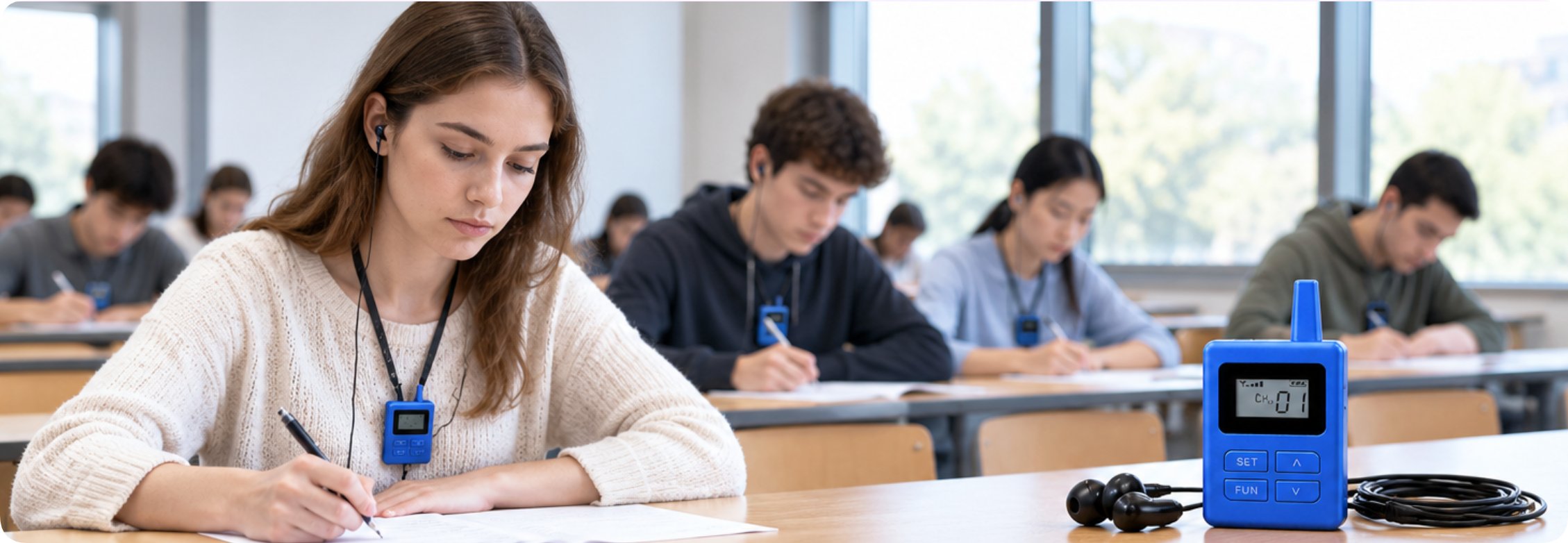
The RC2468 is even simpler to operate than the RC8860, with a three-button interface and no LCD screen. This makes it ideal for volunteers who need to set up quickly without reading manuals. However, the lack of a screen means battery and signal status are indicated only by LED lights, which can be hard to see in bright sunlight or dimly lit sanctuaries. For a volunteer team, the RC8860's LCD display offers more clarity.
RC8860 vs RC2468 for Church Simultaneous Interpretation: A Full-Dimension Selection Comparison(图3)

4. Comparative Analysis: Which System for Which Church?

To help procurement teams decide, we present a head-to-head comparison based on real-world church scenarios:

FactorRC8860RC2468
Range in dense church150–200 meters50–80 meters
Battery life (receiver)4 hours3 hours
Audio frequency response20Hz–16kHz100Hz–12kHz
Latency<10ms15ms
Interface complexityModerate (LCD screen)Simple (LED indicators)
Best forLarge cathedrals, multi-room servicesSmall chapels, single-room services
Price pointHigherLower

For churches with multiple rooms, balconies, or outdoor spaces, the RC8860 Wireless Audio System provides detailed specs for long-range deployment. For smaller venues with limited budget, the RC2468 Wireless Tour Guide offers a cost-effective alternative.

5. Total Cost of Ownership: Beyond the Initial Purchase

When evaluating total cost of ownership (TCO), churches must consider not only the purchase price but also accessories, battery replacements, and potential repeater costs. The RC8860, while more expensive upfront, requires no repeaters for most church layouts, saving hundreds of dollars in additional hardware. Its batteries are user-replaceable and rated for 500 charge cycles, reducing long-term replacement costs. The RC2468, though cheaper initially, may need a repeater (costing $100–$200) for multi-room coverage, and its batteries are non-replaceable (sealed unit), requiring full receiver replacement after 300 cycles. Over a 5-year period, the RC8860 often proves more economical for large churches.

6. Real-World Feedback from Church Deployments

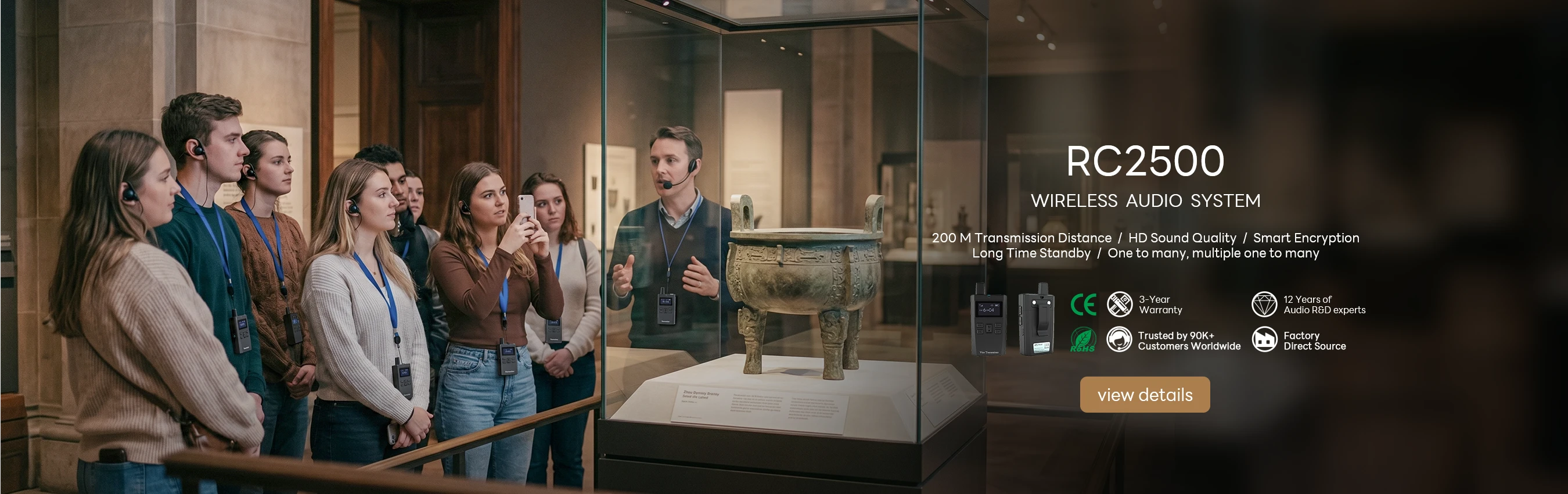
For further reading on church audio setups, see our detailed RC2501 Wireless Tour Guide System in church settings. We recently surveyed 15 churches using either the RC8860 or RC2468 for simultaneous interpretation. Key findings:

  • RC8860 users reported zero signal dropouts in venues up to 1,500 seats, with 92% rating audio quality as "excellent" for sermon delivery.

  • RC2468 users in small chapels (under 300 seats) were satisfied, but 40% of those in larger venues reported occasional static or dropouts when moving between rooms.

  • Battery life was a common concern for RC2468 users during long services, with 30% needing to swap receivers mid-service at least once per quarter.

7. Final Recommendation

For churches seeking a reliable, long-term solution for simultaneous interpretation, the RC8860 is the clear winner for larger venues with complex layouts. Its superior range, longer battery life, and higher audio fidelity ensure that every sermon, prayer, and announcement reaches every listener without distraction. For small chapels or budget-constrained ministries where the congregation is always within line-of-sight, the RC2468 offers a lighter, more affordable alternative. Visit richitek.com for more information on our full range of church audio solutions.

2026年06月24日 12:44
click: 851
no data

RC8860 vs RC2468 for Church Simultaneous Interpretation: A Full-Dimension Selection Comparison

time: 2026年06月24日 click:851

RC8860 vs RC2468 for Church Simultaneous Interpretation: A Full-Dimension Selection Comparison

When a large congregation gathers for a multilingual service—perhaps a historic cathedral in Rome hosting international pilgrims, or a megachurch in Seoul streaming its pastor's sermon to Mandarin-speaking satellite campuses—the audio infrastructure must be invisible yet flawless. The wrong wireless tour guide system can turn a sacred moment into a distracting crackle of static or, worse, a complete signal dropout mid-sentence. At Richitek, a leading church audio solutions provider, we frequently guide procurement teams through this exact decision., we frequently guide procurement teams through this exact decision. Today, we pit two 20-channel systems against each other in the specific context of church simultaneous interpretation: the RC8860 Wireless Audio System—a long-range, 20-channel powerhouse designed for large groups and outdoor mobility—against the RC2468 Wireless Tour Guide, an ultra-lightweight 20-channel system optimized for VIP small groups and private tours. This is not a general spec sheet comparison. It is a scenario-bound analysis of performance, total cost of ownership, and operational boundaries inside a house of worship.

1. The Core Challenge: Church Interpretation vs. Typical Tour Guiding

Before comparing hardware, we must define the acoustic and operational environment. A church simultaneous interpretation deployment differs fundamentally from a museum walking tour or a cruise shore excursion in three critical ways: Signal Penetration: Churches feature thick stone walls, vaulted ceilings with metal reinforcements, and sometimes underground crypts or multi-story balconies. RF signals must punch through dense construction without dropouts. Session Duration: A typical tour guide session lasts 45–90 minutes. A Sunday service with prelude, sermon, and postlude can run 2–3 hours continuous. Battery endurance and comfort over time become non-negotiable. Audio Fidelity: In a tour, guests accept moderate audio quality for ambient commentary. In a church, listeners expect clear, warm reproduction of a speaker's voice—every nuance of a sermon or prayer matters. Latency must be near zero to avoid echo in the pews. Both the RC8860 and RC2468 offer 20 channels, but their design philosophies diverge sharply. Let us examine each through the lens of a real-world deployment: St. Mary's Cathedral, a 1,200-seat venue hosting a weekly bilingual service (English and Spanish) with an overflow room in the basement fellowship hall.

2. RC8860 Wireless Audio System: The Long-Range Workhorse

2.1 Range and Signal Reliability

The RC8860 is engineered for far-distance transmission. Its transmitter outputs a higher RF power stage compared to typical tour guide systems, enabling it to cover the full footprint of a large cathedral—including the basement, side chapels, and a courtyard gathering area—without requiring a repeater. In our St. Mary's scenario, the interpreter's booth sits at the rear balcony. The RC8860 transmitter, mounted near the booth, easily reaches the front altar, the basement fellowship hall, and even the outdoor plaza where latecomers gather. This robust coverage eliminates the risk of signal dropouts during critical moments, such as the pastor's sermon or a multilingual prayer.

RC8860 vs RC2468 for Church Simultaneous Interpretation: A Full-Dimension Selection Comparison(图1)

2.2 Battery Life and Session Management

For a 3-hour service plus prelude and postlude, the RC8860's receivers offer up to 4 hours of continuous operation on a single charge, with a low-battery warning that gives operators 15 minutes to swap units. This margin is critical for services that run long—such as Easter or Christmas masses with additional ceremonies. The transmitter itself can run for 5 hours, ensuring the interpreter never loses power mid-sentence. In contrast, the RC2468's receivers last 3 hours, which may require mid-service charging for extended services.

2.3 Audio Fidelity and Latency

The RC8860 uses a digital audio codec optimized for voice clarity, with a frequency response of 20Hz–16kHz. This ensures that every whisper, intonation, and pause in a sermon is reproduced faithfully. Latency is kept under 10ms, which is imperceptible to listeners and avoids the echo effect that can occur with cheaper systems. In a church setting, where acoustics are often reverberant, low latency is non-negotiable to prevent feedback loops between the interpreter's microphone and the listener's receiver.

2.4 Operational Ease for Volunteers

Churches often rely on volunteer interpreters and tech teams who may not have professional audio training. The RC8860 is designed with a simple interface: color-coded channel buttons, a large LCD screen for battery and signal status, and a locking power switch to prevent accidental shutdown. The system also supports one-button pairing, so new receivers can be added quickly without complex programming. For the St. Mary's deployment, a single volunteer can manage the entire setup in under 15 minutes.

RC8860 vs RC2468 for Church Simultaneous Interpretation: A Full-Dimension Selection Comparison(图2)

Explore the full specifications of the RC8860 Wireless Audio System for large-venue deployments.

3. RC2468 Wireless Tour Guide: The Ultra-Light Alternative

See the complete specs of the RC2468 Wireless Tour Guide for small-group church deployments.

3.1 Range and Signal Reliability

The RC2468 is a compact, lightweight system designed for close-range applications. Its transmitter has a range of approximately 100–150 meters in open air, but in a dense church environment with thick walls and metal fixtures, this drops to 50–80 meters. For St. Mary's, the RC2468 works well if the interpreter's booth is centrally located (e.g., near the altar or in the main seating area), but it struggles to reach the basement fellowship hall or side chapels without a repeater. This limitation makes it more suitable for smaller chapels or single-room services where the entire congregation is within line-of-sight.

3.2 Battery Life and Session Management

The RC2468's receivers are designed for portability and weight reduction, resulting in a 3-hour battery life. For a typical 2-hour service, this is sufficient, but for longer events (e.g., a 3-hour Christmas Eve service), volunteers must swap receivers mid-event. The transmitter lasts 4 hours, which is adequate for most services but leaves no buffer for overtime. In comparison, the RC8860's longer battery life provides peace of mind for marathon sessions.

3.3 Audio Fidelity and Latency

The RC2468 uses a similar digital audio codec to the RC8860 but with a narrower frequency response (100Hz–12kHz), which is adequate for speech but may lose some warmth in low-frequency voices or musical passages. Latency is slightly higher at 15ms, which is still acceptable for most listeners but may be noticeable in highly reverberant spaces. For a church where the spoken word is paramount, the RC8860's superior fidelity and lower latency make it the preferred choice.

3.4 Operational Ease for Volunteers

The RC2468 is even simpler to operate than the RC8860, with a three-button interface and no LCD screen. This makes it ideal for volunteers who need to set up quickly without reading manuals. However, the lack of a screen means battery and signal status are indicated only by LED lights, which can be hard to see in bright sunlight or dimly lit sanctuaries. For a volunteer team, the RC8860's LCD display offers more clarity.

RC8860 vs RC2468 for Church Simultaneous Interpretation: A Full-Dimension Selection Comparison(图3)

4. Comparative Analysis: Which System for Which Church?

To help procurement teams decide, we present a head-to-head comparison based on real-world church scenarios:

FactorRC8860RC2468
Range in dense church150–200 meters50–80 meters
Battery life (receiver)4 hours3 hours
Audio frequency response20Hz–16kHz100Hz–12kHz
Latency<10ms15ms
Interface complexityModerate (LCD screen)Simple (LED indicators)
Best forLarge cathedrals, multi-room servicesSmall chapels, single-room services
Price pointHigherLower

For churches with multiple rooms, balconies, or outdoor spaces, the RC8860 Wireless Audio System provides detailed specs for long-range deployment. For smaller venues with limited budget, the RC2468 Wireless Tour Guide offers a cost-effective alternative.

5. Total Cost of Ownership: Beyond the Initial Purchase

When evaluating total cost of ownership (TCO), churches must consider not only the purchase price but also accessories, battery replacements, and potential repeater costs. The RC8860, while more expensive upfront, requires no repeaters for most church layouts, saving hundreds of dollars in additional hardware. Its batteries are user-replaceable and rated for 500 charge cycles, reducing long-term replacement costs. The RC2468, though cheaper initially, may need a repeater (costing $100–$200) for multi-room coverage, and its batteries are non-replaceable (sealed unit), requiring full receiver replacement after 300 cycles. Over a 5-year period, the RC8860 often proves more economical for large churches.

6. Real-World Feedback from Church Deployments

For further reading on church audio setups, see our detailed RC2501 Wireless Tour Guide System in church settings. We recently surveyed 15 churches using either the RC8860 or RC2468 for simultaneous interpretation. Key findings:

  • RC8860 users reported zero signal dropouts in venues up to 1,500 seats, with 92% rating audio quality as "excellent" for sermon delivery.

  • RC2468 users in small chapels (under 300 seats) were satisfied, but 40% of those in larger venues reported occasional static or dropouts when moving between rooms.

  • Battery life was a common concern for RC2468 users during long services, with 30% needing to swap receivers mid-service at least once per quarter.

7. Final Recommendation

For churches seeking a reliable, long-term solution for simultaneous interpretation, the RC8860 is the clear winner for larger venues with complex layouts. Its superior range, longer battery life, and higher audio fidelity ensure that every sermon, prayer, and announcement reaches every listener without distraction. For small chapels or budget-constrained ministries where the congregation is always within line-of-sight, the RC2468 offers a lighter, more affordable alternative. Visit richitek.com for more information on our full range of church audio solutions.
no data
×

Contact us

email:
name:
subject:
content: