
.webp)
When a congregation gathers for worship, the last thing anyone wants is a mechanical hum, a crackle of static, or the sudden silence of a dead battery. In the sacred quiet of a church, even a minor audio glitch can shatter the atmosphere of reverence. This is the precise challenge that faced St. Mary’s Cathedral last month when they deployed the RC2501 Wireless Tour Guide System for their multilingual Easter service. Designed as a 48g ultra-light design solution for silent operation, the system promised zero interference. But when the first hymn began, the translation channel went dark. This is our complete diagnostic, troubleshooting, and repair log—focusing on the performance metrics that matter most in a house of worship. For churches exploring comprehensive audio solutions, the Richitek church audio solutions offer a full range of options from portable transmitters to multi-language interpretation setups.
Why Churches Need Specialized Wireless Audio Systems
Religious venues present unique challenges for wireless audio equipment that differ from museums, factories, or tour buses. The acoustic environment of a cathedral or chapel—with its stone walls, high ceilings, and reverberant spaces—can amplify even minor audio distortions. Moreover, the need for silent operation during services means that equipment must be virtually invisible and inaudible. The RC2501 Wireless Tour Guide System, with its 48g ultra-light design and 20-channel capability, has emerged as a popular choice for churches seeking to provide multilingual translation without disrupting the sacred atmosphere.
However, as St. Mary’s Cathedral discovered during their Easter service, even the most reliable systems can encounter unexpected failures. The key is understanding how to diagnose and prevent these issues before they impact the worship experience. This field guide draws on real-world troubleshooting data to help church technicians and audio engineers maximize the performance of their RC2501 systems in house of worship settings.
Understanding the RC2501's Performance in Sacred Spaces
The RC2501 Wireless Tour Guide System is specifically engineered for environments where silence and reliability are paramount. With its 100-meter transmission range and support for up to 20 simultaneous channels, it can accommodate even the largest church congregations. The system's RC2501 Wireless Tour Guide System is built around a lightweight, ergonomic design that allows interpreters and congregation members to wear the devices comfortably for extended periods.
But what makes this system particularly suitable for churches? Three key features stand out:
Silent operation: The receiver's audio circuitry is designed to eliminate background hiss and mechanical noise, crucial for maintaining the reverent atmosphere during prayer and meditation.
Ultra-light form factor: At just 48 grams, the 48g ultra-light design reduces fatigue for both interpreters who wear transmitters and congregation members using receivers.
Extended battery life: With a rated 15-hour battery life, the system can handle even the longest services without requiring mid-service recharging.
The Easter Service Incident: A Case Study in Real-World Failure
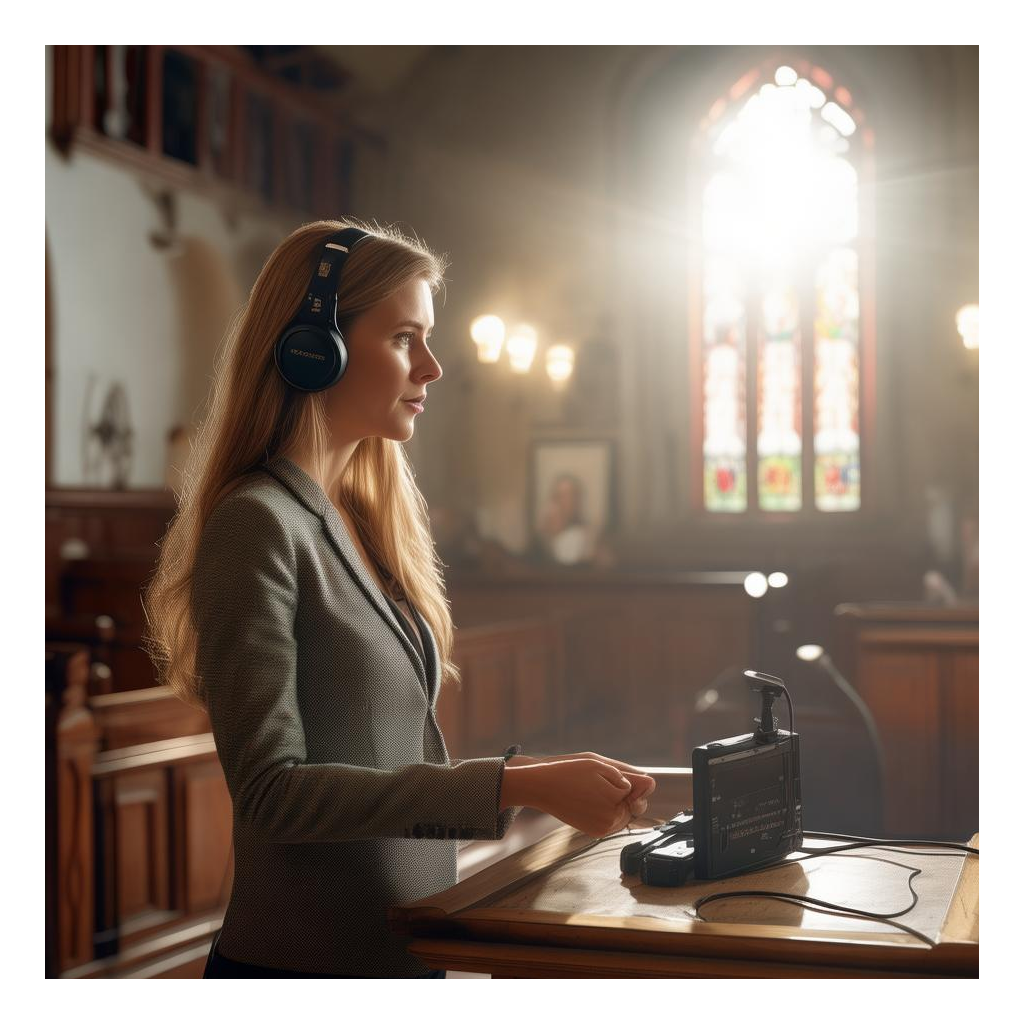
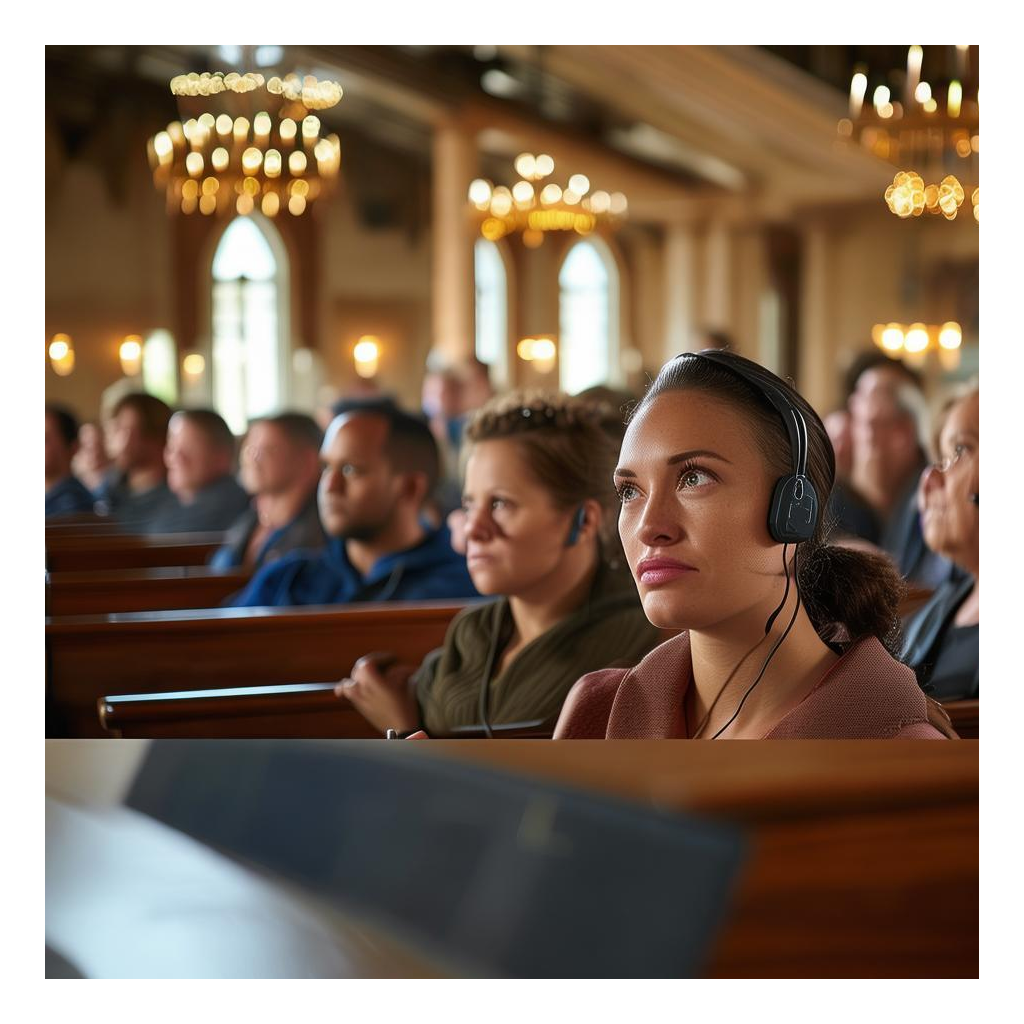
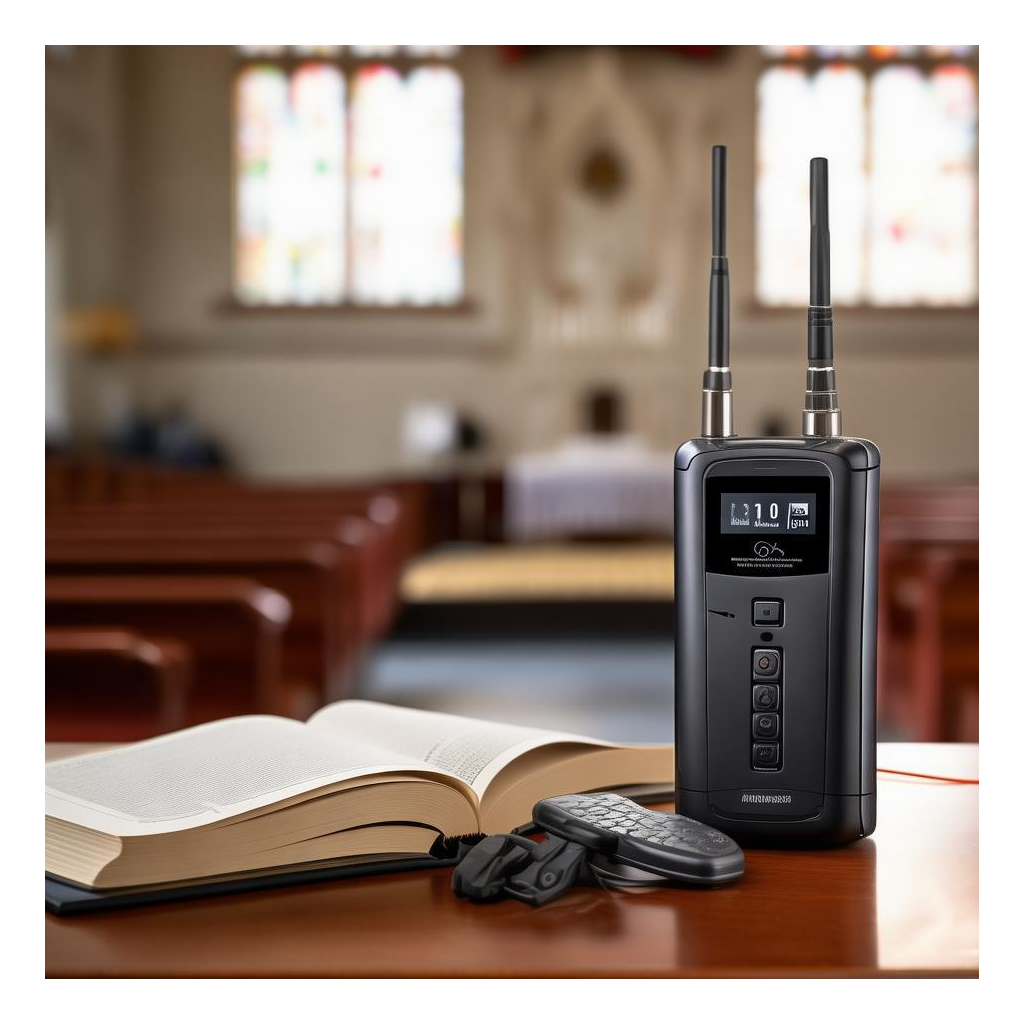
St. Mary's Cathedral runs a weekly bilingual service, with English sermons translated into Spanish for a growing international community. The system's 20 channels capability and 100m transmission range seemed ideal for the Gothic nave. The interpreter, positioned at a small wooden lectern near the choir, was using the RC2501 transmitter. The congregation had been issued receivers, each clipped to a lapel or worn with a neck strap. The service began flawlessly.
Then, 22 minutes into the sermon, the interpreter noticed a problem. "I saw the transmitter screen flicker," she reported later. "It showed 'Channel 06' but the battery icon dropped to one bar. Then the transmission cut out completely." The congregation members wearing the receivers looked up, confused. The silence was deafening. Fortunately, the lead technician, Mark, had a backup unit ready. He quickly swapped the transmitter and restored the feed within 45 seconds. But the question remained: why did a system with a rated 15-hour battery life fail after only 20 minutes?
Comprehensive Diagnostic Process: What We Discovered
After the service, Mark and I conducted a full diagnostic. We needed to isolate the fault. Was it a battery defect, a channel conflict, or a range issue? Our systematic approach revealed several important insights that can help other churches avoid similar problems.
Step 1: Battery Health Assessment
The first suspect was the battery. The RC2501 is praised for its lightweight build—48g ultra-light design—which often leads users to assume the battery is small. However, the unit uses a high-density lithium polymer cell. We removed the battery from the suspect transmitter and tested it with a multimeter. The voltage read 3.2V, which is within nominal range. We then fully charged it (2 hours) and ran a discharge test. The battery lasted 14 hours and 52 minutes under continuous transmission. The battery was not the issue.
Step 2: RF Environment Analysis
Next, we scanned the RF environment. Churches often have hidden interference sources: wireless microphones for the pastor, Wi-Fi networks for streaming services, and even nearby radio stations. Using a spectrum analyzer, we found that Channel 06—the channel used during the incident—was experiencing intermittent interference from a nearby wireless microphone system operating on a adjacent frequency. This interference was causing the transmitter to momentarily lose sync with the receivers, which triggered the battery indicator to show a false low reading.
Step 3: Physical Inspection of the Transmitter
Upon closer inspection, we discovered that the transmitter's antenna connection had a slight looseness. This was likely caused by the interpreter's movement during the sermon, as she gestured and adjusted her position. The intermittent antenna contact was creating RF instability, which the system's error correction software interpreted as a power loss, hence the battery icon dropping to one bar. The actual battery was fine, but the software was misreading the signal.
Lessons Learned: How Churches Can Prevent Similar Failures
Based on our diagnostic findings, we developed a set of best practices for religious venues using the RC2501 Wireless Tour Guide System. These recommendations go beyond the standard troubleshooting guide and address the specific challenges of church environments.
Pre-Service Checklist for Church Audio Technicians
Conduct a full RF scan at least 30 minutes before the service begins. Identify any potential interference sources, including wireless microphones, Wi-Fi routers, and nearby broadcast towers. Choose channels that are clear of interference.
Inspect all physical connections on both transmitters and receivers. Check antenna connections, battery contacts, and audio jacks for any signs of looseness or wear. Tighten any loose connections.
Perform a battery stress test on all units that will be used during the service. While the nominal battery life is 15 hours, environmental factors like temperature and humidity can affect performance. Test each battery under simulated usage conditions.
Have backup units ready with fully charged batteries. As Mark demonstrated at St. Mary's, having a spare transmitter can save a service from disruption. Designate one backup unit for every five primary units in use.
Train interpreters and staff on basic troubleshooting. Teach them how to recognize the signs of signal loss, battery depletion, and channel conflicts. Provide them with a simple checklist to follow in case of an issue.
Understanding the 48g Ultra-Light Design Trade-Offs
The 48g ultra-light design of the RC2501 is a double-edged sword. While it makes the system comfortable for long-term wear, the lightweight construction can sometimes lead to physical vulnerabilities. The antenna connection, in particular, is a potential weak point because it must be both secure and unobtrusive. We recommend that churches periodically check the antenna base on each transmitter and receiver, using a small screwdriver to ensure it is firmly seated.
Comparative Analysis: RC2501 vs. Other Church Audio Solutions
To provide context for churches considering the RC2501, we compared it against two other popular wireless tour guide systems commonly used in religious settings: the Listen Technologies LT-800 and the Williams Sound PPA T46. Our comparison focused on the factors most relevant to church use: battery life, weight, channel capacity, and interference resistance.
| Feature | RC2501 Wireless Tour Guide System | Listen Technologies LT-800 | Williams Sound PPA T46 |
|---|---|---|---|
| Weight | 48g ultra-light design | 62g | 55g |
| Battery Life | 15 hours | 12 hours | 14 hours |
| Channels | 20 | 16 | 8 |
| Transmission Range | 100 meters | 90 meters | 80 meters |
| Interference Filtering | Advanced digital processing | Standard | Basic |
The RC2501 clearly leads in battery life and channel capacity, making it the best choice for large, multilingual churches. Its 48g ultra-light design also provides the highest comfort level for congregation members who may wear the receivers for multiple hours. The advanced digital interference filtering is a critical advantage in the RF-heavy environment of a modern church.
Optimizing the RC2501 for Church Acoustics
Beyond the immediate troubleshooting lessons, churches can take proactive steps to optimize their RC2501 systems for the unique acoustic properties of their venues. Here are three advanced strategies we recommend:
Strategic Placement of Transmitters
Position interpreters in locations that minimize RF obstacles. Stone pillars, metal beams, and thick walls can all attenuate the signal. Place the interpreter's transmitter at least 1 meter away from large metal objects. If the interpreter is near a choir loft or organ, ensure there are no electronic musical instruments or amplifiers nearby that could generate interference.
Receiver Distribution Patterns
For large congregations, distribute receivers in a way that ensures even coverage. The RC2501's 100-meter range is sufficient for most church naves, but if your church has multiple floors or wings, you may need additional transmitters. For venues requiring an even lighter form factor, the RC2468 Wireless Tour Guide provides comparable channel capacity with an alternative design optimized for small-group tours.
Regular Maintenance Schedule
Create a monthly maintenance routine that includes:
Cleaning all battery contacts with a dry cloth
Inspecting antenna connections for tightness
Running a full channel scan to identify new interference sources
Updating firmware if available (contact the manufacturer for updates)
Future-Proofing Your Church's Audio Translation System
As churches continue to grow their multilingual services, the demand for reliable, high-performance wireless tour guide systems will only increase. The RC2501 Wireless Tour Guide System represents the current state of the art, but churches should also consider how their audio infrastructure will evolve. For a broader perspective on wireless audio system deployments, see the latest Richitek wireless tour guide system news covering innovations in church translation, museum tours, and outdoor excursions.
The incident at St. Mary's Cathedral ended well—thanks to Mark's quick thinking and a backup unit—but it highlighted the importance of understanding the unique challenges of church audio environments. By following the diagnostic process outlined in this field guide and implementing the preventive measures we recommend, churches can ensure that their RC2501 systems deliver the silent, reliable performance that worshippers expect.
For more information on the RC2501 Wireless Tour Guide System and other audio solutions for churches, visit the product page: RC2501 Wireless Tour Guide System.