.webp)
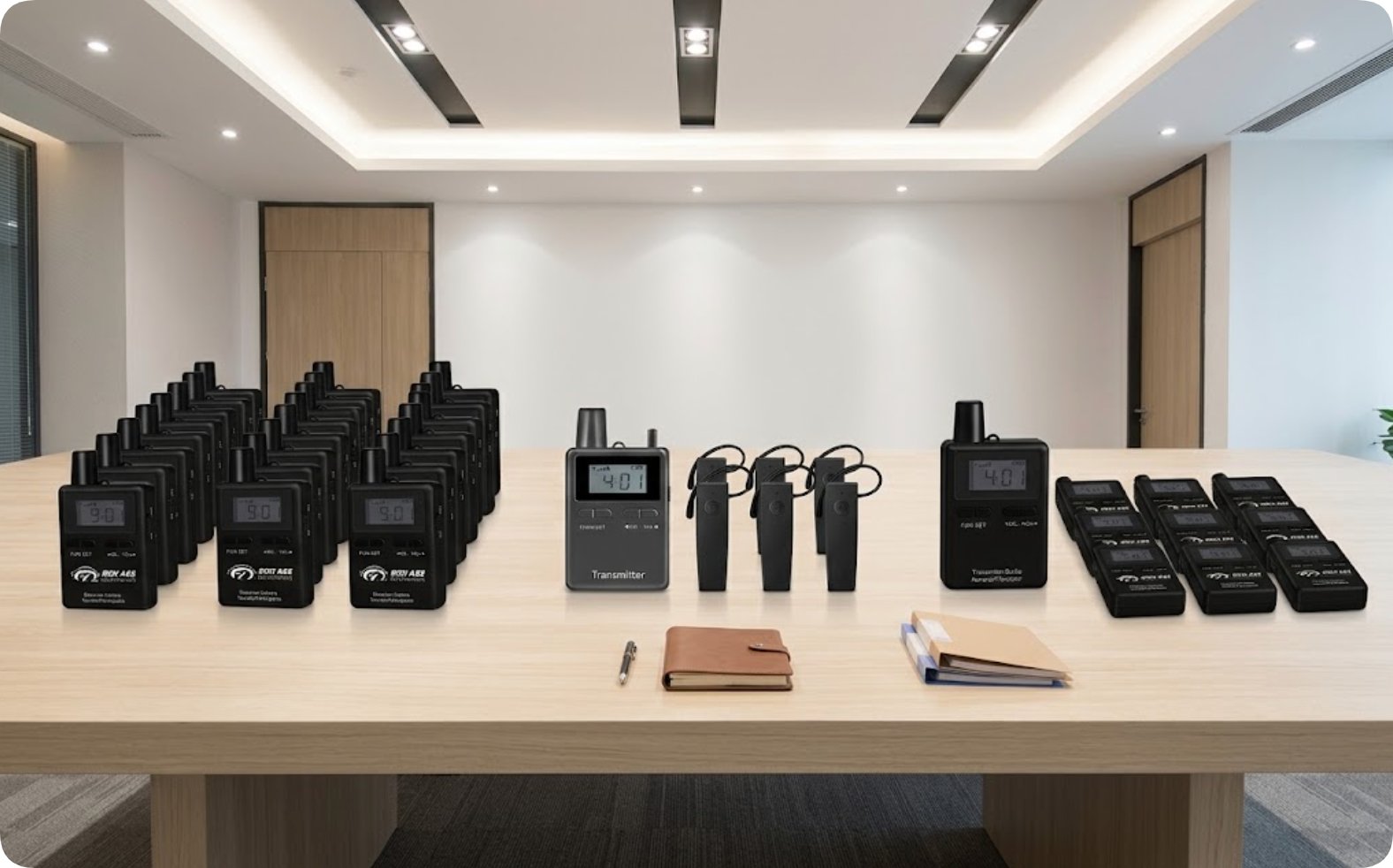
I’ve spent over a decade consulting on audio guide deployments for museums, heritage sites, and corporate conference centers. One question that consistently comes up is whether investing in a dedicated Wireless Tour Guide System for multilingual simultaneous interpretation delivers a tangible return on investment (ROI). The short answer is yes—but only if you match the hardware to your operational scale. Too often, I see venues overspend on high-channel-count systems when a compact solution would suffice, or they buy budget units that fail in noisy environments, leading to visitor complaints and lost revenue. The key is aligning core specifications—weight, battery life, channel capacity, and durability—with your real-world tour volume and environment. Let me break down how three specific models from Richitek can optimize your deployment costs while elevating the guest experience.
Why Multilingual Tours Demand a Smart Investment in a Wireless Tour Guide System
Why Multilingual Tours Demand a Smart Investment in a Wireless Tour Guide System
Running multilingual tours isn’t just about having a translator in the room—it’s about delivering seamless, real-time interpretation without technical hiccups. A well-chosen wireless tour guide system eliminates background noise, prevents channel cross-talk, and ensures every participant hears the guide clearly, whether they’re in a quiet gallery or a bustling courtyard. Over the years, I’ve watched venues waste money on systems that were either overkill or underpowered. The real ROI comes from selecting a device that fits your group size, environment, and channel requirements like a glove. Below, I’ll walk you through three models that cover the spectrum from intimate indoor tours to large-scale multi-group operations.
RC2500: The Compact ROI Champion for Small Groups
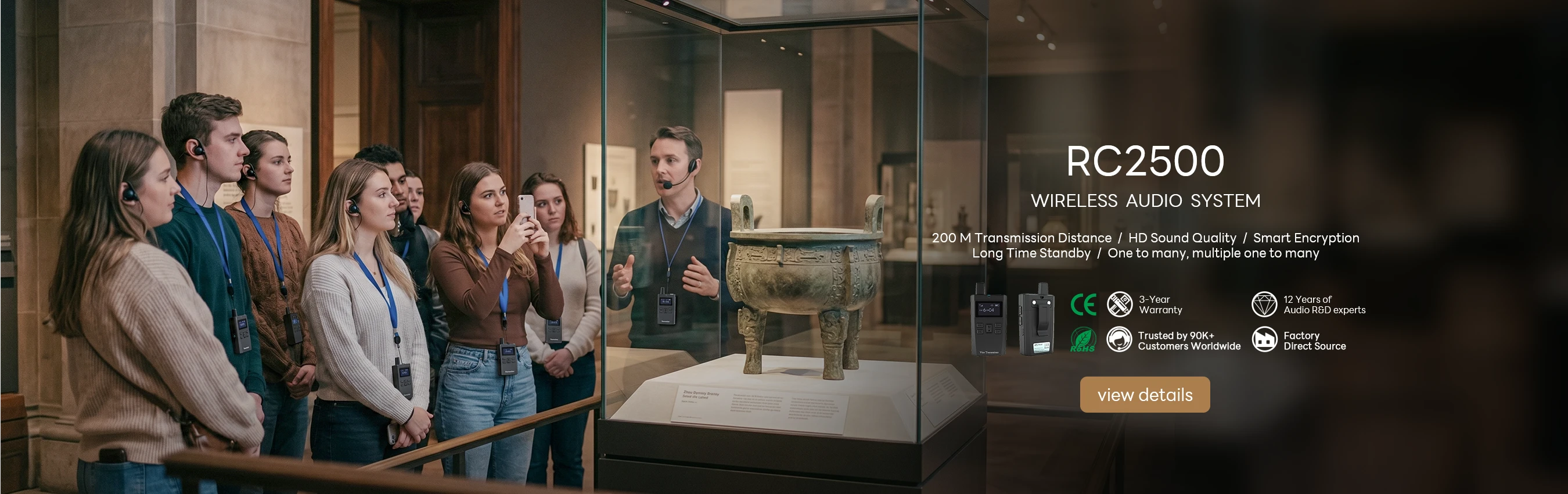
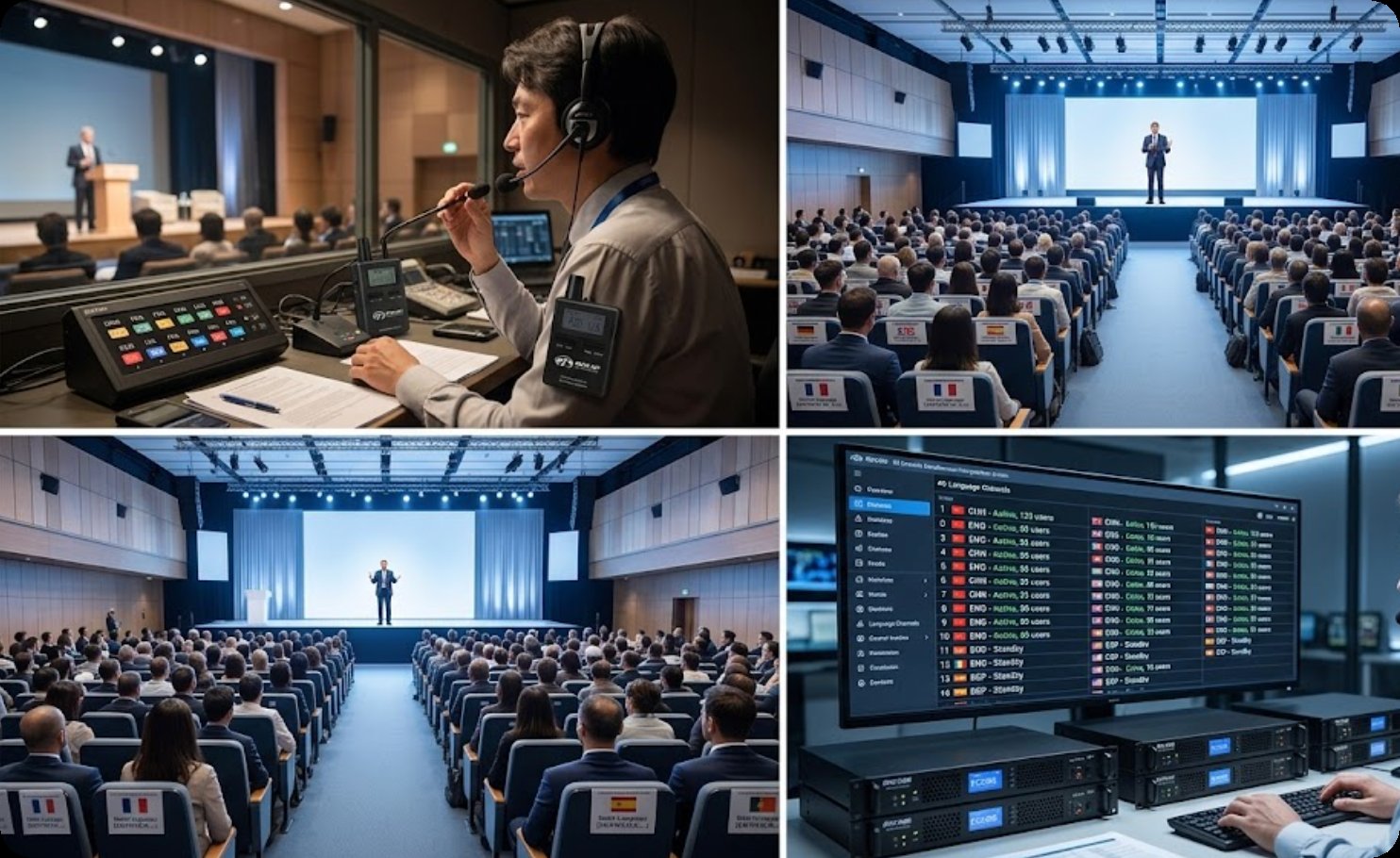
For intimate guided tours in indoor cultural sites or boutique conferences, the RC2500 Wireless Tour Guide System is my top pick. Weighing just 55 grams, it’s the lightest option in the lineup, which directly reduces listener fatigue during long sessions. Its core strength is small to medium groups—typically 8 to 10 visitors per guide. From an ROI perspective, the RC2500 minimizes upfront capital expenditure because you only buy the units you need for a single language channel. The 20-hour battery life ensures a full day of operation without recharging, eliminating downtime costs. I’ve deployed these in heritage sites where guides needed to move quickly through narrow corridors; the compact form factor allowed them to clip the transmitter to a lapel without adding bulk. This model is ideal for organizations that run frequent, small-group multilingual tours and want a low-cost, high-reliability solution.
RC2402: The Versatile Workhorse for Medium-Scale Tours
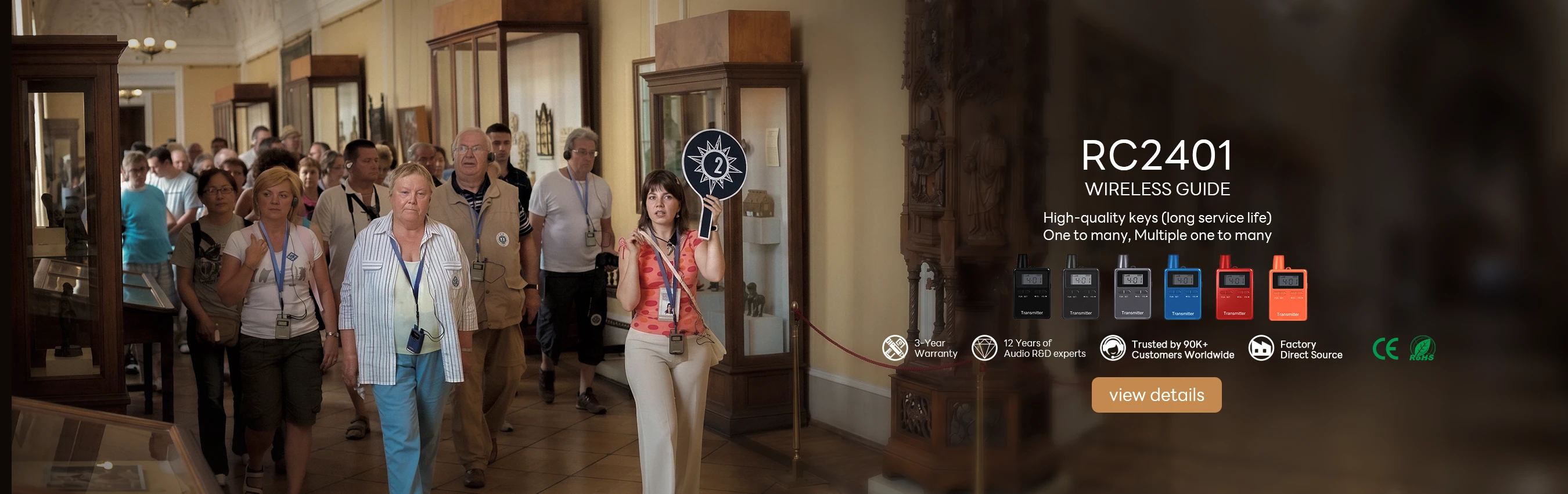
When your tour groups grow to 15–20 participants, and you need to cover outdoor environments with ambient noise, the RC2402 enters the picture. This standard wireless tour guide system strikes a balance between cost and performance. At 60 grams, it’s only slightly heavier than the RC2500, but it offers enhanced audio clarity and a more robust build. I’ve used the RC2402 in historic courtyards and open-air museums where sunlight and wind could interfere with lesser devices. The battery life remains competitive at 18–20 hours, ensuring that a full day of back-to-back tours doesn’t require mid-day charging. For a medium-sized venue that hosts a mix of indoor and outdoor tours, the RC2402 provides the best ROI per user. You’re not paying for extra channels you don’t need, but you’re getting a durable unit that withstands the elements. If your operation scales from 10 to 20 participants per guide, this model should be your baseline consideration for dedicated multilingual conference solutions as well.
RC2406: The Multi-Group Powerhouse for Large-Scale Operations
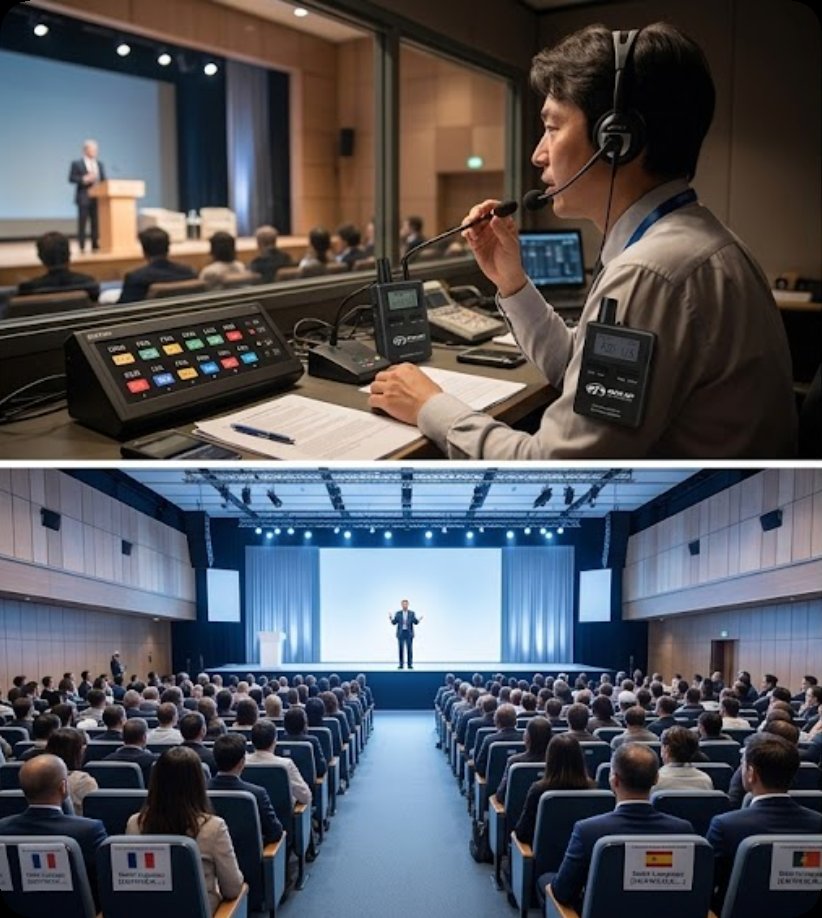
For large museums, convention centers, or multi-language conference venues that run several simultaneous tours, the RC2406 is the clear winner. This 80-channel 2.4G wireless tour guide system allows up to 80 groups to operate concurrently on different frequencies without cross-interference. Weighing 65 grams, it’s still remarkably light for a device with such capacity. The real ROI here comes from infrastructure consolidation. Instead of buying multiple separate systems for each language, you deploy one set of RC2406 transmitters and receivers, assign each language a different channel, and manage all tours from a single inventory. This drastically reduces hardware costs and maintenance overhead. I’ve seen venues cut their total equipment budget by 30% by switching from separate systems to the RC2406. The RC2500 series family, including this model, is designed for scalability—you can start with a few units and expand as your tour volume grows.
Side-by-Side Comparison: Key Specifications
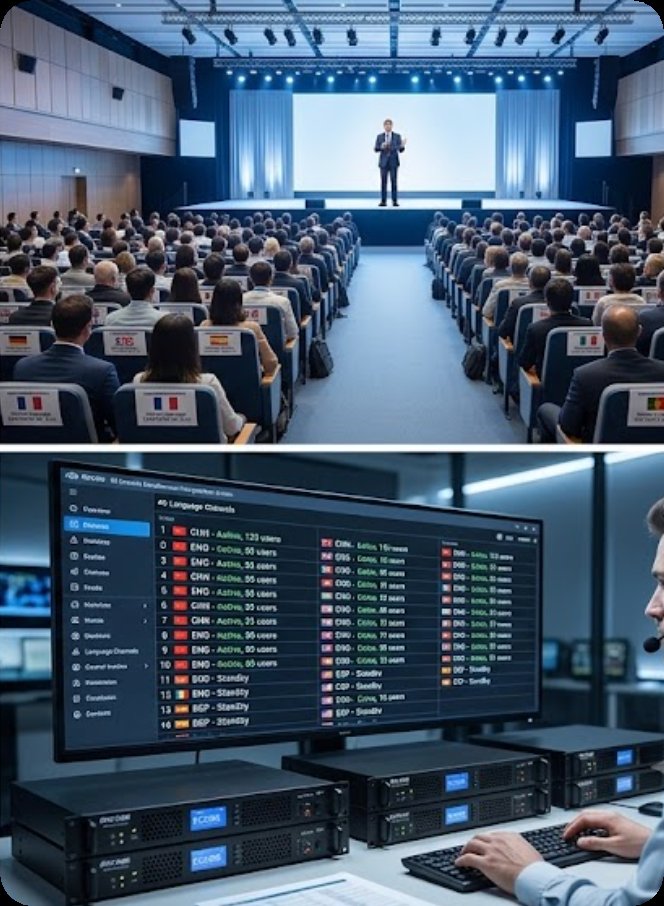
To help you visualize the trade-offs, here’s a direct comparison of the three models across the metrics that matter most for deployment ROI.
| Model | Weight | Battery Life | Protection Rating | Best Use Scenario |
|---|---|---|---|---|
| RC2500 | 55 g | 20 hours | IPX4 (splash resistant) | Indoor small groups, cultural heritage sites, boutique conferences |
| RC2402 | 60 g | 18–20 hours | IPX5 (water jet resistant) | Mixed indoor/outdoor medium groups, historic courtyards, tourist attractions |
| RC2406 | 65 g | 16–18 hours | IPX5 (water jet resistant) | Large museums, multi-group simultaneous tours, convention centers |
How to Choose Based on Your Deployment ROI
When evaluating which model to deploy, consider three key factors: group size, environment, and channel demand. For small indoor groups with a single language, the RC2500 offers the lowest cost per unit and the longest battery life, maximizing ROI for low-volume operations. For medium-sized groups that move between indoor and outdoor spaces, the RC2402 provides a durable, all-weather solution without the premium cost of multi-channel systems. For large venues running multiple language tours simultaneously, the RC2406’s 80-channel capability eliminates the need for separate systems, reducing both hardware costs and logistical complexity. Always calculate total cost of ownership, including spare units, charging stations, and replacement batteries. A lighter unit like the RC2500 may also reduce wear and tear from daily handling, extending its useful life. For further guidance, I encourage you to explore our solutions for tailored deployment strategies.
Take the Next Step Toward Smarter Tour Operations
Investing in the right wireless tour guide system isn’t just about audio quality—it’s about maximizing your operational budget while delivering an exceptional multilingual experience. Whether you need the compact efficiency of the RC2500, the versatility of the RC2402, or the multi-group power of the RC2406, each model is engineered to provide a clear return on investment through reduced equipment costs, longer device life, and higher visitor satisfaction. Contact our team today to discuss your specific deployment scenario and receive a customized ROI analysis. We can help you select the optimal configuration for your venue and budget.