
.webp)

AI Audio Conference Systems Are Reshaping Meeting Rooms: From Hardware Stacks to Intelligent Voice Infrastructure
Conference room technology is shifting from traditional multi-device setups toward integrated, AI-assisted audio systems. Instead of relying on separate microphones, mixers, processors, and amplifiers, modern meeting environments are adopting streamlined solutions that combine these functions into fewer, more capable components.
The Evolution of Conference Room Audio Systems
Conventional audio conference systems were built around layered hardware: ceiling microphones captured sound, digital signal processors handled noise reduction, and amplifiers distributed audio to speakers. While effective, this architecture required complex installation, ongoing maintenance, and specialized configuration.
Today, advancements in embedded processing and signal optimization are enabling more compact solutions. Intelligent audio components can now handle voice pickup, filtering, and distribution within a unified system, reducing system complexity and improving reliability.
Why Audio Quality Matters in AI-Driven Meetings
As organizations adopt AI-based meeting tools—such as automatic transcription, translation, and meeting summaries—the importance of clean audio input has increased significantly. These systems depend on accurate voice capture to deliver reliable outputs.
Poor audio quality can lead to:
Inaccurate transcription and meeting summaries
Reduced effectiveness of voice recognition systems
Misinterpretation of speaker intent in analytics tools
Lower engagement in hybrid or remote meetings
Ensuring stable, high-quality audio is essential for maximizing the value of AI-enabled communication tools.
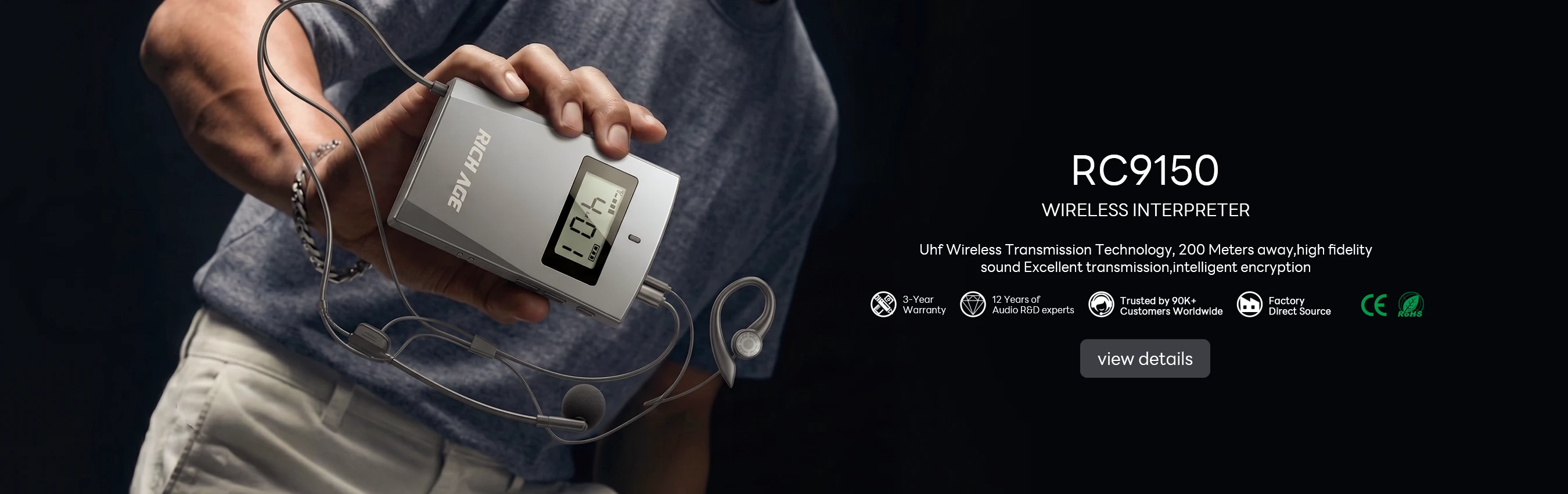
RC9150 High-Capacity Audio Conference System
The RC9150 audio conference system is designed for large meeting environments where consistent audio coverage is required across multiple participants and spaces.
It supports scalable communication with stable transmission and high audio fidelity, making it suitable for integration with modern conferencing workflows.
Key capabilities include:
Multi-channel support for simultaneous users or sessions
Wide-area coverage suitable for large rooms and venues
High-fidelity audio reproduction for clear voice transmission
Secure communication through integrated signal protection
Extended battery performance for long-duration meetings
RC2402 Noise-Controlled Communication System
The RC2402 system addresses one of the most common challenges in modern workplaces: background noise.
In open-plan offices and shared meeting environments, noise from conversations, equipment, and airflow systems can interfere with communication. Noise-managed audio improves clarity and supports more effective collaboration.
RC085 for Accessible and Inclusive Meetings
The RC085 UHF communication system enhances accessibility by supporting users with hearing assistance devices.
Its compatibility with telecoil-enabled hearing aids allows participants to receive audio directly, improving inclusivity in professional and public meeting environments.
Practical Benefits of Integrated Audio Systems
Transitioning to modern audio conference systems provides several operational advantages:
Simplified installation with fewer hardware components
Reduced maintenance requirements and system complexity
Improved consistency in audio performance across rooms
Better compatibility with AI-driven meeting tools
These improvements help organizations scale communication infrastructure more efficiently.
Where AI-Enhanced Audio Systems Are Used
Advanced audio conference systems are being adopted across multiple industries:
Corporate meeting rooms and executive briefing centers
Hybrid workspaces and remote collaboration hubs
Educational institutions and lecture halls
Healthcare training and medical conferencing
Legal and compliance environments requiring accurate records
The Future of Meeting Room Audio
As communication technologies evolve, audio systems are becoming more integrated, reliable, and adaptable. High-quality voice transmission remains a critical foundation for both human interaction and machine-assisted analysis.
Organizations investing in modern audio infrastructure are better positioned to support efficient collaboration, accurate documentation, and scalable meeting environments.
Explore advanced audio conference systems: Build a communication environment designed for clarity, reliability, and future-ready collaboration.