.webp)
Accessible & Inclusive Tourism for Blind and Low‑Vision Visitors (RC085 & RC2468)
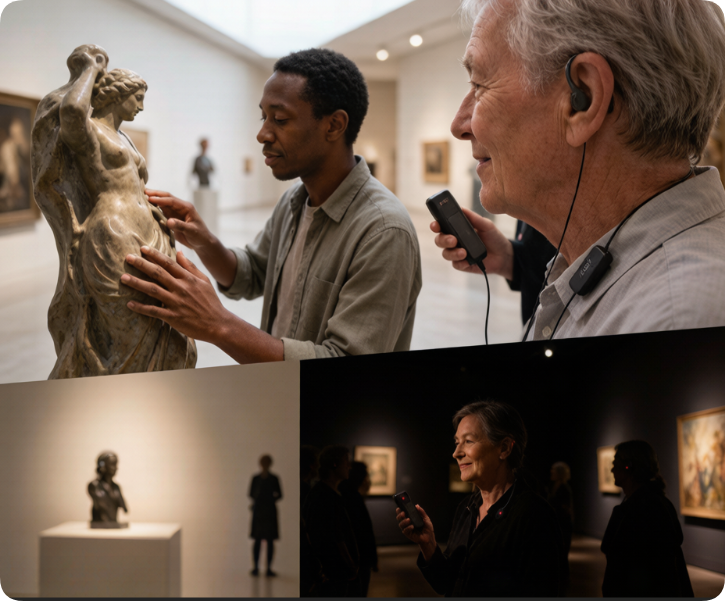
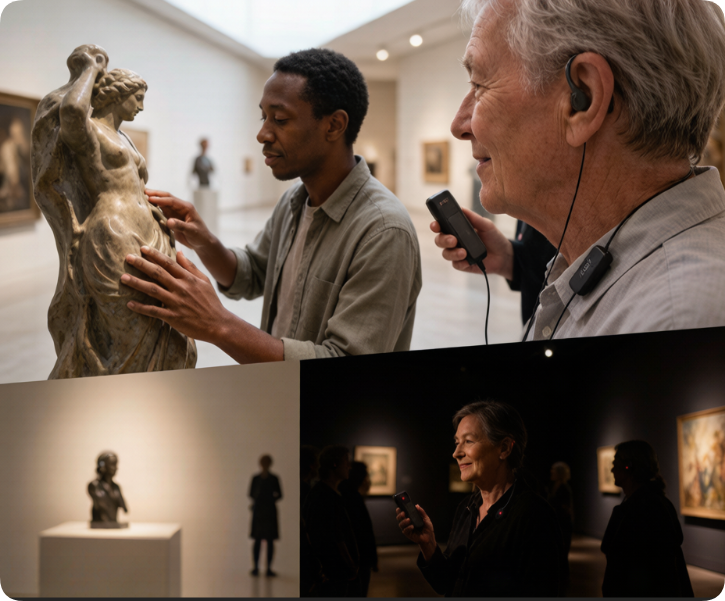
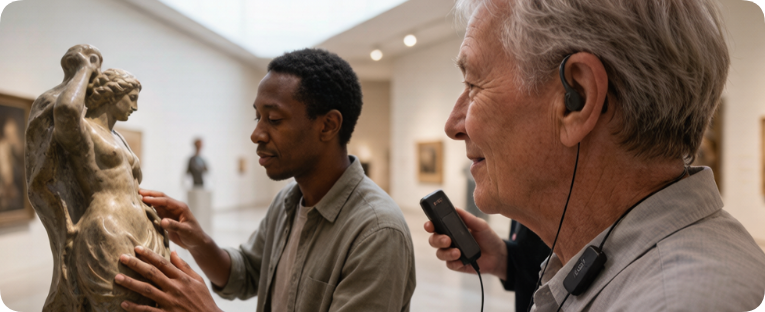
A Personal Journey into Inclusive Storytelling: My uncle has been completely blind since early adulthood. While his passion for history and cultural heritage is immense, he historically avoided guided museum tours. For him, a traditional walk-through was an exercise in isolation; he couldn't see the exhibits the docent pointed to, and the overlapping ambient noise of echoey galleries made tracking the verbal explanations impossible. Everything changed when I took him to a progressive cultural institution that offered specialized audio-described tours using an assistive Wireless Tour Guide System.
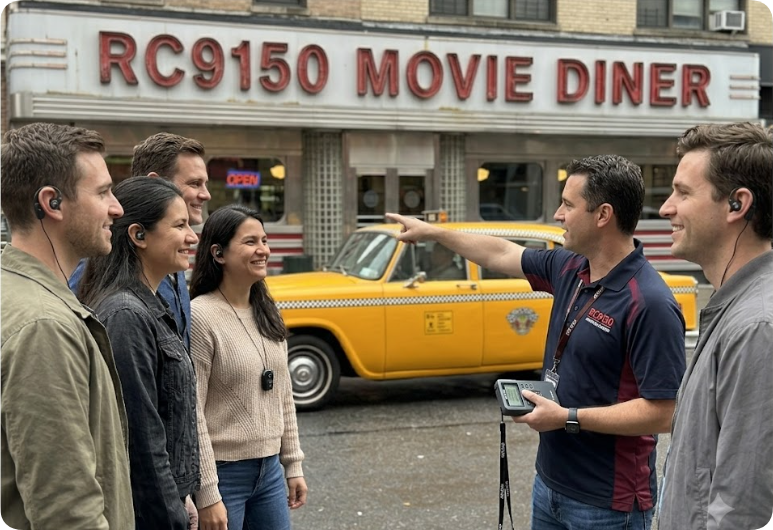
The museum docent wore a high-performance RC085 UHF transmitter, while my uncle was equipped with a discreet RC2468 receiver. Instead of generic commentary, the guide painted vivid mental pictures—detailing the exact color gradients, structural textures, and physical scale of ancient artifacts directly into his ear. The high-fidelity audio meant he captured every detail perfectly, even as boisterous school groups passed nearby. For the very first time, he toured a gallery without feeling like a logistical burden to his companions. That moving experience reshaped my understanding of institutional design: true accessibility goes far beyond wheelchair ramps. It is about deploying the communication infrastructure needed to help sensory-impaired visitors see with their ears.
The Multi-Trillion-Dollar Shift Toward Inclusive Travel Experiences
Accessible tourism is no longer treated as a niche compliance obligation or an occasional philanthropic program; it represents a massive, highly influential sector of the global travel industry. The global accessible travel market—which serves aging populations, elderly leisure travelers, and persons with long-term disabilities—was valued at over $1 trillion in 2025 and is projected to surge to an unprecedented $1.9 trillion within the next decade. Demographic studies reveal that one in four global travelers, or their immediate travel companions, live with a chronic health impairment. Among these, hearing loss and visual impairments rank as the most prevalent barriers to standard tourist activities, leaving a massive global demographic significantly underserved by traditional travel providers.
In response, leading museums, botanical gardens, and historical heritage sites are systematically upgrading their programming to offer barrier-free cultural tours. Modern inclusion strategies go well beyond physical mobility fixes, integrating specialized sign-language tours for deaf communities, tactile touch-based workshops for blind visitors, and sensory-friendly morning hours for neurodivergent individuals on the autism spectrum. Today's industry competition has shifted from basic physical facility upgrades like automatic doors and accessible restrooms to information transmission. Providing clear, localized, and real-time audio ensures that travelers with diverse needs can explore public spaces with complete independence and dignity.
RC085 UHF Digital Platform: Advanced Signal Penetration for Historic Architecture
Historic structures, ancient cathedrals, and classic museum buildings frequently present serious challenges for standard wireless equipment due to thick stone walls, reinforced concrete pillars, and marble partitions. The RC085 UHF digital system solves these coverage issues by utilizing the lower ultra-high frequency band (470–510MHz), which offers far superior structural penetration and lower wave attenuation compared to standard 2.4GHz consumer systems.
The specialized hardware layout of the RC085 makes it an exceptional tool for inclusive site management:
F2 Two-Way Intercommunication Mode: Allows visually impaired or low-vision guests to easily press a button and ask a question directly back to the guide without drawing unwanted attention or needing to yell across a crowded room.
Direct Telecoil (T-Loop) Compatibility: Connects seamlessly with personal hearing aids via a standard neck loop accessory, routing crystal-clear audio straight into the visitor's custom earpiece while bypassing room echo.
Intelligent Power-Saving Wake-Up Mode: Automatically manages power consumption across multi-hour excursions, protecting battery lifespans and preventing mid-tour hardware dropouts.
High-Contrast Master LCD Screen: Enables operators to monitor signal integrity, operational channels, and remaining battery percentages at a glance during busy registration handoffs.
200-Meter Signal Umbrella: Guarantees an unbroken audio stream even if a visually impaired guest lingers behind to touch a tactile replica or needs extra time navigating structural thresholds.
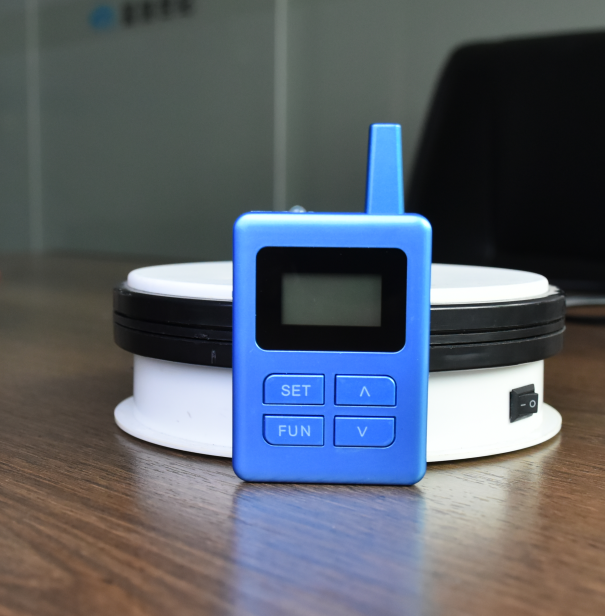
RC2468: Ultra-Lightweight Ergonomics for Long-Duration Sensory Tours
For visitors navigating a public space with a white cane, a guide dog, or a support harness, hands-free operation and lightweight gear are essential safety requirements. The RC2468 receiver addresses these needs perfectly by packing advanced wireless connectivity into an incredibly small, featherlight frame.
Weighing a mere 18 grams, it stands as the lightest professional tour receiver on the market, completely preventing the neck strain and ear fatigue common with heavy, full-sized over-ear headsets. Its flexible ear-hook shape wraps comfortably around the ear without moving, letting blind users focus fully on their balance, orientation, and cane feedback. Individual digital volume buttons allow each user to easily modify their sound level to match their personal hearing profile—an essential feature for older adults facing age-related hearing decline. Powered by a premium lithium-polymer cell, it delivers 10 hours of continuous operation on a single charge, covering full-day cultural excursions without a hitch.
Global Pioneers: How Inclusive Systems Drive Community Engagement
The push toward high-accessibility audio networks is rapidly expanding across international tourism destinations. For example, Nepal recently launched an innovative outdoor program training deaf trekking guides to safely lead hearing-impaired expeditions through the challenging terrains of the Himalayas, proving that inclusive travel models can succeed anywhere with target-designed training and audio support. Similarly, Italy's historic Via Francigena pilgrimage trail is introducing modern communication tech to make its rural paths accessible to hikers with varied physical and sensory requirements.
The takeaway for the cultural sector is clear: inclusive audio setups are no longer just an optional add-on for luxury tours—they are a core requirement for any museum, heritage landscape, or public venue committed to serving its entire community. Transitioning to professional wireless networks with two-way talkback, T-coil assistance, and independent volume adjustments stands as the single most practical, high-impact investment an institution can make to ensure true cultural equity.
Strategic Guidance for Curators and Site Managers
It is time for cultural institutions to stop treating accessibility as an administrative checkbox for regulatory compliance. Instead, look at it as a profound invitation to expand your audience. Implementing high-fidelity wireless audio loops tailored for blind, low-vision, and hard-of-hearing patrons directly expands your visitor base, enriches local educational outcomes, and deepens community engagement. When you remove communication barriers, you welcome a loyal, highly passionate demographic that is eager to experience everything your venue has to show.
Advanced Accessibility Audio Solutions:
Review the full technical specifications of the long-range RC085 UHF Digital System for historic venues, or examine the lightweight RC2468 Ultra-Light Receiver for all-day visitor comfort.