
Acoustic Harmony on the High Seas: Elevating Marine Tourism with a Premium Wireless Tour Guide System
How eco-conscious commercial vessels utilize long-range UHF frequencies to replace loud public address speakers, eliminate marine noise pollution, and deliver crystal-clear commentary.
My View: I have spent years evaluating marine excursions, and I have sat through far too many whale watching trips where the captain's narration crackled over a terrible, corroded PA system. Passengers crowded onto the upper observation deck could only make out broken bursts of static, while those resting on the lower deck were left in total silence. The second an immense humpback whale breached against the horizon, a wave of confusion took over the deck as everyone frantically yelled "Where?" over the roar of the diesel engine. The captain was forced to shout instructions repeatedly, completely breaking the magic of the moment.
That paradigm shifted entirely during a recent research cruise in the Azores when we deployed the RC8860 UHF system. The onboard marine biologist wore a lightweight transmitter, while each guest wore a compact RC2468 receiver. When a massive fin whale surfaced unexpectedly, the biologist spoke into her microphone in a calm, focused whisper: “Port side, exactly 100 meters, moving parallel to our hull.” Instantly, every passenger moved smoothly to the viewing rail without a single second of confusion or shouting. The deck stayed completely calm, and the animals remained unbothered. It was a perfect demonstration of a clear reality: high-end wildlife viewing requires silent, instant, personalized audio to maximize the guest experience.

The Economics and Environmental Challenges of Modern Marine Tourism
Global whale watching has grown into a highly competitive $2 billion annual industry, drawing more than 13 million active travelers across coastal markets worldwide. However, as global ecotourism regulations grow more stringent, vessel operators face a difficult operational challenge. Traditional public address speakers do more than just provide a poor customer experience; they push sound energy deep down into the water column. Sound waves travel over four times faster through ocean water than through the air, creating significant acoustic pollution that can disrupt the feeding and communication patterns of marine mammals.
Adopting a specialized UHF wireless solution like the RC8860 allows commercial charter operations to bypass these acoustic challenges completely. Moving beyond old speaker systems, this hardware delivers high-definition sound directly to hundreds of listeners across a reliable 200‑meter operational range, providing full coverage for large multi-deck catamarans and ocean-going cruise ships. Incorporating HDCD sound quality standards, the system captures the full emotional range and subtle changes in the speaker's voice, keeping guests thoroughly engaged throughout long coastal excursions.
Field-Tested Reliability for Marine Environments: The RC2468
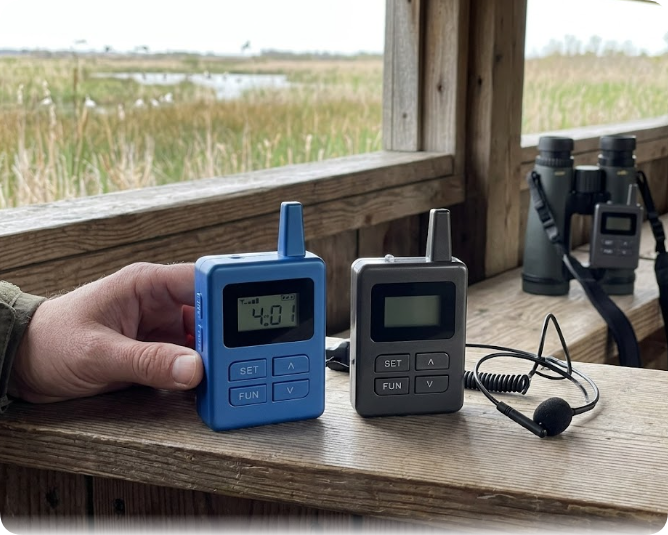
Open ocean routes subject consumer electronics to harsh conditions, including heavy moisture, salt air corrosion, strong winds, and sudden boat movements. Devices designed for dry indoor spaces break down quickly in these humid environments. The RC2468 receiver was engineered precisely to handle the physical demands of open-water eco-tourism.
Ultralight Structural Profile (18g): The incredibly light casing ensures zero neck strain over long tours. It can be clipped directly to personal life jackets, windbreakers, or worn comfortably using a soft lanyard.
Ergonomic Ear-Hook Design: Built to stay put, the earpiece fits securely around the outer ear, remaining stable even when facing sudden ocean gusts or high-speed catamaran travel.
10-Hour Continuous Battery Life: Optimized for extended maritime schedules, the robust power cell easily covers half-day charters, evening sunset cruises, and morning spotting runs without requiring a charge.
Telecoil Universal Compatibility: An essential feature for older travelers, the integrated T-coil circuitry routes clear audio directly to personal hearing aids, bypassing background wind interference completely.
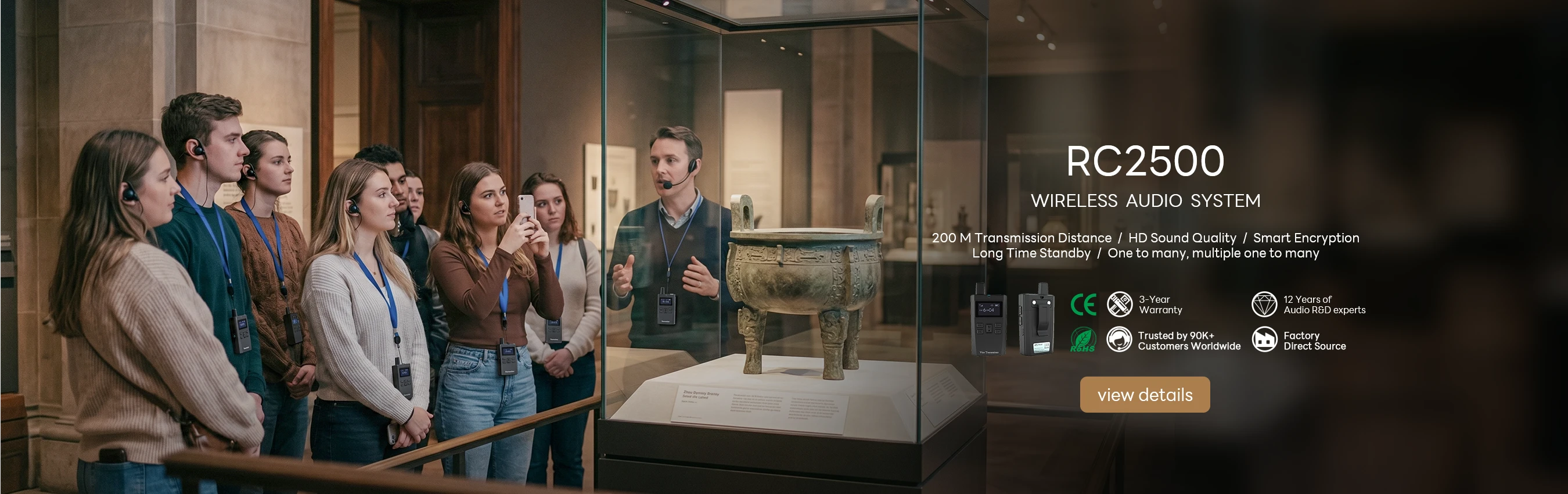
 Figure 1: Biologists guiding cruise passengers with targeted UHF audio signals that keep the natural habitat quiet.
Direct Operator Feedback: Insights from the Captain's Chair
“In the past, our crew had to cut the boat's primary engine entirely to ensure passengers could hear descriptions over the loudspeaker, which wasted fuel and valuable tracking time. Transitioning our fleet over to the RC8860 system changed everything. We can maintain a steady positioning speed, and our guests still hear every detail perfectly. By cutting out dead communication time, we have successfully increased our daily tour frequency by 20%.”
Beyond expanding tour capacity, the system offers an exceptional feature for international tourism hubs: 20 discrete channel allocations. This capability allows a single vessel to broadcast multiple target language tracks simultaneously. An English-speaking guide can use channel 1, while translated audio tracks or secondary interpreters stream out smoothly on channels 2 and 3, serving an international audience without cross-talk or confusion.
Why UHF Architecture Outperforms Bluetooth and Wi-Fi on the Water
Many tour companies attempt to use consumer smart apps or standard Bluetooth networks, only to encounter severe dropouts. Open water surfaces act as highly reflective mirrors for 2.4GHz signals, creating massive data packet loss when crowds walk around the deck. The RC8860 utilizes industrial UHF band transmission, which penetrates salt spray, heavy mist, metal boat walls, and high passenger density without signal degradation.
Simplicity remains essential for busy crews working out on the water. The system features single-frequency synchronization, making daily setup incredibly fast. Captains and naturalists can pair hundreds of receivers with a single button press, removing the need for ongoing technical support or complicated menus during a tour.
This reliable performance has made the hardware a preferred choice for a wide variety of wildlife excursions:
Coastal Dolphin Watching: Biologists track fast-moving pods, delivering quick spotting coordinates to guests without startling the animals with loud PA speakers.
Island Seal Colonies: Ecologists keep tour boats at a respectful distance, sharing educational details cleanly over the wind while keeping the resting colonies calm.
Florida Manatee Excursions: Guides coordinate small groups of swimmers and kayakers in shallow rivers, using quiet audio feeds to ensure the gentle animals are not frightened away.
Strategic Advice for Commercial Marine Operators
Your guests book excursions to experience the natural beauty of marine life, not to struggle against loud engines or distorted speaker audio. Moving away from unamplified shouting and investing in an eco-friendly wireless audio system respects the marine environment, simplifies your boat's operations, and significantly improves customer review scores and repeat bookings.