
Birdwatching & Wetland Eco‑Tour (RC085 & RC2468 & RC2402)
My View: Having tracked rare avian species across dense wetlands and old-growth forests for over twenty years, I have encountered the same structural frustration on every guided excursion. Leading a group outdoors means your voice only carries to the two or three enthusiasts walking directly beside you, while the participants trailing at the rear miss out on the sighting entirely. A rare, skittish warbler lands in the canopy; you try to whisper its coordinates, but by the time the message passes down the line through a series of confused frantic gestures, the bird has flushed.
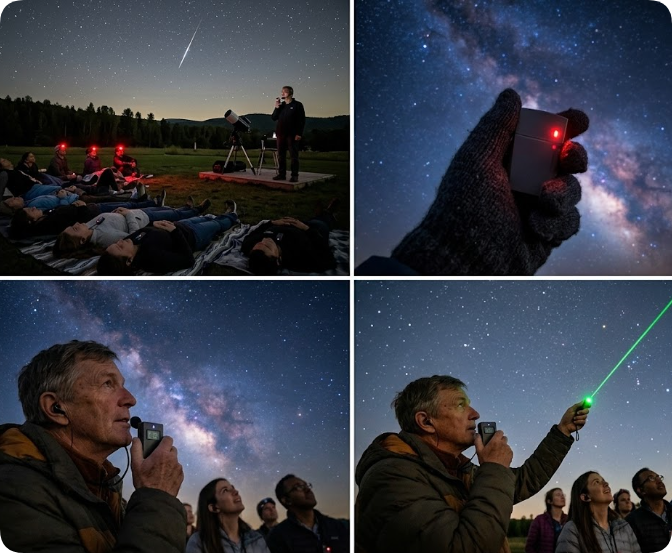
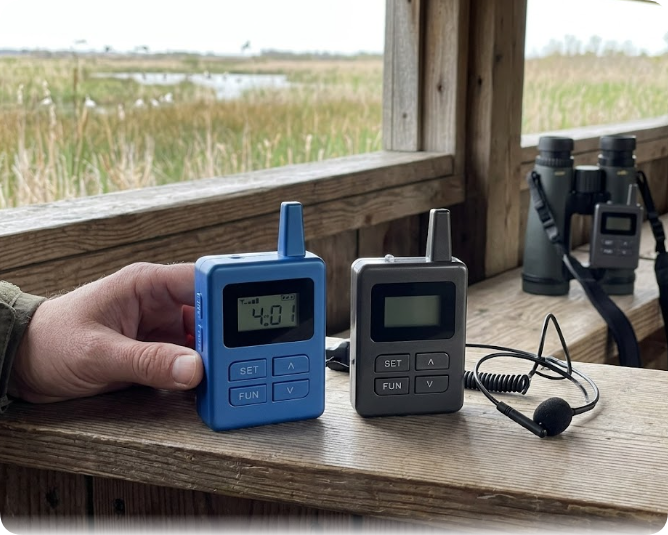
My operational methodology transformed when a wildlife refuge in Florida equipped my group with a professional Wireless Tour Guide System. Utilizing an ultra-sensitive RC085 transmitter while outfitting each participant with an RC2468 receiver, I was able to quietly whisper, "Cape May warbler, third branch from the trunk, look near the cluster of pine cones at one o'clock." Every single visitor captured the instruction instantaneously. Every camera focused in unison. The wildlife remained completely undisturbed. That field trip proved it to me: subtle, whisper-clear audio communication is the single most transformative tool an expert eco-guide can possess.
The global ecotourism and sustainable wildlife travel sector is undergoing an unprecedented commercial boom. Market research suggests the worldwide ecotourism economy is projected to expand to a valuation of $1.2 trillion by 2035, with specialized birdwatching and wildlife photography expeditions ranking as the fastest-growing niches within the industry. However, wildlife observation demands absolute acoustic discipline; traditional loud amplification, shouting, or shouting megaphones create immediate acoustic pollution that panics fauna and destroys the authenticity of the outdoor experience.
Deploying a low-profile, highly sensitive Wireless Tour Guide System allows naturalists to deliver detailed anatomical overviews and behavioral explanations at a vocal volume barely above a breath, ensuring that everyone in the group enjoys premium audio clarity. By integrating specialized hardware designed for field biology applications, tour agencies can significantly increase high-value wildlife sightings, prevent environmental disruption, and establish a deeply immersive educational environment that drives five-star client reviews.
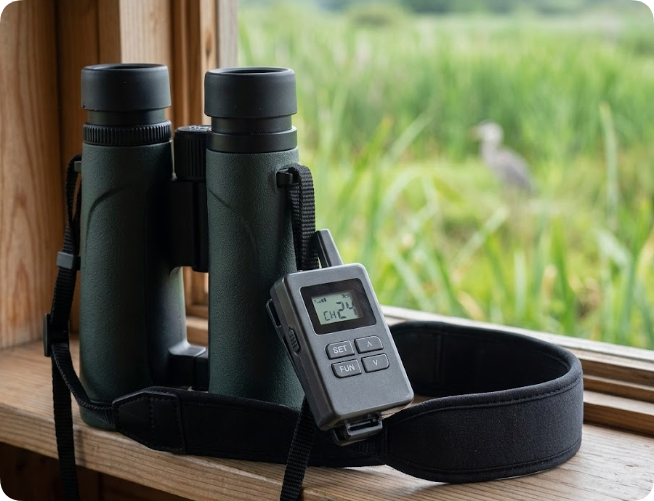
Deep Canopy Wave Penetration: The RC085 UHF Digital System
Navigating dense botanical barrier zones like coastal mangrove swamps, thick pine barrens, or tropical rainforest canopies requires specialized radio frequencies. The RC085 UHF digital system is custom-engineered to bypass physical vegetation obstacles. Utilizing the 470-510MHz UHF frequency spectrum, its radio waves bend seamlessly around thick trunks, heavy foliage, and dense reed beds, eliminating the line-of-sight signal dropouts that frequently plague standard short-wave digital consumer devices.
Every design element of the RC085 addresses the unique needs of field naturalists. The transmitter features stealthy, red-only LED indicator lights that emit zero high-contrast glare, preserving the low-light conditions required during dawn and dusk excursions when wildlife is most active. Its high-gain, whisper-sensitive microphone capture system picks up subtle vocal inflections effortlessly, allowing the guide to communicate crisp data while standing mere feet from nesting waterfowl without triggering a flight response. Backed by a 200-meter transmission range, tour participants can spread out safely along fragile boardwalks or cliff edges to find optimal viewing angles, while an intelligent power-saving wake-up mode minimizes battery drain during long periods of stationary patience in hidden observation blinds.
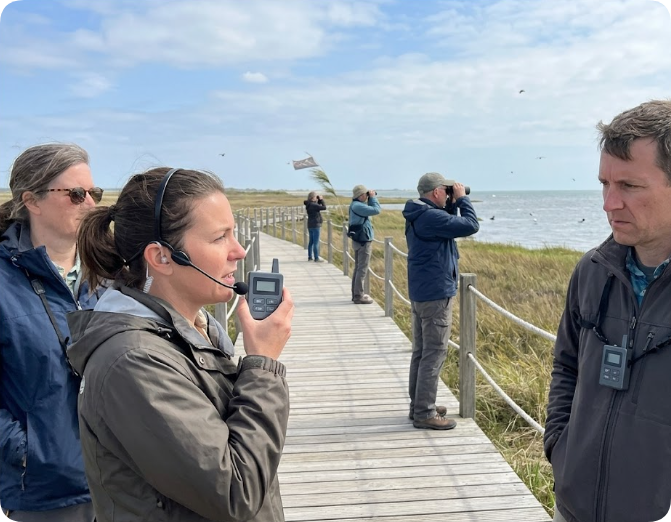
Ergonomic Field Efficiency: The RC2468 Ultra-Light Receiver
Outdoor wilderness travel demands lightweight gear, as participants are already managing binoculars, heavy spotting scopes, field guides, and camera rigs. The RC2468 receiver addresses this payload issue directly by scaling in at a near-weightless 18 grams. This ultra-compact profile minimizes physical fatigue, enabling ecotourists to comfortably explore rough backcountry trails for a full day without experiencing neck strain or discomfort.
The system relies on a flexible ear-hook architecture that fits securely under wide-brimmed sun hats, heavy winter beanies, or bulky camera neck straps without losing alignment during active movement. Its efficient internal battery array supplies a continuous 10-hour runtime to easily accommodate demanding sunrise-to-sunset birding itineraries. Tactile volume buttons allow guests to react quickly to rising wind noise or rushing water, while the customizable matte green and earthy brown exterior finishes eliminate artificial glint or shine, helping visitors blend seamlessly into surrounding natural habitats.
Conquering Marine Environments: The RC2402 Smart Noise-Canceling Receiver
For eco-tours exposed to extreme coastal conditions, such as wave-beaten marine sanctuaries, wind-swept bluffs, or pelagic boat tours, environmental sound management is vital. The heavy-duty RC2402 receiver is engineered to counteract these harsh conditions using an advanced ≥25dB digital smart noise cancellation circuit. This hardware-level processing filters out low-frequency wind shear, crashing surf, and vessel engine rumble, isolating the guide's vocal stream with exceptional clarity.
The RC2402 is built for the rigors of long expeditions, housing a premium battery architecture that delivers up to a 40-hour operational lifecycle on a single charge. This extended capacity is a major asset for multi-day wilderness workshops or remote ecological field stations where access to grid power is limited. Encased in a rugged, moisture-sealed housing, the system easily withstands dense coastal fog, early morning condensation, and unexpected rain showers, making it a reliable choice for remote marine biology and wilderness travel operations.
Quantifiable Conservation and Hospitality Metrics: Real-World Impacts
Transitioning to wireless audio networks yields direct benefits for both visitor experience and local conservation metrics. A high-profile wildlife reserve located in the coastal wetlands of Texas recently integrated the RC085 UHF network into its public conservation tours. Historically, the refuge had to cap group sizes at a maximum of ten guests per guide to ensure safety and audio coverage without resorting to yelling.
By establishing a silent wireless loop, the reserve successfully doubled its single-tour capacity to twenty visitors per guide while simultaneously dropping their recorded acoustic footprint on local nesting habitats to near zero. More importantly, they leveraged the advanced F2 two-way communication mode built into the RC085 system. This feature allows dispersed guests to press a silent push-to-talk button to transmit questions directly into the guide's headset ear-piece. The guide can then address the inquiry for the entire group using the whisper transmitter, creating an interactive, educational environment without disturbing sensitive wildlife.
This low-impact communication strategy adapts perfectly to a wide range of alternative outdoor applications. It is widely used by botanical gardens for rare orchid viewings, insect sanctuaries for specialized butterfly walks, and conservation groups tracking nocturnal species or managing low-light moth surveys. Additionally, professional landscape photography instructors rely heavily on these wireless systems to coordinate camera settings and composition angles across wide panoramic vistas without disturbing nearby wildlife, demonstrating that high-fidelity wireless audio is a core asset for modern sustainable ecotourism.
Why Professional Wildlife Educators Standardize on Rich Age Technology:
✔ UHF Signal Penetration: 470-510MHz engineering moves clean audio through dense mangroves, reed beds, and heavy forest canopies.
✔ Acoustic Discretion: High-gain whisper microphones transmit clear voice audio without disrupting local wildlife habitats.
✔ Tactical Camouflage Profile: Stealthy matte finishes and low-glare indicator lights ensure gear blends with the natural environment.
✔ Interactive Two-Way Path: Integrated F2 channel logic enables guests to submit real-time questions silently via a push-to-talk button.
Strategic Counsel for Wildlife Conservation and Ecotourism Directors
Your organization invests heavily in habitat preservation, biological surveys, and expert naturalist training to provide a premium outdoor experience. Do not let environmental barriers or distance compromise the quality of your educational delivery. Implementing a professional wireless communication loop is the most effective way to protect sensitive ecosystems, scale group logistics safely, and elevate client satisfaction scores.
Technical Procurement Resource Paths:
Review our full line of commercial Wireless Tour Guide System platforms.
Examine frequency and channel parameters for the specialized RC085 details.
Analyze weight profiles and charging parameters for the ultra-light RC2468 details.
Evaluate marine-grade environmental durability specifications for the RC2402 details.