
.webp)
The Future of Museum Accessibility: Scaling Multilingual Tours with Wireless Systems
In my years of consulting for world-class cultural institutions, I have witnessed a recurring operational breakdown: the "simultaneous group arrival." Picture three international delegations—English, French, and Japanese—arriving at the entrance of a major heritage site within the same fifteen-minute window. In a traditional setting, this is a recipe for chaos. Guides are forced to shout over one another, visitors struggle to catch fragmented sentences, and the acoustic integrity of the exhibition space is compromised. You cannot simply ask a human guide to increase their volume, nor can you expect groups to wait in a stagnant line.
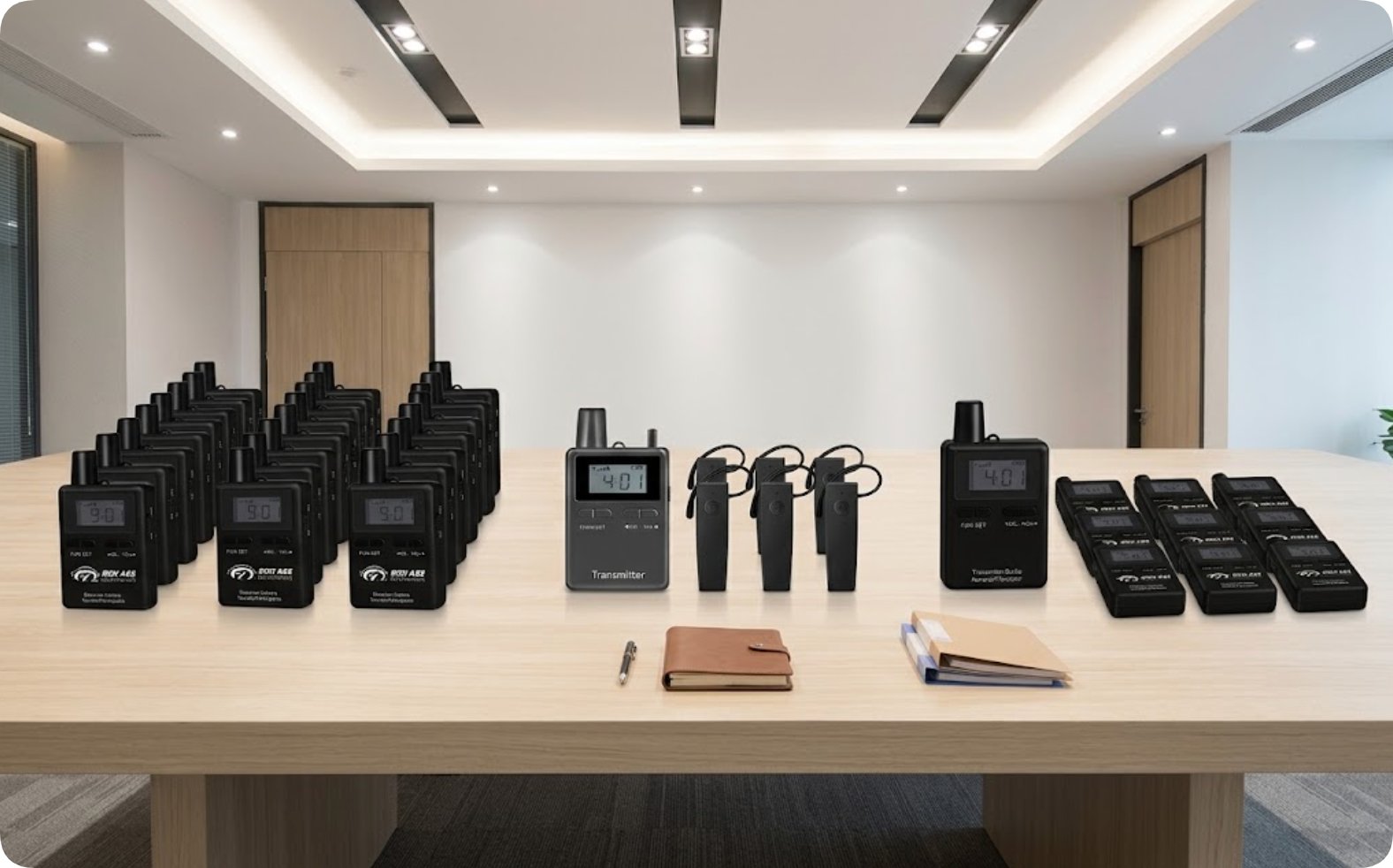
The only professional, scalable, and visitor-centric solution is the deployment of a robust wireless tour guide system. By isolating audio through dedicated language channels, these systems eliminate ambient noise and allow multiple groups to inhabit the same gallery simultaneously without auditory interference. For any museum or heritage site aiming to capture the international market, this technology is no longer a luxury—it is the operational baseline for professional curation.
Modern museums must accommodate diverse linguistic backgrounds daily. By assigning a specific frequency to each group, you ensure that every visitor receives a high-definition narrative while the guide maintains a conversational, respectful tone. Below, I analyze the three most effective Richitek systems designed to solve these exact logistical pain points at varying levels of architectural complexity.
RC2402: The Multi-Channel Powerhouse for Daily Operations
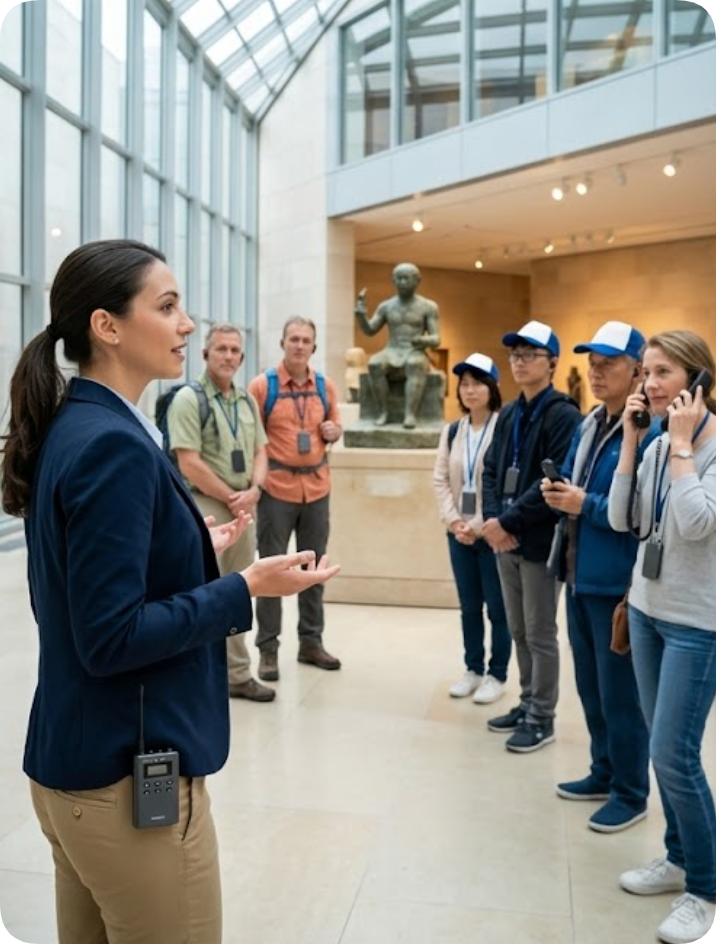
The RC2402 wireless tour guide system has become the industry standard for mid-sized museums that require high-volume channel flexibility. With 40 independent channels, a single coordinator can manage dozens of concurrent tours. For instance, you can assign Channel 1 for English, Channel 2 for French, and Channel 3 for Japanese. Visitors simply tune their receivers to the corresponding channel to receive crystal-clear audio.
Operating on a stable UHF frequency, the RC2402 is resilient against the electronic noise inherent in urban environments filled with Wi-Fi and Bluetooth hotspots. With a 200-meter range, it is perfectly suited for standard gallery rooms and outdoor courtyards. I have personally supervised its deployment in historical sites across Europe, where it has consistently outperformed traditional acoustic solutions.
RC9150: High-Fidelity 2.4G Audio for Silent Gallery Curation
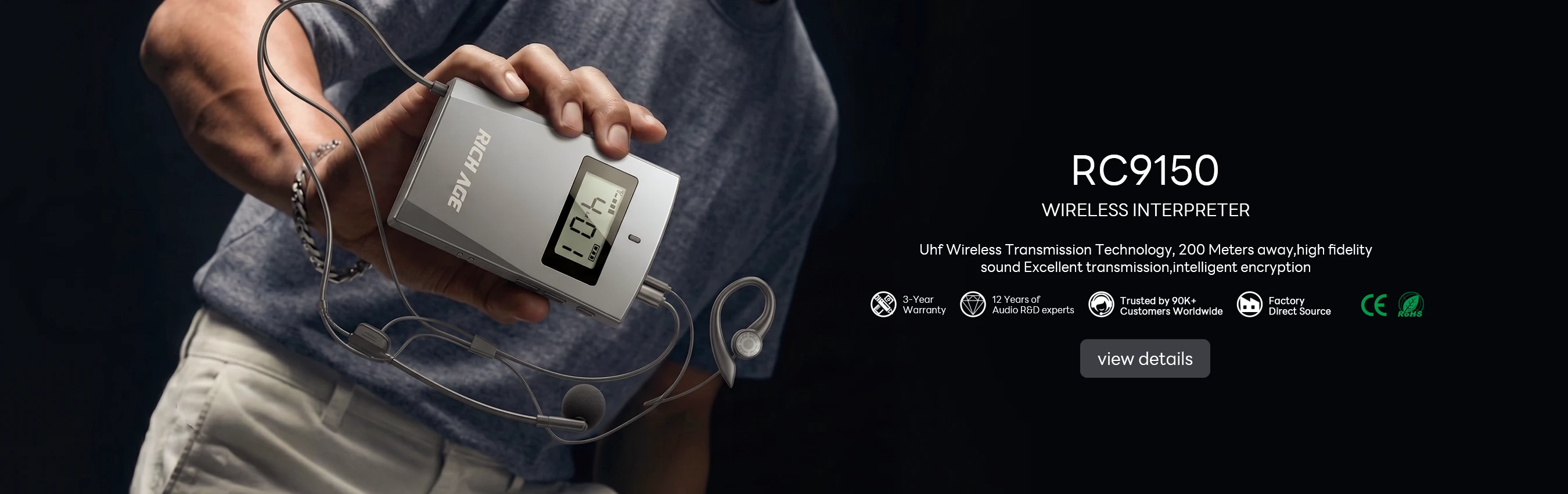
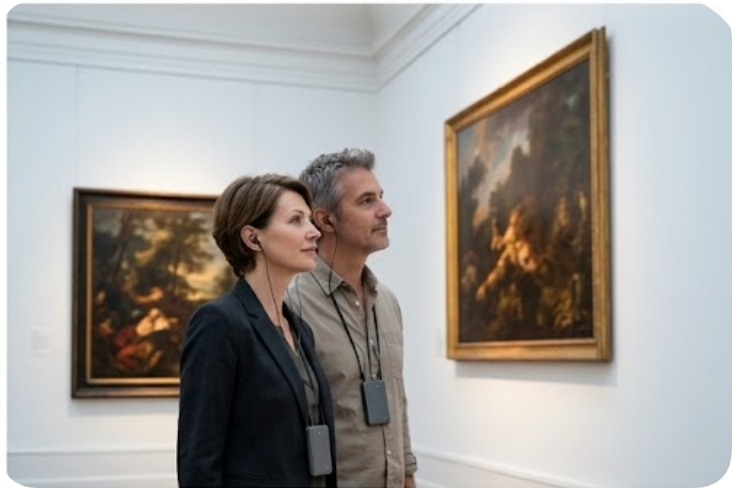
For institutions that view absolute silence as a curatorial requirement—such as high-end art galleries or delicate special exhibitions—the RC9150 wireless audio guide is the premier choice. This system utilizes the 2.4G band, offering superior immunity to urban interference while maintaining an incredibly compact, lightweight form factor.
The "whisper-guide" functionality is a game-changer. Guides can speak in a near-subdued tone, which is then transmitted with high-fidelity clarity to the visitors' earpieces. This eliminates the echo typically found in marble-floored exhibition halls. With 100 available channels, it provides unparalleled flexibility for large-scale multilingual events, ensuring that the technology remains invisible while the experience remains profound.
RC2501: Architecturally Robust Long-Range Coverage
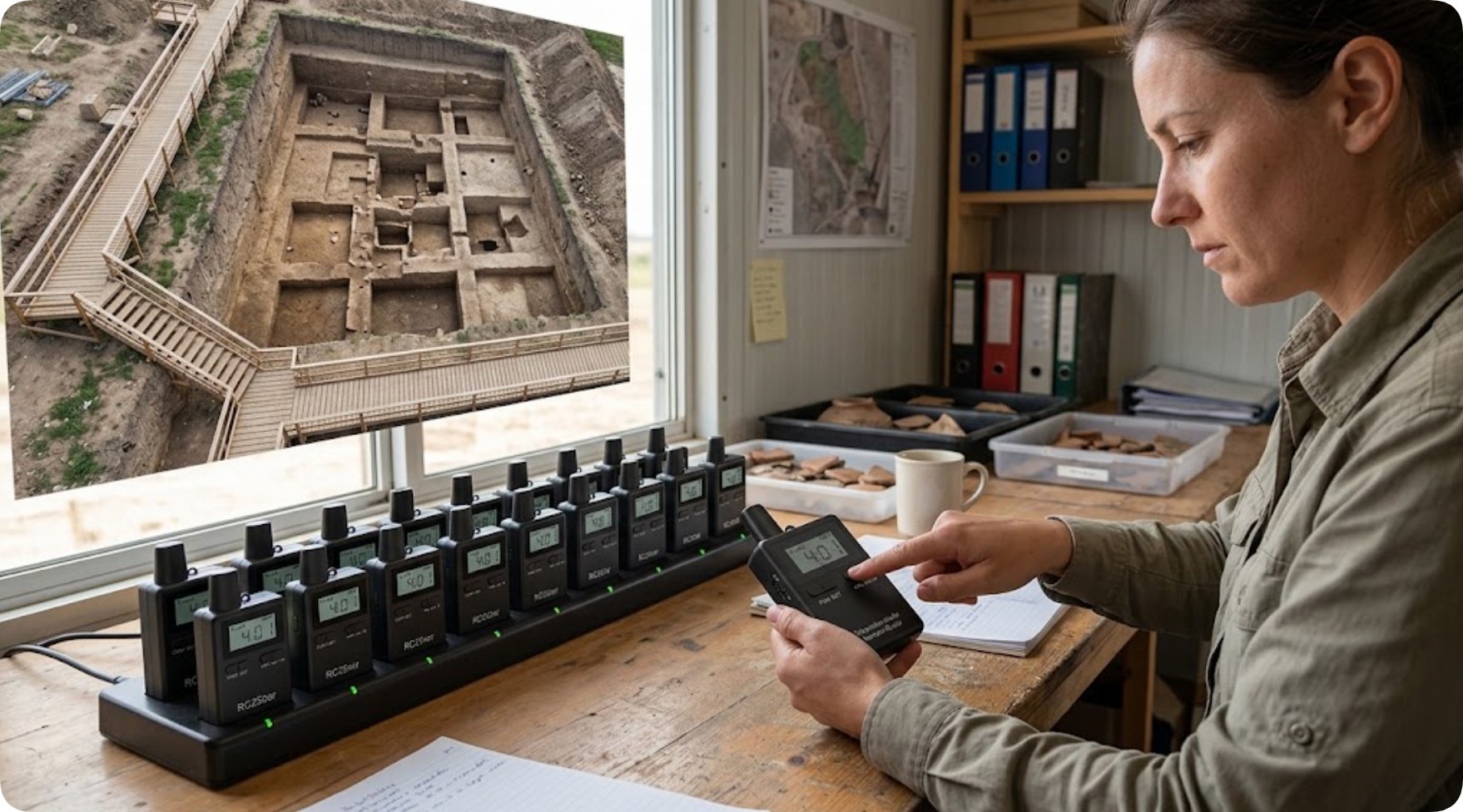
Cathedrals, sprawling palaces, and archaeological sites present unique acoustical challenges—specifically, thick stone masonry that can easily absorb or distort radio signals. The RC2501 long-range guide system is engineered to combat these structural barriers.
Offering a 300-meter reach, this system ensures that even if a guide is positioned at a main altar and the visitors are dispersed throughout the nave or adjacent chapels, the audio signal remains uninterrupted. Its stability through high-vaulted ceilings and reinforced stone structures is unmatched. Much like the RC2402, it supports multi-channel setups, meaning you do not have to sacrifice multilingual functionality for the sake of extended range.
Comparative Technical Matrix
| Model | Freq/Channels | Max Range | Best Application |
|---|---|---|---|
| RC2402 | UHF / 40 Channels | 200m | General Museum Tours |
| RC9150 | 2.4G / 100 Channels | 150m | Silent Art Galleries |
| RC2501 | UHF / 40 Channels | 300m | Cathedrals & Large Palaces |
Operational Excellence: The Channel-First Strategy
Acquiring the hardware is merely the first step; sustainable museum operations require a "Channel-First" booking strategy. I recommend that operators assign specific channels to languages long before the groups arrive. For instance, reserving channels 1-10 for English, 11-20 for French, and so on, creates a predictable environment for both your guides and your front-desk personnel.
Furthermore, staggering tour start times by 10 minutes prevents physical bottlenecks at popular exhibits. When your team views channel management with the same professional rigor as ticket sales, you eliminate cross-talk and drastically enhance the visitor experience. It is the subtle, technical discipline that dictates the true return on your investment in communication hardware.
Transform Your Visitor Experience
If your heritage site is struggling to manage international crowds without sacrificing operational clarity, it is time to upgrade. Whether you require the versatility of the RC2402, the quiet sophistication of the RC9150, or the expansive reach of the RC2501, we provide the full-spectrum solutions your museum needs. Contact our team today for a comprehensive site audit and a personalized system demo. Let us help you set a new standard for accessibility in your institution.