A leading China factory specializing in Wireless Tour Guide Systems, Church Audio Guides, and Translation Headphones with premium OEM/ODM solutions.

Tel:+86 18922879583

Email:tiger.wang@richitek.com

How Wireless Tour Guide Technology Evolved for Modern Trade Show Reception

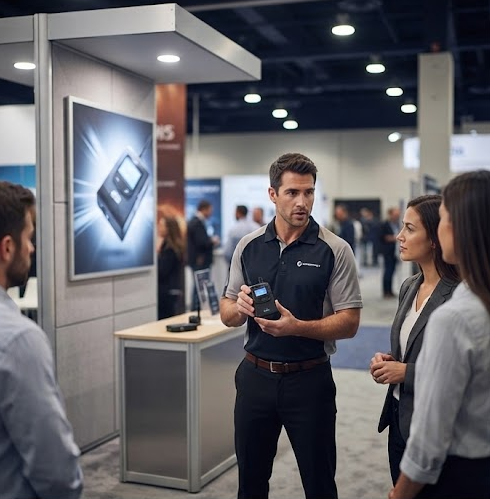
Over the past decade I have watched the trade-show reception desk change more than almost any other corner of the event floor. Where a single microphone and a raised voice once covered a booth, today's exhibitors expect crystal-clear audio that reaches every visitor without bleeding into the neighboring stand. That shift did not happen by accident. It is the result of a quiet but steady evolution in wireless tour guide technology, moving from bulky analog packs to featherweight digital systems that pair automatically and run all day. For teams running booths, product launches, and guided demos, choosing the right device now comes down to band stability, battery discipline, and how naturally the hardware disappears into the conversation. If you are planning a reception-heavy show season, it is worth looking at dedicated exhibition tradeshow solutions before committing to a bulk order.

💡 Why Exhibition Reception Demands Clear Audio

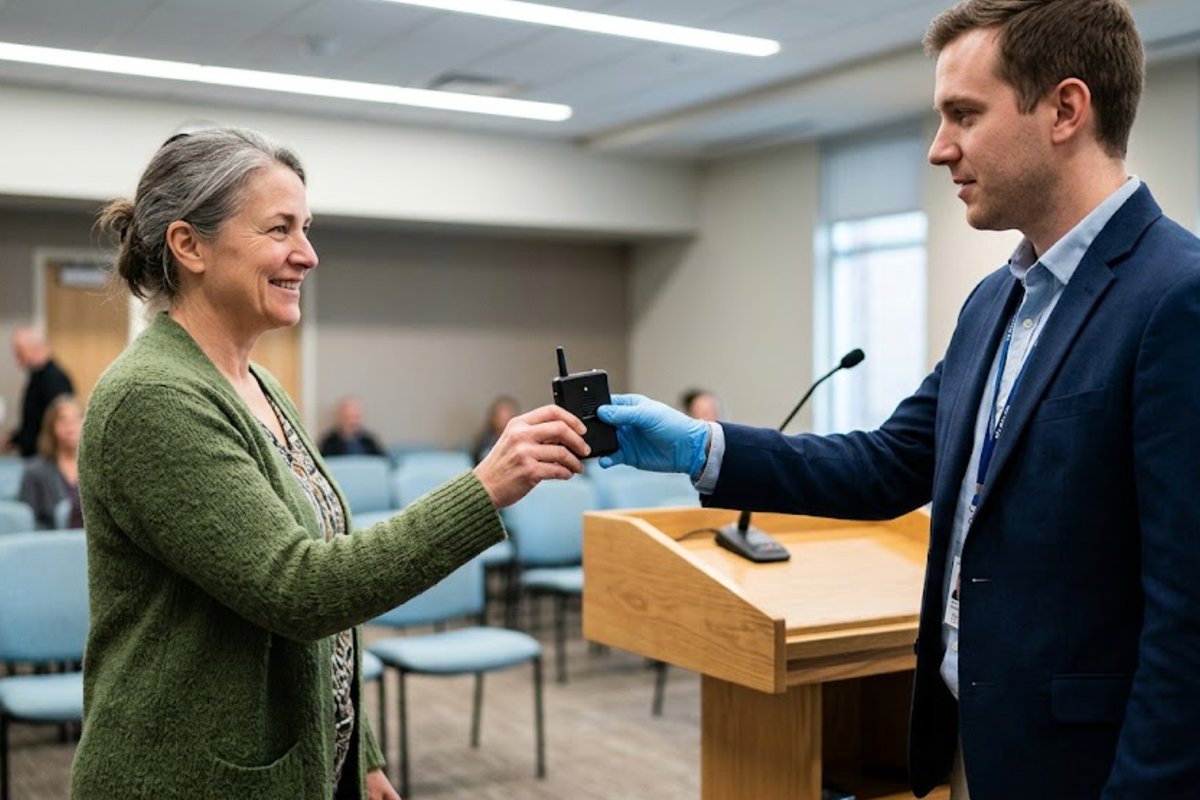
A reception area is the worst-case scenario for wireless audio. You have competing PA systems, Wi-Fi saturation from thousands of phones, Bluetooth chatter from badges and beacons, and reflective walls that bounce signal into dead zones. Early analog guides handled this poorly: narrow bands meant cross-talk between groups, and a wandering visitor could suddenly hear the wrong tour. Modern digital platforms solve it with licensed-free bands, synthesized channels, and signal paths engineered to push through concrete and machinery. The practical result is that a presenter at a busy booth can speak at a normal volume and still be heard clearly twenty meters away, which is exactly what a crowded reception desk needs.

📡 The RC2401 Multi-Channel Transmitter

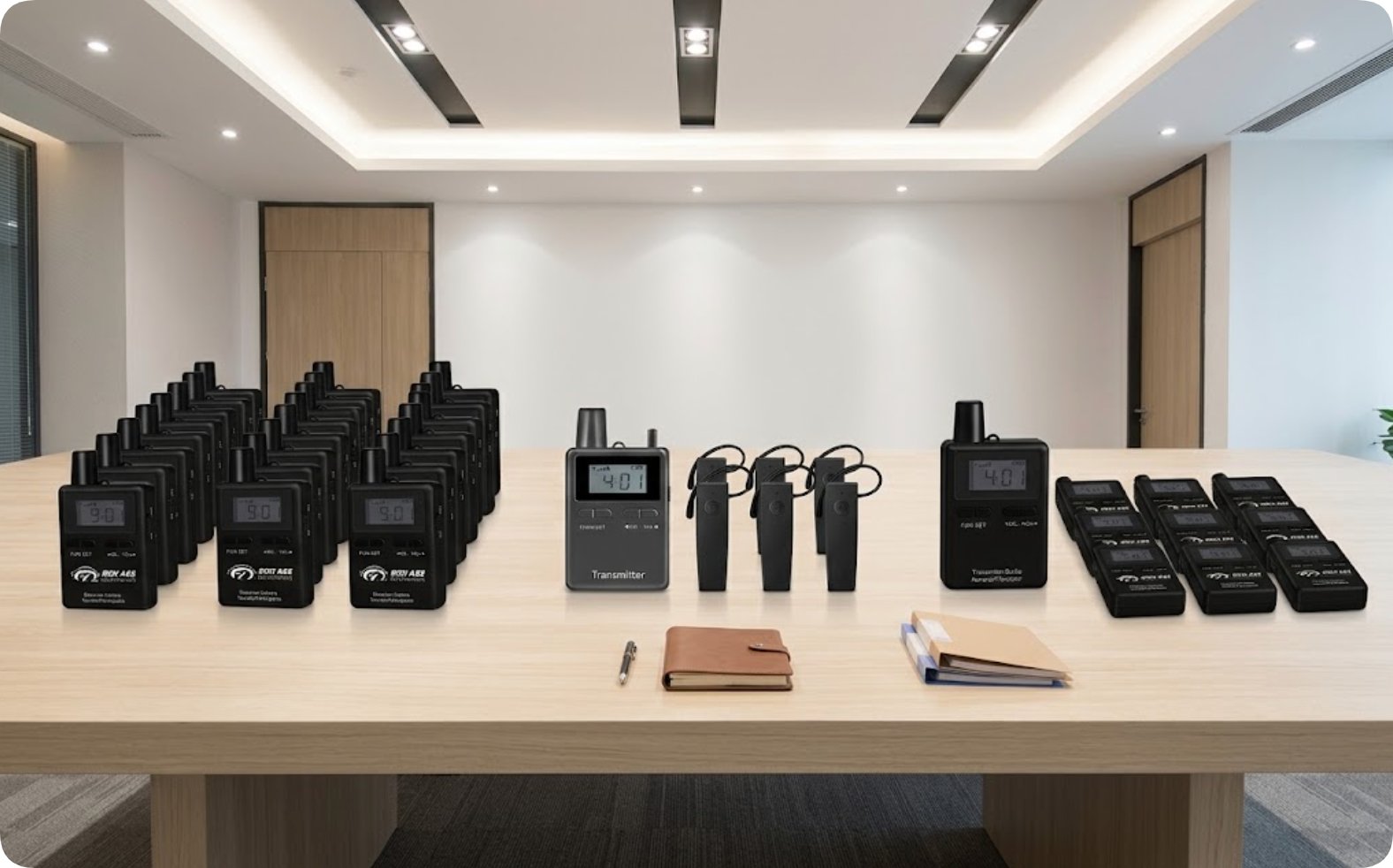
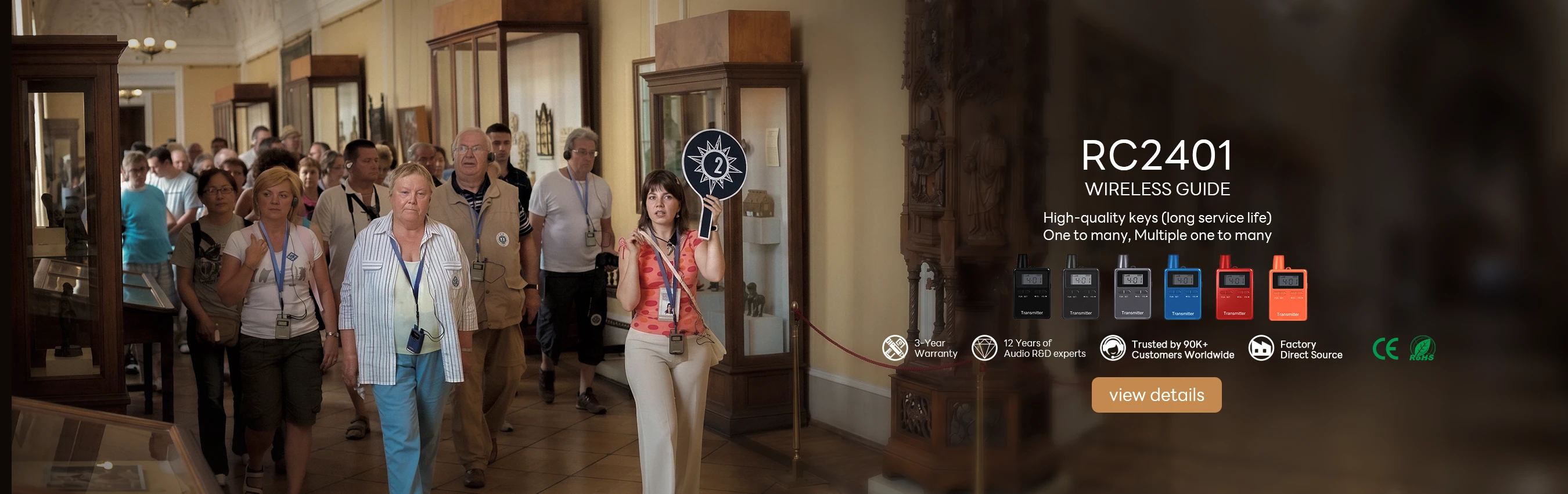
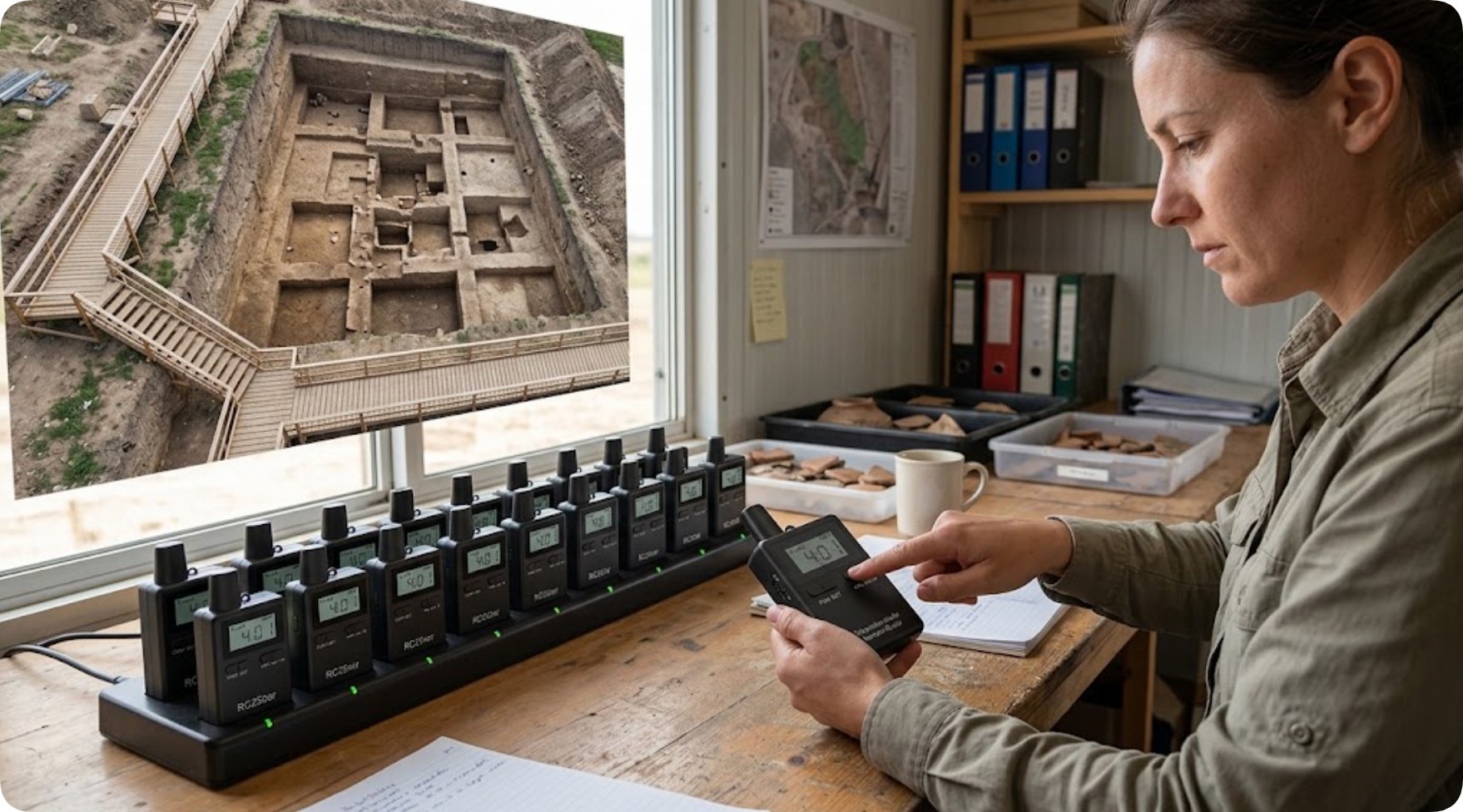
The RC2401 is built for exactly this kind of multi-group chaos. It runs on the global 2.4GHz ISM band (2403-2483MHz) with no license and no regional registration, and it backs that with 50 independent channels driven by PLL frequency synthesis. That means you can run several tour groups side by side in the same hall without crosstalk, a feature I have seen save more than one launch event from audio overlap. The transmitter delivers 10+ hours of continuous operation while the receiver holds a full 20 hours on a single charge, and the whole unit weighs just 72 grams with an IPX4 splash-resistant shell. For a trade-show booth that runs from open to close, that battery split is the difference between a relaxed day and a mid-afternoon charging panic.

How Wireless Tour Guide Technology Evolved for Modern Trade Show Reception(图1)

🎯 The RC085 Digital Guide with LCD

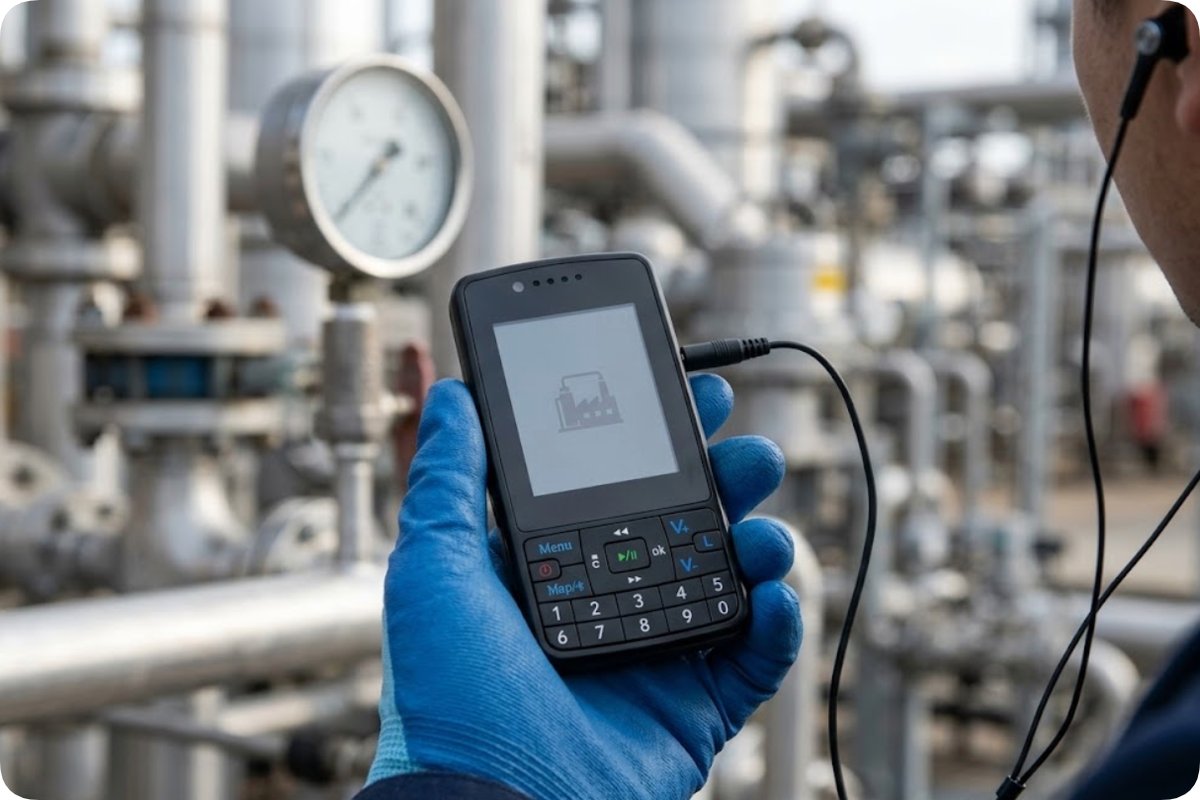
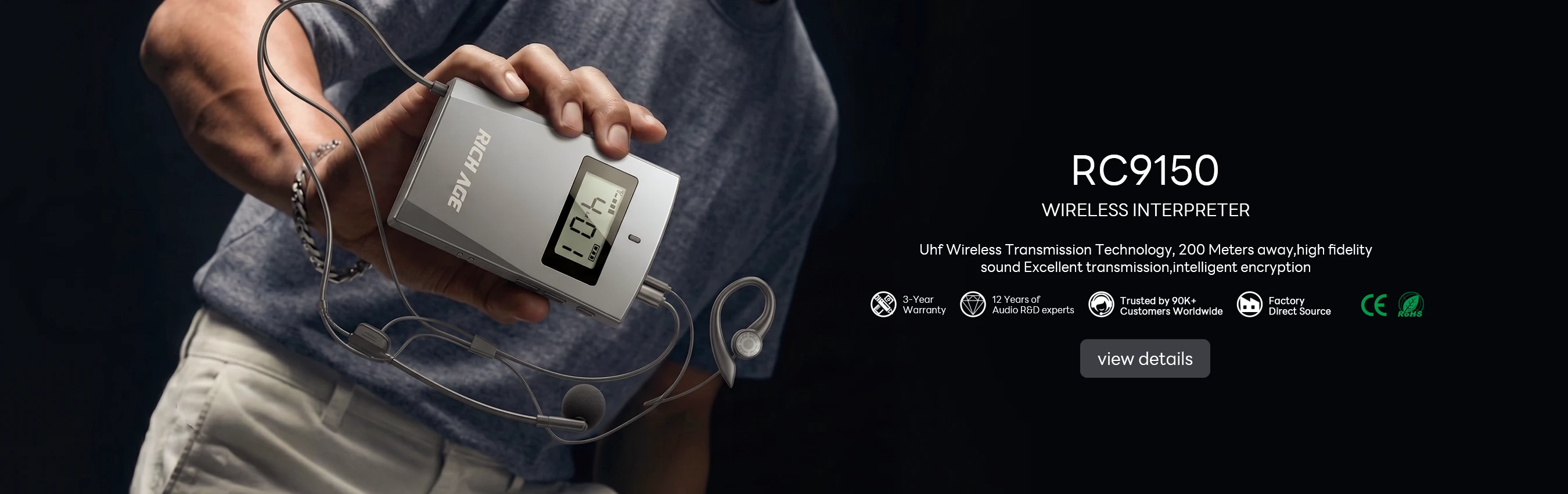
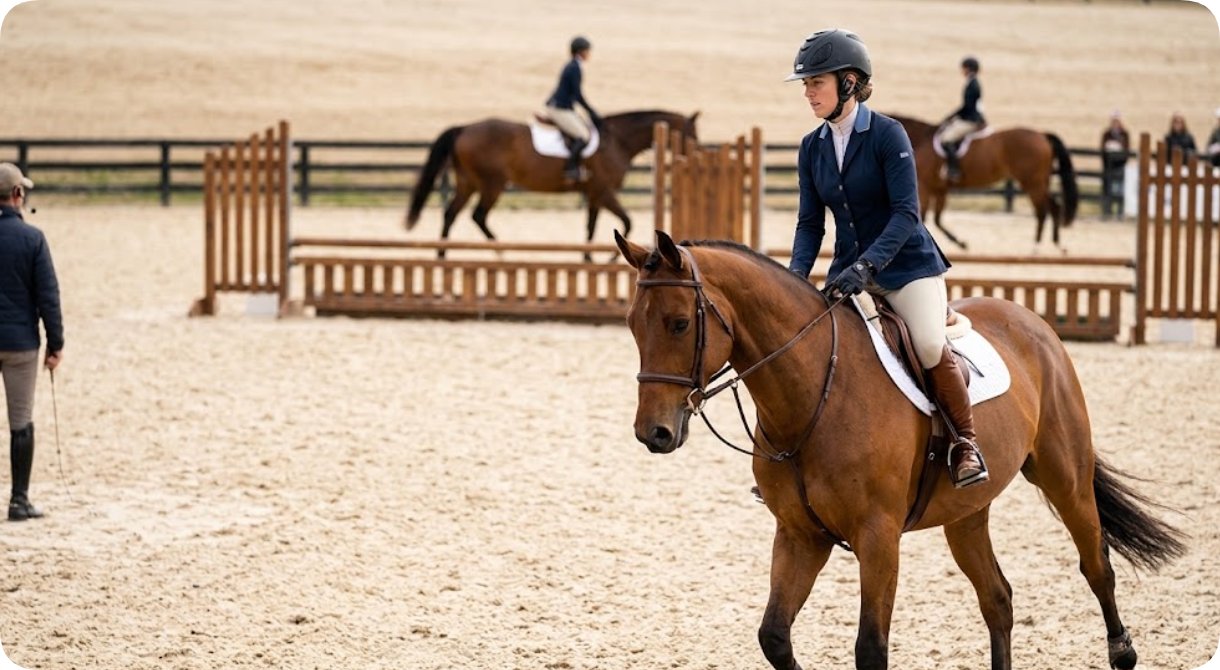
Where the RC2401 wins on channel density, the RC085 takes a different path: it operates in the 470-510MHz UHF band, which bends around obstacles and resists the Wi-Fi and Bluetooth interference that plagues 2.4GHz hardware. That makes it a strong fit for metal-heavy exhibition shells and partitioned booths where signal bounce is unavoidable. It carries an LCD smart screen for at-a-glance status, supports dual working modes (F1 one-way broadcast or F2 interactive Q&A), and uses an auto sleep/wake power scheme that stretches working time significantly. At 62 grams it is the lighter of the two, and its two-way capable F2 mode is genuinely useful when a reception host needs to take a quick question from a visitor without breaking the flow. To see how it sits inside the broader lineup, you can browse the full RC series and compare form factors side by side.
How Wireless Tour Guide Technology Evolved for Modern Trade Show Reception(图2)

🔋 Battery Life and Portability Compared

Both units land at a 200-meter open-area range, so coverage is not the differentiator. The real split is in power discipline and weight. The RC2401 publishes clear numbers: 10+ hours on the transmitter and 20+ hours on the receiver, with multi-device DC charging so a whole fleet tops up overnight on one bench. The RC085 leans on its auto sleep/wake logic to deliver all-day use without a hard hour claim, which suits hosts who dip in and out of presentations rather than broadcasting continuously. In hand feel, 72 grams versus 62 grams is a narrow gap, but across a full day of wear it is noticeable for staff who keep a unit clipped on from setup to teardown.

ModelWeightFrequency BandRangeBatteryIngress ProtectionBest Scenario
RC240172 g2.4GHz (2403-2483MHz)200 m10h tx / 20h rxIPX4 splash-resistantTrade-show booths, multi-group training
RC08562 gUHF 470-510MHz200 mAll-day (auto sleep/wake)Indoor / light-industrialReception desks, interactive Q&A, LCD demos

⚖️ Choosing Between the Two Systems

If your reception desk runs parallel guided groups all day, the RC2401's 50 channels and published 20-hour receiver life make it the safer default. If your space is RF-noisy, walled, or you want the option of two-way Q&A with a visible status screen, the RC085's UHF band and LCD are the smarter pull. Neither is a wrong call; they simply optimize for different failure modes on the show floor. For deeper planning across venues and staffing models, take a moment to explore our solutions, and when you are ready to weigh every model at once, the full series comparison lays out the whole RC family on one page.

💰 Deployment Tips for Busy Booths

A few habits make the technology evolution pay off on site. Pre-pair transmitters and receivers the night before and label them by group color so a new temp host can grab a kit without training. Keep a single multi-device charger at the desk so units rotate through a charge during slow periods. For UHF hardware like the RC085, do a quick walk to the farthest corner of the booth during build-out to confirm the F2 Q&A link holds through partitions. And resist the urge to max volume: digital clarity means a calm, normal speaking voice already reaches the back of the group, which keeps your booth from becoming the noisy neighbor everyone avoids.

Final Thoughts

The move from analog whisper networks to digital 2.4GHz and UHF guides is not just a spec-sheet upgrade. It is what lets a reception team sound professional in a hall that is actively trying to drown them out. The RC2401 and RC085 represent two mature answers to that problem: one optimized for dense multi-group channels, the other for RF-tough, interactive, screen-assisted hosting. Pick by failure mode, deploy the night before, and the technology quietly does the rest while your team focuses on the visitors in front of them.
2026年08月25日 14:55
click: 242
no data

How Wireless Tour Guide Technology Evolved for Modern Trade Show Reception

time: 2026年08月25日 click:242

Over the past decade I have watched the trade-show reception desk change more than almost any other corner of the event floor. Where a single microphone and a raised voice once covered a booth, today's exhibitors expect crystal-clear audio that reaches every visitor without bleeding into the neighboring stand. That shift did not happen by accident. It is the result of a quiet but steady evolution in wireless tour guide technology, moving from bulky analog packs to featherweight digital systems that pair automatically and run all day. For teams running booths, product launches, and guided demos, choosing the right device now comes down to band stability, battery discipline, and how naturally the hardware disappears into the conversation. If you are planning a reception-heavy show season, it is worth looking at dedicated exhibition tradeshow solutions before committing to a bulk order.

💡 Why Exhibition Reception Demands Clear Audio

A reception area is the worst-case scenario for wireless audio. You have competing PA systems, Wi-Fi saturation from thousands of phones, Bluetooth chatter from badges and beacons, and reflective walls that bounce signal into dead zones. Early analog guides handled this poorly: narrow bands meant cross-talk between groups, and a wandering visitor could suddenly hear the wrong tour. Modern digital platforms solve it with licensed-free bands, synthesized channels, and signal paths engineered to push through concrete and machinery. The practical result is that a presenter at a busy booth can speak at a normal volume and still be heard clearly twenty meters away, which is exactly what a crowded reception desk needs.

📡 The RC2401 Multi-Channel Transmitter

The RC2401 is built for exactly this kind of multi-group chaos. It runs on the global 2.4GHz ISM band (2403-2483MHz) with no license and no regional registration, and it backs that with 50 independent channels driven by PLL frequency synthesis. That means you can run several tour groups side by side in the same hall without crosstalk, a feature I have seen save more than one launch event from audio overlap. The transmitter delivers 10+ hours of continuous operation while the receiver holds a full 20 hours on a single charge, and the whole unit weighs just 72 grams with an IPX4 splash-resistant shell. For a trade-show booth that runs from open to close, that battery split is the difference between a relaxed day and a mid-afternoon charging panic.

How Wireless Tour Guide Technology Evolved for Modern Trade Show Reception(图1)

🎯 The RC085 Digital Guide with LCD

Where the RC2401 wins on channel density, the RC085 takes a different path: it operates in the 470-510MHz UHF band, which bends around obstacles and resists the Wi-Fi and Bluetooth interference that plagues 2.4GHz hardware. That makes it a strong fit for metal-heavy exhibition shells and partitioned booths where signal bounce is unavoidable. It carries an LCD smart screen for at-a-glance status, supports dual working modes (F1 one-way broadcast or F2 interactive Q&A), and uses an auto sleep/wake power scheme that stretches working time significantly. At 62 grams it is the lighter of the two, and its two-way capable F2 mode is genuinely useful when a reception host needs to take a quick question from a visitor without breaking the flow. To see how it sits inside the broader lineup, you can browse the full RC series and compare form factors side by side.

How Wireless Tour Guide Technology Evolved for Modern Trade Show Reception(图2)

🔋 Battery Life and Portability Compared

Both units land at a 200-meter open-area range, so coverage is not the differentiator. The real split is in power discipline and weight. The RC2401 publishes clear numbers: 10+ hours on the transmitter and 20+ hours on the receiver, with multi-device DC charging so a whole fleet tops up overnight on one bench. The RC085 leans on its auto sleep/wake logic to deliver all-day use without a hard hour claim, which suits hosts who dip in and out of presentations rather than broadcasting continuously. In hand feel, 72 grams versus 62 grams is a narrow gap, but across a full day of wear it is noticeable for staff who keep a unit clipped on from setup to teardown.

ModelWeightFrequency BandRangeBatteryIngress ProtectionBest Scenario
RC240172 g2.4GHz (2403-2483MHz)200 m10h tx / 20h rxIPX4 splash-resistantTrade-show booths, multi-group training
RC08562 gUHF 470-510MHz200 mAll-day (auto sleep/wake)Indoor / light-industrialReception desks, interactive Q&A, LCD demos

⚖️ Choosing Between the Two Systems

If your reception desk runs parallel guided groups all day, the RC2401's 50 channels and published 20-hour receiver life make it the safer default. If your space is RF-noisy, walled, or you want the option of two-way Q&A with a visible status screen, the RC085's UHF band and LCD are the smarter pull. Neither is a wrong call; they simply optimize for different failure modes on the show floor. For deeper planning across venues and staffing models, take a moment to explore our solutions, and when you are ready to weigh every model at once, the full series comparison lays out the whole RC family on one page.

💰 Deployment Tips for Busy Booths

A few habits make the technology evolution pay off on site. Pre-pair transmitters and receivers the night before and label them by group color so a new temp host can grab a kit without training. Keep a single multi-device charger at the desk so units rotate through a charge during slow periods. For UHF hardware like the RC085, do a quick walk to the farthest corner of the booth during build-out to confirm the F2 Q&A link holds through partitions. And resist the urge to max volume: digital clarity means a calm, normal speaking voice already reaches the back of the group, which keeps your booth from becoming the noisy neighbor everyone avoids.

Final Thoughts

The move from analog whisper networks to digital 2.4GHz and UHF guides is not just a spec-sheet upgrade. It is what lets a reception team sound professional in a hall that is actively trying to drown them out. The RC2401 and RC085 represent two mature answers to that problem: one optimized for dense multi-group channels, the other for RF-tough, interactive, screen-assisted hosting. Pick by failure mode, deploy the night before, and the technology quietly does the rest while your team focuses on the visitors in front of them.
no data
×

Contact us

email:
name:
subject:
content: