
.webp)
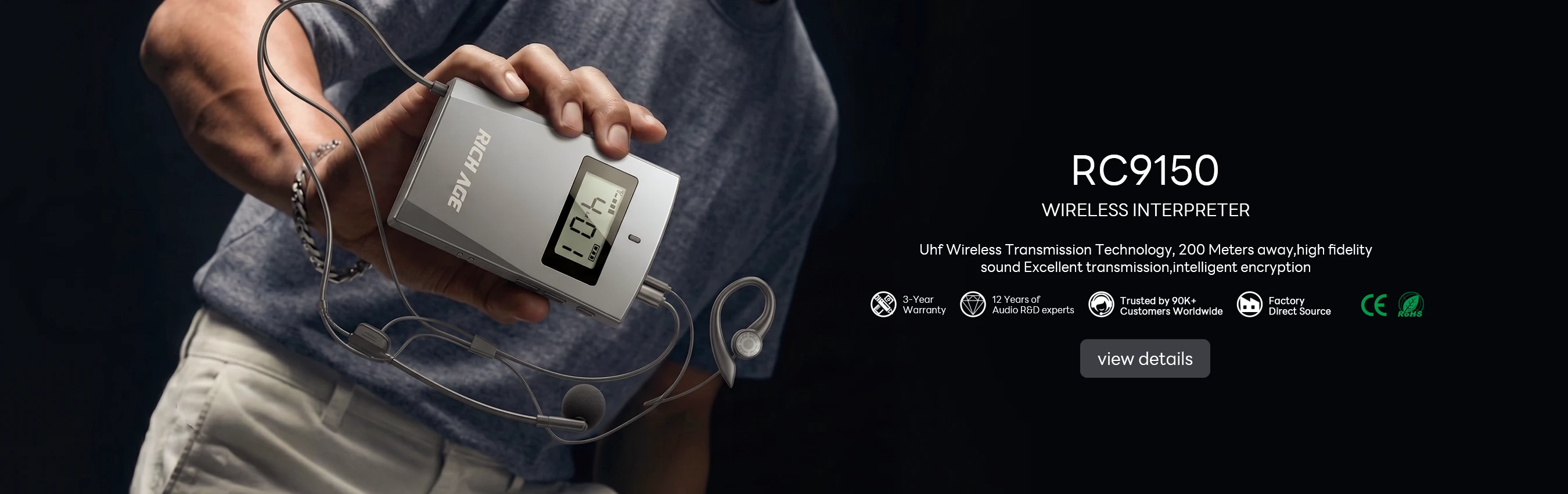
From my work with cultural institutions over the past few years, one change stands out: multilingual guided tours are no longer a nice-to-have, they are a compliance obligation. Visitors who rely on assisted listening, and international groups who need clear translation, now arrive with the expectation that the museum will meet published accessibility standards. When a venue asks me how to stay compliant without turning the gallery into a hardware showroom, my answer usually starts with the right wireless tour guide system. Two models from our line, the dedicated museum multilingual solutions built around RC2501 and RC9150, cover almost every compliance scenario a modern museum faces. What used to be solved with printed leaflets and a hopeful smile now needs measured audio performance and a clear paper trail. Auditors and funders increasingly ask for both, and the hardware choice decides whether you can answer yes with confidence.
💡 Why Accessibility Standards Shape Museum Tours
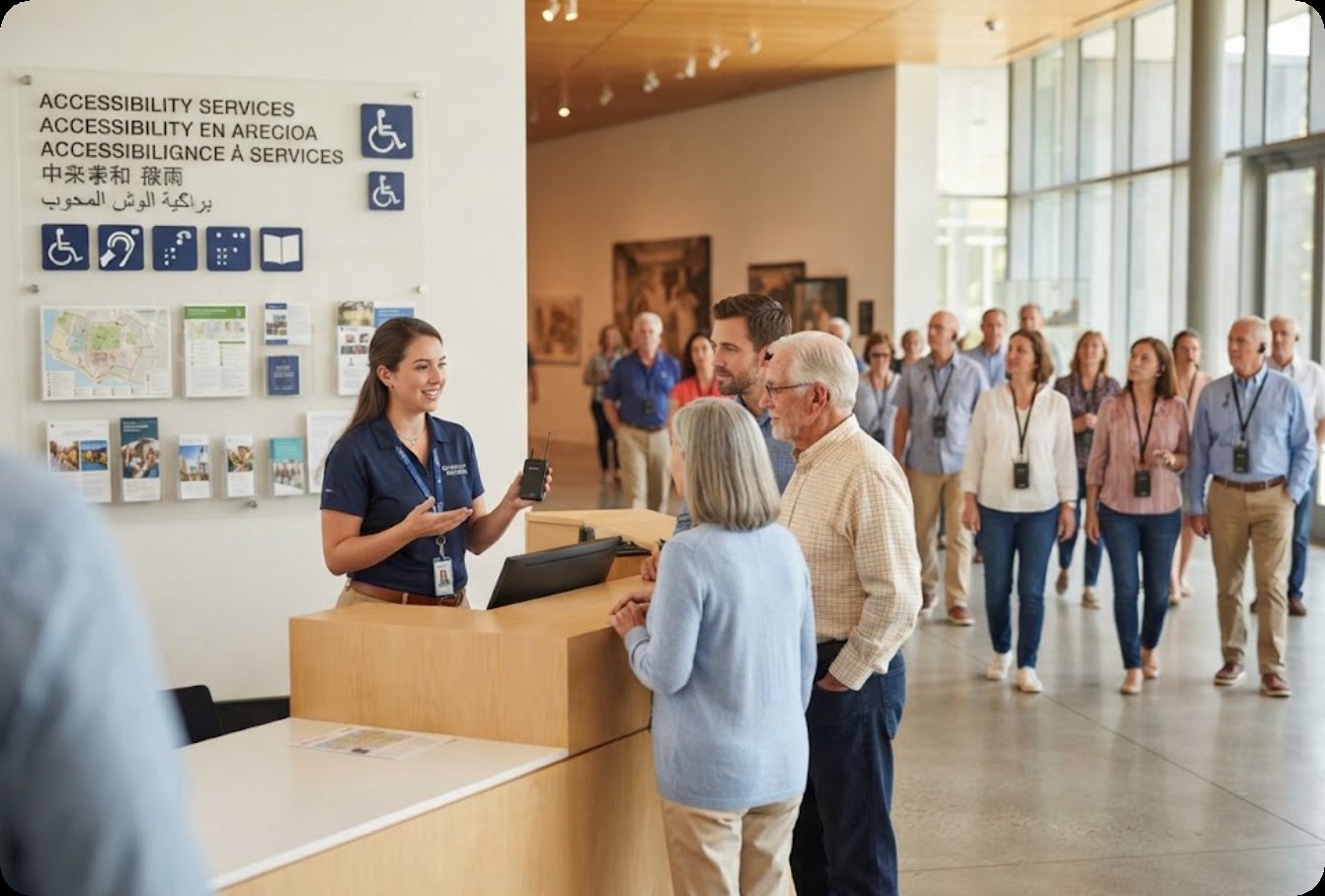
Regulations such as the Americans with Disabilities Act in the United States, the EU Accessibility Act, and technical standards like EN 301 549 and IEC 60118-4 for hearing assistance have moved assisted listening from optional to mandatory in public exhibition spaces. A museum that runs tours in several languages must now prove that every visitor, regardless of hearing ability or native tongue, receives the same core commentary. The practical result is that tour hardware has to be discreet, reliable, and auditable. A guide shouting over a headset, or a translator repeating lines by memory, no longer passes the bar. Documented, standards-aligned equipment does. Venues that skip this step risk more than poor reviews; they face formal complaints, lost public funding, and the reputational cost of excluding the very visitors cultural programs exist to serve.
📱 RC2501 for Small-Group Accessible Tours
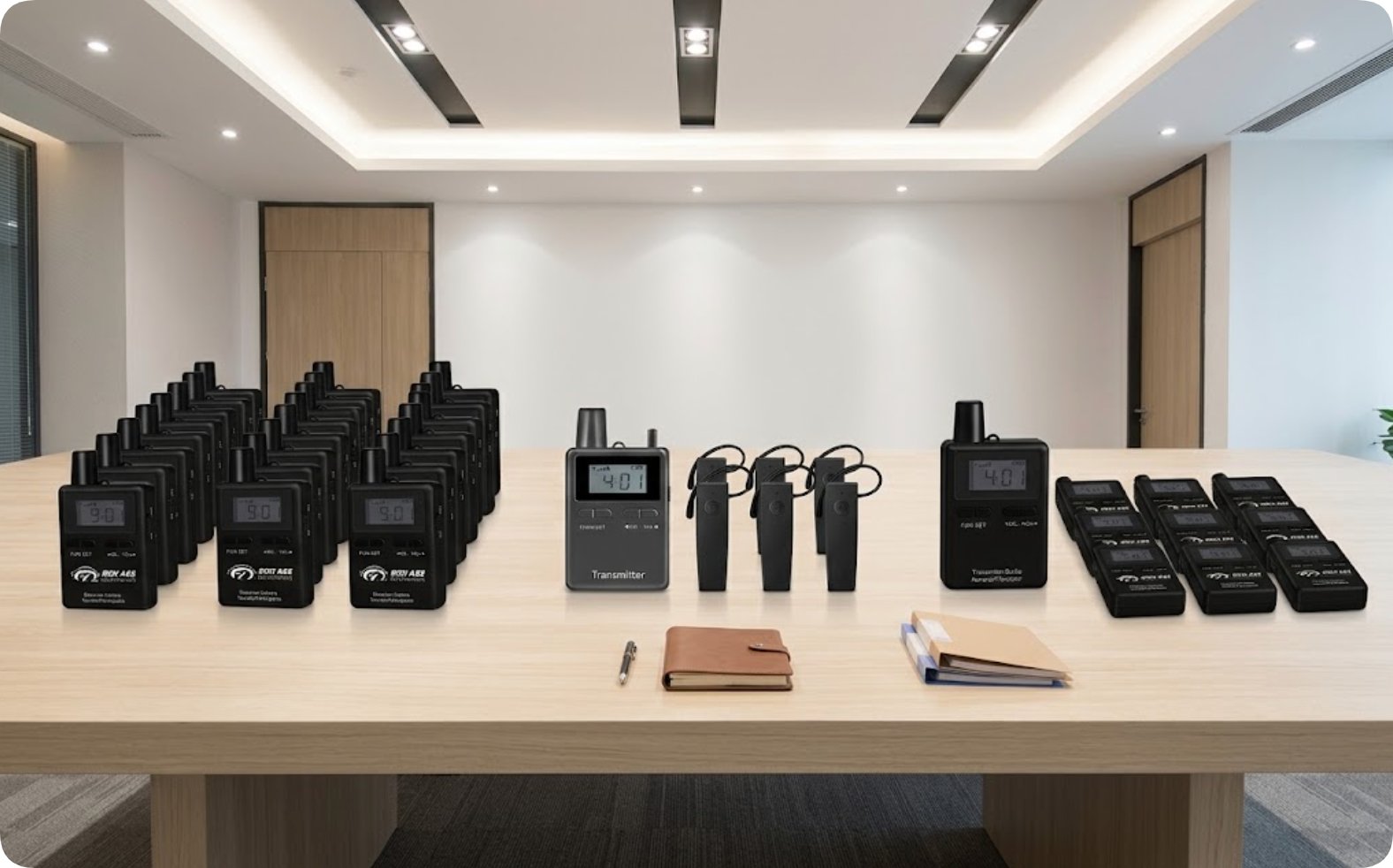
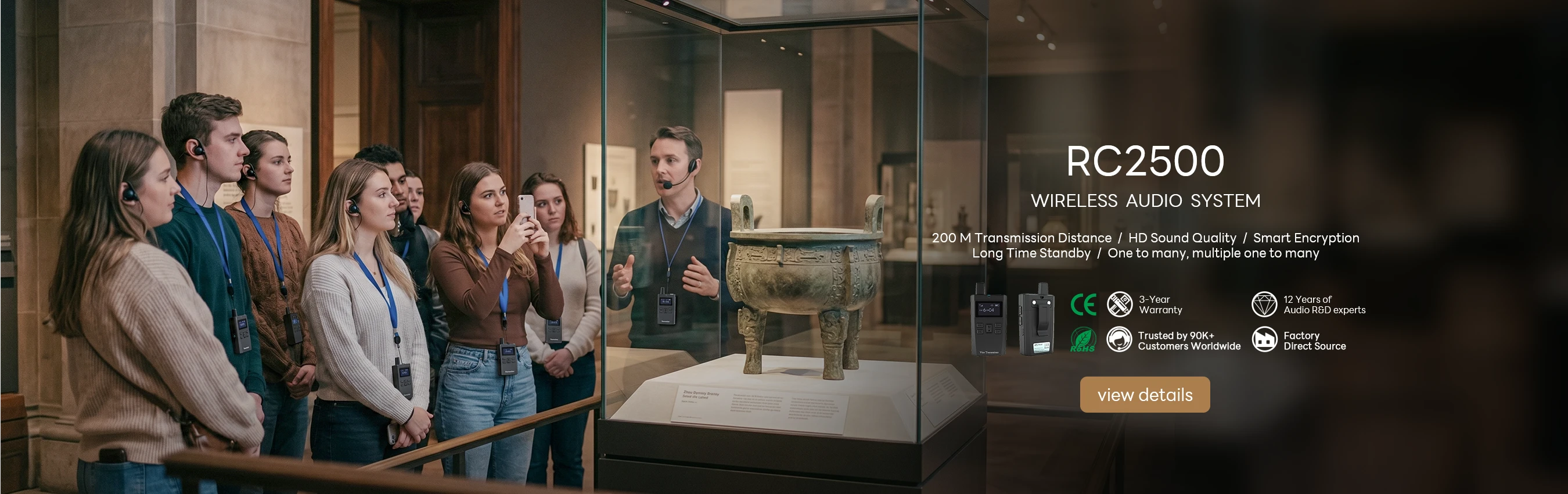
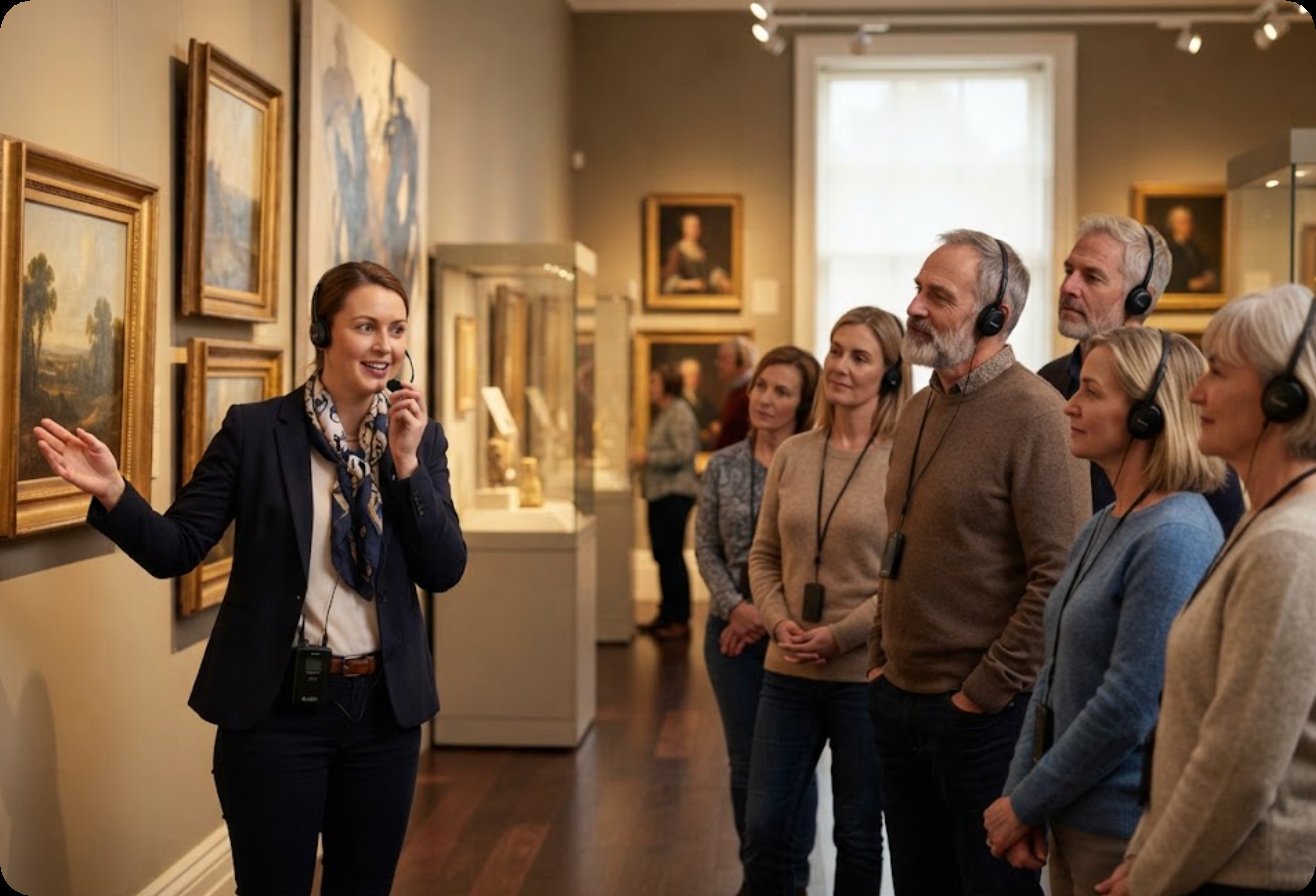
The RC2501 is a 48-gram translation headphone system built for intimate gallery walks of six to ten visitors. Its 2.4 GHz digital link keeps the commentary free of the interference you get from older FM units, which matters in buildings dense with security and Wi-Fi signals. Battery life runs close to twelve hours on a single charge, so a full day of rotating school and corporate groups never hits a mid-tour cutoff. For compliance, the key point is consistency: every listener receives the identical audio level and clarity, and the unit's low-latency channel means the guide's words line up with their position in the room. That uniform delivery is exactly what accessibility audits look for.
RC9150 for Formal Multilingual Interpretation
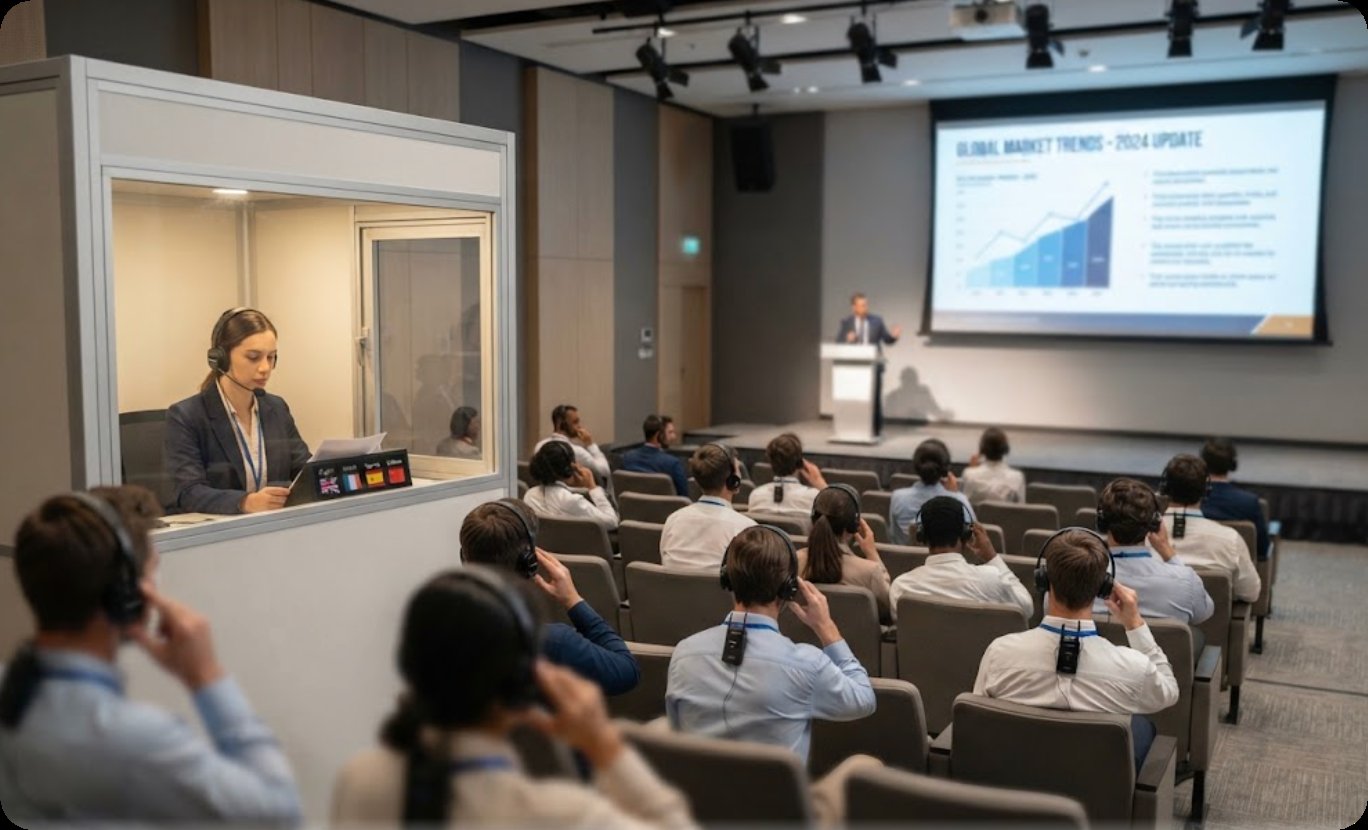
When the program scales to simultaneous interpretation for fifteen or more delegates, the RC9150 takes over. At 75 grams it stays comfortable through long sessions, and its high-end 2.4 GHz platform supports the multiple channels a true multilingual setup needs. In a museum lecture hall or a visiting-diplomat reception, interpreters work from a booth while the audience selects their language on lightweight receivers. This structured split is what lets a single event satisfy audiences who each require a different language, a layout that maps directly onto the multilingual-access clauses in current standards. Because each channel is isolated, the system also produces a clean record of which language each receiver used, which proves useful when a grant report asks exactly how multilingual access was delivered.
⚖️ RC2501 vs RC9150: Compliance at a Glance
| Specification | RC2501 | RC9150 |
|---|---|---|
| Device weight | 48 g | 75 g |
| Transmission | 2.4 GHz digital | 2.4 GHz high-end |
| Battery life | Up to 12 hours | Up to 14 hours |
| Operating range | Around 150 m | Around 200 m |
| Language channels | Single guide channel | Multi-channel interpretation |
| Best group size | 6 to 10 visitors | 15 plus delegates |
| Typical use | Small guided gallery tours | Formal multilingual events |
🎨 Choosing the Right System for Your Museum
The decision comes down to group profile and audit trail. If most of your multilingual demand is small visiting groups moving through permanent collections, the RC2501 keeps things light, quiet, and fully covered for assisted-listening requirements. If you host international press previews, board briefings, or scholarly symposia where several languages run at once, the RC9150 is the compliant choice because it separates each language onto its own channel and documents delivery per listener. Many institutions I advise keep both: RC2501 for daily tours, RC2501 and its series siblings for scale, and RC9150 reserved for high-stakes interpretation days.
Standards Met, Experience Kept
Compliance should never read as a cold checklist to the visitor. The reason RC2501 and RC9150 work in real museums is that they disappear into the experience: a small headphone, a calm guide voice, a clear translation. When a venue can show it meets accessibility and multilingual standards while the guest simply enjoys the art, the system has done its job. For teams planning a compliant multilingual program, reviewing a museum audio guide system case helps turn the standard into a concrete rollout plan. Start with one gallery, measure listener feedback, then extend the same hardware across the building.