
.webp)
Every walk through an auto assembly plant runs on a noise floor that never drops: presses, conveyors, air tools and the ventilation that fights them. Visitors can rarely hear an unaided speaker past the first workstation, so every plant that accepts tours installs some audio system. What the purchase order rarely records is the more interesting decision behind it: when the group hears an explanation, who is actually producing that explanation? A person standing in front of them, a presenter broadcasting from somewhere out of sight, or nobody at all.
Those are three different sources, and the hardware follows the source rather than the other way round. This piece takes the three formats side by side on the same route through the same plant, because the choice between them shapes staffing, scheduling and how much of the line a visitor really gets to hear.
Three Sources, One Walk of the Line
Picture the standard route: body shop, paint line seen from a walkway, final assembly, then the inspection bay. A production and facility tour setups page will show you the route options, but the audio decision sits underneath all of them. Either a guide walks with the group and speaks into a transmitter, or one presenter covers a whole zone from a fixed spot, or the plant records its narration once and lets visitors pick it up on headphones. Each format answers the "who is speaking" question differently, and each carries a distinct bill of hardware.
🎯 An Ear-Hook That Puts the Guide Beside Every Ear
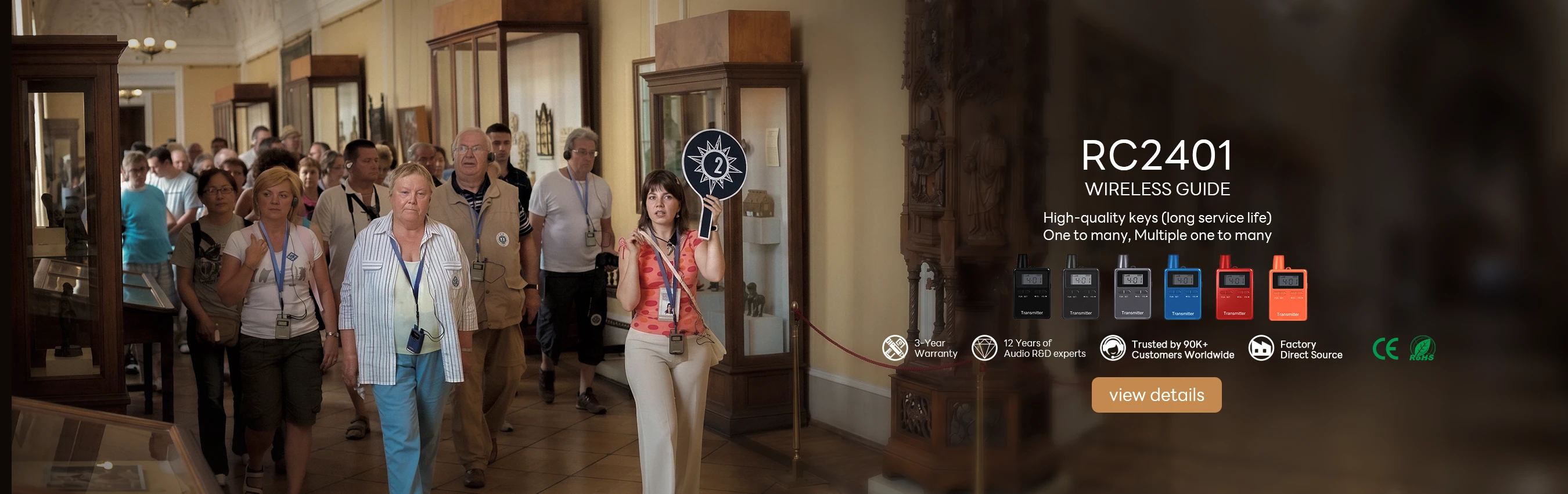
The first format keeps a live guide with the group and hands every visitor a receiver. The RC2468 wireless tour guide system works this way on the 2.4 GHz band with 50 channels and a working range of 1 to 200m, which is ample for a walking group that never leaves its guide's side. The receiver is the detail that matters on a factory floor: 18g in an ear-hook form, light enough that visitors stop noticing it while ducking under rails and stepping over cables. The transmitter runs 10 hours on a charge at 59g, the receiver manages about 8 hours, and both charge over USB with the 5V/1A supply the kit ships with. Because the voice is live, questions flow both ways; the guide hears the question and answers the whole group at once. The ear-hook also coexists with the rest of the PPE: it hooks over the ear without fighting a hard hat's suspension, and at 18g it never pulls on the lanyard clip a visitor is already wearing.

🏭 One Broadcaster Across the Whole Assembly Hall
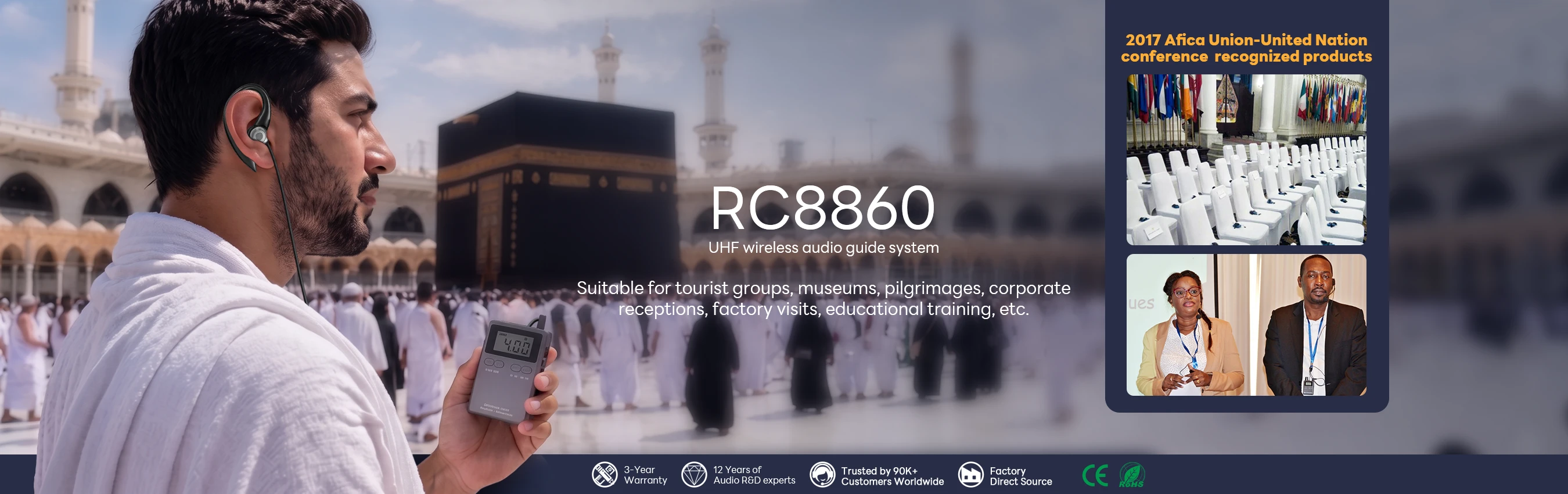
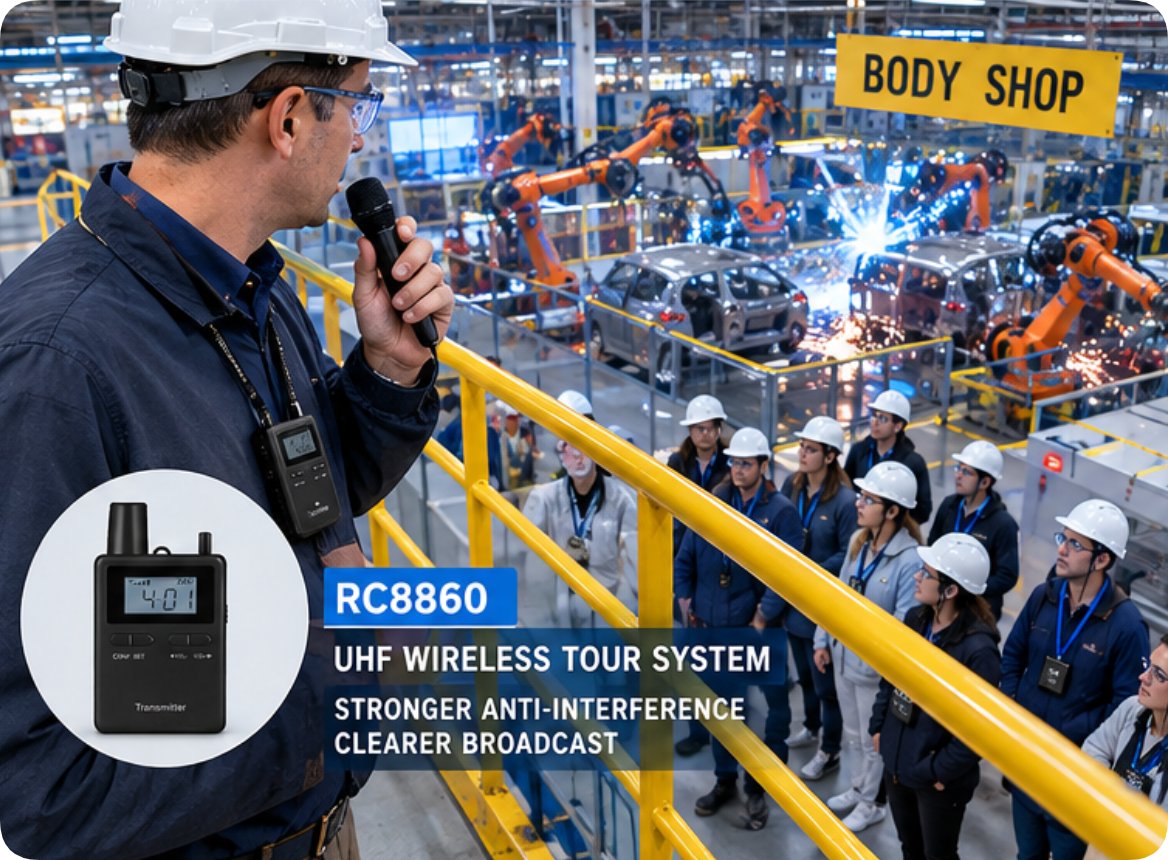
The second format removes the walking presenter. One transmitter covers a zone, and visitors anywhere in it hear the same programme. The RC8860 UHF tour guide system occupies the 860-870 MHz UHF band, a single frequency range chosen for interference resistance rather than compactness. Assembly halls are hostile radio territory: variable-frequency drives, welding cells and chargers all radiate, and a 2.4 GHz signal shares its band with exactly that kind of equipment. The UHF allocation sits elsewhere, and 20 channels give a plant room to run parallel groups without crosstalk. The receiver weighs 50g, runs 20 hours per charge, and recharges through a DC port, so a fleet can cover a morning and an afternoon shift before anyone opens a charging case. There is a staffing dividend too: one presenter at a fixed broadcast point can serve three groups a morning, instead of three guides each dragging a group along the same catwalk.
The Set Where Nobody Speaks at All
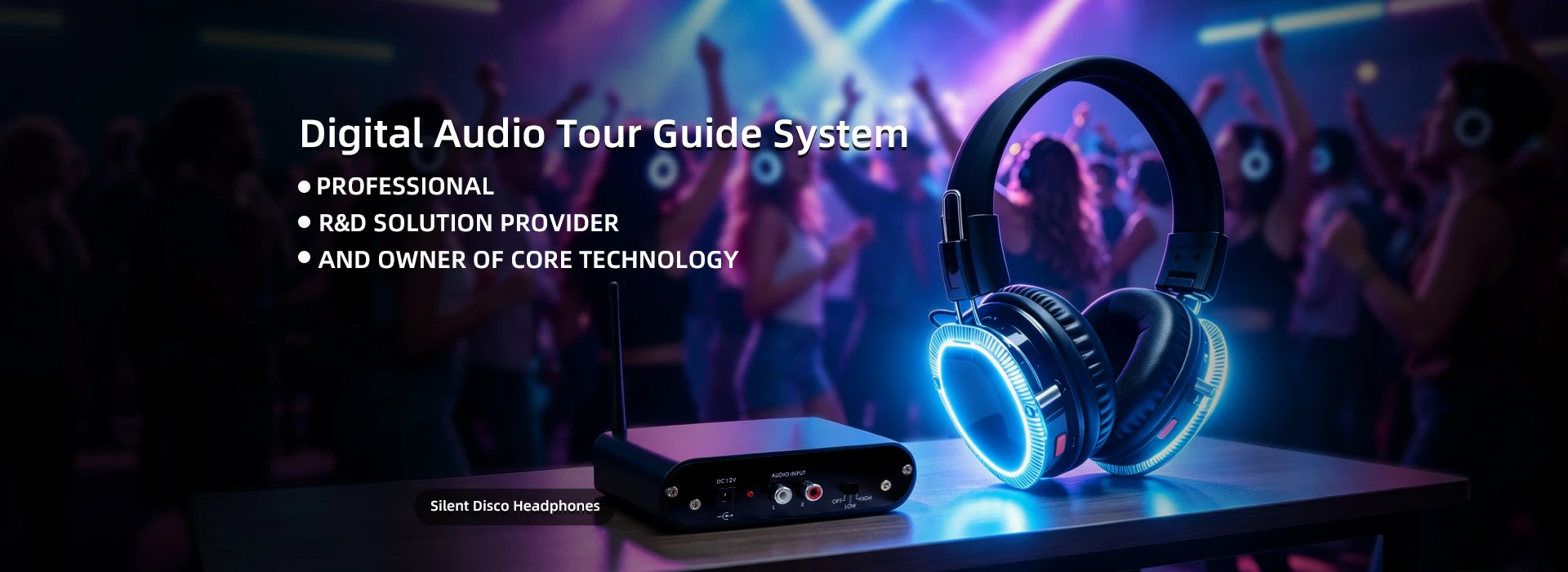
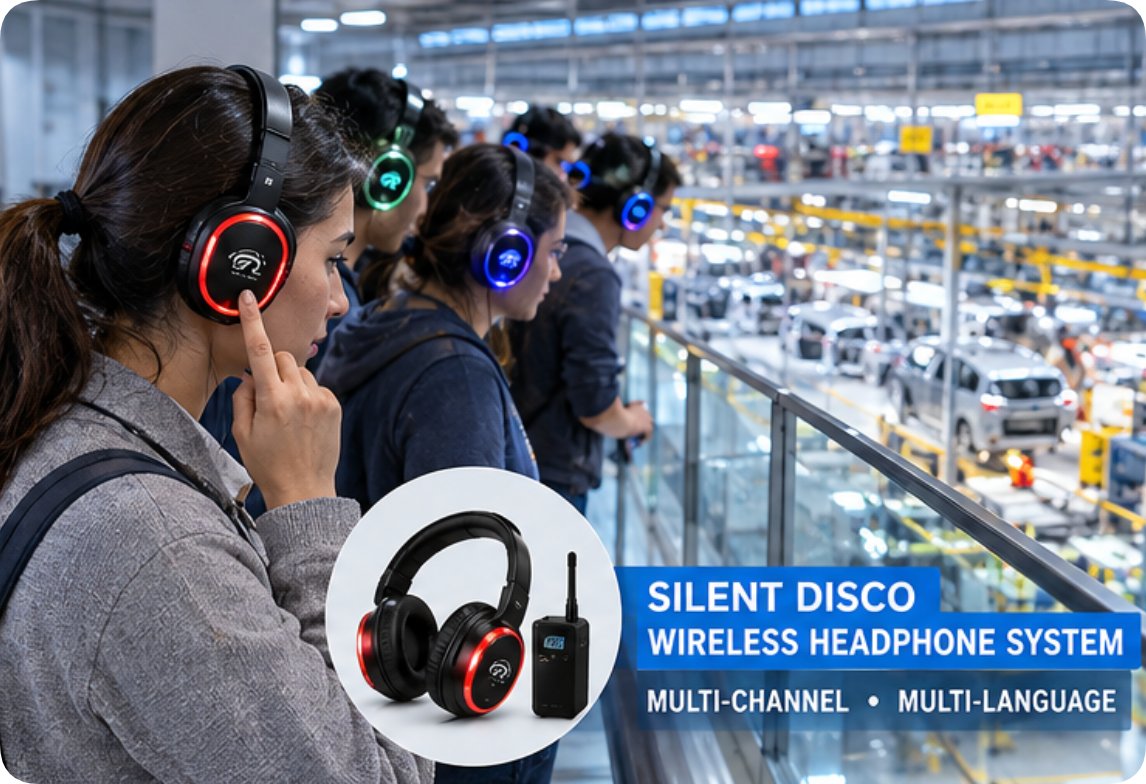
The third format has no live speaker in the chain. The Silent Disco wireless headphone system pairs RC-409 headphones with an RC-50RF transmitter, and the audio it carries is a recording: the plant records its route narration once, in as many languages as it wants, and each language rides its own channel. The system runs 10 channels of FM stereo on UHF, with five-colour LED rings on the ear cups showing which channel each listener has chosen. The 40mm drivers deliver 30 to 20000Hz at better than 75dB signal-to-noise, the 500mAh battery runs 10 hours and recharges in 3 over Micro USB, and the range spans 200m in low-power mode to over 500m with the transmitter at full power. Visitors adjust volume on each headphone independently, which matters when one visitor wants the narration and the one beside them mostly wants it quieter. The economics also differ from the live formats: the recording is made once, so the marginal cost of an extra visitor, an extra language or an extra Saturday is close to zero.
Band, Reach and Endurance Compared
The mechanical facts sit cleanly in one grid, because all three publish their numbers:
| Comparison | RC2468 | RC8860 | Silent Disco Set |
|---|---|---|---|
| Who is on the microphone | A live guide walking with the group | One presenter covering a zone | Nobody; a recorded track plays |
| Band and channels | 2.4 GHz; 50 channels | UHF 860-870 MHz; 20 channels | UHF; 10 channels; FM stereo |
| Working range | 1-200m | 1-200m | 200m low power; over 500m high power |
| Receiver endurance | About 8h | 20h | 10h per charge |
| Charging port | USB | DC Port | Micro USB |
Reading the Table by Shift Arithmetic
Endurance reads differently once you attach it to a shift schedule. An 8-hour receiver covers one tour block and goes back on charge at lunch, which is why the 18g ear-hook ships as a personal-fit item rather than a fleet item. A 20-hour receiver tolerates a double shift and forgets about charging until the weekend. The 10-hour headphone with its 3-hour recharge sits in between: a midday top-up during the lunch window returns it to full before the afternoon block. One caution belongs here rather than in the grid: the foldable over-ear shells are bulkier than an ear-hook, and the product page does not print a weight for them, so the honest comparison is bulk and storage, not grams.
Splitting a Route Across Two Sources
Plants rarely pick just one. A common arrangement runs the broadcast format in the body shop, where the noise floor makes a walking guide shout, and switches to live ear-hook units in final assembly, where visitors ask questions and the answers are the point of the stop. The headphone set handles the odd hours: the observation mezzanine stays open while the line runs, and a visitor waiting there follows a recorded track on the channel whose LED colour matches the language they want. Channel colours turn language selection into something a visitor can see from across the platform, without a staff member standing beside the rack.
⚖️ What Decides Between a Voice and a Track
The decision rule comes down to staffing, not spec sheets. If your plant has people who can walk and talk, a live format wins on questions, and the clip-on format wins on comfort across a two-hour route. If one presenter must cover a large or loud zone, the UHF broadcast format earns its bandwidth the hard way. If tours happen outside production hours, in four languages, or self-guided, the recorded track is the only source that scales, because a recording repeats without payroll. Most plants end up buying the question they asked at the start: whose voice, exactly, do you want leading your line?
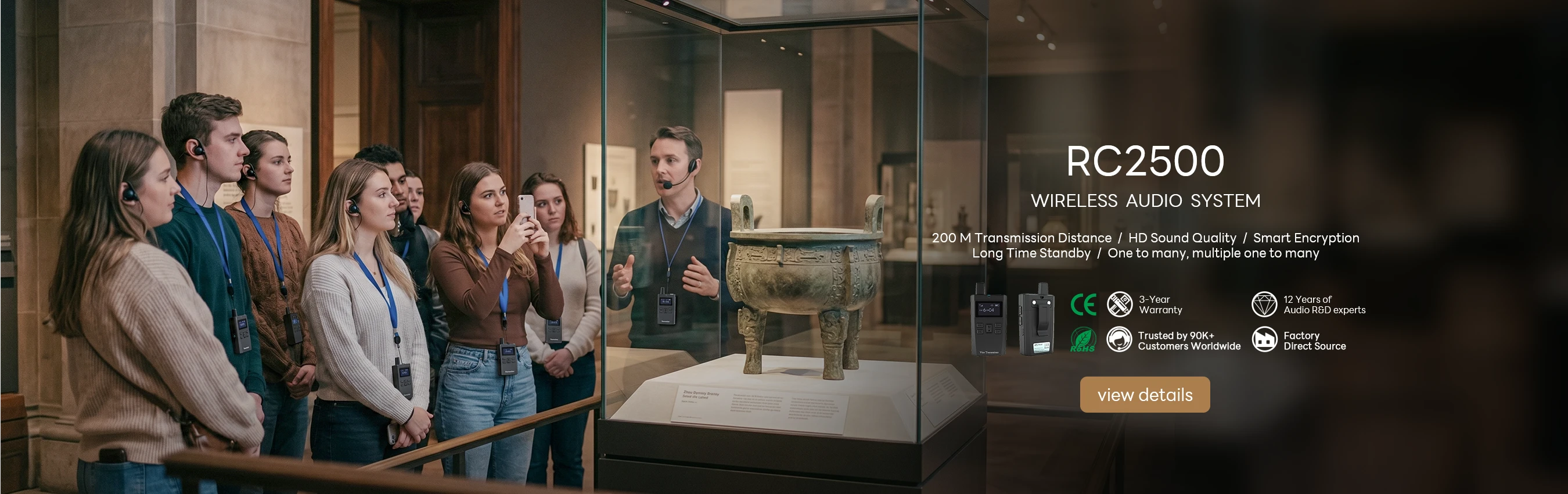
Both live formats sit inside the wireless tour guide system range, and the recorded format lives with the headphones. To match a format to your own floor plan and staffing, the deployment solutions page lays out the scenarios each system was built for.