
.webp)
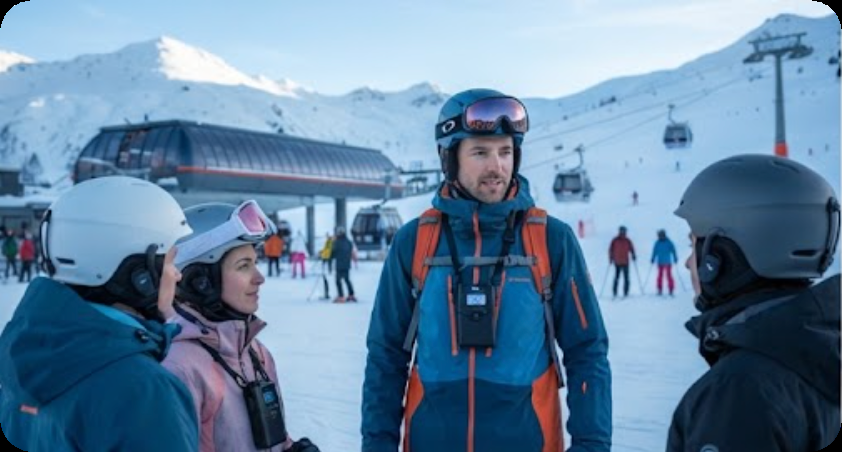
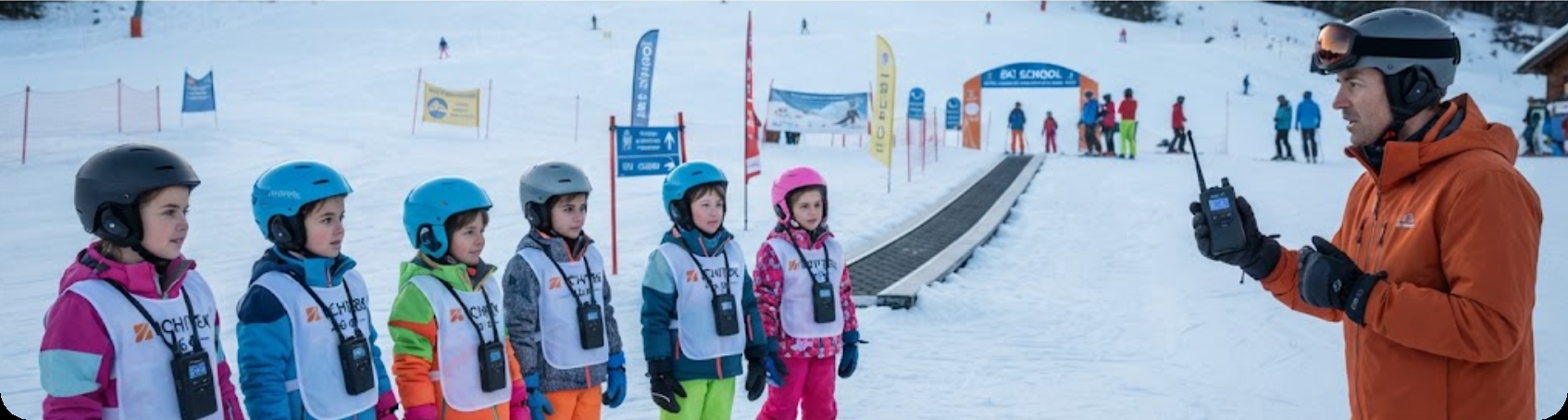
A ski resort is one of the hardest places to run a guided group. Mornings start near the lift stations at minus ten, wind noise competes with every transmitter, guests wear gloves and helmets, and a ski school may push eight separate groups down the same slope before lunch. Most equipment failures reported by mountain operators are not radio failures at all; they are battery, comfort, and logistics failures that no brochure survives. The hardware that works on city tour solutions in summer has to earn its place again each winter.
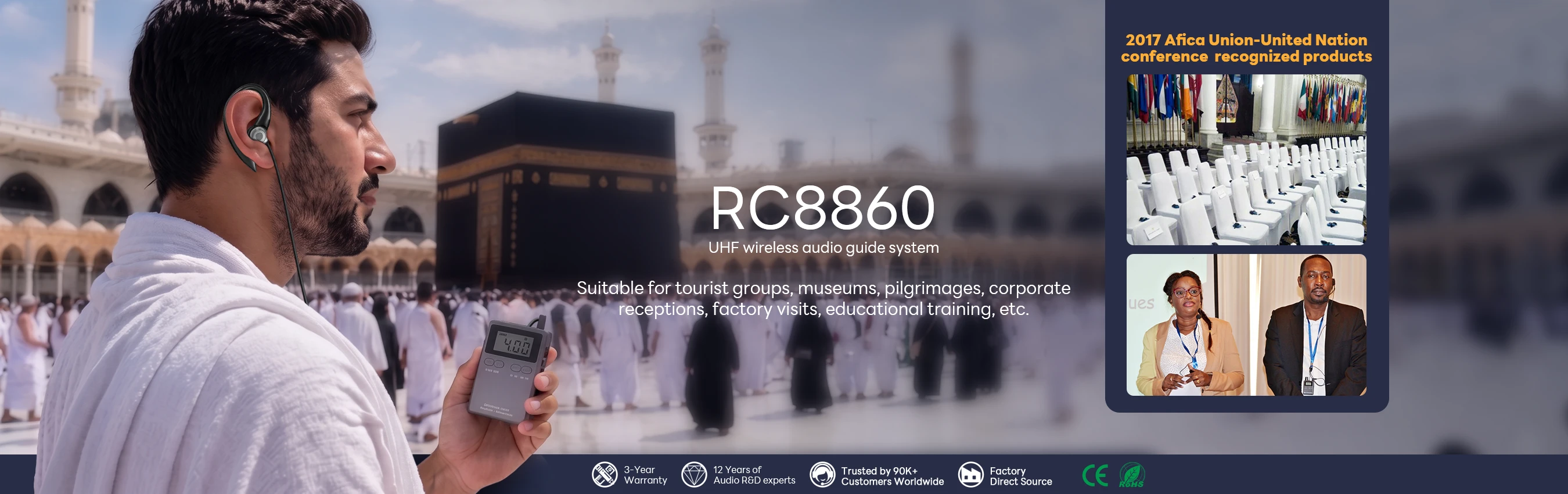
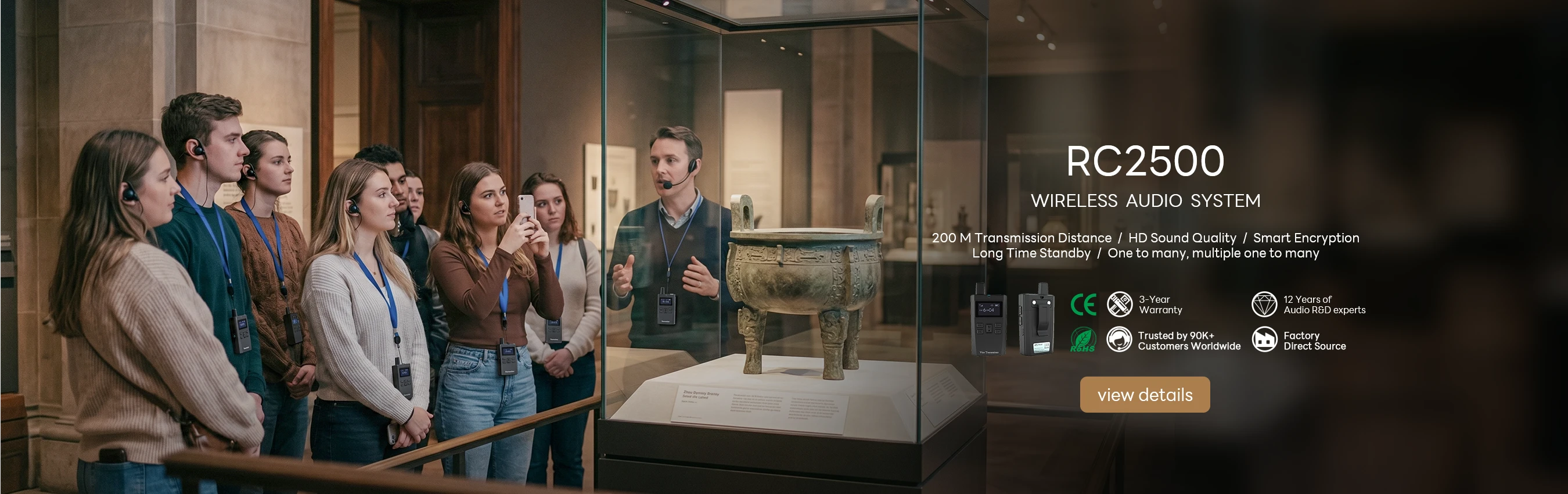
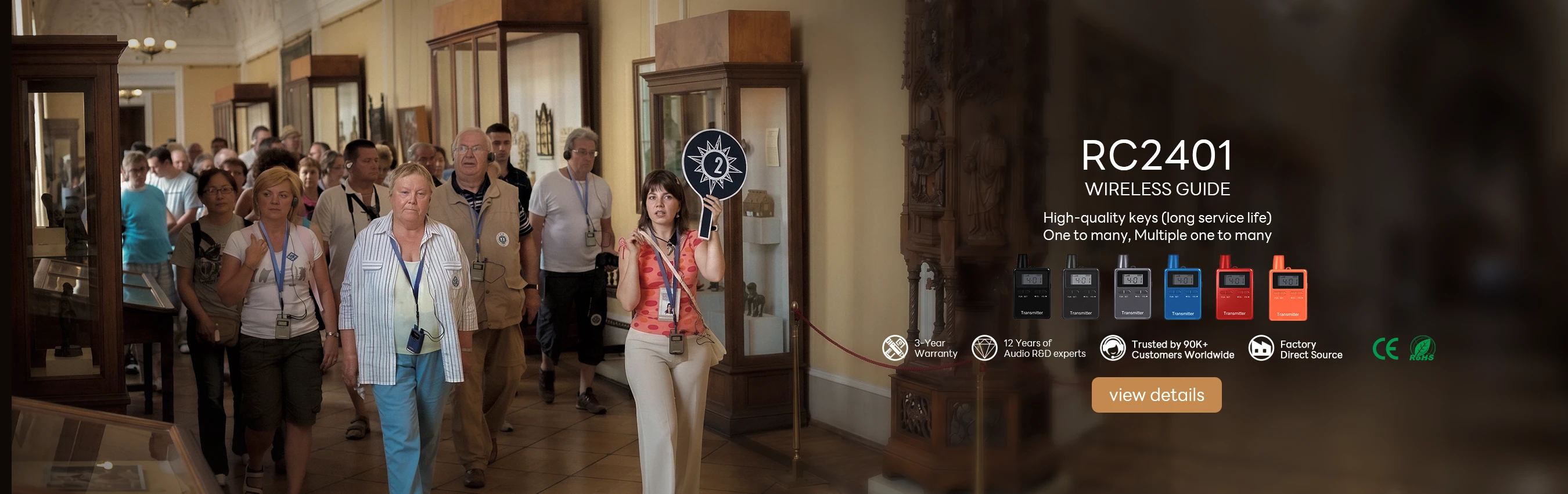
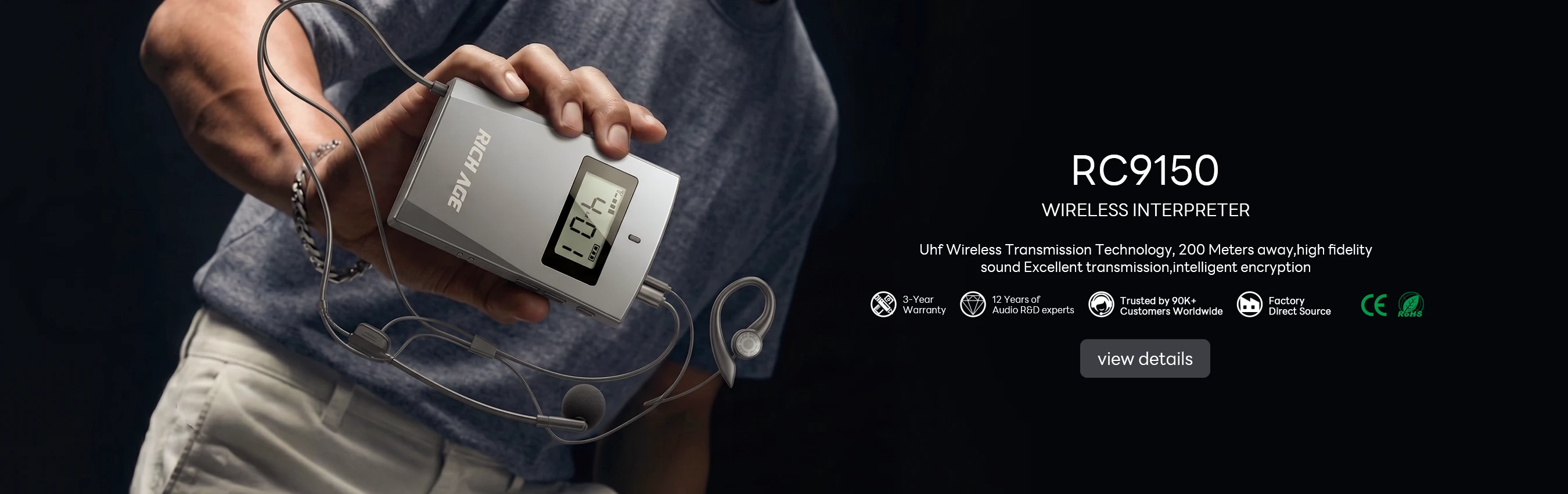
This article compares three Richitek units the way a resort equipment desk would: against the published specifications of rival kits. The RC2500 Wireless Tour Guide System is the long-runtime flagship of the 2.4 GHz line, the RICH AGE RC2401 Wireless Audio Guide System is the lightweight ear-hook workhorse, and the RC8860 Tour Guide Transmitter For Teaching moves the same job onto the 860-870 MHz band. Each section below takes one environmental stress and checks how all three hold up against competitor kits.
Cold Air Changes the Numbers First
Every runtime figure in a datasheet assumes a room-temperature battery. On a chairlift at minus fifteen, lithium cells deliver less capacity and alkaline cells fare worse. That is why the first comparison criterion for a ski resort is not the printed hours but the reserve behind them. The RC2500 carries a 3.7V 1800mAh pack in both transmitter and receiver, published at 15 hours of transmission and more than 35 hours of reception. The RC2401 and RC8860 carry a 1500mAh transmitter pack and a 1000mAh receiver pack, published at 10 and 20 hours respectively. Rival hardware prints similar numbers: the Retekess TT109 receiver is listed at 18 to 20 hours from a 1000mAh cell, and the Williams Sound DLT 400 is listed at 16 hours. The difference shows up on the second and third day between charges, when the larger reserve still has margin left after cold derating.
🎯 The Stresses That Decide the Purchase
A resort buyer is really purchasing against four stresses. First, runtime reserve in cold air, because a dead receiver at the top station means a guest rides down in silence. Second, channel capacity, because a ski school, a snowboard school, and two tourist groups may share the same mountain on the same morning. Third, frequency legality, because alpine resorts sit near borders and guests rent equipment across them. Fourth, charging and fleet logistics, because two hundred receivers return to one desk every afternoon and must be ready by seven the next morning. Competitor kits usually score well on one or two of these stresses and quietly fail the rest, which is why the comparison below takes them one at a time rather than averaging a brochure score.
🔋 Battery Behavior Below Zero
Cold exposes the difference between replaceable and sealed power. Several rival kits run on AA batteries: the OKAYO WT-300 is listed at 30 hours on AAs, and the Tourtalk TT 40 receiver weighs 75g with a single AA. Swapping AAs at minus fifteen with gloves on is slow, and alkaline capacity drops sharply in deep cold. The three Richitek units use sealed lithium packs recharged on a desk, which turns the daily routine into a single overnight cycle instead of a stocking exercise for spare cells. The trade-off is weight: the RC2500 transmitter and receiver each weigh 104g, while the RC2401 and RC8860 come in at 59g for the transmitter and 50g for the receiver, light enough for a jacket pocket or a helmet strap without pulling on an ear.
Channels and Clarity on Open Terrain
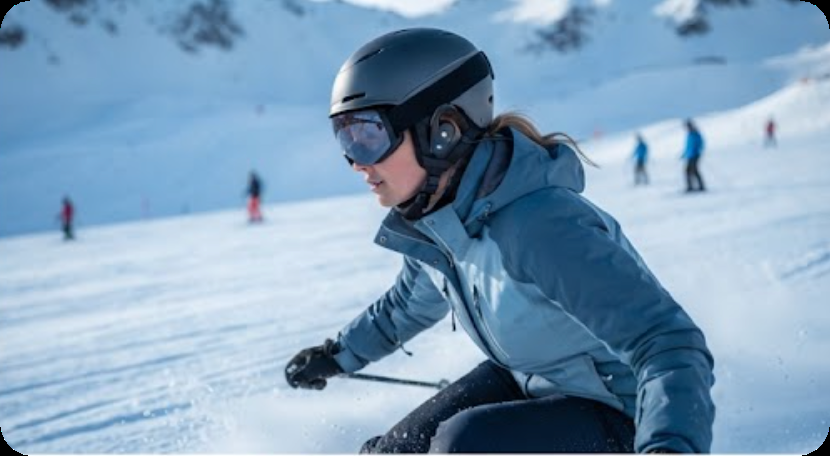
Channel count decides how many groups can share the air. The RC2500 and RC2401 publish 50 channels each; the RC8860 publishes 20 on its 860-870 MHz band. Against the field: the OKAYO WT-300D lists 25 synchronous channels on 863-865 MHz, the Tourtalk TT 40 lists 40, and the Sennheiser 2020-D series lists just 6. A resort running eight or ten concurrent groups wants headroom, and 50 channels with 50 group IDs leaves room for a school group, a VIP tour, and staff communications on the same morning without coordinating who owns which frequency. All three units use PLL synthesis, so channels stay where they are set instead of drifting as temperatures swing between the equipment room and the summit.
How the Rival Kits Handle the Mountain
Range is where marketing tables mislead. The OKAYO WT-600 lists only 20 to 30 meters on 2.4 GHz, which suits a workshop, not an open slope. The Retekess TT109 reaches 180 meters, close to the 1 to 200 meters all three Richitek units publish. The Williams Sound DLT 400 reaches about 900 feet on a 2.4 GHz DSS link and adds two-way speech, a different class of hardware at a higher price point. For readers weighing the UHF option against the best-known 2.4 GHz rival, the head-to-head RC8860 vs Retekess T130P covers band choice in detail. The table below gathers the published figures that matter on a mountain.
| Kit | Band | Channels | Range | Notable published figures |
|---|---|---|---|---|
| RC2500 / RC2401 / RC8860 | 2.4 GHz or 860-870 MHz | 50 / 50 / 20 | 1-200m | 15h TX and 35+h RX on RC2500 |
| Retekess TT109 receiver | 2.4 GHz | 50 | 180m | 51g, 1000mAh, 18-20h |
| OKAYO WT-300D | 863-865 MHz | 25 | 110m | HAC compatible, remote channel change |
| OKAYO WT-600 | 2.4 GHz | Not published | 20-30m | Two speakers at once, AA batteries |
| Williams Sound DLT 400 | 2.4 GHz DSS | Not published | approx. 274m | Two-way, 16h, court mode |
| Tourtalk TT 40 | 863-865 MHz | 40 | 120m | 75g receiver, single AA cell |
Two rows are marked Not published because the source sheets list no channel figure for those models, and the range figures come from each maker's own materials, so they describe different test conditions rather than one measured course.
Frequencies That Follow Guests Across Borders
Alpine guests cross borders in an hour of driving, and rental fleets follow them. The 2.4 GHz band used by the RC2500 and RC2401 sits between 2403 and 2483 MHz, license-free in most of the world, which is why touring operators who move between countries standardize on it. The RC8860's 860-870 MHz band is the European license-free allocation, the same territory the OKAYO WT-300 series and the Tourtalk range occupy at 863-865 MHz. By contrast, hardware on 470-510 MHz, like the RC085 in the same catalog, needs per-country coordination and is better kept to domestic fleets. A resort near a border that serves guests from two countries should decide this question first, because it narrows the hardware list faster than any other criterion. Resorts that keep one side of a border all year can treat the band question as settled and spend the saved planning time on channel allocation instead.
Charging Logistics at the Equipment Desk
Two hundred receivers and twenty transmitters arrive at the desk by four in the afternoon. The RC2500 charges over Type-C, while the RC2401 and RC8860 use DC ports; either way the fleet goes onto charge cases overnight, and the 15-hour transmitter runtime on the RC2500 means a unit that missed its charge cycle still covers a full day. Weight matters again here: 104g units stack into charge cases with a heft desk staff can feel, while the 59g and 50g units of the RC2401 and RC8860 make the count faster but demand gentler shelving. Competitor fleets on AA cells turn this same desk into a battery-sorting line every evening, which is the hidden labor cost no comparison table prints. A lithium fleet also avoids the bin of half-used cells that alkaline kits generate, because every pack leaves its case full each morning.
Fitting a System to the Resort Routes
The final decision is routing, not radio. A resort that runs one meeting point and two blue runs can put a 20-channel UHF kit to work and never touch its limits. A resort that splits guests across a glacier, a terrain park, and a village festival needs the 50-channel 2.4 GHz kits and the reserve of the RC2500. The same fleet then works the summer season, when the mountain becomes a hiking and sightseeing venue and the wireless tour guide system lineup moves indoors to cable car cabins and visitor centers. Buyers who want the full comparison spread can start from the specifications above, match them against the four stresses, and shortlist two kits before asking for a slope trial.