
.webp)
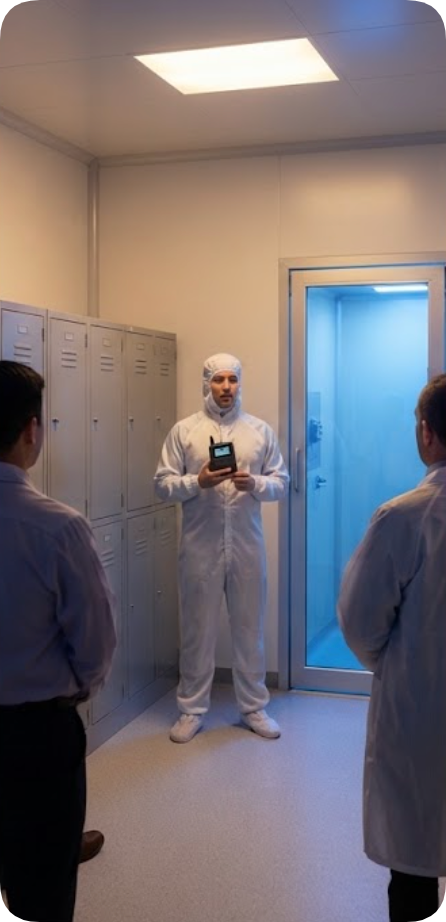
A fabrication plant's visit season is announced by the audit calendar, not the marketing one. Customer qualification teams arrive between tool installs, certification bodies book their weeks in advance, and supplier development engineers show up whenever a process change needs eyes on it. Every one of those groups passes through the same bottleneck before it sees a single tool: the gowning room. Hoods go over ears, sleeves seal over wrists, and anything loose that cannot survive the air shower stays in a locker. The gowning room, in other words, writes the equipment specification for the whole season — and it does so before anyone has said a word about headsets.
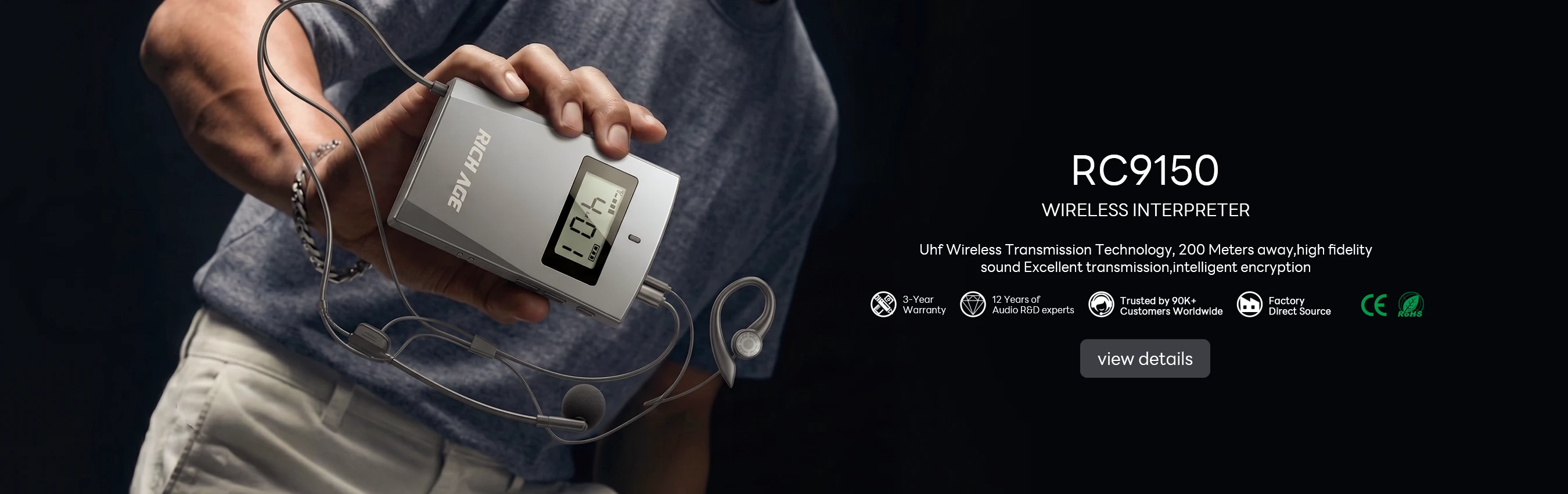
Plan the season from that room outward and the fleet design almost writes itself. This guide works through the three constraints the gowning routine sets on a wireless tour guide system for factory tours, then assigns the hardware: two interchangeable base units for volume tours, and one flagship for the lead voice. All three are PLL-synthesized 2.4G units working the 2403-2483 MHz band across a 1-200 meter range; what separates them is exactly what the season stresses — channels, standby hours and control.
What the Hood Decides Before Anyone Speaks
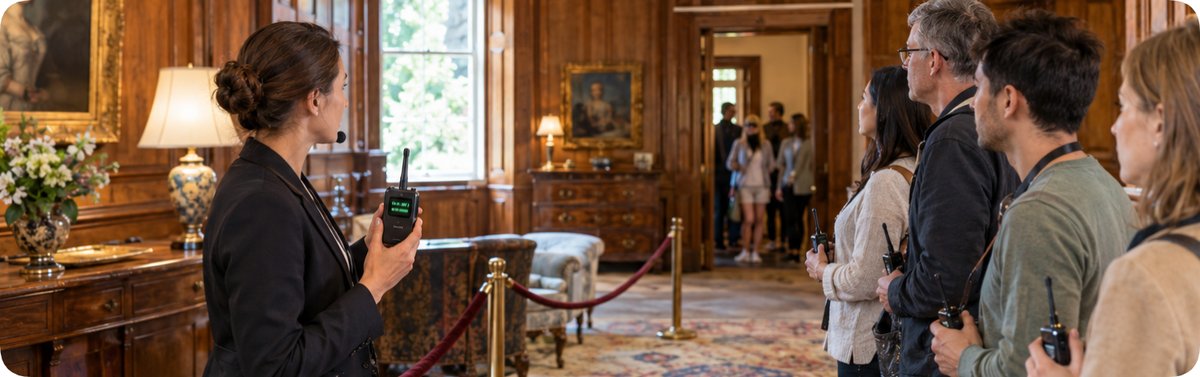
The first constraint is the hood. A full cleanroom garment covers the ears, which rules out any receiver that hooks over them; the earpiece has to reach under the hood edge as a lightweight single-side earphone. Belt-clip receivers solve this cleanly. The base units' receivers weigh 50 grams each, light enough that a visitor in full garb stops noticing the unit within a corridor section, and the clip seats on the gown's waist belt where both hands stay free for handrails, documents and the annotation everyone is asked to sign. A visitor who is comfortable and unencumbered asks better questions; a visitor fighting a sore ear after twenty minutes asks to leave early.
Fifty Channels for the Audit Weeks
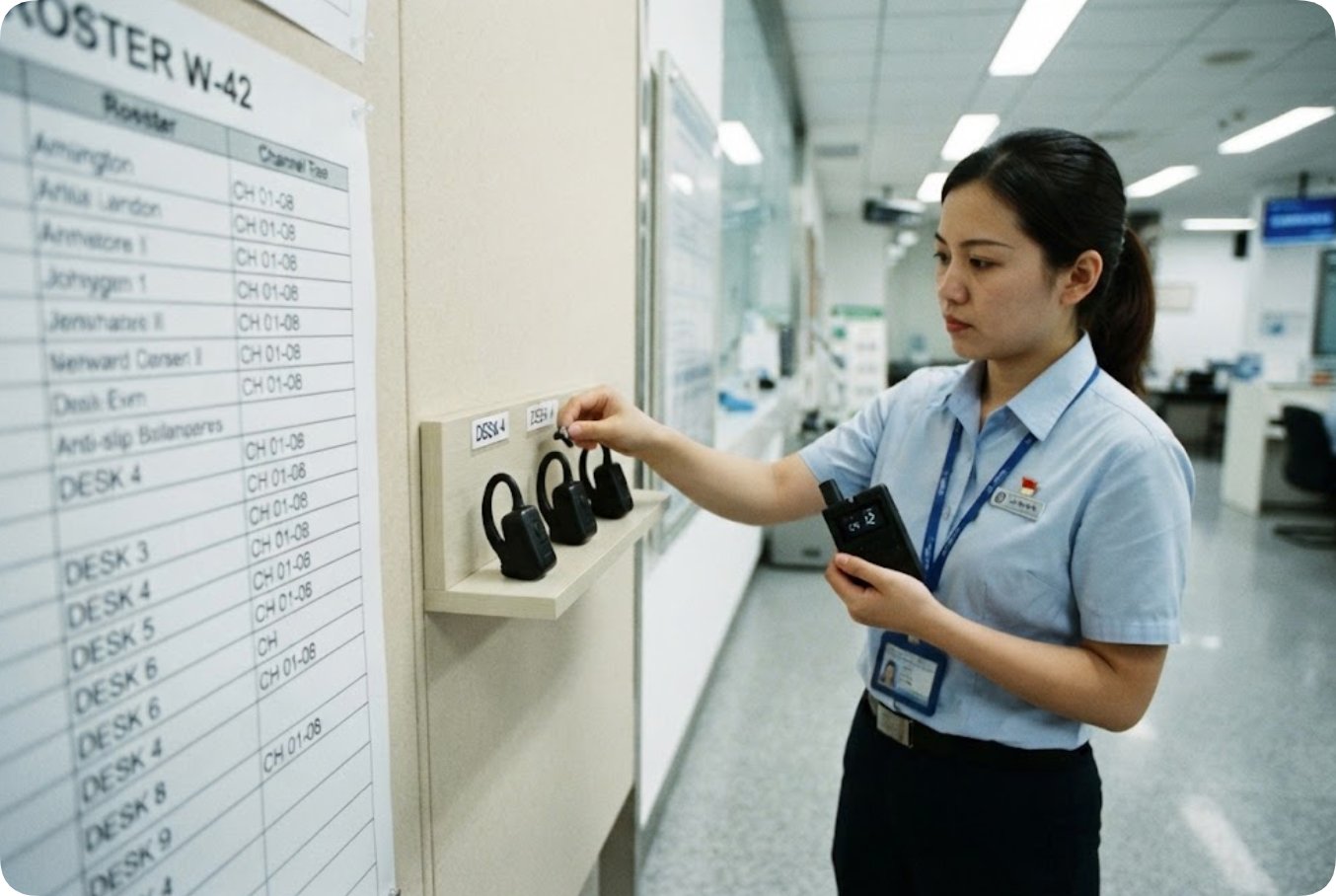
The second constraint is simultaneity. Audit season does not send one group at a time; a typical week stacks a customer's quality team in the morning, a certification body after lunch and a supplier development visit on the mezzanine, all moving through the same corridor system. Each base unit carries 50 channels on its PLL-synthesized link, enough to run those parties in parallel with a channel per group and no negotiation. Plant practice settles into a simple discipline: one channel per visiting party, reassigned between the morning and afternoon slots, logged on the same whiteboard that tracks gowning sizes. When a group runs long in the diffusion corridor, the coordinator moves the next party to a spare channel rather than delaying the tour behind it.
Where Ten Milliwatts Meets Steel Racks
The third constraint is the building itself. A fab is full of metal: process tools, foil-backed panels, overhead ducting that reflects RF in unpredictable ways. Ten milliwatts of output power is deliberately modest, and the 1-200 meter figure assumes a clear path, not a route bent around a lithography bay. The planning answer is a test walk, not a power debate: before the season starts, the coordinator walks the actual visitor route with a transmitter and a receiver, notes where the signal thins, and bends the route or repositions the docent accordingly. PLL synthesis keeps each channel locked where it was set, so a channel that works in September still works in November — the interference picture around a running fab does move, and the test walk catches it before a guest does.
The Two Twins That Fill the Calendar
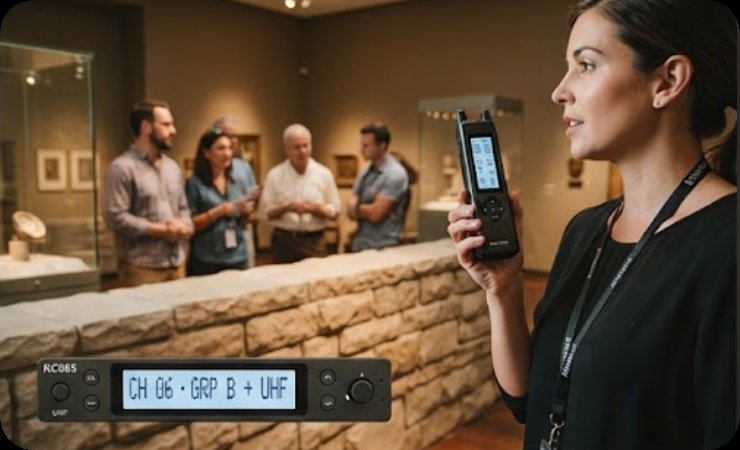
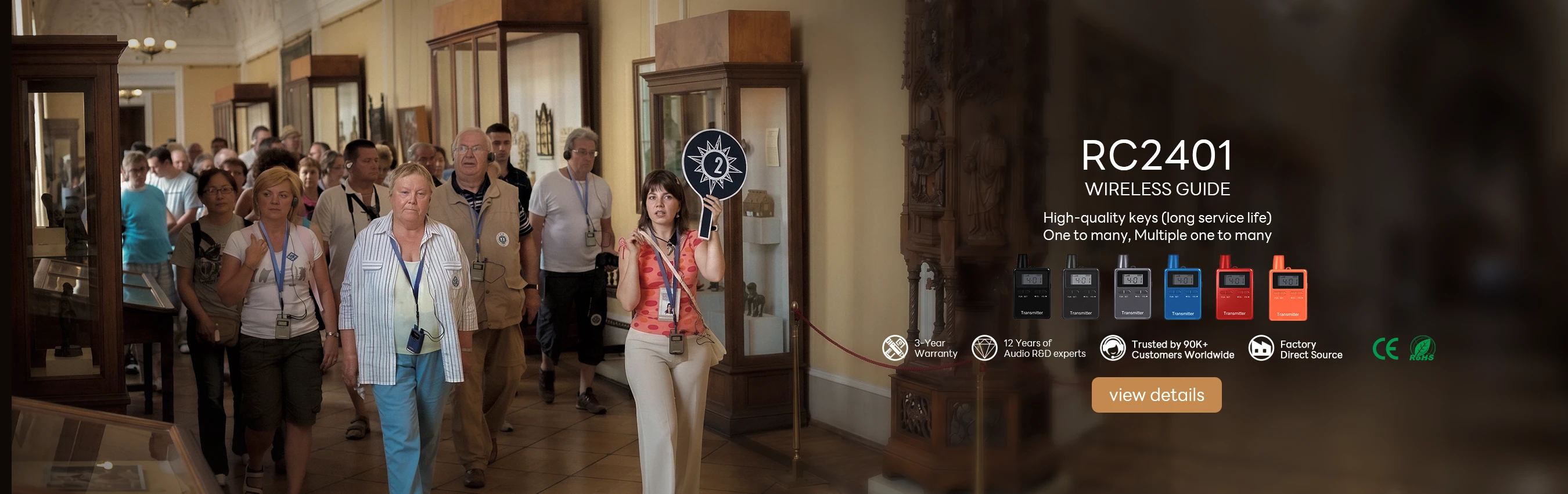
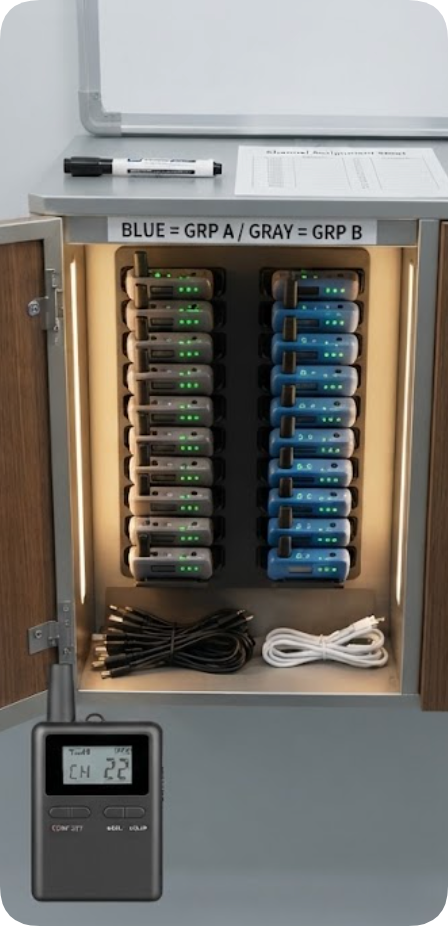
The RC2401 wireless audio guide system and the RC2402 wireless tour guide system are, by specification, twins: 50 channels, 10 milliwatts, a 1-200 meter link, ten hours of transmitter runtime and twenty of receiver runtime, 3.7V 1500mAh in the transmitter and 3.7V 1000mAh in the receiver, a 59-gram transmitter, a 50-gram receiver, DC Port charging and a frequency response of 50Hz-200kHz on transmit against 50Hz-12kHz on receive. Twins are not a weakness in a fleet plan; they are the plan. A pool of identical base units means any receiver answers any transmitter, a dead unit swaps out in seconds, and spare stock needs no separate briefing sheet. Color coding does the rest — both models ship in multiple colors for volume orders, so the Tuesday customer group carries blue units and the certification body carries gray, and nobody has to ask which receiver belongs to whom at the return tray.

One Flagship for the Lead Voice
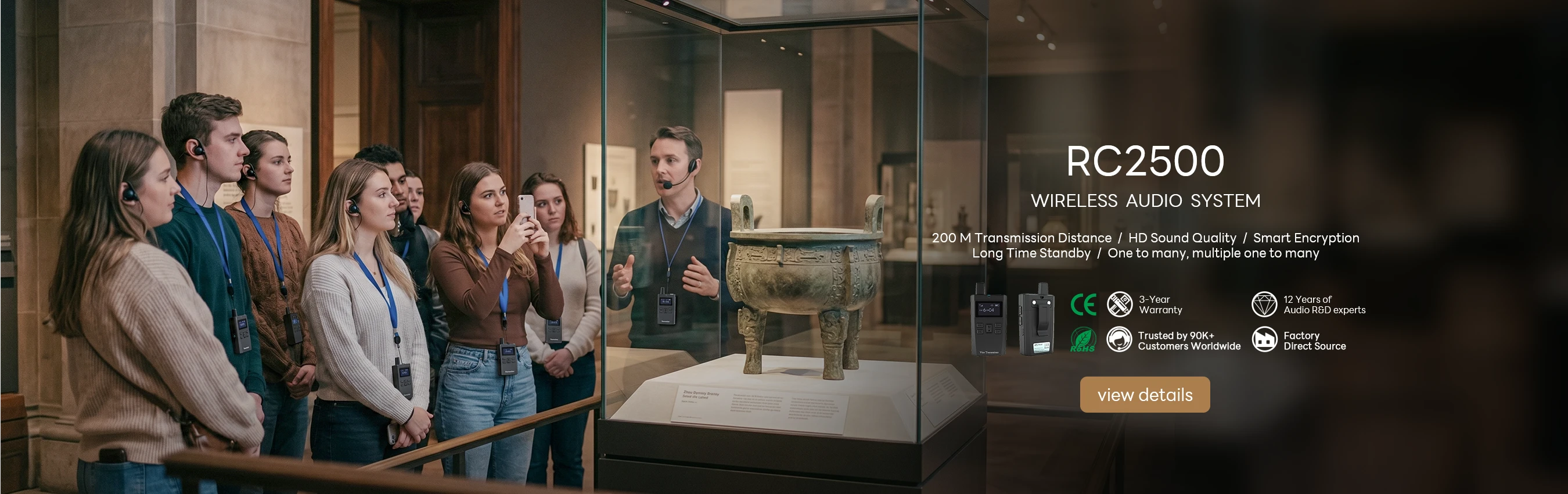
The lead docent or audit host works the longest day of the season: opening briefing in the corridor, the full route, then the close-out question block while the visitors are still gowned. The RC2500 is built for that seat. Its transmitter runs fifteen hours on a 3.7V 1800mAh pack and its receiver stands by for over thirty-five hours, so the lead's kit charges once and covers a double-header. At 104 grams in both transmitter and receiver it sits noticeably heavier than the base units, which is the honest trade for the extra runtime and the control set: one-touch synchronization brings a fresh receiver into the group without a menu dive, one-touch mute silences the link the moment the party reaches the airlock, and one-touch power-off closes the day without a shutdown sequence. It charges over Type-C, ships in black only, and covers 50Hz-8kHz across the link — a slightly tighter audio window than the twins, tuned for voice.
Charging Stays Outside the Air Shower
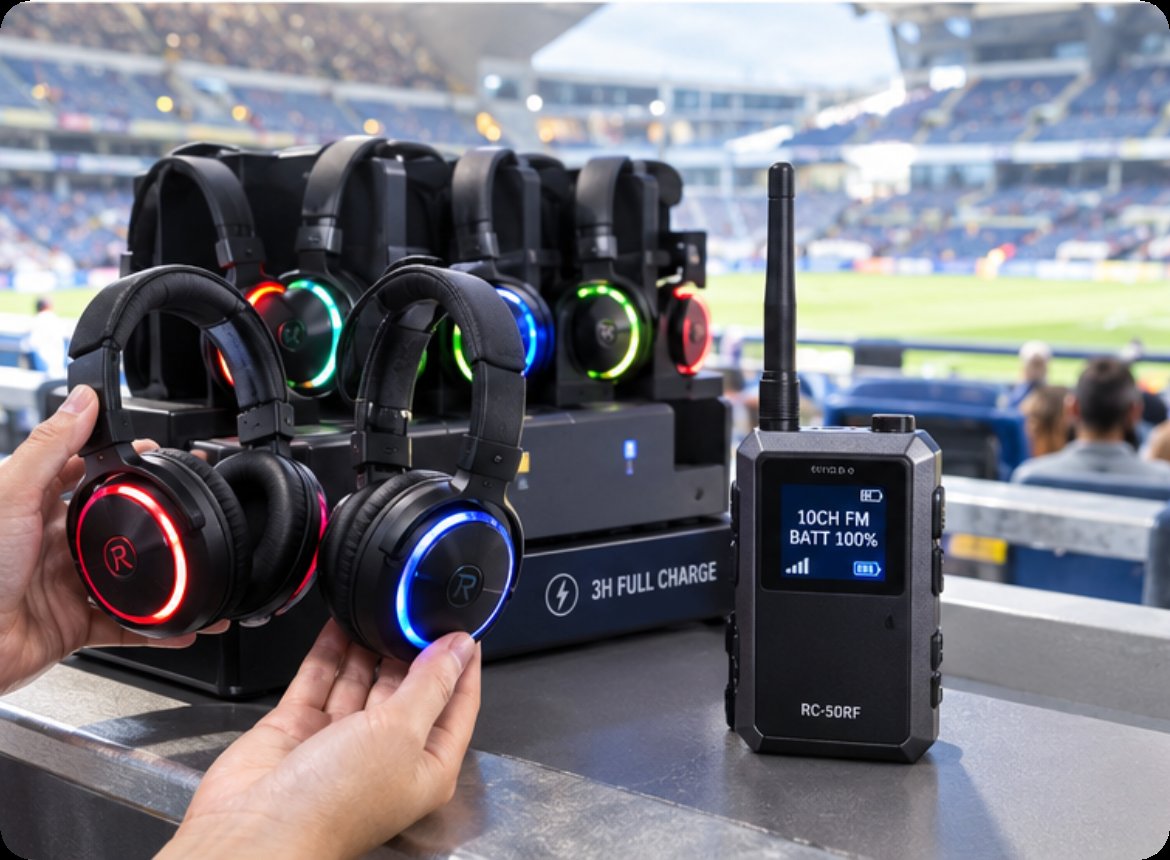
Cleanroom discipline extends to chargers: nothing loose goes through the gowning line, so charging lives in the corridor cabinet, not on the tour route. The mixed fleet makes one concession practical — the twins charge over DC Port and the flagship over Type-C, so the cabinet carries two labeled cable kits rather than one. The working rhythm is simple: units return to the tray at the end of each tour, get wiped, sorted by color, and docked overnight; a full night on the drawer covers the ten and twenty hour figures several times over. Labels matter more than intelligence here — the season runs on muscle memory, and a cable kit marked by color ends the only daily confusion the fleet can produce.
The Season Table
The table below compresses the three units for the procurement file.
| RC2401 | RC2402 | RC2500 | |
|---|---|---|---|
| Core band | 2403-2483 MHz | 2403-2483 MHz | 2403-2483 MHz |
| Channels | 50 | 50 | 50 |
| Range | 1-200m | 1-200m | 1-200m |
| Output power | 10mW | 10mW | 10mW |
| Transmitter runtime | 10h | 10h | 15h |
| Receiver runtime | 20h | 20h | 35+h standby |
| Weights (TX / RX) | 59g / 50g | 59g / 50g | 104g / 104g |
| Frequency response | TX 50Hz-200kHz / RX 50Hz-12kHz | TX 50Hz-200kHz / RX 50Hz-12kHz | 50Hz-8kHz |
| Charging port | DC Port | DC Port | Type-C |
| Standout controls | basic PLL 2.4G | basic PLL 2.4G | one-touch sync / mute / power-off |
| Colors | multi (customizable) | multi (customizable) | black only (customizable) |
Read as a season plan rather than a spec sheet, the table says one thing: the two twins carry identical numbers on purpose, and the flagship buys runtime and control, not channels.
What to Order Before the First Audit Email
The parts of this program that take time are not the radios. Kitting — color labels, two cable sets, the charging drawer, the corridor whiteboard — takes longer than shipping, and it is the part that cannot be improvised the night before a certification visit. The working rule is to place the order when the audit dates land on the calendar, not when the first email arrives: count group size plus docent plus roughly ten percent in spares, split the pool between the two twin models by color, and add a single flagship for whoever runs the room. A season bought that way absorbs the busiest stacked week without a rental quote, and the same fleet quietly serves the quiet weeks without sitting idle.
Whether the season ahead is one certification visit or a stacked quarter, the full tour guide system range covers fleets from a single flagship to a color-coded pool. For teams comparing these units against other makers' hardware, the solutions library collects the scenario-by-scenario notes worth reading before the purchase order goes out.