
.webp)
Convention centers do not sell rooms during peak season; they sell overlapping time slots inside the same rooms. A Tuesday in October can hold a product launch at ten, a certification workshop at noon, and a dealer briefing at two, with crews resetting chairs between each one. Audio is the resource that quietly decides whether those sessions coexist or interfere.
Most venues plan for one tour at a time and discover the limit on the busiest day of the year. This article walks through how a convention facility can split a single peak day into parallel programs using three devices that rarely appear in the same paragraph: the RC2406, the RC2500, and a silent disco headphone kit built around the RC-409 headset and the RC-50RF transmitter.
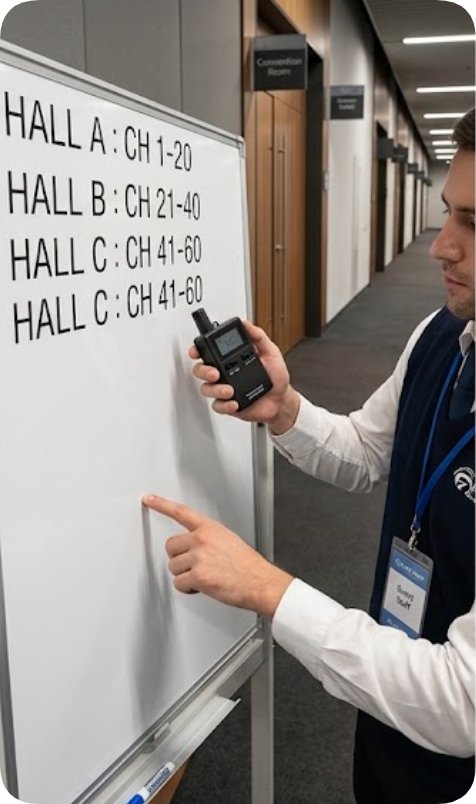
Channel assignment sheet for a three-session day in Hall B.
The Day the Halls Sell Out Twice
A sold-out hall is not the hardest problem. The hard problem is a sold-out hall that has to host two audiences with different agendas before lunch. The morning group expects a guided walk past exhibit booths; the midday group sits down for a training block in the same square meters. Resetting a room takes twenty minutes; resetting a frequency plan takes one, if it was designed before the season started.
Venue crews that treat every peak day as a one-off end up improvising with megaphones and raised voices. The cost shows up as complaints, delayed starts, and organizers who quietly book the competitor venue next year. Planning parallel sessions as a standard capability, rather than an emergency, is what separates venues that survive a packed calendar from those that merely endure it, and a proper simultaneous interpretation system review is where that planning usually starts.
Channel Budgets Before Room Budgets
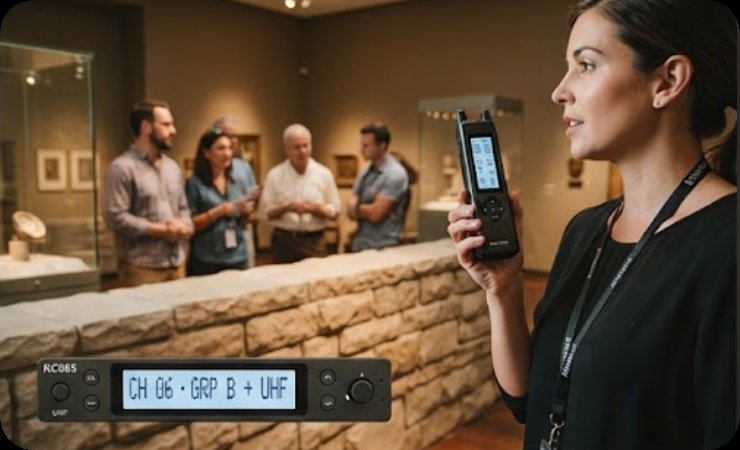
The first resource to allocate is not floor space; it is spectrum. The RC2406 offers 80 channels on the 2403-2483 MHz band with PLL anti-interference technology, which means a venue can pre-assign channel blocks to individual halls the way an airline assigns gates. A 50-channel plan on the RC2500 follows the same logic with fewer slots, and the silent disco kit contributes 10 independent FM stereo streams on its own UHF link.
Writing the allocation down matters more than the hardware itself. A one-page sheet that says Hall A runs channels 1 through 20, Hall B runs 21 through 40, and the silent lounge holds its own numbered set gives every technician the same mental model. When a third organizer calls in October asking for one more room, the answer is a lookup, not a negotiation, and the venue can point to its published conference solutions page as proof the capacity is real.
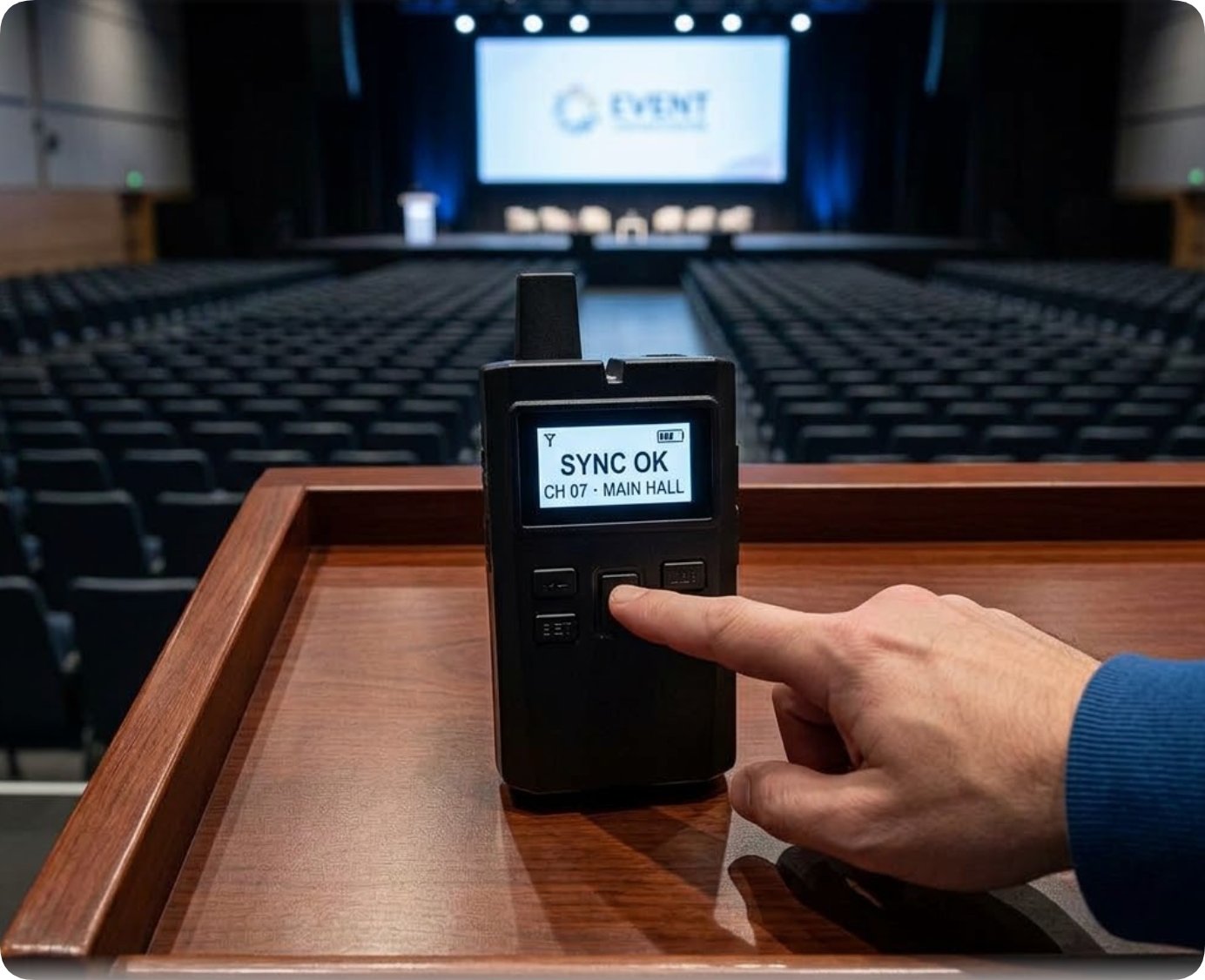
Main-hall transmitter staged on the lectern before doors open.
The Main Hall Anchors on One Long Shift
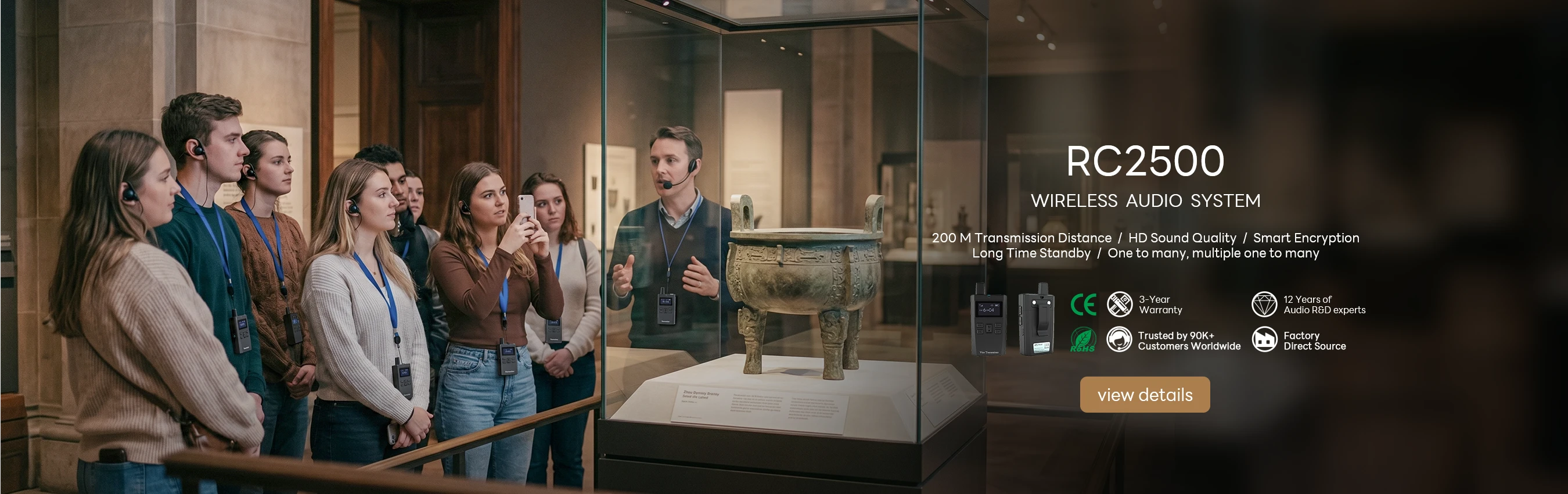
Keynote halls run the longest continuous shifts, and their equipment cannot take a lunch break. The RC2500 is built for exactly this anchor role: its transmitter lasts 15 hours per charge and each receiver holds more than 35 hours, both drawing on 1800 mAh packs. A transmitter that goes live at seven for a rehearsal still has power for the evening awards dinner, and receivers handed out in the morning do not need a mid-day swap.
The one-click synchronization matters on reset days. When the room flips from a morning plenary to an afternoon ceremony, a technician re-syncs the fleet to a new channel in seconds instead of re-pairing units one by one. At 104 grams for both transmitter and receiver, the units also survive the rough handling that comes with collection bins and fast turnaround between sessions.
The Breakout Rooms Run on Their Own Numbers
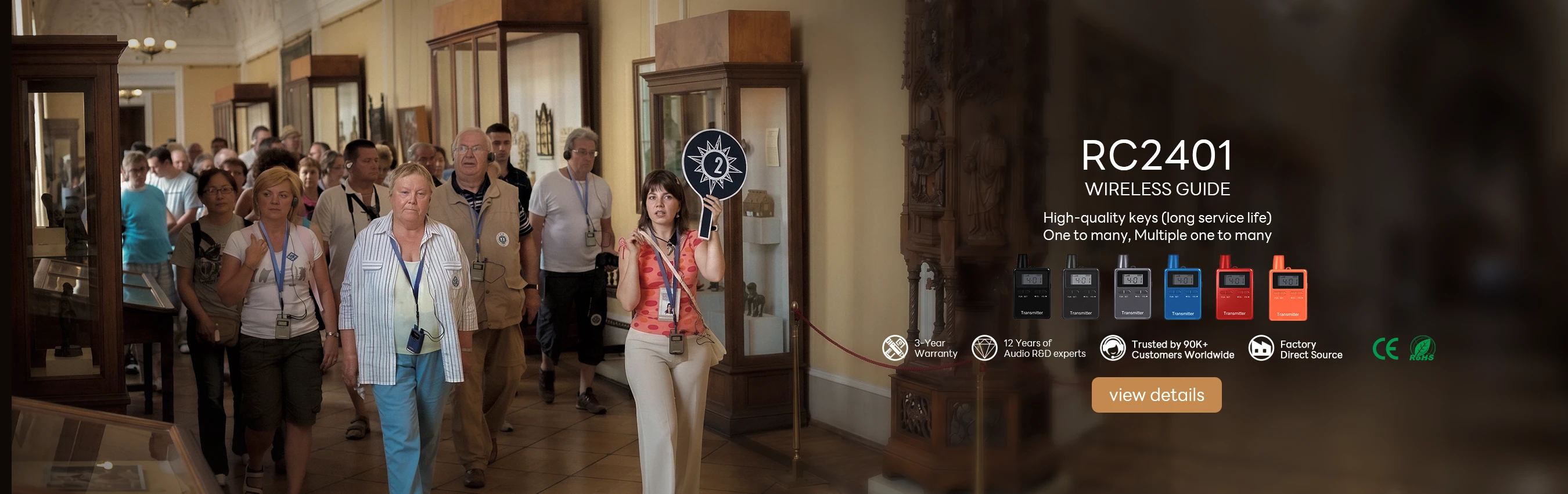
Breakout rooms are where parallel programming is won or lost, because several guides speak at once inside one building. The RC2406 was designed with this congestion in mind: 80 channels of PLL-locked capacity on the license-free 2.4 GHz band, with a transmission range up to 200 meters in open areas. Three concurrent walking sessions can operate on non-overlapping channel blocks without a technician hearing bleed from the room next door.
Weight discipline also matters when a guide works a twelve-hour exhibition day. The RC2406 transmitter weighs 59 grams and the receiver 50 grams, light enough that presenters forget they are wearing a system. Its DC-port charging integrates cleanly with the AV cabinets most convention centers already own, and the 1500 mAh transmitter battery covers a full-day continuous program without a swap.
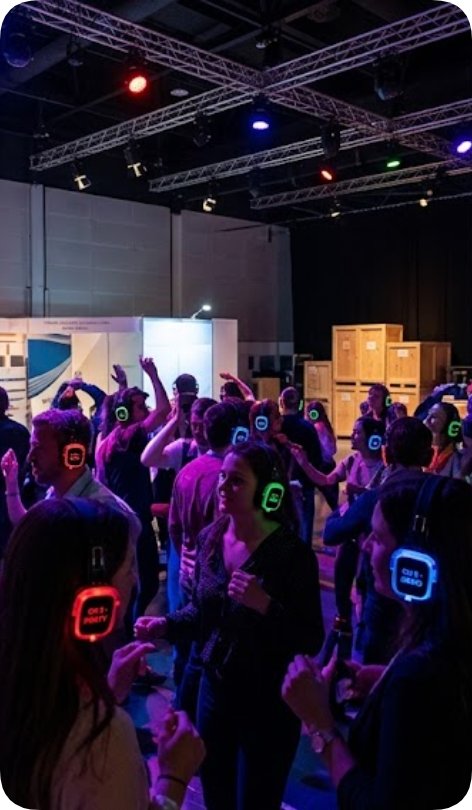
Evening silent program running inside a hall that hosted a booth day.
One Room, Two Programs, No Bleed
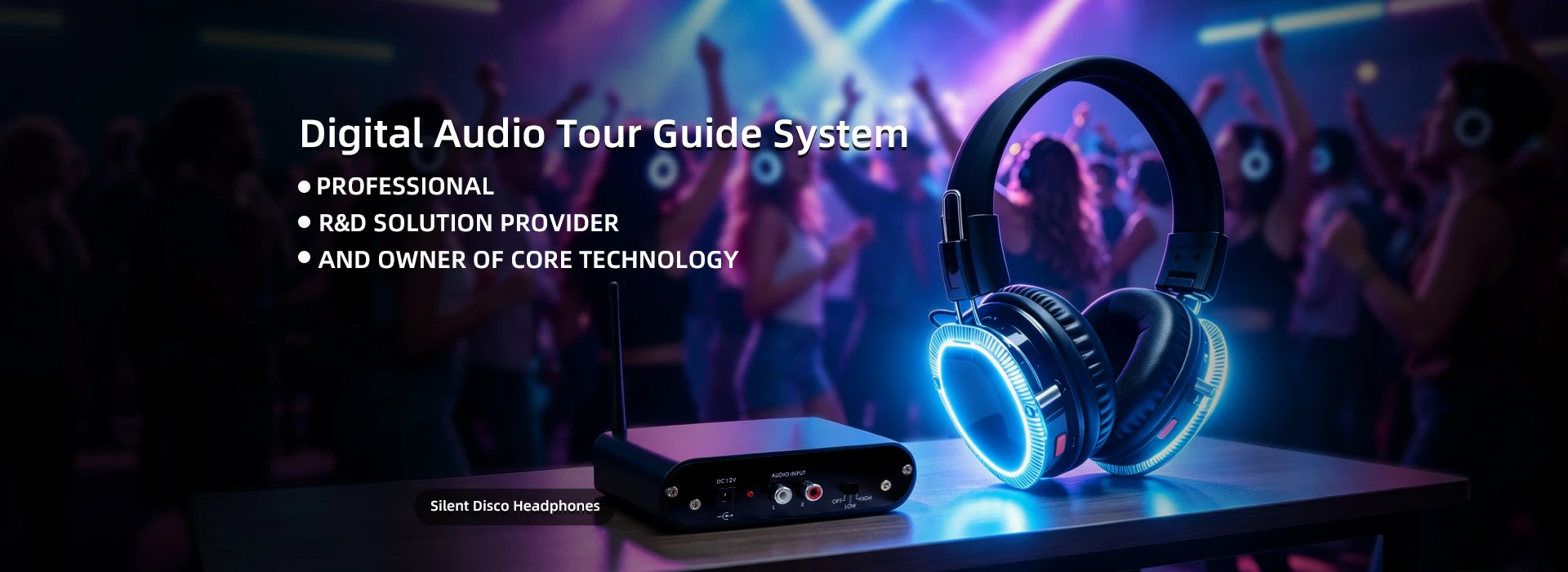
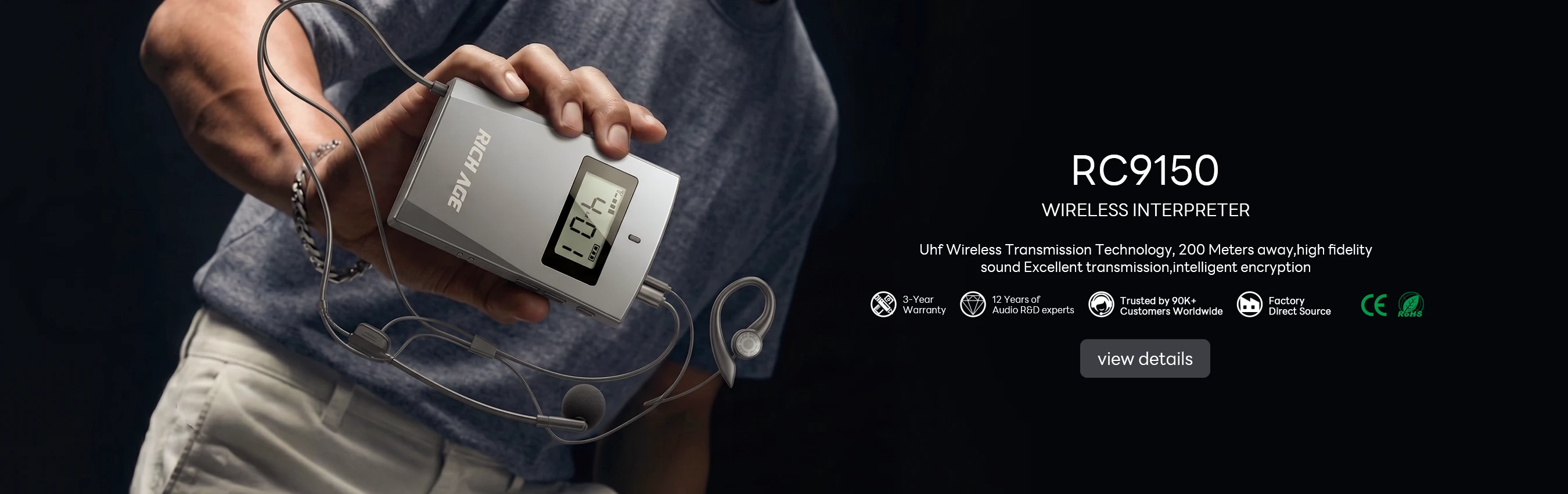
Some peak-day programs do not want silence or a guide; they want two soundtracks in the same room. A booth floor can run product demonstrations on one audio stream while a fitness class, a silent rave, or a kids' corner runs another ten meters away. The silent disco kit handles this by giving each RC-409 headphone a 10-channel FM stereo selector with five-color LED rings, so an attendee can see which program they are tuned to from across the room.
The engineering numbers behind the party lighting are serious. The 40 mm Mylar drivers hold SNR above 75 dB with distortion under 1 percent across a 30 to 20000 Hz response, and the built-in 500 mAh battery runs 10 hours on a 3-hour Micro USB charge. The RC-50RF transmitter reaches 200 meters in low-power mode and beyond 500 meters in high-power mode, which covers a full exhibition wing from one metal-cased unit with an LCD on the front.
What the Charging Ladder Looks Like at 18:00
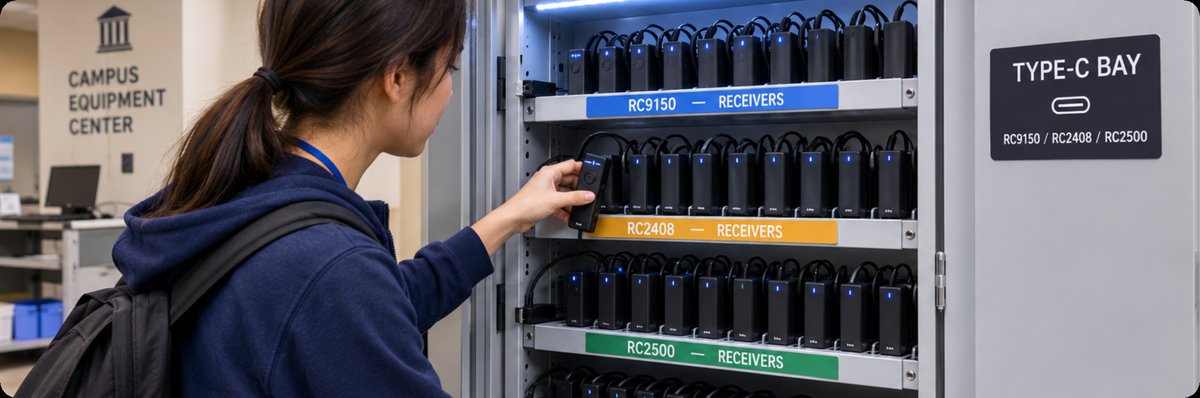
A parallel-session day ends with three different charging routines running at once, and the differences are worth planning around. The RC2406 units refill through DC ports, which suits the fixed AV cabinets in breakout rooms. The RC2500 fleet uses Type-C, so a single tray of modern cables serves both the main hall and the backup kit. The silent disco headphones charge over Micro USB in three hours, fast enough for a full turn between an afternoon program and an evening one.
Battery math also decides which device covers which slot. A 10-hour headphone ceiling matches a two-block evening program; a 15-hour transmitter matches a keynote hall that never goes dark; and 20-hour or 35-plus-hour receiver runtimes mean collection bins, not charging carts, are the real end-of-day task. Crews that sort returned units by state of charge, rather than by room, cut their prep time the following morning roughly in half.
A Session Map the Crew Can Read in One Glance
The plan only works if the whole crew reads it the same way. The table below is the version that fits on one laminated sheet at the AV desk.
| Dimension | RC2406 | RC2500 | Silent Disco Kit |
|---|---|---|---|
| Channels | 80 (PLL) | 50 (PLL) | 10 (FM stereo) |
| TX battery life | 10 h per charge | 15 h per charge | 10 h on the RC-50RF |
| RX battery life | 20 h per charge | 35+ h per charge | 10 h per headphone |
| TX weight | 59 g | 104 g | metal case, LCD front |
| RX weight | 50 g | 104 g | foldable headset |
| Charging port | DC Port | Type-C | Micro USB |
Warranty terms differ and should be quoted accurately when organizers ask: both RC models list a three-year warranty on the mainboard, while the silent disco system lists one year, with accessories excluded across the line. Frequency response is deliberately left out of the table because the three pages do not publish it on a comparable basis.
🔮 Booking the Next Peak Before This One Ends
Peak season capacity is not bought with more square meters; it is bought with a channel plan, a charging ladder, and a crew that can reset a hall in twenty minutes. The RC2500 anchors the longest shifts, the RC2406 multiplies the breakout rooms, and the silent disco kit turns one hall into two programs after dark. Each covers a failure mode the other two cannot.
Venues that document this trio as a standard package can quote parallel programming with confidence during the booking season, and the same wireless tour guide system package carries into weddings, fitness events, and multi-track conferences throughout the year. The next peak is already on someone's calendar; the frequency sheet should be on yours first.