💡 Why a Runway Puts Extreme RF Stress on Wireless Audio Gear
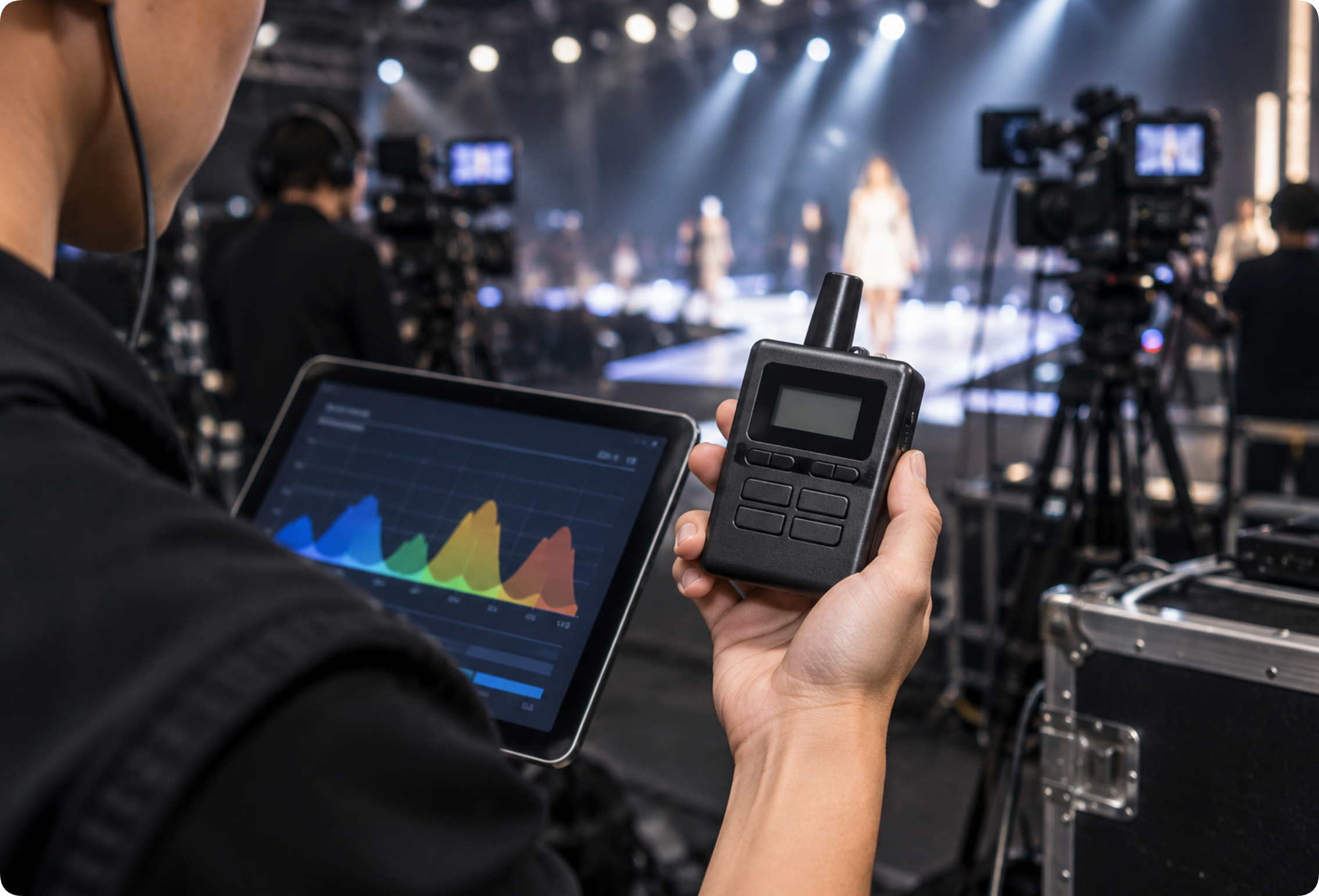
While a museum audio guide system operates in calm, stable conditions, a fashion runway operates in a high-density electromagnetic storm. Intelligent lighting rigs, wireless video transmitters, press Wi-Fi networks, and packed audience smartphones constantly compete for limited unlicensed frequency spectrum. Physically, the handling is rigorous: receivers are clipped to belts, dropped on hard staging floors, and disconnected rapidly between wardrobe changes. Stage heat from professional lighting fixtures elevates ambient temperatures, which combined with long hours of fittings, introduces moisture stress to sensitive electronics. Neglecting proper maintenance guarantees equipment failure during a live show. The definitive solution is not investing in over-engineered hardware, but establishing a repeatable backstage maintenance workflow that preempts technical issues before the first model steps onto the runway. Rehearsal day serves as the ultimate benchmark—testing lighting, video, and audio systems simultaneously while the venue is partially filled provides the ideal window to identify and eliminate RF interference well before showtime.
📡 Proactive RF Planning Before Show Lighting Powers Up
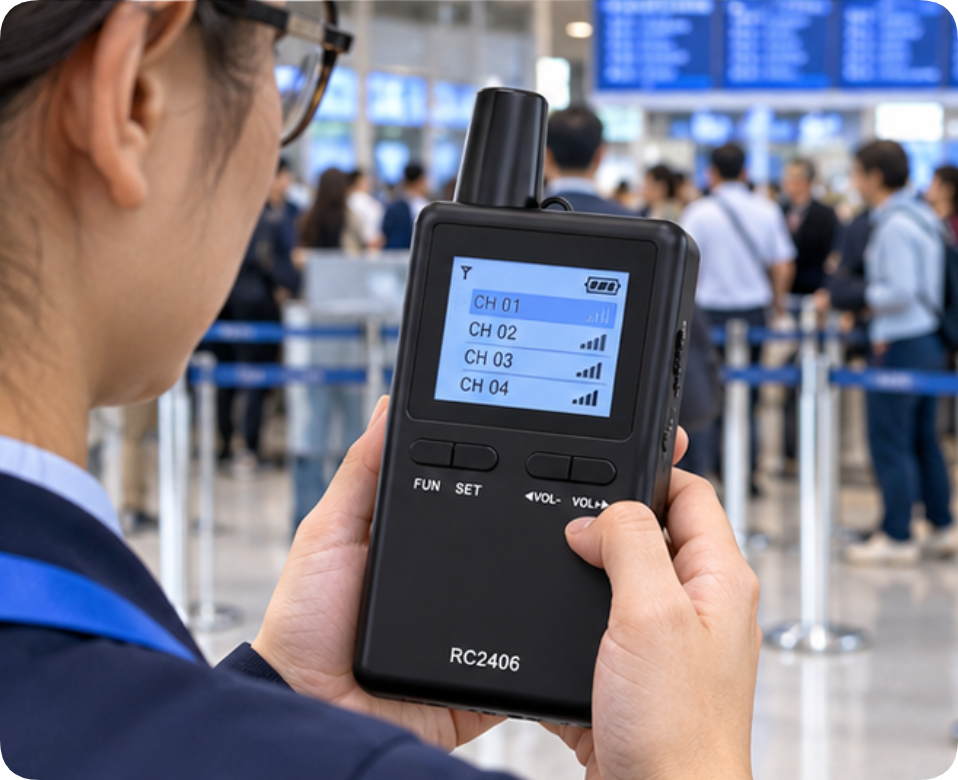
Effective frequency coordination is your highest-impact task while the venue remains quiet. These three Richitek models operate across distinct frequency bands to mitigate signal overlap. The RC085 digital tour guide system utilizes the UHF 470–510 MHz frequency band featuring 100 selectable channels, allowing it to bypass the congested 2.4 GHz bandwidth saturated by media cameras and intelligent lighting. Conversely, both the RC2406 and RC2402 operate within the 2.4G spectrum (2403–2483 MHz); however, the RC2406 offers 80 channels compared to the RC2402's 50 channels, providing significantly greater flexibility to dodge interference. Prior to venue doors opening, scan the facility using an RF analyzer or mobile diagnostic tool, identify congested frequency blocks, and pre-assign dedicated channels for each production zone. Document your channel map clearly on a laminated sheet secured inside the equipment transport case. This ensures seamless shift handovers for incoming technical operators and prevents costly guesswork during fast-paced load-ins.
🔋 Battery Management: Charge by the Numbers, Not by Guesswork
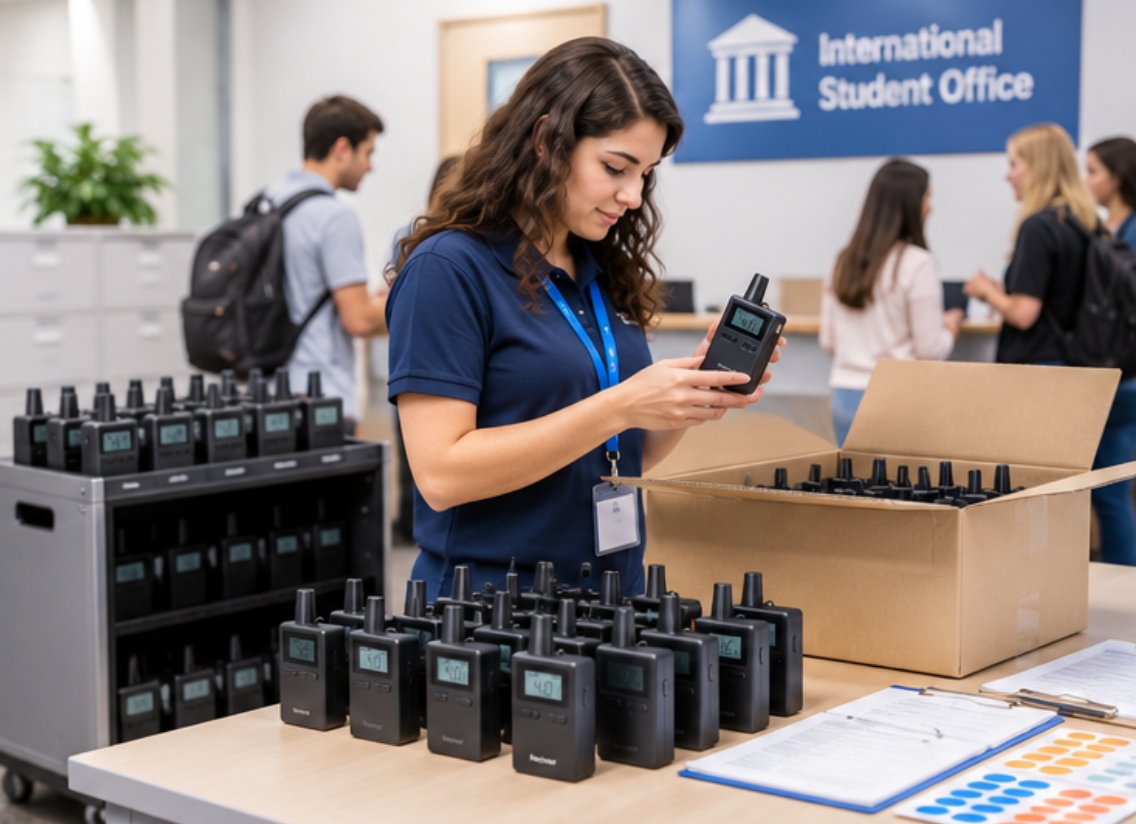
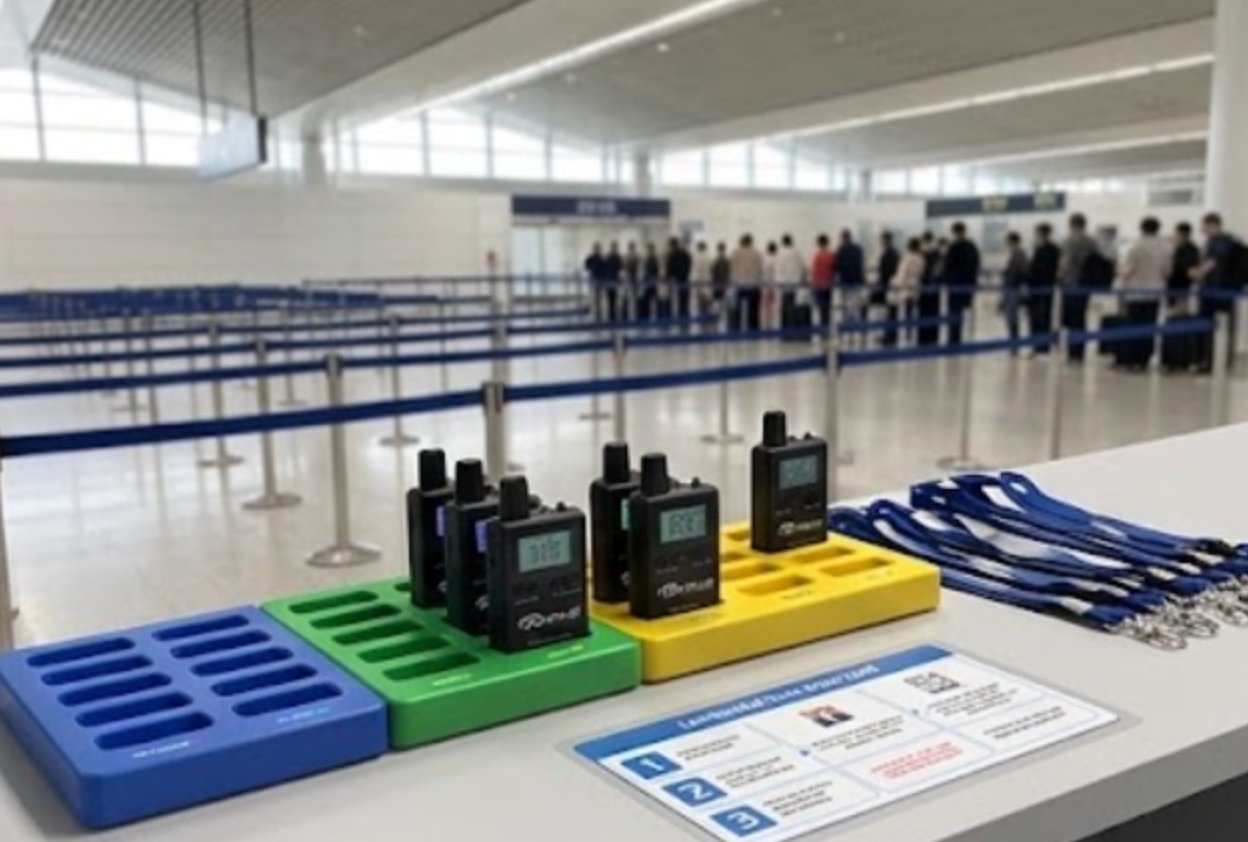
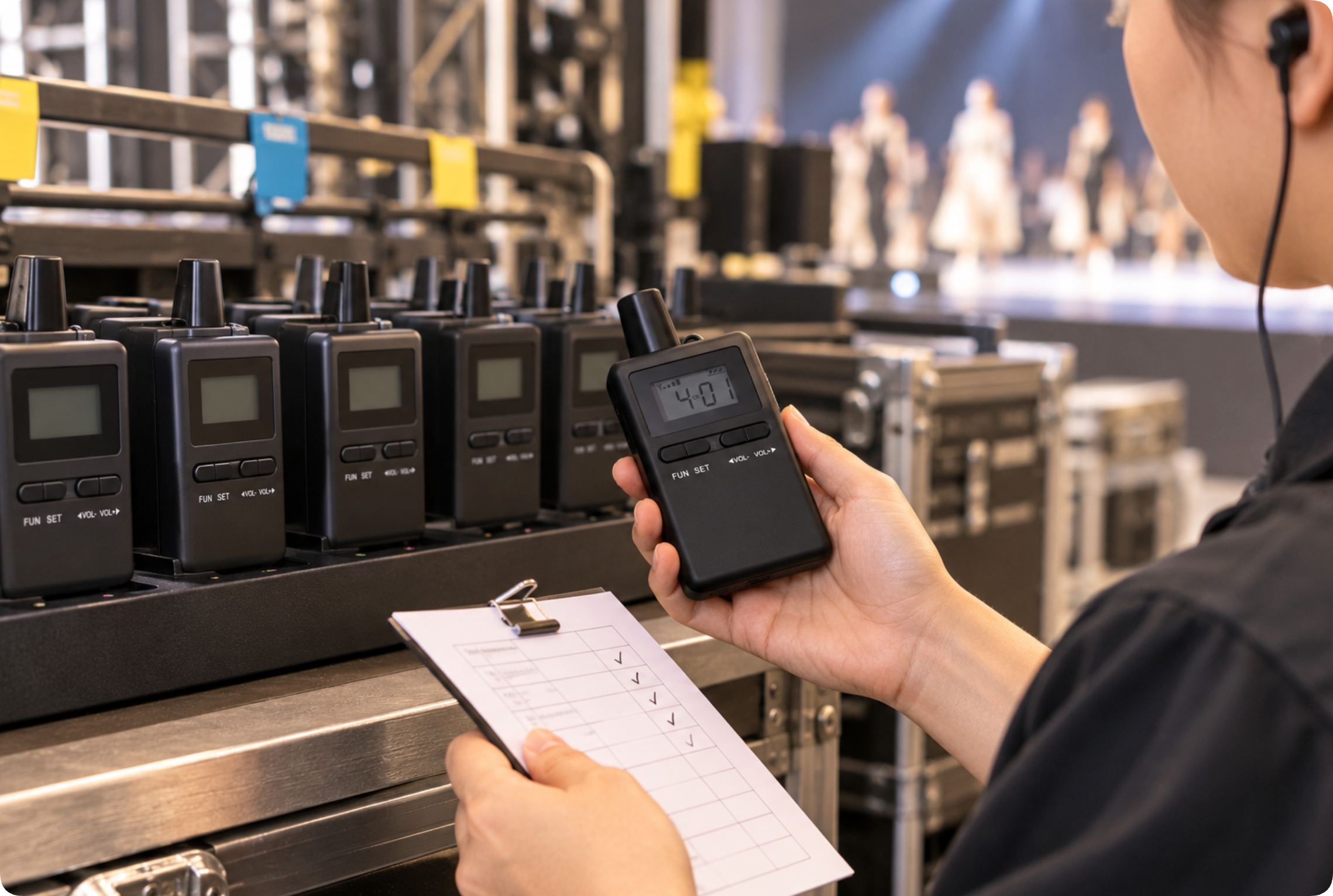
Systematic battery maintenance always outperforms passive capacity reliance. The RC085 delivers up to 12 hours of continuous transmission time from its 1200mAh lithium battery and 20 hours of reception time, utilizing convenient USB charging. Meanwhile, the RC2406 and RC2402 provide 10 hours of transmission and 20 hours of reception powered by a 1500mAh transmitter battery paired with a 1000mAh receiver battery, recharging efficiently via DC Port connections. Preventing mid-show power depletion requires a disciplined charging protocol initiated the evening prior to the event rather than minutes before call time. Implement color-coded unit labeling, rotate dedicated backup sets through your charging station, and never deploy units that received only brief opportunistic top-ups between fittings. Review the comprehensive technical specifications for the RC2406 80-channel 2.4G system to optimize your power planning.
🔮 Professional Microphone Handling and Maintenance
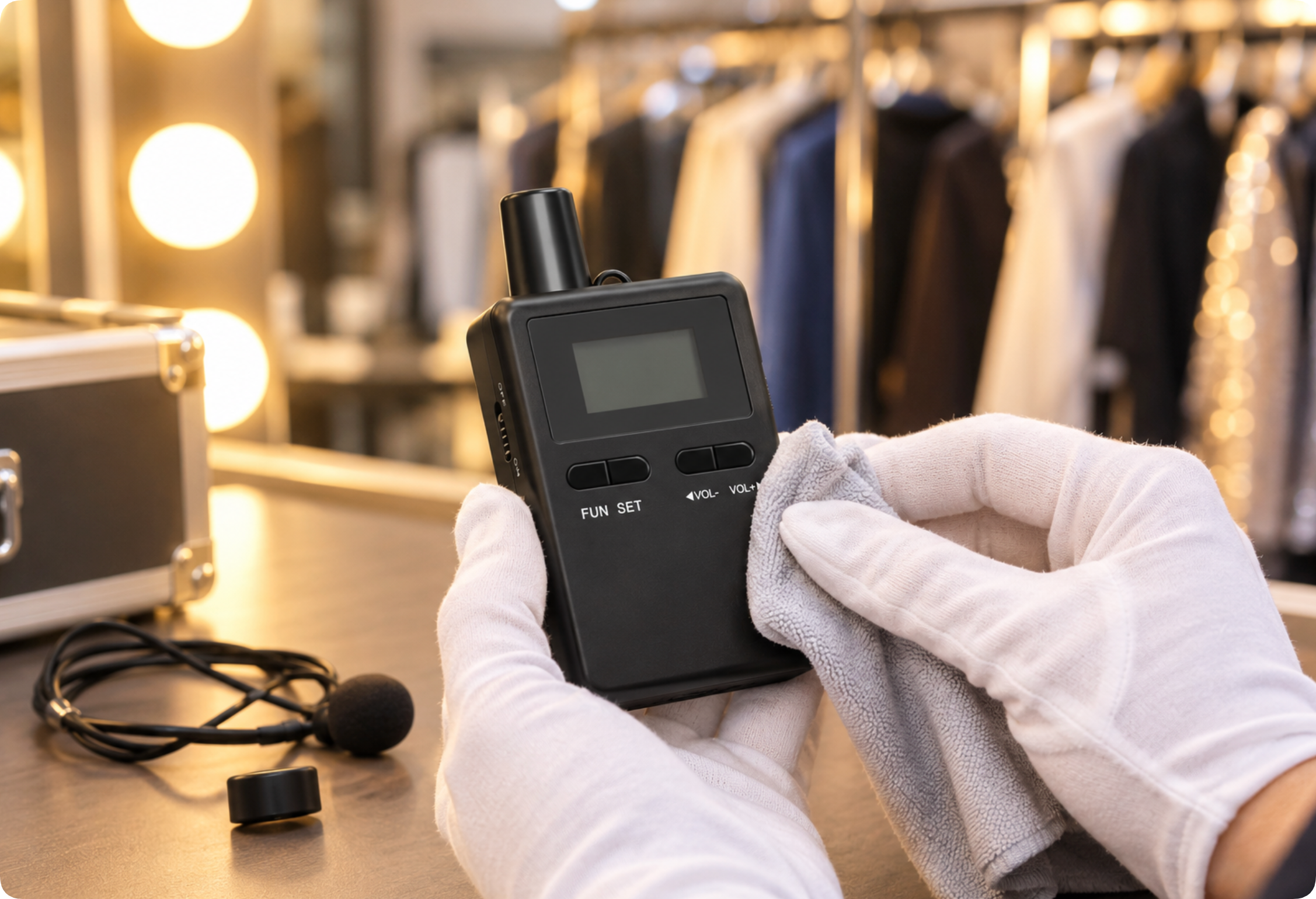
In high-end fashion productions, wireless microphones and headsets require the same delicate care afforded to haute couture garments. The RC085 supports professional headset and lavalier microphone accessories with high sensitivity ratings near -102dBm, rendering connectors and capsules the most vulnerable components in your audio toolkit. Always clean connector contacts after each session, attach protective port caps when microphones are detached, and coil cables smoothly without sharp kinks. The ultra-lightweight ear-hook receivers included with the RC2406 and RC2402 wireless guide systems weigh a mere 50 grams for exceptional user comfort, though their slender pivoting hinges demand mindful handling. Performing a quick visual inspection of the ear-hook mechanism before every segment allows technicians to spot micro-fractures early, turning a potential live-show failure into a simple five-minute preventive swap.
⚖️ Safe Transport and Storage Between Fittings
The majority of physical damage occurs during backstage transit rather than active operation. Following a show segment, equipment is frequently bundled hurriedly, tossed into bins, and relocated across complex venues. Protecting your investment requires robust hard-shell transport cases featuring custom high-density foam cutouts. Store transmitters and receivers in isolated foam compartments to prevent heavier bodies from crushing the lightweight 50g ear-hooks, and include moisture-absorbing silica gel packs if operating in humid backstage environments. With transmitter weights remaining exceptionally manageable—65g for the RC085 and 59g for the RC2406 and RC2402—all units endure demanding schedules effortlessly when secured properly against impact and rattling. Taking five seconds to securely latch your transport cases provides invaluable insurance against pre-finale equipment damage.
Troubleshooting Catwalk Audio Dropouts: Rapid Field Solutions
Despite meticulous planning, unexpected RF dropouts can occur. Knowing three immediate corrective measures separates a minor glitch from a production crisis. First, execute a quick channel re-scan on the affected receiver and jump to a verified clear frequency slot. The RC2406’s expansive 80-channel spectrum provides ample breathing room to shift frequencies without conflicting with surrounding production networks. Second, if neighboring wireless audio groups experience interference, prioritize shifting the 2.4G units (RC2402 or RC2406) rather than the UHF RC085, as the UHF band operates independently of local 2.4 GHz traffic. Third, maintain at least one pre-paired, fully charged backup receiver powered on in the control case so equipment swaps take seconds instead of forcing stressful pairing procedures under pressure. Record successful working channels directly onto adhesive case labels to guide subsequent operators, and log recurring interference incidents to establish localized frequency reservations for future events.
The 10-Minute Post-Show Equipment Reset
Show wrap-up does not signal the end of technical preparation. Within ten minutes of strike, wipe all device connection ports using a dry anti-static microfiber cloth, inspect ear-hook joints for hairline wear, and monitor battery cycle performance to retire aging lithium cells before they compromise a client presentation. Verify that firmware versions are up to date while units remain accessible on the workbench, preventing unexpected compatibility snags during upcoming load-ins. This brief post-show maintenance window represents the ideal moment to identify units requiring factory servicing, keeping flawless gear ready for your next production call sheet. Browse the complete Richitek tour guide system collection when standardizing your professional deployment kits.
🔧 Comprehensive Pre-Show Maintenance Checklist
Operational discipline relies on standardized documentation. Affixing a laminated pre-show checklist inside your equipment case provides foolproof quality control. Verifying RF channel allocation, charged backup spares, microphone contact cleanliness, and post-show protocols in a consistent sequence transforms maintenance into reliable muscle memory. The comparative specifications table below highlights key maintenance metrics for all three Richitek models, enabling technicians to evaluate each unit's role within professional production workflows.
| Spec | RC2406 | RC2402 | RC085 |
|---|---|---|---|
| Core frequency band | 2403-2483 MHz (2.4G) | 2403-2483 MHz (2.4G) | 470-510 MHz (UHF) |
| Channels | 80 | 50 | 100 |
| TX / RX battery life | 10h / 20h | 10h / 20h | 12h / 20h |
| TX / RX battery | 1500mAh / 1000mAh | 1500mAh / 1000mAh | 1200mAh / 1000mAh |
| TX / RX weight | 59g / 50g | 59g / 50g | 65g / 60g |
| Charging port | DC Port | DC Port | USB |
| Maintenance note | 80-channel anti-interference, ideal for crowded RF | Base 2.4G standard, cost-effective backup | UHF plus optional headset mic, best for 2.4G-noisy rooms |
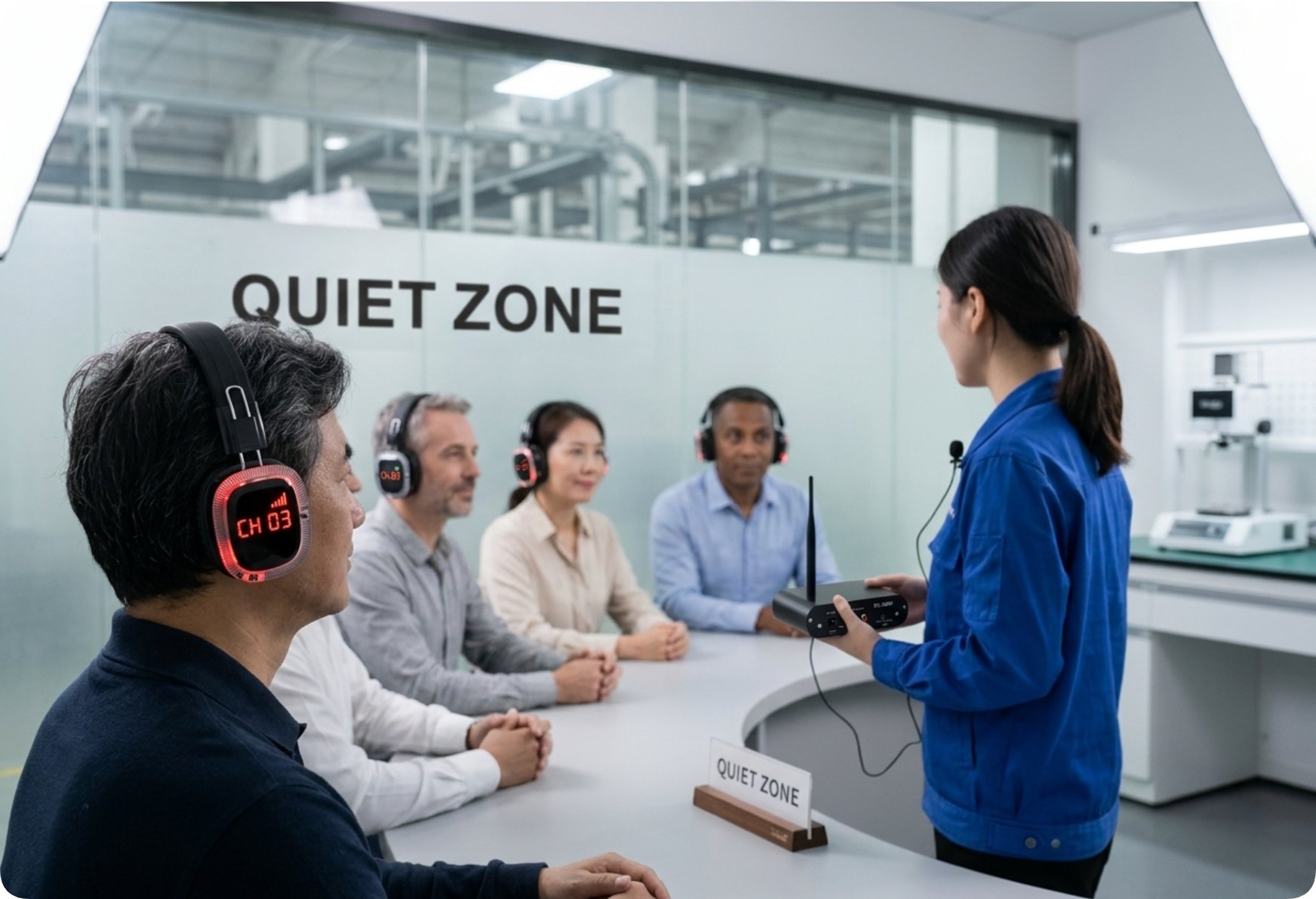
Additional application scenarios cover museums, industrial factories, and guided city tours if your equipment kits travel beyond the runway.
Frequently Asked Questions
1. Should the RC085 really use UHF at a fashion show?
Yes. A runway is saturated with 2.4 GHz traffic from intelligent lighting, wireless cameras, and press Wi-Fi. The RC085 works on UHF 470-510 MHz with 100 channels, so it sits in a band most show equipment ignores. That separation is why a UHF unit often sounds clean when 2.4G units in the same kit start dropping.
2. How many spare charged units should I bring per model?
Bring at least one spare transmitter and one spare receiver for every two active units, and keep them on a separate charging loop. The RC2406 and RC2402 draw 10 hours of transmit time from a 1500mAh cell, while the RC085 gives 12 hours from a 1200mAh cell, so overnight charging covers a full day with margin if spares are rotated.
3. Why pick the RC2406 over the RC2402 for backstage?
Both share the same 2.4G band, weight, and battery, but the RC2406 carries 80 channels against the RC2402's 50. In a crowded RF environment that extra headroom lets an operator move a dropping group to a clear slot instead of fighting interference. The RC2402 stays the cost-effective backup in the same kit.
4. Can I charge the RC085 and the 2.4G units from one power strip?
You can share the strip, but keep the cables separate. The RC085 charges over USB while the RC2406 and RC2402 use a DC Port connector, so label each cable and avoid forcing the wrong plug. A simple color tag on the USB cables prevents a frantic mismatch five minutes before doors.