

The Silent Museum Revolution: How Wireless Audio Guide Systems Protect the Visitor Experience

The silent museum revolution – wireless tour guide systems protect the gallery experience
By Richi Tek | April 2026
Walk into any major museum today, and you'll notice something different from a decade ago: it's quieter. Not empty – quieter. The shift is intentional. Museums are rediscovering that silence and contemplation are essential parts of the art and history experience. And at the center of this "silent museum" movement? The wireless tour guide system.
Modern cultural institutions are moving away from noisy public address setups toward localized, personal audio broadcasting. By replacing open-air shouting with digital UHF/2.4G encryption transmission, galleries can accommodate thousands of daily visitors without sacrificing atmospheric tranquility or historical reverence.
The Problem with Traditional Museum Tours
For decades, the standard museum tour involved a docent with a raised voice – sometimes amplified by a portable megaphone. For visitors not on the tour, this was a nuisance. For those on adjacent tours, it was confusion. And for the art itself? A noisy gallery is no way to experience a Renaissance painting or a delicate ancient artifact.
Surveys consistently show that noise is one of the top complaints from museum visitors. In a 2024 study of European cultural sites, 58% of respondents said excessive tour group noise diminished their experience. Some museums have even reported visitors leaving early specifically due to noise pollution from guided tours. Furthermore, high reverberation in historic masonry halls causes acoustic echo, forcing docents to speak louder and aggravating vocal fatigue.
The Wireless Solution
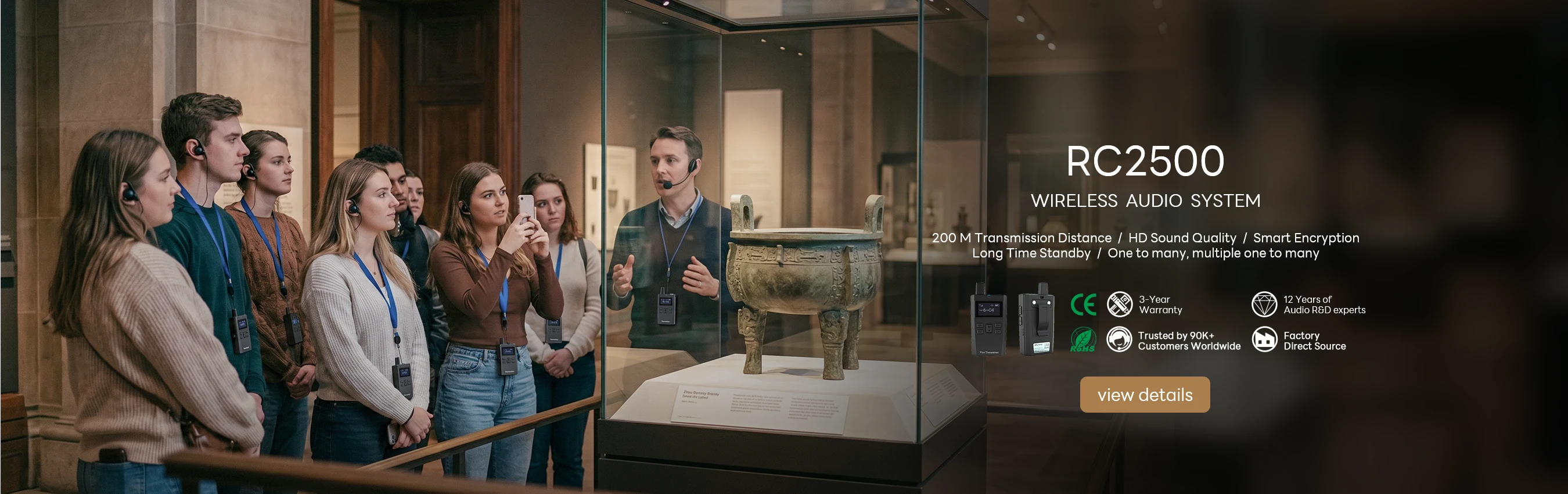
A wireless tour guide system allows docents to speak at a normal, even hushed, volume while still being heard clearly by every member of their tour group. The guide's voice travels through the transmitter to each visitor's receiver and earpiece – nowhere else.
The result: the gallery remains quiet and contemplative for other visitors. Multiple tours can operate simultaneously without any audio bleed between groups. And the docent can share insights in a conversational tone, creating a more intimate and engaging experience for their group.
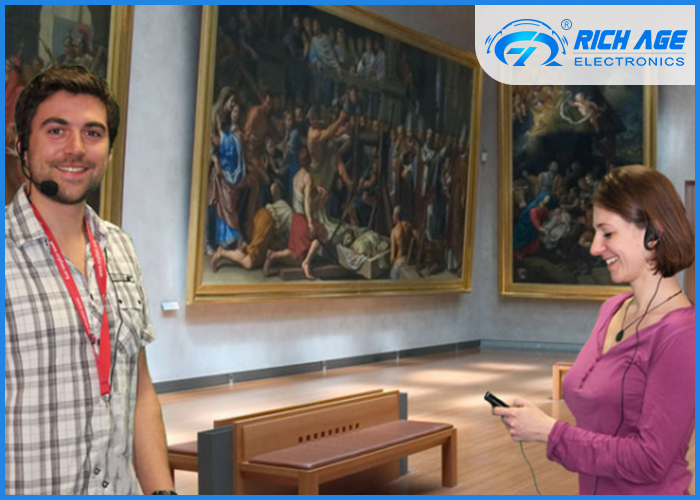
Speak softly, reach everyone – the wireless museum standard
Recommended Products for Museums
Recommended Model: RC085 – Silent & Lightweight
The RC085's 52g receiver is barely noticeable during long museum tours. The
40-hour battery life easily covers multiple tour days without recharging. With
50 channels and 200-meter range, multiple docents can lead tours
simultaneously without any crosstalk. The quiet, discreet design complements the museum environment.
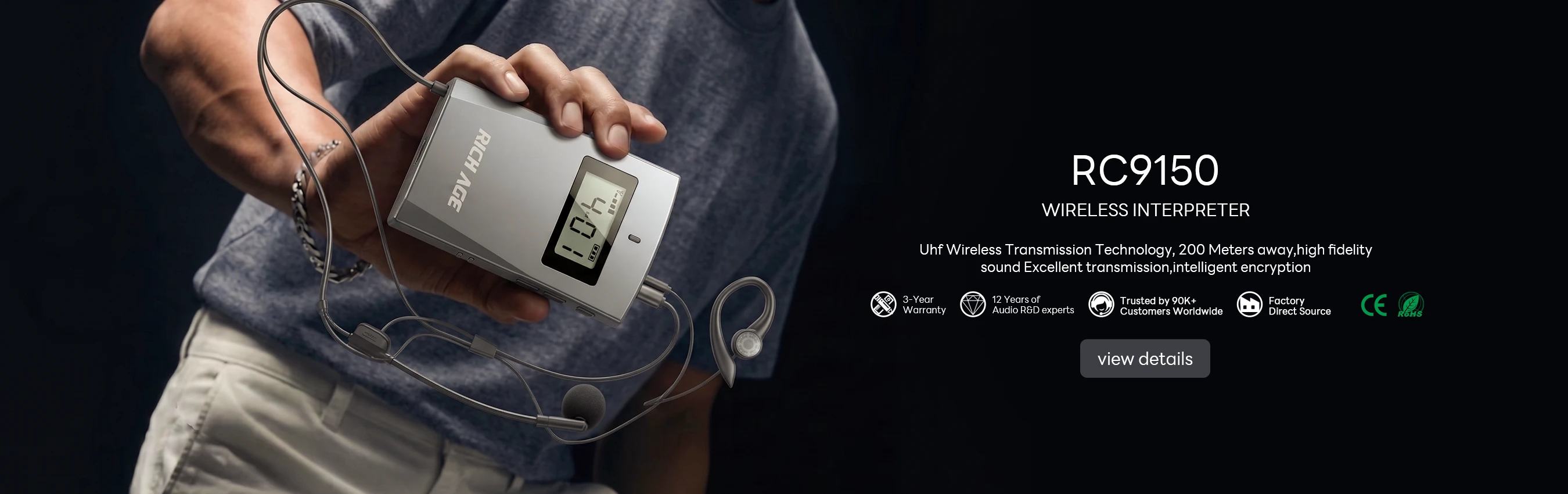
Premium Choice: RC9150 – High-End Museum Solution
For prestigious institutions requiring the best, the RC9150 offers 100 channels
(ideal for very large museums with many simultaneous tours), Hi-Fi sound quality
for the most discerning visitors, and intelligent encryption technology for
private exhibition previews or donor events. The transmitter lasts 15 hours, receiver over 30 hours.
Key museum features both offer: One-button synchronization, support for 1-to-many mode, and multi-language conference capabilities for international visitors.
Museum Audio Guide Hardware Matrix
| Model Series | Weight & Ergonomics | Battery Endurance | Channels & Isolation | Recommended Venue Scale |
|---|---|---|---|---|
| RC085 | 52g (Ultra-Light, Ear-hook) | 25h (TX) / 40h (RX) | 50 Channels (Zero Crosstalk) | Regional art galleries, municipal heritage centers |
| RC9150 | 68g (Flagship Hi-Fi Display) | 15h (TX) / 30h+ (RX) | 100 Channels (Encrypted Signal) | National museums, international exhibition centers |
Leading Institutions Are Already There
The world's most respected museums have already made the switch:
The Louvre in Paris mandates wireless systems for all group tours to enforce noise regulations.
The British Museum in London offers wireless guides for both group and self-guided visitors.
The Metropolitan Museum of Art in New York has phased out amplified tours entirely.
The Vatican Museums require wireless systems for the thousands of groups that visit daily.
These institutions didn't make the change to save money – they made it to preserve the visitor experience and protect the contemplative atmosphere that makes museums special.
Beyond Noise Reduction: Additional Benefits
1. Accessibility & Inclusivity
For visitors with hearing challenges, wireless receivers feature adjustable volume controls and integrate seamlessly with hearing aid neckloops. This makes museum audio content fully accessible to diverse audiences.
2. Multi-Language Support
International museums can offer tours in multiple languages simultaneously. Group A listens to French on Channel 1, Group B to Mandarin on Channel 2 – zero interference or scheduling bottlenecks.
3. Streamlined Group Management
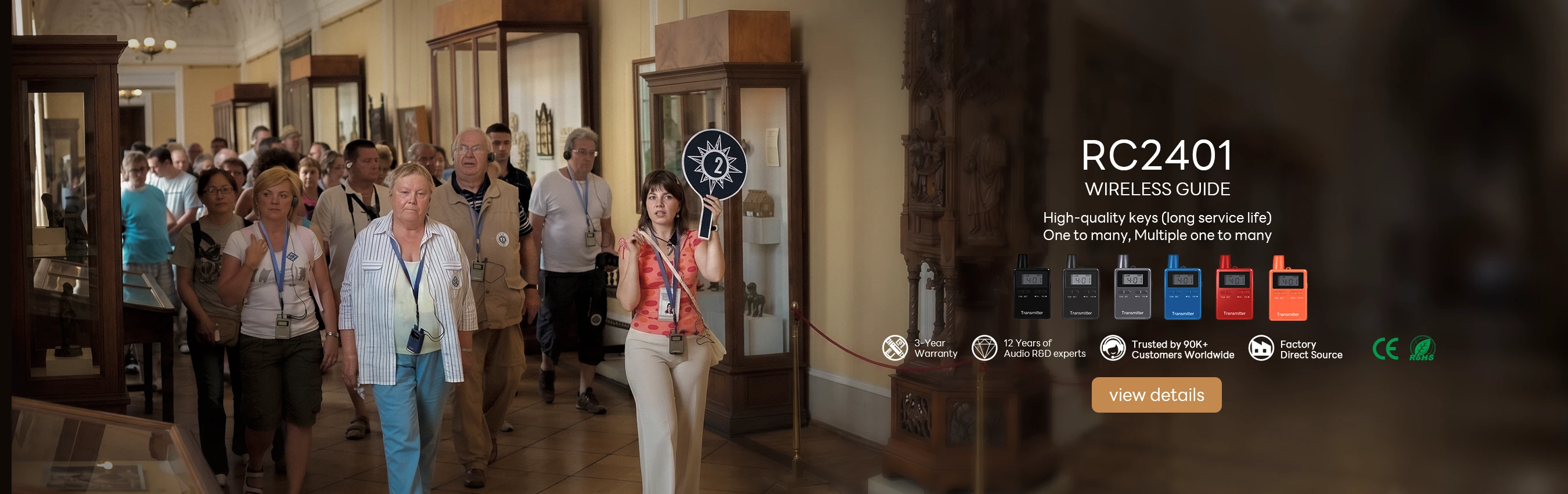
Docents can keep 30+ visitors together across winding gallery paths without raising their voices, avoiding visitor dispersion and protecting fragile glass displays.
4. Docent Health & Retention
Museum docents often lead 4 to 6 tours daily. Speaking at normal conversational volume preserves vocal health, preventing occupational laryngitis and reducing sick days.
Implementation Considerations for Museums
Hygiene & Safety: Museums should invest in sanitizable silicone earpieces or medical-grade wipeable ear-hooks for shared equipment fleets. Bulk disposable covers are also available.
Charging Infrastructure: Modular aluminum flight cases and charging racks capable of docking 32, 40, or 60 units overnight streamline daily operations for staff.
Staff Training: Wireless systems require minimal setup, but docents benefit from practicing conversational-tone commentary using collar or headset microphones.
Visitor Education: Clear signage at information desks helps visitors understand the benefits of silent wireless audio receivers.
The ROI of Going Silent
Museums that have switched to wireless systems report:
Higher visitor satisfaction scores (both for tour participants and independent visitors)
Increased tour capacity (more groups can run simultaneously without audio bleed)
Fewer noise complaints logged at visitor service desks
Better docent retention (reduced vocal strain and fatigue)
Improved accessibility ratings under international cultural standards
Frequently Asked Questions (FAQ) for Museum Curators
Q: Will 2.4GHz wireless systems interfere with museum Wi-Fi networks or security cameras?
A: No. Richi Tek systems utilize automatic frequency-hopping algorithms and digital pilot codes to dynamically bypass active Wi-Fi routers and security channels, guaranteeing zero RF interference.
Q: Can institutional branding or logos be added to receiver fleets?
A: Yes. We offer comprehensive OEM/ODM customization including custom casing colors, silk-screened museum logos, and pre-programmed channel labels for institutional fleet orders.
Making the Switch
Richi Tek offers wireless tour guide systems specifically designed for museum environments. We provide sample units for museum testing and full OEM/ODM customization including logo printing and branded charging cases. Volume pricing is available for institutional orders of 50+ units.

Join the silent museum revolution – wireless tour guide systems protect the gallery experience for everyone
Upgrade Your Cultural Institution Today
Contact Richi Tek to discuss your museum's wireless tour guide needs, request free evaluation sample kits, or explore custom solutions for cultural institutions. All enterprise orders include a full 1-year factory warranty and modular charging flight cases.