
A leading China factory specializing in Wireless Tour Guide Systems, Church Audio Guides, and Translation Headphones with premium OEM/ODM solutions.

Tel:+86 18922879583

Email:tiger.wang@richitek.com

RC8860 and RC2408 Outdoor Large Venue Wireless Guide Installation Walkthrough

Outdoor venues present challenges that indoor halls rarely expose. Open ground absorbs and scatters radio signals, wind carries voices away before they reach the back row, and constant tour movement wears down cables, batteries, and mounts. For operators who manage guided visits in these spaces, the real question is whether a system holds up on a busy afternoon when visitors are spread across a wide platform. This article walks through a practical, stage-by-stage deployment of the RC8860 and RC2408, from the first coverage survey to the daily maintenance routine that keeps it running season after season.

💡 Why RC8860 and RC2408 Are Built for Outdoor Large Venue Work

Facilities that put the RC8860 and RC2408 to work in an Outdoor Large Venue setting typically report three kinds of results. The first is consistent, high-quality audio that removes the most common visitor complaint: missing pieces of the guide's narration. The second is simpler day-to-day operations, because staff spend their time guiding visitors instead of wrestling with unreliable equipment. The third is a professional impression. A tour that flows without interruptions and dead zones reflects well on the whole organization.

The operational problems in this environment fall into recognizable categories: equipment that cannot handle demanding conditions, batteries that die at the worst possible moment, and signal dead zones that disconnect visitors from the narration. No amount of hardware quality will save a deployment that ignores these realities. The RC8860 transmitter weighs only 59 grams and clips directly to a coach's clothing, while the RC2408 weighs 70 grams and is engineered for long-range coverage across open ground. Both are light enough for a full shift and rugged enough for daily outdoor use.

Before placing an order, it is worth studying how a wireless guide system for Outdoor Large Venue is normally structured. Most sites are divided into functional zones, each with its own audio requirements and radio environment. Each zone deserves its own channel plan rather than a single frequency applied across the whole site. This zone-based thinking is the foundation of every step that follows.

Step 1: Coverage Planning and Channel Settings

Begin the installation with a simple map of the venue. Mark every area where groups gather, whether that is the main plaza, the training arena, the overlook, or the walkways between exhibits. For each zone, estimate two numbers: how many visitors will listen at the same time, and how far the guide stands from the farthest listener. Outdoor spaces behave very differently from enclosed halls. Trees, terrain, and even crowds absorb and deflect radio energy in ways that are hard to predict on paper, so walk the range on foot before committing to a layout, carrying a receiver to the far corners and noting where the audio begins to break up.

Once the usable range of each zone is clear, assign channels zone by zone to prevent interference. Neighboring groups should never share a frequency, and reserved channels stop cross-talk between a coach working with riders and a tour guide addressing a nearby crowd. The RC2408 makes this planning easier, because a single unit can cover a wide viewing platform even when visitors spread themselves across several rows of seating or standing space. That reach reduces the number of channels and transmitters a large guided group needs.

Step 2: Installing RC8860 for Coaching and Training Areas

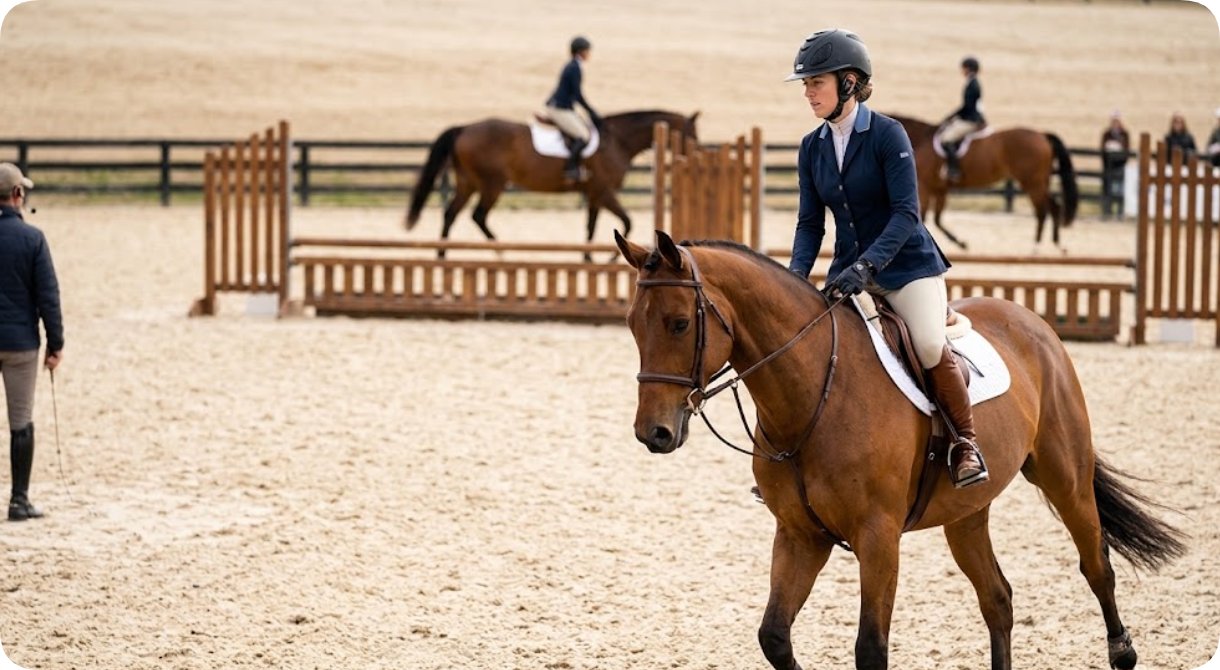
For equestrian training and high-motion outdoor coaching, the RC8860 is the anchor unit of the deployment. Its 59-gram body clips onto the coach's waistband, leaving both hands free to demonstrate jumps, signal turns, or adjust equipment mid-session. Riders wear lightweight receivers with earpieces, and the coach speaks in a normal voice while the signal travels directly to every rider in the group. In practice, a group of five to six riders stays in sync even as they move across the arena, because nobody has to strain to hear or stop to ask for a repeat.
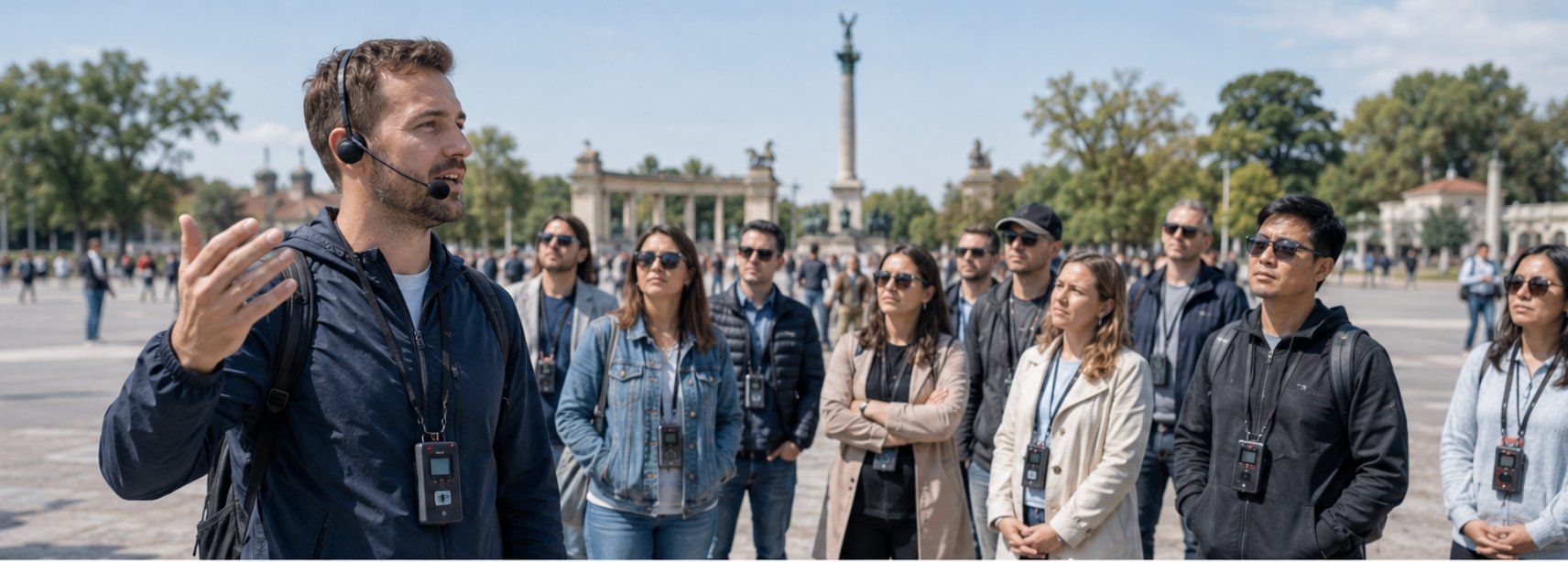
RC8860 and RC2408 Outdoor Large Venue Wireless Guide Installation Walkthrough(图1)

Position the coach at the center of the training line wherever possible, since a central transmitting position gives every rider roughly equal signal strength. On very wide arenas, mark the coaching line clearly and keep the transmitter mounted above the waist so the body never shields the antenna; clipping at chest height rather than the belt line measurably improves the far end of the line. For a closer look at how this unit fits into a teaching workflow, read the RC8860 Tour Guide Transmitter For Teaching page, and check the RC085 vs RC8860 comparison before upgrading older inventory.

💰 Step 3: Deploying RC2408 for Long-Range Guided Tours

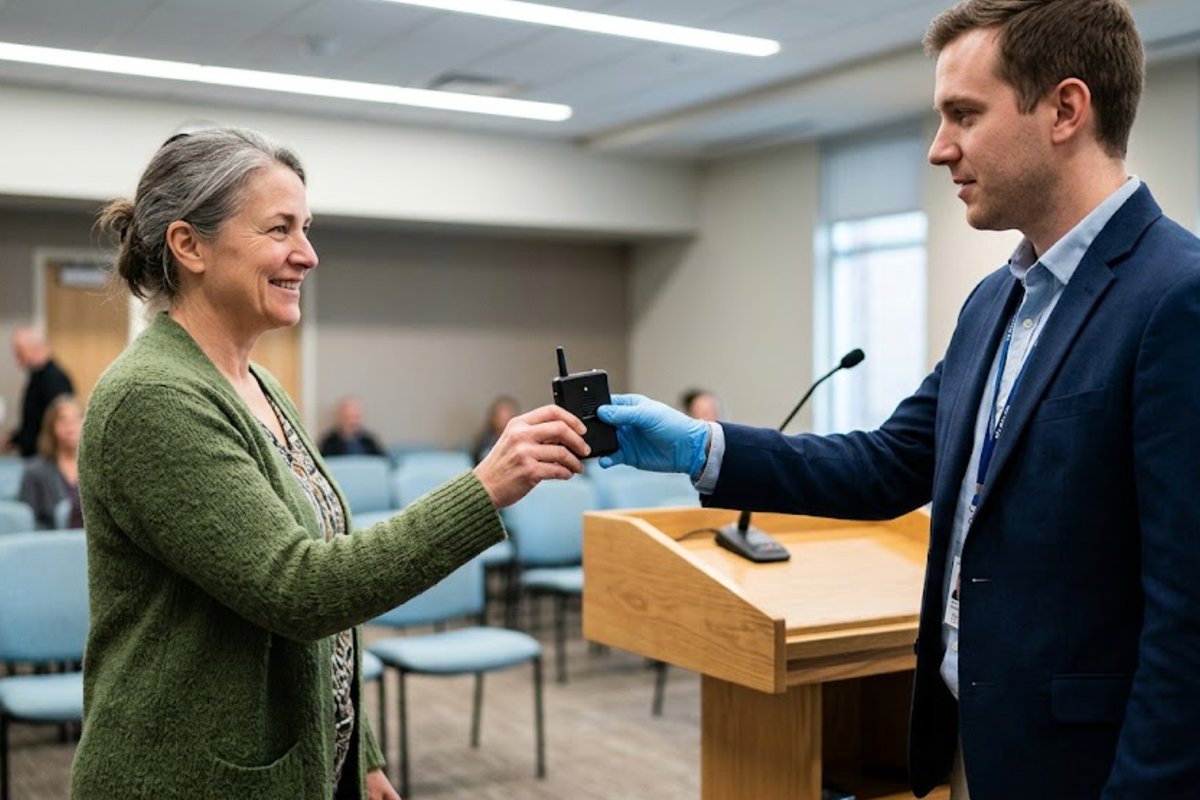
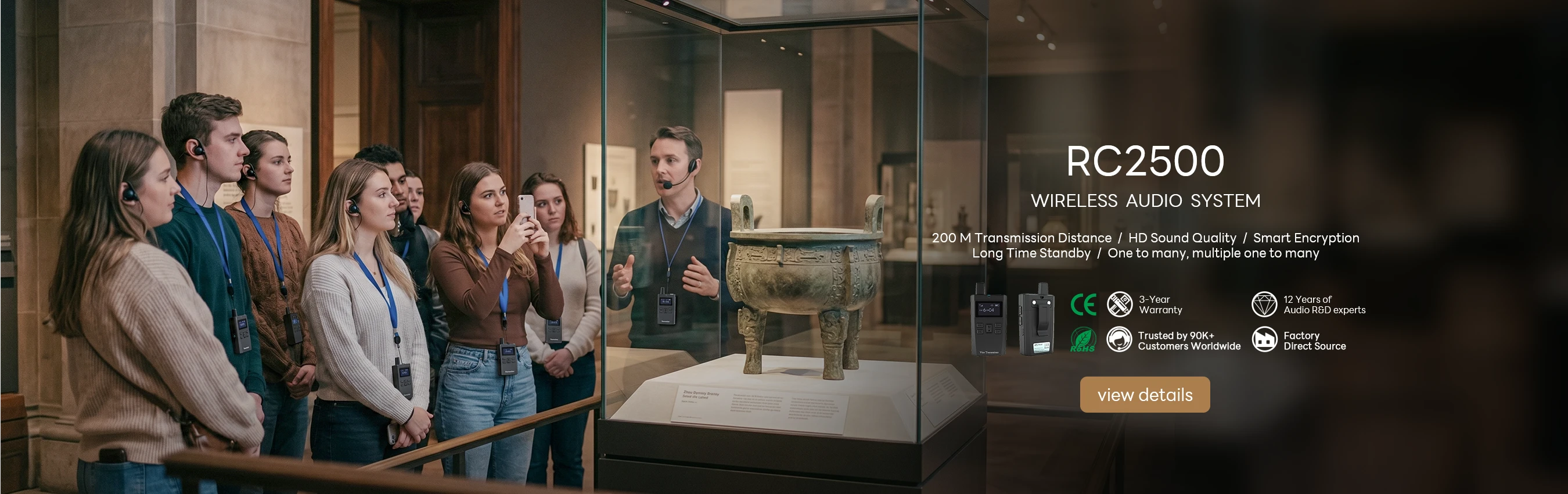
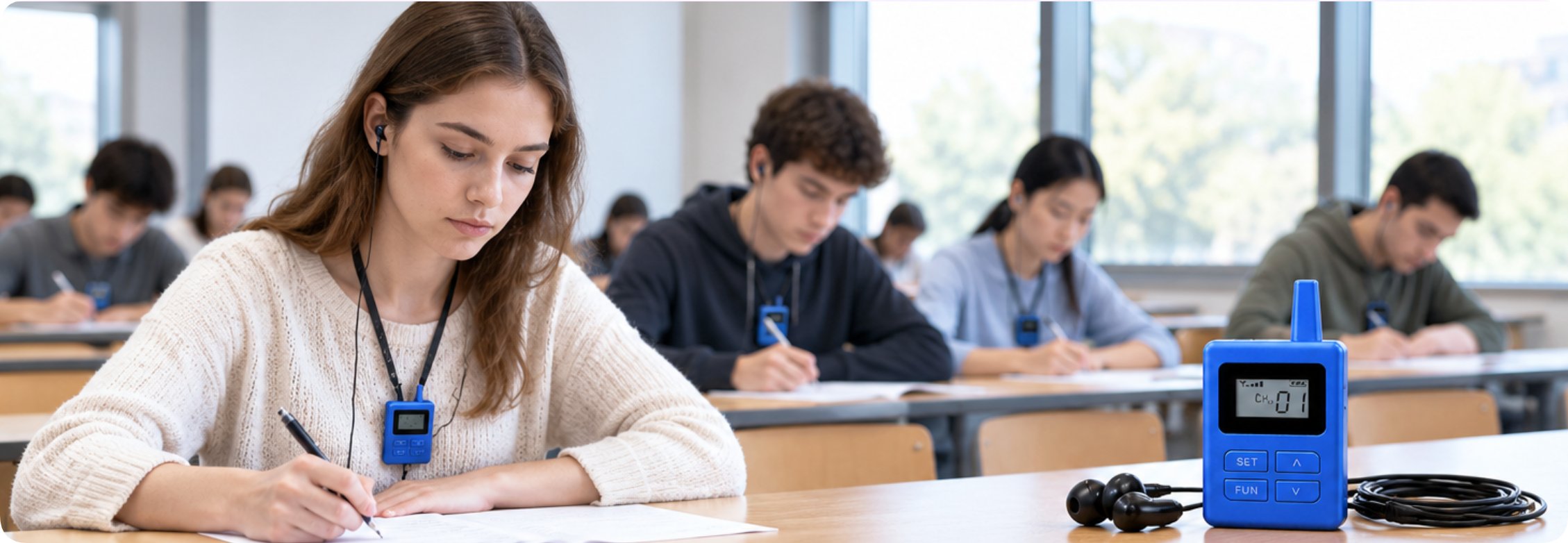
Where the venue opens into broad viewing areas, the RC2408 takes over as the main tool for guided tours. Its long-range radio keeps audio clear across a wide platform, which lets a single tour guide address twenty or more visitors without raising the voice or repeating sentences. Visitors wear receiver units that can be handed out at the start of the route and collected at the end, keeping group management simple even when tour sizes fluctuate.

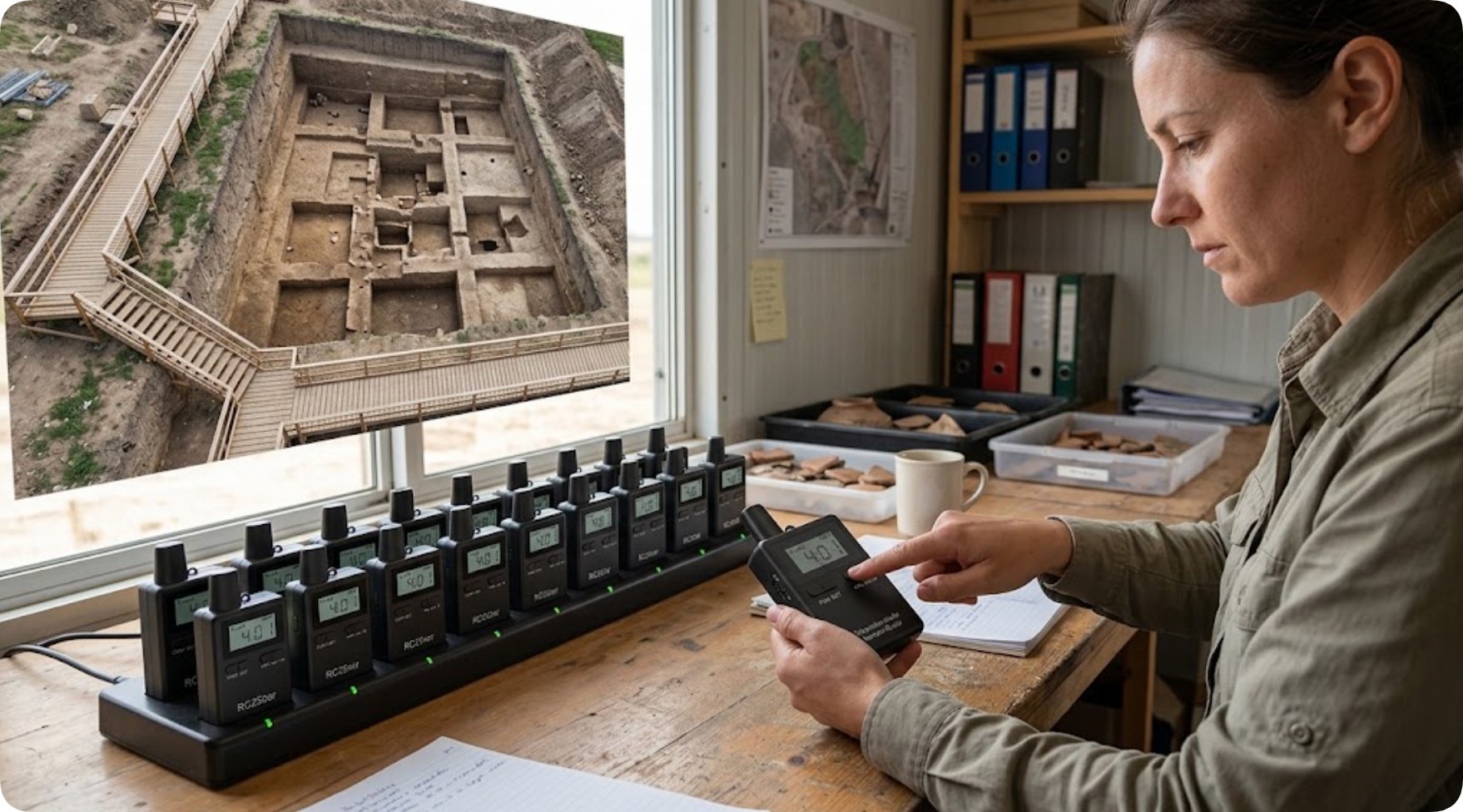
RC8860 and RC2408 Outdoor Large Venue Wireless Guide Installation Walkthrough(图2)

When deploying the RC2408, mount the transmitter close to the guide's natural speaking position and keep spare receivers charged inside a weather-safe case. Because visitors will scatter to read a map or take in the scenery, place the guide at a slightly elevated point whenever the terrain allows; even a meter of height improves coverage at the edges of the group. Teams running a shorter-range model today can study the RC2402 vs RC2408 comparison to judge whether the extra reach justifies an upgrade. Full specifications for the long-range unit are listed on the RC2408 Wireless Tour Guide System page.

💰 Step 4: Multi-Zone Deployment and Equipment Layout

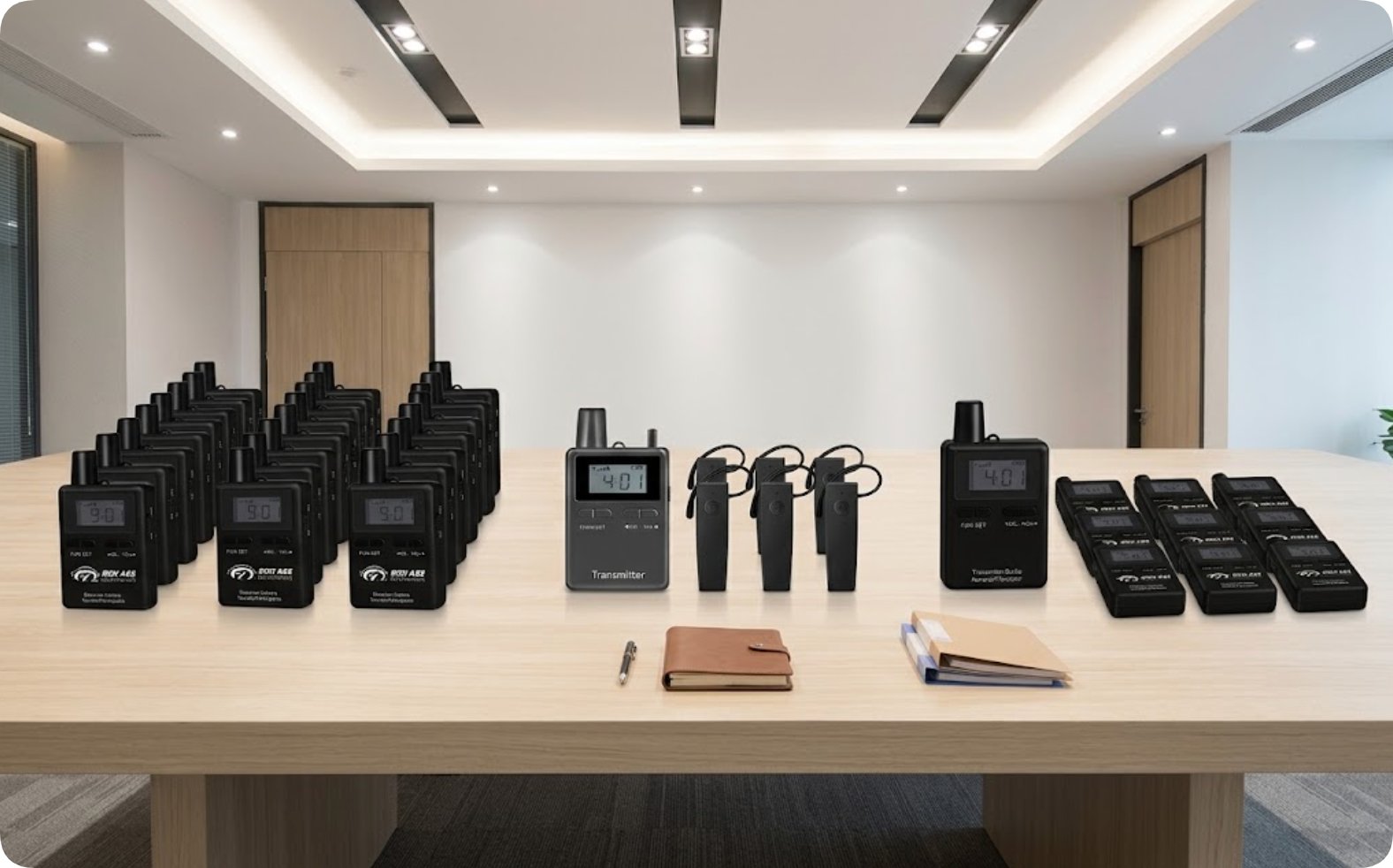
Large venues rarely need a single transmitter. They need a small fleet spread across the zones where tours actually run. A typical layout places one RC8860 in the training arena, one or two RC2408 units on the overlook, and a spare at the operations desk in case a unit needs swapping mid-shift. Store receivers near each zone entrance so staff can distribute and collect them without walking long distances, and label every receiver's channel before the shift starts so visitors never have to guess which group they belong to.

Keep a written layout plan at the operations desk showing which zone uses which channel. When several groups run at the same time, this single document prevents interference before it happens and makes troubleshooting fast when a visitor reports a quiet receiver. The plan also serves as a training reference for new staff, so the deployment never depends on one person's memory.

🔧 Step 5: Weather Protection and Ongoing Maintenance

Outdoor duty means rain, dust, and temperature swings. Keep transmitters in a sealed pouch or dry bag during breaks, and never leave receivers in direct sunlight for hours at a time. replace batteries on a fixed schedule rather than waiting for failures; a flat battery mid-tour is the fastest way to turn a satisfied visitor into a frustrated one. At the end of each day, wipe the units down and store them in a dry, ventilated cabinet.

Finally, run a short audio check before every tour. One minute of testing catches weak batteries, wrong channels, and loose earpieces before visitors notice them, and it saves a full hour of complaints later. This small habit is what keeps the professional impression intact day after day.

RC8860 and RC2408 Side-by-Side Comparison

ModelBest PositionWeightProduct Page
RC8860Equestrian training and high-motion outdoor coaching59 ghttps://www.richitek.com/wireless-horse-instruction-system-for-equestrian-training/832.html
RC2408Long-range wireless tour guide system70 ghttps://www.richitek.com/tour-guide-system/839.html

Consider the case of a facility manager at a large Outdoor Large Venue. The brief was demanding: handle groups of fifty or more visitors while keeping audio crystal-clear in an environment with no walls to help carry sound. After evaluating several options, the manager deployed RC8860 and RC2408 across the main zones and saw a measurable improvement in visitor satisfaction scores within the first month. The result did not come from the hardware alone. It came from careful coverage planning, zone-based channel settings, and a simple weather-protection routine. Any venue can deliver the same result by following the same sequence.
2026年08月18日 10:45
click: 342

RC8860 and RC2408 Outdoor Large Venue Wireless Guide Installation Walkthrough

time: 2026年08月18日 click:342

Outdoor venues present challenges that indoor halls rarely expose. Open ground absorbs and scatters radio signals, wind carries voices away before they reach the back row, and constant tour movement wears down cables, batteries, and mounts. For operators who manage guided visits in these spaces, the real question is whether a system holds up on a busy afternoon when visitors are spread across a wide platform. This article walks through a practical, stage-by-stage deployment of the RC8860 and RC2408, from the first coverage survey to the daily maintenance routine that keeps it running season after season.

💡 Why RC8860 and RC2408 Are Built for Outdoor Large Venue Work

Facilities that put the RC8860 and RC2408 to work in an Outdoor Large Venue setting typically report three kinds of results. The first is consistent, high-quality audio that removes the most common visitor complaint: missing pieces of the guide's narration. The second is simpler day-to-day operations, because staff spend their time guiding visitors instead of wrestling with unreliable equipment. The third is a professional impression. A tour that flows without interruptions and dead zones reflects well on the whole organization.

The operational problems in this environment fall into recognizable categories: equipment that cannot handle demanding conditions, batteries that die at the worst possible moment, and signal dead zones that disconnect visitors from the narration. No amount of hardware quality will save a deployment that ignores these realities. The RC8860 transmitter weighs only 59 grams and clips directly to a coach's clothing, while the RC2408 weighs 70 grams and is engineered for long-range coverage across open ground. Both are light enough for a full shift and rugged enough for daily outdoor use.

Before placing an order, it is worth studying how a wireless guide system for Outdoor Large Venue is normally structured. Most sites are divided into functional zones, each with its own audio requirements and radio environment. Each zone deserves its own channel plan rather than a single frequency applied across the whole site. This zone-based thinking is the foundation of every step that follows.

Step 1: Coverage Planning and Channel Settings

Begin the installation with a simple map of the venue. Mark every area where groups gather, whether that is the main plaza, the training arena, the overlook, or the walkways between exhibits. For each zone, estimate two numbers: how many visitors will listen at the same time, and how far the guide stands from the farthest listener. Outdoor spaces behave very differently from enclosed halls. Trees, terrain, and even crowds absorb and deflect radio energy in ways that are hard to predict on paper, so walk the range on foot before committing to a layout, carrying a receiver to the far corners and noting where the audio begins to break up.

Once the usable range of each zone is clear, assign channels zone by zone to prevent interference. Neighboring groups should never share a frequency, and reserved channels stop cross-talk between a coach working with riders and a tour guide addressing a nearby crowd. The RC2408 makes this planning easier, because a single unit can cover a wide viewing platform even when visitors spread themselves across several rows of seating or standing space. That reach reduces the number of channels and transmitters a large guided group needs.

Step 2: Installing RC8860 for Coaching and Training Areas

For equestrian training and high-motion outdoor coaching, the RC8860 is the anchor unit of the deployment. Its 59-gram body clips onto the coach's waistband, leaving both hands free to demonstrate jumps, signal turns, or adjust equipment mid-session. Riders wear lightweight receivers with earpieces, and the coach speaks in a normal voice while the signal travels directly to every rider in the group. In practice, a group of five to six riders stays in sync even as they move across the arena, because nobody has to strain to hear or stop to ask for a repeat.

RC8860 and RC2408 Outdoor Large Venue Wireless Guide Installation Walkthrough(图1)

Position the coach at the center of the training line wherever possible, since a central transmitting position gives every rider roughly equal signal strength. On very wide arenas, mark the coaching line clearly and keep the transmitter mounted above the waist so the body never shields the antenna; clipping at chest height rather than the belt line measurably improves the far end of the line. For a closer look at how this unit fits into a teaching workflow, read the RC8860 Tour Guide Transmitter For Teaching page, and check the RC085 vs RC8860 comparison before upgrading older inventory.

💰 Step 3: Deploying RC2408 for Long-Range Guided Tours

Where the venue opens into broad viewing areas, the RC2408 takes over as the main tool for guided tours. Its long-range radio keeps audio clear across a wide platform, which lets a single tour guide address twenty or more visitors without raising the voice or repeating sentences. Visitors wear receiver units that can be handed out at the start of the route and collected at the end, keeping group management simple even when tour sizes fluctuate.

RC8860 and RC2408 Outdoor Large Venue Wireless Guide Installation Walkthrough(图2)

When deploying the RC2408, mount the transmitter close to the guide's natural speaking position and keep spare receivers charged inside a weather-safe case. Because visitors will scatter to read a map or take in the scenery, place the guide at a slightly elevated point whenever the terrain allows; even a meter of height improves coverage at the edges of the group. Teams running a shorter-range model today can study the RC2402 vs RC2408 comparison to judge whether the extra reach justifies an upgrade. Full specifications for the long-range unit are listed on the RC2408 Wireless Tour Guide System page.

💰 Step 4: Multi-Zone Deployment and Equipment Layout

Large venues rarely need a single transmitter. They need a small fleet spread across the zones where tours actually run. A typical layout places one RC8860 in the training arena, one or two RC2408 units on the overlook, and a spare at the operations desk in case a unit needs swapping mid-shift. Store receivers near each zone entrance so staff can distribute and collect them without walking long distances, and label every receiver's channel before the shift starts so visitors never have to guess which group they belong to.

Keep a written layout plan at the operations desk showing which zone uses which channel. When several groups run at the same time, this single document prevents interference before it happens and makes troubleshooting fast when a visitor reports a quiet receiver. The plan also serves as a training reference for new staff, so the deployment never depends on one person's memory.

🔧 Step 5: Weather Protection and Ongoing Maintenance

Outdoor duty means rain, dust, and temperature swings. Keep transmitters in a sealed pouch or dry bag during breaks, and never leave receivers in direct sunlight for hours at a time. replace batteries on a fixed schedule rather than waiting for failures; a flat battery mid-tour is the fastest way to turn a satisfied visitor into a frustrated one. At the end of each day, wipe the units down and store them in a dry, ventilated cabinet.

Finally, run a short audio check before every tour. One minute of testing catches weak batteries, wrong channels, and loose earpieces before visitors notice them, and it saves a full hour of complaints later. This small habit is what keeps the professional impression intact day after day.

RC8860 and RC2408 Side-by-Side Comparison

ModelBest PositionWeightProduct Page
RC8860Equestrian training and high-motion outdoor coaching59 ghttps://www.richitek.com/wireless-horse-instruction-system-for-equestrian-training/832.html
RC2408Long-range wireless tour guide system70 ghttps://www.richitek.com/tour-guide-system/839.html

Consider the case of a facility manager at a large Outdoor Large Venue. The brief was demanding: handle groups of fifty or more visitors while keeping audio crystal-clear in an environment with no walls to help carry sound. After evaluating several options, the manager deployed RC8860 and RC2408 across the main zones and saw a measurable improvement in visitor satisfaction scores within the first month. The result did not come from the hardware alone. It came from careful coverage planning, zone-based channel settings, and a simple weather-protection routine. Any venue can deliver the same result by following the same sequence.
×

Contact us

email:
name:
subject:
content: