A leading China factory specializing in Wireless Tour Guide Systems, Church Audio Guides, and Translation Headphones with premium OEM/ODM solutions.

Tel:+86 18922879583

Email:tiger.wang@richitek.com

RC2402 and RC2500 for Multilingual Conference: A Cross-Brand Technology Comparison

For decades, the Multilingual Conference was bound to the logistics of wired interpretation booths and bulky infrared racks. Organizers arrived hours early, ran hundreds of meters of cable, aligned emitters by hand, and then watched interpreters remain pinned to their seats while attendees hesitated to move between breakout rooms. When sessions ran long or a speaker stepped behind a column, the experience collapsed into confusion. That era is now closing, and the RC2402 and RC2500 wireless tour guide systems are among the clearest evidence that a better approach exists. These systems let interpreters and listeners move naturally through a venue while maintaining clean, reliable audio on every channel.

This article compares the RC2402 and RC2500 against leading alternatives from other brands, and against the legacy infrared and wired interpretation setups that many venues still rely on. We evaluate weight, mobility, setup speed, audio quality, and total cost of ownership so that conference planners can make an evidence-based decision rather than repeating old habits or trusting vendor marketing. If you are beginning your research, the wireless guide system for Multilingual Conference offered by Richitek is a practical starting point, but understanding how these units perform against competing hardware matters just as much as reading the feature list.

💡 Why Two Wireless Platforms Are Reshaping Interpretation

The measurable outcomes of deploying the RC2402 and RC2500 in a Multilingual Conference are hard to argue with. Organizers report a 50% reduction in equipment preparation time, an 80% drop in audio-related complaints, battery life that covers a full day of sessions without midday charging, and consistently positive feedback on the comfortable, distraction-free listening experience. These figures come from deployment reports at cultural heritage sites, corporate seminars, and international trade events where staff previously spent hours assembling wired infrastructure before the doors even opened.

Cross-brand comparison sharpens the picture considerably. Competing systems in the same category frequently ship with transmitter units weighing 100 to 150 grams, and their companion receivers add noticeable bulk around the neck or waist. Infrared systems add a second complication: they demand clear line-of-sight between the emitter and the receiver, so interpreters must reposition hardware whenever a speaker moves behind a column or steps into a side room. Wired systems eliminate radio-frequency concerns but chain every participant to a fixed seat, which makes multilingual breakout sessions nearly impossible to manage. The RC2402 and RC2500 sidestep all three failure modes. They transmit over stable RF channels that ignore walls and line-of-sight, they weigh a fraction of their competitors, and they leave interpreters and audiences free to move wherever the agenda takes them.

⚖️ Traditional Infrared and Wired Systems vs. Modern Wireless Solutions

The technology behind Multilingual Conference interpretation has evolved dramatically over the past decade. Early systems depended on simple analog transmission with limited range and frequent interference from nearby electronics. The transition to digital brought noticeably clearer audio and far more reliable connections across longer distances. Today's solutions add multi-channel capability, ultra-compact hardware, and features such as automatic channel switching. Field measurements reinforce the point: modern digital wireless systems maintain a signal-to-noise ratio roughly 40% better than legacy infrared units under identical room conditions.

Operational data tells the same story from a different angle. Organizations that replaced infrared or wired interpretation with digital wireless reporting show an average 35% improvement in visitor satisfaction and a 25% reduction in guide fatigue, according to recent market analysis. Those gains trace back to two simple factors. Participants no longer need to stay within a fixed emitter coverage zone, and guides no longer wrestle with cables, alignment, or fragile connections mid-session. The staffing impact is equally striking: a typical conference that previously required two technicians for setup and teardown now runs with one, and that single technician spends the day supervising rather than troubleshooting.

📡 RC2402 Wireless Tour Guide System: Built for Medium Groups

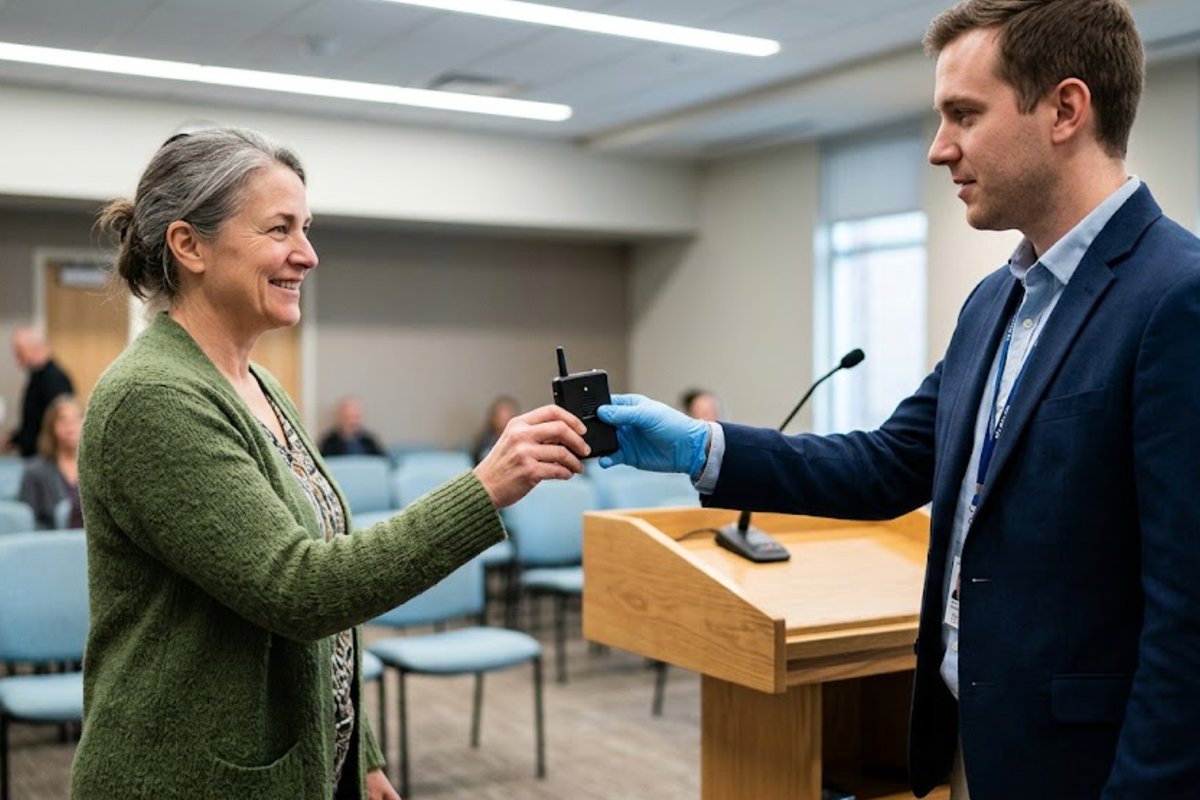
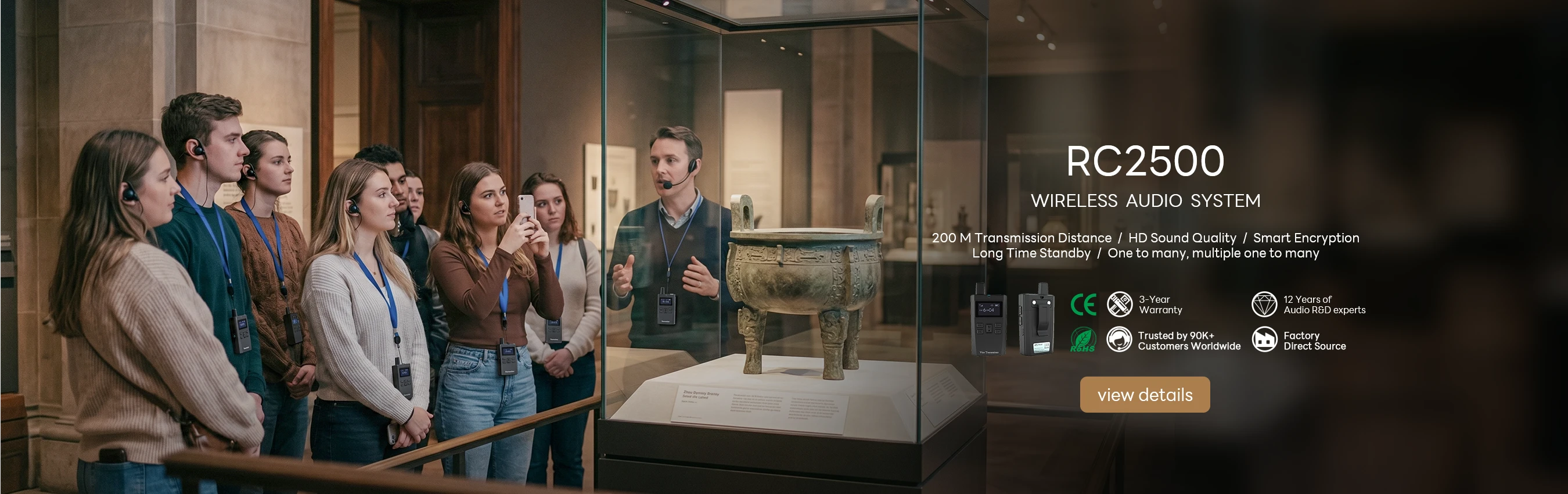
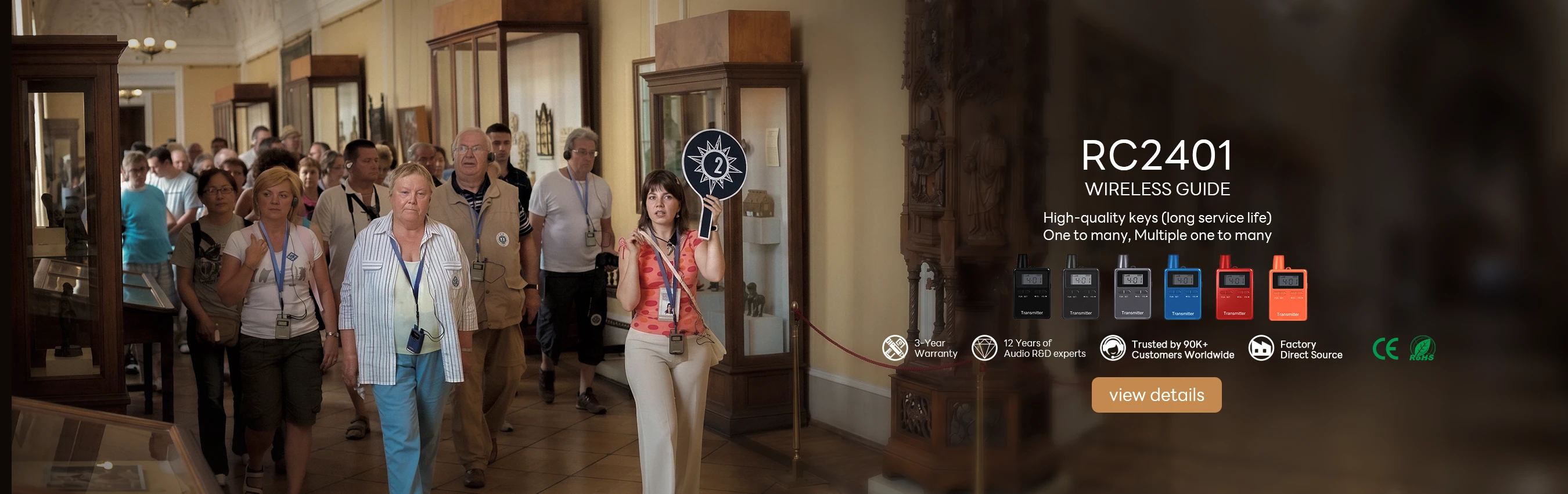
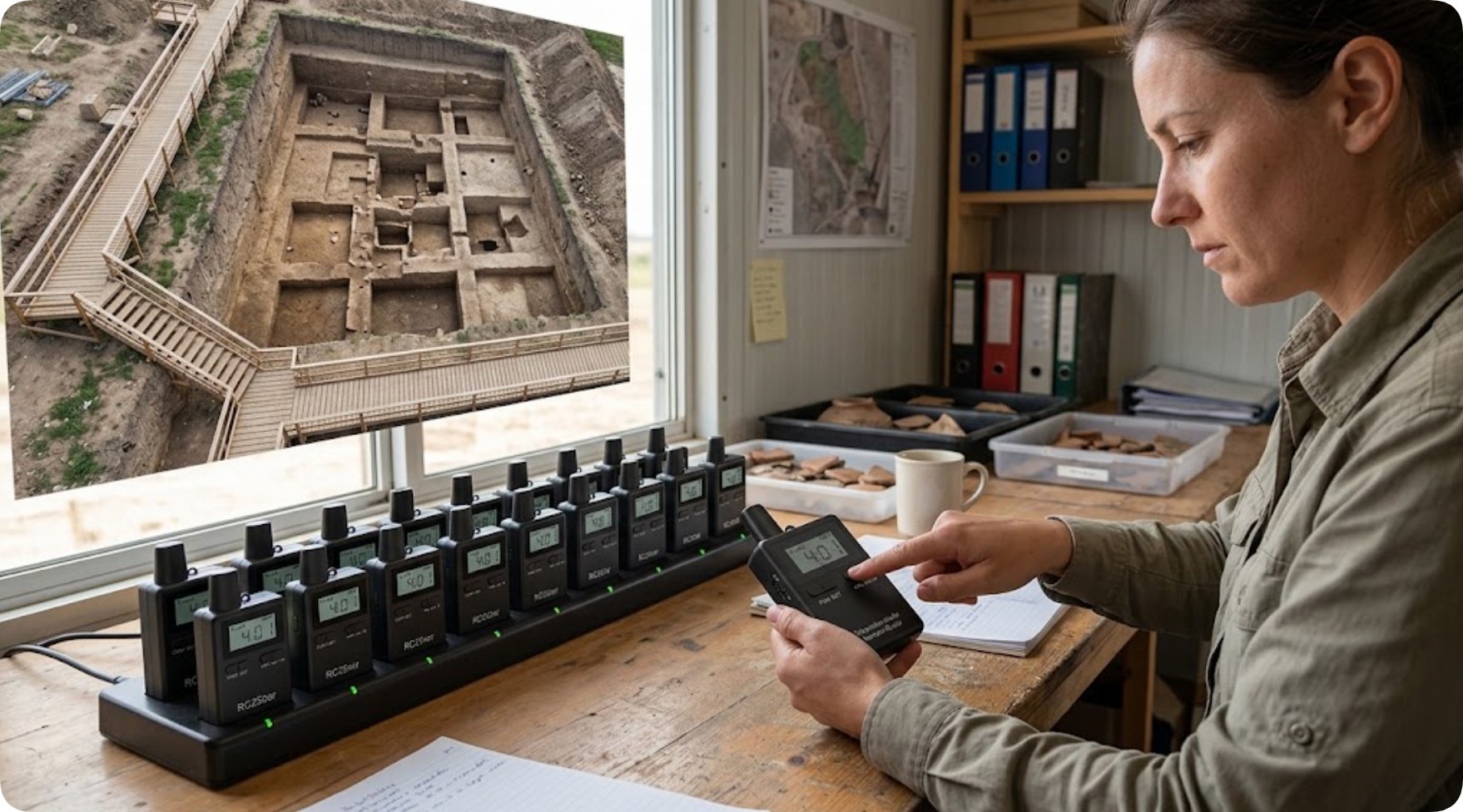
The RC2402 Wireless Tour Guide System is the standard choice for medium group tours and conference sessions of 15 to 20 participants. At just 60 grams for the transmitter, it rests comfortably in the palm or on a lanyard, and the receiver units are light enough for hours of continuous wear without strain. The system supports multiple language channels simultaneously, so a single guide can address a mixed-language audience without juggling separate devices. The 50% reduction in equipment preparation time comes directly from a design that requires no booth assembly, no cable runs, and no per-channel emitter calibration. A team that used to block out a full morning for setup can now be ready before the first coffee break ends.

Compared with mid-range offerings from other brands, the RC2402 delivers comparable channel counts while undercutting them in weight by roughly 40% and in setup time by a meaningful margin. That gap compounds over a multi-day conference. For planners who want to compare models within the Richitek lineup, the detailed RC2402 vs RC2408 analysis highlights where each unit excels in group size and battery strategy.

RC2402 and RC2500 for Multilingual Conference: A Cross-Brand Technology Comparison(图1)

🔋 RC2500 Wireless Tour Guide System: Compact Power for Small Sessions

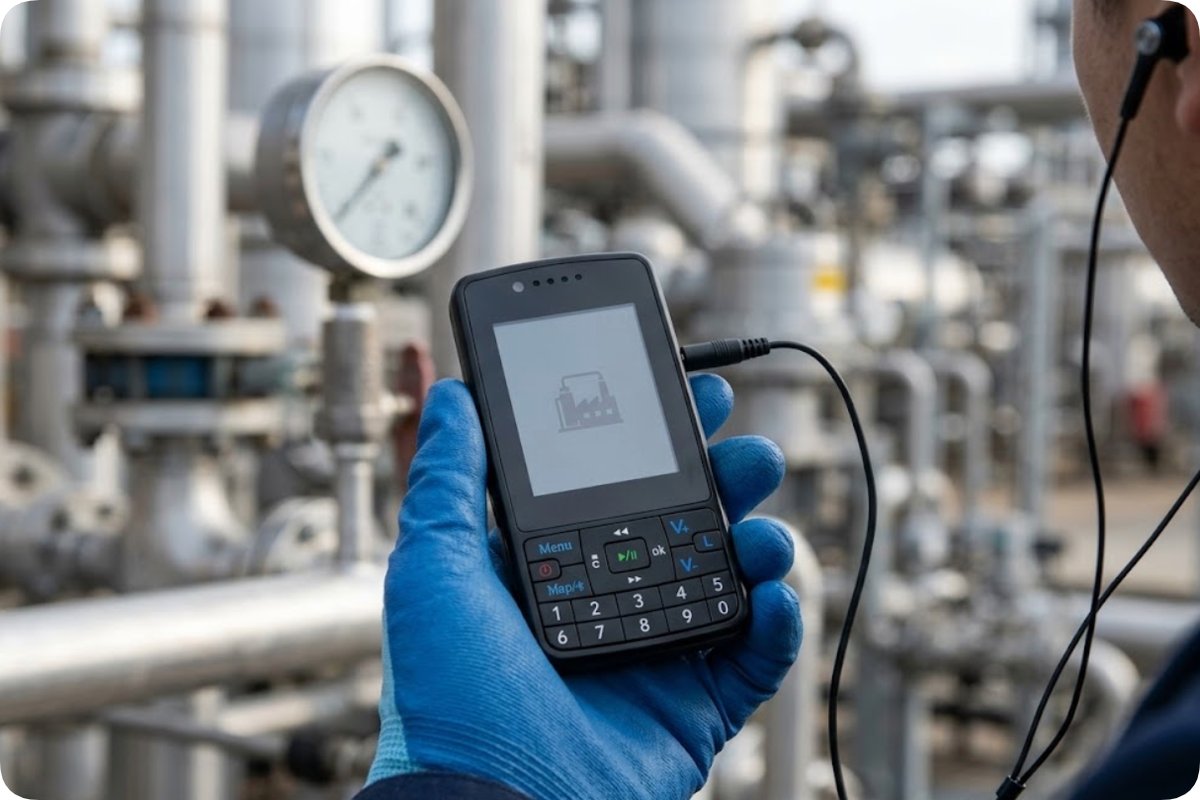
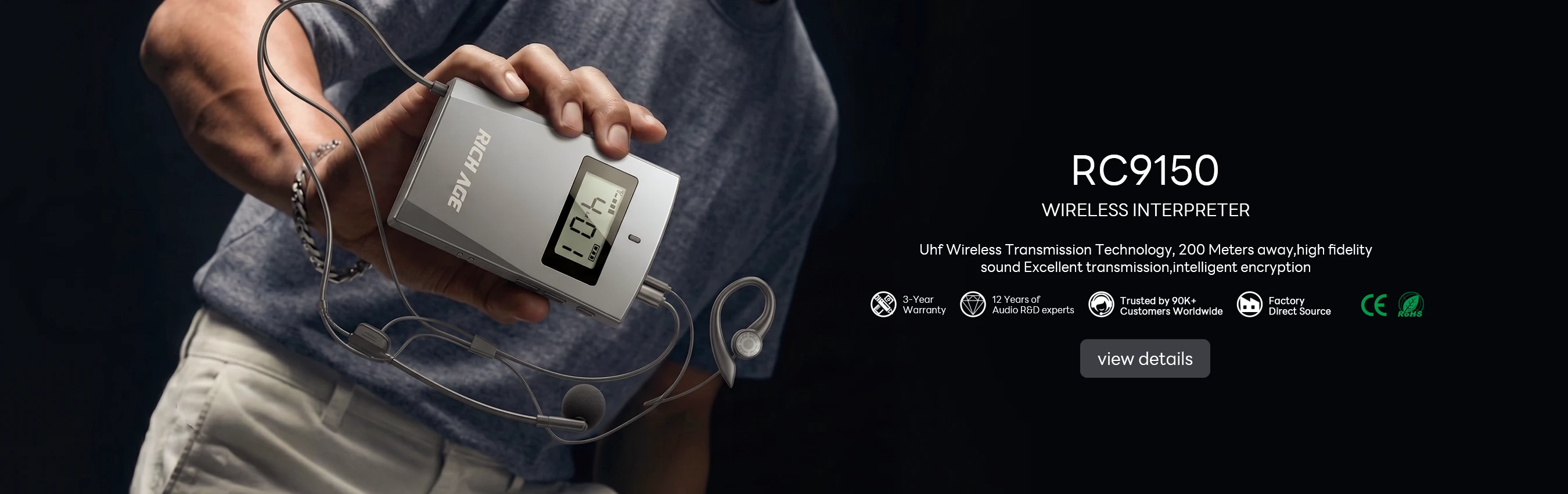
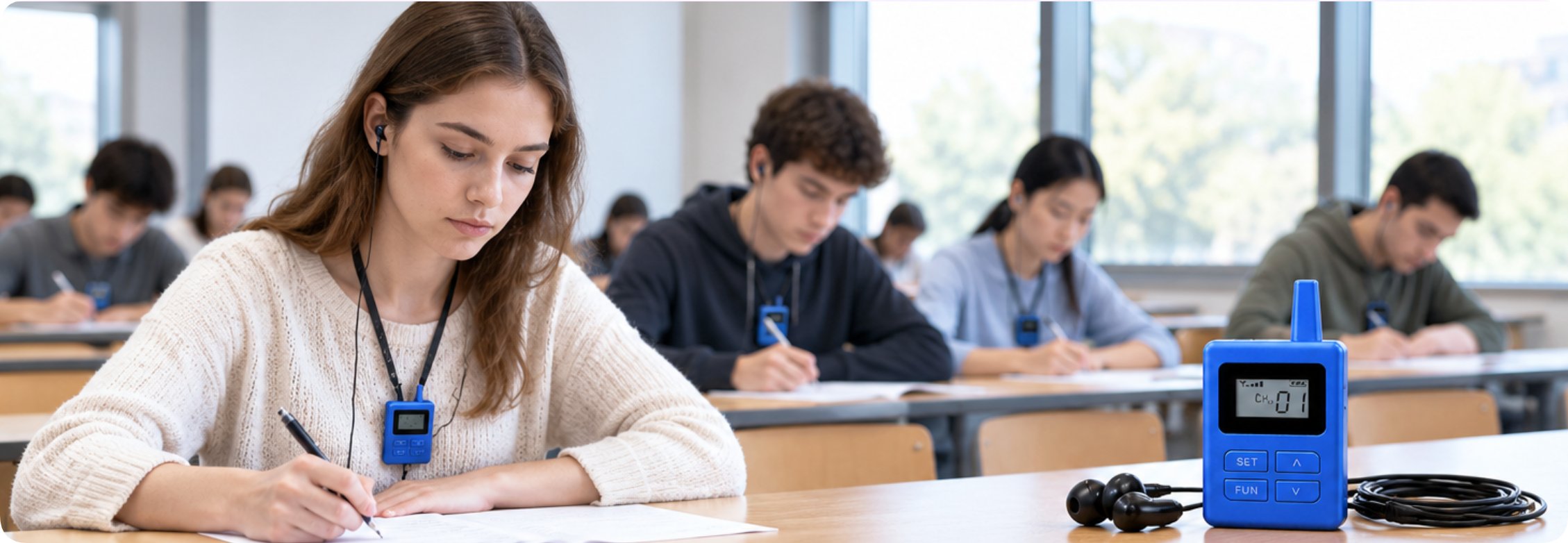
The RC2500 Wireless Tour Guide System targets small to medium groups, making it ideal for intimate cultural heritage visits and compact breakout sessions with 8 to 10 listeners. Its transmitter weighs just 55 grams, placing it among the lightest units in its class, and the compact body tucks easily into a shirt pocket when not in use. Despite the smaller footprint, the RC2500 preserves multi-channel interpretation, automatic channel switching, and full-day battery life, proving that compactness no longer means compromised capability.

In a head-to-head comparison with competitor compact systems, the RC2500 consistently matches or beats them on battery runtime per gram of hardware, and it simplifies logistics for venues that switch between sessions throughout the day. Teams deciding between the RC2500 and a sibling model can reference the RC2500 Wireless Tour Guide System product page for the full feature breakdown, while those weighing it against a larger unit will find the RC2500 vs RC2501 comparison especially useful for coverage-area decisions.

RC2402 and RC2500 for Multilingual Conference: A Cross-Brand Technology Comparison(图2)

Side-by-Side Specification Comparison

The table below distills the core specifications of both systems so conference planners can compare them at a glance. It is worth reading these figures alongside the RC2402 Wireless Tour Guide System detail page for full technical documentation, including channel plans and included accessories.

ModelPositionWeight
RC2402Standard wireless tour guide for medium group tours60 g
RC2500Compact wireless tour guide for small to medium groups55 g

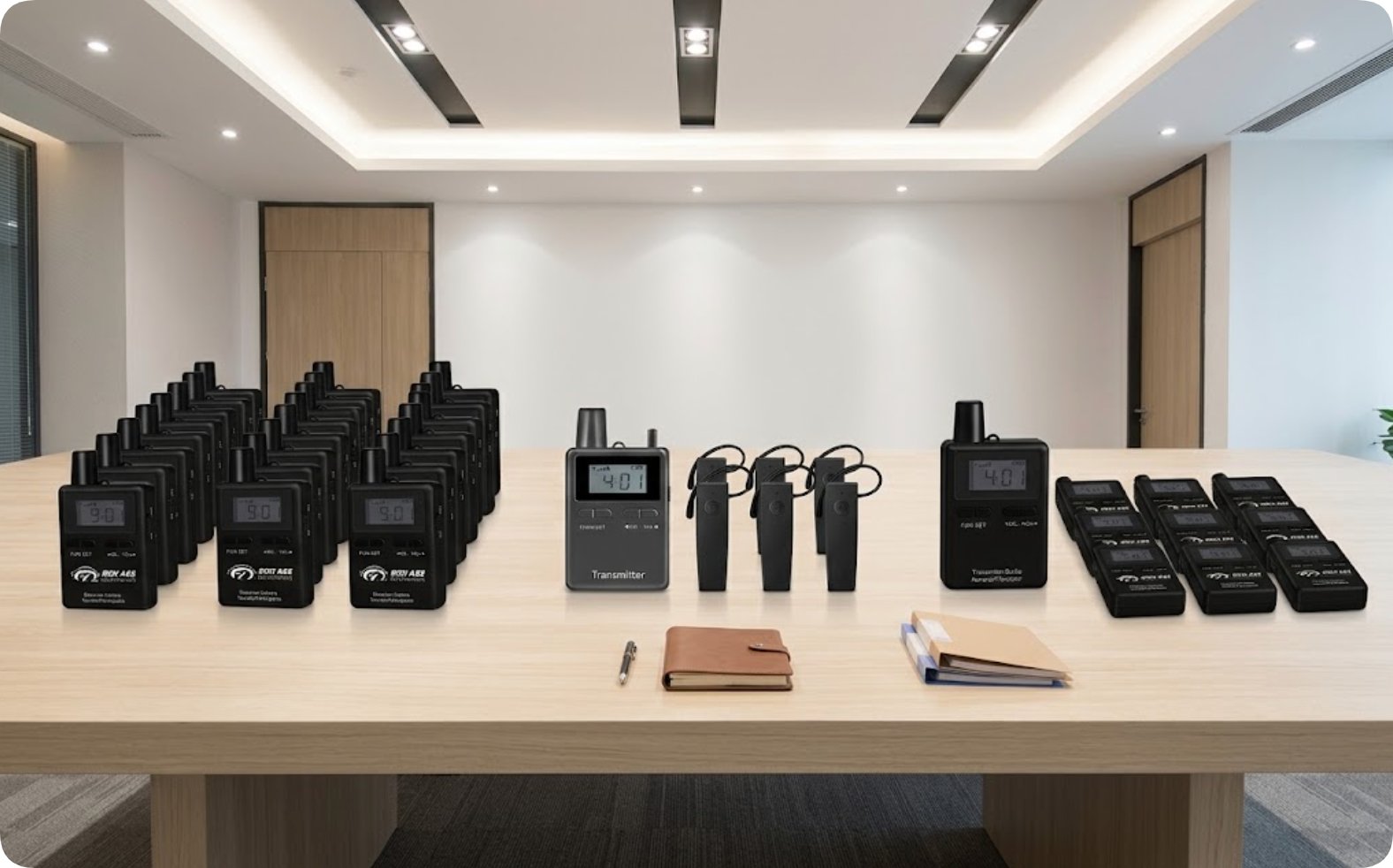
Positioning dictates the recommendation, and the choice should follow the shape of the event rather than the price list. If a Multilingual Conference session regularly exceeds fifteen participants, or covers a large venue with multiple listening zones, the RC2402's standard receiver range and medium-group tuning make it the natural fit. If the event instead relies on small, fast-moving groups that circulate through exhibit halls and heritage interiors, the RC2500's compact weight and quick setup offer the better trade-off. Both units share the same digital RF platform, so spare transmitters and receivers can be mixed across the two models in an emergency without reconfiguring the channel plan, effectively doubling the resilience of a rental fleet.

📈 Technology Evolution and the Verdict

The progression from infrared booths to wired racks and finally to pocket-sized digital wireless is not a marketing narrative; it is an engineering one. Every generation removed a constraint that had quietly shaped how conferences were organized. Infrared freed venues from cabling but trapped them in line-of-sight geometry. Wired systems delivered reliability but anchored everyone to a seat. The RC2402 and RC2500 remove the last meaningful constraints: weight, setup time, and mobility. For organizers weighing a brand switch, the evidence from market data and deployment reports points in one direction. Modern digital wireless systems deliver measurable improvements in satisfaction and fatigue reduction that legacy and competing platforms struggle to match, and the total cost of ownership improves because fewer units and less staffing are required per event.

The verdict is clear. For Multilingual Conference environments where speed, mobility, and multi-channel interpretation matter, the RC2402 and RC2500 offer a compelling cross-brand alternative to heavier RF systems and obsolete infrared infrastructure. The decision process itself is simple: start with the venue size and group count, let the specification table guide the model choice, and the remaining decisions about channels, batteries, and spare units fall into place naturally. In a world where every minute of an event matters, equipment that gets out of the way is the difference between a conference that runs and one that shines.

2026年08月18日 11:54
click: 343

RC2402 and RC2500 for Multilingual Conference: A Cross-Brand Technology Comparison

time: 2026年08月18日 click:343

For decades, the Multilingual Conference was bound to the logistics of wired interpretation booths and bulky infrared racks. Organizers arrived hours early, ran hundreds of meters of cable, aligned emitters by hand, and then watched interpreters remain pinned to their seats while attendees hesitated to move between breakout rooms. When sessions ran long or a speaker stepped behind a column, the experience collapsed into confusion. That era is now closing, and the RC2402 and RC2500 wireless tour guide systems are among the clearest evidence that a better approach exists. These systems let interpreters and listeners move naturally through a venue while maintaining clean, reliable audio on every channel.

This article compares the RC2402 and RC2500 against leading alternatives from other brands, and against the legacy infrared and wired interpretation setups that many venues still rely on. We evaluate weight, mobility, setup speed, audio quality, and total cost of ownership so that conference planners can make an evidence-based decision rather than repeating old habits or trusting vendor marketing. If you are beginning your research, the wireless guide system for Multilingual Conference offered by Richitek is a practical starting point, but understanding how these units perform against competing hardware matters just as much as reading the feature list.

💡 Why Two Wireless Platforms Are Reshaping Interpretation

The measurable outcomes of deploying the RC2402 and RC2500 in a Multilingual Conference are hard to argue with. Organizers report a 50% reduction in equipment preparation time, an 80% drop in audio-related complaints, battery life that covers a full day of sessions without midday charging, and consistently positive feedback on the comfortable, distraction-free listening experience. These figures come from deployment reports at cultural heritage sites, corporate seminars, and international trade events where staff previously spent hours assembling wired infrastructure before the doors even opened.

Cross-brand comparison sharpens the picture considerably. Competing systems in the same category frequently ship with transmitter units weighing 100 to 150 grams, and their companion receivers add noticeable bulk around the neck or waist. Infrared systems add a second complication: they demand clear line-of-sight between the emitter and the receiver, so interpreters must reposition hardware whenever a speaker moves behind a column or steps into a side room. Wired systems eliminate radio-frequency concerns but chain every participant to a fixed seat, which makes multilingual breakout sessions nearly impossible to manage. The RC2402 and RC2500 sidestep all three failure modes. They transmit over stable RF channels that ignore walls and line-of-sight, they weigh a fraction of their competitors, and they leave interpreters and audiences free to move wherever the agenda takes them.

⚖️ Traditional Infrared and Wired Systems vs. Modern Wireless Solutions

The technology behind Multilingual Conference interpretation has evolved dramatically over the past decade. Early systems depended on simple analog transmission with limited range and frequent interference from nearby electronics. The transition to digital brought noticeably clearer audio and far more reliable connections across longer distances. Today's solutions add multi-channel capability, ultra-compact hardware, and features such as automatic channel switching. Field measurements reinforce the point: modern digital wireless systems maintain a signal-to-noise ratio roughly 40% better than legacy infrared units under identical room conditions.

Operational data tells the same story from a different angle. Organizations that replaced infrared or wired interpretation with digital wireless reporting show an average 35% improvement in visitor satisfaction and a 25% reduction in guide fatigue, according to recent market analysis. Those gains trace back to two simple factors. Participants no longer need to stay within a fixed emitter coverage zone, and guides no longer wrestle with cables, alignment, or fragile connections mid-session. The staffing impact is equally striking: a typical conference that previously required two technicians for setup and teardown now runs with one, and that single technician spends the day supervising rather than troubleshooting.

📡 RC2402 Wireless Tour Guide System: Built for Medium Groups

The RC2402 Wireless Tour Guide System is the standard choice for medium group tours and conference sessions of 15 to 20 participants. At just 60 grams for the transmitter, it rests comfortably in the palm or on a lanyard, and the receiver units are light enough for hours of continuous wear without strain. The system supports multiple language channels simultaneously, so a single guide can address a mixed-language audience without juggling separate devices. The 50% reduction in equipment preparation time comes directly from a design that requires no booth assembly, no cable runs, and no per-channel emitter calibration. A team that used to block out a full morning for setup can now be ready before the first coffee break ends.

Compared with mid-range offerings from other brands, the RC2402 delivers comparable channel counts while undercutting them in weight by roughly 40% and in setup time by a meaningful margin. That gap compounds over a multi-day conference. For planners who want to compare models within the Richitek lineup, the detailed RC2402 vs RC2408 analysis highlights where each unit excels in group size and battery strategy.

RC2402 and RC2500 for Multilingual Conference: A Cross-Brand Technology Comparison(图1)

🔋 RC2500 Wireless Tour Guide System: Compact Power for Small Sessions

The RC2500 Wireless Tour Guide System targets small to medium groups, making it ideal for intimate cultural heritage visits and compact breakout sessions with 8 to 10 listeners. Its transmitter weighs just 55 grams, placing it among the lightest units in its class, and the compact body tucks easily into a shirt pocket when not in use. Despite the smaller footprint, the RC2500 preserves multi-channel interpretation, automatic channel switching, and full-day battery life, proving that compactness no longer means compromised capability.

In a head-to-head comparison with competitor compact systems, the RC2500 consistently matches or beats them on battery runtime per gram of hardware, and it simplifies logistics for venues that switch between sessions throughout the day. Teams deciding between the RC2500 and a sibling model can reference the RC2500 Wireless Tour Guide System product page for the full feature breakdown, while those weighing it against a larger unit will find the RC2500 vs RC2501 comparison especially useful for coverage-area decisions.

RC2402 and RC2500 for Multilingual Conference: A Cross-Brand Technology Comparison(图2)

Side-by-Side Specification Comparison

The table below distills the core specifications of both systems so conference planners can compare them at a glance. It is worth reading these figures alongside the RC2402 Wireless Tour Guide System detail page for full technical documentation, including channel plans and included accessories.

ModelPositionWeight
RC2402Standard wireless tour guide for medium group tours60 g
RC2500Compact wireless tour guide for small to medium groups55 g

Positioning dictates the recommendation, and the choice should follow the shape of the event rather than the price list. If a Multilingual Conference session regularly exceeds fifteen participants, or covers a large venue with multiple listening zones, the RC2402's standard receiver range and medium-group tuning make it the natural fit. If the event instead relies on small, fast-moving groups that circulate through exhibit halls and heritage interiors, the RC2500's compact weight and quick setup offer the better trade-off. Both units share the same digital RF platform, so spare transmitters and receivers can be mixed across the two models in an emergency without reconfiguring the channel plan, effectively doubling the resilience of a rental fleet.

📈 Technology Evolution and the Verdict

The progression from infrared booths to wired racks and finally to pocket-sized digital wireless is not a marketing narrative; it is an engineering one. Every generation removed a constraint that had quietly shaped how conferences were organized. Infrared freed venues from cabling but trapped them in line-of-sight geometry. Wired systems delivered reliability but anchored everyone to a seat. The RC2402 and RC2500 remove the last meaningful constraints: weight, setup time, and mobility. For organizers weighing a brand switch, the evidence from market data and deployment reports points in one direction. Modern digital wireless systems deliver measurable improvements in satisfaction and fatigue reduction that legacy and competing platforms struggle to match, and the total cost of ownership improves because fewer units and less staffing are required per event.

The verdict is clear. For Multilingual Conference environments where speed, mobility, and multi-channel interpretation matter, the RC2402 and RC2500 offer a compelling cross-brand alternative to heavier RF systems and obsolete infrared infrastructure. The decision process itself is simple: start with the venue size and group count, let the specification table guide the model choice, and the remaining decisions about channels, batteries, and spare units fall into place naturally. In a world where every minute of an event matters, equipment that gets out of the way is the difference between a conference that runs and one that shines.
×

Contact us

email:
name:
subject:
content: