.webp)

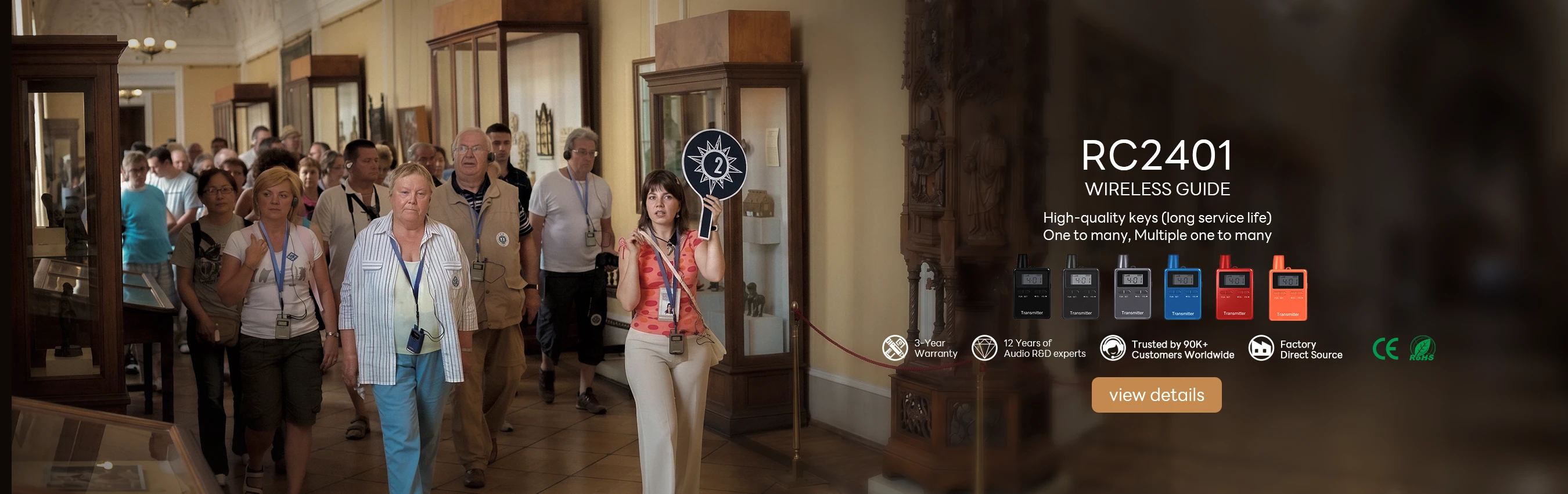
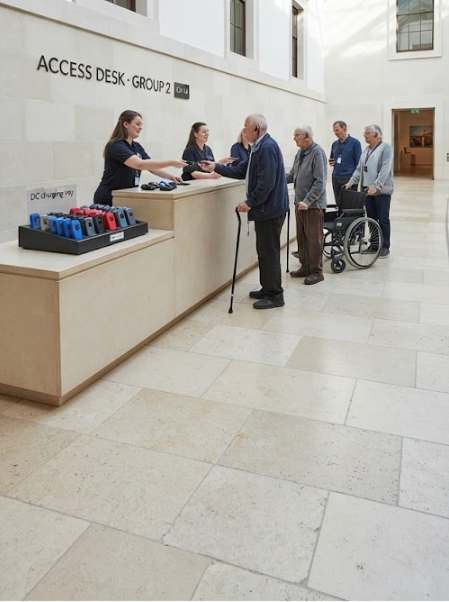
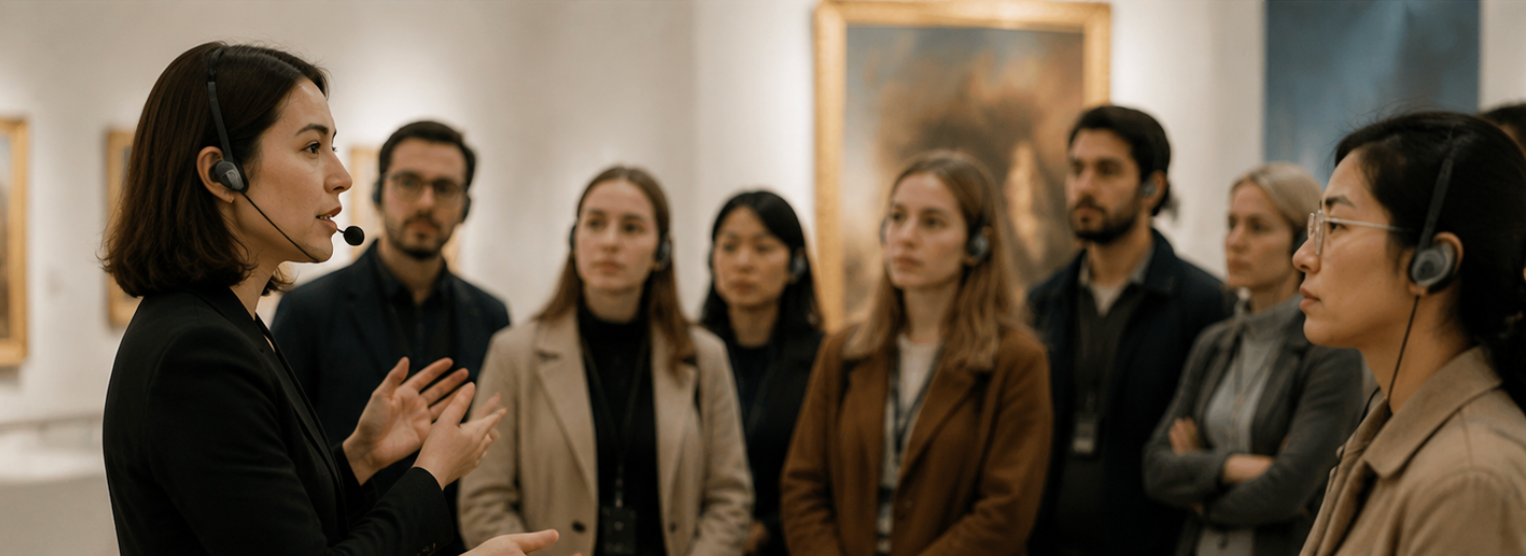
Silence falls over the gallery. A docent whispers about chiaroscuro, yet every word lands with perfect clarity. For over a decade, I have consulted with cultural institutions on audio infrastructure, and the right museum audio guide solution is a commitment to your visitors' experience and curatorial vision.
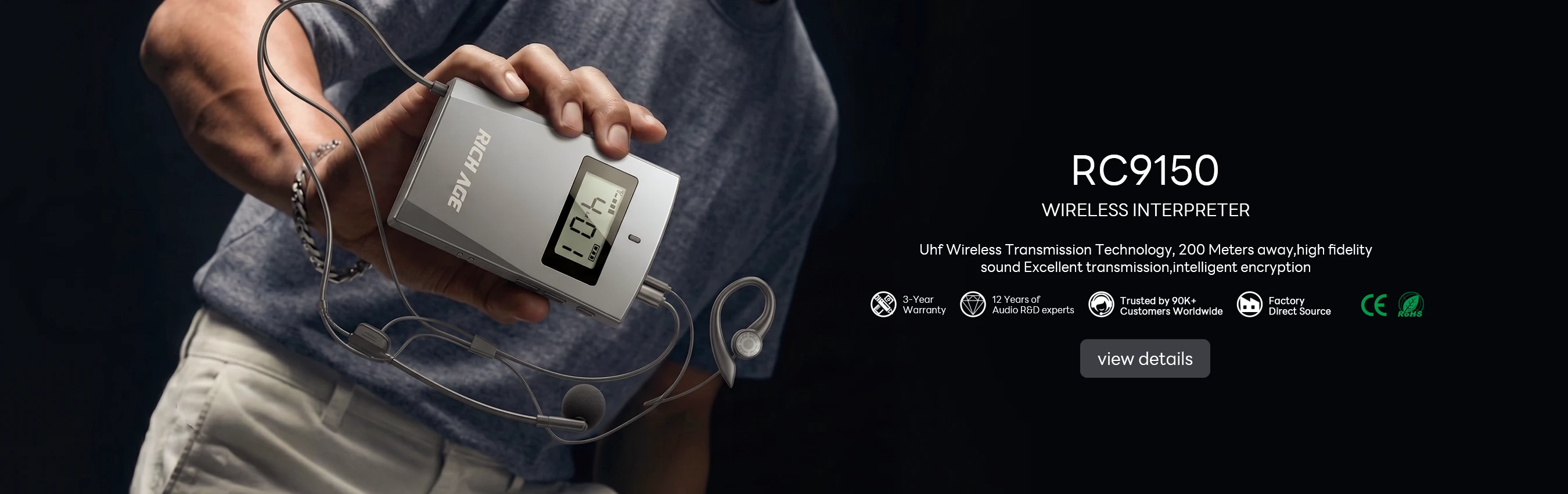
RC9150: The Flagship for Large-Scale Multilingual Galleries
For a major museum orchestrating simultaneous tours in five languages, the RC9150 operates on the 2.4 GHz license-free band (2403-2483 MHz), a strategic advantage over the Beyerdynamic Synexis, which often requires frequency coordination and licensed spectrum. With 100 selectable channels, you can coordinate dozens of groups without cross-interference. The 1–200 meter range covers expansive halls, while the 20mW transmission power ensures stable audio behind concrete columns. The receiver's 40-hour battery life supports back-to-back tours, and the 104g transmitter offers enhanced durability. Compared to the Synexis—undeniably quality German engineering—the RC9150 offers practical deployment without needing a dedicated RF engineer. If your priority is high channel capacity and rapid deployment, the RC9150 high-end audio guide system stands as the professional’s choice.
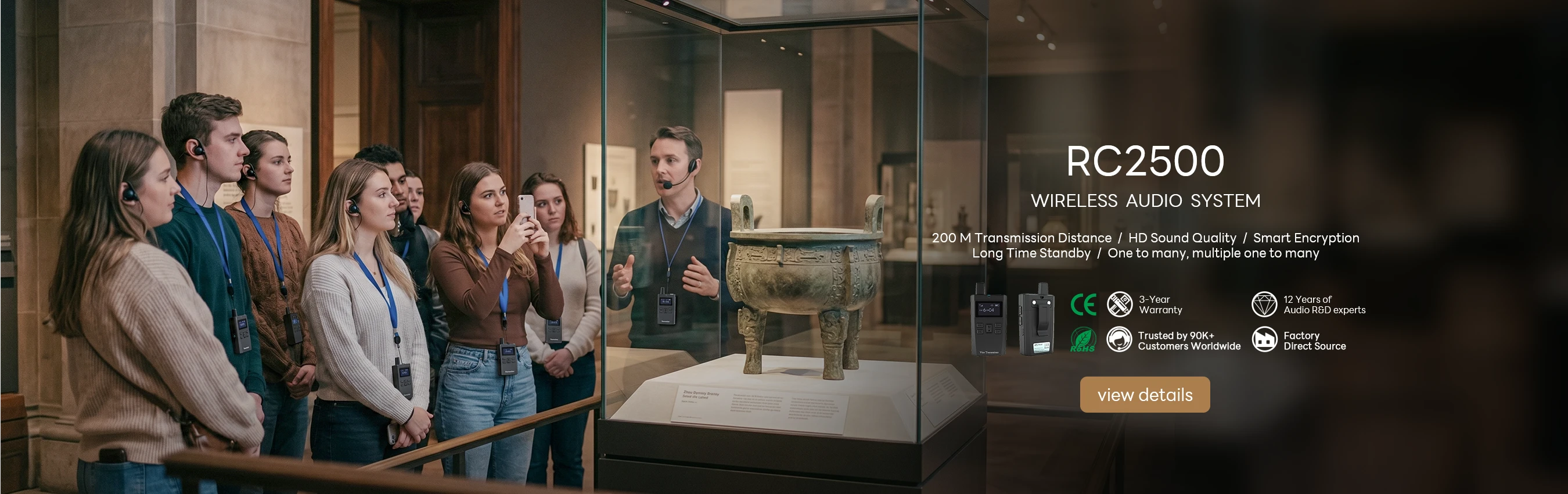
RC2501: The Endurance Champion for All-Day Guided Walks
The RC2501 is my recommendation for continuous, day-long interpretive programs. Its defining feature is the 25-hour transmitter battery life, outlasting the most tireless staff member. This contrasts directly with the Acoustiguide Opus+, a content-driven device storing over 500 hours of pre-recorded media—not designed for live, quiet, human-led interpretation. If your gallery's strength lies in authentic live docents, the RC2501, with its optional headset or lapel microphone (sensitivity ≈ -90dBm), delivers crystal-clear vocal reproduction the Opus+ cannot match live. Weighing just 61g, the transmitter is unnoticeable on a blazer, and the 40-hour receiver battery allows visitors to return devices the next day. The Opus+ is formidable for self-guided multimedia, but its per-unit cost and content workflow are lengthy. For a live, immersive tour, the RC2501 wireless tour guide system is more agile and cost-effective.

RC2402: The High-Value Standard for Small Galleries and Traveling Exhibits
For a small private gallery or traveling exhibition, the RC2402 is the pragmatic workhorse. This standard 2.4G model offers 50 channels, a 10-hour transmitter battery, and a 20-hour receiver battery. The transmitter weighs only 59g and delivers the same 1–200m range as its larger siblings. The key advantage is cost efficiency—European competitors like Beyerdynamic Synexis and Acoustiguide Opus+ carry premium price tags and long lead times for spare parts. The RC2402 is designed for batch deployment; you can equip twenty guides for the price of four or five Opus+ units. For a traveling exhibit needing quick setup, the RC2402's simplicity is its greatest strength. It is the kind of wireless tour guide system you forget is there—until the tour ends and no one noticed the time pass.
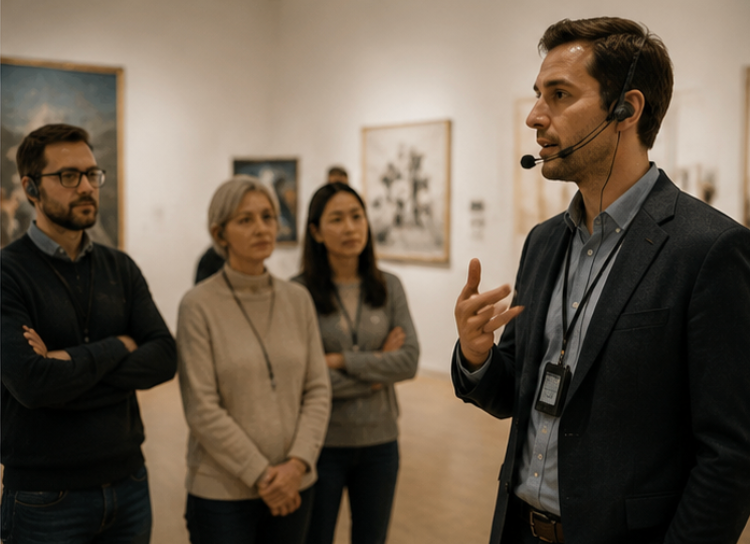
Head-to-Head Comparison: Richitek RC Series vs. European Competitors
| Feature | Richitek RC9150 | Richitek RC2501 | Richitek RC2402 | Beyerdynamic Synexis | Acoustiguide Opus+ |
|---|---|---|---|---|---|
| Primary Type | Live Wireless Tour Guide | Live Wireless Tour Guide | Live Wireless Tour Guide | Live Wireless Tour Guide | Multimedia Audio Player |
| Frequency Band | 2.4 GHz (License-Free) | 2.4 GHz (License-Free) | 2.4 GHz (License-Free) | Licensed RF (Requires Coordination) | N/A (Local Storage) |
| Channels | 100 | 50 | 50 | Varies (System Dependent) | N/A |
| Range | 1-200m | 1-200m | 1-200m | Up to 100m (Typical) | N/A |
| Transmitter Battery | 12 hours | 25 hours | 10 hours | ~10 hours | N/A |
| Receiver Battery | 40 hours | 40 hours | 20 hours | ~20 hours | ~8-10 hours |
| Transmitter Weight | 104g | 61g | 59g | ~100g (Approx.) | ~150g (Approx.) |
| Content Creation | None Required (Live) | None Required (Live) | None Required (Live) | None Required (Live) | High (Audio/Video Production) |
| Deployment Cost | High Value (OEM/ODM Friendly) | High Value (OEM/ODM Friendly) | Lowest Cost per Unit | High (European Import Pricing) | Very High (Hardware + Content) |
Selecting the Right System: A Gallery Scenario Guide
| Gallery Scenario | Visitor Languages | Tour Duration | Recommended Model | Why This Choice? |
|---|---|---|---|---|
| Large Museum (Multiple Wings) | 5+ Simultaneous Languages | 2-3 Hours per Tour | RC9150 | 100 channels prevent cross-talk between groups; 40h receiver battery handles high turnover. |
| Modern Art Gallery (Full-Day Tours) | 2-3 Languages | 6-8 Hours Continuous | RC2501 | 25h transmitter battery outlasts the longest shift; 61g weight is ideal for all-day wear. |
| Small Gallery / Traveling Exhibit | 1-2 Languages | 1-2 Hours per Group | RC2402 | Lowest unit cost enables bulk purchasing; 59g weight and simple operation for volunteers. |
| Self-Guided Multimedia Tour | Pre-recorded Content | Variable | Acoustiguide Opus+ | If you require video sync and 500h storage, this is a viable, albeit expensive, option. |
Making the Final Decision: Budget, Scale, and Content Strategy
Look beyond the initial hardware quote. For the Synexis, factor in frequency coordinator costs; for the Opus+, budget for a production studio. Our RC series is straightforward: no licensing fees, no content bottlenecks, no specialized RF training. If you value the warmth of a human voice guiding visitors through silence, evaluate the RC9150 or RC2501. On a tight budget, the RC2402 is the smartest investment. We also offer OEM/ODM services for custom branding. Ultimately, the best tour guide system comparison is one that disappears into the background, allowing the art to speak. Explore our complete wireless tour guide system lineup to see how our models compare in detail.