
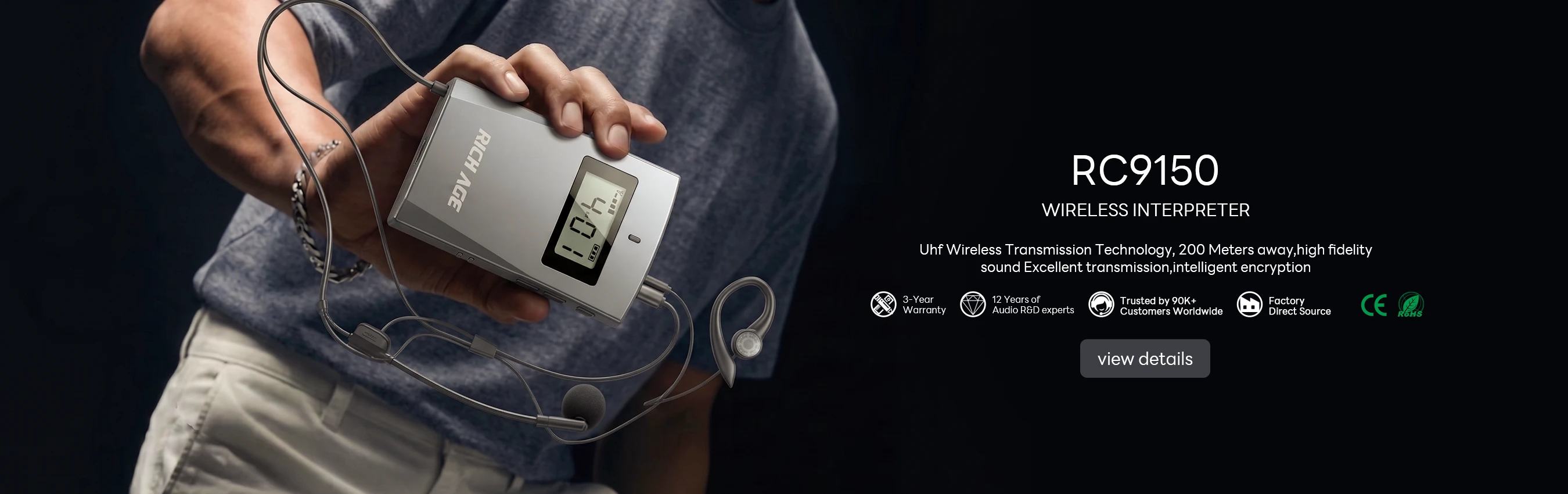
In the era of global digital education transformation, smart campus infrastructure has become a core strategic directive for educational institutions at all levels. From K-12 schools to research universities, the demand for intelligent, efficient, and humanized campus communication is rapidly evolving. Among these initiatives, optimizing on-campus visits, guided tours, and instructional audio has emerged as a primary breakthrough. In 2026, the professional wireless audio tour system is no longer viewed as a supplementary accessory, but as a core architectural component empowering high-quality campus development.

Limitations of Traditional Campus Communication Equipment
Traditional tour and communication methods have long constrained smart campus progression. During open houses, prospective parent delegations, and campus research tours, conventional loudspeakers create heavy vocal fatigue for presenters while distorting audio through severe environmental interference—such as playground activity, school bells, and outdoor maintenance.
Wired setups severely restrict movement, introducing physical tripping hazards and logistics hurdles. Furthermore, low-end wireless gear suffers from severe signal crosstalk when hosting multiple simultaneous tour groups, degrading the visitor experience and detracting from institutional prestige.
Three Core Demands Driving 2026 Adoption
The rapid shift toward wireless audio tour hardware is driven by a direct alignment with modern institutional priorities:
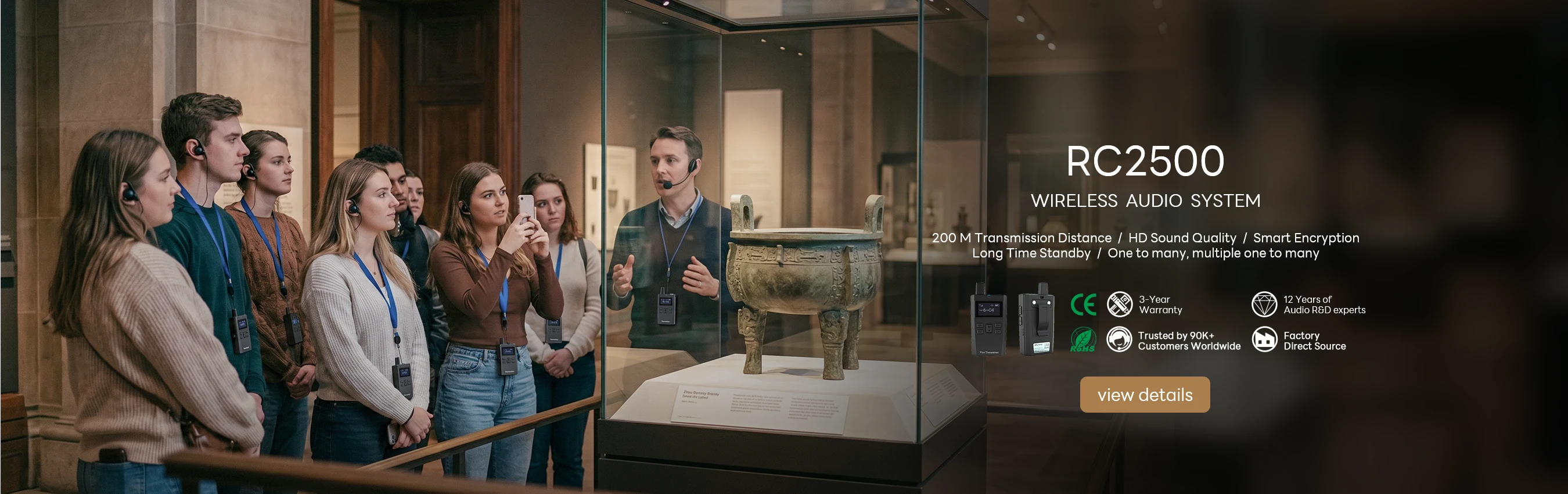
Modern systems discard bulky hardware in favor of compact, ergonomic transmitters and receivers. Non-technical staff, student volunteers, and faculty can deploy units instantly via one-click pairing and smart noise filtering.
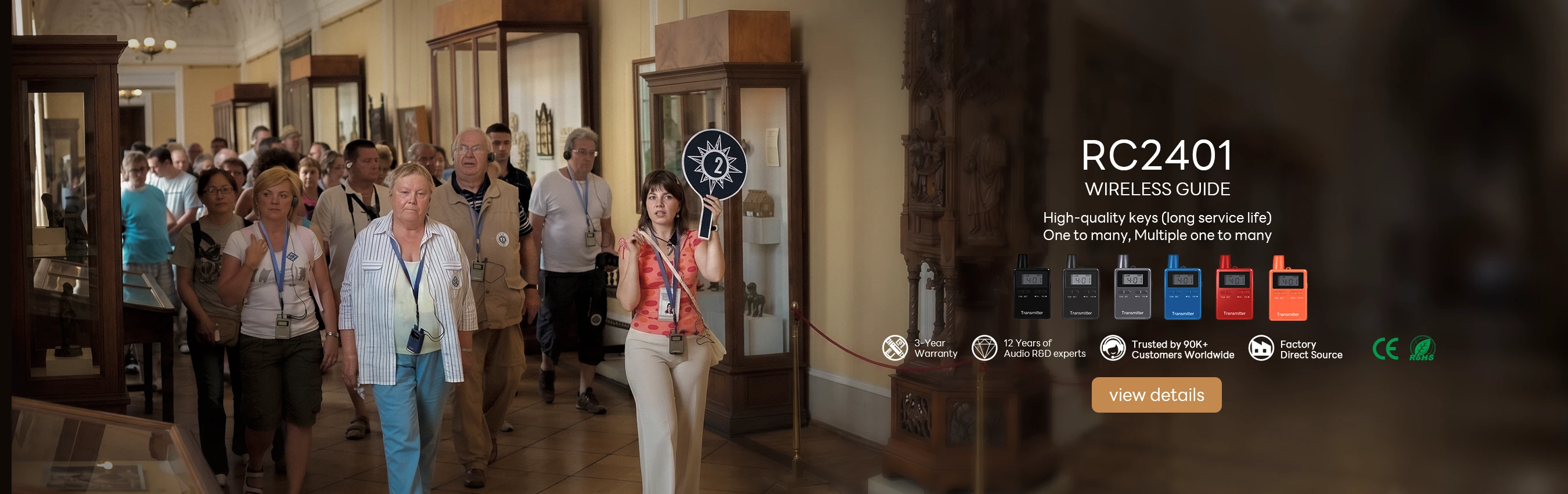
Whether handling an intimate classroom demonstration or a campus-wide open day with hundreds of attendees, advanced systems provide robust, dead-zone-free coverage supporting independent multi-group channels without crosstalk.
International schools, vocational institutions, and research academies require tailored acoustic configurations—ranging from multi-language translation feeds to rugged outdoor weatherproofing and custom institutional branding.

The Richitek Smart Campus Audio Advantage
As a specialized global provider of campus wireless communication technology, Richitek engineers audio solutions built specifically for modern educational environments. Richitek systems feature smart noise-canceling microphones designed to isolate voice clarity against heavy campus ambient noise.
Proprietary wireless architecture ensures campus-wide signal stability, supporting hundreds of simultaneous listeners without dropout or interference. Measuring an ultra-compact 86mm × 50mm × 19mm, Richitek hardware combines featherlight portability with comprehensive OEM/ODM visual branding options, robust color coding for group sorting, and exclusive support for 22 distinct languages to serve international and bilingual institutions seamlessly.

Empowering the Future of Educational Digitization
Smart campus construction is an iterative journey, and upgrading audio communication infrastructure represents a pivotal step toward maximizing institutional service standards and visitor satisfaction. By integrating tightly with broader smart campus ecosystems, wireless audio systems continue to drive higher engagement and operational efficiency.
Richitek remains committed to advancing educational communication technology, equipping global institutions with professional wireless tour solutions that elevate campus tours and foster academic excellence.
Explore specialized hardware applications: Equestrian Teaching Audio System
Frequently Asked Questions
1. How do wireless audio tour systems prevent channel crosstalk during large campus open days?
Richitek wireless audio systems utilize multi-channel digital phase-locked loop (PLL) technology and encrypted frequency synthesis. This allows dozens of independent tour groups to operate side-by-side in the same building or outdoor courtyard without experiencing signal bleed, static, or cross-channel interference.
2. Can non-technical campus volunteers quickly set up and operate the equipment?
Yes. Designed for zero-threshold deployment, the systems feature automated one-click receiver pairing. Staff or student guides can synchronize an entire fleet of receivers to the primary transmitter within seconds, requiring no technical background or complex configuration.
3. How does the system handle noisy campus environments like sports fields or construction zones?
Transmitters are equipped with integrated smart DSP noise-canceling technology. The digital audio processor actively filters out low-frequency ambient sounds—such as traffic, wind, lawnmowers, and background student chatter—delivering crystal-clear voice transmission directly to listeners' earpieces.
4. What options are available for multi-language tours at international educational institutions?
Richitek systems support up to 22 distinct language feeds simultaneously. Interpreters or automated audio feeds can broadcast on dedicated channels, allowing international guests to choose their preferred language on individual receivers.
5. Are custom OEM/ODM branding options available for school logos and colors?
Richitek provides full OEM/ODM customization services. Educational institutions can specify custom shell colors, silkscreen school logos, specialized lanyard designs, and custom charging flight cases to align with official campus branding.