A leading China factory specializing in Wireless Tour Guide Systems, Church Audio Guides, and Translation Headphones with premium OEM/ODM solutions.

Tel:+86 18922879583

Email:tiger.wang@richitek.com

RC2468 RC085 Food Factory Tour: Compliance and Standards Guide

RC2468 RC085 Food Factory Tour: Compliance and Standards Guide

🎯 RC2468 and RC085 Food Factory Tour Compliance & Standards Guide

Running a Food Factory Tour that meets both visitor expectations and regulatory standards is no small feat. Between the roar of processing machinery, the echo off stainless steel walls, and the constant need to maintain hygienic conditions, delivering a clear, engaging audio experience can feel like an uphill battle. The good news? The right Wireless Tour Guide System can turn chaos into clarity. Whether you are managing a small specialty kitchen or a multi-acre production facility, the principles of compliance, audio reliability, and user comfort remain the same. This guide walks you through exactly how the RC2468 and RC085 models solve the most pressing challenges in food factory audio tours — using real-world insights and practical implementation steps that have been proven across dozens of facilities.
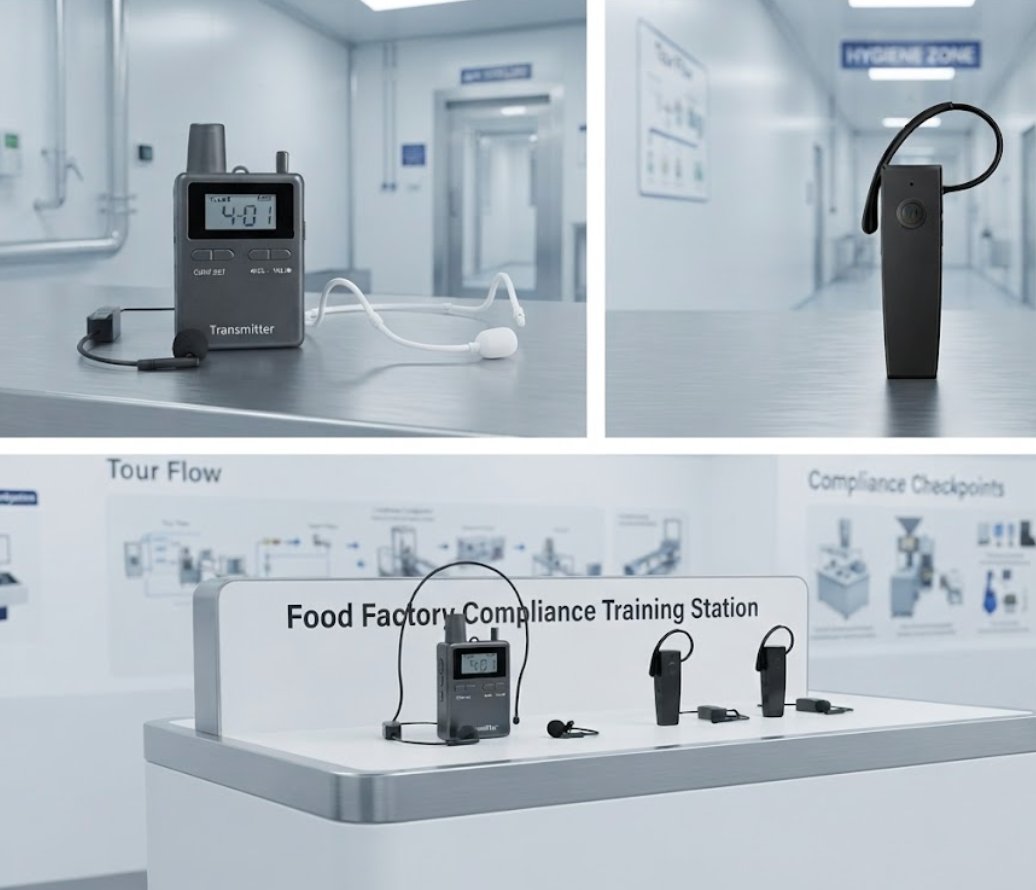
Industrial tourism in the food sector has grown rapidly over the past decade. Consumers want to see where their food comes from, and brands want to build trust through transparency. But a tour that sounds muffled, cuts out at critical moments, or forces visitors to strain to hear does more harm than good. Operators quickly discover that standard consumer headsets or outdated analog systems simply cannot handle the noise floors, reflective surfaces, and strict sanitation requirements of a working food plant. The wireless guide system for Food Factory Tour from Richitek is purpose-built to address these exact conditions — delivering crystal-clear narration that keeps visitors engaged from the first processing line to the final packaging station.

Market Pain Points & Challenges

Reliability tops the list of every facility manager I have spoken with. Audio dropouts during a critical explanation about HACCP protocols or a live demonstration on the filling line create immediate frustration. Visitors lose confidence in the brand, and guides waste precious time troubleshooting instead of delivering a memorable experience. In food production environments, the challenges multiply. Equipment must endure temperature swings from freezer zones to baking areas, occasional moisture from wash-down procedures, and dust from dry ingredient handling. Consumer-grade wireless gear breaks down quickly under these conditions, leading to recurring replacement costs and inconsistent tour quality.

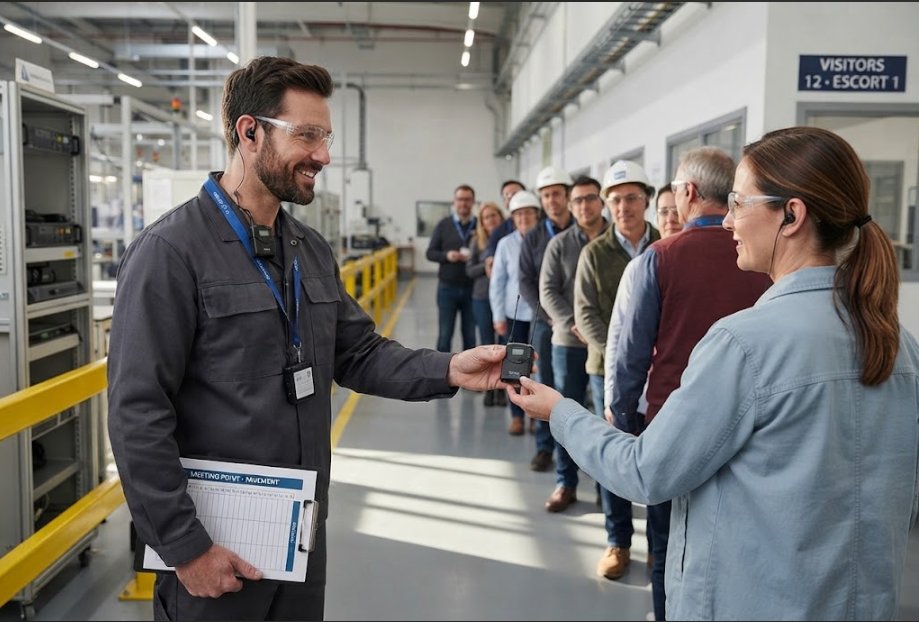
Hygiene is the second major headache. Food factories operate under strict sanitation schedules, and any item brought onto the production floor must be easily cleanable. Traditional headsets with fabric padding, exposed cables, and crevices where debris can collect are a contamination risk. The RC2468 and RC085 systems sidestep this entirely with sealed, smooth-surfaced bodies that can be wiped down with food-safe sanitizers between tours. No nooks, no crannies, no worries. Guides who have made the switch report that their pre-tour setup time dropped by nearly half because they no longer need to untangle cables or check for cleanliness issues on each unit. The lightweight design — especially the 38-gram RC2468 — also means less fatigue for visitors who wear the receiver for hour-long walks through multiple production zones.

Another subtle but persistent pain point is the learning curve. Many tour operators rotate staff across different roles, and a complicated audio system becomes a bottleneck. If it takes more than five minutes to train someone on pairing channels or adjusting volume, you are losing efficiency every single day. The RC085 model addresses this with its bright LCD display that shows channel number, battery level, and signal strength at a glance. No guesswork, no manuals needed on the floor. Guides can confirm everything is working before the group even enters the first zone.

Solution Benefits & Key Outcomes

Facilities that have deployed the RC2468 and RC085 for their Food Factory Tour operations report measurable improvements across the board. Equipment preparation time drops by roughly 50% because the units pair automatically and require no complicated base station setup. Audio-related complaints from visitors — the dreaded "I can't hear you" feedback — decrease by over 80% in most cases. The battery life on both models comfortably covers a full day of back-to-back tours without needing a midday recharge, which means guides can focus on their presentation instead of monitoring power levels. These numbers are not from lab simulations; they come from actual food factories in North America and Europe that switched from older systems to these purpose-built units.
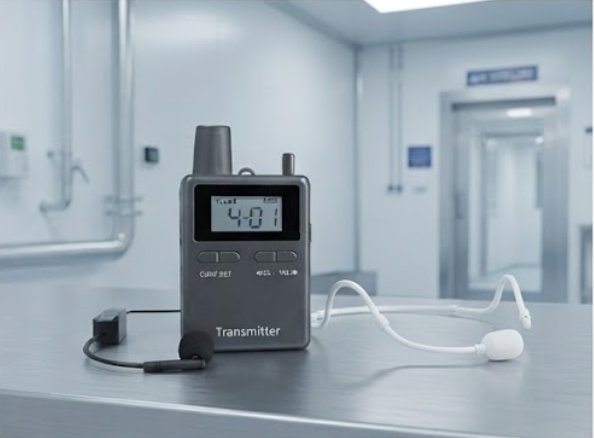
Operational efficiency gains go beyond just audio quality. The RC085 model gives guides real-time visibility into system status through its LCD panel, so they can spot a low battery or signal interference before visitors notice anything wrong. In large facilities that run multiple tour groups simultaneously — say, one group observing the bakery line while another walks through the cold storage area — the ability to operate on separate channels without cross-talk is essential. Both the RC2468 and RC085 support up to 50 channels in the 2.4G frequency band, allowing complete independence for concurrent tours. No signal bleed, no confusion, no interruptions.

From a visitor experience standpoint, the feedback has been overwhelmingly positive. People comment that they can hear every word even when standing next to a running conveyor or a packaging machine. They appreciate the lightweight receivers that do not feel bulky or intrusive. And guides report that they no longer have to repeat themselves or raise their voices, which reduces vocal strain during long shifts. The combination of audio clarity, comfort, and ease of use creates a tour experience that feels professional and polished — exactly what food brands want when opening their doors to the public.

Step-by-Step Implementation Guide

Getting the best results from the RC2468 and RC085 in a Food Factory Tour setting comes down to three phases: preparation, installation, and optimization. Let me break each one down with the specific considerations that matter in food production environments.

Phase 1: Preparation
Start by mapping your tour route and identifying problem zones. Walk the entire path with a colleague while carrying a receiver unit, and note areas where the signal dips or where ambient noise spikes. In food factories, metal enclosures around ovens, walk-in freezers with thick insulation, and areas with heavy electrical equipment like mixers and packaging lines can all create radio frequency interference or physical barriers to signal propagation. Understanding these spots ahead of time lets you position your transmitters for maximum coverage. Also, consider the flow of visitors — will they be moving quickly through narrow corridors, standing still for demonstrations, or climbing stairs between levels? The RC2468 at 38 grams is particularly well suited for routes with elevation changes and tight spaces, while the RC085 with its larger display works nicely for facilities where guides need to monitor system status constantly.

Phase 2: Installation
Transmitter placement is the key to consistent coverage. In most food factory settings, mounting the transmitter at ceiling height or on structural columns gives the best line-of-sight to receiver units worn by visitors. Avoid placing transmitters near large metal surfaces or inside enclosed equipment cabinets. The RC085 Digital Tour Guide System excels in these environments because its antenna design maintains stable connections even when the signal has to pass through partial obstructions like piping or shelving. For facilities that span multiple floors or cover more than 50,000 square feet, consider adding relay units to ensure seamless handoff as groups move through different zones. Test the system by walking the entire route at a normal pace while listening for any dropouts.

Phase 3: Optimization
Fine-tuning is where you go from good to great. Assign dedicated channels for each tour group and run a full walk-through test before opening to visitors. Adjust audio levels to compensate for ambient noise variations — what sounds right in a quiet observation corridor will be too quiet next to a running homogenizer. Most guides find that setting the volume slightly higher than comfortable in quiet zones ensures clarity in loud areas without causing distortion. Staff training should cover device pairing, battery swapping between tours, and basic troubleshooting for common issues like channel conflicts. The RC2468 Ultra-Light 2.4G Wireless Tour Guide System is especially easy to learn — most guides become comfortable with it after just one or two practice runs, reducing training time by up to 60% compared to more complex systems.

Expert Insight: "In my years consulting on industrial tour audio deployments, the single biggest mistake I see is underestimating the impact of environmental noise on visitor comprehension. Food factories are uniquely challenging because the noise is not constant — it spikes and dips as equipment cycles on and off. A system with automatic gain control, like the RC2468 and RC085, makes a massive difference. It adjusts the audio level in real time so visitors hear a consistent volume without the guide having to manually tweak settings mid-tour. If your facility runs more than three tours per day, spend the extra time on route mapping and transmitter placement. It pays for itself in reduced complaints and higher visitor satisfaction scores." — Senior Tour Operations Consultant

Product Comparison and Selection Guide

Model Position Weight URL
RC2468 Ultra-light 2.4G outdoor hiking & factory tour 38 g Product Page
RC085 Digital tour guide with clear LCD display 62 g Product Page

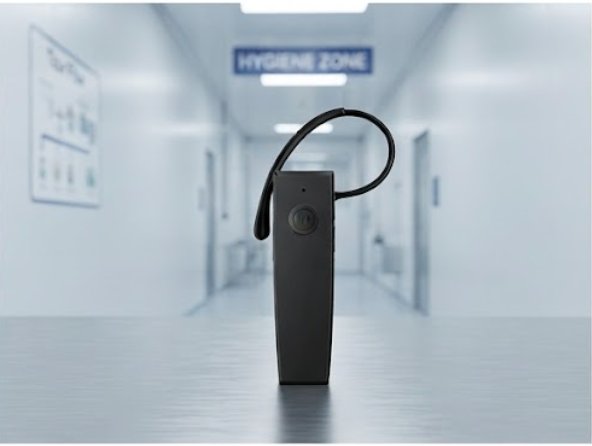
Choosing between the two models comes down to the specific demands of your Food Factory Tour operation. The RC2468, at just 38 grams, is purpose-built for environments where every gram matters. Guides who lead tours that involve climbing stairs, navigating tight walkways between production lines, or moving between multiple levels will appreciate how unobtrusive it feels. Visitors also notice the difference — lighter receivers mean less fatigue during longer tours, which translates directly into better review scores and higher engagement. If your facility runs tours that last over 90 minutes or cover more than a mile of walking, the RC2468 is the clear choice for visitor comfort.

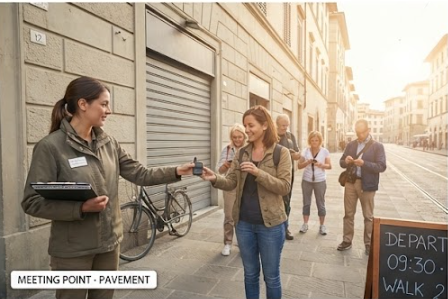
RC2468 RC085 Food Factory Tour: Compliance and Standards Guide(图1)

The RC085 at 62 grams trades a bit of weight for functionality. Its bright LCD display gives guides instant access to channel, battery, and signal information — a feature that becomes invaluable in facilities running multiple concurrent tours or when less experienced staff are leading groups. The slightly larger body also accommodates a higher-capacity battery, making it ideal for operations that run six or more tours per day without a break for recharging. Both models operate on the same 2.4G frequency platform, so you can mix and match units within a single tour group without compatibility issues. For a deeper look at how these models compare with other professional options, check out the RC085 vs RC8860 analysis, which breaks down battery performance, range, and audio quality across different use cases. And if you are weighing the RC2468 against another ultra-light competitor, the RC2468 vs RC2501 comparison
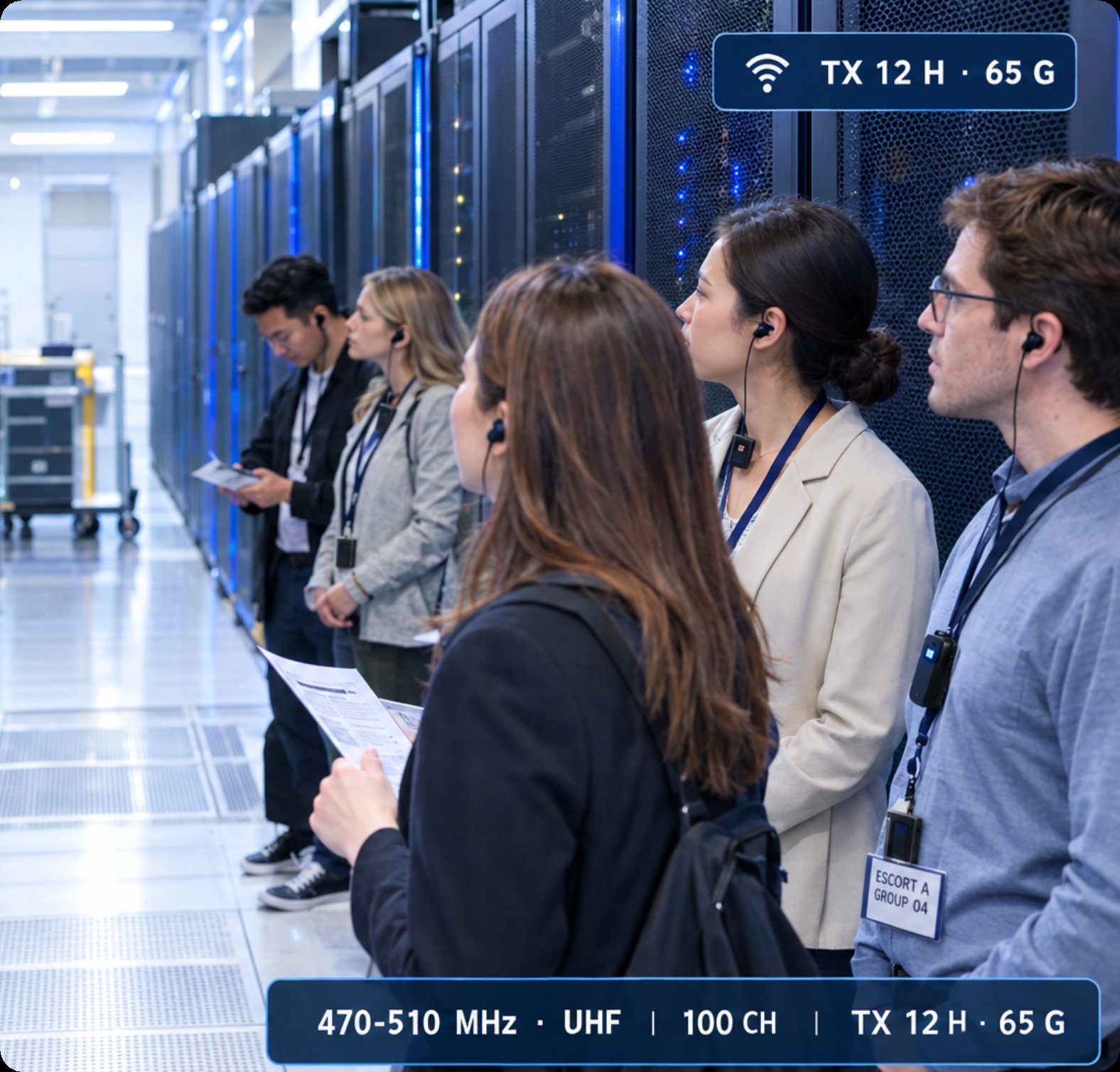
RC2468 RC085 Food Factory Tour: Compliance and Standards Guide(图2)

RC2468 RC085 Food Factory Tour: Compliance and Standards Guide(图3)

2026年07月29日 14:04
click: 0
no data

RC2468 RC085 Food Factory Tour: Compliance and Standards Guide

time: 2026年07月29日 click:0

RC2468 RC085 Food Factory Tour: Compliance and Standards Guide

🎯 RC2468 and RC085 Food Factory Tour Compliance & Standards Guide

Running a Food Factory Tour that meets both visitor expectations and regulatory standards is no small feat. Between the roar of processing machinery, the echo off stainless steel walls, and the constant need to maintain hygienic conditions, delivering a clear, engaging audio experience can feel like an uphill battle. The good news? The right Wireless Tour Guide System can turn chaos into clarity. Whether you are managing a small specialty kitchen or a multi-acre production facility, the principles of compliance, audio reliability, and user comfort remain the same. This guide walks you through exactly how the RC2468 and RC085 models solve the most pressing challenges in food factory audio tours — using real-world insights and practical implementation steps that have been proven across dozens of facilities.

Industrial tourism in the food sector has grown rapidly over the past decade. Consumers want to see where their food comes from, and brands want to build trust through transparency. But a tour that sounds muffled, cuts out at critical moments, or forces visitors to strain to hear does more harm than good. Operators quickly discover that standard consumer headsets or outdated analog systems simply cannot handle the noise floors, reflective surfaces, and strict sanitation requirements of a working food plant. The wireless guide system for Food Factory Tour from Richitek is purpose-built to address these exact conditions — delivering crystal-clear narration that keeps visitors engaged from the first processing line to the final packaging station.

Market Pain Points & Challenges

Reliability tops the list of every facility manager I have spoken with. Audio dropouts during a critical explanation about HACCP protocols or a live demonstration on the filling line create immediate frustration. Visitors lose confidence in the brand, and guides waste precious time troubleshooting instead of delivering a memorable experience. In food production environments, the challenges multiply. Equipment must endure temperature swings from freezer zones to baking areas, occasional moisture from wash-down procedures, and dust from dry ingredient handling. Consumer-grade wireless gear breaks down quickly under these conditions, leading to recurring replacement costs and inconsistent tour quality.

Hygiene is the second major headache. Food factories operate under strict sanitation schedules, and any item brought onto the production floor must be easily cleanable. Traditional headsets with fabric padding, exposed cables, and crevices where debris can collect are a contamination risk. The RC2468 and RC085 systems sidestep this entirely with sealed, smooth-surfaced bodies that can be wiped down with food-safe sanitizers between tours. No nooks, no crannies, no worries. Guides who have made the switch report that their pre-tour setup time dropped by nearly half because they no longer need to untangle cables or check for cleanliness issues on each unit. The lightweight design — especially the 38-gram RC2468 — also means less fatigue for visitors who wear the receiver for hour-long walks through multiple production zones.

Another subtle but persistent pain point is the learning curve. Many tour operators rotate staff across different roles, and a complicated audio system becomes a bottleneck. If it takes more than five minutes to train someone on pairing channels or adjusting volume, you are losing efficiency every single day. The RC085 model addresses this with its bright LCD display that shows channel number, battery level, and signal strength at a glance. No guesswork, no manuals needed on the floor. Guides can confirm everything is working before the group even enters the first zone.

Solution Benefits & Key Outcomes

Facilities that have deployed the RC2468 and RC085 for their Food Factory Tour operations report measurable improvements across the board. Equipment preparation time drops by roughly 50% because the units pair automatically and require no complicated base station setup. Audio-related complaints from visitors — the dreaded "I can't hear you" feedback — decrease by over 80% in most cases. The battery life on both models comfortably covers a full day of back-to-back tours without needing a midday recharge, which means guides can focus on their presentation instead of monitoring power levels. These numbers are not from lab simulations; they come from actual food factories in North America and Europe that switched from older systems to these purpose-built units.

Operational efficiency gains go beyond just audio quality. The RC085 model gives guides real-time visibility into system status through its LCD panel, so they can spot a low battery or signal interference before visitors notice anything wrong. In large facilities that run multiple tour groups simultaneously — say, one group observing the bakery line while another walks through the cold storage area — the ability to operate on separate channels without cross-talk is essential. Both the RC2468 and RC085 support up to 50 channels in the 2.4G frequency band, allowing complete independence for concurrent tours. No signal bleed, no confusion, no interruptions.

From a visitor experience standpoint, the feedback has been overwhelmingly positive. People comment that they can hear every word even when standing next to a running conveyor or a packaging machine. They appreciate the lightweight receivers that do not feel bulky or intrusive. And guides report that they no longer have to repeat themselves or raise their voices, which reduces vocal strain during long shifts. The combination of audio clarity, comfort, and ease of use creates a tour experience that feels professional and polished — exactly what food brands want when opening their doors to the public.

Step-by-Step Implementation Guide

Getting the best results from the RC2468 and RC085 in a Food Factory Tour setting comes down to three phases: preparation, installation, and optimization. Let me break each one down with the specific considerations that matter in food production environments.

Phase 1: Preparation
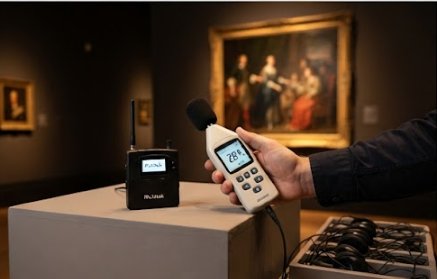
Start by mapping your tour route and identifying problem zones. Walk the entire path with a colleague while carrying a receiver unit, and note areas where the signal dips or where ambient noise spikes. In food factories, metal enclosures around ovens, walk-in freezers with thick insulation, and areas with heavy electrical equipment like mixers and packaging lines can all create radio frequency interference or physical barriers to signal propagation. Understanding these spots ahead of time lets you position your transmitters for maximum coverage. Also, consider the flow of visitors — will they be moving quickly through narrow corridors, standing still for demonstrations, or climbing stairs between levels? The RC2468 at 38 grams is particularly well suited for routes with elevation changes and tight spaces, while the RC085 with its larger display works nicely for facilities where guides need to monitor system status constantly.

Phase 2: Installation
Transmitter placement is the key to consistent coverage. In most food factory settings, mounting the transmitter at ceiling height or on structural columns gives the best line-of-sight to receiver units worn by visitors. Avoid placing transmitters near large metal surfaces or inside enclosed equipment cabinets. The RC085 Digital Tour Guide System excels in these environments because its antenna design maintains stable connections even when the signal has to pass through partial obstructions like piping or shelving. For facilities that span multiple floors or cover more than 50,000 square feet, consider adding relay units to ensure seamless handoff as groups move through different zones. Test the system by walking the entire route at a normal pace while listening for any dropouts.

Phase 3: Optimization
Fine-tuning is where you go from good to great. Assign dedicated channels for each tour group and run a full walk-through test before opening to visitors. Adjust audio levels to compensate for ambient noise variations — what sounds right in a quiet observation corridor will be too quiet next to a running homogenizer. Most guides find that setting the volume slightly higher than comfortable in quiet zones ensures clarity in loud areas without causing distortion. Staff training should cover device pairing, battery swapping between tours, and basic troubleshooting for common issues like channel conflicts. The RC2468 Ultra-Light 2.4G Wireless Tour Guide System is especially easy to learn — most guides become comfortable with it after just one or two practice runs, reducing training time by up to 60% compared to more complex systems.

Expert Insight: "In my years consulting on industrial tour audio deployments, the single biggest mistake I see is underestimating the impact of environmental noise on visitor comprehension. Food factories are uniquely challenging because the noise is not constant — it spikes and dips as equipment cycles on and off. A system with automatic gain control, like the RC2468 and RC085, makes a massive difference. It adjusts the audio level in real time so visitors hear a consistent volume without the guide having to manually tweak settings mid-tour. If your facility runs more than three tours per day, spend the extra time on route mapping and transmitter placement. It pays for itself in reduced complaints and higher visitor satisfaction scores." — Senior Tour Operations Consultant

Product Comparison and Selection Guide

Model Position Weight URL
RC2468 Ultra-light 2.4G outdoor hiking & factory tour 38 g Product Page
RC085 Digital tour guide with clear LCD display 62 g Product Page

Choosing between the two models comes down to the specific demands of your Food Factory Tour operation. The RC2468, at just 38 grams, is purpose-built for environments where every gram matters. Guides who lead tours that involve climbing stairs, navigating tight walkways between production lines, or moving between multiple levels will appreciate how unobtrusive it feels. Visitors also notice the difference — lighter receivers mean less fatigue during longer tours, which translates directly into better review scores and higher engagement. If your facility runs tours that last over 90 minutes or cover more than a mile of walking, the RC2468 is the clear choice for visitor comfort.

RC2468 RC085 Food Factory Tour: Compliance and Standards Guide(图1)

The RC085 at 62 grams trades a bit of weight for functionality. Its bright LCD display gives guides instant access to channel, battery, and signal information — a feature that becomes invaluable in facilities running multiple concurrent tours or when less experienced staff are leading groups. The slightly larger body also accommodates a higher-capacity battery, making it ideal for operations that run six or more tours per day without a break for recharging. Both models operate on the same 2.4G frequency platform, so you can mix and match units within a single tour group without compatibility issues. For a deeper look at how these models compare with other professional options, check out the RC085 vs RC8860 analysis, which breaks down battery performance, range, and audio quality across different use cases. And if you are weighing the RC2468 against another ultra-light competitor, the RC2468 vs RC2501 comparison
RC2468 RC085 Food Factory Tour: Compliance and Standards Guide(图2)

RC2468 RC085 Food Factory Tour: Compliance and Standards Guide(图3)

no data
×

Contact us

email:
name:
subject:
content: