Three Positions We Measured in One Afternoon
The venue layout established three fixed testing positions. Position one was the main hall featuring approximately 200 theatre-style seats, hosting destination presentations four times daily. Position two consisted of breakout rooms separated from the main hall by movable partition walls for one-on-one buyer meetings. Position three was the open exhibition corridor outside these rooms where delegates drifted between booths. Pre-event logs tracked channel allocation, partition wall count, walking distance, and initial battery states. For broader deployment layouts, planners can review the conference solutions page.
The Full-Hall Channel Load on the 2.4G Floor
The RC9150 managed main hall communications within the 2403–2483 MHz frequency band, featuring 100 channels and 10mW output power. Four presenter groups operated simultaneously alongside a reserve channel for adjacent booths. With over 90 channels remaining unused, the system demonstrated robust reserve capacity in shared 2.4G airspace. Receivers weighed 97.5g, ensuring comfortable wear throughout extended presentations. The published specifications—35 hours of receiver standby and 15 hours of transmitter life—accommodated continuous operation from morning rehearsals to final sessions.

Hardware specifics are available on the RC9150 2.4G Wireless Audio Guide System page.
Five Hundred Metres Through Two Partition Walls
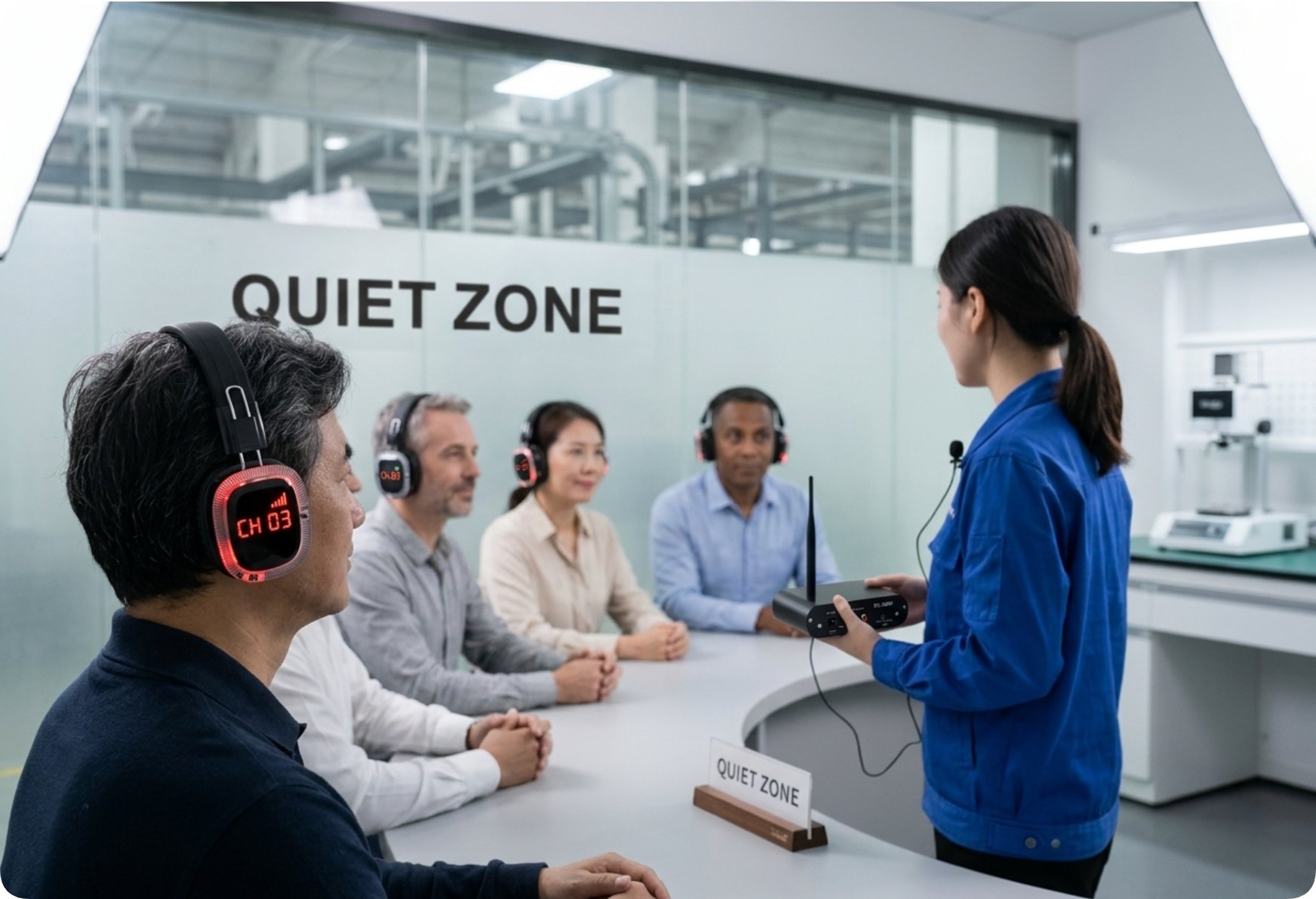
Deployed in the breakout rooms, the Silent Disco Wireless Headphone System was evaluated against its range claims. While low-power mode supports up to 200m and high-power mode exceeds 500m in open areas using the RC-50RF transmitter, indoor performance depends on structural barriers. Testing confirmed stable audio transmission through two movable partition walls separating the transmitter from receivers in the second breakout room without degradation. Supporting 10 independent channels with FM stereo modulation, dual PLL stability, and built-in 500mAh batteries delivering 10 hours of operation, full specifications are detailed on the Silent Disco Wireless Headphone System page.

Each headphone features five-color LED indicators (red, green, blue, purple, yellow) corresponding to active channels, streamlining visitor management and reducing staff inquiries. Audio performance relies on 40mm Mylar drivers boasting a signal-to-noise ratio above 75dB, total harmonic distortion under 1%, and a 30–20,000Hz frequency response. Foldable ear cups also facilitated compact pack-down into storage crates.
The UHF Corner Where Crowded Bands Back Off
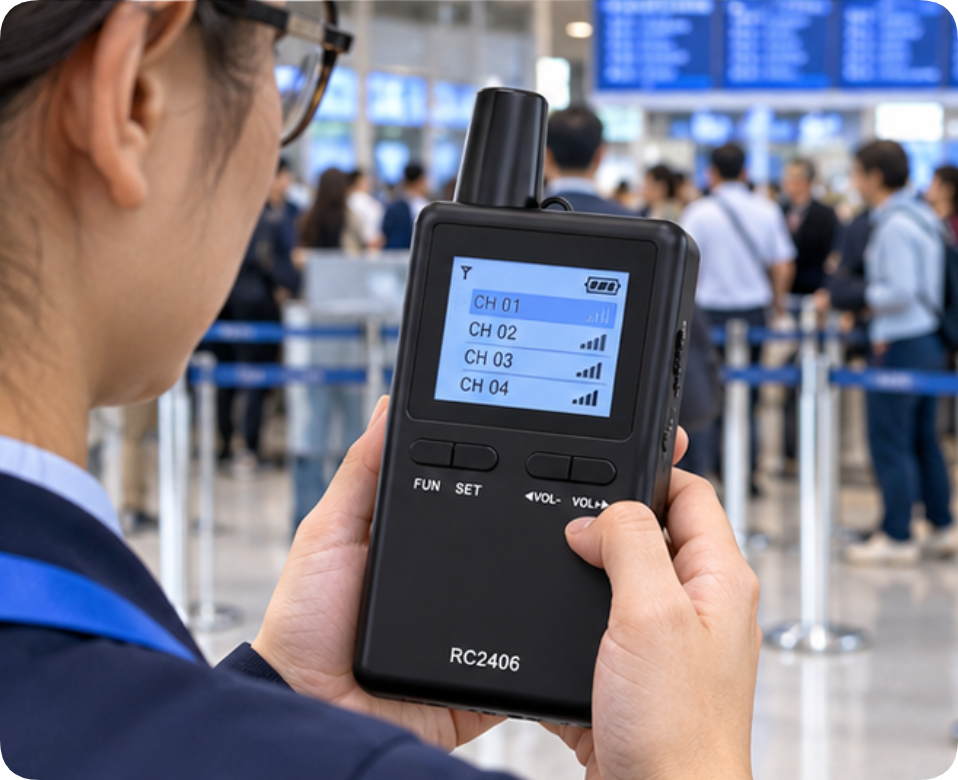
Assigned to the frequency-congested exhibition corridor, the RC085 leveraged the UHF 470–510 MHz band to avoid interference from venue Wi-Fi and mobile hotspots. Its 100 channels and 8–10mW output covered operating distances up to 200m effectively amidst high ambient foot traffic. Featuring a sensitivity rating of approximately -102dBm and flexible headset or lavalier microphone pairing options, the unit is documented on the RC085 Digital Tour Guide System page and compared alongside the broader Richitek tour guide system line.

| Comparison Dimension | RC9150 | Silent Disco Wireless Headphone System | RC085 |
|---|---|---|---|
| Core frequency band | 2403-2483 MHz (2.4G) | UHF/RF link, FM stereo modulation | 470-510 MHz (UHF) |
| Number of channels | 100 | 10 | 100 |
| Control and modulation | PLL frequency synthesis | FM stereo, dual PLL stability | PLL |
| Receiver battery life | 35+h standby | 10h operation (500mAh built-in) | 20h |
| Charging port | Type-C | Micro USB, 3h full charge | USB |
Official metrics indicate the RC9150 provides 10mW output with 97.5g transceivers, while the RC085 specifies 8–10mW output with a 65g transmitter and 60g receiver. Transmitter battery capacities are rated at 3.7V 1800mAh (RC9150 providing 15h life) and 3.7V 1200mAh (RC085 providing 12h life).
Recharge Math Between Briefings and Walkthroughs
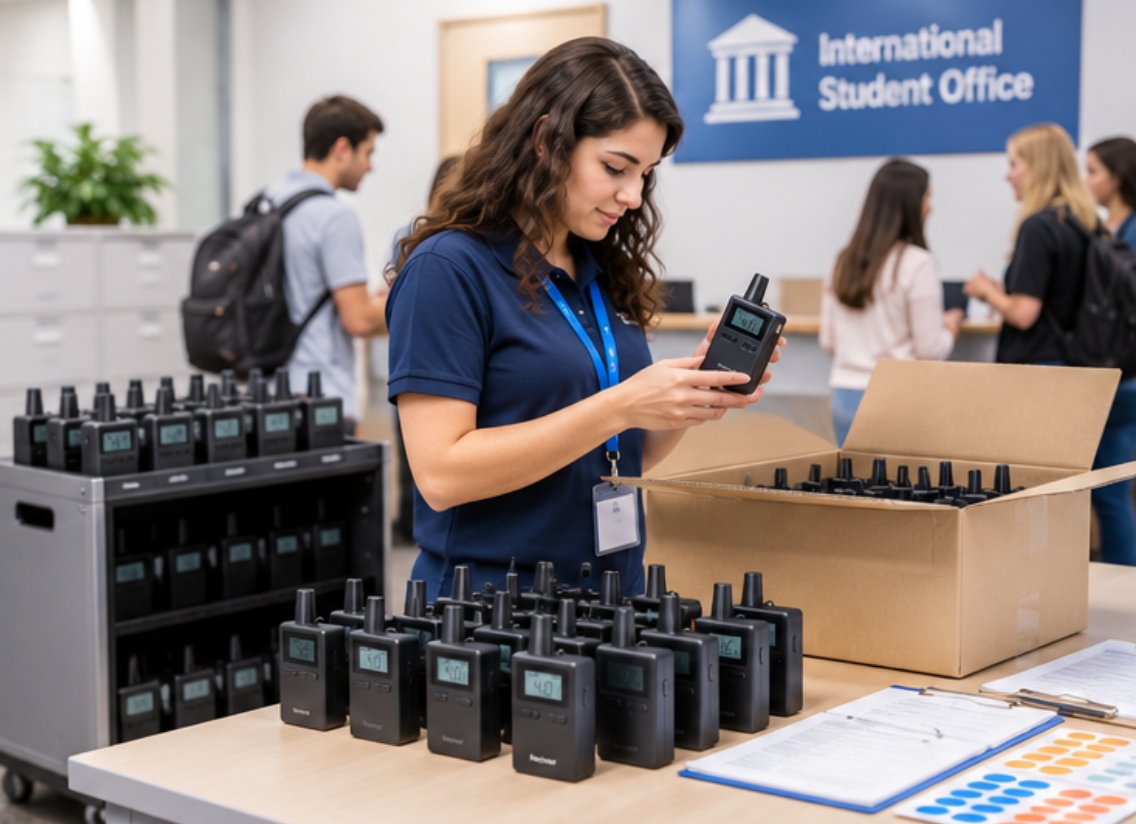
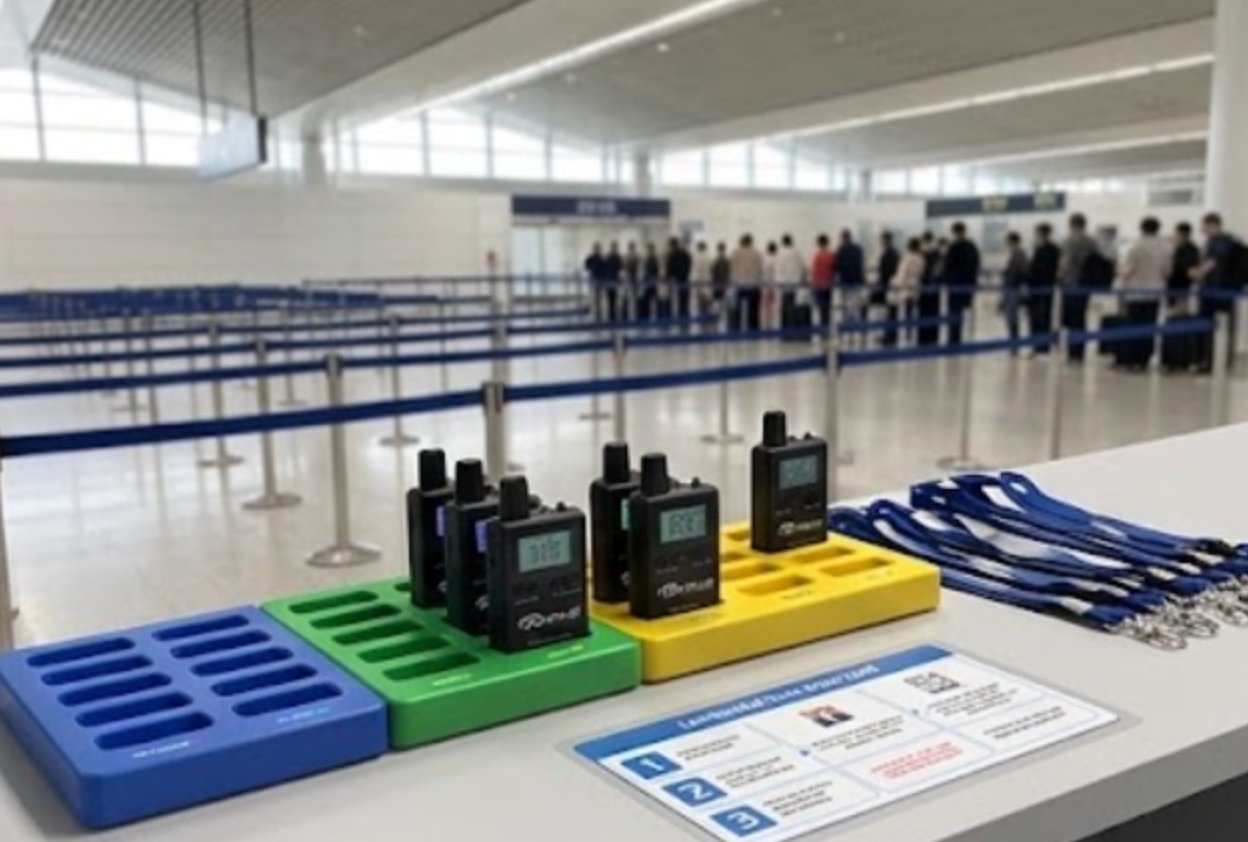
Battery replenishment schedules were dictated by the shortest runtime in the inventory. Silent Disco headphones required a full three-hour Micro USB charge cycle for their 500mAh cells, easily accommodated during midday breaks. Managing Type-C ports for RC9150 units and standard USB ports for RC085 units required labeled charging racks. Adopting a strict protocol of returning devices to powered racks immediately after use ensured optimal battery percentages throughout long event days.
Two Batteries That Stayed Past Closing Time
Contrasting continuous operation profiles against standby modes highlights essential planning parameters. Silent Disco receivers delivered 10 hours of continuous operation matching single demanding event days. Conversely, RC9150 receivers leveraged their 35-hour standby rating to remain active between intermittent sessions without requiring mid-event recharging. Transmitter operational limits (15 hours for RC9150 and 12 hours for RC085) dictate overnight charging priorities for multi-day deployments.
Booking Notes for the Next Promotion Round
Successful deployment relies on matching system capabilities to venue dynamics: deploy 2.4G systems for fixed seating layouts, FM/UHF wall-penetrating systems for dynamic breakout partitions, and robust UHF systems for crowded, mobile exhibition spaces. Reviewing floor plans alongside the solutions overview ensures optimal equipment selection prior to event execution.
Frequently Asked Questions
1. Can three different systems run in one building without interfering with each other?
Yes, because they operate on distinct frequency bands. The RC9150 works at 2403–2483 MHz, the RC085 utilizes 470–510 MHz UHF, and the Silent Disco system runs separate FM stereo channels. Adequate channel spacing prevents cross-talk across simultaneous groups.
2. Is the 500m range figure usable indoors?
Not as an unhindered straight line. While open-area specifications apply in high-power modes, indoor environments require accounting for physical barriers like partition walls and elevator shafts, which attenuate signal propagation.
3. Why does receiver standby matter more than receiver runtime for a promotion week?
Receivers often remain powered on but idle between scheduled sessions during multi-day events. High standby ratings allow equipment to survive rehearsals and presentations without nightly re-docking, reserving overnight charging capacity for active transmitters and continuous-run units.
4. What happens if a headset fails mid-event?
Standard warranties cover manufacturing defects (excluding general accessories), while pre-shipping quality testing maintains low failure rates. Modular replacement and foldable designs allow rapid hardware swaps from central staging racks.