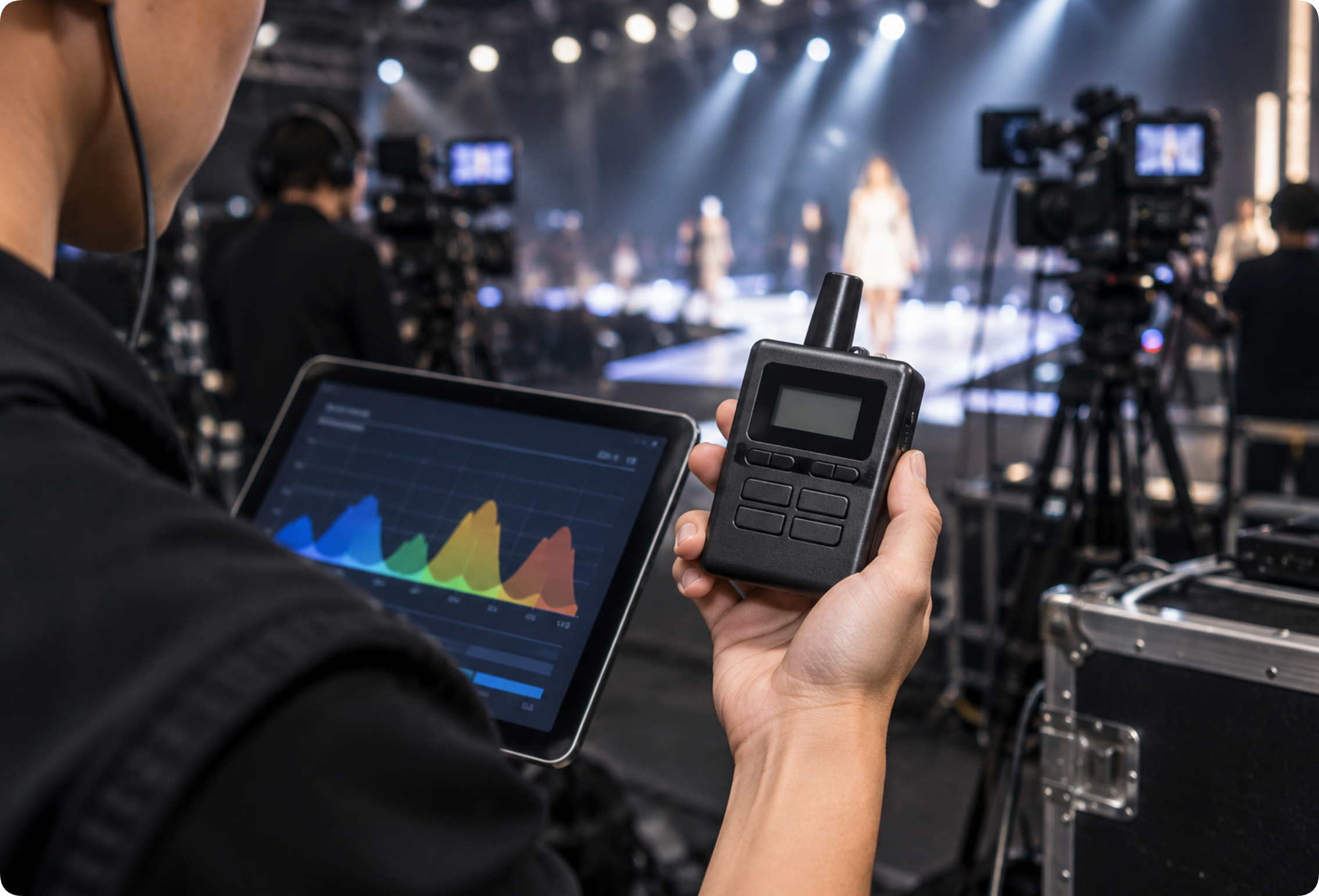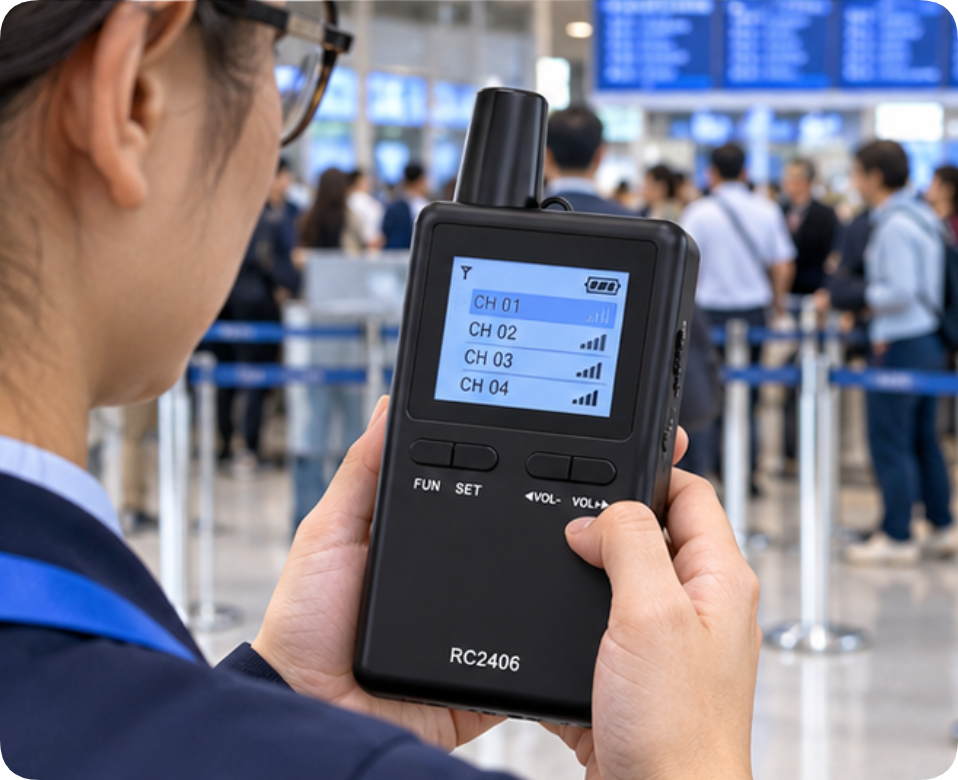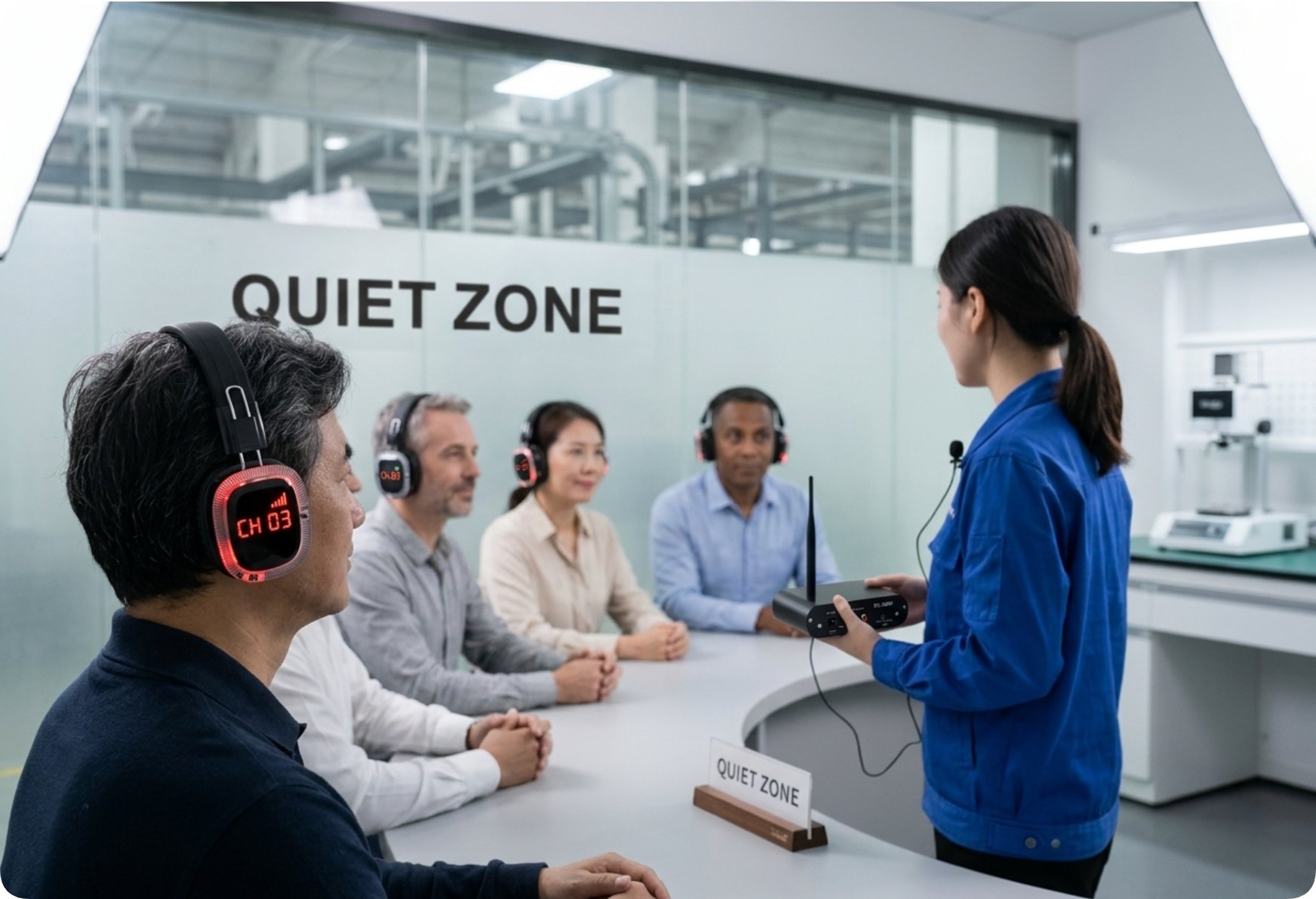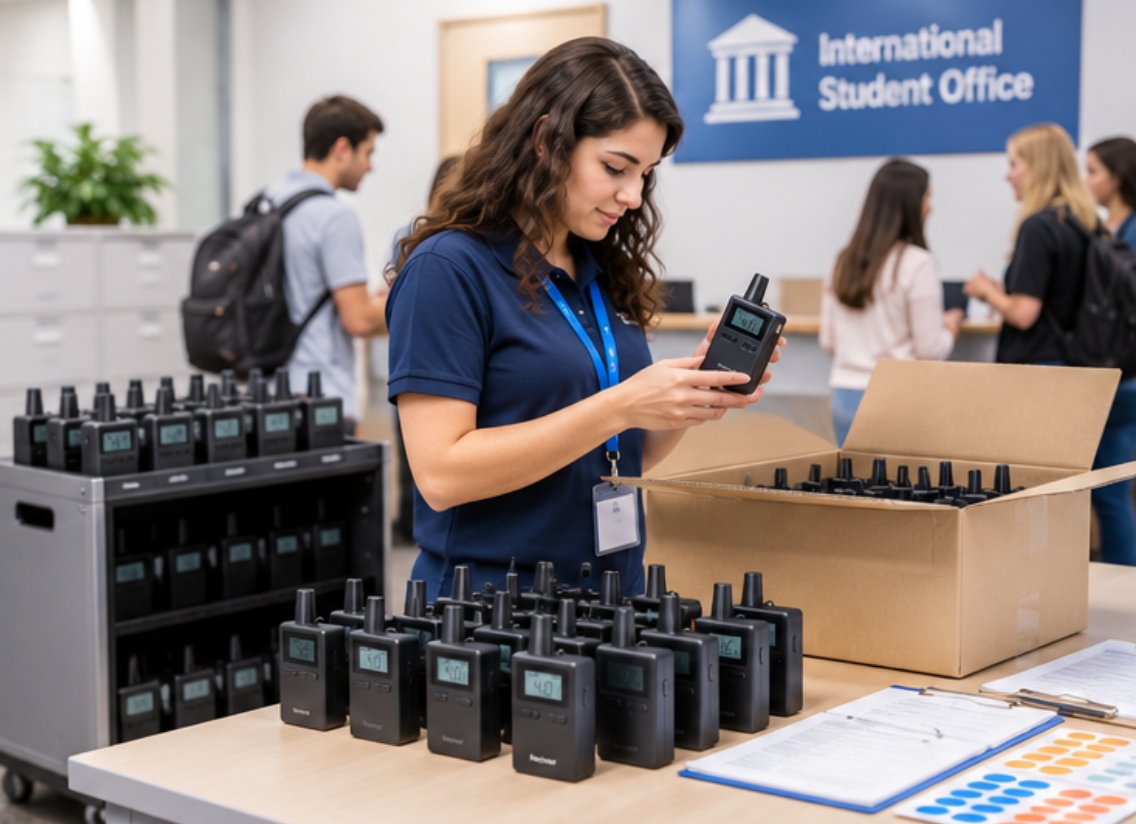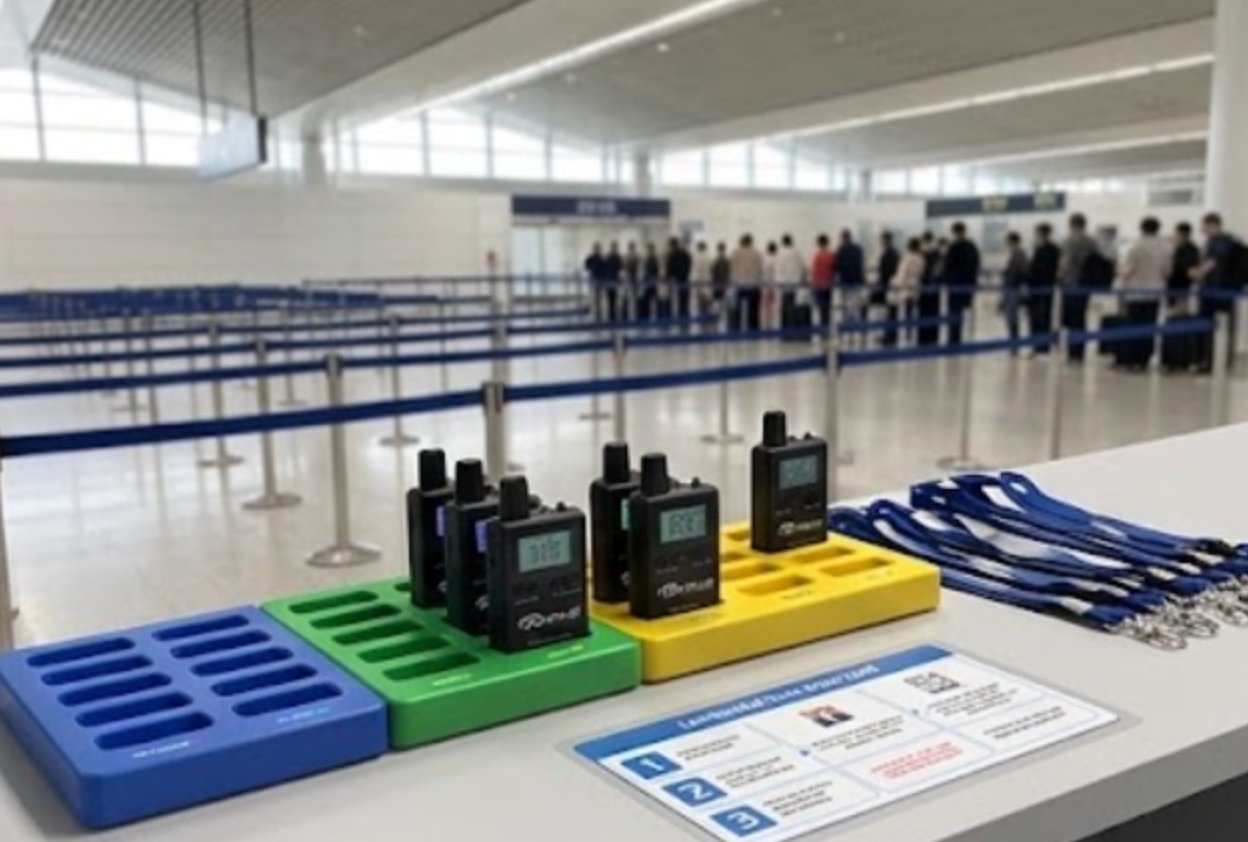
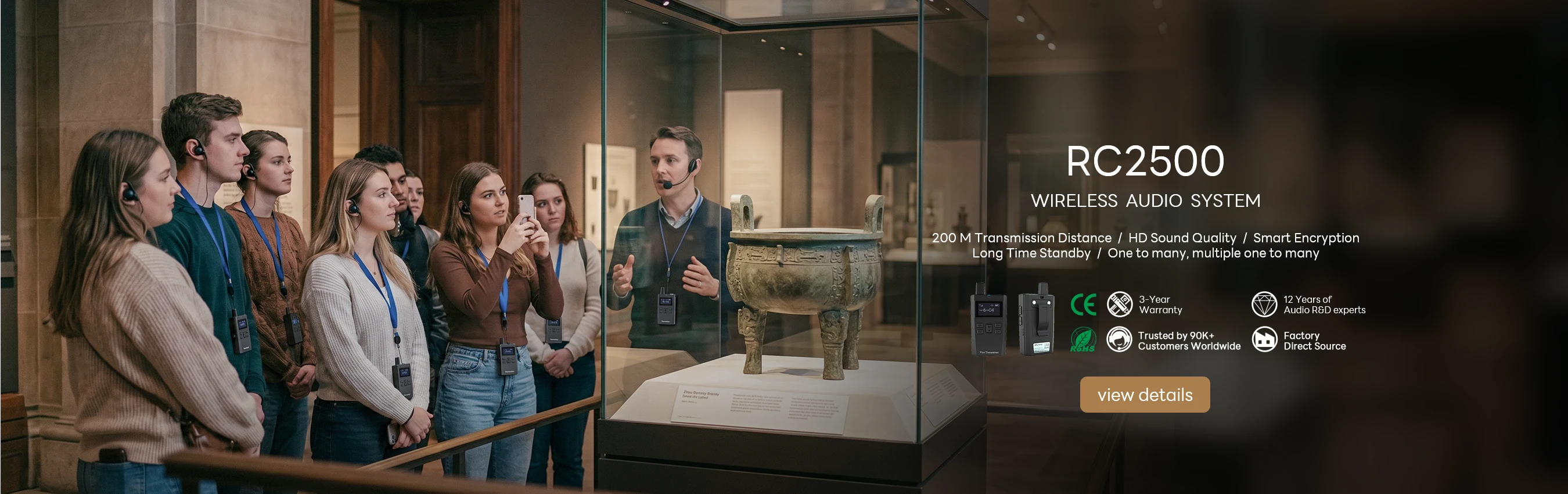

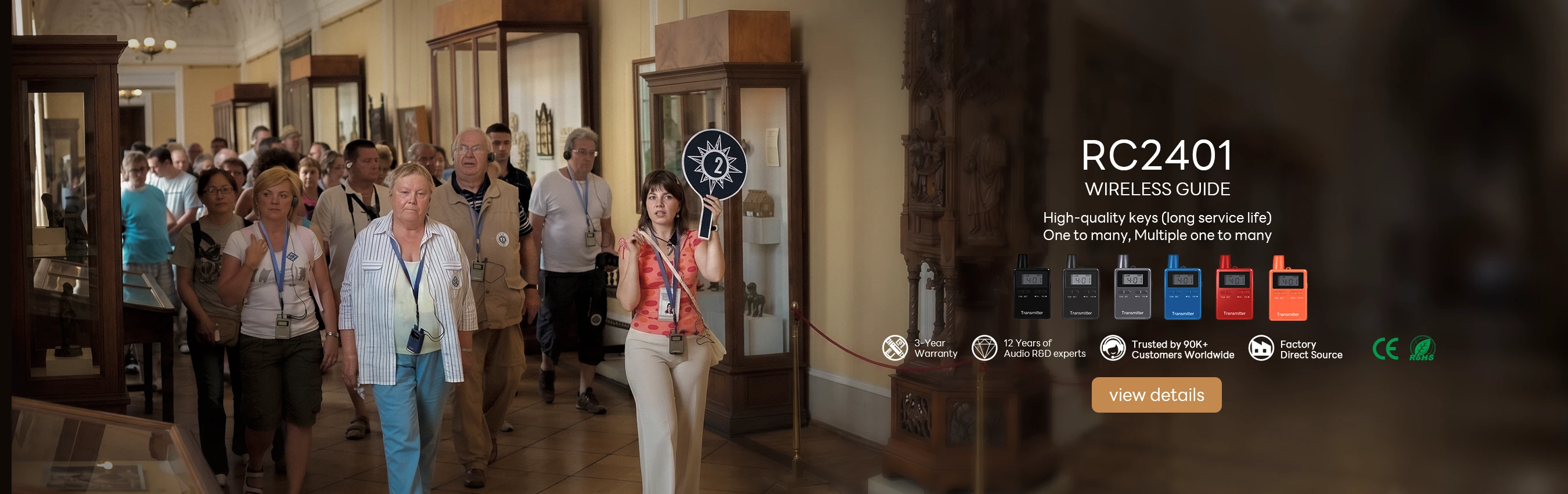
A semiconductor cleanroom tour is a controlled event inside one of the most controlled buildings in industry. Visitors gown up, cross an airlock, and walk past tools worth more than the building they stand in, while the guide explains etch bays and litho cells through a wireless audio system. The environment is unforgiving in quiet ways: lint-shedding gown fabric, alcohol wipes at every glove change, static discharges, and a schedule where a dead receiver mid-route means pulling the whole group back to the airlock. The systems that hold up are the ones maintained with the same discipline as the fab itself. This guide lays out that routine for three Richitek units that suit fab tours: the RICH AGE RC2401 wireless audio guide system, the RC2468 ultra-light 2.4G tour guide system, and the RC2501 wireless audio tour system. The wider deployment context for industrial sites is covered in our factory tour wireless audio solutions.
🎯 🏭 Why Cleanrooms Are Hard on Tour Guide Audio
Cleanrooms attack audio equipment through the gowning ritual itself. Every visitor pulls nitrile gloves over their hands, and those gloves carry powder residue that transfers to anything they touch, including receivers passed out at the airlock bench. Garment stations stock 70% isopropyl alcohol, and it migrates onto surfaces throughout the shift. The air handling keeps humidity low and static high, so plastic housings collect charge and then dust. None of this is dramatic; all of it accumulates.
The operational pattern adds its own stress. A fab tour runs on shift boundaries, so receivers are handed out and collected dozens of times a day, often by visitors wearing full smocks and no instructions. Units get dropped into collection bins, clipped to gown belts, and left on returns carts next to hard equipment cases. A maintenance plan for cleanroom audio therefore has to answer four questions: how batteries rotate, what the cleaning limits are, how channels stay separated between concurrent groups, and where the warranty stops covering abuse. The three sections below take those questions one model at a time.
🧤 Gowning, Gloves and Handling Discipline for RC2468 Receivers
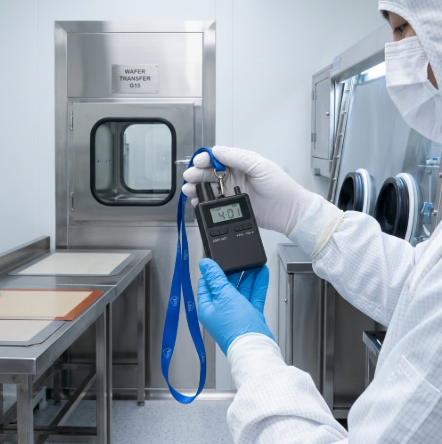
The RC2468 receiver weighs just 18 grams, which changes how cleanroom handling works in practice. A visitor in full smock and double gloves barely notices an 18 g unit on a lanyard, so the receiver stops being an object people fumble with and becomes part of the gown. That same featherweight build, paired with a 59 g transmitter, is why the unit survives the drop-into-the-bin collection style of high-volume tours. Maintenance discipline still matters, and it centers on the contact points: lanyard loops, the earpiece port, and the one-touch pairing button that every gloved visitor presses.
Between tours, the routine is short and repeatable. Inspect each earpiece port for glove residue and blow it out with dry, filtered air rather than anything wet. Wipe housings with a dry lint-free wipe from the gowning stock; save the alcohol for the scuffed spots and let units dry before the next hand-out. Check the six transmitter color options on the RC2468 as a visual sorting aid: assign one color per concurrent tour group so returned units land in the right charging tray without reading labels through gloves. Because pairing is one-touch, re-pairing a receiver that failed inspection takes seconds, and you can send the suspect unit to the bench without holding the tour.
🔋 🔋 Battery Rotation: 1500mAh Transmitters and 300mAh Receivers
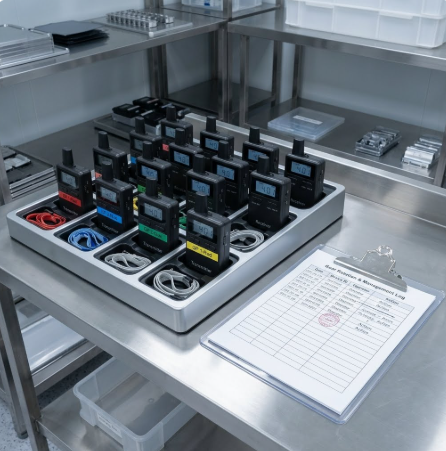
Battery numbers from the product pages set the rotation math. The RC2468 transmitter runs 12 hours on its 1500mAh cell, and the receiver delivers 10 hours from a compact 300mAh battery, charging over Micro USB at 5V/1A. The RC2401 is the endurance option: the transmitter delivers 10+ hours of continuous operation while the receiver holds a full 20 hours on a single charge, with a DC charging system that supports multi-device charging docks. A full fab shift plus overtime fits inside either envelope, which is exactly the point: rotation should be scheduled by the calendar, not by dead units.
Set the routine so it survives staff turnover. Charge overnight on a fixed shelf, every unit seated and labeled. In the morning, power each transmitter on and confirm the pairing tone; pull any receiver that fails to boot and swap its charger position, because a silent failure in the dock is usually the tray, not the cell. Keep one charged transmitter as a hot spare per concurrent group. The RC2468's 300mAh receiver cells age faster under constant top-up charging, so units that live on the dock for weeks should be cycled down and recharged monthly to keep the capacity honest. Log it on the same clipboard the gowning log lives on, so the habit attaches to one the staff already has.
🔧 🧼 Cleaning Limits: What IPX4 Means Before You Wipe Down
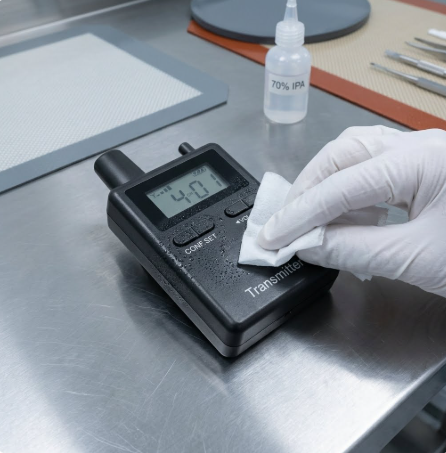
The RC2401 carries an IPX4 splash-resistant rating, and that specification draws the exact line for cleanroom cleaning. IPX4 means the housing tolerates splashes from any direction; it is not a wash-down rating, and it is not a reason to submerge a receiver or hold it under a sanitizer spray. In a fab where wipe-down is a reflex, the maintenance instruction has to be written down: damp wipe, never wet. Use the 70% IPA from the gowning station on a lint-free cloth, wipe the housing, and keep liquid away from the earpiece jack, the pairing button edge, and any port cover.
The RC2501's smart noise-canceling microphone deserves its own cleaning note. Its mic filters background interference for clear voice pickup, which is precisely what you want when a fab guide is talking over the white noise of cleanroom air handlers. But a noise-canceling mic clogged with glove powder loses the very signal it was built to isolate, so the mic port goes on the weekly deep-check: dry brush first, then a short IPA-damp wipe on the housing around it. None of the three units lists a washable design, and the correct summary for your SOP is that all cleaning is surface cleaning. If a unit takes a real liquid hit, pull it from rotation and dry it bench-side for a full day before it is trusted again.
📻 Channel Hygiene: 50 PLL Groups Without Crosstalk
Both the RC2401 and the RC2468 run 50 independent channels on PLL frequency synthesis in the license-free 2403–2483MHz ISM band, and both reach up to 200 meters in open areas, with the RC2468 rated to hold signal through walls and machinery. For a fab with several concurrent tours, that channel count is maintenance-relevant hardware: assign each group its own channel before the shift, write the map on the tour board, and never let two groups share one even when the building feels empty, because a neighboring lab's 2.4 GHz gear does not respect your schedule.
The weekly RF check is simple. Power all transmitters in the charging room at once, walk one receiver along the actual tour route, and listen for bleed from any group that should be silent. The multi-group architecture on the RC2501 is built for complete crosstalk elimination, and the RC2501's one-click sync means a receiver that drifted can be re-synced at the airlock in seconds rather than benching it. Do the check after any facility change too: new tool installations, new shielded walls, or a reorganized route can all move the RF map under your feet, and the cheapest moment to discover that is during a rehearsal, not with visitors inside the airlock.
🔧 📋 Spec Comparison for the Maintenance Log
The table below consolidates the figures that matter to a maintenance planner, taken from the current product pages. Post it inside the charging cabinet so the numbers survive staff changes.
| Maintenance Item | RC2501 | RC2401 | RC2468 |
|---|---|---|---|
| Band / channels | 2.4GHz ISM, multi-group independent | 2403–2483MHz, 50 PLL channels | 2403–2483MHz, 50 PLL channels |
| Open-area range | 200 m | 200 m | 1–200 m |
| Battery life | Not published on product page | TX 10+ h / RX 20+ h | TX 12 h (1500mAh) / RX 10 h (300mAh) |
| Weight | 86 × 50 × 19 mm housing | Not published on product page | TX 59 g / RX 18 g |
| Cleaning-relevant rating | Not listed | IPX4 splash-resistant | Not listed |
| Charging | Not published on product page | DC charging, multi-device supported | Micro USB 5V/1A |
| Operating temperature | -10℃ to 45℃ | Not published on product page | Not published on product page |
Where a cell says not published, resist the urge to fill it from a brochure: the product page is the source of record, and the maintenance log should cite it the same way. Buyers weighing these units against the rest of the range can browse the full wireless tour guide systems lineup to match fleet size to tour volume.
💾 🌡️ Storage, Temperature and Warranty Boundaries
Storage is where cleanroom audio kits quietly die. The RC2501 is rated for -10℃ to 45℃ operation, which covers an equipment room in most climates, but the corner of the facility office next to the steam line or the unconditioned loading cage does not qualify. Store charged units in the climate-controlled area the cleanroom already maintains, in closed cases away from the IPA station, with desiccant packs changed on the same schedule as the gowning-room ones. The RC2468's frequency response of 50Hz–200kHz delivers Hi-Fi voice, and moisture in a stored receiver is the fastest way to lose that clarity to crackle.
Know the warranty line before an incident, not after. Richitek's three-year warranty on these systems covers the mainboard and excludes vulnerable parts: the headset, the microphone, and the battery. That division is exactly why the consumable items above get their own maintenance intervals in this guide. Earpieces and mic foams are wear parts you stock and swap; batteries are cycled and retired on schedule; the mainboard is what the warranty protects when everything else was handled correctly. OEM and ODM customization is available across the line if your facility wants logo printing or color coding for its fleet. For procurement teams comparing maintenance cost across product families, the Richitek solutions library collects the scenario guides where these tradeoffs are worked through.
✅ The Pre-Shift Checklist Before Visitors Enter the Airlock
Close the loop with a checklist that takes five minutes and saves a tour. Power on every transmitter and confirm the pairing tone; count receivers against the visitor list and pull any unit that fails to boot. Verify the channel map: one group, one channel, no exceptions, and the spare transmitter pre-set to each group's channel. Wipe housings with dry lint-free wipes, spot-clean scuffs with IPA on a cloth and let them dry. Check lanyards and clips, since a snapped clip inside a cleanroom becomes a FOD event on the floor, not just a lost receiver.
Finish with the two entries most kits forget. First, confirm the bench-side spare: one charged receiver and one charged transmitter per group, out of visitor circulation. Second, log the battery counters — units past their monthly cycle-down get flagged for the weekend rotation, not the morning of a customer visit. Run the same list after the tour in reverse, and the collection bin becomes the start of tomorrow's shift instead of a pile of unknowns. A fab tour succeeds when the audio disappears into the background; maintenance is what buys that invisibility, five minutes at a time.