An admissions open day looks like a single event to the families walking in, but to whoever wires the campus it is three different jobs running at once: a welcome talk in a five-hundred-seat auditorium, parallel subject sessions in half a dozen teaching rooms, and a walking circuit that drags thirty families across open quadrants between buildings. Each job punishes the wrong hardware in a different way. A rig that works beautifully in a lecture hall goes quiet the moment a group rounds a concrete stairwell; a system tuned for outdoor range runs through its batteries before the afternoon wave starts. This guide walks through the deployment as an installer meets it, zone by zone, using the three Richitek units that covered our last open-day build: the same education deployment pattern we use across campus projects, applied here to the RC8860, the RC085 and the RC2501.
The schedule is the first document to read, before any equipment leaves the storeroom. Our last event ran a welcome address at 9:00, six faculty sessions at 10:00, and family tours from 11:15 until the lunch rush, then repeated the whole shape after a lunch break for a second intake. That layout fixes almost every decision that follows: how many simultaneous audio channels the building needs, which zones can share frequencies, and how long each transmitter has to survive without a charger. Installers who skip this step usually discover the problem at 9:40, when two sessions on adjacent channels start bleeding into each other through a partition wall.
What One Morning on an Admissions Day Actually Demands
Count the simultaneous sessions first, not the headcount. On our last build the peak was eight concurrent talks: one auditorium, six faculty rooms, and one outdoor circuit running at the same time. Any fleet below that channel count forces families to share a receiver across two rooms, which is exactly the kind of compromise a prospective applicant notices. The second number is distance: the outdoor circuit covers roughly four hundred metres end to end, crossing a quadrangle with no walls to bounce signal off, while the faculty rooms barely stretch thirty metres. The third number is time. Doors open at 8:30 and the last family leaves after 15:00, so every transmitter has to hold a live session for close to seven hours with no opportunity to swap units mid-talk.
Those three numbers point at three different radio environments, which is why a single-model fleet keeps disappointing campus AV teams. A dedicated UHF band shrugs off the Wi-Fi soup inside a modern teaching block; a wide channel bank absorbs six rooms running at once; and a long-endurance 2.4G unit lets a walking tour run all morning without a battery cart following it around the quad. The RC8860, RC085 and RC2501 line up against those three environments almost one to one.
The Auditorium Session Anchors on RC8860
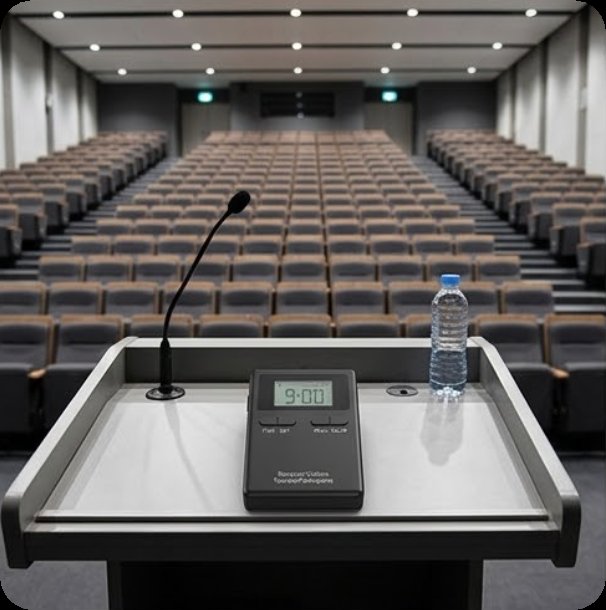
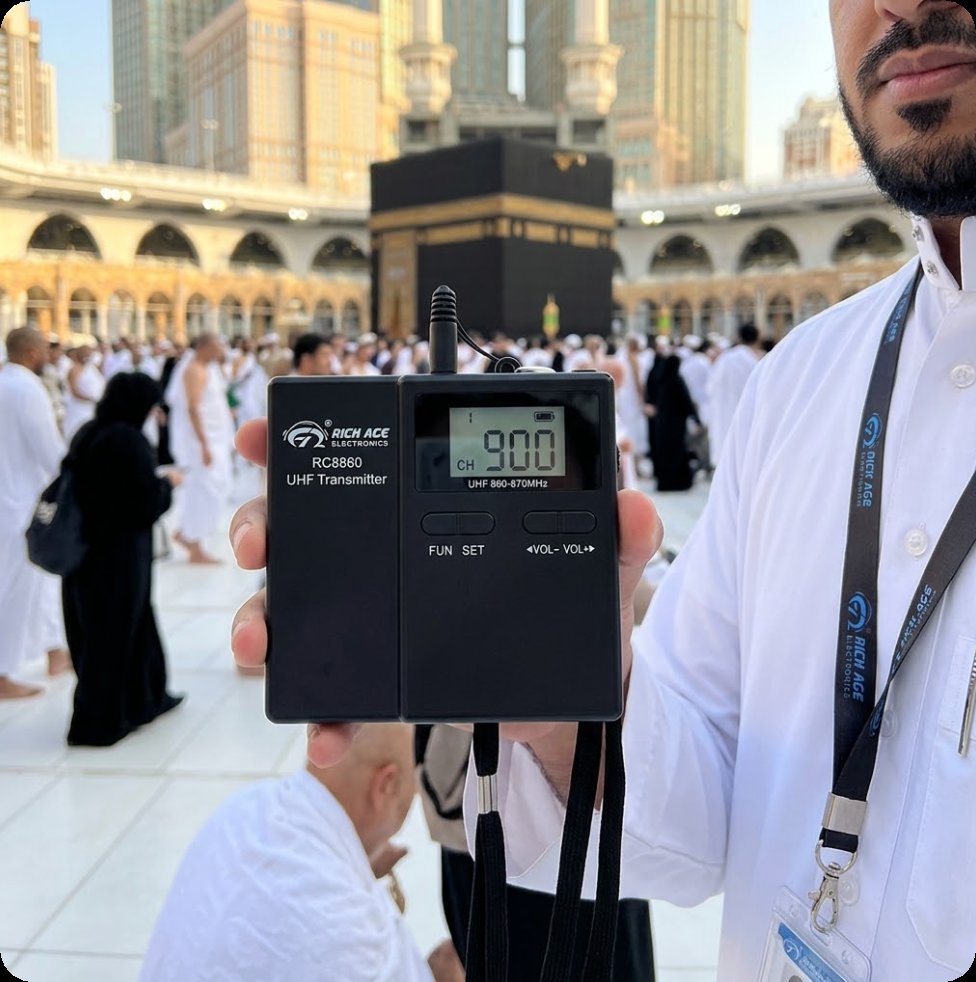
The welcome talk is the one session where everybody in the building listens to a single voice, so it gets the most stable radio on the shelf. The RC8860 transmits on 860-870 MHz, a dedicated UHF band that no campus data network touches, and its twenty-channel bank is more than enough for a session where one transmitter serves hundreds of listeners. Output power sits at 10 mW with a transmission range of 1-200 metres, which comfortably covers a tiered hall from the lectern to the back row. The transmitter's 10-hour battery, fed by a 3.7 V 1500 mAh pack, runs from the 9:00 address straight through to the afternoon repeat without a mid-event charge.
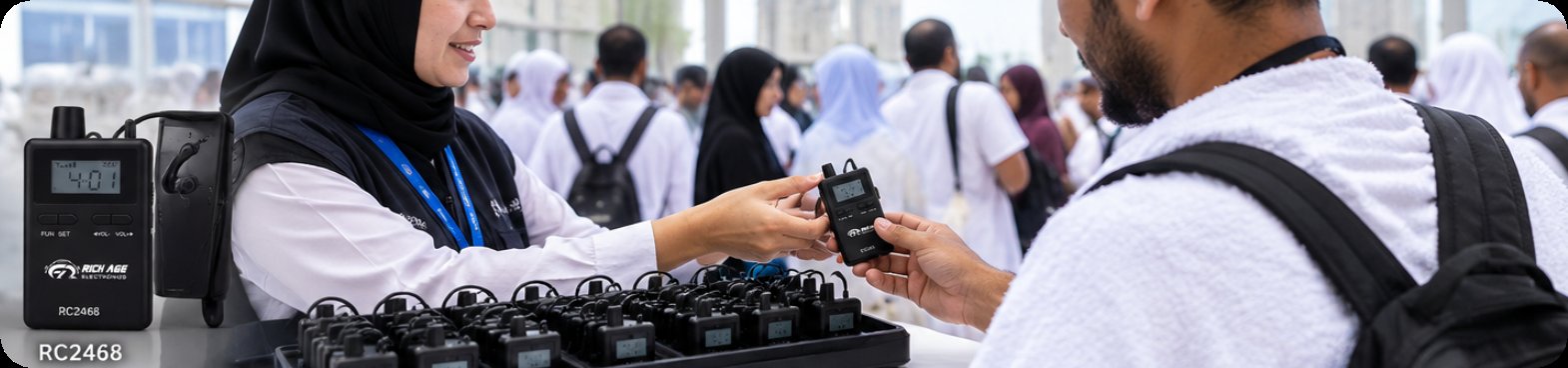
Installation here is mostly discipline rather than hardware. We assign the auditorium channel on the Friday before the event, tape a printed label over the dial, and lock the unit so nobody can drift it. Receivers for this session are handed out at the hall doors, not at the main registration desk, because a fifty-gram earpiece receiver disappears into a pocket and never comes back if it is collected three buildings away from where it is used. The RC8860's receiver battery carries a 20-hour rating on a 1000 mAh cell, so the units that ran the morning session can be reset for the afternoon wave with nothing more than a power-off between events.
RC085 Takes the Parallel Faculty Rooms
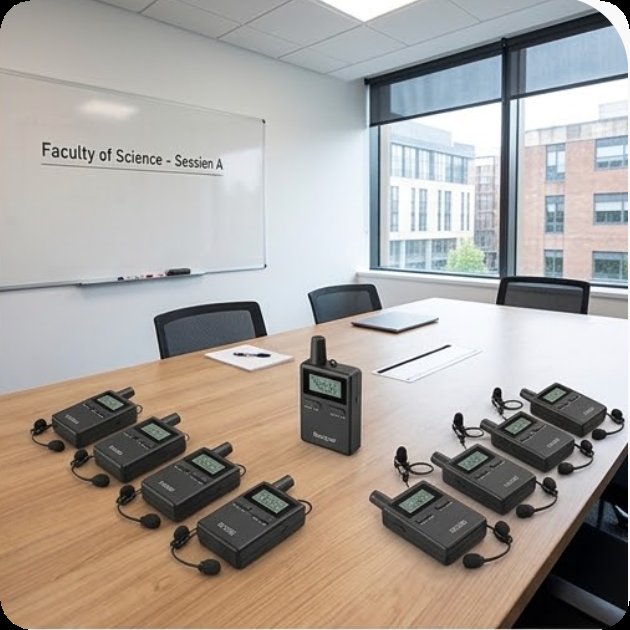
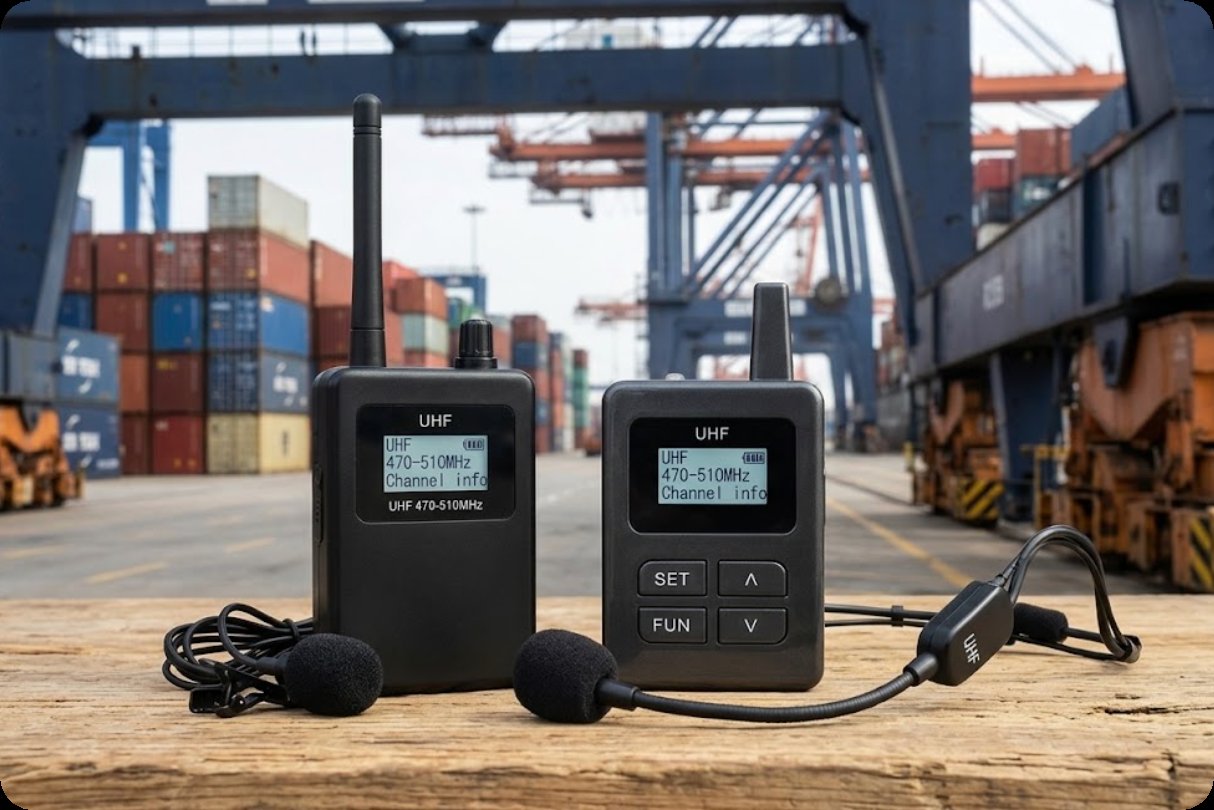
Six faculty sessions running simultaneously is where cheap fleets fall apart, and it is the reason this zone gets the RC085. Its 470-510 MHz band carries a hundred channels, so six concurrent rooms plus a spare for the overflow desk consume barely a tenth of the bank, and two departments that refuse to coordinate their session titles still cannot collide. Each transmitter runs 8-10 mW across the same 1-200 metre span, which is generous for a thirty-metre room but useful when a popular professor moves the session into the corridor because the room filled up.
Two details make this unit the right shape for repeated short talks. The first is sensitivity: the RC085's receiver is rated around -102 dBm, and with the optional headset or lavalier microphone on the transmitter, an admissions tutor can clip the unit on and demonstrate a lab bench without holding anything. The second is the transmitter's 12-hour rating on a 1200 mAh cell. Faculty sessions run forty minutes each with gaps, so the radio duty cycle is light, and the fleet that starts at 10:00 still has headroom when a parent asks for a private repeat at 14:00. Receivers come back to a collection bin at each room door, and the sixty-gram weight means even younger siblings carry one without complaint.
⚖️ RC2501 for the Families Walking Between Buildings

The outdoor circuit is the hardest environment on campus, and it belongs to the RC2501. It transmits on 2.4 GHz at 13 mW, the strongest output of the three units here, with the same 1-200 metre working range. Across an open quadrant with nothing to reflect off, that output margin is what keeps the guide's voice solid at the back of a straggling group of thirty. The fifty-channel bank handles the walking tours plus the backup circuit that runs when weather pushes the route under cover.
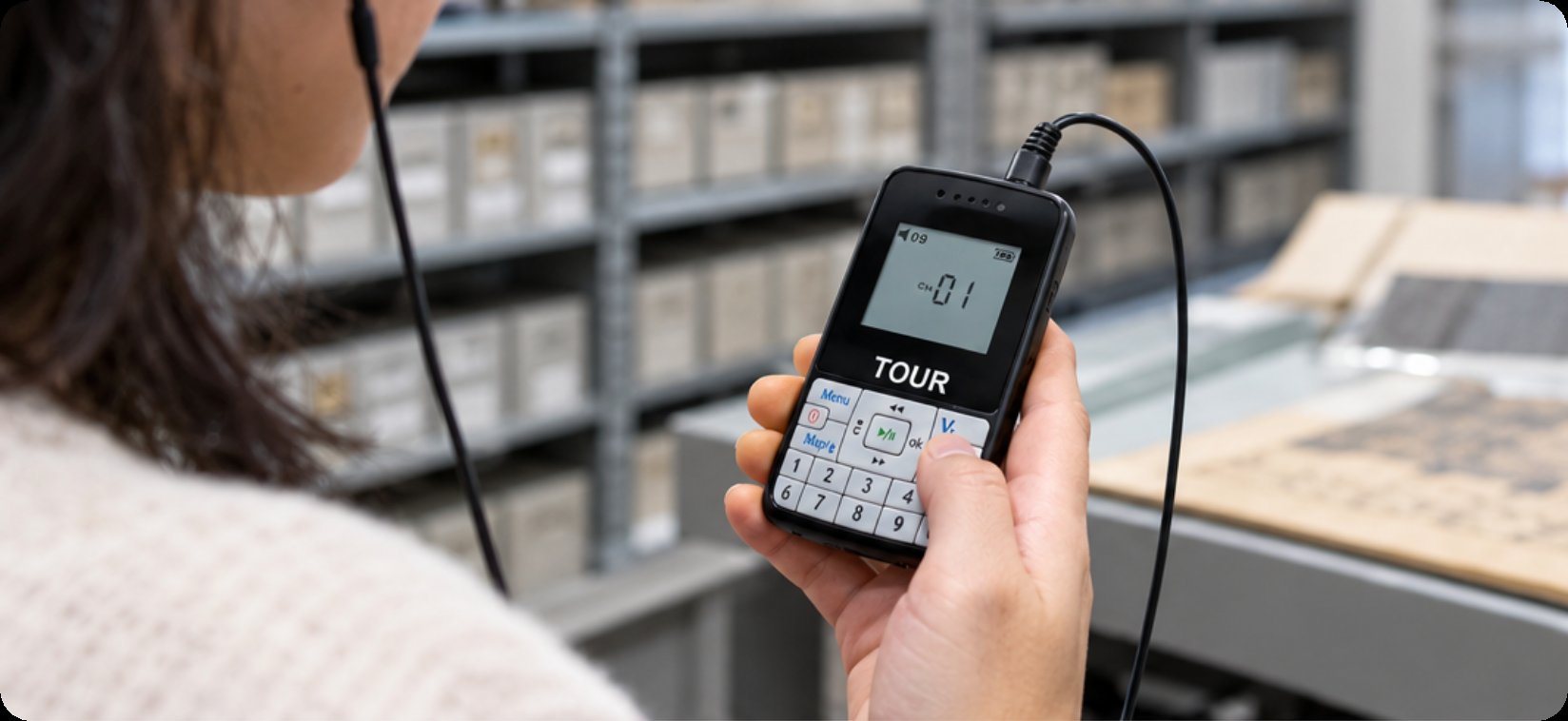
Battery behaviour is the quiet reason this unit suits the walking zone. The transmitter holds a 15-hour rating on a 3.7 V 1500 mAh pack, and the receiver carries a 35-plus-hour standby figure on the same capacity class, which changes the logistics: the walking fleet gets charged on Thursday evening and forgotten about, instead of competing for the charging cart at 12:30. Both transmitter and receiver weigh 47 grams, so a receiver handed to a fourteen-year-old at the quad gate is not a burden three buildings later. Charging runs over Type-C, which means the same power banks that top up phones at the registration desk can rescue a unit in a pinch, and the optional lavalier mic lets the tour guide keep both hands free for doors and brochures.
🏟️ The Sheet the AV Team Works From
Everything above compresses into one page that gets taped inside the equipment case. The version from our last build read as follows.
| Zone | Unit | Band | Channels | TX battery | RX battery | Charge |
|---|---|---|---|---|---|---|
| Auditorium | RC8860 | 860-870 MHz UHF | 20 | 10 h / 1500 mAh | 20 h / 1000 mAh | USB |
| Faculty rooms | RC085 | 470-510 MHz UHF | 100 | 12 h / 1200 mAh | 20 h / 1000 mAh | USB |
| Walking circuit | RC2501 | 2.4 GHz | 50 | 15 h / 1500 mAh | 35+ h / 1000 mAh | Type-C |
Three bands, three duty profiles, one sheet. Installers who want to see how these units sit in the wider line-up can compare them against the entry fleet, the mid-range option and the higher-channel configuration before locking a purchase list.
⚖️ Battery Rotations Between the Morning and Afternoon Waves
An open day repeats itself after lunch, and the repeat is where battery planning pays off. The RC8860's ten-hour transmitter figure means the auditorium rig that started at 9:00 is still inside its rating when the second welcome talk begins at 13:30, so no swap is scheduled at all. The RC085 transmitters live on a light duty cycle, but we still park all six on their USB chargers during the lunch lull, because the afternoon intake always includes one extra overflow session that nobody planned. The RC2501 walking fleet needs nothing at midday; the 35-plus-hour receiver figure and the 15-hour transmitter rating absorb both waves with room to spare, and the Type-C ports mean a single multi-port brick in the equipment case covers the entire circuit if a unit does come back low.
The one habit worth enforcing is a written log rather than a mental one. Every unit gets an out-time and an in-time on the sheet, and whoever runs the collection bin initials the row. It feels bureaucratic at 8:00 and indispensable at 14:50, when two faculty receivers are missing and the afternoon auditorium session starts in ten minutes.
Handover Discipline: Counting Receivers Back In
Receivers wander off at open days for the same reason pens do: they are small, useful, and handed to people who are excited about something else. Three habits keep the count honest. First, hand out and collect in the same zone, at the same door, from the same person; a receiver collected at the faculty room it was used in comes back, one carried to the quad gate does not. Second, keep the channel locked so a wandering unit is useless outside its assigned fleet, which gives families no reason to keep exploring it at home. Third, count against the sheet at every wave change, not just at close; a missing unit discovered at 15:00 is a shrug, one discovered at 10:45 is still findable in the auditorium cloakroom.
None of this is exotic, and none of it is specific to one brand, which is the point: the hardware only holds an open day together when the handover routine is boring and repeatable. Teams that want the fuller equipment view behind these units can browse the complete tour guide line, and teams planning a season of recruitment events rather than a single morning can pull ideas from our scenario solutions library.
Frequently Asked Questions
1. Can one fleet cover all three zones instead of three models?
It can, and on small campuses it does, but the compromises show up quickly. A single 2.4G fleet inside six faculty rooms fights the building's own Wi-Fi density, and a single UHF fleet loses its channel headroom the moment two zones need to be re-planned on the fly. The three-band split exists so that no zone ever depends on another zone's discipline.2. How early should the channel plan be locked?
The Friday before the event, with printed labels on every transmitter. The plan itself takes twenty minutes; what it prevents is a 9:40 collision between two faculty rooms whose sessions were reordered the night before without anyone telling the AV desk.3. What happens when it rains on the walking circuit?
The backup route moves under colonnades and building concourses, which is why the walking fleet carries its own channel block on the RC2501 rather than borrowing from the faculty bank. The 2.4G signal behaves well in covered walkways, and the 200-metre range absorbs the detour without re-pairing anything.4. Do receivers need to be sterilised between waves?
Between the morning and afternoon intakes we wipe earpieces with alcohol cloths during the lunch lull, which fits easily because the UHF receivers are parked anyway. The walking fleet's earpieces get the same wipe while families are at lunch, and the 35-hour battery figure means none of this wiping time costs a charge cycle.From the first channel sheet to the last receiver counted back in, an open-day installation is a logistics exercise wearing an audio costume. The RC8860 holds the auditorium, the RC085 absorbs the parallel rooms, and the RC2501 walks the quad; each stays inside its ratings all day, and the sheet taped inside the case is what makes the next event faster than the last.