
A leading China factory specializing in Wireless Tour Guide Systems, Church Audio Guides, and Translation Headphones with premium OEM/ODM solutions.

Tel:+86 18922879583

Email:tiger.wang@richitek.com

Silent Disco Headphones, RC2468 Receivers and 2.8-Inch Audio Guides: A Fault-Finding Route Through a Theme Park Day

A theme park never reports a fault the way a conference room does. Nobody hands the technician a written description between two shows, because the person who noticed the problem is usually a guest on their way to the next ride, not a coordinator standing beside a charging case. By the time the kit comes back, the symptom has been reworded three or four times, and the unit that actually misbehaved is buried somewhere in a crate of two hundred others. What works instead is a fixed route: a small number of points in the day where faults reliably surface, each one stocked with the checks that make sense right there. A tour guide system fleet that runs in a park all season needs that route more than it needs another feature list, because the equipment itself is rarely the hardest part of the day to diagnose.

This article follows one route through one operating day at a park, using three kits that behave very differently under the same conditions: a Silent Disco Wireless Headphone System for the evening sessions, the RC2468 ultra-light 2.4G receiver for all-day commentary, and a 2.8-inch semi-auto digital audio guide for self-paced exhibit zones. The three overlap only partly: one is a stereo headphone built for silent events, one is a classic transmitter-and-receiver pair, and one plays numbered MP3 tracks from internal memory. What they share is the way their failures cluster at predictable moments, which is exactly what a fault-finding route built on the wider solutions behind our products can exploit — the equipment itself is rarely the hardest part of the day to diagnose.

Four Points Where a Park Day Turns Up Its Own Faults

Strip a season of service tickets down and most of them land at one of four points. The first is the checkout bin, in the hour before gates open, when staff pull units from overnight storage and hand them to the morning cohort. The second is the midway stretch, early afternoon, when a receiver that left fully charged meets its first real gap. The third is the reclaim point, at closing, where returned units are counted, wiped and repacked. The fourth is the evening session itself, when the silent disco headphones take over a fenced area and every fault is visible as a patch of guests standing still. Walking the same four points in the same order every day converts scattered complaints into a map, and the map is what lets a two-person crew cover a park that runs three hundred units.

🛒 The Checkout Bin Catches What Overnight Charging Missed

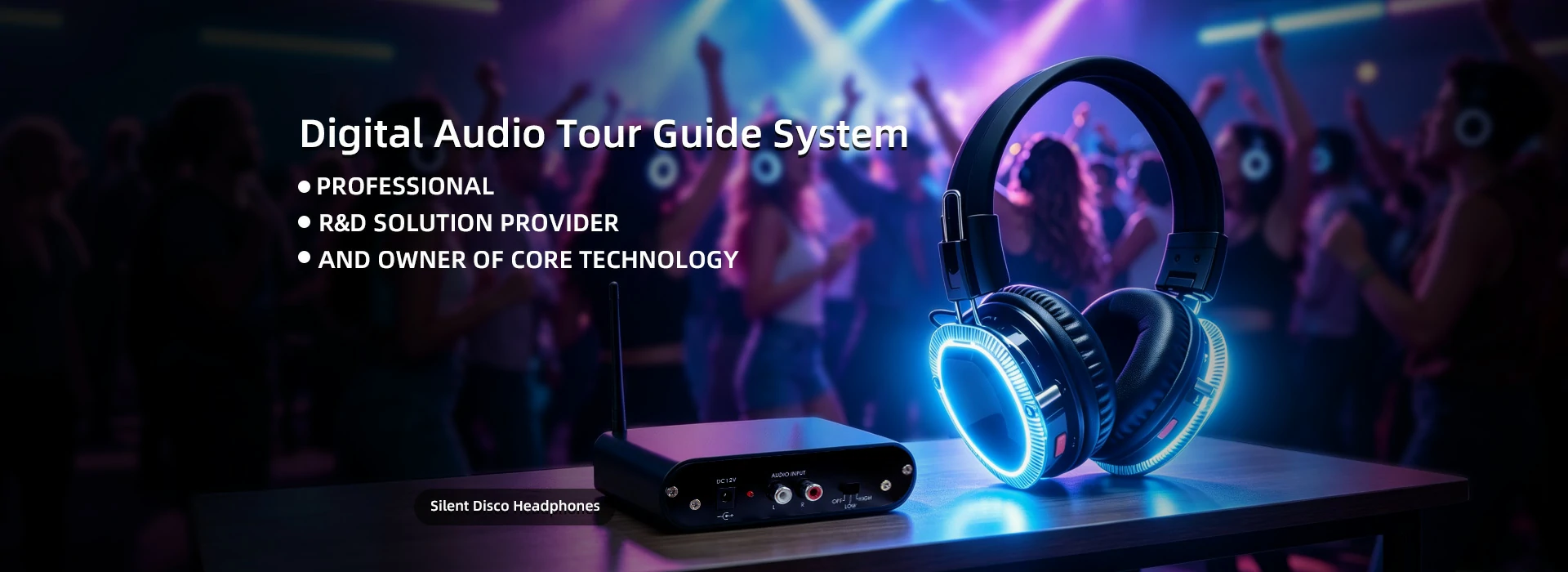
Morning is the only time of day when a fault can be fixed before a guest ever holds the unit, so the checkout bin gets the strictest routine. For the Silent Disco Wireless Headphone System, the routine starts with the five-colour LED ring: red, green, blue, purple and yellow mark the ten available channels, and a headphone showing a colour nobody assigned has been left on the wrong channel since last night. A full system check takes less time than the queue of staff waiting for kit: power on, confirm the LED colour matches the sheet, press one channel step up and back, and listen for the two-second lock. The foldable headbands get a physical once-over at the same moment, because a hinge cracked in yesterday's crowd will not survive another day folded into a transport case. Headphones that fail here go straight to the 3-hour Micro USB recovery pile rather than into circulation, which is why the morning pile and the evening party almost never share problems.

A park attendant checks the five-colour LED ring of a Silent Disco headphone at the morning checkout counter beside open transport cases

One-Sided Audio Is a Channel Question Before It Is a Repair

The single most common Silent Disco report sounds worse than it is: music in one ear, silence in the other. Because the RC-409 headphones carry a stereo FM signal with a signal-to-noise ratio above 75 dB, a dead earcup is almost never a dead driver — it is a channel story. A headphone slipped half a step onto a neighbouring channel can still catch enough of the adjacent carrier to render one side, and guests describe that as "broken" rather than "mistuned". The thirty-second test at the reclaim point is to step the channel up once, down twice, and back once while watching both LED cups: if the silent side flickers back on any step, the unit never needed a work order, only a firm click. Units that stay one-sided through the full sweep go into the defect pile — the vendor quotes a defective rate under one percent on this line, so a genuine hardware fault is rare enough to log individually with its serial number.

🔋 Midway Through the Day, Receiver Battery Math Starts to Bite

The RC2468 is the kit most exposed to the afternoon, because it is the lightest thing in the fleet — the receiver weighs 18 grams in its ear-hook format — and guests forget they are wearing it, which means it never gets handed back for a top-up. The arithmetic is unforgiving: the transmitter carries a 1500 mAh cell rated for 10 hours, but the receiver runs a 300 mAh cell rated at approximately 8 hours of continuous use. A park day that starts at nine runs past that figure before the evening session, so the crews that stay ahead of complaints do not wait for dead units; they schedule a swap window around two in the afternoon, pulling the cohort that checked out first thing and issuing spares from the second crate. The fifty channels available on the 2403-2483 MHz band also earn their keep here, because a swap performed next to a live show needs a clean channel more than it needs speed. Units that come back "dead by three" for a second consecutive day get their USB charge port inspected before the battery is blamed — a worn port charges slowly enough to look exactly like a dying cell.

A visitor wearing the 18-gram RC2468 ear-hook receiver walks through a theme park midway with coaster tracks behind the stalls

Three Kits, One Park Day, Side by Side

The table below condenses the three kits into the numbers that matter at each checkpoint. Every value comes from the current product documentation, and the columns were chosen so that a crew leader can run the whole route from a single printed sheet.

Checkpoint questionSilent Disco systemRC24682.8-inch guide
Audio pathUHF/RF FM stereo, dual PLL2.4 GHz digital, 2403-2483 MHzStored MP3 playback
Channels or trigger10 channels, five-colour LED50 channels0-9 number keys trigger files
Full-charge runtime10 hoursTX 10 h, RX approx. 8 hUp to 18 hours
ChargingMicro USB, 3 hoursUSB portMicro USB
What the visitor adjustsChannel and volumeChannel and volumeExhibit number and volume

Read down the runtime row and the route explains itself: the headphone that ran ten hours for the evening party still has charge at closing, the RC2468 receiver is the one that needs the afternoon swap, and the 2.8-inch guide routinely comes back with charge to spare after an eighteen-hour rating covers even a double shift. Charging ports matter just as much — two of the three kits charge over Micro USB, so the crate by the reclaim point keeps a powered hub with both cable types permanently attached.

🎨 The Reclaim Point, Where a Wrong Exhibit Number Explains Itself

The 2.8-inch semi-auto digital audio guide generates a quieter but stranger class of fault, and nearly all of it surfaces at the reclaim point. A guest returns a unit that "plays the wrong story", and the cause is almost always a mismatch between the number the visitor keyed and the file that number triggers — with space for 9999 audio files across 16 languages inside 2 GB of memory, a re-mapped zone or a reordered exhibit hall shifts the mapping long before anyone edits the audio. The check at reclaim takes one minute: key a known exhibit number, listen for the expected opening line, then key the same number in the secondary language to confirm the language bank moved with it. Units that answer correctly are wiped and reissued; units that do not are tagged with the zone and the wrong track they played, which turns a vague complaint into a one-line work item for whoever maintains the file index. Buttons get their own glance at the same stop, since a number key that needs a second press is an annoyance in the morning and a refusal by evening.
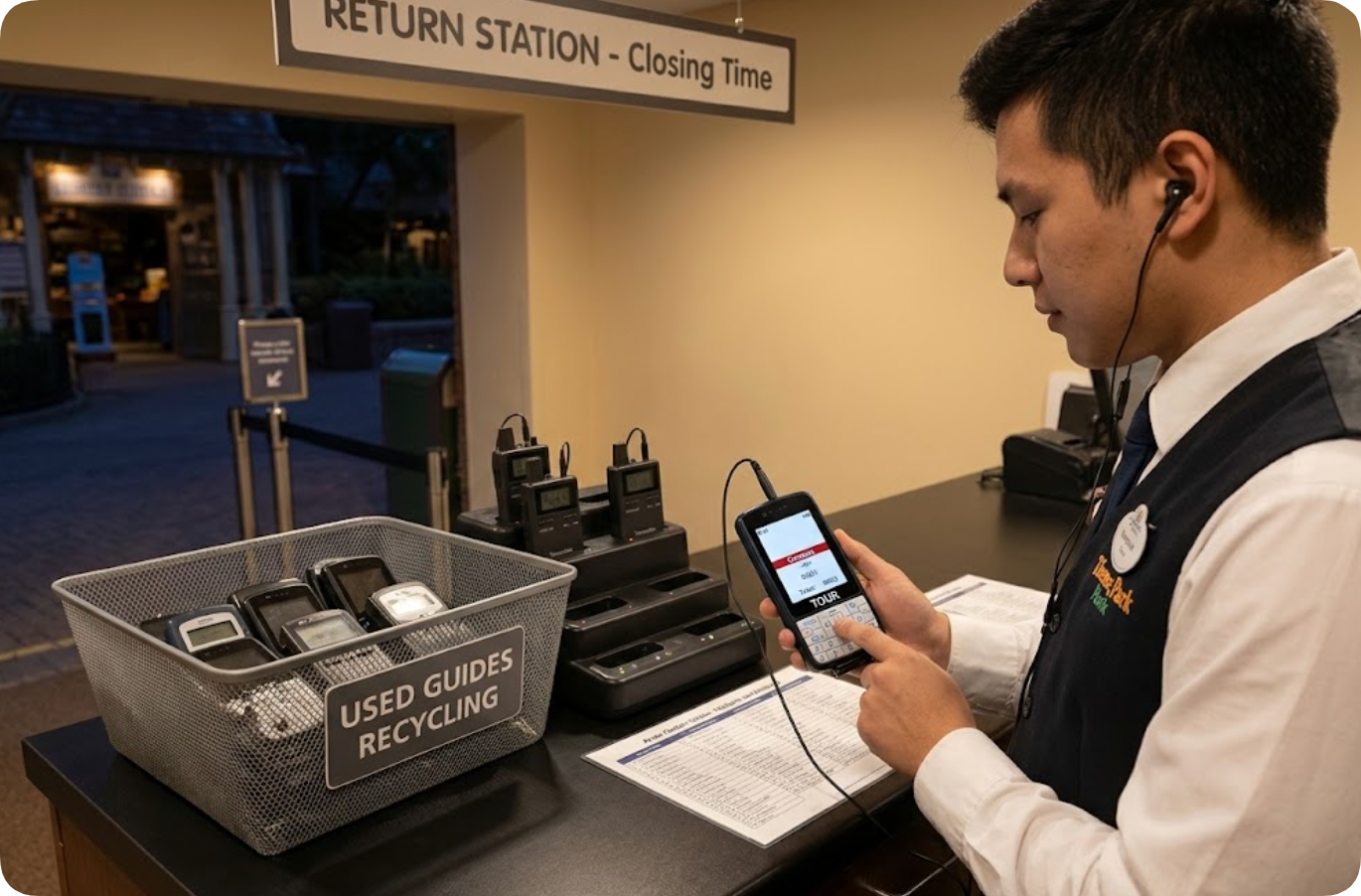
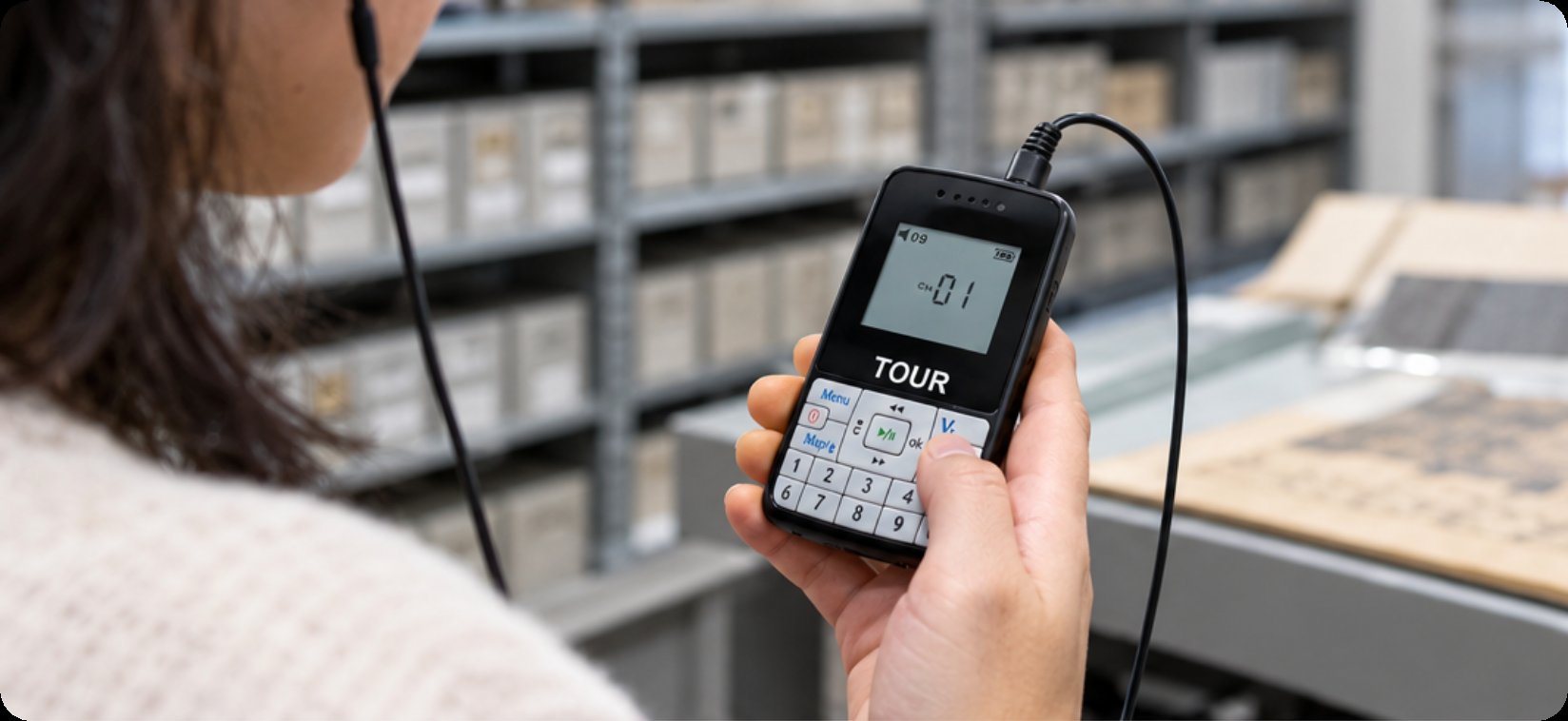
A staff member tests the numeric keypad of a 2.8-inch digital audio guide at the closing-time return station beside a recycling bin of used units

🔮 Log What Each Point Caught, Then Reset for the Next Park Day

The route only pays off if each point writes down what it caught, in the same three lines every day: which checkpoint, which unit, which observation. Over a season the log separates kits that fail from kits that were failed — the headphones that come back one-sided every Saturday point at a channel discipline problem in the evening crew, while receivers dying mid-afternoon point at a swap schedule that starts too late. The routine closes where it opened: batteries onto the overnight hub, LED colours zeroed, number keys tested, and the crate repacked in checkout order so tomorrow's first hour starts ahead instead of behind. Parks running guided zones alongside the silent events can map the same four points onto any city tour operation with almost no changes, because the four points — issue, midway, reclaim, evening session — exist wherever a fleet leaves a counter in the morning and comes back at night.

Frequently Asked Questions

1. A guest reports one side of the Silent Disco headphones is silent. Should the unit be pulled from service?

Run the channel sweep first: step one channel up, two down, one back while watching both LED cups. If the silent side returns on any step, the headphone had drifted onto an adjacent channel and needs no work order. Only units that stay one-sided through the full ten-channel sweep go to the defect pile, which on this line is fewer than one in a hundred units.

2. How many RC2468 receivers actually finish a park day without recharging?

Plan on the rating, not on luck: the 300 mAh receiver cell is rated at approximately 8 hours of continuous use against a 10-hour transmitter day. In practice the units issued at opening need a swap or a USB top-up by mid-afternoon, and the swap window at around two o'clock clears the whole morning cohort before the evening session starts.

3. A 2.8-inch guide plays the wrong audio for an exhibit. What is checked first?

Re-key the exhibit number and compare the opening line against the zone sheet. With up to 9999 files and 16 languages on 2 GB of memory, a reordered hall or a re-mapped zone changes what a number triggers before anyone touches the audio itself. If the number answers correctly in both the primary and the secondary language, the unit is fine and the file index needs the fix.

4. Can any of the three kits be partially charged between shows?

Yes, and the ports decide how: the Silent Disco headphones recover a full charge in 3 hours over Micro USB, the 2.8-inch guide tops up on the same connector, and the RC2468 charges over its USB port. A powered hub with both cable types kept at the reclaim point handles every kit without hunting for adapters, and a thirty-minute top-up is enough to carry an evening session.


Get the spec sheet, MOQ and a factory-direct quote

Tell us the venue, the group size and how many languages you need. An engineer at our Shenzhen factory replies within one business day with the matching model, a written quote, lead time and the CE / RoHS / ISO 9001 documents.

Talk to an engineer    WhatsApp +86 189 2287 9583

Prefer email? tiger.wang@richitek.com  |  OEM / ODM, custom tooling and neutral packaging available  |  send the enquiry through our contact page

Shenzhen Rich Age Electronics Co., Ltd. (Richitek) - manufacturing wireless tour guide systems, church translation headsets and museum audio guide equipment since 2007.

2026年10月21日 11:02
ꄘ click: 12
no data

Silent Disco Headphones, RC2468 Receivers and 2.8-Inch Audio Guides: A Fault-Finding Route Through a Theme Park Day

time: 2026年10月21日 click:12

A theme park never reports a fault the way a conference room does. Nobody hands the technician a written description between two shows, because the person who noticed the problem is usually a guest on their way to the next ride, not a coordinator standing beside a charging case. By the time the kit comes back, the symptom has been reworded three or four times, and the unit that actually misbehaved is buried somewhere in a crate of two hundred others. What works instead is a fixed route: a small number of points in the day where faults reliably surface, each one stocked with the checks that make sense right there. A tour guide system fleet that runs in a park all season needs that route more than it needs another feature list, because the equipment itself is rarely the hardest part of the day to diagnose.

This article follows one route through one operating day at a park, using three kits that behave very differently under the same conditions: a Silent Disco Wireless Headphone System for the evening sessions, the RC2468 ultra-light 2.4G receiver for all-day commentary, and a 2.8-inch semi-auto digital audio guide for self-paced exhibit zones. The three overlap only partly: one is a stereo headphone built for silent events, one is a classic transmitter-and-receiver pair, and one plays numbered MP3 tracks from internal memory. What they share is the way their failures cluster at predictable moments, which is exactly what a fault-finding route built on the wider solutions behind our products can exploit — the equipment itself is rarely the hardest part of the day to diagnose.

Four Points Where a Park Day Turns Up Its Own Faults

Strip a season of service tickets down and most of them land at one of four points. The first is the checkout bin, in the hour before gates open, when staff pull units from overnight storage and hand them to the morning cohort. The second is the midway stretch, early afternoon, when a receiver that left fully charged meets its first real gap. The third is the reclaim point, at closing, where returned units are counted, wiped and repacked. The fourth is the evening session itself, when the silent disco headphones take over a fenced area and every fault is visible as a patch of guests standing still. Walking the same four points in the same order every day converts scattered complaints into a map, and the map is what lets a two-person crew cover a park that runs three hundred units.

🛒 The Checkout Bin Catches What Overnight Charging Missed

Morning is the only time of day when a fault can be fixed before a guest ever holds the unit, so the checkout bin gets the strictest routine. For the Silent Disco Wireless Headphone System, the routine starts with the five-colour LED ring: red, green, blue, purple and yellow mark the ten available channels, and a headphone showing a colour nobody assigned has been left on the wrong channel since last night. A full system check takes less time than the queue of staff waiting for kit: power on, confirm the LED colour matches the sheet, press one channel step up and back, and listen for the two-second lock. The foldable headbands get a physical once-over at the same moment, because a hinge cracked in yesterday's crowd will not survive another day folded into a transport case. Headphones that fail here go straight to the 3-hour Micro USB recovery pile rather than into circulation, which is why the morning pile and the evening party almost never share problems.

A park attendant checks the five-colour LED ring of a Silent Disco headphone at the morning checkout counter beside open transport cases

One-Sided Audio Is a Channel Question Before It Is a Repair

The single most common Silent Disco report sounds worse than it is: music in one ear, silence in the other. Because the RC-409 headphones carry a stereo FM signal with a signal-to-noise ratio above 75 dB, a dead earcup is almost never a dead driver — it is a channel story. A headphone slipped half a step onto a neighbouring channel can still catch enough of the adjacent carrier to render one side, and guests describe that as "broken" rather than "mistuned". The thirty-second test at the reclaim point is to step the channel up once, down twice, and back once while watching both LED cups: if the silent side flickers back on any step, the unit never needed a work order, only a firm click. Units that stay one-sided through the full sweep go into the defect pile — the vendor quotes a defective rate under one percent on this line, so a genuine hardware fault is rare enough to log individually with its serial number.

🔋 Midway Through the Day, Receiver Battery Math Starts to Bite

The RC2468 is the kit most exposed to the afternoon, because it is the lightest thing in the fleet — the receiver weighs 18 grams in its ear-hook format — and guests forget they are wearing it, which means it never gets handed back for a top-up. The arithmetic is unforgiving: the transmitter carries a 1500 mAh cell rated for 10 hours, but the receiver runs a 300 mAh cell rated at approximately 8 hours of continuous use. A park day that starts at nine runs past that figure before the evening session, so the crews that stay ahead of complaints do not wait for dead units; they schedule a swap window around two in the afternoon, pulling the cohort that checked out first thing and issuing spares from the second crate. The fifty channels available on the 2403-2483 MHz band also earn their keep here, because a swap performed next to a live show needs a clean channel more than it needs speed. Units that come back "dead by three" for a second consecutive day get their USB charge port inspected before the battery is blamed — a worn port charges slowly enough to look exactly like a dying cell.

A visitor wearing the 18-gram RC2468 ear-hook receiver walks through a theme park midway with coaster tracks behind the stalls

Three Kits, One Park Day, Side by Side

The table below condenses the three kits into the numbers that matter at each checkpoint. Every value comes from the current product documentation, and the columns were chosen so that a crew leader can run the whole route from a single printed sheet.

Checkpoint questionSilent Disco systemRC24682.8-inch guide
Audio pathUHF/RF FM stereo, dual PLL2.4 GHz digital, 2403-2483 MHzStored MP3 playback
Channels or trigger10 channels, five-colour LED50 channels0-9 number keys trigger files
Full-charge runtime10 hoursTX 10 h, RX approx. 8 hUp to 18 hours
ChargingMicro USB, 3 hoursUSB portMicro USB
What the visitor adjustsChannel and volumeChannel and volumeExhibit number and volume

Read down the runtime row and the route explains itself: the headphone that ran ten hours for the evening party still has charge at closing, the RC2468 receiver is the one that needs the afternoon swap, and the 2.8-inch guide routinely comes back with charge to spare after an eighteen-hour rating covers even a double shift. Charging ports matter just as much — two of the three kits charge over Micro USB, so the crate by the reclaim point keeps a powered hub with both cable types permanently attached.

🎨 The Reclaim Point, Where a Wrong Exhibit Number Explains Itself

The 2.8-inch semi-auto digital audio guide generates a quieter but stranger class of fault, and nearly all of it surfaces at the reclaim point. A guest returns a unit that "plays the wrong story", and the cause is almost always a mismatch between the number the visitor keyed and the file that number triggers — with space for 9999 audio files across 16 languages inside 2 GB of memory, a re-mapped zone or a reordered exhibit hall shifts the mapping long before anyone edits the audio. The check at reclaim takes one minute: key a known exhibit number, listen for the expected opening line, then key the same number in the secondary language to confirm the language bank moved with it. Units that answer correctly are wiped and reissued; units that do not are tagged with the zone and the wrong track they played, which turns a vague complaint into a one-line work item for whoever maintains the file index. Buttons get their own glance at the same stop, since a number key that needs a second press is an annoyance in the morning and a refusal by evening.

A staff member tests the numeric keypad of a 2.8-inch digital audio guide at the closing-time return station beside a recycling bin of used units

🔮 Log What Each Point Caught, Then Reset for the Next Park Day

The route only pays off if each point writes down what it caught, in the same three lines every day: which checkpoint, which unit, which observation. Over a season the log separates kits that fail from kits that were failed — the headphones that come back one-sided every Saturday point at a channel discipline problem in the evening crew, while receivers dying mid-afternoon point at a swap schedule that starts too late. The routine closes where it opened: batteries onto the overnight hub, LED colours zeroed, number keys tested, and the crate repacked in checkout order so tomorrow's first hour starts ahead instead of behind. Parks running guided zones alongside the silent events can map the same four points onto any city tour operation with almost no changes, because the four points — issue, midway, reclaim, evening session — exist wherever a fleet leaves a counter in the morning and comes back at night.

Frequently Asked Questions

1. A guest reports one side of the Silent Disco headphones is silent. Should the unit be pulled from service?

Run the channel sweep first: step one channel up, two down, one back while watching both LED cups. If the silent side returns on any step, the headphone had drifted onto an adjacent channel and needs no work order. Only units that stay one-sided through the full ten-channel sweep go to the defect pile, which on this line is fewer than one in a hundred units.

2. How many RC2468 receivers actually finish a park day without recharging?

Plan on the rating, not on luck: the 300 mAh receiver cell is rated at approximately 8 hours of continuous use against a 10-hour transmitter day. In practice the units issued at opening need a swap or a USB top-up by mid-afternoon, and the swap window at around two o'clock clears the whole morning cohort before the evening session starts.

3. A 2.8-inch guide plays the wrong audio for an exhibit. What is checked first?

Re-key the exhibit number and compare the opening line against the zone sheet. With up to 9999 files and 16 languages on 2 GB of memory, a reordered hall or a re-mapped zone changes what a number triggers before anyone touches the audio itself. If the number answers correctly in both the primary and the secondary language, the unit is fine and the file index needs the fix.

4. Can any of the three kits be partially charged between shows?

Yes, and the ports decide how: the Silent Disco headphones recover a full charge in 3 hours over Micro USB, the 2.8-inch guide tops up on the same connector, and the RC2468 charges over its USB port. A powered hub with both cable types kept at the reclaim point handles every kit without hunting for adapters, and a thirty-minute top-up is enough to carry an evening session.


Get the spec sheet, MOQ and a factory-direct quote

Tell us the venue, the group size and how many languages you need. An engineer at our Shenzhen factory replies within one business day with the matching model, a written quote, lead time and the CE / RoHS / ISO 9001 documents.

Talk to an engineer    WhatsApp +86 189 2287 9583

Prefer email? tiger.wang@richitek.com  |  OEM / ODM, custom tooling and neutral packaging available  |  send the enquiry through our contact page

Shenzhen Rich Age Electronics Co., Ltd. (Richitek) - manufacturing wireless tour guide systems, church translation headsets and museum audio guide equipment since 2007.

no data
×

Contact us

email:
name:
subject:
content: