A leading China factory specializing in Wireless Tour Guide Systems, Church Audio Guides, and Translation Headphones with premium OEM/ODM solutions.

Tel:+86 18922879583

Email:tiger.wang@richitek.com

Standardizing a Heritage Sightseeing Route with the RC2401, RC2402 and RC2500

Standardizing a Heritage Sightseeing Route with the RC2401 and RC2500 Tour Guide Systems

A heritage sightseeing tour programme moves a single group through several sacred and historic stops in one morning, and the commentary has to stay clear at every one of them. The operator running this route had grown used to losing the back of the group at the noisy stops and losing the front of the group at the quiet ones. What changed was not the script but the hardware: three models from one product family, each assigned to the stop where its strengths mattered most. This is the record of how that assignment was planned and what it delivered in the first season.

The route itself is not unusual. A heritage sightseeing tour programme of this kind typically opens inside a basilica, moves to a cloister and open courtyard, and finishes with a walking segment through the pilgrimage precinct outside the walls. Each environment asks something different of the audio, and the mistake most operators make is buying one unit for all three instead of matching the unit to the stop.

The Operator Brief for Sacred and Historic Stops

The brief the operator gave the guide team was narrow and unforgiving. Inside the basilica, voices carry and a raised guide voice disturbs a working place of worship, so the system has to deliver private, clear commentary at low volume. In the courtyard, the group spreads out and the stone reflects sound in every direction, so the system has to hold a clean signal across twenty metres of open space. On the walk, the group is on its feet for the better part of an hour, so the receivers have to outlast the tour without a mid-route battery swap.

None of these is hard on its own. The difficulty is doing all three on the same frequency plan, with the same guide transmitter, and with a team that swaps units between groups several times a day. That is the constraint that shaped the three-model choice, and it is the part most equipment decisions ignore.

💡 Why This Operator Selected Three Compatible Models

Compatibility mattered more than any single specification. All three units the operator chose sit on the same 2403 to 2483 MHz band, all three use the same PLL control mode, and all three share the same fifty-channel map, which means one channel sheet covers the whole route. The guide carries a single transmitter and switches the group between receivers without re-tuning. The family the operator settled on was the Richitek wireless tour guide system range, specifically three models that cover the quiet, the crowded, and the long-haul stops respectively.

SpecificationRC2401RC2402RC2500
Core frequency band2403 to 2483 MHz2403 to 2483 MHz2403 to 2483 MHz
Number of channels505050
Transmission distance1 to 200 m1 to 200 m1 to 200 m
Output power10 mW10 mW10 mW
Transmitter battery life10 h10 h15 h
Receiver battery life20 h20 h35+ h
Transmitter or receiver battery3.7V 1500 mAh / 3.7V 1000 mAh3.7V 1500 mAh / 3.7V 1000 mAh3.7V 1800 mAh / 3.7V 1800 mAh
Transmitter or receiver weight59 g / 50 g59 g / 50 g104 g / 104 g
Frequency response50 Hz to 200 kHz / 50 Hz to 12 kHz50 Hz to 200 kHz / 50 Hz to 12 kHz50 Hz to 8 kHz / 50 Hz to 8 kHz
Control modePLLPLLPLL
Charging portDC PortDC PortType-C
Special designBasic 2.4G standard versionBasic 2.4G, 50-channel regular scenarioOne-touch sync, shutdown, mute; 35+ h standby
ColorMulti-colorMulti-colorBlack only

Quiet Basilica Commentary Using the RC2401
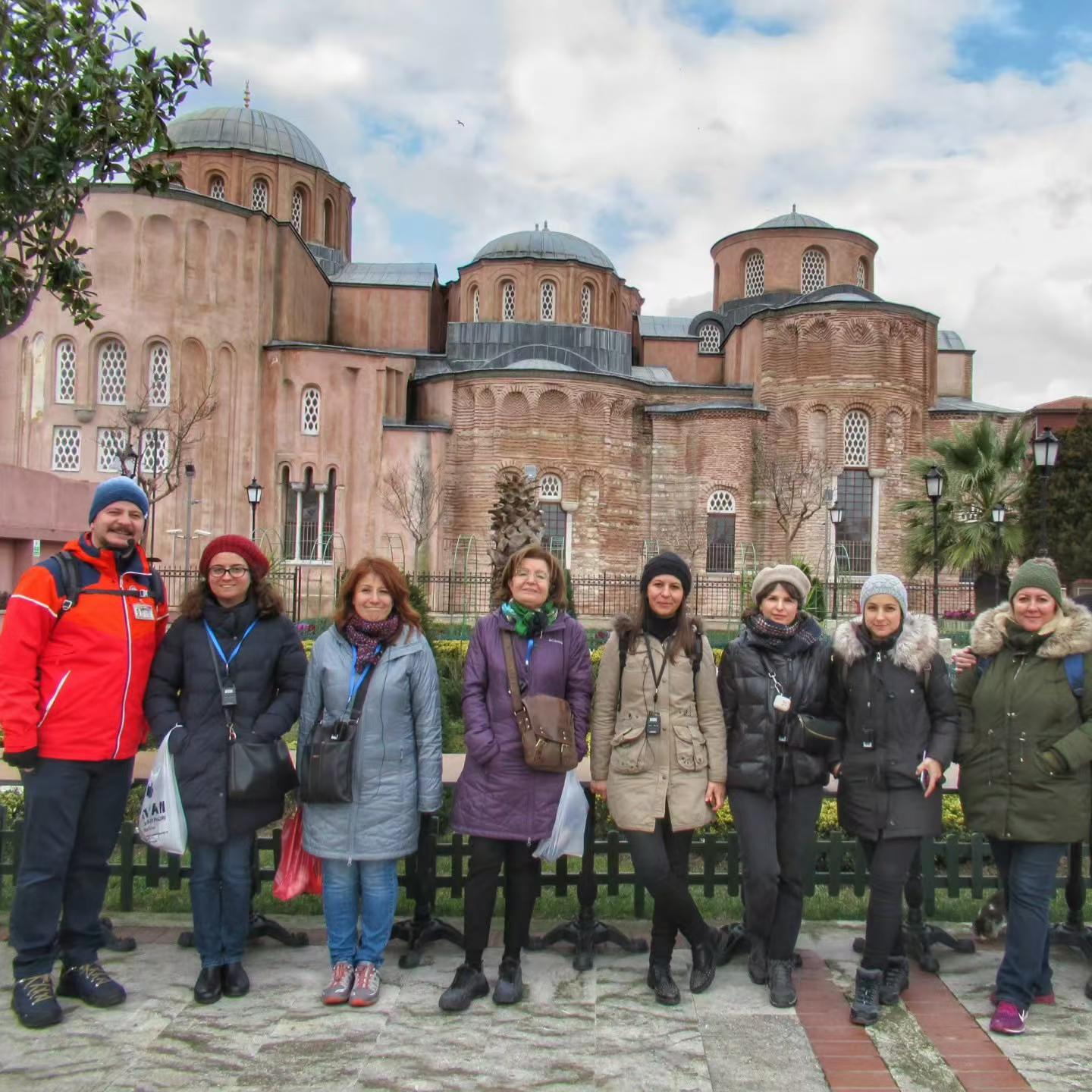
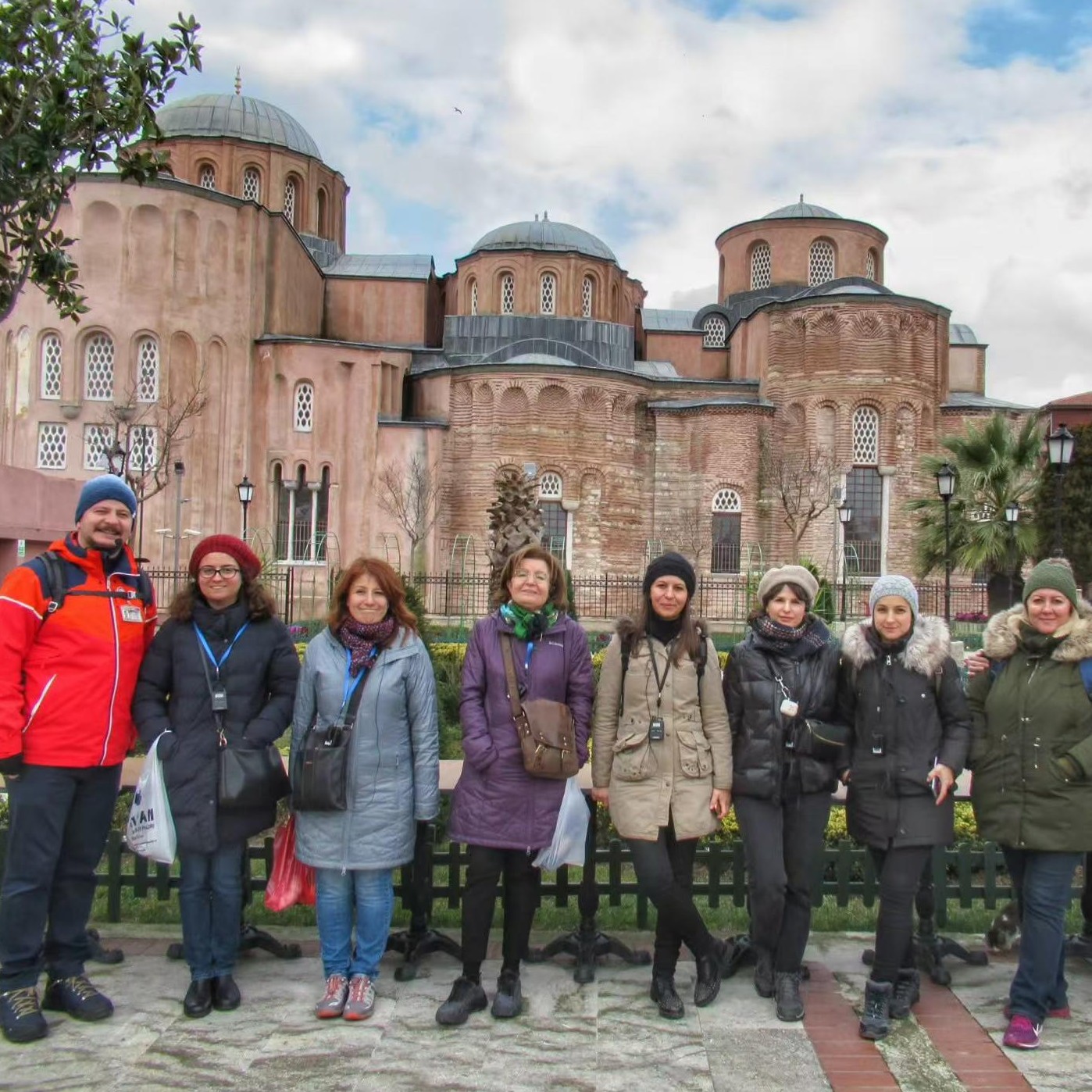
RC2401-mosque-group-heritage_sightseeing_tour

The first stop is the basilica interior, where a working congregation shares the space and a loud guide voice is unacceptable. The operator assigned the RC2401 wireless audio guide system here because its ten-milliwatt output and forty-to-twelve-kilohertz receiver response are tuned for close, intelligible speech rather than wide coverage. The guide speaks at a normal indoor level, the transmitter reaches every receiver in the group, and the commentary stays private to the people wearing the units.

What the guide noticed first was the drop in shushing. With the previous louder setup, staff at the basilica had repeatedly asked the group to keep quiet; with the RC2401 the group was already quiet because each visitor could hear without the guide raising a voice. The receiver at fifty grams and the transmitter at fifty-nine grams meant nobody objected to wearing the kit through a forty-minute indoor visit.

Group Coverage Across the Cloister Using the RC2402
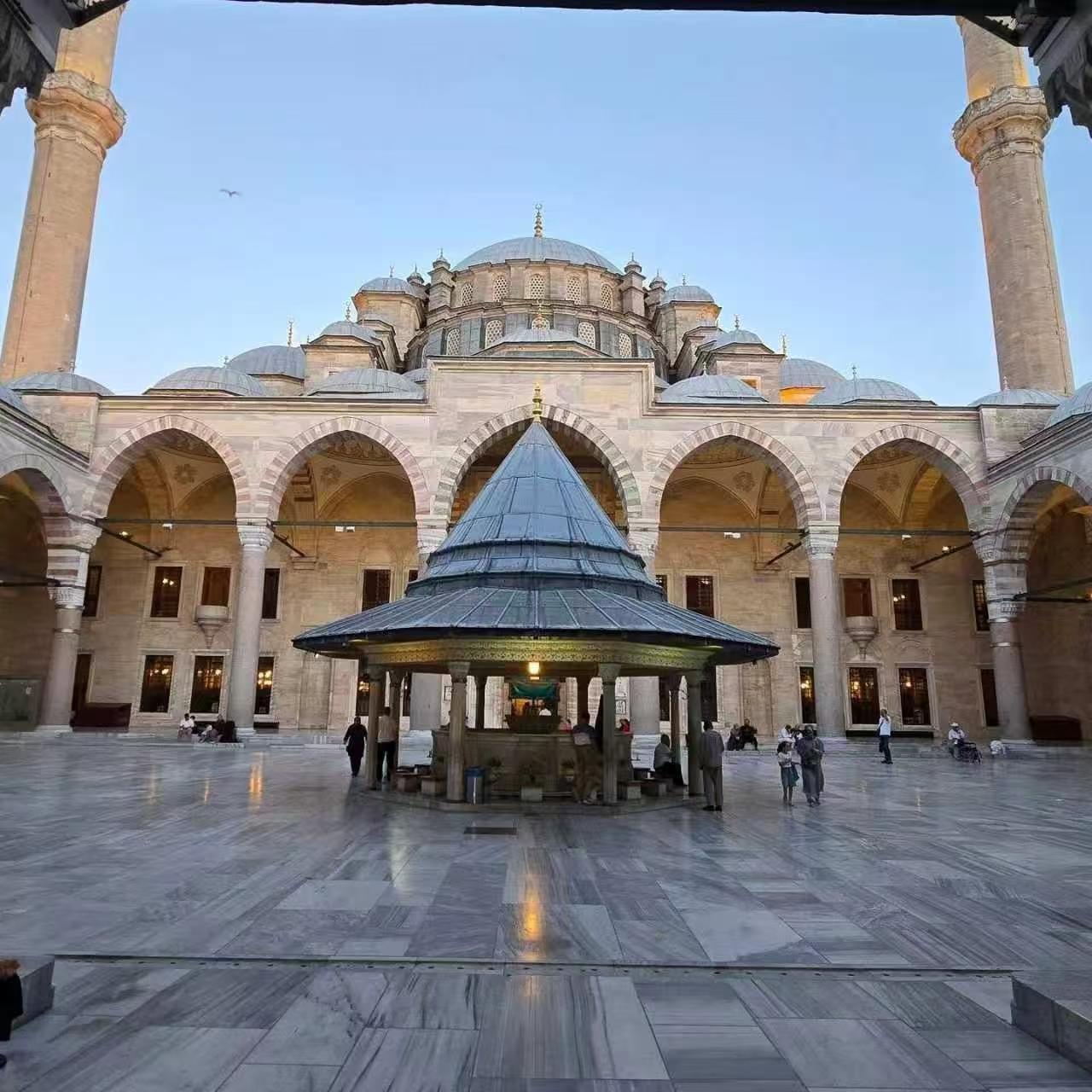
RC2402-mosque-courtyard-heritage_sightseeing_tour

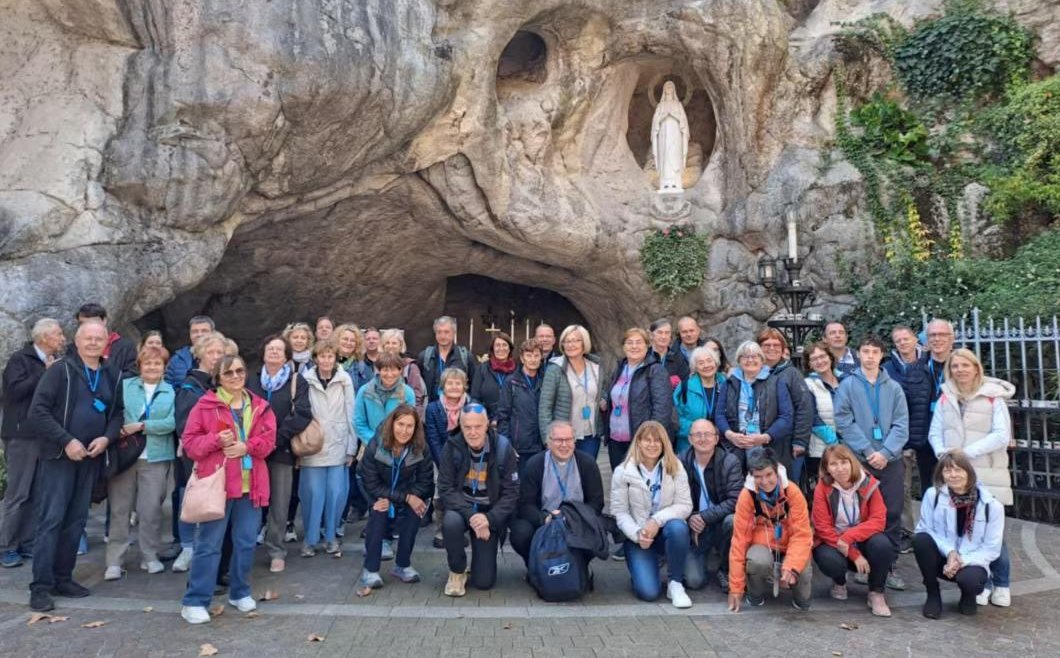
The second stop is the cloister and its open courtyard, where the same group that was tight inside the basilica now spreads across stone that throws sound back at itself. The operator assigned the RC2402 wireless tour guide system to this stop. On paper the RC2402 carries the same fifty channels, the same band, and the same battery figures as the RC2401, which is exactly the point: the guide keeps one channel plan and one mental model, and the group keeps one wearing experience.

The reason to deploy a second model rather than move the first set is operational, not acoustic. The courtyard group arrives in a different formation, often with a second sub-guide, and having a dedicated kit already cased and charged for that stop removes the scramble of re-issuing receivers between the two indoor and outdoor legs. The regular-scenario tuning of the RC2402 is the version the operator keeps on the cloister cart, ready to hand out the moment the basilica leg ends.

All-Day Range on the Pilgrimage Walk Using the RC2500
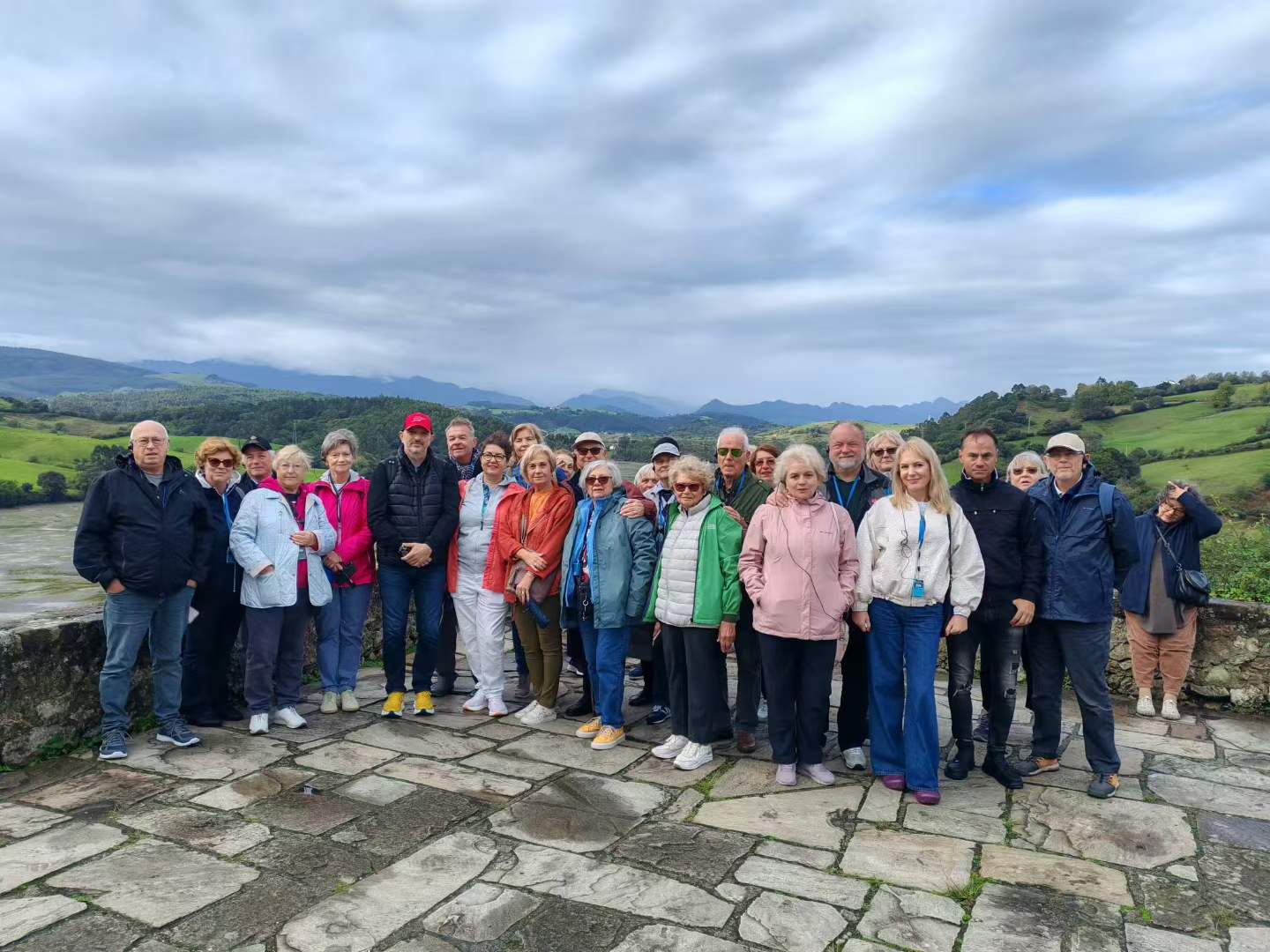
RC2500-ruin-terrace-heritage_sightseeing_tour

The final segment is the walk through the pilgrimage precinct outside the walls, an hour on foot with no building to contain the sound. The operator assigned the RC2500 wireless tour guide system here, and the deciding numbers were the fifteen-hour transmitter battery and the thirty-five-plus-hour receiver battery rather than any acoustic edge. On a walking leg the group cannot pause for a battery swap, and a flat receiver at the far end of the route is a ruined commentary.

The RC2500 also carries the one-touch sync, shutdown, and mute control that the other two models lack, which matters when a walking group stops at a viewpoint where the guide wants silence for a minute before the next segment. At one hundred and four grams the unit is heavier than the RC2401 and RC2402, but on a walk where it lives in a pocket or a waist pouch rather than on a lanyard all day, the weight difference was unnoticeable to the visitors and decisive for the guide.

📡 One Frequency Plan Across All Three Stops

The single most underrated decision was running all three stops on one shared fifty-channel plan. Because the RC2401, RC2402, and RC2500 all sit on the same 2403 to 2483 MHz band with the same PLL tuning, the guide programs one sheet and reuses it at every stop. When two groups are on the route at once, the operator assigns them channels ten apart and the acoustic separation of the buildings does the rest. Nothing has to be re-tuned when a morning group hands its receivers to an afternoon group, which is the moment most multi-model fleets break.

That shared plan also made training trivial. A new guide learns one transmitter, one channel sheet, and one charging routine, and the three models stop being three products and become one system with three form factors. The operator reported that the learning curve for seasonal staff dropped from a half-day session to a twenty-minute briefing.

First-Season Results the Operator Recorded

Across the first season the operator tracked three numbers that had been guesswork before. Guide-reported interruptions from visitors who could not hear fell to near zero on the basilica and cloister legs, because the private channel replaced the raised voice. Receiver battery incidents on the walking leg went to zero, because the thirty-five-plus-hour receiver life comfortably covered the longest tour with margin for a late start. And re-issue time between the morning and afternoon groups dropped from roughly fifteen minutes to under three, because the one channel plan removed the re-tuning step.

The number the operator valued most was a softer one: rebooking and referral. Visitors who could hear the commentary at every stop were more likely to recommend the route, and the operator attributed a measurable lift in repeat group bookings to the simple fact that nobody left a stop having missed the point of it. The hardware paid for itself in the first season on battery-replacement savings and guide time alone, before counting the booking effect.

A Repeatable Playbook for Heritage Routes

The lesson transfers directly to other heritage and religious tour operators. Match the unit to the stop instead of buying one box for everything: a low-output, speech-tuned unit for the quiet indoor stop, a same-family unit already cased for the crowded courtyard, and a long-battery unit for the walking leg. Keep one frequency plan across all of them so the guide learns one system. The church and religious translation system case shows the same logic applied where multilingual commentary is the harder problem, and the pattern holds.

For an operator planning a similar route, the practical first step is a walk-through that times each stop and counts the spread of the group, then a channel sheet that survives a same-day turnaround. The equipment is the easy part; the plan that lets a morning group hand its receivers to an afternoon group without a re-tuning scramble is the part that earns the result.

Frequently Asked Questions

1. Do the three models need three different channel plans?

No. The RC2401, RC2402, and RC2500 all sit on the same 2403 to 2483 MHz band with the same fifty PLL channels, so one channel sheet covers the whole route and the guide reuses it at every stop without re-tuning.

2. Why use three models instead of one for the entire route?

The stops ask different things of the hardware. The basilica needs low-volume private speech, the courtyard needs a pre-cased kit already ready for a spread-out group, and the walk needs receiver battery life that outlasts an hour on foot. Matching the unit to the stop removes the scramble of re-issuing one shared set between legs.

3. How long do the receivers last on the outdoor walking leg?

The RC2500 receivers run thirty-five hours or more on a charge, which covers the longest single walking tour with margin for a late start, and the fifteen-hour transmitter battery means the guide's unit also finishes the day without a swap.

4. Is the heavier RC2500 uncomfortable for visitors on a long walk?

At one hundred and four grams it is heavier than the fifty-gram RC2401 receiver, but on the walking leg it is carried in a pocket or pouch rather than worn on a lanyard all day, so the visitors did not notice the difference while the guide valued the one-touch mute and the battery margin.


2026年10月31日 14:18
ꄘ click: 0

Get the spec sheet, MOQ and a factory-direct quote

Tell us the venue, the group size and how many languages you need. An engineer at our Shenzhen factory replies within one business day with the matching model, a written quote, lead time and the CE / RoHS / ISO 9001 documents.

Talk to an engineer WhatsApp +86 189 2287 9583

Prefer email? tiger.wang@richitek.com  |  OEM / ODM, custom tooling and neutral packaging available  |  send the enquiry through our contact page

Shenzhen Rich Age Electronics Co., Ltd. (Richitek) - manufacturing wireless tour guide systems, church translation headsets and museum audio guide equipment since 2007.

no data

Standardizing a Heritage Sightseeing Route with the RC2401, RC2402 and RC2500

time: 2026年10月31日 click:0

Standardizing a Heritage Sightseeing Route with the RC2401 and RC2500 Tour Guide Systems

A heritage sightseeing tour programme moves a single group through several sacred and historic stops in one morning, and the commentary has to stay clear at every one of them. The operator running this route had grown used to losing the back of the group at the noisy stops and losing the front of the group at the quiet ones. What changed was not the script but the hardware: three models from one product family, each assigned to the stop where its strengths mattered most. This is the record of how that assignment was planned and what it delivered in the first season.

The route itself is not unusual. A heritage sightseeing tour programme of this kind typically opens inside a basilica, moves to a cloister and open courtyard, and finishes with a walking segment through the pilgrimage precinct outside the walls. Each environment asks something different of the audio, and the mistake most operators make is buying one unit for all three instead of matching the unit to the stop.

The Operator Brief for Sacred and Historic Stops

The brief the operator gave the guide team was narrow and unforgiving. Inside the basilica, voices carry and a raised guide voice disturbs a working place of worship, so the system has to deliver private, clear commentary at low volume. In the courtyard, the group spreads out and the stone reflects sound in every direction, so the system has to hold a clean signal across twenty metres of open space. On the walk, the group is on its feet for the better part of an hour, so the receivers have to outlast the tour without a mid-route battery swap.

None of these is hard on its own. The difficulty is doing all three on the same frequency plan, with the same guide transmitter, and with a team that swaps units between groups several times a day. That is the constraint that shaped the three-model choice, and it is the part most equipment decisions ignore.

💡 Why This Operator Selected Three Compatible Models

Compatibility mattered more than any single specification. All three units the operator chose sit on the same 2403 to 2483 MHz band, all three use the same PLL control mode, and all three share the same fifty-channel map, which means one channel sheet covers the whole route. The guide carries a single transmitter and switches the group between receivers without re-tuning. The family the operator settled on was the Richitek wireless tour guide system range, specifically three models that cover the quiet, the crowded, and the long-haul stops respectively.

SpecificationRC2401RC2402RC2500
Core frequency band2403 to 2483 MHz2403 to 2483 MHz2403 to 2483 MHz
Number of channels505050
Transmission distance1 to 200 m1 to 200 m1 to 200 m
Output power10 mW10 mW10 mW
Transmitter battery life10 h10 h15 h
Receiver battery life20 h20 h35+ h
Transmitter or receiver battery3.7V 1500 mAh / 3.7V 1000 mAh3.7V 1500 mAh / 3.7V 1000 mAh3.7V 1800 mAh / 3.7V 1800 mAh
Transmitter or receiver weight59 g / 50 g59 g / 50 g104 g / 104 g
Frequency response50 Hz to 200 kHz / 50 Hz to 12 kHz50 Hz to 200 kHz / 50 Hz to 12 kHz50 Hz to 8 kHz / 50 Hz to 8 kHz
Control modePLLPLLPLL
Charging portDC PortDC PortType-C
Special designBasic 2.4G standard versionBasic 2.4G, 50-channel regular scenarioOne-touch sync, shutdown, mute; 35+ h standby
ColorMulti-colorMulti-colorBlack only

Quiet Basilica Commentary Using the RC2401

RC2401-mosque-group-heritage_sightseeing_tour

The first stop is the basilica interior, where a working congregation shares the space and a loud guide voice is unacceptable. The operator assigned the RC2401 wireless audio guide system here because its ten-milliwatt output and forty-to-twelve-kilohertz receiver response are tuned for close, intelligible speech rather than wide coverage. The guide speaks at a normal indoor level, the transmitter reaches every receiver in the group, and the commentary stays private to the people wearing the units.

What the guide noticed first was the drop in shushing. With the previous louder setup, staff at the basilica had repeatedly asked the group to keep quiet; with the RC2401 the group was already quiet because each visitor could hear without the guide raising a voice. The receiver at fifty grams and the transmitter at fifty-nine grams meant nobody objected to wearing the kit through a forty-minute indoor visit.

Group Coverage Across the Cloister Using the RC2402

RC2402-mosque-courtyard-heritage_sightseeing_tour

The second stop is the cloister and its open courtyard, where the same group that was tight inside the basilica now spreads across stone that throws sound back at itself. The operator assigned the RC2402 wireless tour guide system to this stop. On paper the RC2402 carries the same fifty channels, the same band, and the same battery figures as the RC2401, which is exactly the point: the guide keeps one channel plan and one mental model, and the group keeps one wearing experience.

The reason to deploy a second model rather than move the first set is operational, not acoustic. The courtyard group arrives in a different formation, often with a second sub-guide, and having a dedicated kit already cased and charged for that stop removes the scramble of re-issuing receivers between the two indoor and outdoor legs. The regular-scenario tuning of the RC2402 is the version the operator keeps on the cloister cart, ready to hand out the moment the basilica leg ends.

All-Day Range on the Pilgrimage Walk Using the RC2500

RC2500-ruin-terrace-heritage_sightseeing_tour

The final segment is the walk through the pilgrimage precinct outside the walls, an hour on foot with no building to contain the sound. The operator assigned the RC2500 wireless tour guide system here, and the deciding numbers were the fifteen-hour transmitter battery and the thirty-five-plus-hour receiver battery rather than any acoustic edge. On a walking leg the group cannot pause for a battery swap, and a flat receiver at the far end of the route is a ruined commentary.

The RC2500 also carries the one-touch sync, shutdown, and mute control that the other two models lack, which matters when a walking group stops at a viewpoint where the guide wants silence for a minute before the next segment. At one hundred and four grams the unit is heavier than the RC2401 and RC2402, but on a walk where it lives in a pocket or a waist pouch rather than on a lanyard all day, the weight difference was unnoticeable to the visitors and decisive for the guide.

📡 One Frequency Plan Across All Three Stops

The single most underrated decision was running all three stops on one shared fifty-channel plan. Because the RC2401, RC2402, and RC2500 all sit on the same 2403 to 2483 MHz band with the same PLL tuning, the guide programs one sheet and reuses it at every stop. When two groups are on the route at once, the operator assigns them channels ten apart and the acoustic separation of the buildings does the rest. Nothing has to be re-tuned when a morning group hands its receivers to an afternoon group, which is the moment most multi-model fleets break.

That shared plan also made training trivial. A new guide learns one transmitter, one channel sheet, and one charging routine, and the three models stop being three products and become one system with three form factors. The operator reported that the learning curve for seasonal staff dropped from a half-day session to a twenty-minute briefing.

First-Season Results the Operator Recorded

Across the first season the operator tracked three numbers that had been guesswork before. Guide-reported interruptions from visitors who could not hear fell to near zero on the basilica and cloister legs, because the private channel replaced the raised voice. Receiver battery incidents on the walking leg went to zero, because the thirty-five-plus-hour receiver life comfortably covered the longest tour with margin for a late start. And re-issue time between the morning and afternoon groups dropped from roughly fifteen minutes to under three, because the one channel plan removed the re-tuning step.

The number the operator valued most was a softer one: rebooking and referral. Visitors who could hear the commentary at every stop were more likely to recommend the route, and the operator attributed a measurable lift in repeat group bookings to the simple fact that nobody left a stop having missed the point of it. The hardware paid for itself in the first season on battery-replacement savings and guide time alone, before counting the booking effect.

A Repeatable Playbook for Heritage Routes

The lesson transfers directly to other heritage and religious tour operators. Match the unit to the stop instead of buying one box for everything: a low-output, speech-tuned unit for the quiet indoor stop, a same-family unit already cased for the crowded courtyard, and a long-battery unit for the walking leg. Keep one frequency plan across all of them so the guide learns one system. The church and religious translation system case shows the same logic applied where multilingual commentary is the harder problem, and the pattern holds.

For an operator planning a similar route, the practical first step is a walk-through that times each stop and counts the spread of the group, then a channel sheet that survives a same-day turnaround. The equipment is the easy part; the plan that lets a morning group hand its receivers to an afternoon group without a re-tuning scramble is the part that earns the result.
Frequently Asked Questions

1. Do the three models need three different channel plans?

No. The RC2401, RC2402, and RC2500 all sit on the same 2403 to 2483 MHz band with the same fifty PLL channels, so one channel sheet covers the whole route and the guide reuses it at every stop without re-tuning.

2. Why use three models instead of one for the entire route?

The stops ask different things of the hardware. The basilica needs low-volume private speech, the courtyard needs a pre-cased kit already ready for a spread-out group, and the walk needs receiver battery life that outlasts an hour on foot. Matching the unit to the stop removes the scramble of re-issuing one shared set between legs.

3. How long do the receivers last on the outdoor walking leg?

The RC2500 receivers run thirty-five hours or more on a charge, which covers the longest single walking tour with margin for a late start, and the fifteen-hour transmitter battery means the guide's unit also finishes the day without a swap.

4. Is the heavier RC2500 uncomfortable for visitors on a long walk?

At one hundred and four grams it is heavier than the fifty-gram RC2401 receiver, but on the walking leg it is carried in a pocket or pouch rather than worn on a lanyard all day, so the visitors did not notice the difference while the guide valued the one-touch mute and the battery margin.


Get the spec sheet, MOQ and a factory-direct quote

Tell us the venue, the group size and how many languages you need. An engineer at our Shenzhen factory replies within one business day with the matching model, a written quote, lead time and the CE / RoHS / ISO 9001 documents.

Talk to an engineer WhatsApp +86 189 2287 9583

Prefer email? tiger.wang@richitek.com  |  OEM / ODM, custom tooling and neutral packaging available  |  send the enquiry through our contact page

Shenzhen Rich Age Electronics Co., Ltd. (Richitek) - manufacturing wireless tour guide systems, church translation headsets and museum audio guide equipment since 2007.

no data
×

Contact us

email:
name:
subject:
content: