
A leading China factory specializing in Wireless Tour Guide Systems, Church Audio Guides, and Translation Headphones with premium OEM/ODM solutions.

Tel:+86 18922879583

Email:tiger.wang@richitek.com

RC2501, RC2402 and RC8860: A Botanical Garden Case Study Told in Daily Rituals

A 34-hectare botanical garden on the edge of a mid-sized European city runs three admission waves a day, nine guided loops, and one glasshouse that challenges every radio you bring into it. Before this season, the garden's volunteer guides carried raised voices and a borrowed megaphone; after a spring trial that we followed from gate to closing crate, the garden settled on a three-device fleet: the RC2501 Wireless Tour Guide System for the morning gate briefings, the RC2402 Wireless Tour Guide System for the greenhouse and shaded dell loops, and the RC8860 Tour Guide Transmitter For Teaching for the event lawn. This account is a case study in the strict sense — one site, one season, real numbers from the garden's own logs — and it is organized around the daily rituals that made the fleet stick rather than around the spec sheet. Operators planning a similar rollout can compare the three roles inside the museum and audio guide equipment range, where the same three-device logic is laid out for indoor collections.

Morning Ritual: The Gate Briefing Before the First Wave

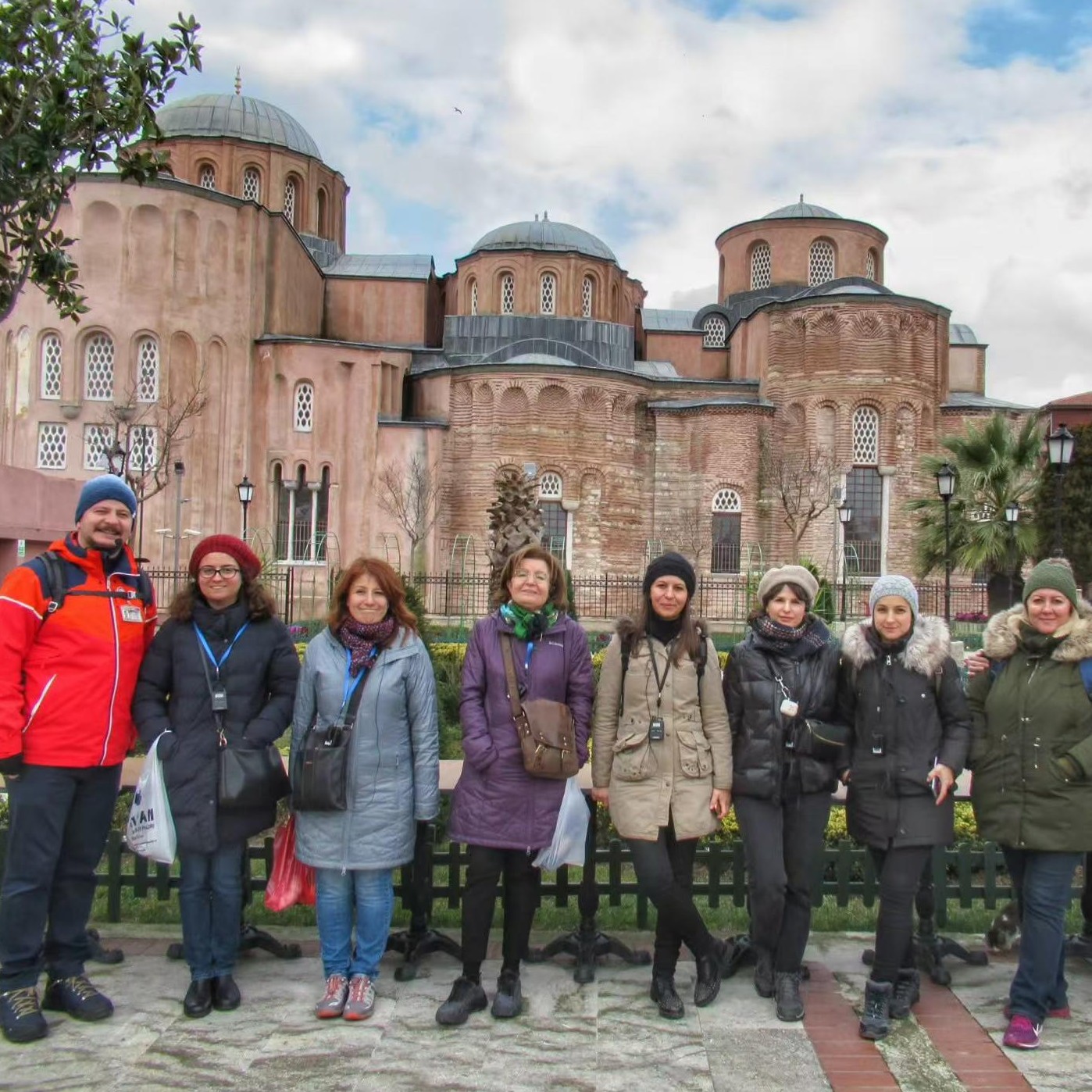
The garden opens its gates at 09:00, and the first admission wave — season-pass holders, tour coaches, and a school class most days — funnels through the entrance plaza between 08:50 and 09:20. The head guide runs the plaza like a departure lounge: one transmitter, forty receivers racked in a roll-cage trolley, and a fixed script that has not changed in weeks because it does not need to. The RC2501's 2.4GHz signal covers the plaza's full 200-meter sweep with margin to spare, and its pocket-sized transmitter lets the head guide walk the queue line while talking, which the old megaphone never allowed. The ritual matters more than the hardware: receivers are counted out loud, channel one is confirmed on the trolley's test unit, and two spare units ride the trolley's top tray. On the day we timed it, the full briefing ran four minutes and the first loop departed at 09:07 — seven minutes faster than the megaphone era, which the head guide attributes entirely to not repeating the safety script three times. The pairing moment — the seconds when a visitor clips a unit on and hears the guide's first sentence — is the one the garden's volunteers rehearse, because visitors keep their receivers until loop's end. The full 2.4G platform behind this role sits on the RC2501 product page.
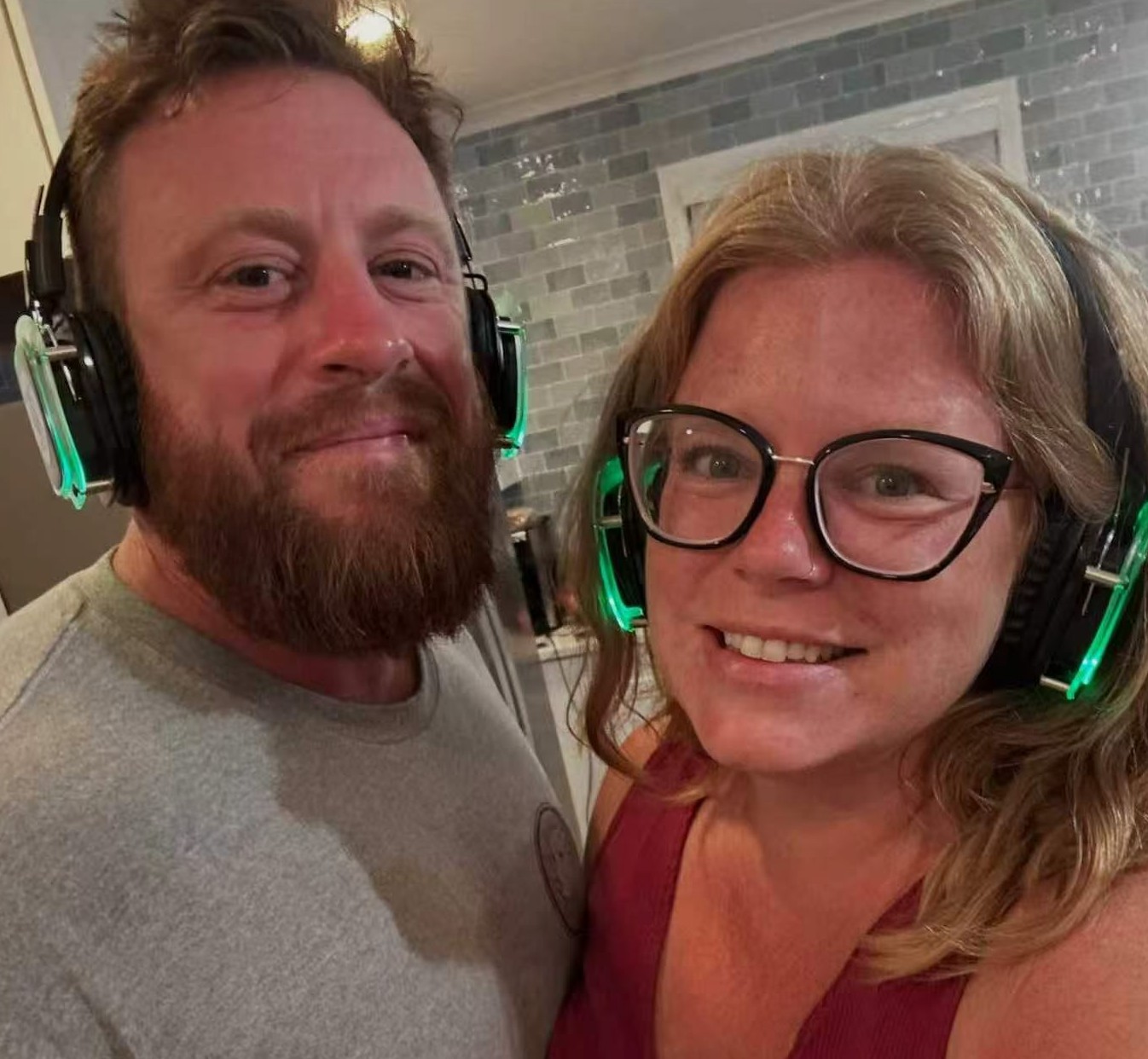
Visitor-headphone-pairing-moment-botanical_garden

Midday Ritual: RC2402 on the Greenhouse and Dell Loops

The garden's hardest acoustic territory is not the open lawn but the glasshouse and the shaded dell below it: humid glass, hard stone edges, and a loop path that pinches to single-file in three spots. The RC2402 loops run here, and they run on a discipline the garden calls the two-minute handover — the 11:00 loop's guide docks the transmitter, the 11:30 guide lifts it, and the unit never leaves the loop's start point. The RC2402's one-click frequency synchronization is what makes that handover safe: a fresh guide presses sync once, sees the loop's channel register, and walks; there is no pairing session to fumble while a queue watches. Battery discipline fits the ritual too, since the receiver's 20-hour rating and the transmitter's 10-hour rating mean a single overnight charge covers the whole midday block without mid-loop swaps. The 2403-2483MHz ISM band matters here for a second reason: the garden sits inside a city grid dense with Wi-Fi, and the license-free band's channel agility has kept the dell loops free of the dropouts the garden's old FM kit suffered. Two hundred meters of open-area range is more than the dell's full loop length, so the guide can pause at the fern bed, drop back to help a visitor, and never lose the group's audio. The loop's numbers after a month are unglamorous and convincing: zero aborted loops, one transmitter swap (a dropped unit, not a fault), and a median loop time of 41 minutes against the 45 the garden budgeted. The RC2402 product page carries the loop-relevant specifications verbatim.
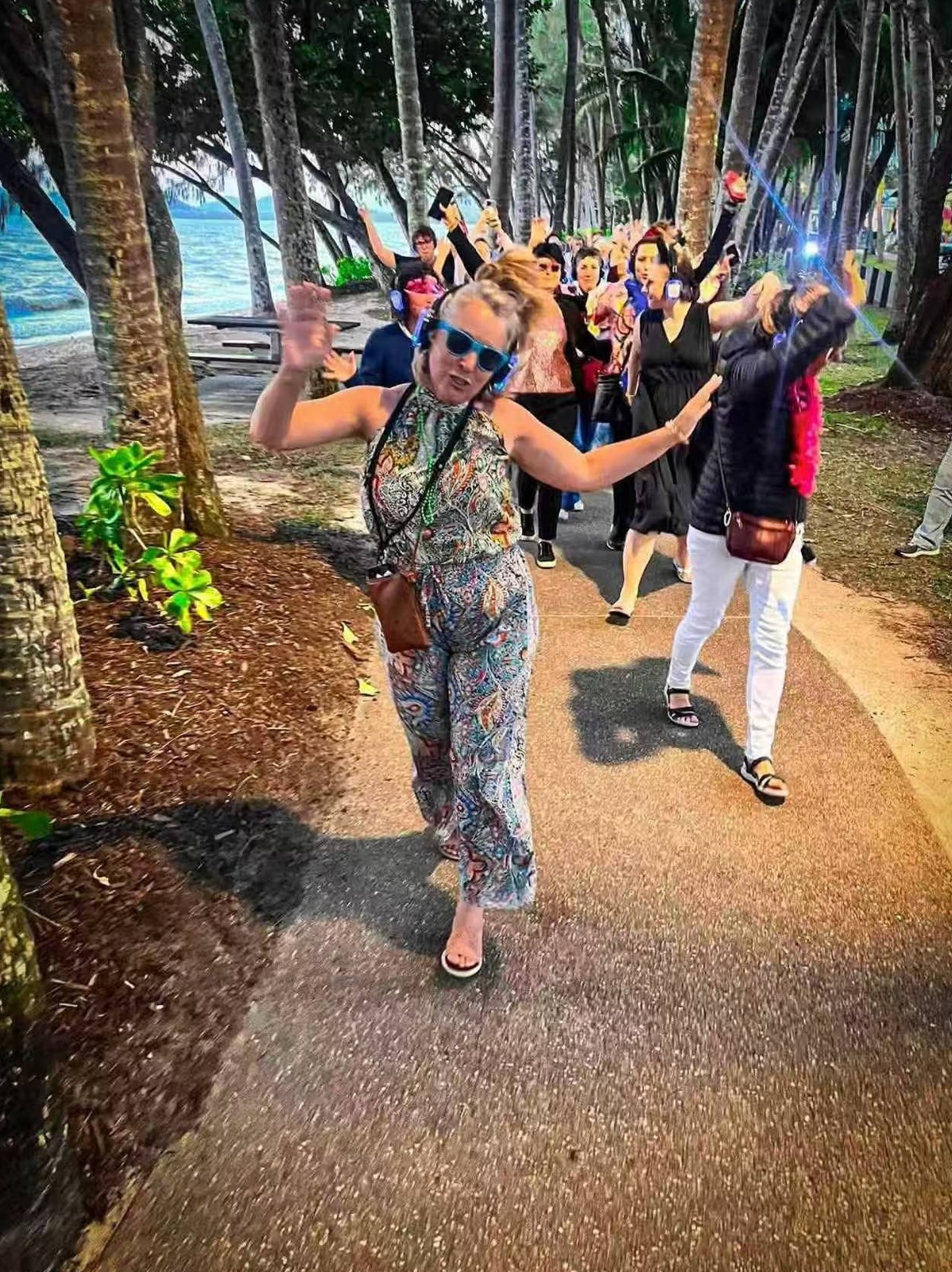
Garden-path-walking-group-botanical_garden

Event Days: Where the RC8860 Base Station Earns Its Case

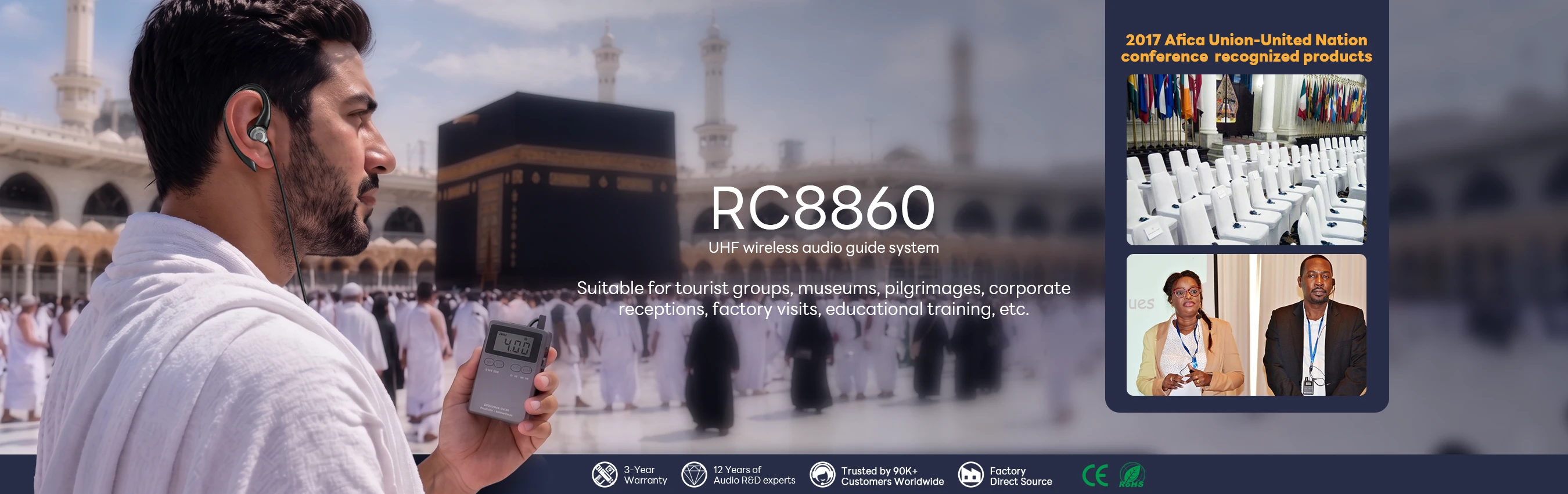
Every third weekend the garden converts its event lawn into a demonstration stage — pruning workshops, orchid society meetings, and the summer evening lecture series that sells out its two hundred chairs. These are the days the garden borrows nothing, because the RC8860's UHF link does a job the 2.4G loops cannot: its 860-870MHz band with 20 PLL channels keeps twenty distinct speaker-listener pairs separated across one lawn, and its penetration through the lawn's stone pavilion walls means the lecture audience spilling onto the terrace still hears the presenter. The RC8860 transmitter's 1500mAh cell runs the full 10-hour event day, and the 1000mAh receivers return 20 hours, so the garden's tech volunteer charges the event crate on Thursday and forgets it until Sunday evening. The ritual here is a channel map taped inside the crate lid: workshop pairs on channels 1 through 8, the lecture ring on 12, and two channels held clear for the garden's own staff radios. When a visiting orchid society brought its own tour system in June, the map absorbed it in five minutes — the society's guide took channel 18, and neither group heard the other all afternoon. That interoperability-by-discipline, rather than any single specification, is what convinced the garden to keep a UHF layer in the fleet. The RC8860 product page lists the channel architecture and range figures the garden planned against.

Specification Comparison for the Garden Fleet

The table compiles each unit's page as published. The garden chose by role first and specification second, which is why the columns look asymmetric: the plaza unit optimizes for script stability and queue coverage, the loop unit for handover speed and battery trust, and the event unit for channel count and wall penetration.

ItemRC2501RC2402RC8860
Transmission band2.4GHz ISM2.4GHz ISM (2403-2483MHz)UHF 860-870MHz
Open-area rangeUp to 200mUp to 200mUp to 200m
ChannelsNot publishedOne-click frequency synchronization20 PLL channels
Receiver batteryNot published20 hours1000mAh, 20 hours
Transmitter batteryNot published10 hours1500mAh, 10 hours
Operating temperature-10℃ to 45℃Not publishedNot published
Penetration characterHolds through obstaclesStable in large venues and outdoor sitesStrong through walls and obstacles
Warranty3-year, mainboard covered3-year, mainboard covered3-year, mainboard covered

Closing Ritual: The Crate That Outwaits the Last Departure

The garden's third ritual happens after the last loop, and it is the reason the fleet survived its first summer: every unit returns to a foam-lined crate, cut to hold each receiver in a numbered slot, and the crate does not close until the count matches the morning's ledger. The foam tray does double duty — it cradles the units so the day's knocks never meet, and it makes a missing unit obvious in two seconds instead of two days. On the one evening a receiver failed to return, the slot's emptiness triggered a gate call before the visitor's bus left the forecourt, and the unit came back. The crate then plugs into the charge strip overnight as one object, not forty decisions. Guides rotate through crate duty in pairs, which means every volunteer knows the fleet's state by touch, not by a spreadsheet only the head guide reads. Nothing in the garden's equipment budget predicted that a plywood box with cut foam would rank, in the team's own retrospective, ahead of any radio specification — but the ritual is exactly what keeps forty receivers looking new in month five.
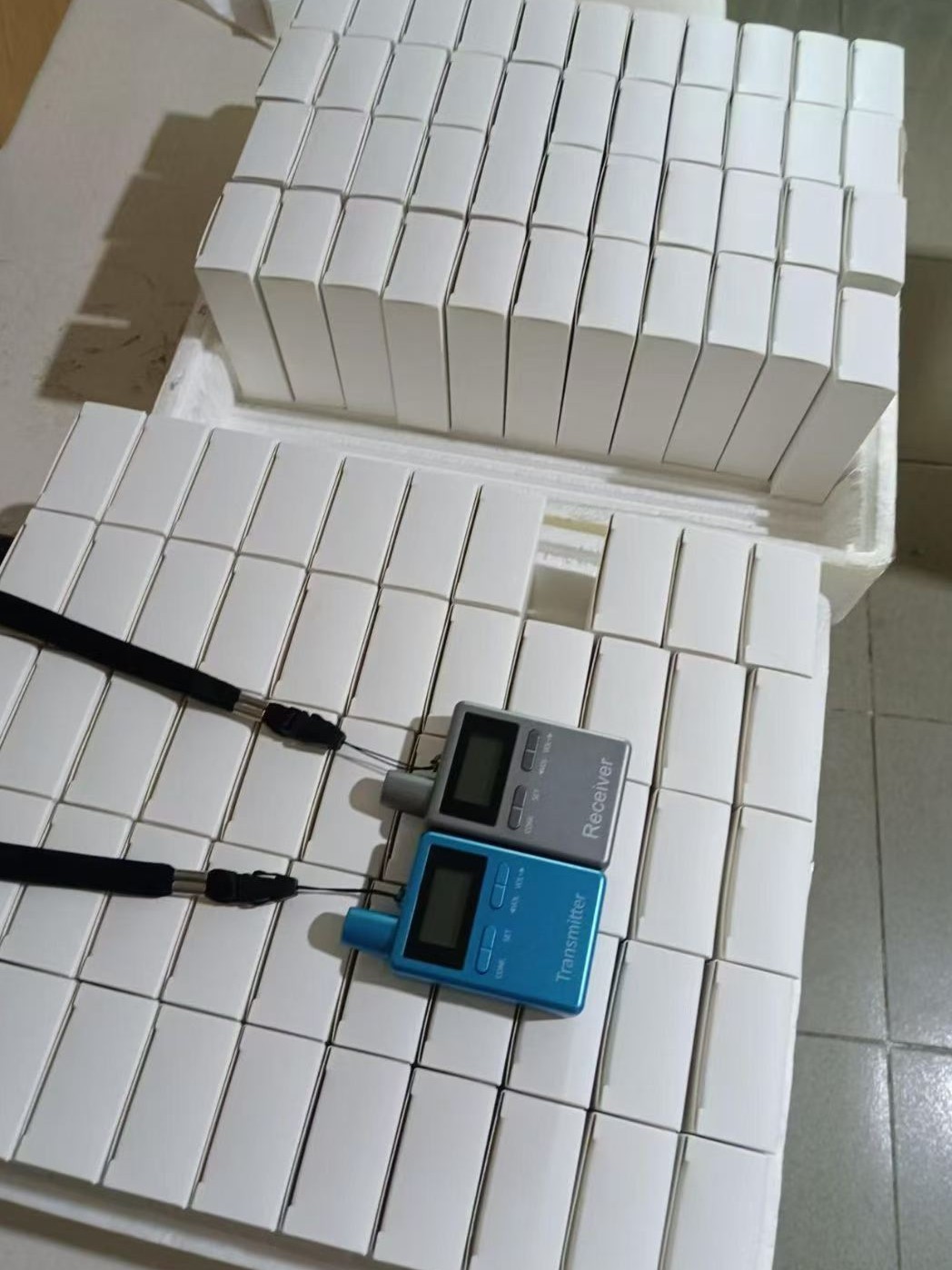
Fleet-crate-foam-tray-botanical_garden

🏟️ What the Garden Team Counted After a Month

The garden's own log, kept by the volunteer coordinator, closes the case. Complaints about not hearing the guide fell from a seasonal norm of four or five a week to zero across the trial month. Loop punctuality improved enough that the garden added a tenth weekend loop without hiring anyone. The megaphone retired to a shelf, and the school-class feedback forms — previously the loudest critics — started naming the fern bed and the orchid house as highlights, which the guides read as evidence that visitors were listening rather than straining. Costs stayed inside the season's equipment line: no rentals, no repair bills, and the one dropped transmitter passed its post-drop function check with nothing worse than a scuffed clip. For a site weighing its first move away from raised voices, the garden's advice is procedural rather than technical: fix the rituals first — the briefing, the handover, the crate — and the hardware simply has to be good enough to carry them, which the tour guide system catalog makes easy to match in any budget tier.

Frequently Asked Questions

1. Why does one garden need three different systems instead of a single model?

Because the three roles fail differently. The plaza needs queue coverage and script stability, which the RC2501's 2.4G link provides; the greenhouse and dell loops need fast handovers between guides, which the RC2402's one-click sync absorbs; and the event lawn needs many simultaneous groups plus stone-wall penetration, which is UHF territory on the RC8860. One model would have forced two of the three rituals to compromise, and rituals are the part the team refused to give up.

2. Is a 2.4GHz system legal for commercial guiding in most countries?

The RC2402 and RC2501 use the 2403-2483MHz ISM band, which is license-free in most jurisdictions, so commercial guiding on that band is generally a matter of following local power and interference rules rather than obtaining a licence. The RC8860's 860-870MHz UHF band is similarly accepted in most regions, but the garden's own step was to confirm the band plan with its national regulator before the first event day — a five-minute check that any operator should copy rather than assume.

3. What happens when a visitor walks away with a receiver?

The numbered foam crate is the garden's answer, and it worked on the one occasion it was tested: the empty slot was spotted at the closing count, the gate team called the forecourt before the visitor's coach departed, and the unit returned within minutes. The discipline that matters is the morning ledger and the closing count — technology that tries to page a wandering receiver costs more than a ritual that simply notices one is missing.

4. How would the fleet scale if the garden doubles its loop count?

The three-ritual structure scales before the hardware does: more loops means more handover slots on the RC2402 map and more channels reserved on the RC8860 event plan, and both were designed with headroom — the UHF crate still holds two spare channels, and the loop kits charge overnight as whole crates. The garden's stated trigger point is a twelfth loop, at which point it would add a second plaza unit rather than mixing models within a role. Sites can browse the operator solutions to see how larger multi-loop sites layer the same three roles.


2026年10月30日 13:09
ꄘ click: 41

Get the spec sheet, MOQ and a factory-direct quote

Tell us the venue, the group size and how many languages you need. An engineer at our Shenzhen factory replies within one business day with the matching model, a written quote, lead time and the CE / RoHS / ISO 9001 documents.

Talk to an engineer WhatsApp +86 189 2287 9583

Prefer email? tiger.wang@richitek.com  |  OEM / ODM, custom tooling and neutral packaging available  |  send the enquiry through our contact page

Shenzhen Rich Age Electronics Co., Ltd. (Richitek) - manufacturing wireless tour guide systems, church translation headsets and museum audio guide equipment since 2007.

no data

RC2501, RC2402 and RC8860: A Botanical Garden Case Study Told in Daily Rituals

time: 2026年10月30日 click:41

A 34-hectare botanical garden on the edge of a mid-sized European city runs three admission waves a day, nine guided loops, and one glasshouse that challenges every radio you bring into it. Before this season, the garden's volunteer guides carried raised voices and a borrowed megaphone; after a spring trial that we followed from gate to closing crate, the garden settled on a three-device fleet: the RC2501 Wireless Tour Guide System for the morning gate briefings, the RC2402 Wireless Tour Guide System for the greenhouse and shaded dell loops, and the RC8860 Tour Guide Transmitter For Teaching for the event lawn. This account is a case study in the strict sense — one site, one season, real numbers from the garden's own logs — and it is organized around the daily rituals that made the fleet stick rather than around the spec sheet. Operators planning a similar rollout can compare the three roles inside the museum and audio guide equipment range, where the same three-device logic is laid out for indoor collections.

Morning Ritual: The Gate Briefing Before the First Wave

The garden opens its gates at 09:00, and the first admission wave — season-pass holders, tour coaches, and a school class most days — funnels through the entrance plaza between 08:50 and 09:20. The head guide runs the plaza like a departure lounge: one transmitter, forty receivers racked in a roll-cage trolley, and a fixed script that has not changed in weeks because it does not need to. The RC2501's 2.4GHz signal covers the plaza's full 200-meter sweep with margin to spare, and its pocket-sized transmitter lets the head guide walk the queue line while talking, which the old megaphone never allowed. The ritual matters more than the hardware: receivers are counted out loud, channel one is confirmed on the trolley's test unit, and two spare units ride the trolley's top tray. On the day we timed it, the full briefing ran four minutes and the first loop departed at 09:07 — seven minutes faster than the megaphone era, which the head guide attributes entirely to not repeating the safety script three times. The pairing moment — the seconds when a visitor clips a unit on and hears the guide's first sentence — is the one the garden's volunteers rehearse, because visitors keep their receivers until loop's end. The full 2.4G platform behind this role sits on the RC2501 product page.

Visitor-headphone-pairing-moment-botanical_garden

Midday Ritual: RC2402 on the Greenhouse and Dell Loops

The garden's hardest acoustic territory is not the open lawn but the glasshouse and the shaded dell below it: humid glass, hard stone edges, and a loop path that pinches to single-file in three spots. The RC2402 loops run here, and they run on a discipline the garden calls the two-minute handover — the 11:00 loop's guide docks the transmitter, the 11:30 guide lifts it, and the unit never leaves the loop's start point. The RC2402's one-click frequency synchronization is what makes that handover safe: a fresh guide presses sync once, sees the loop's channel register, and walks; there is no pairing session to fumble while a queue watches. Battery discipline fits the ritual too, since the receiver's 20-hour rating and the transmitter's 10-hour rating mean a single overnight charge covers the whole midday block without mid-loop swaps. The 2403-2483MHz ISM band matters here for a second reason: the garden sits inside a city grid dense with Wi-Fi, and the license-free band's channel agility has kept the dell loops free of the dropouts the garden's old FM kit suffered. Two hundred meters of open-area range is more than the dell's full loop length, so the guide can pause at the fern bed, drop back to help a visitor, and never lose the group's audio. The loop's numbers after a month are unglamorous and convincing: zero aborted loops, one transmitter swap (a dropped unit, not a fault), and a median loop time of 41 minutes against the 45 the garden budgeted. The RC2402 product page carries the loop-relevant specifications verbatim.

Garden-path-walking-group-botanical_garden

Event Days: Where the RC8860 Base Station Earns Its Case

Every third weekend the garden converts its event lawn into a demonstration stage — pruning workshops, orchid society meetings, and the summer evening lecture series that sells out its two hundred chairs. These are the days the garden borrows nothing, because the RC8860's UHF link does a job the 2.4G loops cannot: its 860-870MHz band with 20 PLL channels keeps twenty distinct speaker-listener pairs separated across one lawn, and its penetration through the lawn's stone pavilion walls means the lecture audience spilling onto the terrace still hears the presenter. The RC8860 transmitter's 1500mAh cell runs the full 10-hour event day, and the 1000mAh receivers return 20 hours, so the garden's tech volunteer charges the event crate on Thursday and forgets it until Sunday evening. The ritual here is a channel map taped inside the crate lid: workshop pairs on channels 1 through 8, the lecture ring on 12, and two channels held clear for the garden's own staff radios. When a visiting orchid society brought its own tour system in June, the map absorbed it in five minutes — the society's guide took channel 18, and neither group heard the other all afternoon. That interoperability-by-discipline, rather than any single specification, is what convinced the garden to keep a UHF layer in the fleet. The RC8860 product page lists the channel architecture and range figures the garden planned against.

Specification Comparison for the Garden Fleet

The table compiles each unit's page as published. The garden chose by role first and specification second, which is why the columns look asymmetric: the plaza unit optimizes for script stability and queue coverage, the loop unit for handover speed and battery trust, and the event unit for channel count and wall penetration.

ItemRC2501RC2402RC8860
Transmission band2.4GHz ISM2.4GHz ISM (2403-2483MHz)UHF 860-870MHz
Open-area rangeUp to 200mUp to 200mUp to 200m
ChannelsNot publishedOne-click frequency synchronization20 PLL channels
Receiver batteryNot published20 hours1000mAh, 20 hours
Transmitter batteryNot published10 hours1500mAh, 10 hours
Operating temperature-10℃ to 45℃Not publishedNot published
Penetration characterHolds through obstaclesStable in large venues and outdoor sitesStrong through walls and obstacles
Warranty3-year, mainboard covered3-year, mainboard covered3-year, mainboard covered

Closing Ritual: The Crate That Outwaits the Last Departure

The garden's third ritual happens after the last loop, and it is the reason the fleet survived its first summer: every unit returns to a foam-lined crate, cut to hold each receiver in a numbered slot, and the crate does not close until the count matches the morning's ledger. The foam tray does double duty — it cradles the units so the day's knocks never meet, and it makes a missing unit obvious in two seconds instead of two days. On the one evening a receiver failed to return, the slot's emptiness triggered a gate call before the visitor's bus left the forecourt, and the unit came back. The crate then plugs into the charge strip overnight as one object, not forty decisions. Guides rotate through crate duty in pairs, which means every volunteer knows the fleet's state by touch, not by a spreadsheet only the head guide reads. Nothing in the garden's equipment budget predicted that a plywood box with cut foam would rank, in the team's own retrospective, ahead of any radio specification — but the ritual is exactly what keeps forty receivers looking new in month five.

Fleet-crate-foam-tray-botanical_garden

🏟️ What the Garden Team Counted After a Month

The garden's own log, kept by the volunteer coordinator, closes the case. Complaints about not hearing the guide fell from a seasonal norm of four or five a week to zero across the trial month. Loop punctuality improved enough that the garden added a tenth weekend loop without hiring anyone. The megaphone retired to a shelf, and the school-class feedback forms — previously the loudest critics — started naming the fern bed and the orchid house as highlights, which the guides read as evidence that visitors were listening rather than straining. Costs stayed inside the season's equipment line: no rentals, no repair bills, and the one dropped transmitter passed its post-drop function check with nothing worse than a scuffed clip. For a site weighing its first move away from raised voices, the garden's advice is procedural rather than technical: fix the rituals first — the briefing, the handover, the crate — and the hardware simply has to be good enough to carry them, which the tour guide system catalog makes easy to match in any budget tier.

Frequently Asked Questions

1. Why does one garden need three different systems instead of a single model?

Because the three roles fail differently. The plaza needs queue coverage and script stability, which the RC2501's 2.4G link provides; the greenhouse and dell loops need fast handovers between guides, which the RC2402's one-click sync absorbs; and the event lawn needs many simultaneous groups plus stone-wall penetration, which is UHF territory on the RC8860. One model would have forced two of the three rituals to compromise, and rituals are the part the team refused to give up.

2. Is a 2.4GHz system legal for commercial guiding in most countries?

The RC2402 and RC2501 use the 2403-2483MHz ISM band, which is license-free in most jurisdictions, so commercial guiding on that band is generally a matter of following local power and interference rules rather than obtaining a licence. The RC8860's 860-870MHz UHF band is similarly accepted in most regions, but the garden's own step was to confirm the band plan with its national regulator before the first event day — a five-minute check that any operator should copy rather than assume.

3. What happens when a visitor walks away with a receiver?

The numbered foam crate is the garden's answer, and it worked on the one occasion it was tested: the empty slot was spotted at the closing count, the gate team called the forecourt before the visitor's coach departed, and the unit returned within minutes. The discipline that matters is the morning ledger and the closing count — technology that tries to page a wandering receiver costs more than a ritual that simply notices one is missing.

4. How would the fleet scale if the garden doubles its loop count?

The three-ritual structure scales before the hardware does: more loops means more handover slots on the RC2402 map and more channels reserved on the RC8860 event plan, and both were designed with headroom — the UHF crate still holds two spare channels, and the loop kits charge overnight as whole crates. The garden's stated trigger point is a twelfth loop, at which point it would add a second plaza unit rather than mixing models within a role. Sites can browse the operator solutions to see how larger multi-loop sites layer the same three roles.


Get the spec sheet, MOQ and a factory-direct quote

Tell us the venue, the group size and how many languages you need. An engineer at our Shenzhen factory replies within one business day with the matching model, a written quote, lead time and the CE / RoHS / ISO 9001 documents.

Talk to an engineer WhatsApp +86 189 2287 9583

Prefer email? tiger.wang@richitek.com  |  OEM / ODM, custom tooling and neutral packaging available  |  send the enquiry through our contact page

Shenzhen Rich Age Electronics Co., Ltd. (Richitek) - manufacturing wireless tour guide systems, church translation headsets and museum audio guide equipment since 2007.

no data
×

Contact us

email:
name:
subject:
content: