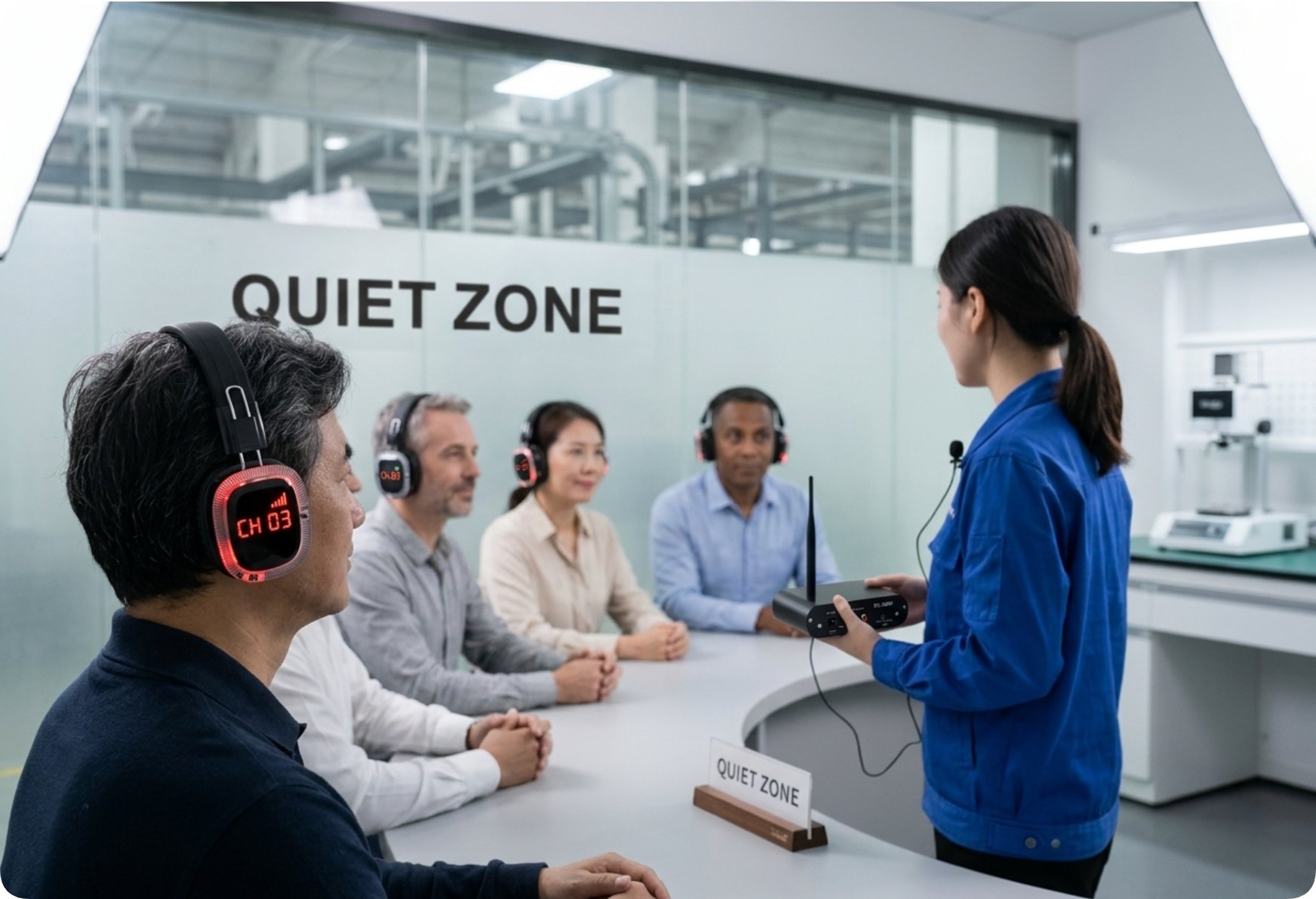
A factory tour has to teach visitors something without breaking the plant's own noise rules. The usual fix is a single wireless guide system, but that only solves half the problem: it still puts a voice in the room, and a voice is exactly what a noise cap is meant to limit. The more reliable setup is dual-mode — pair a self-paced, earphone-only semi-auto audio guide with two-way wireless transmitters such as the RC2408 and the RC2500, then switch between the two modes as the group moves through louder and quieter zones. This article walks through how that kit is built and which compliance points it clears.
💡 Why a Factory Tour Hits a Noise Limit
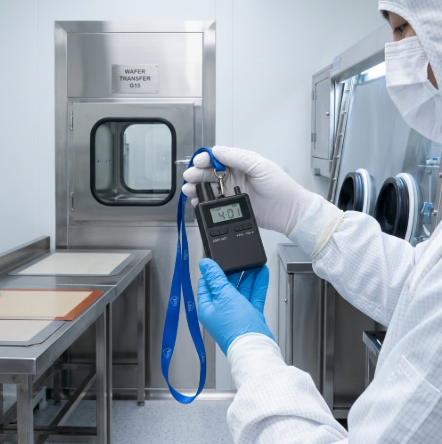
Most plants already run under an ambient noise code, and a tour guide's voice simply adds to the existing level. In some zones — a control room, a metrology lab, or anywhere near running machinery — the expectation is near-silence, not just "speak quietly." When a guide has to raise their voice to be heard over the floor, the whole group clusters and starts to shout back, which makes the noise problem worse instead of better. Audit and EHS teams have started asking tours to stay within a stated cap rather than relying on good intentions, and that changes the equipment choice from "loud enough" to "quiet by design."
What "Dual-Mode" Means for a Guided Visit
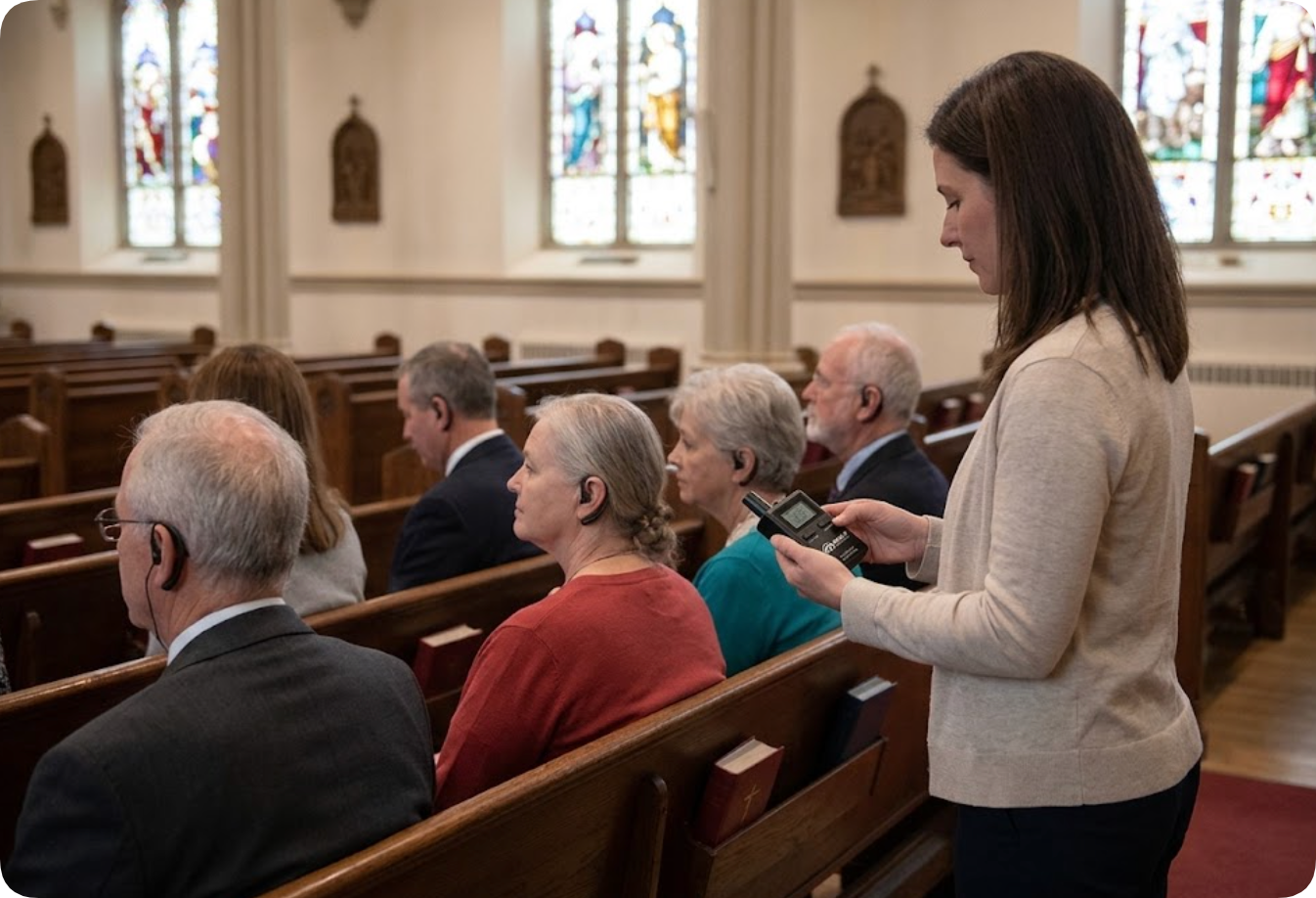
Dual-mode is not a single device but a way of splitting the visit into two delivery styles. Mode A is self-paced, earphone-delivered content: the visitor listens through a headset and the room hears nothing. Mode B is a live two-way wireless link where the guide speaks and visitors receive, with the option for questions on the floor. The kit earns its name by offering both and letting the leader switch between them by zone. A visit that begins with silent self-guided orientation and shifts into a live narrated walk on the shop floor is using both modes without anyone raising their voice. You can see the full factory-tour solution overview for where each mode fits.
🎯 The Semi-Auto Guide Covers the Silent, Self-Paced Half
The 2.8-inch semi-auto digital audio guide is the self-paced half of the kit. A visitor types a number on the 0-9 keypad and the matching track plays automatically; play, pause and volume are on the body. It stores up to 9999 audio files in 16 languages on 2 GB of built-in memory, charges over Micro USB, runs up to 18 hours on a full charge, and ships with earphones in the box. Its listed applications explicitly include factories alongside museums and heritage sites. Because the audio reaches the visitor through the earphone, the room itself stays silent — the device contributes nothing to the audible noise level, which is precisely what a noise cap is measuring.

📡 The 80-Channel Unit Carries the Live Two-Way Signal
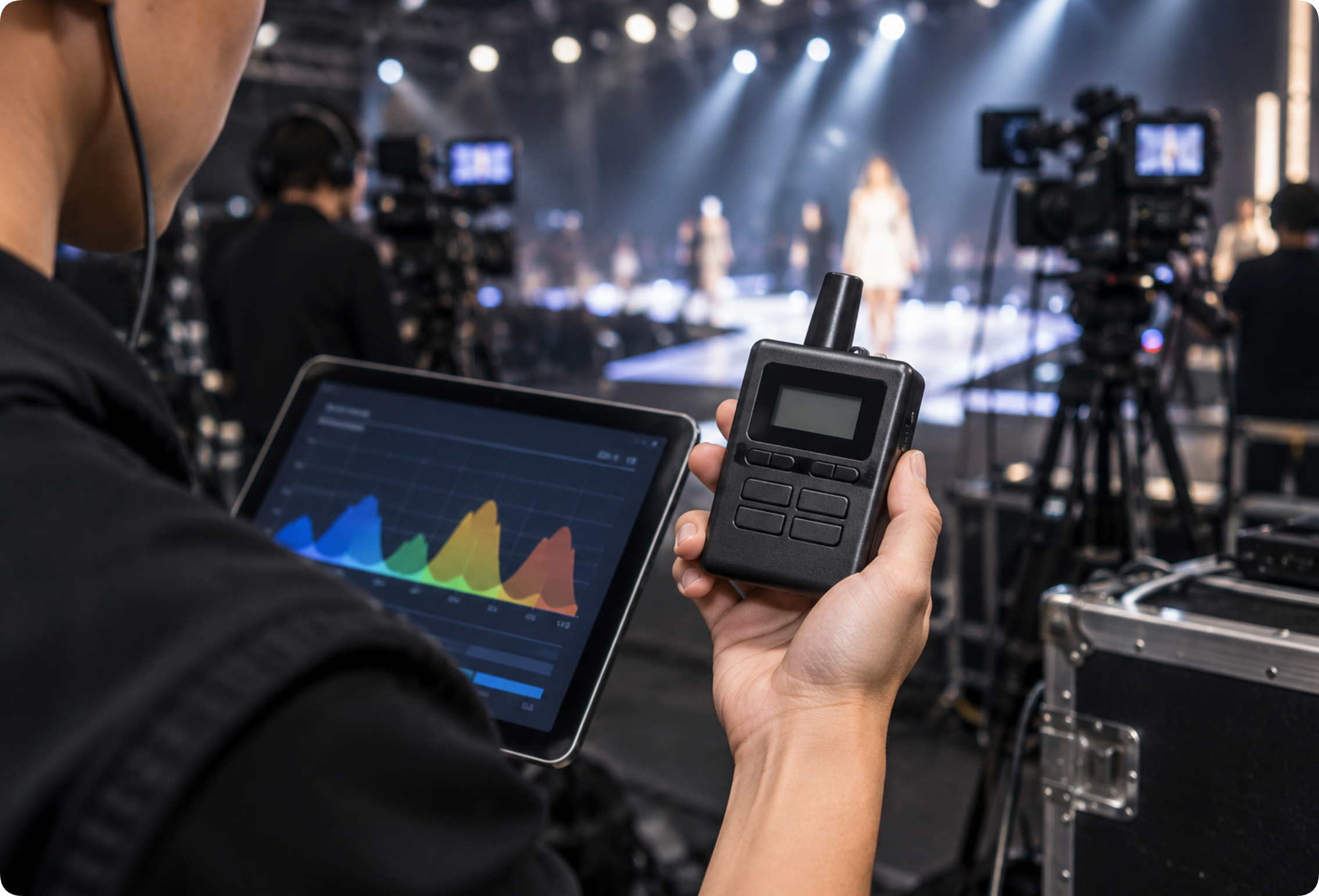
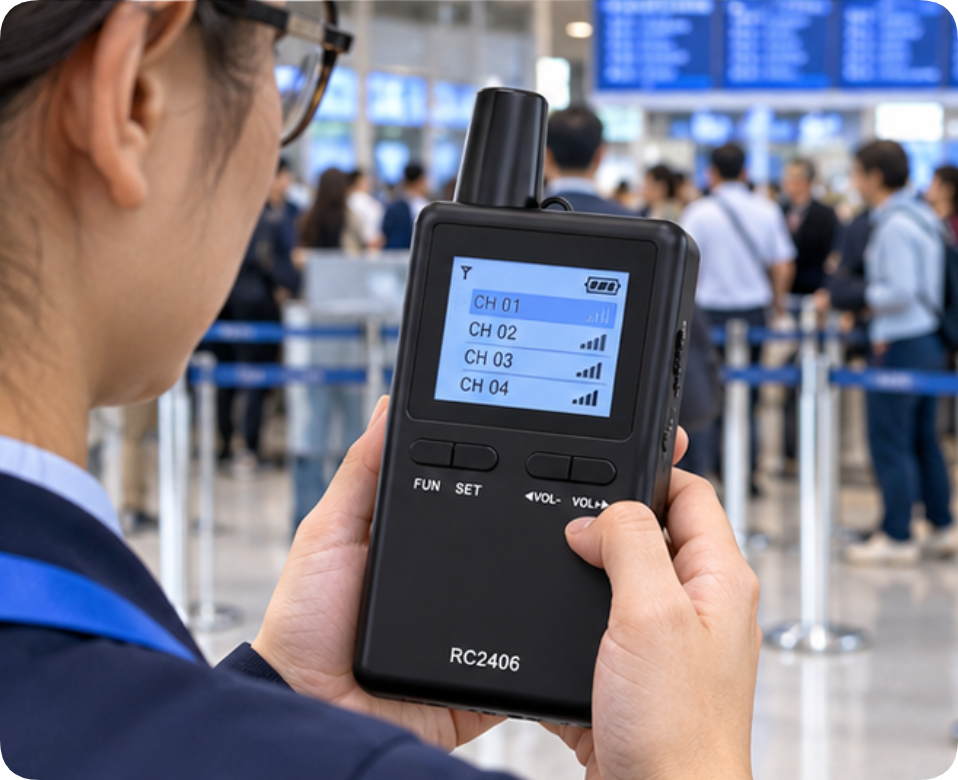
When the group moves onto the live floor segment, the RC2408 wireless tour guide system takes over. It works on the 2.4 GHz band with 80 channels and uses a two-way design so the guide can answer questions as they come up rather than delivering a one-way monologue. The 80-channel count matters in a working plant: several tour groups and normal plant radios can operate in the same building without stepping on each other, because each group locks to its own channel. Power comes through a DC port, and the unit is built for exactly this kind of floor narration where interaction matters more than one-way broadcast.

The One-Key-Mute Unit Adds Silence for Sensitive Zones
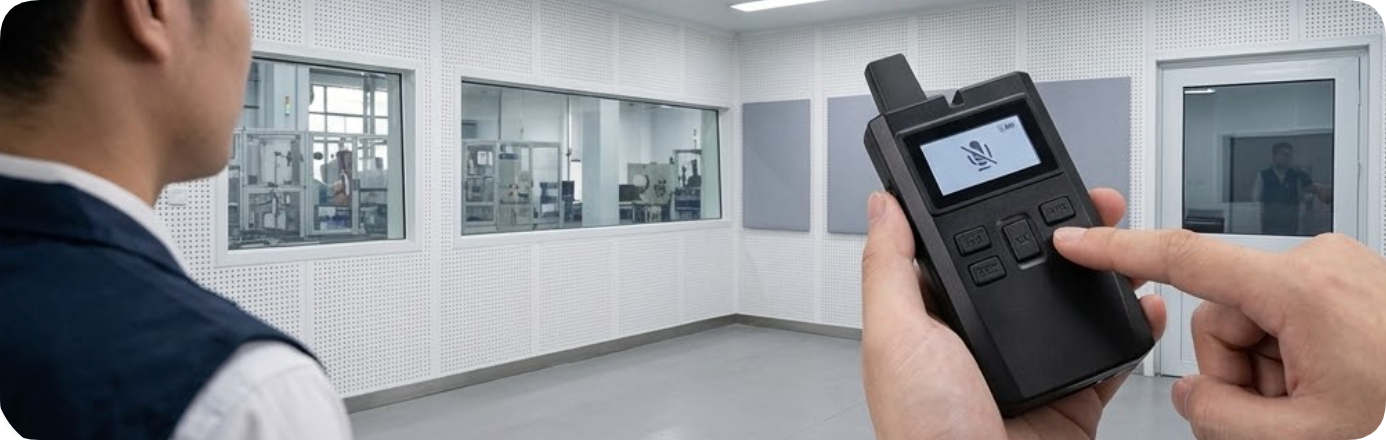
The RC2500 wireless tour guide system is the quiet-zone companion. It also runs on 2.4 GHz but with 50 channels, uses a Type-C port, weighs 104 g for both transmitter and receiver, and delivers 35+ hours of receiver battery life at a 10 mW output. Its defining feature is one-key sync, shutdown and mute — and that mute is exclusive to the RC2500 across the range. In a control room or a quiet inspection bay, one press on the guide unit silences every receiver at once, with no menu diving and no raised voice. For any tour that passes through a sensitive zone, keeping at least one RC2500 in the group is the simplest way to guarantee instant compliance.
Three Audit Points the Dual-Mode Kit Clears
Laid side by side, the three devices split the work cleanly:
| Device | Working mode | RF / Channels | One-key mute | Charging port |
|---|---|---|---|---|
| 2.8" Semi-Auto Guide | Self-guided playback | No RF (audio file) | No | Micro USB |
| RC2408 | Two-way wireless | 2.4 GHz, 80 channels | No | DC Port |
| RC2500 | Two-way wireless | 2.4 GHz, 50 channels | Yes (exclusive) | Type-C |
The kit clears three recurring audit points at once. First, the audible contribution is controlled: the semi-auto guide emits no voice into the room, so the tour's noise footprint stays at the floor's natural level. Second, multilingual access is covered two ways — 16 languages on the stored guide plus live interpretation over the wireless link for ad-hoc questions. Third, hearing and EMC safety are handled by a low 10 mW output, earphone delivery, and a one-key mute that can drop the signal the instant a quiet zone demands it.
A Sample Walk: Where Each Device Takes Over
A practical routing shows the hand-offs. In the arrival hall, visitors are handed the semi-auto guides and self-pace a short intro loop through earphones — the room stays silent and nobody crowds the guide. On the shop floor the leader switches the group to the RC2408 and RC2500, narrates the line live, and takes questions two-way. As the group approaches the control room, the RC2500's one-key mute drops every receiver, or the leader simply keeps the semi-auto guides active since they are already silent. At departure the units go back in the case with no noise complaint logged and no raised voice recorded on the walk.
🗺️ Sizing the Kit to Your Visitor Mix
The kit scales by group type rather than by headcount alone. Pure self-guided groups need only the semi-auto guides — hand them out and let the tracks do the work. Live guided groups run on the RC2408 plus the RC2500, one guide transmitter and as many receivers as visitors. Mixed or audited groups benefit most from the full dual-mode set, because the same visitors can be silent in one bay and interactive in the next. Keep the RC2500 in the plan specifically for its one-key mute; it is the only unit in the range that can silence a whole group instantly, and that single feature is what lets a tour cross a sensitive zone without a noise incident. See the broader solution and news index for deployment notes across other tour types, or the full wireless guide catalog when sizing channels and battery life.