.webp)

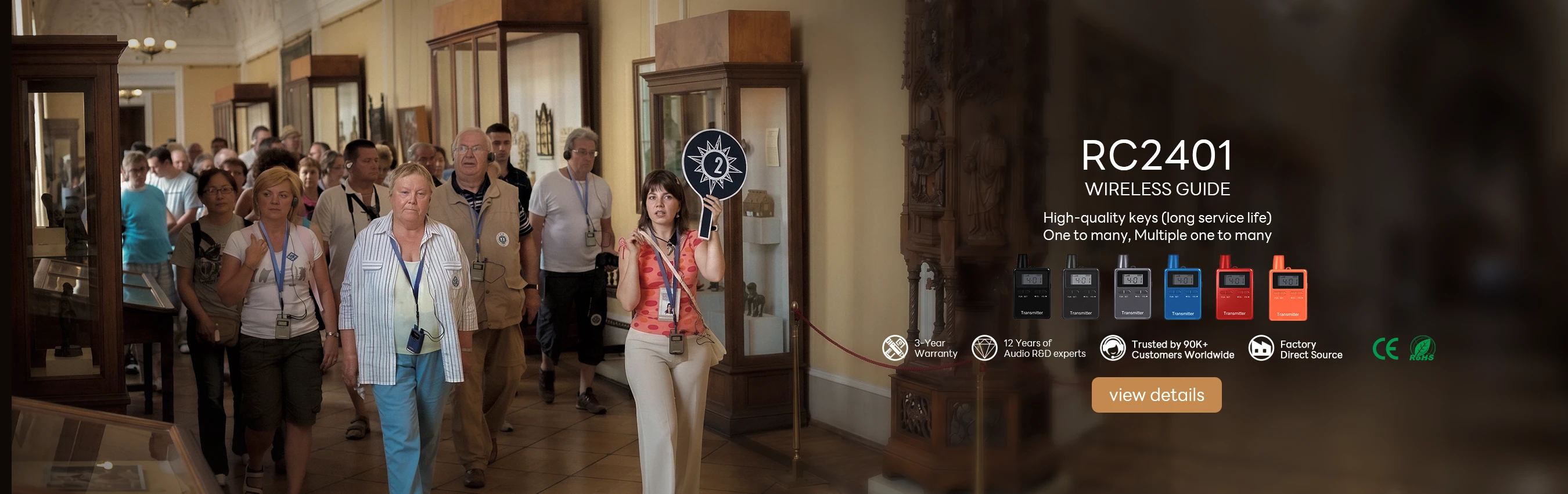
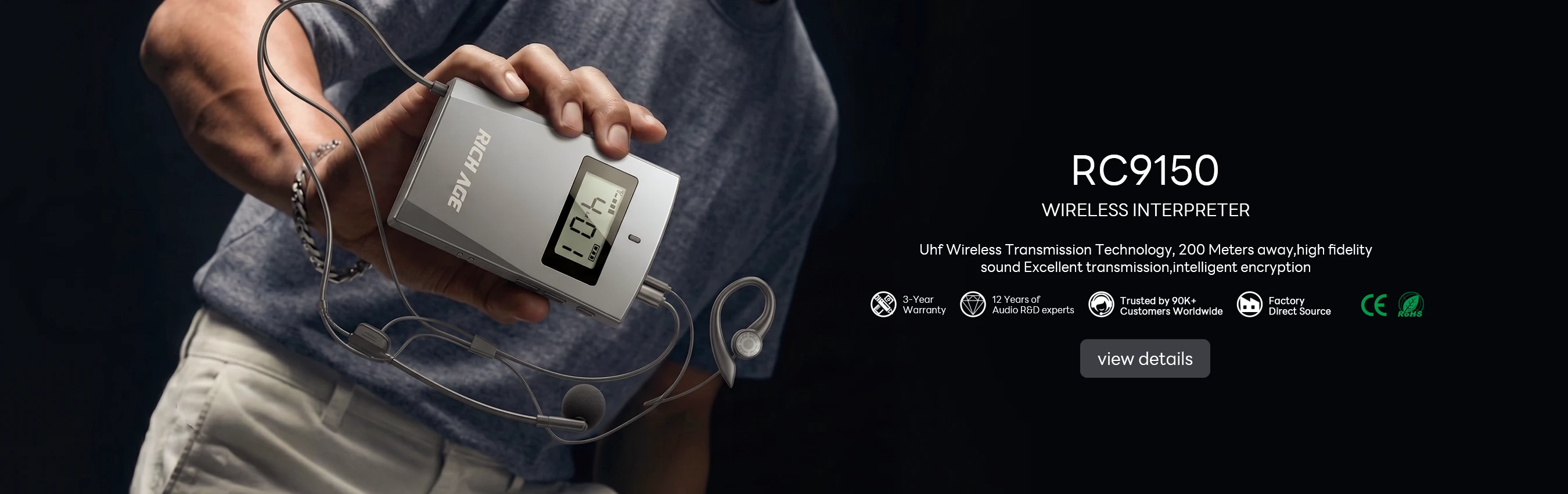
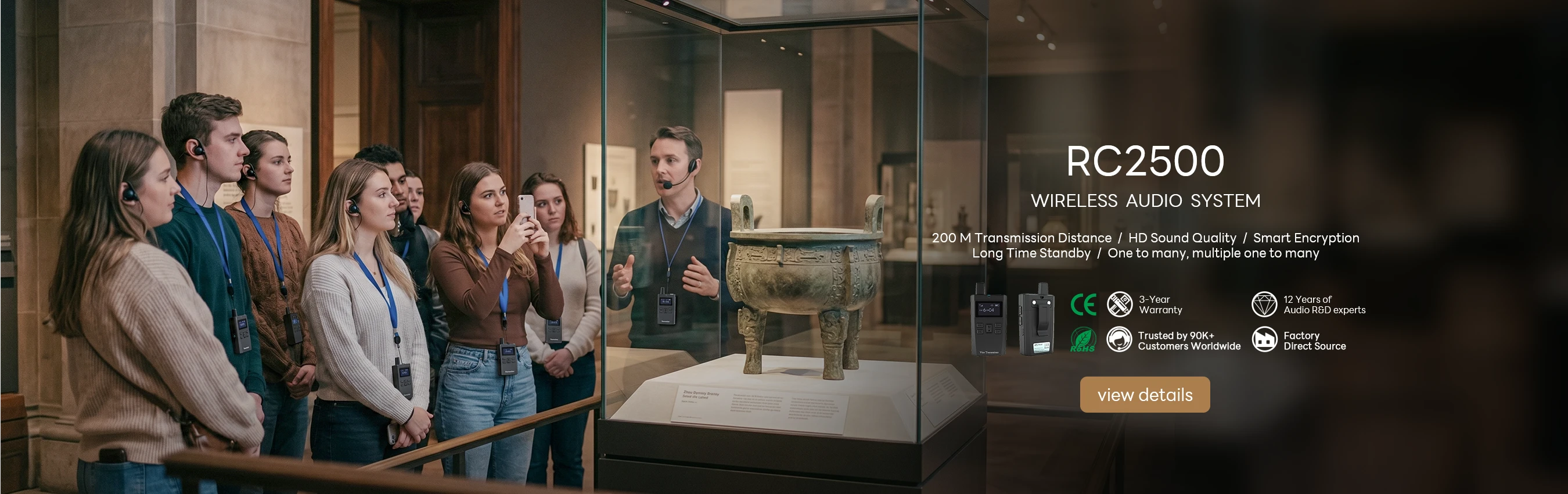
Two-Way Tour Guide System: Definition and Overview
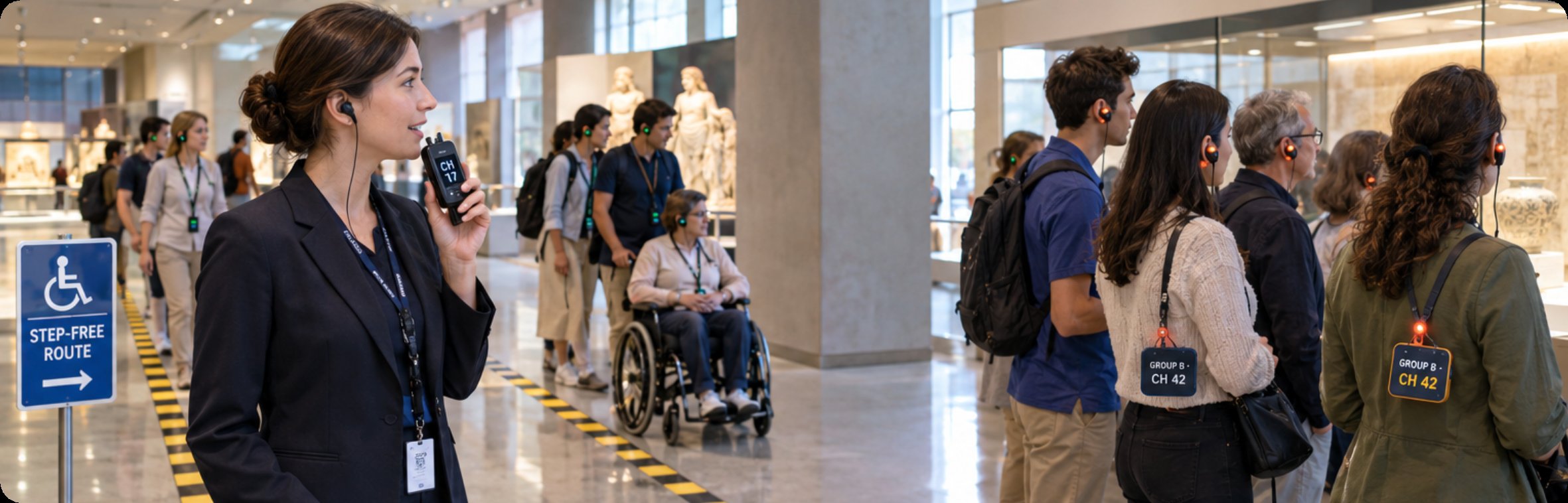
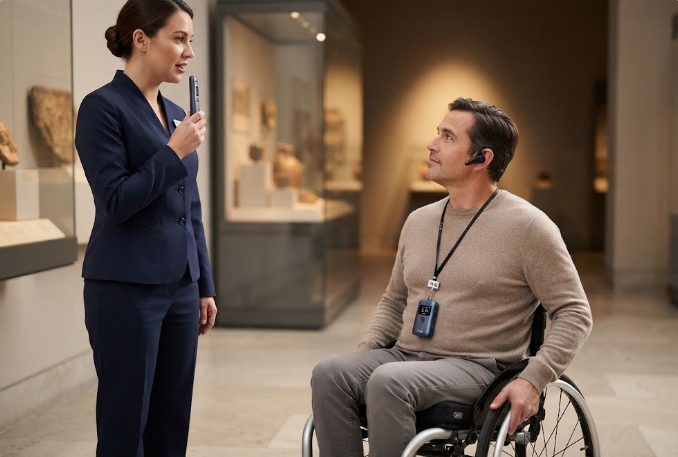
The Two-Way Tour Guide System, also known as a bidirectional wireless tour guide system, is an advanced communication device that facilitates two-way interaction between tour guides and visitors. Unlike traditional systems, this system allows not only the visitors to hear the tour guide’s commentary but also enables them to ask questions or provide feedback directly to the guide, fostering a more interactive and dynamic experience.
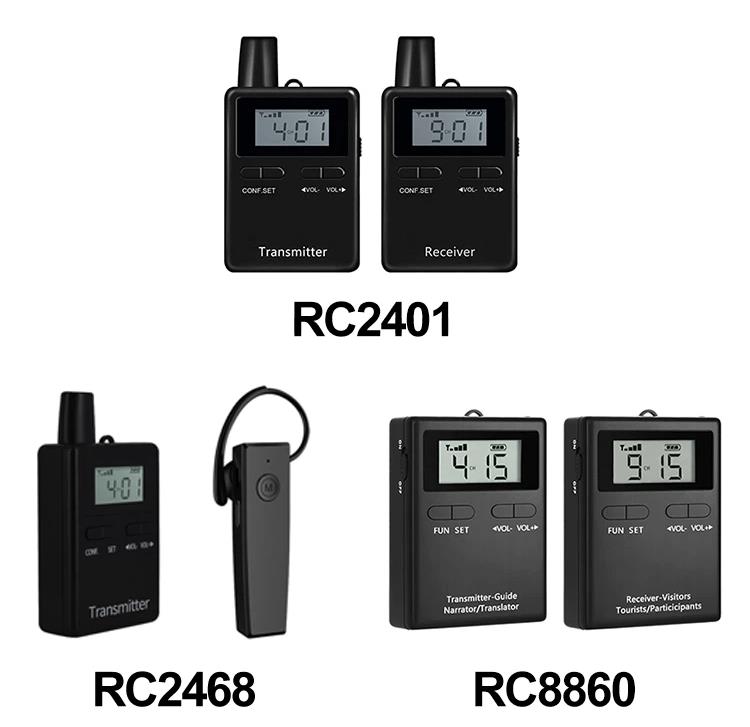

Main Components:
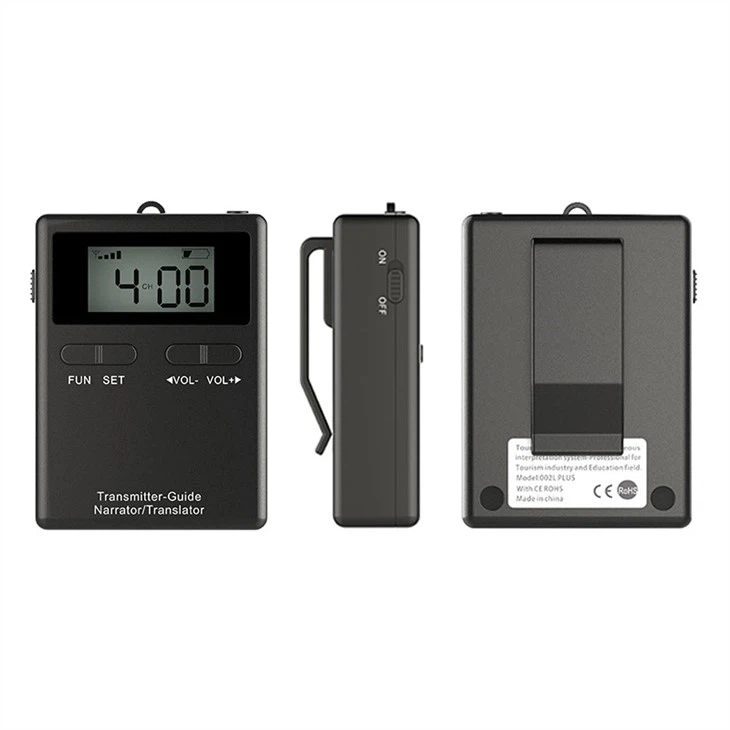
- Transmitter: Typically used by the tour guide, it is equipped with a one-touch switch and an adjustable microphone to transmit audio signals.
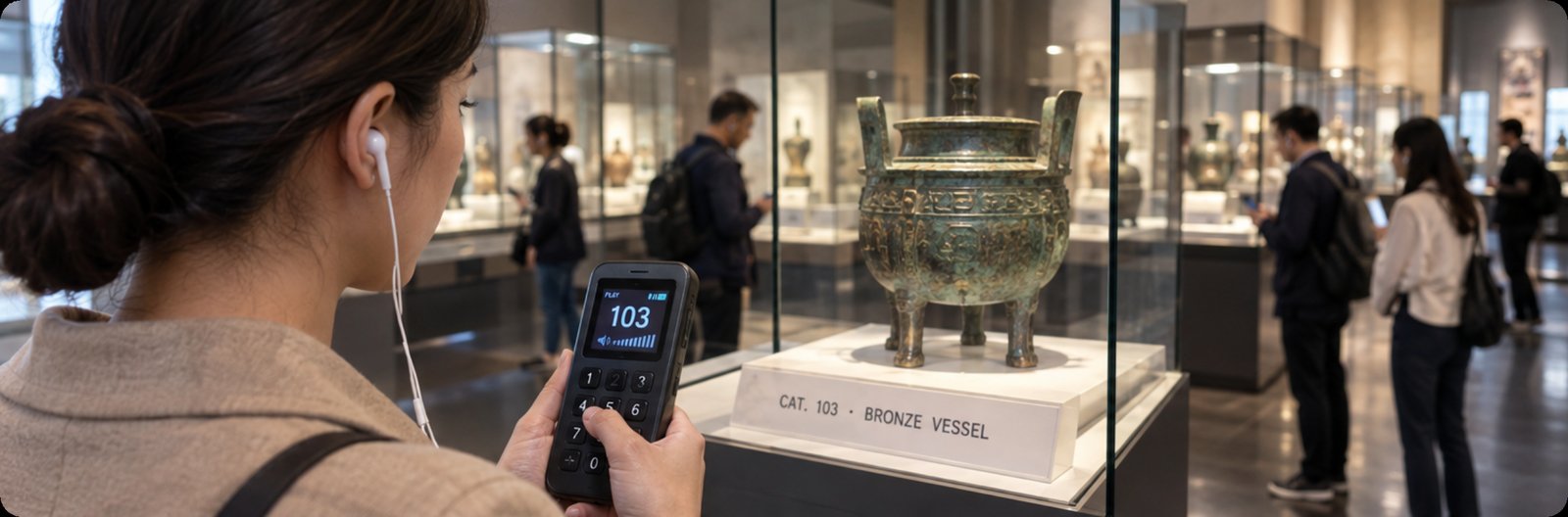
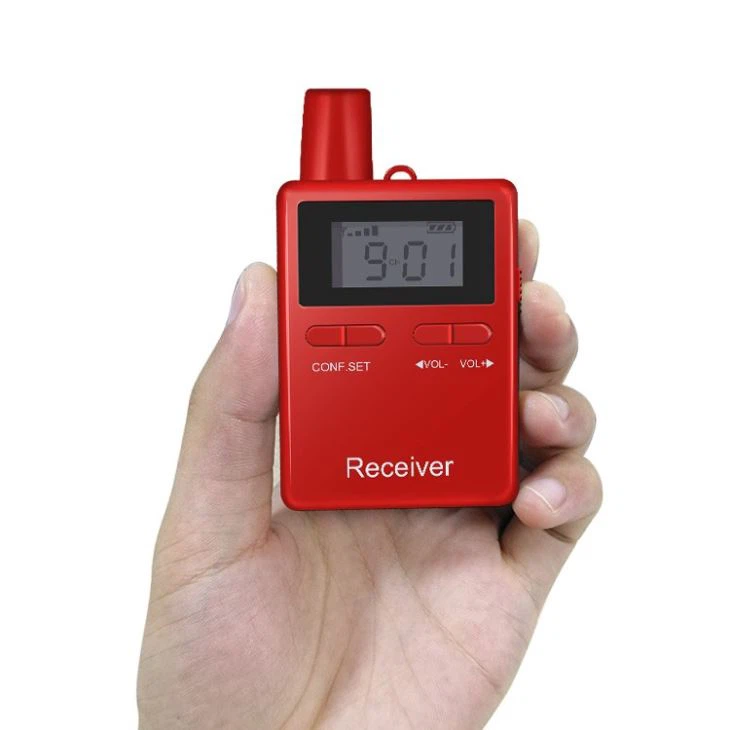
- Receiver: Worn by visitors, it receives the audio signals from the transmitter. Some receivers also include a microphone function, allowing visitors to provide voice feedback.
Charging Case: Used for storing and charging the transmitters and receivers, ensuring portability and organization.

Features and Advantages:
- Two-Way Communication: Unlike one-way systems, this system enables real-time interaction, allowing visitors to ask questions and engage with the guide, which enhances the overall experience.
- Flexibility: Visitors can provide feedback or ask questions at any point, and the tour guide can adjust commentary or pace based on their responses.
Wide Application: Ideal for museums, factories, schools, tourist attractions, and other venues, catering to different tour needs and enabling highly personalized experiences.
One-Way Tour Guide System: Definition and Overview
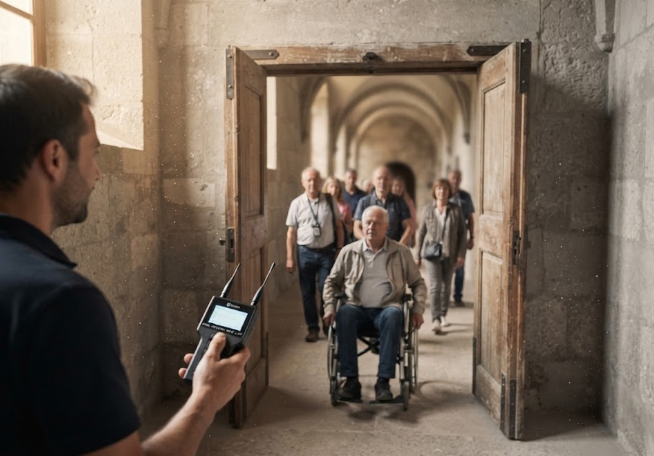
The One-Way Tour Guide System, also known as a unidirectional wireless tour guide system, is the traditional method of guidance. In this system, the tour guide sends audio signals through a transmitter, and visitors receive the commentary via receivers. However, this system lacks the capability for visitors to directly interact with the guide.
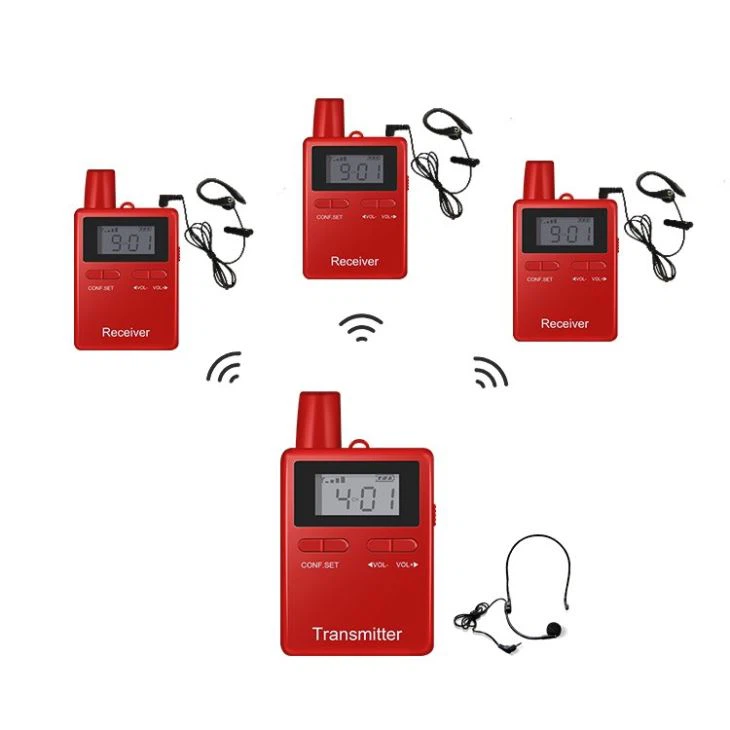
Main Components:
- Transmitter: Used by the tour guide to transmit audio signals.
- Receiver: Worn by visitors to receive the audio from the transmitter.
Features and Limitations:
- One-Way Transmission: Information flows solely from the tour guide to the visitors, with no opportunity for interaction.
- Passive Reception: Visitors can only listen to the commentary passively, without the ability to ask questions or adjust based on personal interests.
Limited Application: Suitable for scenarios requiring quiet listening or straightforward information transmission, but less effective for highly interactive or personalized services.
Key Differences Between the Two Systems
Communication Mode: The Two-Way System supports bidirectional communication, allowing both the guide and visitors to interact, while the One-Way System is unidirectional, with only the guide transmitting information.
Interactivity: The Two-Way System allows real-time interaction, enabling visitors to ask questions and provide feedback; the One-Way System is more passive, with visitors only listening to the commentary.
Application Scope: The Two-Way System is better suited for scenarios requiring high interactivity and personalized service, such as educational tours or customized group experiences. The One-Way System is more appropriate for simpler, traditional tours where interaction is limited.
User Experience: The Two-Way System provides a richer, more dynamic experience, promoting engagement and satisfaction. In contrast, the One-Way System can seem more monotonous and less engaging for visitors.
By integrating a Two-Way Tour Guide System, venues and tour operators can offer a more engaging and personalized experience, ensuring both informative and interactive tours.